Home › Sacred Valley & Beyond › Quinoa in Peru: Breakfasts, Soups and Savory Plates
Quinoa in Peru: Breakfasts, Soups and Savory Plates
The short answer
Choose quinoa by the cooked texture and the rest of the meal: a savory bowl, soup, salad or breakfast can all suit it. Rinse according to the product’s preparation instructions and use a tested method. Quinoa’s regional history and nutrient content do not identify the farm, certify the kitchen or determine an unspecified portion’s nutrition.

On this page
- What kind of quinoa meal do you want?
- Is quinoa connected to Cusco farming?
- How does quinoa differ from kiwicha?
- Why can quinoa taste bitter?
- What is a useful stovetop method?
- Which texture fits the dish?
- How can you build a savory plate?
- What does its nutrition tell you?
- How should leftovers fit your travel plans?
- Leave space for a meal, rather than another checklist item
- Sources
- Continue exploring the table
- Frequently asked questions
- Choose an Andean grain by its job on the plate
Quinoa may be familiar at home, but a well-prepared savory dish can give you a different way to enjoy it in Peru. Start with the texture and the ingredients you want on the plate.
A warm bowl, a grain salad and a soup make different demands on the cook. This guide helps you understand rinsing, a practical stovetop method and useful ordering questions, while keeping the crop’s documented Cusco connection separate from a restaurant’s actual supplier. It also explains how food form and portion change nutritional comparisons.
What kind of quinoa meal do you want?
Choose the preparation first. Quinoa can be a distinct cooked seed in a savory bowl, a softer ingredient in soup or the basis of a warm breakfast. Those experiences are different, even when the menu uses the same ingredient name. Ask whether the dish is primarily quinoa or a larger plate with a small quinoa component.
Oregon State University’s Food Hero describes quinoa as a grain-like seed with an earthy flavor and offers uses in salads, soups and stews. Its flexibility is useful when you want regional ingredients in an ordinary satisfying meal. You do not need to order a special wellness dish to try it. Food Hero quinoa recipe
Is quinoa connected to Cusco farming?
Yes. INIA publishes a quinoa cultivation manual for Cusco producers through its Andenes agricultural station. That gives the ingredient a documented regional connection beyond a restaurant’s use of the word Andean. FAO also identifies quinoa as an Andean crop with a much wider growing history and range. INIA Cusco cultivation manual
The connection still needs to be separated from your plate’s provenance. A kitchen in Urubamba may obtain grain from another region through a distributor. If origin matters to you, ask which region and supplier supplied that batch. Organic, colorful and locally cooked describe different things; none alone identifies the farm. The regional produce guide helps frame that conversation.
Choose an Andean grain by its job on the plate
An Andean-grain course becomes easier to order when you say what you want to eat: distinct tender seeds, a softer spoonable accompaniment or a light crisp finish. Quinoa, kiwicha and cañihua can all interest you without becoming substitutes for one another. Ask the kitchen which form it has and what role that form will play.
Compare the prepared foods
For a quinoa plate, ask whether the seeds remain separate or become part of a softer quinotto or soup. For kiwicha, establish whether you are being offered cooked grain, popped seed or flour. Oregon State University's Food Hero describes grain amaranth as capable of a creamy texture and documents dry popping for a crisp topping. Its generic amaranth guidance helps explain those forms without proving how every Peruvian kiwicha variety cooks.
Cañihua brings a further distinction: whole grain and cañihuaco are different kitchen ingredients. FAO describes cañihuaco as a traditional toasted, ground product, with uses beyond a single breakfast drink. A toasted flour can contribute to a bowl or other preparation, but it cannot be assumed to provide the visible grains you expected from a grain accompaniment.
Use the description to choose the meal
| You want | Ask the kitchen | What the answer changes |
|---|---|---|
| Visible grain beside cooked vegetables | Which whole grain is used, and does it stay distinct? | Whether the accompaniment has the texture you want. |
| A soft savory course | Is this cooked grain or flour, and what liquid gives it body? | Texture plus stock, dairy and other ingredient questions. |
| A crisp finishing accent | Is the popped kiwicha plain, and how much is included? | Whether this is a garnish rather than the meal's grain portion. |
| An unsweetened breakfast | Is the base plain before toppings are added? | Whether sugar is already present in a prepared mix. |
| An identified cañihua dish | Is whole grain or cañihuaco actually available? | Whether the kitchen can prepare the food form you intended. |
Keep the rest of the plate in view
Describe the main course and vegetables as well. A soft grain accompaniment might suit cooked alpaca with tender greens; separate quinoa could accompany baked high-altitude Andean trout and vegetables. These are proposed hotel-kitchen combinations, not verified current restaurant dishes. Let the kitchen recommend what it can prepare from its actual ingredients rather than requiring all three grains in one sitting.
The name alone does not settle dietary needs. A grain dish can contain animal stock, cheese, butter or a mixture with another grain. A flour preparation may include wheat. Ask about the complete recipe and shared handling when avoidance is necessary, and keep the individual ingredient guides available for those details.
Nor does a darker seed automatically deserve a higher health ranking. Compare the food forms you will eat and the portion served. Dry flour, hydrated cooked grain and a spoonful of popped garnish are poor substitutes for one another in a nutrition calculation. You can choose the texture that appeals without declaring a winner.
If a particular grain is unavailable, keep the desired role and choose another preparation the kitchen can explain. The pleasure of an Andean meal does not depend on collecting every crop name. A clearly described grain course, cooked vegetables and a sauce you enjoy give the meal a coherent direction.
Sources: foodhero.org; fao.org; foodhero.org
Continue with Kiwicha: Andean Amaranth Beyond the Garnish, Cañihua and Cañihuaco: Choose the Grain or Toasted Flour, Native Potatoes, Tarwi and Andean Ingredients Worth Knowing.
Why can quinoa taste bitter?
Residual saponins on the seed can contribute bitterness. FAO describes processing and rinsing to remove that taste, while Food Hero tells cooks to rinse quinoa unless it is pre-rinsed. Use a fine-mesh strainer because the seeds are small. A coarse colander can send part of your ingredient down the drain. FAO cooking introduction
The package is useful information. If it states that the grain is already rinsed, follow its instructions and the recipe you have chosen. Dry toasting can add a roasted flavor, but that flavor step should not become an invented universal sanitation procedure. If a restaurant preparation is unusually bitter, ask about the dish rather than assuming that all quinoa tastes that way.

What is a useful stovetop method?
Food Hero supplies a specific starting point: one cup of quinoa with two cups of water. Bring the water to a boil, add the grain, return to boiling, then cover and simmer gently for 12 minutes. Turn off the heat and let it stand until the water is absorbed and the texture suits you, about five to ten minutes. Named Food Hero method
Treat that as a recipe, not a universal timer for every grain and kitchen. FAO’s cookbook uses a different liquid ratio, and the texture needed for soup differs from a dry accompaniment. Pick one method, keep the pan and product consistent, and check the result. A package or tested appliance recipe may be a better fit for your particular setup.
How can you build a savory plate?
Use a clear grain component with vegetables and a dressing you enjoy. Peru’s Ministry of Environment publishes a quinoa salad containing cooked tarwi, corn, potato, fresh cheese, lemon and cilantro. It also offers a different salad with aguaymanto and herbs. These show several ways of working with cooked quinoa without making the entire plate a sweet preparation. Ministry recipe book
They also show why the ingredient list matters: one example contains dairy, and tarwi is a lupin with its own preparation and allergy considerations. A vegetarian-sounding grain salad is not enough information for every dietary requirement. Ask whether the kitchen can provide the actual recipe or explain its main components before you choose.
What does its nutrition tell you?
Quinoa contributes nutrients, including protein, but its food form and amount matter. A dry-grain table, hydrated cooked seed and a composed restaurant bowl are different comparisons. Peru’s INS identifies quinoa in its food-composition system; FAO discusses its nutritional qualities. Neither gives you the protein content of an unnamed salad by looking at its menu title. INS quinoa entry
For a numerical estimate, use an identified cooked food amount or the product’s own label. For an enjoyable meal, ask about the grain portion and the rest of the plate. Plain quinoa is naturally gluten-free, but broth, sauces, mixed grains and cross-contact need separate attention when avoidance is medically necessary. One manufacturer’s certification does not certify another kitchen’s dish.

How should leftovers fit your travel plans?
A batch can save kitchen work, provided you have suitable cold storage. Food Hero tells cooks to refrigerate leftovers within two hours. RiceSelect gives a refrigerated range for its cooked product and says prepared quinoa can also be frozen. Those are handling-dependent recommendations, not permission to leave a takeaway in a car or room. RiceSelect quinoa guidance
If you are cooking in accommodation, make the quantity you can store properly or will eat that day. Label an extra portion so it does not become an anonymous container. For a cold salad, consider the storage of the entire dish, including cheese, dressing and cut vegetables. The grain’s shelf life cannot settle every other ingredient’s condition.
Leave space for a meal, rather than another checklist item
A hypothetical breakfast makes the choice concrete: the kitchen offers a quinoa bowl, but it comes with a sweet topping you do not want. You ask for the actual options, choose a suitable preparation and keep enough time to enjoy it. The Sacred Valley planning guide can help make that meal part of the day rather than a hurried stop between transfers.
The publisher, Florian Rolke, also offers The SoulSearching Experience, a five-day Sacred Valley seminar for 8-15 participants, with no plant medicine. It is a separate invitation for readers interested in a longer, more reflective stay. Specific food arrangements and other inclusions require confirmation.
Fold tender greens through quinoa without losing the grain's texture
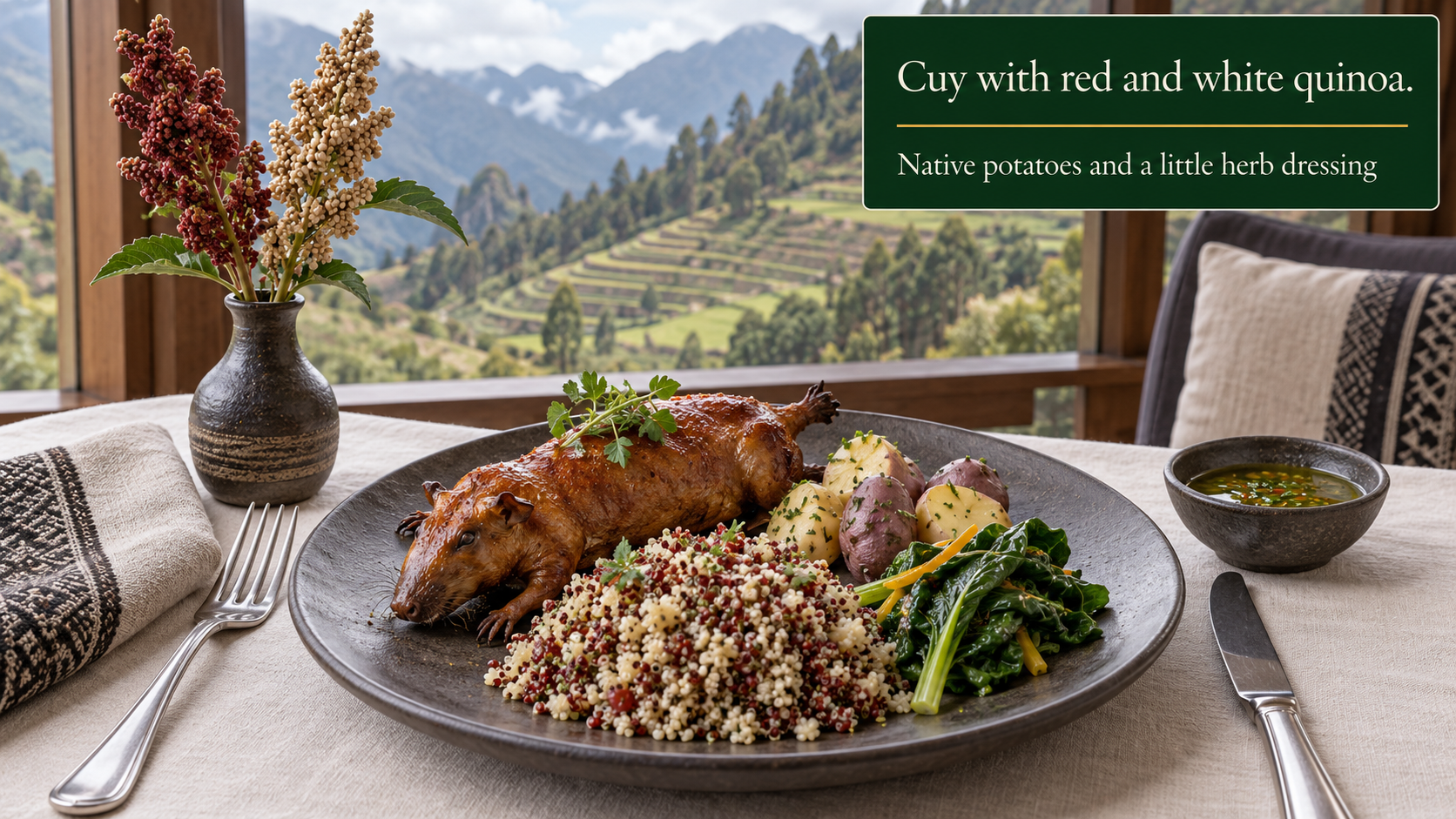
For quinoa with garden greens, the most useful choice is whether you want a loose grain serving or a soft, broth based bowl. This concept favors distinct cooked seeds with ribbons of tender leaf between them. A shallow serving makes both ingredients visible and leaves room for a piece of cooked trout alongside if you want a fish course.
Prepare the quinoa and greens separately before combining them. Oregon State University's Food Hero method includes a covered rest after simmering so the remaining water is absorbed. Wet greens added too early can change that balance. Cook the leaves to the texture you enjoy, drain the liquid that is not intended for the dish, and fold them into the finished grain close to service.
Bloomsdale spinach gives a soft leaf that collapses quickly. Fordhook chard offers a more substantial pale rib, which can be cut separately and cooked before the thin leaf blade. Either can work, but they should not receive identical timing merely because both are green. The separate spinach and chard guides explain those choices; their photographed packet names do not identify a restaurant's current harvest.
Ask for the grain to remain loose, with a generous amount of cooked greens and lemon served separately. A light broth can accompany the plate in a small jug instead of soaking the whole serving. If you prefer a soup, choose it deliberately and let the grain soften into that liquid. This is an original meal concept for food served to guests, not a tested recipe or a promise that the retreat includes a quinoa course.
Explore the preparation in its ingredient guide: Bloomsdale Spinach with Alpaca and Quinoa; Fordhook Chard with Trout and Lemon Broth; Mizuna and Chinese Broccoli, Cooked with Garlic.
Quinoa as a course of its own
Cooked quinoa contributes energy and plant protein
Cooked quinoa brings carbohydrate for energy and a modest contribution of plant protein to the meal. Protein supplies amino acids the body uses to build and maintain tissues. The Peruvian INS table lists 89 calories and 2.8 grams of protein per 100 grams of plain cooked quinoa. Those figures describe hydrated grain, making them more useful for a serving than dry-grain percentages. A quinoa accompaniment beside vegetables and fish or a suitable legume can contribute to a varied meal; its sauce and portion determine the completed dish.
A grain course with enough presence to remember
A shallow bowl of quinoa can hold the center of a meal. Picture cooked grains around tender mushrooms, a few leaves of cooked chard and a separately served herb sauce, with high-altitude Andean trout resting alongside. The quinoa remains visible rather than disappearing beneath a crowded salad. This is a proposed dining composition; a restaurant can tell you whether its kitchen offers something similar.
For a softer course, a quinoa soup with vegetables lets the grain mingle with the broth. For more distinct grains, ask for quinoa graneada. FAO documents uses in soups as well as flour, while its international cookbook shows how broadly chefs work with the crop. Those preparations make different dishes from the same ingredient.
Quinotto gives the grain a different role
A quinotto borrows the idea of a spoonable, cohesive grain course. It can be an appealing choice when you want something warm after a day outside. Inkaterra has published a red-quinoa quinotto recipe, giving this serving style a real culinary reference. A recipe published by a hotel does not establish that the dish is on today's menu.
Before ordering, ask what makes that particular version creamy. Cheese, butter, cream, stock and vegetable purees change the result and its suitability for your preferences. An imagined variation with roasted squash, mushrooms and a small spoonful of herb sauce offers another direction. Describe the texture you want and let the cook explain the actual preparation.
Color identifies the grain more reliably than a health ranking
White, red and dark quinoa can bring different colors to a plate. The appearance alone does not tell you where that batch grew or how its cooked texture will feel. INIA and FAO's commercial-variety catalog records traits including grain color, plant form and saponin content. It is a better botanical reference than a universal claim that one color is the healthiest.
A small comparison can be enjoyable if the kitchen has more than one grain available. Try a few unadorned spoonfuls before adding sauce, then notice what the complete dish changes. The point is to discover the cook's choice. A mixture need not contain every color to be an accomplished serving.
Compare cooked quinoa with cooked food
The Peruvian INS food-composition table distinguishes cooked quinoa from dry grain, flour and flakes. That distinction matters because cooked grains have absorbed water. A high protein percentage quoted for dry quinoa should not be presented as the amount in the same weight of a restaurant side dish. The table's cooked-quinoa entry is a reference food, not an analysis of a dressed serving.
Quinoa can contribute carbohydrate and some protein to a meal. high-altitude Andean trout, chicken, properly prepared tarwi or another chosen protein can determine the rest of the plate. Nutrient content offers a reason to include the grain in a varied diet; it does not establish that a quinoa dinner treats anemia, prevents disease or fixes altitude symptoms.
A savory sauce belongs to the whole plate
Consider two different serving ideas: quinoa with roast chicken and a mild squash sauce, or quinoa with high-altitude Andean trout and a sharper herb accompaniment. In the first, the sauce connects the grain to the vegetables. In the second, it can be offered separately so the fish and quinoa remain easy to taste. Neither combination needs a sweet glaze.
If a sauce includes maca, chia, sesame or dairy, ask for the full preparation. The featured grain does not describe those additions. Likewise, a quinoa dish can contain wheat through stock, sauces or mixed grains. For a gluten restriction, discuss ingredients and kitchen handling rather than relying on the word quinoa alone.
Recognize the plant behind the small grains
Quinoa carries its seeds in clustered, branching flower heads called panicles. Its leaves are broad, and the panicle can be compact or open according to the variety. It does not make a wheat ear with orderly rows of kernels along a narrow spike. INIA's variety descriptions provide the form and color to look for when a particular cultivar is named.
A few accurately identified, dried quinoa stems could make a restrained table arrangement away from the food. That is a proposed decorative use, not evidence that the quinoa in your bowl was harvested from those stems. An illustrated field or vase should show the same botanical structure without implying a current hotel planting or a documented harvest.
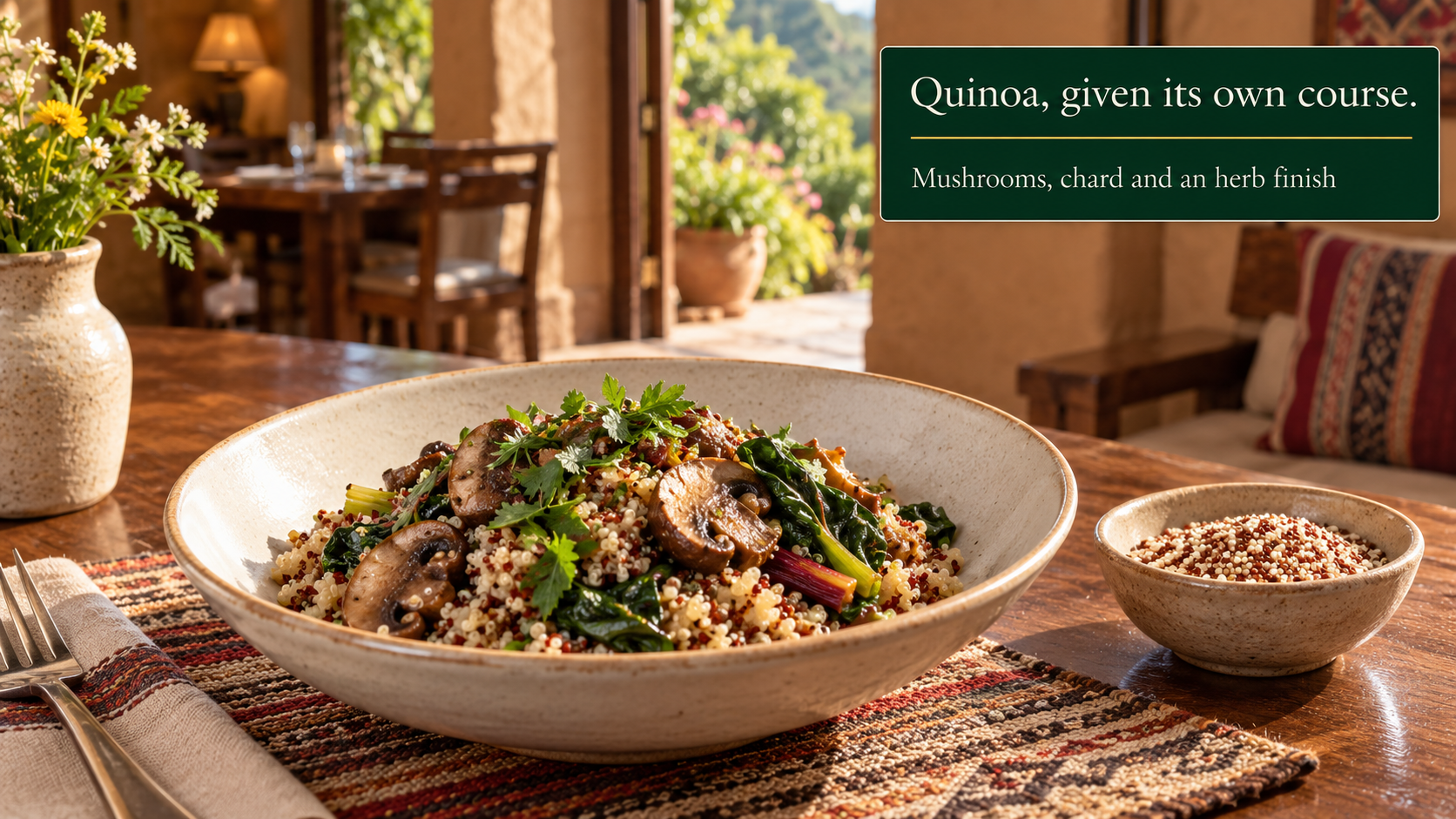
Prepared-food and plant illustrations. No current restaurant dish, harvest or seminar inclusion is established.
Sources
INIA supports the Cusco growing context. FAO, Food Hero and Peru’s Ministry of Environment provide crop and cooking information. INS supplies ingredient-composition context, and RiceSelect provides its own product guidance. Current restaurant stock and individual farm provenance remain separate questions.
Continue exploring the table
Understand food-ready tarwi before combining legumes and grain. Compare kiwicha food forms. Recognize cañihua and its toasted flour. Explore aguaymanto in savory salads. Choose the ingredient or preparation that interests you, and use its guide for the details before ordering.
Frequently Asked Questions
What is quinoa?
Quinoa is the edible seed of Chenopodium quinoa, an Andean crop treated like a grain in the kitchen. FAO identifies its roots in Andean food traditions. Cooked seed can appear in soups, salads or breakfast bowls, so the menu name alone does not tell you the texture, seasoning or portion you will receive.
Sources: Quinoa in the Kitchen; Stovetop Quinoa.
Is quinoa a cereal?
Botanically it is a pseudocereal, rather than a grass cereal such as rice or wheat. That distinction does not make its kitchen uses difficult: simmered quinoa can provide a grain-like component of a meal. It also does not establish that a finished dish is free of every other ingredient or allergen.
Sources: Quinoa in the Kitchen.
What does quinoa taste like?
FAO describes a delicate nutty or earthy flavor. Residual saponins can contribute bitterness, which appropriate processing or rinsing reduces. Broth, herbs and toppings change the finished dish considerably. If you are trying quinoa for the first time, a simple cooked portion lets you notice its flavor before adding a strongly seasoned sauce.
Sources: Quinoa in the Kitchen; Stovetop Quinoa.
Is quinoa the same as amaranth?
No. FAO distinguishes Chenopodium quinoa from Amaranthus caudatus, the Andean amaranth associated with kiwicha. They belong to the same plant family but are different crops. Their cooked textures also differ, so a quinoa grain salad and a creamy amaranth bowl should not be ordered with identical expectations.
Sources: Quinoa in the Kitchen; Stovetop Quinoa; Stovetop Amaranth.
Is quinoa nutritious?
Quinoa contributes nutrients, including protein, within an ordinary varied diet. FAO discusses its nutritional value, while Peru’s INS lists quinoa as an identified food. Assess the form and serving actually eaten, including broth, cheese or dressing. An ingredient’s reputation does not show that an unspecified restaurant dish is a nutritionally complete meal.
Sources: Quinoa in the Kitchen; Quinua food composition entry.
How is quinoa typically eaten?
Cooked quinoa can be added to soups, savory bowls and salads or served with breakfast toppings. Food Hero provides these uses, and FAO also describes porridge and flour preparations. Ask whether a menu item is cooked seed, flakes or another processed form, since these names do not promise the same texture.
Sources: Stovetop Quinoa; International Cookbook for Quinoa.
Where did quinoa farming begin?
FAO describes quinoa as an Andean crop with long-standing regional cultivation. Its historical discussion should not be treated as evidence about the farm supplying today’s restaurant. For a travel meal, distinguish the crop’s Andean history from the country, region and producer of the actual ingredient.
Sources: Quinoa in the Kitchen.
Where is quinoa grown?
INIA documents quinoa production work in Cusco, while FAO discusses its broader Andean cultivation and adaptation. Quinoa is therefore connected to the region without being confined to one valley. A restaurant in the Sacred Valley may buy from several regions; ask for supplier information instead of assuming the location of your table proves local harvest.
Sources: Manejo integrado del cultivo de quinua en el Cusco; Quinoa in the Kitchen.
Are there different varieties of quinoa?
Yes. FAO describes crop diversity, and RiceSelect sells white and mixed-color products as named examples. Choose by the texture and recipe you prefer rather than treating color as proof of superior health effects. A restaurant’s red, black or mixed quinoa description does not identify its precise cultivar or growing location.
Sources: Quinoa in the Kitchen; Quinoa FAQ.
Is quinoa gluten-free?
Plain quinoa is a naturally gluten-free seed, and RiceSelect separately certifies its own products. A finished soup or salad may include other ingredients or encounter cross-contact. If avoiding gluten matters medically, ask about the actual grain product, broth, sauces and preparation rather than transferring one manufacturer’s certification to the whole restaurant dish.
Sources: Quinoa FAQ.
How do you cook quinoa, and must you rinse it?
Food Hero’s recipe rinses quinoa unless it is pre-rinsed, then uses a covered simmer and an off-heat rest. Its one-cup quinoa to two-cups water method is a useful named starting point. Follow your package or chosen recipe because products and intended textures vary; rinse in a fine-mesh strainer to retain the small seeds.
Sources: Stovetop Quinoa.
Can you cook quinoa in a rice cooker?
RiceSelect includes rice-cooker preparation in its quinoa guidance. Use instructions suited to your appliance and grain product, particularly for water quantity and setting. A stovetop ratio is not automatically the correct pressure-cooker or rice-cooker ratio. Check the finished texture rather than assuming every device uses the same cycle.
Sources: Quinoa FAQ; Stovetop Quinoa.
How long does cooked quinoa last?
RiceSelect gives a refrigerated range of three to five days for its cooked quinoa. Food Hero instructs refrigerating leftovers within two hours. These recommendations assume appropriate handling; they do not make an unrefrigerated travel takeaway safe. If you lack reliable refrigeration, cook or order the amount you intend to eat.
Sources: Quinoa FAQ; Stovetop Quinoa.
How much protein does quinoa contain?
Quinoa supplies protein, but dry seed, hydrated cooked grain and a composed dish require different weight and serving comparisons. FAO and INS provide ingredient-level context. Use an identified food form or product label for a numerical estimate; the small quinoa garnish on a large plate cannot inherit a full-serving protein claim.
Sources: Quinoa in the Kitchen; Quinua food composition entry.
Can frozen cooked quinoa be used in a cold salad?
RiceSelect says prepared quinoa can be frozen. Handle and cool it appropriately before freezing, then follow suitable storage and thawing instructions rather than leaving it on a counter. Texture after thawing may differ from a freshly cooked batch, so try a small portion before relying on it for a special meal.
Sources: Quinoa FAQ; Stovetop Quinoa.
Does presoaking quinoa shorten its cooking time?
The Food Hero method cooks quinoa without a separate soaking stage, using a covered simmer followed by a rest. It does not test how much presoaking changes the timing. If you choose to soak, use a recipe designed for that method instead of assuming an unmeasured reduction in cooking time or changing water by guesswork.
Sources: Stovetop Quinoa.
Why can quinoa be difficult to cook consistently?
Start by fixing the product, liquid quantity, pan and intended texture. Food Hero gives a specific covered simmer followed by an off-heat rest rather than continuous boiling until every drop disappears. Keep notes on one method before changing several variables. A soft soup component and distinct salad grains also have different texture goals.
Sources: Stovetop Quinoa; International Cookbook for Quinoa.
What water ratio and time should an Instant Pot use for quinoa?
The sources here do not establish one tested Instant Pot program. Food Hero’s two-to-one liquid ratio is for its stovetop recipe, while other published methods differ. Use your appliance’s quinoa guidance or a tested pressure-cooker recipe rather than applying a stovetop simmer time to sealed pressure cooking.
Sources: Stovetop Quinoa; International Cookbook for Quinoa.
Can washed and toasted quinoa be stored indefinitely?
No source here supports indefinite storage of a washed batch. FAO’s airtight-container advice concerns stored grain, while Food Hero treats toasting as a step before adding cooking liquid. For a simple routine, store the dry product according to its label and rinse or toast when preparing it rather than inventing a shelf-stable wet-preparation process.
Sources: International Cookbook for Quinoa; Stovetop Quinoa.
Can a regular strainer replace a fine-mesh sieve?
Use a tool that retains the small seeds; many coarse strainers will lose them. Food Hero calls for a fine-mesh strainer and suggests a clean coffee filter if you lack one. Rinse with suitable water and drain before cooking, keeping the product’s pre-rinsed instructions and your chosen recipe in mind.
Sources: Stovetop Quinoa.
Put the plan in one place
Save the route, admission time, station names, and transfer details before you book the next part.
Open the trip-planning checklist