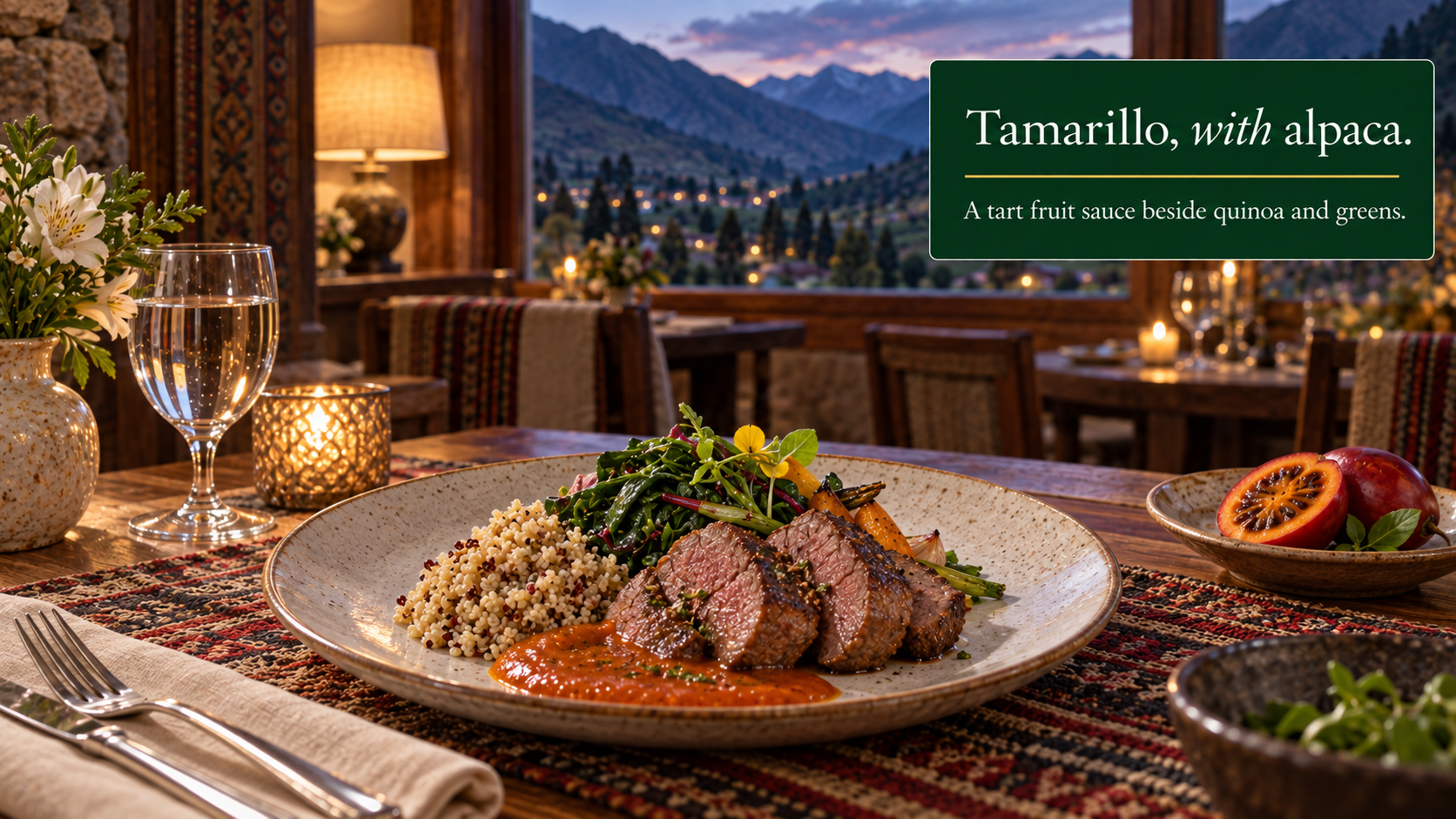
Tamarillo gives a savory plate a sharper fruit accent than peach. A little smooth red-orange sauce can sit beside alpaca without covering its cut surface or soaking every spoonful of quinoa. Keep the greens simply prepared. The useful question is how much fruit makes the next bite more enjoyable.
Fruit, grains and savory plates
Tamarillo Sauce with Alpaca, Quinoa, and Greens
Tamarillo, or tree tomato, is Solanum betaceum, a fruit distinct from tomatillo and ordinary tomato. For this alpaca plate, use ripe peeled flesh, cook it gently, and strain it into a smooth red-orange accompaniment. Serve a small amount beside cooked alpaca, quinoa, and greens. Taste before adding citrus or chili because the fruit already brings considerable tartness.
Tree tomato is a particular fruit
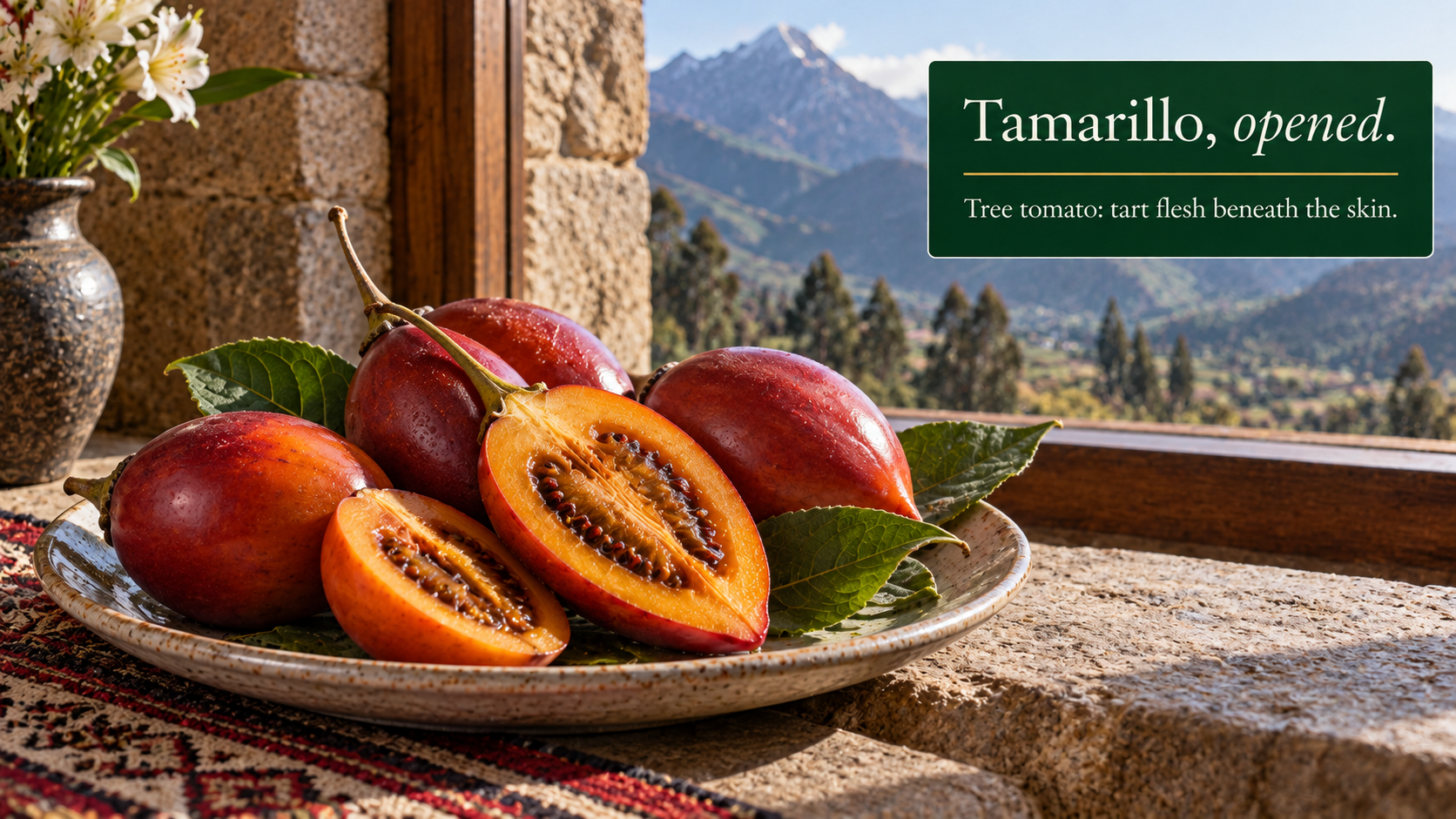
Kew accepts the name Solanum betaceum for tamarillo and includes Cyphomandra betacea among its synonyms. Tomate de árbol and tree tomato are common names for this fruit. A familiar word on a produce label still deserves attention: the elongated tree fruit is different from an ordinary tomato used in a salad.
Tomatillo is another ingredient again, associated with the papery husk surrounding its fruit. Do not treat tamarillo as the same product with an alternative spelling. A sauce written for husked tomatillos may depend on a different texture and flavor. Buy identified food-grade tamarillo and keep the supplier's name attached to the ingredient.
Start with ripe flesh and leave the peel behind
Choose sound ripe fruit, avoiding decay or badly damaged skin. Color varies among tamarillos, so red alone is not a universal ripeness test. UC Davis emphasizes harvesting near full ripeness for good eating quality. Its postharvest guidance also explains that ethylene exposure does not improve the fruit's eating quality. A bag of hard immature fruit is therefore a poor shortcut to this sauce.
Wash before cutting. Halve a ripe fruit and scoop out the flesh, leaving the bitter skin behind. For a larger batch, the New Zealand growers' preparation guidance describes peeling before cooking. The sauce uses the fruit pulp, not leaves or stems. Set aside any pieces of peel that slipped into the bowl before blending.
Build a smooth savory accompaniment
Place peeled ripe flesh in a small pan with a little water and warm it gently until soft enough to blend. Add liquid sparingly. Blend the softened pulp, then press it through a fine sieve if you want the finished accompaniment free of noticeable seeds or coarse particles. The result should flow from a spoon without running across the entire plate.
FAO's Traditional High Andean Cuisine includes an ají preparation that cooks tree tomato and removes its peel and seeds. That establishes a useful culinary precedent for preparing the fruit for a savory sauce. The alpaca combination here keeps its own simpler direction: smooth fruit, restrained seasoning, and no added sugar. It does not need the heat or the full ingredient list of an ají.
Taste the sauce with the food
Try a small spoonful with cooked quinoa before adjusting the seasoning. Tamarillo is already tart, so adding lemon automatically can make the accompaniment abrasive. If the fruit is especially sharp, reduce the serving and offer it separately. A little plain cooking liquid can loosen a concentrated puree.
Choose one aromatic accent, such as a little finely chopped parsley stirred in near service. If you want chili, serve it separately at first. The sauce should still taste of tamarillo after the herbs are added. Long cooking to chase a thick, jamlike texture can concentrate the flavor beyond the modest role intended for this plate.
Plate alpaca, quinoa, and greens
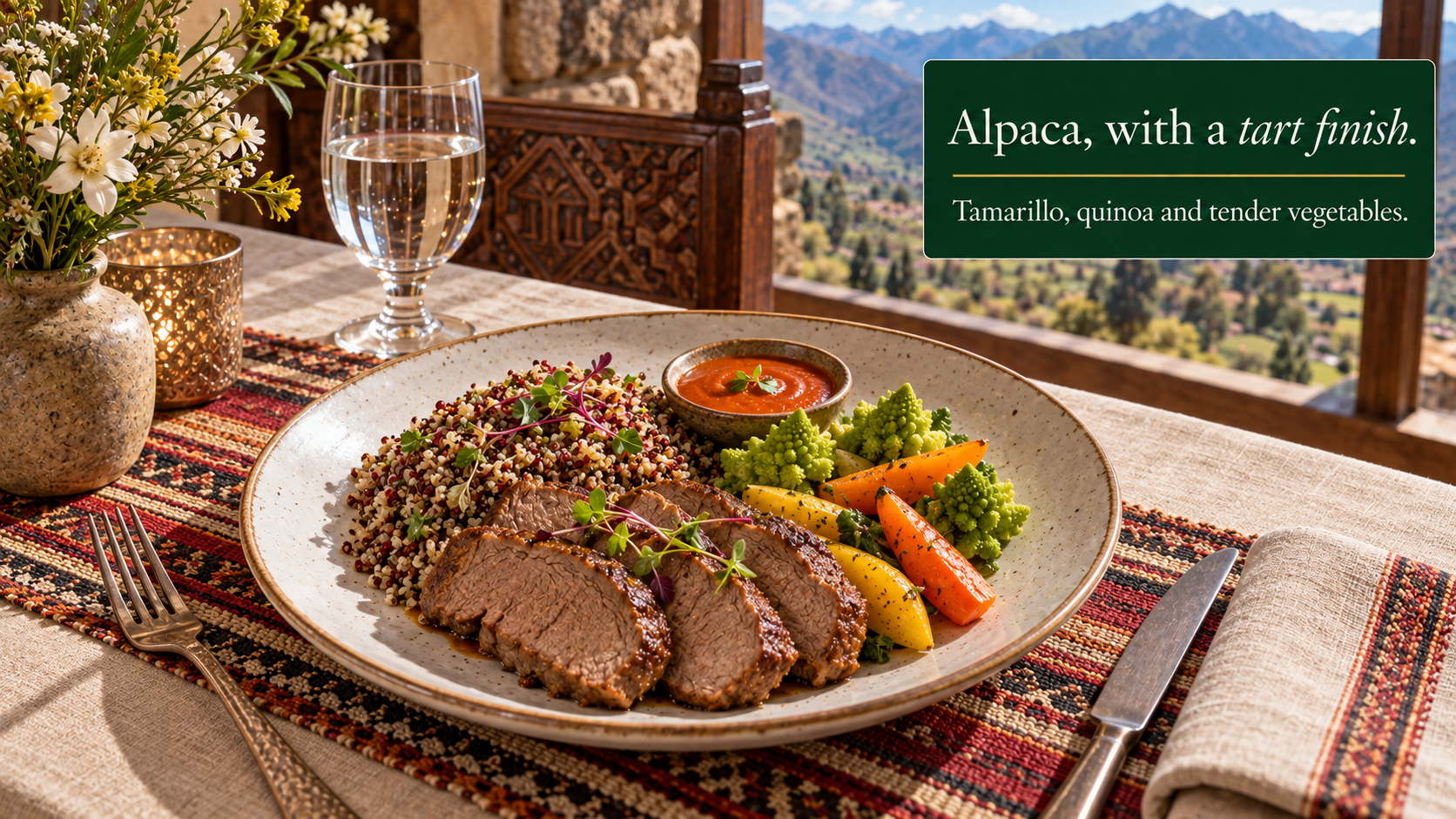
Arrange cooked alpaca beside a spoonful of quinoa and a separate portion of tender greens. Place the smooth red-orange sauce to one side or offer it in a small vessel. This lets the diner choose the amount and keeps the grain's texture distinct.
For the second serving pictured here, add tender Romanesco florets and carrots beside the alpaca and quinoa, and pass the tamarillo sauce separately. Drain the cooked vegetables well so their liquid does not thin the sauce. Their milder flavor gives the tart fruit a different companion in each forkful.
Keep a fresh sauce separate from a preserve
Refrigerate the prepared sauce promptly and handle it as a perishable cooked food. A sour taste does not establish that a homemade sauce is shelf stable. Keep it covered and separate from raw meat, and reheat only the portion needed. A bottle of commercial tamarillo sauce may contain sugar or other ingredients, so read its label before using it for this unsweetened preparation.
At a Sacred Valley table, tamarillo can be introduced through one small spoonful. Ask about the fruit in the dish and how it was prepared. Its tartness, the smooth texture and the cook's seasoning choices give the meal plenty to discuss.
The images illustrate serving ideas, rather than a named restaurant menu, a current harvest or an included retreat meal. These are preparation guides, not tested recipes.
A little more time in the Sacred Valley
A Machu Picchu journey can leave space for more than the train and the citadel: a meal, a quieter morning and a conversation that has time to develop. Ask Florian about The SoulSearching Experience, his five-day Sacred Valley seminar for 8-15 participants. Discuss dates, venue and meal arrangements directly.
Questions readers ask
What fruit does this sauce use?
It uses ripe tamarillo, or tree tomato, identified as Solanum betaceum. Kew accepts that name and includes Cyphomandra betacea as a synonym. The guide concerns the food fruit, not an ordinary tomato given a tree-themed variety name.
What flavor should I expect from tamarillo sauce?
Expect a tart fruit accompaniment rather than ordinary tomato gravy. Taste the actual ripe flesh before cooking, then taste the finished sauce with quinoa. Different fruit and seasoning can change the result. A small separate portion makes the first tasting easier than covering the meat.
Should I buy hard tamarillos and ripen them like peaches?
Choose tamarillos already close to eating ripeness. UC Davis advises near-full-ripe harvest for good flavor and notes that ethylene exposure does not improve eating quality. Ask the supplier about the fruit rather than assuming the paper-bag approach used for peaches will produce the same result.
Should the tamarillo skin enter the sauce?
Leave the skin out. Wash the fruit first, then scoop ripe flesh from the halves or peel it before cooking. The New Zealand growers' guidance advises against eating the unpleasant skin. A stray piece can distract from the smooth fruit accompaniment intended here.
Does tamarillo require added sugar?
Not for this unsweetened savory plate. Try a little ripe fruit with the cooked grain and meat, then decide how much you enjoy. If its sharpness dominates, use a smaller serving or offer it separately. You do not need to turn every tart fruit into a sweet sauce.
Can I taste tamarillo fresh before cooking it?
Yes, use identified ripe food-grade fruit. Wash it, halve it, and scoop a little flesh while leaving the skin behind. A fresh taste helps you judge whether the batch suits your meal. Keep the rest clean and chilled until it is used.
Is tamarillo another name for tomatillo?
No. Tamarillo is the tree fruit Solanum betaceum. Tomatillo is a separate husked ingredient, so a recipe's name should not be corrected by swapping one word for the other. Confirm which food the supplier has and expect a different sauce if you substitute.
Must a tamarillo sauce be spicy?
No. FAO documents tree tomato in a savory ají preparation, but the alpaca accompaniment here can stay mild. Prepare a smooth peeled-fruit sauce and add chili separately if wanted. That lets the diner taste the fruit without confusing tartness with heat.
Will cooking guarantee a mild tamarillo sauce?
No. Cooking changes texture, but it does not guarantee that a strongly tart batch will become mild. Taste as you work. Avoid reducing the pulp into an intense paste when you want a gentle accompaniment, and choose a modest serving beside plain quinoa.
How should I keep whole tamarillos before the meal?
Keep sound fruit cool and follow the supplier's handling guidance. The New Zealand growers' storage advice includes refrigerated holding. Inspect the actual fruit before using it rather than promising the same life for every batch. A prepared sauce needs its own perishable-food handling.
What should I reject when selecting tamarillos?
Reject decayed or badly damaged fruit. Choose an identified, sound ripe batch suited to eating rather than relying only on a glossy photograph. Fruit colors vary, so ask what the supplier is offering and sample the flesh before making a sauce for guests.
What if the tamarillo seeds feel too noticeable?
Remove them for this smooth accompaniment instead of asking the guest to chew through them. Press softened pulp through an appropriately fine sieve and check a spoonful. FAO's cooked tree-tomato ají preparation removes peel and seeds, providing a food-use precedent for that choice.
What tool helps make a smooth accompaniment?
A fine sieve set over a bowl is enough for a small portion. Press the softened pulp through with a spoon or flexible spatula, then inspect the texture. Work in manageable amounts. A specialized machine is not necessary to prepare a small tasting alongside dinner.
Why does my food mill leave seeds in the sauce?
A food mill does not necessarily retain every small seed. Check its actual screen and the finished pulp rather than assuming that milling guarantees a seed-free result. For a smoother tamarillo accompaniment, pass the softened pulp through an appropriately fine sieve and inspect a spoonful before plating.
How can I avoid a watery tamarillo sauce?
Begin with very little added water and soften the peeled fruit gently. Check the strained pulp before adding more liquid. A little uncovered simmering can adjust the consistency, but taste during reduction so the sauce does not become too concentrated for the small accompaniment intended here.
What if the finished puree becomes too thick?
Loosen the portion with a little suitable plain cooking liquid, then taste it again with the quinoa. Add gradually until it flows from a spoon. Keep the rest covered while holding it appropriately. A thick fruit paste and a light accompaniment make different bites.
What if the sauce is too sharp without sugar?
Use less and serve it separately, or loosen a concentrated portion slightly with plain liquid. Taste it with the grain rather than by the spoon alone. If the combination remains unpleasant, choose another accompaniment. There is no obligation to balance every batch by adding sweetness.
Can this fruit sauce be the make-ahead part of dinner?
Yes. Prepare the sauce separately and refrigerate it promptly in a covered container. Keep it away from raw meat and take out the portion needed for service. Holding the accompaniment separately lets you finish the cooked alpaca and greens near the meal instead of leaving an assembled plate waiting.
Does a tart homemade fruit sauce keep like a preserve?
No shelf-stable life is established for this preparation. Treat the sauce as a perishable cooked food, refrigerate it promptly, and follow ordinary leftover guidance. The sour taste does not replace a tested preservation process. A commercial jar or a sweetened compote has a different formulation from this accompaniment.
What makes a good meal around a tart fruit sauce?
For this version, choose cooked alpaca with plain quinoa and simply prepared greens. Keep the sauce separate enough that you can vary its amount from bite to bite. Avoid another tart dressing across the greens at first; taste the whole plate before deciding it needs more acidity.