Curuba and naranjilla can both supply a tart fruit accent, but they are not alternate names for one fruit. Curuba belongs to the passionfruit group. Naranjilla, also called lulo, belongs to Solanum. For dinner, their strained pulps can be tested separately beside roast duck and quinoa, with enough restraint to preserve the savory character of the meal.
Curuba and Naranjilla: Two Distinct Tart Pulps for Duck
Use identified ripe culinary fruit, scoop curuba pulp or prepare naranjilla pulp separately, and strain for a smooth accompaniment. Serve a small amount beside duck and quinoa.
Curuba is a passionfruit name that needs context
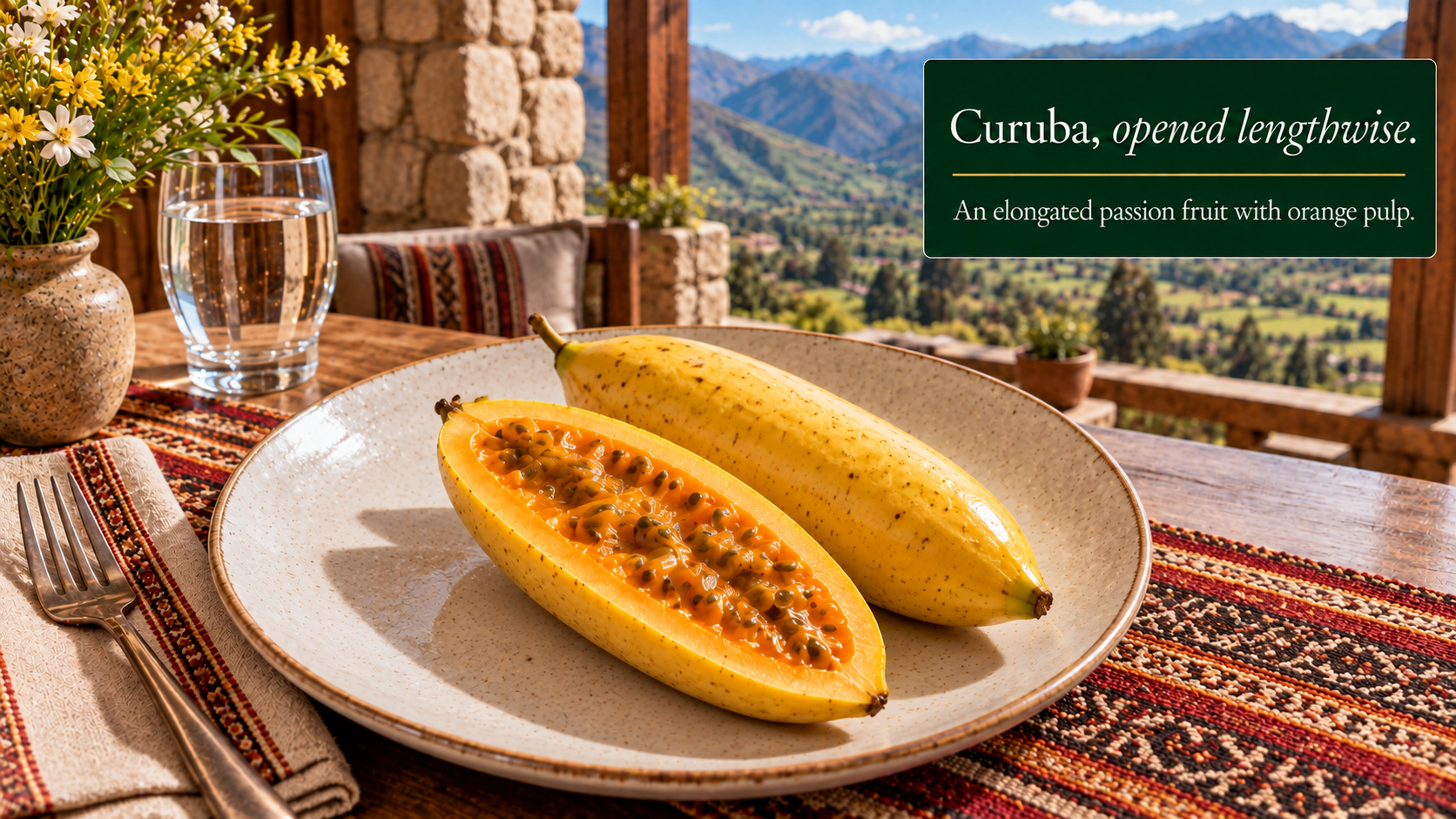
Curuba commonly refers to elongated banana-passionfruit forms within Passiflora. Older food references use Passiflora mollissima, while current sources also discuss P. tripartita var. mollissima and other related species. FAO documents the pulp as a fresh food and beverage ingredient. That supports a culinary discussion without pretending that the common name identifies every plant.
Buy a reliably identified edible curuba food fruit or a labeled culinary pulp. Keep the supplier's fruit name with the pulp during preparation. If the supplier uses another local name, ask how it corresponds to the food product. Do not extend instructions for a known edible passionfruit to an unidentified wild vine.
Naranjilla is lulo, not a small citrus fruit
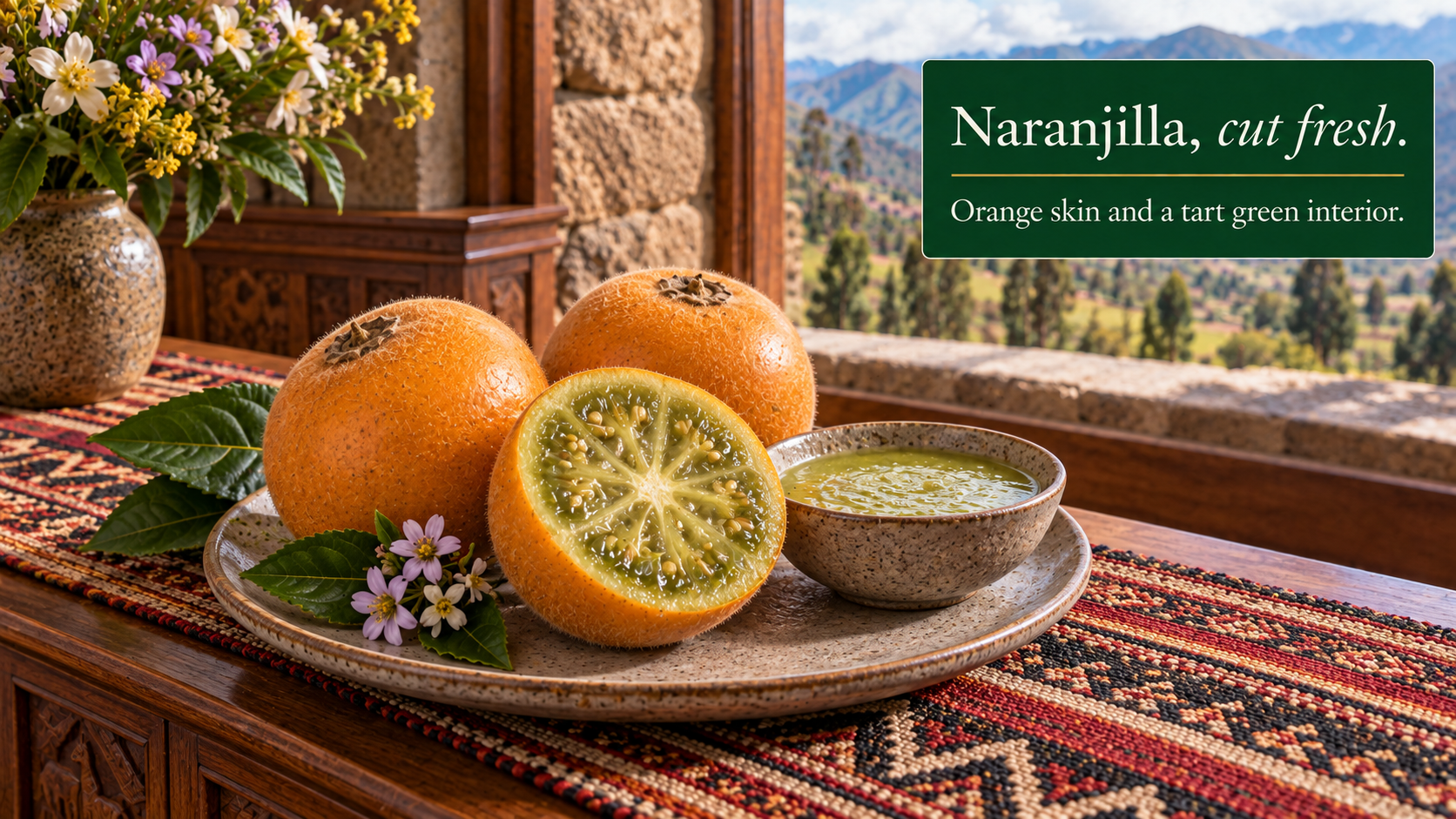
Naranjilla usually denotes Solanum quitoense, commonly called lulo in Colombia. Its orange exterior may suggest citrus to a visitor, yet its interior and botanical group are different. INIAP identifies naranjilla as S. quitoense and documents pulp processing. Keep that identity separate from curuba and from similarly named tropical fruits.
Use a food-supplier product rather than trying to identify a fruit solely from its orange color. A round fruit shown beside a cut curuba is a comparison, not proof that both came from the same property or harvest. When a frozen pulp is supplied, its label should state the actual fruit and any added ingredients.
Prepare the pulps in separate bowls
For curuba, open the sound ripe fruit and scoop the seed-bearing pulp from the shell. Press it gently through a sieve when a smooth accompaniment is desired. The aim is to recover the pulp without grinding shell or seeds into it. Keep a small opened sample aside if the guest wants to see the original food form.
For naranjilla, use a suitable ripe culinary fruit, remove any surface hairs during cleaning, and prepare the interior pulp with the skin excluded from this serving. Strain it separately. INIAP describes pulping through a sieve that retains peel and seeds. Do not mix the two fruits before tasting, since their different acidity and aroma would become harder to judge.
Taste with grain before treating pulp as sauce
A spoonful of concentrated tart pulp can taste much stronger alone than it does in a bite of food. Begin with a small amount and a little water if needed. Add a restrained pinch of salt and taste with cooked quinoa. The pulp should brighten the bite without making the diner pucker through every mouthful.
Keep the preparation unsweetened. If a particular fruit is too sharp, use less of it rather than automatically trying to make a sweet sauce. A few drops beside the meat may work better than a full spoonful over the grain. Leave the rest in a small dish so the guest can decide how much to use.
Build the duck plate around one pulp at a time
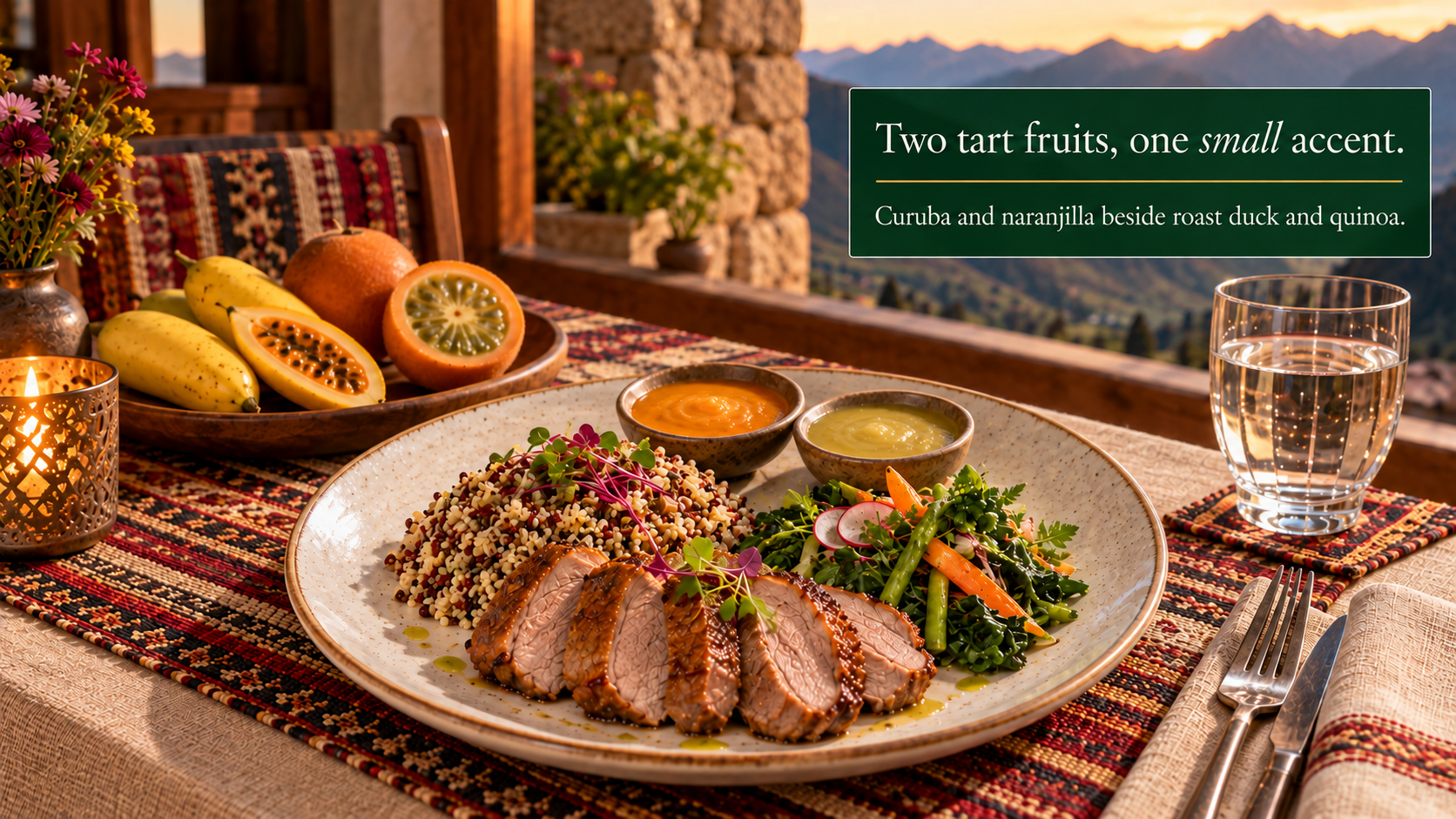
Serve roast duck, loose quinoa and tender greens or vegetables. Choose curuba or naranjilla as the small fruit accompaniment for the first trial. The article compares them, but the dinner does not need both. A simpler plate lets the kitchen assess what the selected fruit actually contributes.
Place the pulp beside the duck rather than coating every slice. Keep part of the quinoa plain, and avoid adding lemon automatically to the greens. The fruit may already provide sufficient acidity. Offer a small additional portion separately if the guest enjoys it. This is an editorial pairing suggestion, not a documented traditional recipe or an existing retreat menu.
Name a packaged product accurately
A labeled frozen culinary pulp can be a practical alternative when fresh fruit is unavailable. Follow its storage and thawing instructions and check for sweeteners or other ingredients. Plain fruit pulp is different from a prepared beverage base. The same fruit name on the front of a package does not make those products interchangeable.
Do not describe a thawed packaged pulp as freshly opened property fruit. It can still serve the proposed dish if its flavor and texture suit it. The useful information for a guest is what fruit is present, whether the accompaniment is unsweetened and how much is on the plate. Accurate plain language makes that easy to understand.
Choose one tart pulp for the duck meal
Ask the kitchen which identified pulp is available, then choose curuba or naranjilla for the first plate. Request a small unsweetened portion beside the duck and quinoa. A smooth strained pulp is easiest to distribute in a controlled amount; an opened fruit can be offered separately if the guest wants to understand the seed-bearing interior. The fruit should remain named throughout that choice.
Taste one combined bite before using more pulp. If it is too sharp, keep the remainder aside rather than making the whole plate sour. If it is mild, a little more may be welcome. A clearly labeled frozen culinary pulp can make a practical alternative to fresh fruit when handled according to its directions. Tell the guest what form is being served. The fruit's tartness and aroma provide enough interest without a complicated mixture.
The images are editorial illustrations of ingredients and serving ideas. They do not document a named restaurant, a current harvest or an included retreat meal. Preparation guidance is not a tested recipe.
Leave room for the Sacred Valley
A visit to Machu Picchu can leave time for a good meal and a quieter stay in the valley. Ask Florian about The SoulSearching Experience, his five-day Sacred Valley seminar for 8-15 participants. Discuss dates, venue and meal arrangements directly.
Questions readers ask
Should naranjilla taste like an orange?
Do not expect ordinary orange sweetness. Taste the identified tart pulp separately, then try a little with quinoa. Its name does not promise citrus flavor.
Can naranjilla and cocona be treated as interchangeable identities?
No. Ask for an identified food product. Similar relatives and common-name confusion do not settle which pulp is being served.
What should be confirmed before requesting curuba?
Ask whether the host has identified culinary fruit or labeled pulp available. This guide cannot establish stock or arrange a shipment.
How can curuba pulp be separated from its seeds?
Scoop the seed-bearing pulp into a sieve and press gently. Recover the pulp without grinding shell or seeds into the smooth accompaniment.
University of Hawaii: Fruit Description, Nutritive Value and Use
Should curuba shell go into the duck accompaniment?
No. This preparation uses scooped pulp or strained juice. Leave the shell out and keep it separate in any fruit study.
UF/IFAS Extension: Passion Fruit Postharvest Handling Practices
Can a labeled culinary pulp replace freshly opened curuba?
It can make a clearly described alternative. Check the fruit identity and added ingredients, then follow storage and thawing instructions.
Are juice, nectar and plain fruit pulp the same ingredient?
No. Check the label for dilution and added ingredients. Choose the actual product that matches a small unsweetened accompaniment.
How can the curuba accompaniment retain a fresh flavor?
Begin with a small freshly prepared pulp portion and avoid a prolonged reduction. Taste with duck and quinoa before adding other strong flavors.
UF/IFAS Extension: Passion Fruit Postharvest Handling Practices
Should every passionfruit pulp be expected to have the same flavor?
No. Choose the identified curuba product and taste it separately. A preference for another passionfruit variety does not predict the same balance of aroma and tartness.
University of Hawaii: Passion Fruit Postharvest Quality-Maintenance Guidelines · UF/IFAS Extension: The Passion Fruit in Florida
Can unused culinary pulp be kept after opening?
Follow the producer's directions and portion it cleanly for appropriate storage. Do not leave an opened bag standing through a long meal.
What part of naranjilla suits a smooth accompaniment?
Use prepared interior pulp, with skin and seeds retained by the sieve for this version. INIAP documents that pulping distinction.
Can tart passionfruit pulp accompany a savory dish?
Yes. For curuba, test a small unsweetened strained portion beside duck and quinoa. Keep the rest of the meal simply seasoned.
Does the quinoa need rinsing?
Follow the quinoa package, rinsing if it is not pre-rinsed. Taste the cooked grain plain before adding curuba or naranjilla, so you can judge the fruit's tartness separately from an unwanted bitter grain flavor.
How can the tiny quinoa seeds be rinsed without losing them?
Use a fine-mesh strainer for the raw quinoa. Straining curuba or naranjilla pulp is a separate step after opening the fruit; its purpose here is a smooth accompaniment. Keep that pulp out of the grain's cooking liquid.
How can the quinoa stay separate on this plate?
Cook the quinoa by its product directions and let absorbed liquid settle before fluffing. Put the selected strained pulp beside the duck, with some quinoa left plain. A watery fruit mixture poured through the grain defeats the separate-grain serving.
Can the cooked quinoa be kept for another meal?
Refrigerate the cooked quinoa promptly in a shallow covered container. Store the identified curuba or naranjilla pulp separately according to its own handling directions. For the next meal, taste the pulp again before deciding how much to serve.
Oregon State University Food Hero: Stovetop Quinoa · University of Minnesota Extension: Safe Food Temperatures, Heating and Cooling
Can quinoa be prepared and frozen separately?
Freeze a properly handled plain quinoa portion separately if preparing ahead. Keep packaged curuba or naranjilla pulp under its own label instructions. Assemble the meal after preparation, so the two ingredients retain clear identities and the pulp amount remains adjustable.
How should this quinoa be seasoned?
Season the quinoa lightly, then try a little of one selected pulp with the grain and duck. Curuba and naranjilla are alternatives in this plate. Leave extra lemon aside until you know whether the fruit already provides enough acidity.
Does quinoa have to become a cold salad?
It can be served warm with roast duck and tender vegetables. Offer either curuba or naranjilla as a small strained side accompaniment. Choosing one pulp first makes its flavor easier to assess than mixing both into a cold grain salad.
Can fresh fruit sit beside warm grain?
Here the fresh component is strained pulp, so offer it in a small dish beside the warm quinoa. The guest can add a little to a forkful. Avoid pouring the entire tart portion over hot grain before it is tasted.