Give a colorful chard stem a head start, then add the leaves. These sides build on the existing Fordhook chard guide, choosing Rainbow Mix for duck, Pink Lipstick for alpaca, and Ruby Red for cuy.
Vegetables at the Andean table
Rainbow and Pink Chard with Duck, Alpaca and Cuy
Serve Rainbow Mix chard with duck and quinoa, Pink Lipstick with alpaca and quinoa, and Ruby Red with cuy and potatoes. Give the stems a head start before adding the leaves, then drain the vegetable before plating. These proposed sides use the different stalk colors deliberately while keeping catalog descriptions separate from claims about a finished meal.
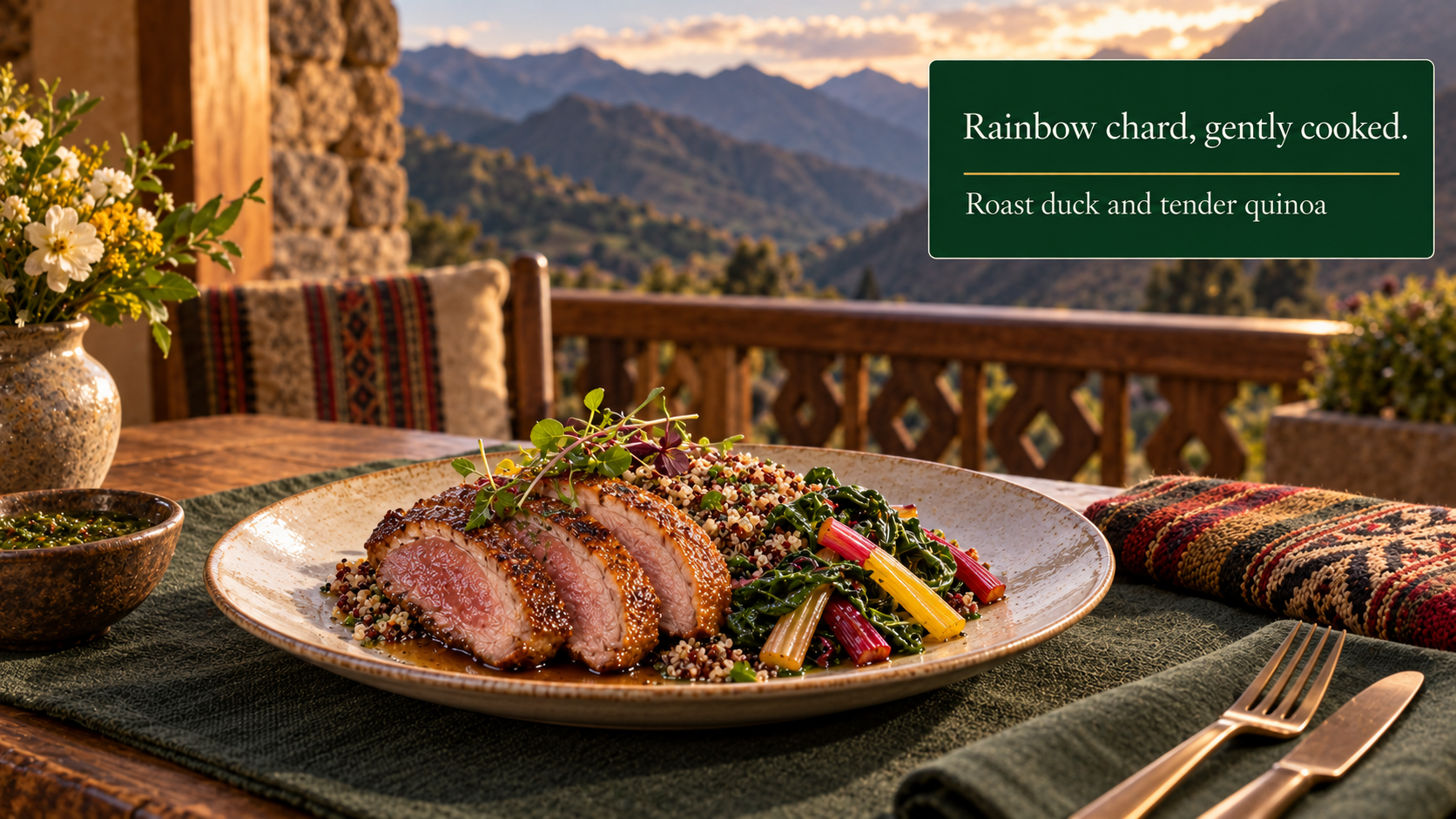
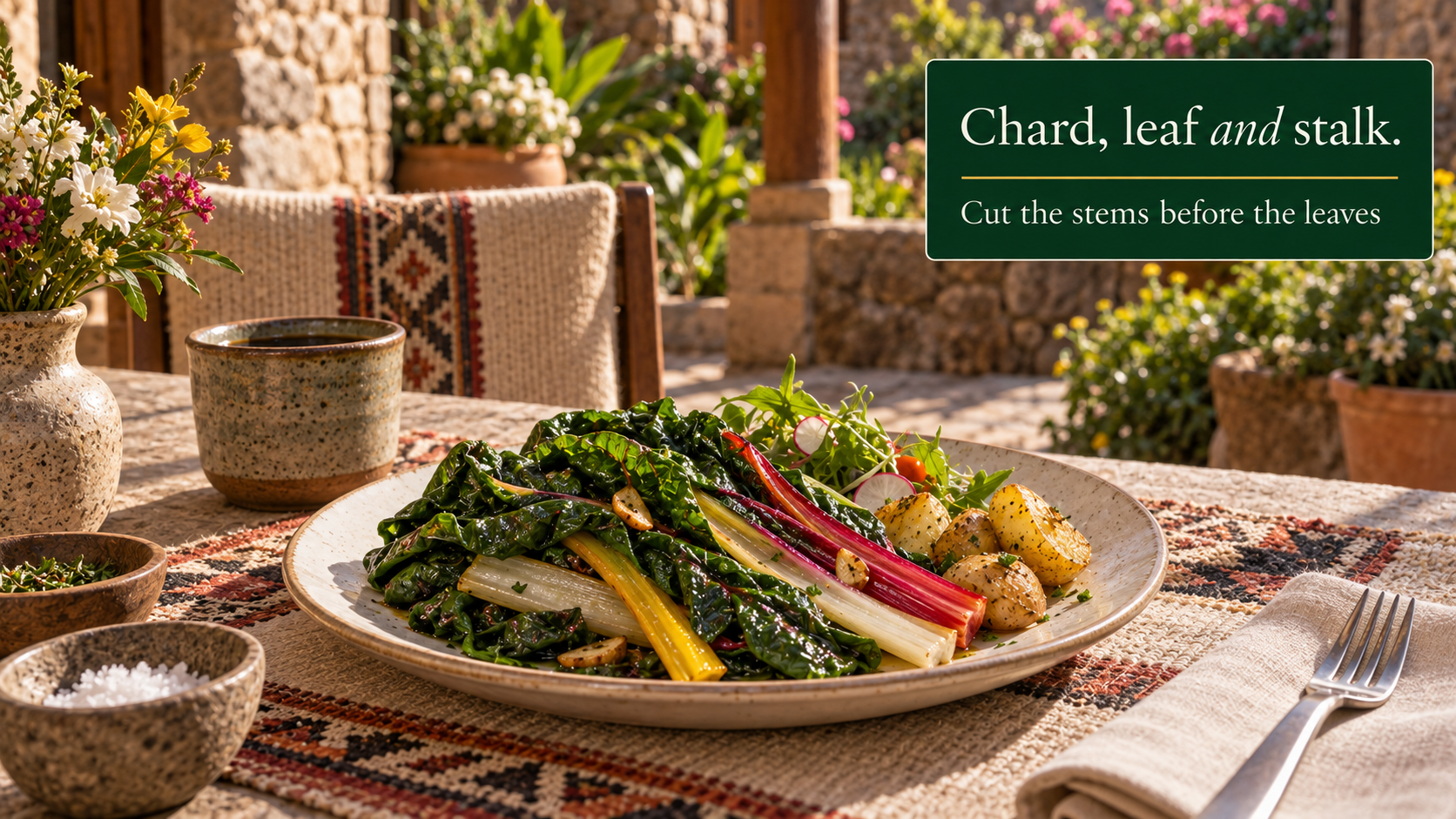
Rainbow chard with duck and quinoa
Cook sliced stalks first, add leaf ribbons later, and drain before plating.
The blend supplies several stalk colors and two complementary cooked textures.
Variety reference: Eden Brothers: Rainbow Mix. Heirloom blend; open pollinated.
Pink-stem chard with alpaca and quinoa
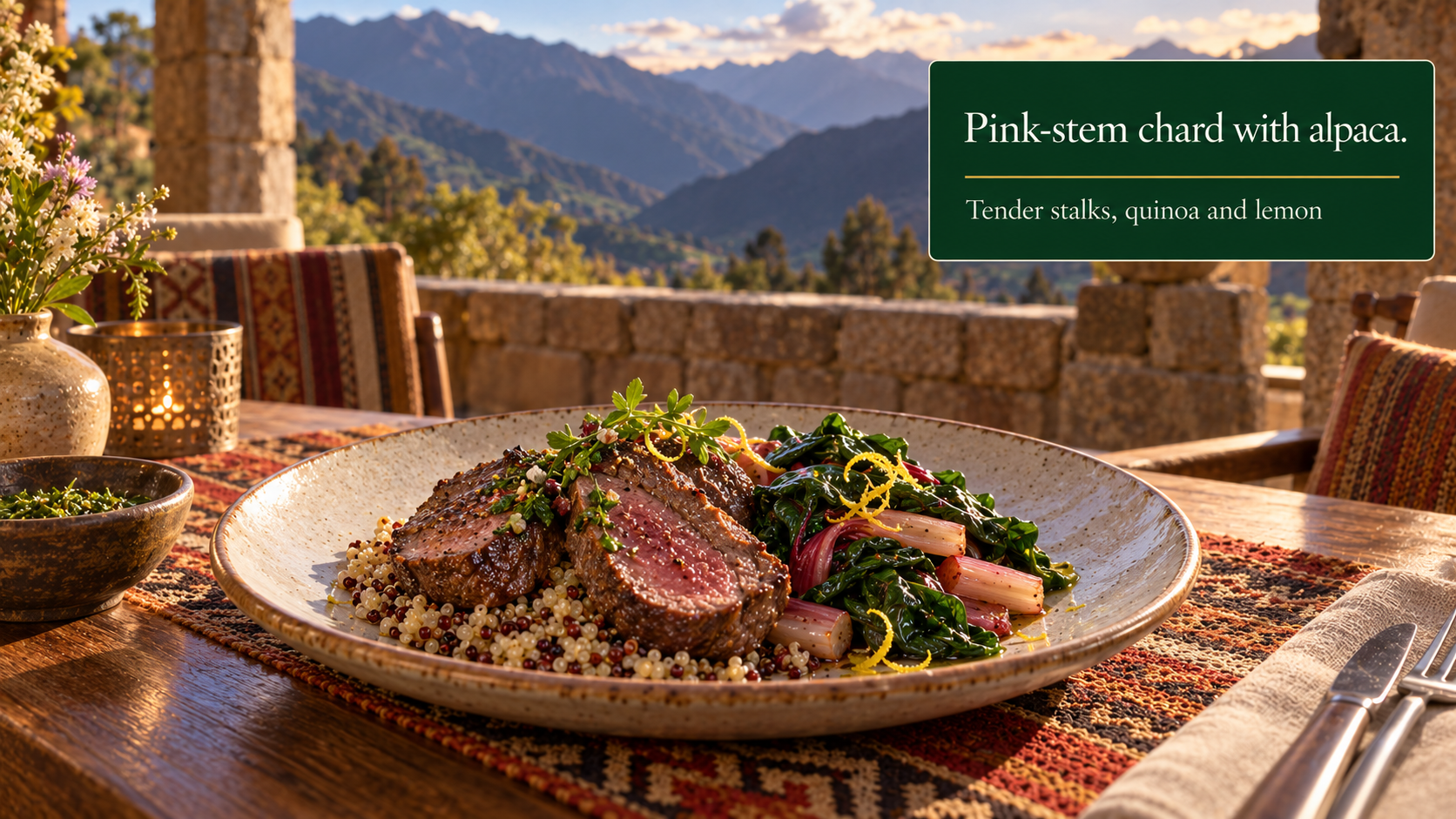
Steam or shallow-braise, keeping some stalk pieces visible.
Pink stems contrast with green leaves; Eden's cooked-color claim still requires observation in the chosen method.
Variety reference: Eden Brothers: Pink Lipstick. Open pollinated; heirloom not stated.
Red-stem chard with cuy and potatoes
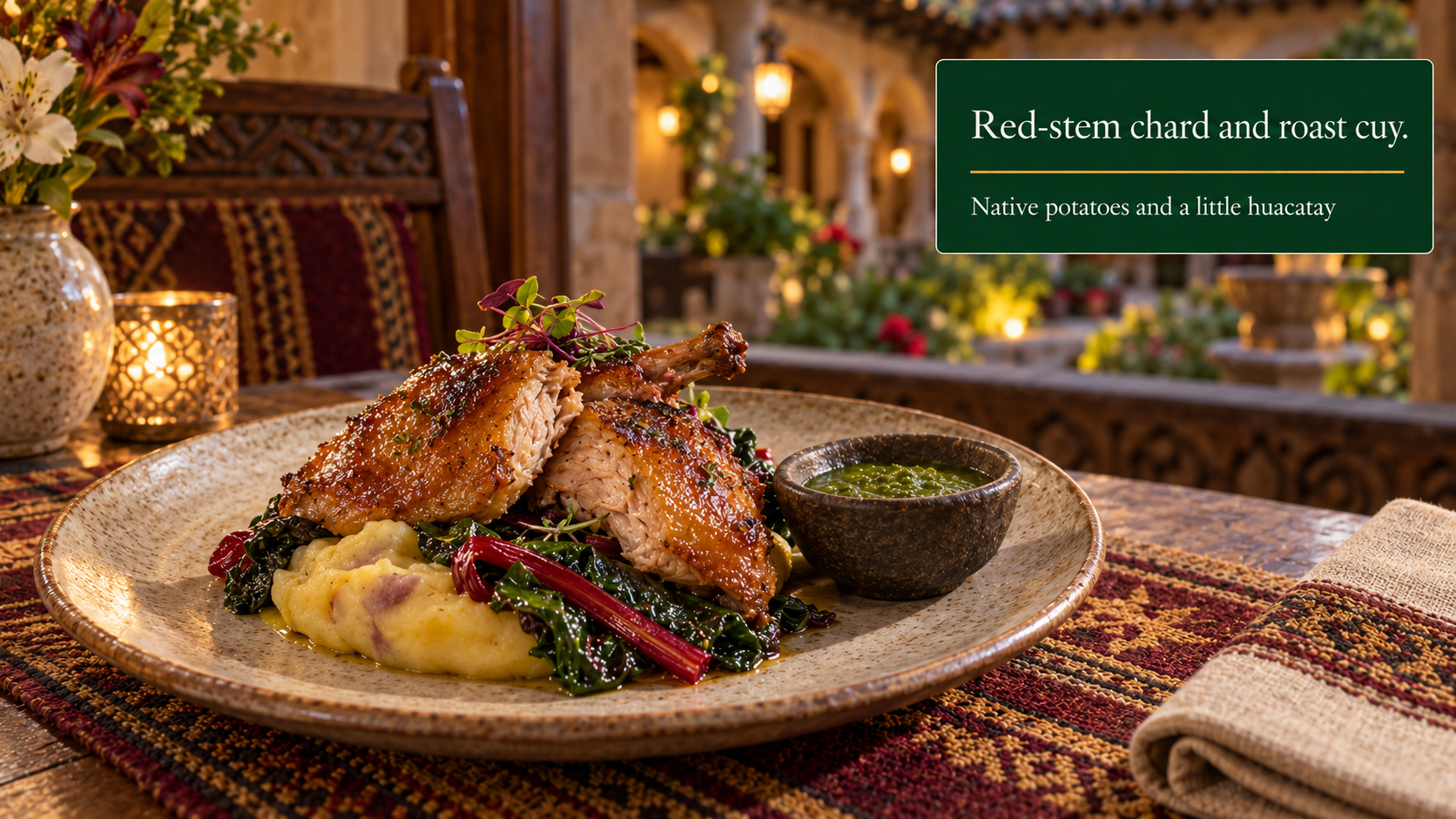
Braise stems and leaves in stages with garlic, then drain.
Red veins and stalks give a distinct appearance; organic seed classification does not certify dinner.
Variety reference: Eden Brothers: Ruby Red. Heirloom; open pollinated; organic seed listing.
Rainbow Mix with duck and quinoa
Separate the stalks from the leaves of the washed chard. Cut the stems into short pieces of similar thickness, and slice the leaves into broad ribbons. Start the stems in a shallow pan with a little water or unsalted broth. Add the leaves when the stems are approaching the tenderness you want, then cook just until the leaves are ready.
Drain and serve beside cooked duck and quinoa. Eden's Rainbow Mix includes orange, yellow, pink, white, and red stalks. It is one blend, not five separately verified cultivars.
Pink Lipstick with alpaca and quinoa
Pink Lipstick's deep-green leaves and pink stems make a clear two-part vegetable. Keep some stem pieces visible rather than chopping everything into flecks. A gentle steam or shallow braise is a useful starting point. Check a stem with a fork, because its thickness matters more than a universal cooking time.
Serve with cooked alpaca and quinoa, offering lemon separately. Eden says Pink Lipstick holds color when cooked. Observe the actual shade before describing or illustrating the finished dish.
Ruby Red with cuy and potatoes
Ruby Red offers green leaves marked by red stems and veins. Cut the stems a little smaller when you want them to cook alongside a quickly finished plate. Use garlic to scent the braising liquid, then drain the vegetable so the cuy's own juices remain distinct. A small spoonful of potatoes can sit between the two components.
Taste before seasoning. An earthy flavor can suit the savory main. Offer lemon with a modest portion if a guest prefers a brighter accompaniment.
Treat the leaf and stem as different cuts
They usually need more attention than the thin leaf blade, so separating them gives the cook control. Thick stems can be cut across into smaller pieces. Tender leaves need much less cooking. Add them later instead of letting them collapse while the stalk remains firm.
Wash where the leaf meets the stalk, removing damaged areas and tough ends. Cut a stringy stem smaller or cook it longer before serving.
A vegetable portion that belongs on the plate
Chard loses volume as it cooks, so assess the finished amount before portioning. Drain it well and add a little sacha inchi oil off the heat if desired. Rainbow Mix is a blend. Pink Lipstick is open-pollinated without a verified heirloom claim here. Ruby Red's organic label belongs to the seed SKU.
These dishes are serving ideas. Images illustrate the ingredients and preparations; they do not document a restaurant menu, a tested recipe or a current property harvest. The exact Eden Brothers catalog varieties remain research candidates.
Give the Sacred Valley a little more time
A trip built around Machu Picchu can also leave room for a good meal and a less hurried stay. Ask Florian about The SoulSearching Experience, his five-day Sacred Valley seminar for 8-15 participants. Discuss dates, venue and meal arrangements directly as you plan.
Questions readers ask
Should I keep the colored chard stems?
Yes. Chard leaves and stalks are edible. Cut the stems into manageable pieces and cook them before the leaves when they are thicker. That preserves their useful role in these plates.
Why give the stems a head start?
Older stems take longer to soften than the leaf blades. Starting them first gives you tender stalks without reducing the leaves to a wet mass. Add leaves when the stems are nearly ready.
What helps when a stem feels stringy?
Trim a dry end and cut across the stem into smaller pieces. Check the cooked texture before plating. The goal is a pleasant bite, not preserving a long stalk at any cost.
Could I serve the stems raw instead?
Young tender chard can be eaten raw, but these dishes deliberately use cooked stems. Taste and assess the actual stalk before changing the preparation; mature pieces can be much firmer.
Are young chard leaves a possible salad ingredient?
Young tender leaves can be used raw after washing. The larger leaves in these proposed plates are cooked for a softer side. That is a texture choice rather than a rule requiring every leaf to be cooked.
What should I do with extra chard intended for later cooking?
Use a reliable blanching and freezing method, including its cooling instructions. Portion for the dishes you expect to cook. Frozen chard belongs in cooked preparations rather than a fresh raw salad.
Should I assume each stalk color has a distinct flavor?
Do not assign a fixed taste to every color. Taste the actual cooked batch. The catalog establishes the appearance of Rainbow Mix, Pink Lipstick, and Ruby Red, while harvest condition and preparation still matter.
How can I introduce chard to someone unsure about its flavor?
Serve a modest, properly cooked portion alongside a familiar main, with lemon offered separately. Let the guest try the stems and leaves. There is no need to conceal it under sugar or insist they enjoy it.
Can I use chard when a cooked side calls for spinach?
Chard can substitute for spinach, but account for the stems and the actual leaf texture. Cook thicker stalks separately or earlier. Do not copy a spinach cooking time without checking tenderness.
How should I hold fresh chard before cooking?
Keep it refrigerated and unwashed until you are ready to prepare it. Wash the leaves and stems then, removing damaged portions. Buy or harvest the amount you can use while the texture remains good.
What should make me reject a bunch of chard?
Discard rotten or moldy portions and reject a bunch with widespread decay. A colorfully named variety does not explain away sliminess or an unpleasant smell. Do not use cooking to rescue rotten produce.
Does a red stalk establish that the plant is chard?
No. Chard and rhubarb are different plants, despite similar-looking stalks in some varieties. Use a known, correctly identified food ingredient. A bright stalk in a garden photograph is insufficient identification.
Can I plan portions by counting bunches alone?
Bunches vary. Prepare a trial amount, assess the cooked yield, and portion for the rest of the meal. Leaves shrink during cooking, so an impressive raw bundle is not a dependable serving measure.
Can extra chard become a light soup instead of another side?
Yes. Use sliced stalks earlier in the broth and add leaf ribbons later. Check the textures before serving. This changes the presentation without requiring a heavy sauce or a fried component.
What cut suits the leaves in these dinner plates?
Lay washed leaves together and cut manageable broad ribbons. Keep the stem pieces separate for their earlier cooking step. Very long strips can be awkward to lift neatly with a fork.
Can I cut the chard stems smaller for a quicker side?
Smaller pieces are a useful way to manage thicker stalks. Keep the cut reasonably even and check tenderness before adding the leaves. Avoid treating one fixed cooking time as suitable for every bunch.
Can cooked chard be reheated for another meal?
Handle it as a perishable leftover: cool and refrigerate promptly, then reheat thoroughly. Prepare a fresh batch when the stem texture is central to the plate rather than repeatedly warming the same portion.
Is Rainbow Mix one cultivar with every stalk color?
The Eden entry is a seed blend and should be counted that way. Pink Lipstick and Ruby Red are separate named catalog entries. Do not count each Rainbow Mix color as another cultivar.
Can I promise that the cooked stalks will match their raw colors?
No exact shade is promised. Eden specifically says Pink Lipstick holds color when cooked, but observe the chosen preparation. Keep stems visible and describe the finished result rather than copying a raw catalog image.
Could large chard leaves become a different presentation?
A briefly softened, intact leaf can hold a small cooked vegetable-and-grain filling. Treat that as a separate dish concept and keep the filling modest, rather than forcing a tough raw leaf into a roll.
Continue at the table
- Fordhook Chard: Tender Stems and Leaves with Baked high-altitude Andean trout: the original ingredient guide.
- Culinary Herbs with high-altitude Andean trout: Burnet, Cress, Lovage, and Lemongrass
- Quinoa in Peru: breakfasts, soups and savory plates
- Alpaca meat at the Andean table
- All the new vegetable dishes