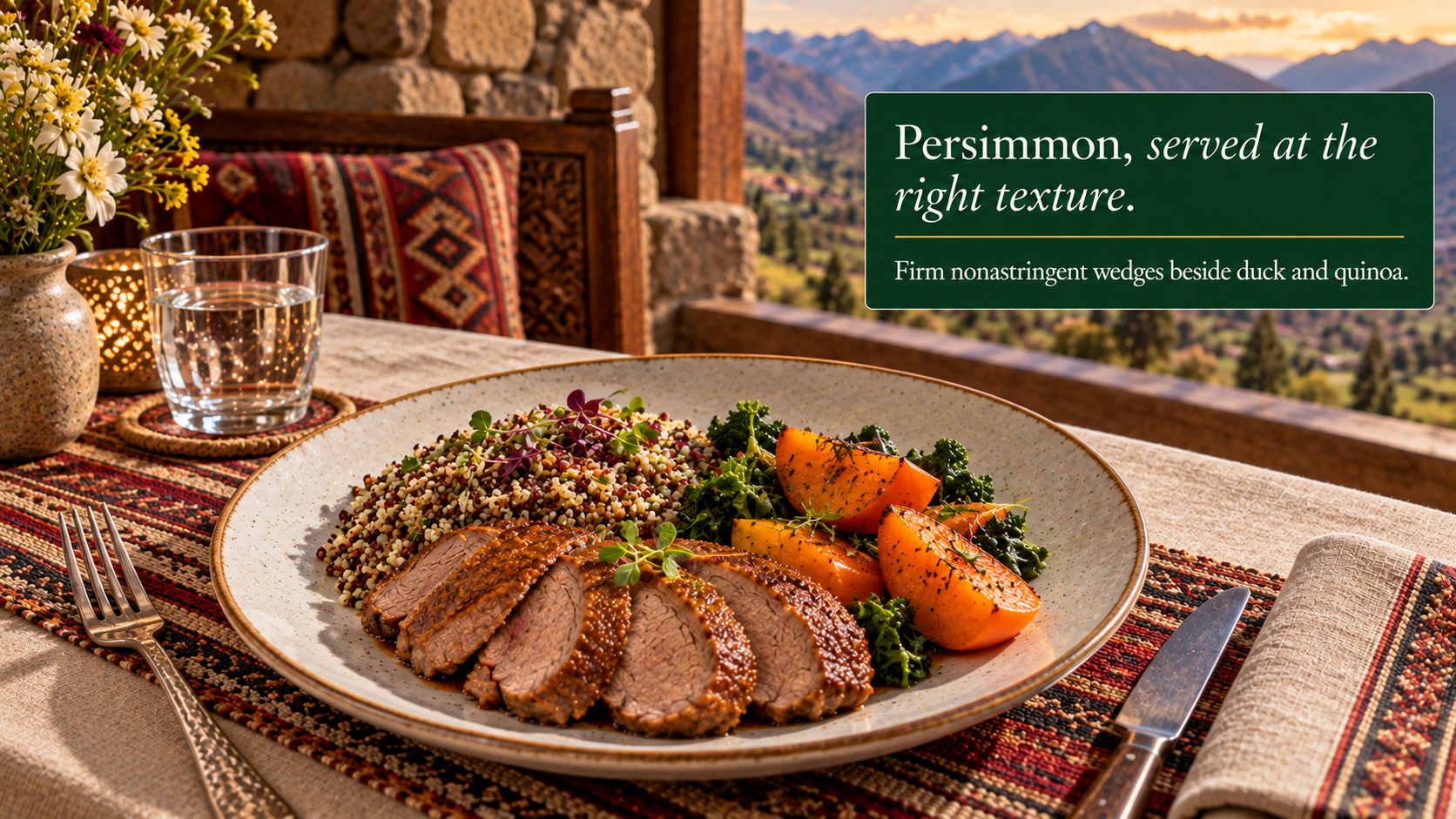
Persimmon is a useful example of why ripe does not always mean soft. A nonastringent fruit can make clean, firm wedges for roast duck and quinoa. An astringent fruit belongs to a different texture decision, usually with fully soft flesh for spooning. Treating the two as one ingredient risks an unpleasant mouth-drying bite and an untidy plate. For the protein, see the separate duck preparation guide.
Persimmon Texture: Firm Wedges or Fully Soft Flesh
Use a confirmed nonastringent persimmon for firm savory wedges. Astringent fruit must reach its suitable fully soft eating stage and cannot simply replace those wedges.
Know the food form before choosing the cut
UF/IFAS distinguishes astringent and nonastringent Japanese persimmons and describes nonastringent fruit as suitable for eating with a crisp texture. Fuyu is a familiar example, while Hachiya is commonly sold as an astringent type. These names help a purchase, but a vague common-name label or orange exterior is not enough to prove what is in the kitchen.
Ask the supplier whether the fruit is suitable for firm fresh eating. If that cannot be established, do not build a plate around crisp wedges. Set the unknown fruit aside until its identity and proper eating stage are clear. A guest should not have to discover the distinction by taking an unpleasant bite at the dinner table.
Prepare nonastringent wedges for duck
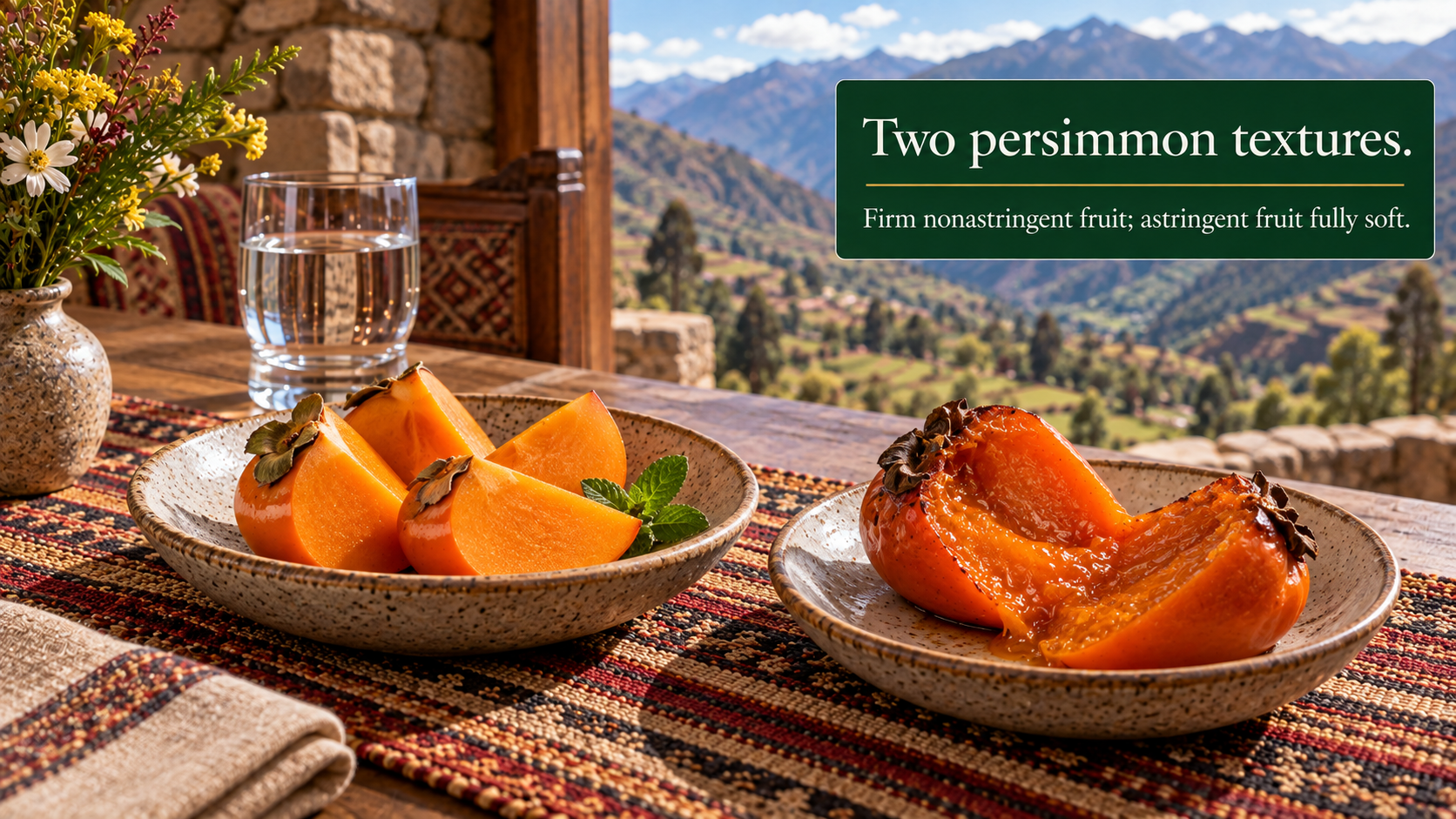
Choose sound fruit with pleasant flavor and a texture that cuts cleanly. Wash it, remove the leafy calyx and inspect for seeds while cutting. Make broad thin wedges that can sit beside the meat without rolling or breaking. Peel if the skin is tough or distracting, though a pleasant tender skin can remain.
Taste a wedge on its own and then with a little quinoa. It should offer a fresh, firm sweetness rather than a sticky coating. There is no need to cook it merely because it accompanies hot duck. Keeping the fruit fresh preserves the texture difference that makes this particular serving distinctive.
Keep astringent fruit as a separate study
An astringent persimmon may be vividly colored while still unsuitable for the intended fresh bite. Its firm appearance does not make it equivalent to a firm nonastringent fruit. Allow the identified fruit to reach its appropriate fully soft stage, then present a small spoonful of sound flesh separately. Remove seeds and any unpleasant skin before serving.
Do not try to cut that soft flesh into the same wedges shown for a Fuyu-type serving. It may be delicious, but it will behave differently on the plate. This distinction also keeps the description honest: fully soft astringent persimmon is an alternative fruit experience, not proof that any persimmon can be used firm in the duck salad.
Build a warm dinner around the firm fruit
For the main proposal, place roast duck beside cooked quinoa and tender vegetables or greens. Add a few firm nonastringent persimmon wedges at service. Keep the fruit away from a deep pool of hot roasting juices. A guest can then combine a fresh wedge with a bite of duck while the next mouthful remains entirely savory.
Use only enough fruit to create that option. A large heap of persimmon can overshadow the grain and meat even without added sweetness. The proportion should be decided by tasting the actual fruit, which may range from mild to very sweet. Offer another small portion separately when requested rather than making every plate equally fruit-heavy.
Season for the fruit already present
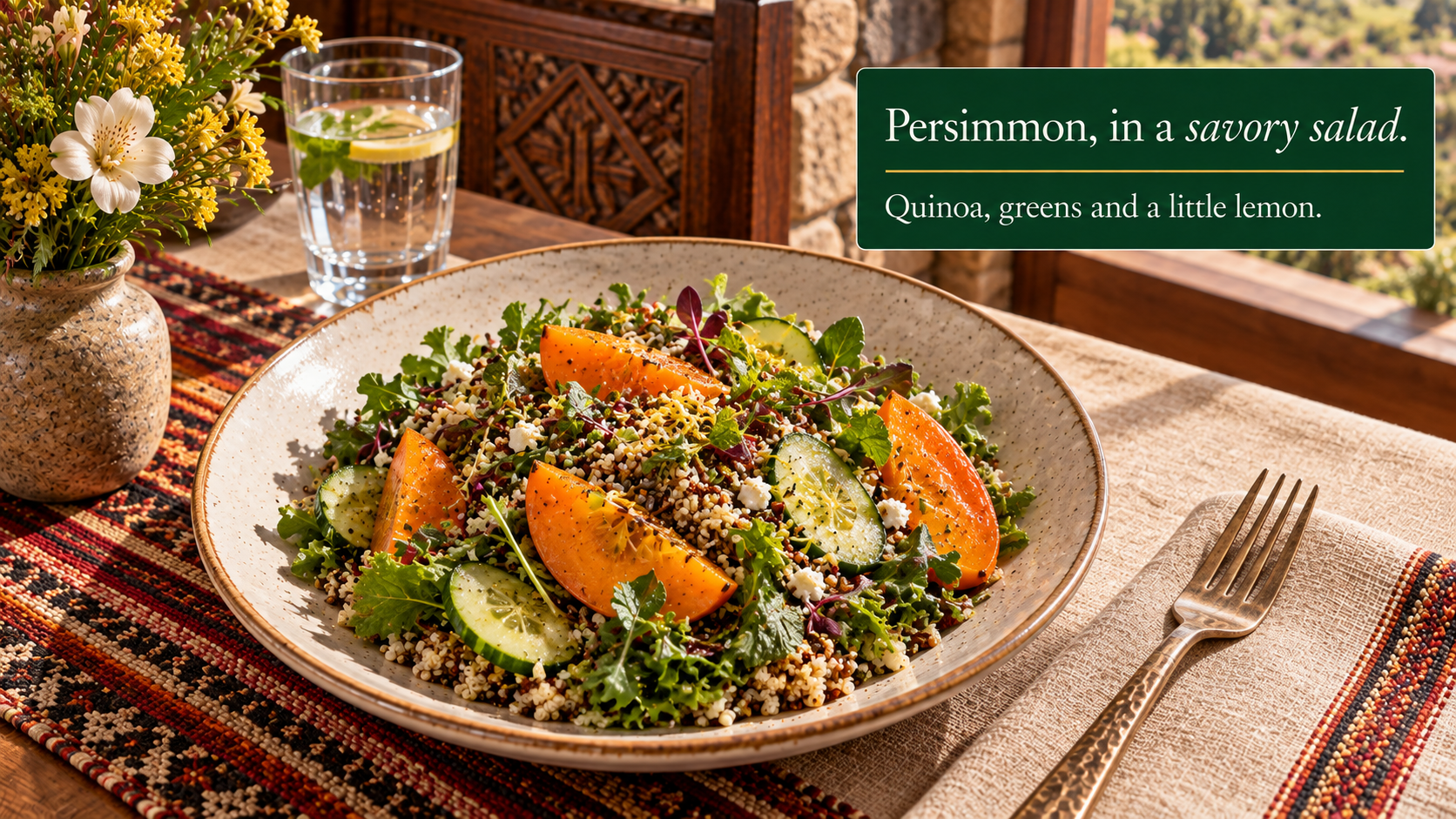
Start with lightly seasoned quinoa and greens. If the persimmon is especially sweet, a little lemon on the greens may bring balance. Add it to the greens first rather than soaking all the fruit. If the fruit is gentle and the duck has lively savory juices, extra acid may be unnecessary.
A few chopped herbs can connect the grain to the vegetables. Avoid assembling several different fruit sauces around the persimmon. The plate's interest is a firm fresh wedge beside warm duck, not a demonstration of how many sweet ingredients can accompany meat. Keep dressings separate during the first kitchen trial so the strongest element can be reduced easily.
Offer a straightforward guest choice
A menu can say roast duck with quinoa, greens and firm nonastringent persimmon. If that vocabulary feels technical, a brief explanation at service is enough: this is the kind intended for eating while firm. The explanation belongs near the actual fruit, where it answers a practical question. It does not need to become a botanical lecture.
Guests who prefer the meat without fruit can have the wedges in a side dish. Those curious about the soft form can try a separate spoonful when suitable fruit is available. Do not quietly combine both textures in one salad and leave the diner to guess why some pieces are crisp and others are fluid.
Name the texture when requesting the meal
Ask for firm nonastringent persimmon if you want fresh wedges beside the duck. Ask for fully soft flesh if you are curious about an identified astringent fruit at its suitable eating stage. Those are two clear requests. The kitchen can then decide whether today's fruit matches the intended texture before preparing the rest of the plate. A vague request for ripe persimmon leaves too much room for misunderstanding.
For the firm version, choose wedges thin enough to share a bite with quinoa but broad enough to remain recognizable. For the soft version, use a small spoon and a separate dish. A guest who enjoys both can compare them without having the textures blurred together. If only one suitable form is available, serve that one well. Learning which texture you like is more useful than collecting several variety names during dinner.
The images are editorial illustrations of ingredients and serving ideas. They do not document a named restaurant, a current harvest or an included retreat meal. Preparation guidance is not a tested recipe.
Leave room for the Sacred Valley
A visit to Machu Picchu can leave time for a good meal and a quieter stay in the valley. Ask Florian about The SoulSearching Experience, his five-day Sacred Valley seminar for 8-15 participants. Discuss dates, venue and meal arrangements directly.
Questions readers ask
How can the kitchen identify a firm-eating persimmon?
Ask for the variety and whether it is nonastringent. Orange color and a neat shape do not establish that it is suitable for firm wedges.
Can cooking rescue an unsuitable firm astringent fruit?
Do not rely on it. Use a confirmed nonastringent fruit for wedges, or a known astringent fruit at its appropriate fully soft eating stage.
Will frozen pulp replace crisp persimmon wedges?
No. It makes a softer food form after thawing. Keep the crisp-wedge proposal separate from a spoonable pulp serving.
Can the skin remain on the firm wedges?
A pleasant tender skin can remain after washing. Peel when its texture distracts, and remove the calyx and any seeds before serving.
Are persimmons always seedless?
No. Check while slicing or scooping and remove any seeds. A familiar variety name is not a promise that every fruit lacks them.
Does a firm persimmon always need more time?
It depends on the identified type. A mature nonastringent fruit can be eaten firm; an ordinary astringent fruit needs its suitable fully soft stage.
Can a mature astringent persimmon finish softening after harvest?
Yes, suitable mature fruit can soften after harvest. Keep its identity known and inspect its condition; waiting does not make spoiled fruit acceptable.
Can a description of dark spots establish that the fruit is sound?
No. The kitchen should inspect the actual fruit. Do not diagnose freshness from a short description or assume every dark patch has one cause.
Should a moldy soft persimmon be trimmed for the guest?
Leave visibly moldy or rotten soft fruit out of the serving. Choose sound fruit rather than trying to salvage an uncertain soft accompaniment.
Should the persimmon be washed before cutting?
Yes. Handle gently under running water, then prepare it on a clean surface. A peel that will be removed still does not justify skipping cleaning.
Does the persimmon need a sauce before joining dinner?
No. A few plain firm nonastringent wedges can sit beside duck, quinoa and greens. Their fresh texture is the reason for the pairing.
Can a photograph settle a property persimmon cultivar?
No. Ask for a trustworthy plant or supplier record. The firm-wedge serving illustrates a food form, not a verified property cultivar.
Does the quinoa need rinsing?
Rinse quinoa when required by its package. That grain preparation cannot correct an unsuitable persimmon: use a confirmed nonastringent fruit for firm wedges, or a known astringent fruit at its appropriate fully soft eating stage.
How can the tiny quinoa seeds be rinsed without losing them?
A fine-mesh strainer keeps the tiny quinoa seeds in place during rinsing. Prepare the persimmon separately after washing it, removing the calyx and any seeds. Keep firm nonastringent wedges distinct from a spoonable fully soft serving.
How can the quinoa stay separate on this plate?
Let the cooked quinoa settle and fluff gently before plating. Add firm nonastringent persimmon wedges alongside the duck, with the roasting juices kept away. If serving fully soft flesh instead, use a small separate dish rather than folding it through the grain.
Can the cooked quinoa be kept for another meal?
Refrigerate cooked quinoa promptly in a shallow covered container. Keep the persimmon separate and check its identity, condition and appropriate eating texture for the next meal. Safe grain storage does not turn an unsuitable firm astringent fruit into edible wedges.
Oregon State University Food Hero: Stovetop Quinoa · University of Minnesota Extension: Safe Food Temperatures, Heating and Cooling
Can quinoa be prepared and frozen separately?
Freeze the properly handled plain quinoa separately. Choose persimmon for the intended texture when serving later. Thawed soft pulp is an alternative food form; it should not be described as the crisp nonastringent wedges proposed beside duck.
How should this quinoa be seasoned?
Season the quinoa and greens lightly, then taste with the persimmon and duck. A little lemon on the greens can be considered if the fruit is very sweet. Keep the wedges plain enough that their firm texture remains the main contrast.
Does quinoa have to become a cold salad?
Warm quinoa with roast duck is the main proposal here. Add firm nonastringent persimmon wedges at service, or offer appropriately soft flesh separately. The fruit texture can stay clear without turning the entire plate into a cold salad.
Can fresh fruit sit beside warm grain?
Place firm nonastringent wedges beside the warm quinoa near service, away from deep hot roasting juices. If the identified fruit belongs to the fully soft eating form, offer a small spoonful separately so the two textures remain understandable.