Home › Sacred Valley & Beyond › Cañihua and Cañihuaco: Choose the Grain or Toasted Flour
Cañihua and Cañihuaco: Choose the Grain or Toasted Flour
The short answer
Cañihua is a small Andean grain, while cañihuaco is flour traditionally made by lightly roasting and grinding it. Choose the form before choosing a dish: whole grain, flour and drink mixes behave differently. Savory soups and stews are documented, but a specific current Sacred Valley restaurant offering was not verified in the menu set checked for this guide.

On this page
- What is cañihua, and why does its form matter?
- How is cañihuaco different from whole cañihua?
- What would you ask for at breakfast or lunch?
- Can you enjoy cañihua without a sweet preparation?
- Is it grown in Cusco or in the Sacred Valley?
- What can you reasonably say about its nutrition?
- Does an Andean grain label establish a gluten-free meal?
- How should you buy and prepare it for home use?
- How can this ingredient fit a slower Valley stay?
- Sources
- Continue exploring the table
- Frequently asked questions
The first question to ask about cañihua is what form you are being offered. A cooked grain accompaniment, a toasted flour and a sweetened breakfast mix can all carry the same crop name while making quite different meals. This guide helps you recognize that difference and ask for the savory or unsweetened preparation you want. It also separates a documented highland crop in the wider Cusco region from an assumed farm beside a Valley hotel. You can enjoy the ingredient without inventing its source or turning traditional food writing into a medical promise.
What is cañihua, and why does its form matter?
Cañihua is a small Andean grain from the plant Chenopodium pallidicaule. You may also see canihua, kañiwa or kaniwa. The spelling on a menu is less useful than knowing whether the kitchen is serving whole grain, toasted flour or a prepared mixture.
That distinction gives you a sensible starting point. A bowl of cooked grain offers a different texture from a drink made with flour. An ingredient sprinkled into a dish may be a garnish rather than its main substance. Ask the server to describe what you will receive instead of expecting every cañihua preparation to resemble quinoa.
FAO's crop background describes grain, flour, drinks, porridge, soups and stews among its uses. Those categories establish culinary possibilities, not a promise that a particular Sacred Valley kitchen offers them today. FAO Ecocrop
How is cañihuaco different from whole cañihua?
Cañihuaco is flour made from lightly roasted, ground cañihua grain in the traditional preparation described by FAO. It is not simply another spelling for the intact seed. That processing difference is central to choosing a meal or buying an ingredient.
Whole grain remains recognizable as grain after cooking. Flour disperses into a preparation and can influence its thickness and flavor. A packet of flour therefore cannot automatically replace whole grain in the same quantity or cooking method. A premixed beverage powder adds another layer: it may contain ingredients beyond cañihua.
FAO's historical chapter documents cañihuaco consumed on its own, in hot or cold drinks and in porridges, as well as other uses of the grain and flour. It also describes bakery mixtures with wheat. FAO, Neglected Crops
For the neighboring ingredients, our quinoa guide and kiwicha guide explain their own food forms. Names from the same Andean grain family of foods do not make the finished dishes interchangeable.
What would you ask for at breakfast or lunch?
Ask for the actual form first, then decide whether the preparation fits the meal you want. “Do you have cooked cañihua or cañihuaco?” gives the kitchen more information than asking for a superfood dish.
| Form described | What to clarify | A practical use to discuss |
|---|---|---|
| Whole grain | Whether it is cooked and how it is seasoned | A warm accompaniment or addition to a savory dish |
| Cañihuaco | Whether the flour is toasted and how it is incorporated | A prepared warm bowl or beverage |
| Flour mixture | Every grain and other ingredient in the mixture | A bakery item or kitchen preparation |
| Ready-made drink | Sugar, milk, flavoring and serving size | A breakfast drink if it suits your preferences |
These are discussion prompts, not newly discovered restaurant offerings. The public menu set checked for this guide did not establish a current savory cañihua dish at a named Valley venue. That gap matters: it is better to ask a kitchen what it actually has than to arrive expecting a dish inferred from a crop description.

Can you enjoy cañihua without a sweet preparation?
Yes, savory uses such as soups and stews are documented in FAO's food background. A sweet pudding or bakery product is not the only way to encounter it. What you can order locally still depends on the kitchen.
Tell the host that you prefer a savory dish or an unsweetened preparation. If a drink uses cañihuaco, ask whether sugar, honey, chocolate or other ingredients are already blended into the base. “No sugar added at the table” does not answer whether the mixture was sweetened earlier.
You can make the same inquiry about milk. A plain grain ingredient does not tell you whether the final bowl contains dairy. If the available preparation does not suit you, choose another grain dish rather than treating a specific ingredient as essential to a successful food experience.
Is it grown in Cusco or in the Sacred Valley?
Cultivation in the wider Cusco region is documented. A primary agronomic study published in August 2026 examined three local cañihua ecotypes at Huarcapata, Espinar, during the 2024-2025 agricultural season. The research site was at 4,045 meters. INIA-hosted primary study
That is a specific highland location. It does not establish that the grain on a Valley restaurant's table came from Espinar, or that it grew beside the hotel. Cusco is a large region with different farming environments. A restaurant's regional description and a crop's growing location require separate checks.
Ask where the kitchen or seller obtains its grain. If the answer is a named community or producer, keep that attribution attached to the ingredient. If the answer is simply Peru or Cusco, appreciate the food without adding a smaller place name. Our local fruit and vegetable guide takes the same approach to nearby-grown produce.
What can you reasonably say about its nutrition?
Cañihua is a food ingredient, and historical crop references describe its protein content. That does not give you a nutritional analysis of a restaurant drink, flour mixture or bowl. Added ingredients and portion size change what the finished preparation provides.
Use the label on a packaged product for that product's stated nutrition. For a restaurant dish, ask about the composition and serving format. Avoid comparing a spoonful of flour with an entire cooked-grain serving, or dry grain numbers with a prepared drink.
Nor should a travel meal be presented as treatment for anemia or altitude illness. Older crop writing sometimes includes traditional medicinal claims alongside agricultural information. Those sentences are not controlled human evidence. If altitude planning is your concern, the Cusco and Valley altitude guide addresses that different decision.
Does an Andean grain label establish a gluten-free meal?
No. The finished product's ingredients and handling matter. FAO's cañihua chapter explicitly describes mixtures with wheat in bakery uses. A bread or biscuit containing cañihua therefore cannot be assumed to exclude wheat.
If you need to avoid gluten, ask for the full ingredient list and discuss preparation surfaces, utensils and other products handled in the kitchen. A grain name in the headline of a menu item is not enough information for a strict dietary requirement.
This is also a useful distinction when buying flour. A bag may contain only cañihuaco, or it may be a mixed product. Read the label before deciding how you will use it. A sealed package with identifiable ingredients is easier to assess than an unlabeled scoop whose composition cannot be explained.

How should you buy and prepare it for home use?
Buy a food product whose form is clearly identified, then follow that product's preparation and storage instructions. A whole-grain package, a toasted flour and a beverage mix need not have the same instructions. This guide does not supply a universal cooking time or water ratio.
If you buy from a market seller, ask what the product is, whether it has been roasted, and how it is intended to be used. Those answers help you decide whether to purchase it. They do not replace a reliable food label when you need exact ingredients or handling directions.
Plan for the use you actually want. If you are interested in a savory grain side, whole grain may be the relevant product to discuss. If you want to explore cañihuaco in a prepared bowl, ask specifically for the toasted flour. Buying both because they look interesting can leave you with two ingredients and no clear preparation plan.
How can this ingredient fit a slower Valley stay?
Learning the difference between a grain and its toasted flour is a small but satisfying part of paying attention to local food. You can ask a thoughtful question, recognize the answer, and let the meal continue. You do not have to turn breakfast into a nutritional experiment or collect every unfamiliar ingredient.
This publication is connected to Florian Rolke and The SoulSearching Experience, a five-day Sacred Valley seminar for 8-15 participants with no plant medicine. The retreat planning guide explains how that broader stay may fit around Machu Picchu. Cañihua, cooking activities and meal inclusions are not confirmed seminar offerings. The ingredient remains an independent food interest for your own travel planning.
Cañihua, whole grain and toasted flour
Cañihua flour contributes protein and fiber
Cañihua offers another way to include plant protein and fiber in a varied diet. INS records 15.2 grams of protein and 14.9 grams of dietary fiber per 100 grams of cañihua flour. Protein provides amino acids for the body's tissues, and fiber supports regular bowel movements. These are useful food contributions, with the amount eaten depending on how much flour enters the serving. A drink or sauce uses only part of that reporting weight. The table names flour without establishing that it is the toasted product cañihuaco.
A smaller grain with a place beyond the breakfast cup
Cañihua is Chenopodium pallidicaule, a small-seeded Andean crop distinct from quinoa. FAO describes its use in soups and stews as well as porridges and beverages. Those uses make it worth asking about at dinner. The question is which food form the kitchen works with, since a cooked whole grain and a spoonful of toasted flour contribute differently.
For an imagined savory course, cooked cañihua could sit beside high-altitude Andean trout and tender vegetables, with a light sauce offered separately. Another possibility is a warm vegetable soup in which the small grain remains visible. These suggestions invite a kitchen conversation; they do not establish a current dish or a customary recipe at every Sacred Valley venue.
Cañihuaco is toasted flour, with its own character
The traditional roasted, ground product is commonly called cañihuaco. FAO records this as a frequent way of using the crop. Flour changes the experience: it gives a preparation a fine texture and a toasted character rather than the visible grains of a pilaf. A cup made with cañihuaco should be described as a flour-based beverage, not as a glass of whole cooked seeds.
At breakfast, ask whether it comes plain or already mixed with sugar and another flour. At dinner, a cook might consider a modest amount within a savory sauce or soup. That latter idea is a proposed adaptation, with quantities and cooking method left to a tested kitchen preparation.
Let a small portion explain itself
An elegant introduction need not disguise cañihua among a dozen ingredients. A warm grain accompaniment with mushrooms and a separate spoonful of vegetable puree would let a diner see what the grain actually looks like. A chef could instead use the toasted flour to lend a different note to a sauce served with roast chicken. These are two distinct food forms with different roles.
Ask the host to name the form before tasting. If the menu simply says Andean grains, find out whether it means cañihua, quinoa, kiwicha or a mixture. There is no need to rank them as rivals. The useful comparison is how each preparation changes the meal in front of you.
Keep dry-grain nutrition attached to dry grain
INS lists separate cañihua entries for grain forms and flour. Their values describe those reference foods per weight, not a finished sauce or the few grams sprinkled on a plate. Water absorbed during cooking changes the comparison, and milk, stock, sugar or fat can change a complete recipe further. Ask about the actual portion before interpreting a promotional nutrition number.
Cañihua can add food energy and protein to a varied diet. Its inclusion does not establish a treatment for anemia, diabetes or fatigue. In particular, a measured iron content does not tell us how much iron an individual will absorb from an entire meal. Clinical outcomes need evidence beyond a composition table.
A highland crop is not a planting promise
INIA's cañihua materials discuss the crop's conservation and agricultural characteristics. FAO describes a short plant, generally much lower than a mature quinoa crop, with different branching forms. Its highland association helps explain its interest, but it does not establish that a particular hotel garden has the right site or that the ingredient was harvested there.
If you visit a growing area, ask the host to distinguish the planted variety from nearby plants with similar leaves. Ask the dining team where its own batch came from; an ingredient's highland association does not identify a restaurant's supplier.
What does the cañihua plant look like?
FAO describes cañihua as a short Andean crop with small flower clusters at branch ends and in the leaf axils, partly covered by its leaves. Some forms grow upright with fewer branches; others spread with more branching. If you visit a growing area, ask your host to identify the crop and variety rather than relying on the appearance of a decorative stem.
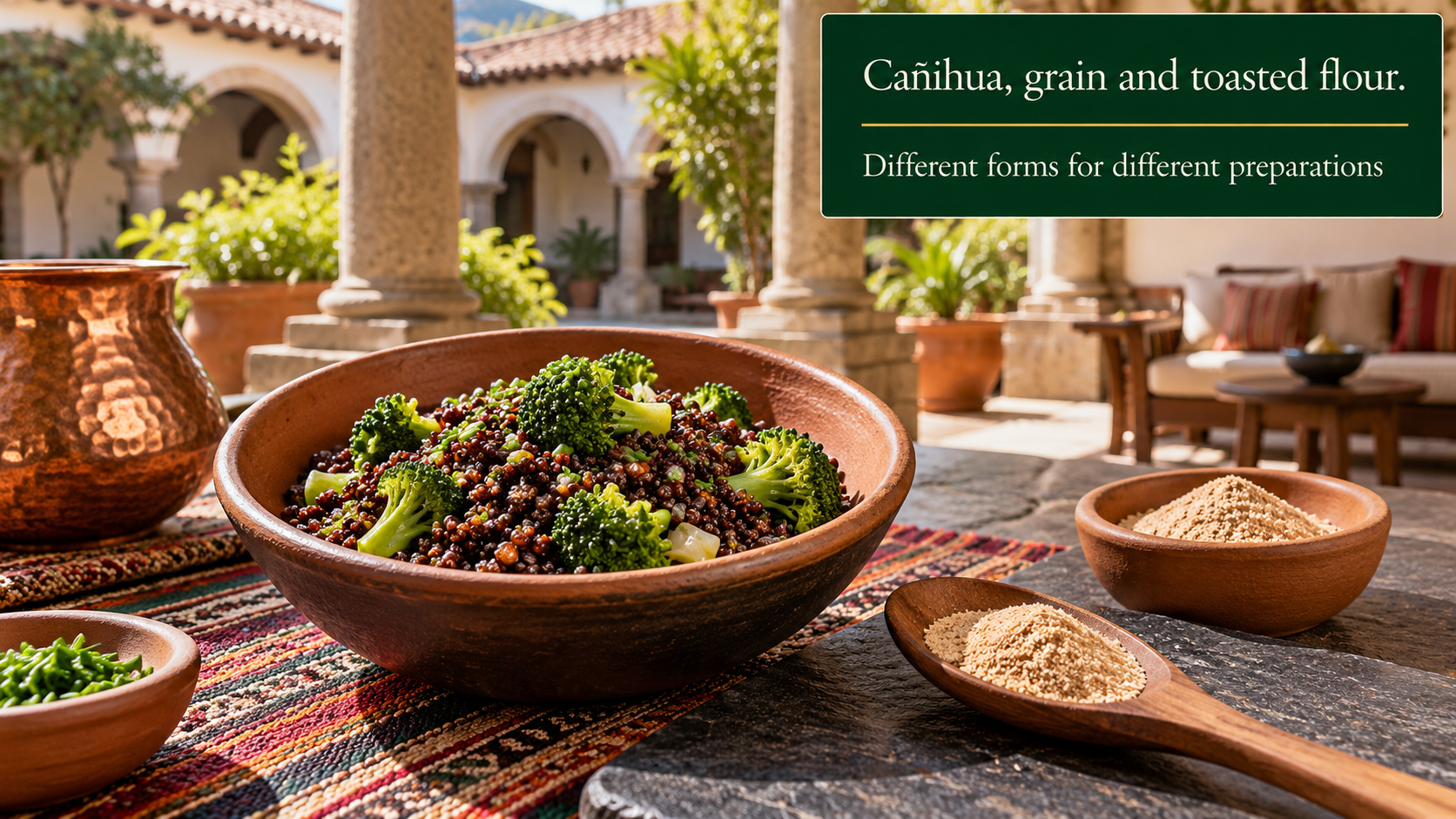
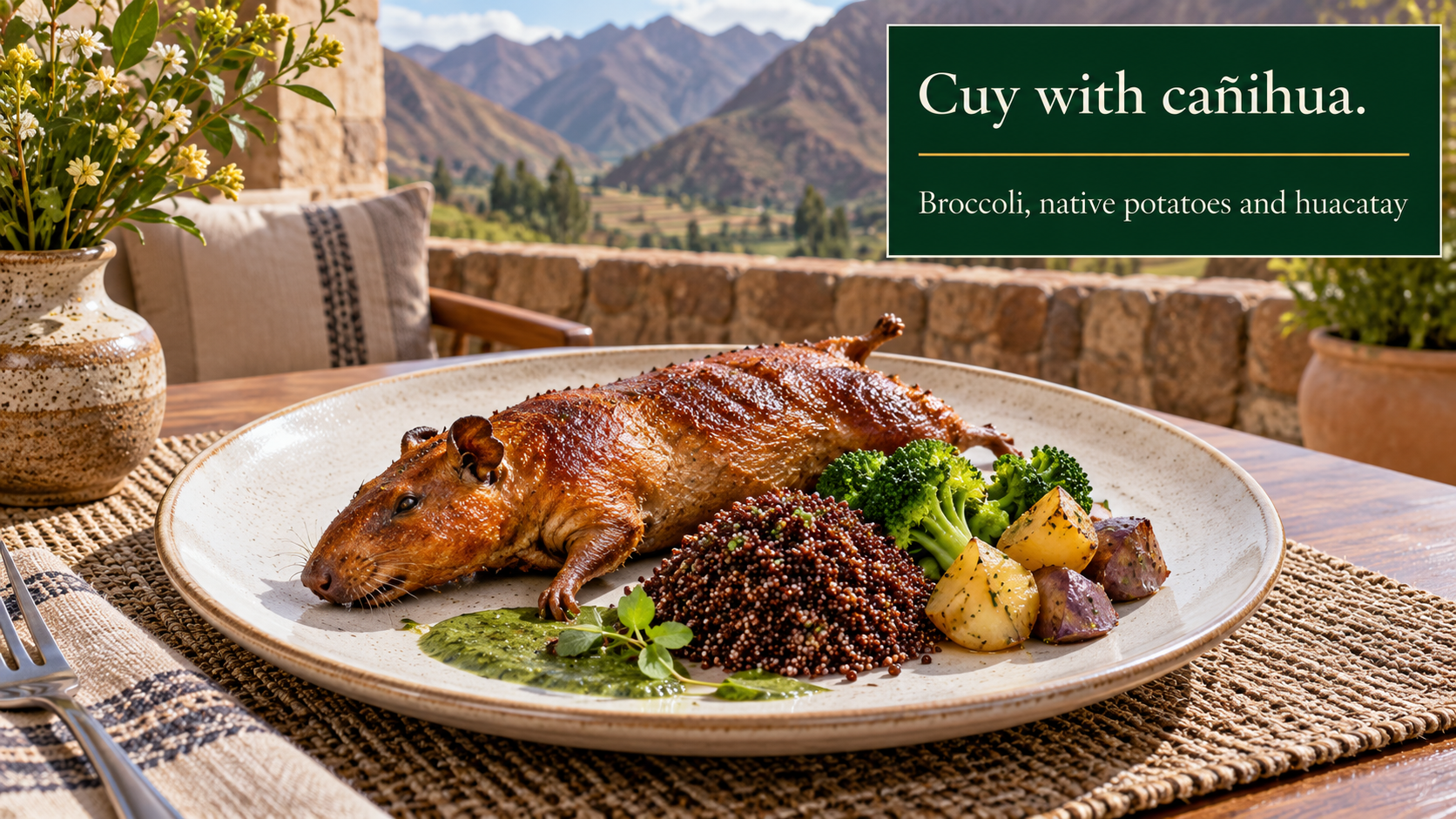
Prepared-food and plant illustrations. No current restaurant dish, harvest or seminar inclusion is established.
Sources
The main food-form references are FAO Ecocrop and the FAO canihua chapter. The 2026 Huarcapata study supplies a precise Cusco-region cultivation example. They serve different purposes: culinary background, historical crop description and one primary field study.
Continue exploring the table
Compare kiwicha grain, popped forms and flour. Choose the ingredient or preparation that interests you, and use its guide for the details before ordering.
Frequently Asked Questions
What is cañihua?
Cañihua is Chenopodium pallidicaule, a small-seeded Andean crop described in FAO references. For choosing food, identify whether you are buying whole grain, toasted ground cañihuaco or a mixture. Those forms can carry the same crop name while requiring different preparation and making different kinds of meals.
Sources: Chenopodium pallidicaule crop facts.
Which name might cañihua have on an English-language label?
Kaniwa and canihua are spellings you may encounter, while FAO identifies the crop as Chenopodium pallidicaule. Use the botanical name and ingredient list when a label is unclear. A familiar-looking spelling does not tell you whether the package holds whole grain, flour or a blend with other ingredients.
Sources: Chenopodium pallidicaule crop facts; Beyond Celiac kaniwa guidance.
Is kaniwa the same crop as quinoa?
No. FAO identifies cañihua as Chenopodium pallidicaule, distinct from quinoa. A small grain does not simply become immature quinoa because a seller uses the baby quinoa phrase. Choose by the ingredient and its food form, then follow that product's instructions rather than borrowing every quinoa preparation step.
Sources: Chenopodium pallidicaule crop facts; Neglected crops: 1492 from a different perspective, canihua chapter.
Are cañihua and cañihuaco the same food form?
Cañihua names the grain crop; cañihuaco is traditionally flour made by lightly roasting and grinding the grain. FAO documents its use in drinks and porridges, along with other culinary uses. A prepared flour mix may contain additional ingredients, so ask what is actually in the package or serving.
Sources: Neglected crops: 1492 from a different perspective, canihua chapter.
Should I assume raw cañihua is ready to eat?
No. Identify the product and follow its preparation instructions. FAO describes cooking the grain and traditionally roasting and grinding it, rather than treating every unprocessed package as a snack. General official flour guidance also distinguishes products sold ready to eat from uncooked flour, which requires the manufacturer's cooking instructions.
Sources: Chenopodium pallidicaule crop facts; Neglected crops: 1492 from a different perspective, canihua chapter; UK official flour safety guidance.
How should I approach cooking whole cañihua?
Follow instructions for the actual whole-grain product, including any cleaning and cooking steps, rather than using a universal ratio from an unrelated grain. FAO documents soups and stews as well as other preparations. Decide whether you want a separate grain accompaniment or a more integrated dish before choosing a recipe.
Sources: Chenopodium pallidicaule crop facts.
What savory uses are documented for cañihua?
FAO describes the grain and flour in soups and stews, alongside drinks and porridge. Those categories give you a useful starting point for a savory request. They do not verify a current Valley restaurant dish, so ask the kitchen which form it uses and what other ingredients are included.
Sources: Chenopodium pallidicaule crop facts; Neglected crops: 1492 from a different perspective, canihua chapter.
What should I clarify about a cañihua drink?
Ask whether it is made with toasted cañihuaco flour, whole grain or a prepared mix, and whether sugar, dairy or other ingredients are added. FAO describes mixing the toasted flour into beverages. That historical use does not establish a particular juice extraction method or an unsweetened recipe at a restaurant.
Sources: Neglected crops: 1492 from a different perspective, canihua chapter.
How can I choose a cañihua breakfast preparation?
Start with the form and recipe. FAO documents cañihuaco drinks and porridges, but a breakfast mix can include other ingredients. If you prefer an unsweetened serving, ask what has already been added and whether the kitchen can prepare it differently. The crop name alone does not establish the finished breakfast.
Sources: Neglected crops: 1492 from a different perspective, canihua chapter.
Does consuming cañihua daily create a special health effect?
The crop references used here describe food forms and traditional uses, not a guaranteed extra benefit from a daily drink. Consider the serving, recipe and the rest of your meals instead of making it a required treatment. If you have a condition affecting your diet, seek individual advice rather than relying on an ingredient's reputation.
Sources: Chenopodium pallidicaule crop facts; Neglected crops: 1492 from a different perspective, canihua chapter.
Does cañihua establish that my whole meal is gluten-free?
The ingredient is described as gluten-free by Beyond Celiac, which also recommends checking product labels. That does not establish a mixed flour or restaurant meal's status. FAO documents bakery mixtures containing wheat flour, so ask about the complete recipe and handling when gluten avoidance is medically important.
Sources: Beyond Celiac kaniwa guidance; Neglected crops: 1492 from a different perspective, canihua chapter.
Is this cañihua product organic?
Organic status depends on the specific product and supplier. This guide does not verify organic certification for the product you are considering. Ask the kitchen or seller for the package label and relevant certification; the crop name or its highland origin does not establish that status.
Sources: Canihua ecotypes in Huarcapata, Espinar, Cusco; Chenopodium pallidicaule crop facts.
Is a saponin claim a reason to ignore cañihua cleaning instructions?
FAO distinguishes cañihua from saponin-containing quinoa in its crop discussion. That does not establish the cleanliness of a particular bag or cancel product instructions. Follow the producer's directions for the whole grain, and keep agricultural cleaning, cooking and a finished ready-to-eat product separate in your decision.
Sources: Neglected crops: 1492 from a different perspective, canihua chapter.
What flavor description can guide a first cañihua tasting?
A first-party ingredient supplier describes its kaniwa as having a delicate nutty flavor. That is a description of its product, not our tasting or a promise about every serving. Toasted flour, a cooked grain and a heavily seasoned mixture can offer different experiences, so identify the preparation before comparing them.
Sources: Woodland Foods kaniwa product description; Neglected crops: 1492 from a different perspective, canihua chapter.
Should I omit cañihua when a dish names it?
Ask what role it plays before deciding. Whole grain and ground flour are different ingredients, and FAO documents several culinary uses. Removing a small addition is a different request from changing a grain-based soup or flour preparation. Let the cook confirm what can be adjusted instead of assuming a one-for-one substitute.
Sources: Chenopodium pallidicaule crop facts; Neglected crops: 1492 from a different perspective, canihua chapter.
Where is cañihua cultivation documented?
FAO describes the crop in highland Peru and Bolivia. A primary study published in 2026 examined three local ecotypes in Huarcapata, Espinar, in the Cusco region. That specific highland evidence does not identify a Sacred Valley restaurant's supplier, and the broader region name should not be presented as a nearby farm.
Sources: Neglected crops: 1492 from a different perspective, canihua chapter; Canihua ecotypes in Huarcapata, Espinar, Cusco.
What should I ask when looking for cañihua to buy?
Ask for the form you want: whole grain, toasted cañihuaco flour or a named prepared mix. Read the ingredient list, producer information and preparation instructions. A historical article's shop discovery does not establish current stock in Peru, so verify the actual seller rather than relying on an old availability example.
Sources: Chenopodium pallidicaule crop facts; Neglected crops: 1492 from a different perspective, canihua chapter.
How should I store a grain or flour product?
Follow its package instructions, including any directions after opening, and keep the container clearly identified. Official flour guidance recommends sealed storage for flour and mixtures and following the manufacturer's handling instructions. This applies to the food form; it does not establish one universal shelf life for whole cañihua and toasted cañihuaco.
Sources: UK official flour safety guidance; Neglected crops: 1492 from a different perspective, canihua chapter.
What nutrition claims about cañihua are supported here?
FAO describes protein and essential amino acids in the grain. That is useful food-composition background, but it does not measure a particular soup or establish a disease treatment. Use the actual product and portion for quantitative comparisons, and separate an enjoyable Andean ingredient from claims about correcting a medical condition.
Sources: Neglected crops: 1492 from a different perspective, canihua chapter.
Who might choose cañihua as a food ingredient?
Someone interested in an Andean grain or toasted flour can choose the form that fits the meal. FAO documents ordinary culinary uses, including savory dishes. A specific dietary need still requires the finished ingredients and handling to be checked; the crop references do not establish that a particular demographic must consume it.
Sources: Chenopodium pallidicaule crop facts; Neglected crops: 1492 from a different perspective, canihua chapter; Beyond Celiac kaniwa guidance.
Put the plan in one place
Save the route, admission time, station names, and transfer details before you book the next part.
Open the trip-planning checklist