Plum can give roast duck a small, lively edge while cañihua carries the quieter part of the meal. The fruit need not become a sticky glaze. A few soft wedges and a spoonful of their cooking juices are enough to show why this combination belongs on a savory plate. The preparation below is a menu idea, not evidence that a particular orchard supplies a retreat kitchen.
Unsweetened Plum With Roast Duck and Cañihua
Choose sound ripe plums, remove their stones, and soften a few wedges with a little water. Serve the unsweetened fruit beside roast duck and cooked cañihua. For the protein, see the separate duck preparation guide.
Choose a plum worth eating on its own
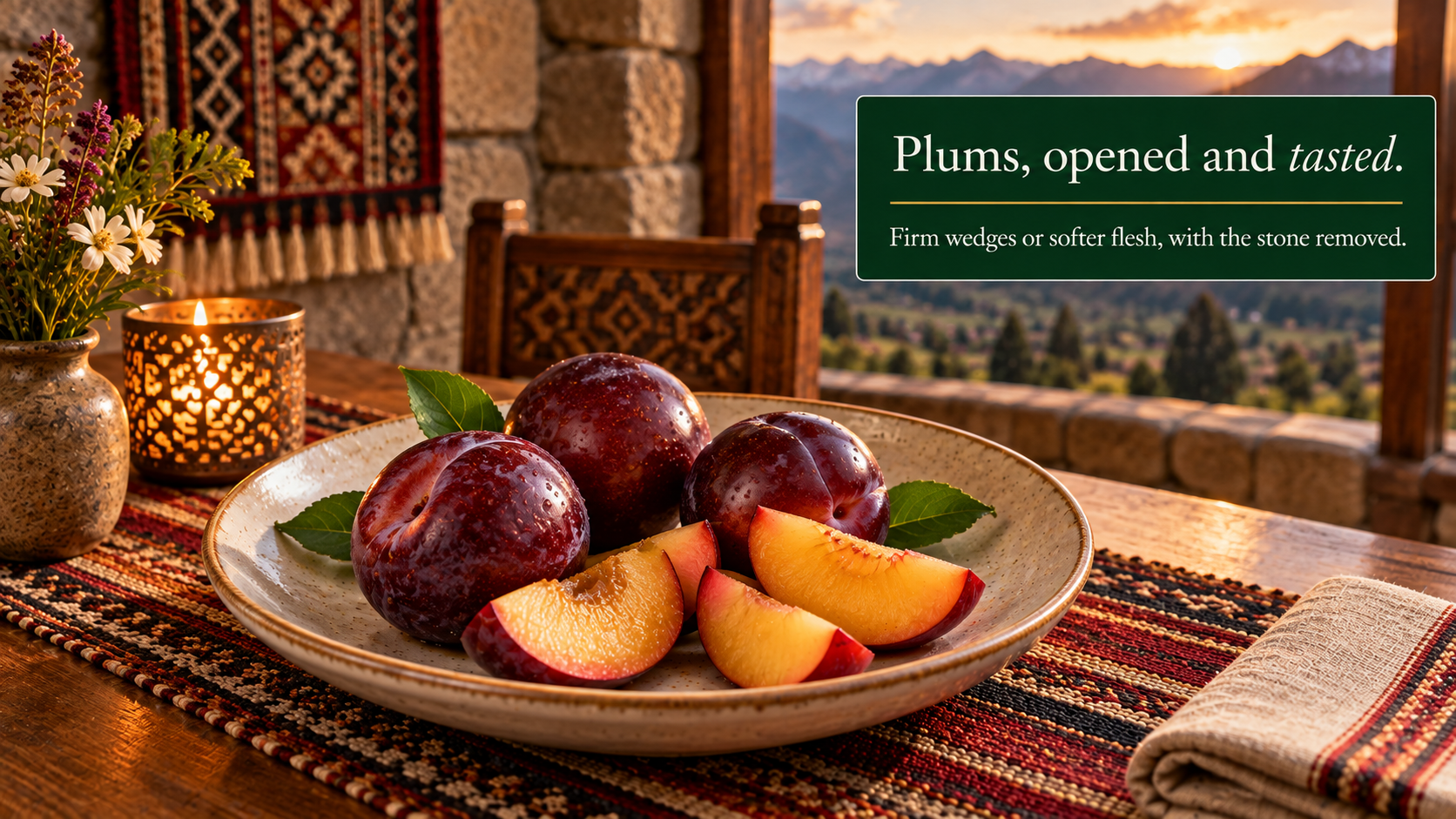
Taste the fruit before deciding how to use it. A plum with pleasant acidity and ripe flesh can remain in wedges. A hard, sharply sour fruit will not automatically become balanced simply because it sits beside duck. Cooking may soften its texture without supplying the missing sweetness. Choose the fruit first and the treatment second.
Plum skins differ in thickness and tartness. Leave a tender skin on when it gives a useful contrast to the flesh. For an especially sharp skin, offer a peeled portion or use fewer wedges. Remove the stone completely and check the cut cavity before plating. Taste the flesh and skin separately when choosing how much of each to include.
Make a gentle accompaniment, without a glaze
Place the cut plum in a small pan with just enough water to keep it from catching. Cover briefly and cook gently until the flesh yields to a spoon while some shape remains. The aim is tender fruit, not a prolonged reduction. Stop before the juices become sticky or the skins dominate the pan.
Taste after cooking and allow the fruit to cool slightly. If it remains too tart for the dish, serve a smaller amount rather than trying to disguise it with added sweetness. A spoonful of plain cooking liquid can loosen a concentrated pulp. Keep the plum separate from the duck roasting pan during the initial trial so its acidity can be judged clearly.
Give cañihua a distinct job
Cañihua is the small Andean grain component here. Prepare the actual packaged food product according to its instructions, then serve it loose enough to gather with the meat juices. This plate does not need both a large grain portion and another heavy starch. A vegetable accompaniment brings more contrast than an extra mound of potato would.
Keep the grain seasoning quiet. A little salt and finely chopped parsley can be sufficient. Overly assertive spices can obscure the difference between plum acidity and the roasted flavor of duck. When cooking for visitors unfamiliar with cañihua, tell them its name and how it is served. That small explanation is more useful than making a broad claim about ancient food or extraordinary health benefits.
Arrange the duck, plum and grain for choice
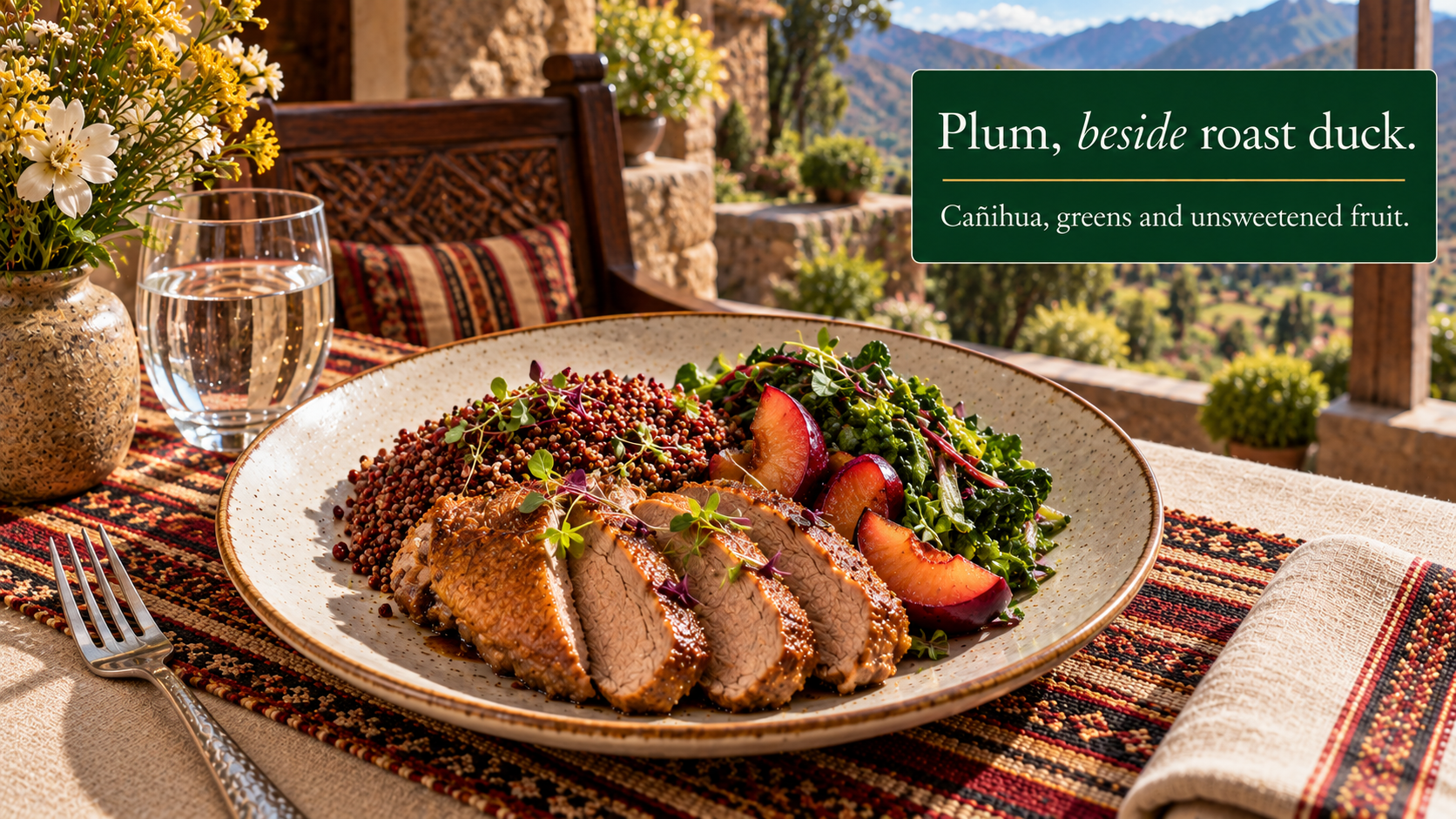
Carve the roast duck and place the plum beside it, leaving enough space for cañihua and vegetables. Spoon a little plum juice near the fruit, not over the entire plate. A guest can then combine bites gradually. This arrangement also makes it easy to serve the meal to someone who enjoys plum but prefers the duck without a sauce.
A useful trial portion is a few wedges or a small spoonful of cooked fruit, followed by another portion if wanted. This is a culinary starting point, not a nutrition prescription. The grain and meat should remain recognizable. A smaller serving leaves room for plain meat and grain bites between the fruit accents.
Choose vegetables that let the fruit remain clear
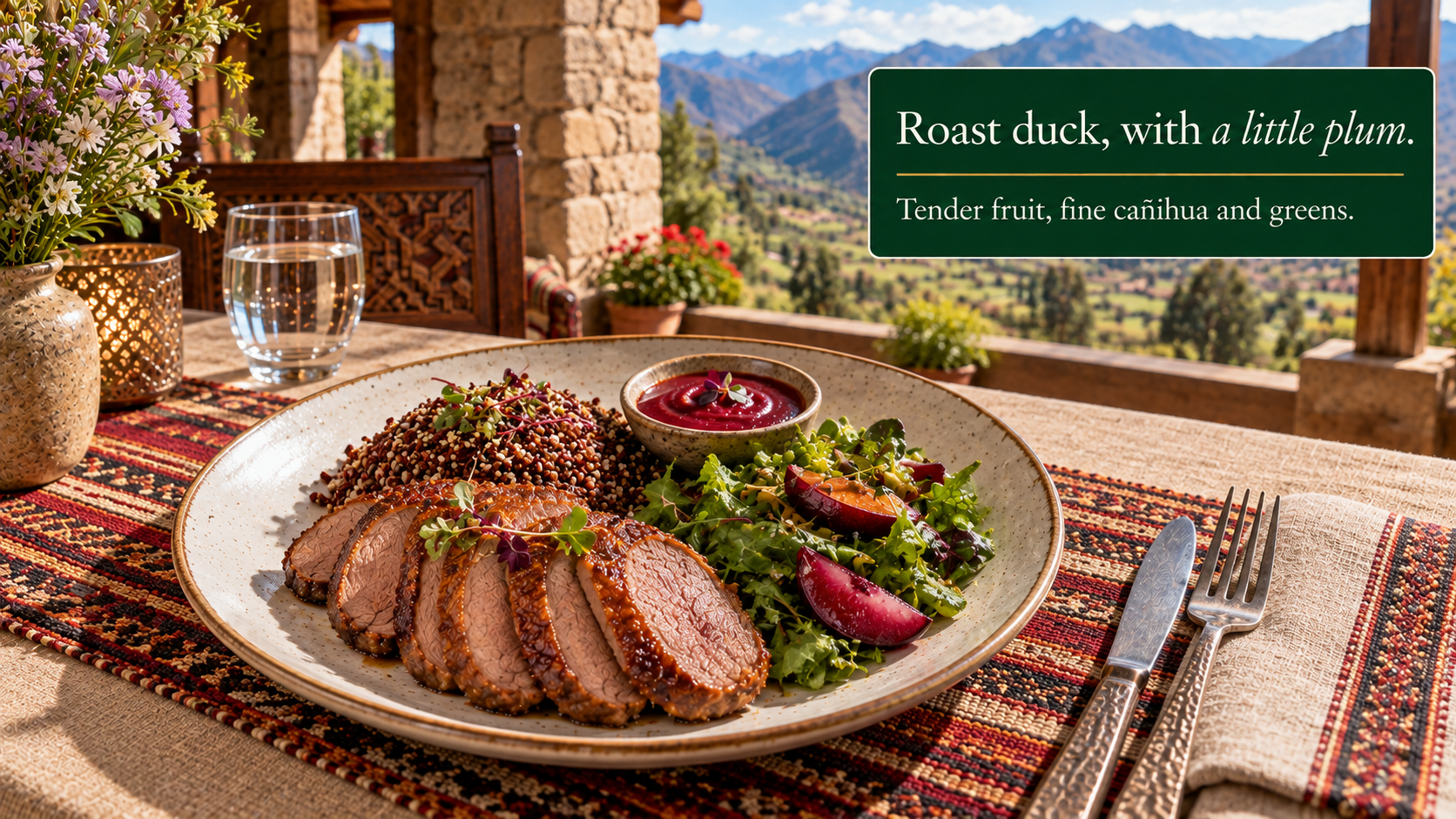
Tender steamed greens or simple roasted vegetables make a sensible partner. Their milder flavor gives the fruit somewhere to land between bites of duck. There is no need to add several other fruits to reinforce the idea. Plum already supplies the sweet-tart element, and the plate benefits from some calmer textures.
For a warmer service, keep vegetables and grain hot while the cooked plum is only gently warm. The fruit will not need to be scalding to accompany the meat. If the duck arrives with strong roasting juices, taste one combined bite before adding lemon or vinegar anywhere else. The plum may already provide all the acidity the plate needs.
Handle the cut fruit and poultry separately
Use sound fruit and wash it before cutting. Prepare plum wedges on a clean board with utensils that have not been used for raw poultry. Remove damaged or spoiled fruit rather than hoping cooking will make it suitable. The same care belongs in an informal retreat kitchen and a hotel dining room.
Prepare a small quantity of fruit for service and refrigerate the remainder promptly as appropriate. The FDA's produce guidance is a useful general reference for washing and separating fresh food from raw meat. It does not provide a plum-duck recipe or establish the actual kitchen's practice. Those remain matters for the actual cook and the day's service.
Fresh wedges or a soft spoonful
Ask whether the plum will remain in wedges or become a soft spoonful. Both can suit the meal, but the eating experience differs. Wedges keep the skin and flesh distinct; a softer accompaniment spreads tartness through a bite of grain. If a guest is particularly sensitive to sour flavors, a peeled wedge and a very small amount of juice give a clearer introduction than a blended sauce.
Plums supply carbohydrate and some fiber; the FDA's raw-fruit chart describes them as fruit rather than a protein centerpiece. Duck and cañihua have different jobs in this meal. That division is useful when ordering: ask for the fruit as a small accompaniment, keep the grain savory, and choose the vegetable you enjoy. If the kitchen offers a bottled plum product instead, check its ingredients and decide whether you want that different preparation.
The images are editorial illustrations of ingredients and serving ideas. They do not document a named restaurant, a current harvest or an included retreat meal. Preparation guidance is not a tested recipe.
Leave room for the Sacred Valley
A visit to Machu Picchu can leave time for a good meal and a quieter stay in the valley. Ask Florian about The SoulSearching Experience, his five-day Sacred Valley seminar for 8-15 participants. Discuss dates, venue and meal arrangements directly.
Questions readers ask
Should plum liqueur replace wine in this unsweetened accompaniment?
This simple version uses neither: soften actual plum wedges with a little water. A sweet liqueur would change the intended unsweetened preparation.
Does plum duck need another large starch beside cañihua?
Cañihua already occupies the grain position. Add tender greens or vegetables rather than automatically repeating that role with a large potato portion.
How can the plum accompaniment be made simply?
Remove stones, cut the fruit and soften gently with a little water. Stop while some shape remains and serve only a little of its juice.
Can duck have a fruit accompaniment without a sugary glaze?
Yes. Use a few unsweetened ripe plum wedges and keep their juices separate. Their tartness can be sufficient without coating every slice of duck.
Is bottled duck sauce the same as fresh cooked plum?
No. A named packaged sauce can have other fruits and added ingredients. Check its label; this dish is based on actual unsweetened plum.
How should the menu identify this fruit preparation?
Call it unsweetened plum or gently cooked plum rather than an unexplained duck sauce. That tells the guest which fruit and food form to expect.
How should duck doneness be checked?
Use a food thermometer in the thickest part, avoiding bone. USDA recommends 165 F for duck and other poultry; color alone cannot establish safety.
Should one thermometer reading stand for the whole duck?
No. Breast and leg portions differ in thickness. Follow a suitable roast method and check the relevant thickest parts rather than relying on one surface reading.
What flavor does duck bring to a fruit plate?
Duck supplies the richer savory center. Keep the fruit modest and optional so the diner can taste the meat on its own before combining bites.
Does pink color alone decide whether duck is ready?
No. Use the thermometer endpoint recommended for poultry. A color impression cannot replace a proper temperature check.
Does the duck need a large coating of sauce?
For this meal, begin with the small fruit accompaniment beside the meat. More can be offered separately after the guest tries the combination.
Is duck classified as red meat because it looks dark?
USDA classifies duck as poultry. Its darker appearance does not change the need to follow appropriate poultry cooking and handling guidance.
Must the plum be as hot as the duck?
No. Gently warm plum can sit beside hot duck and grain. Keep it separate enough that the guest can choose the combined bite.
Is the grain on this plum-and-duck plate quinoa?
This serving uses cañihua, a small Andean seed crop related to quinoa. Quinoa is a separate crop, Chenopodium quinoa; cañihua is Chenopodium pallidicaule. Ask for the grain by name when ordering, since a similar-looking grain accompaniment does not establish which crop was used.
FAO Ecocrop: Chenopodium pallidicaule · FAO: Quinoa questions and answers
Will purple and yellow plums necessarily give the same accompaniment?
No. Taste the actual flesh and skin, then adjust the small portion. Color alone does not guarantee sweetness or acidity.
Can cooked plum be mashed and strained instead of served in wedges?
Yes, that makes a smoother accompaniment. Keep it small and unsweetened, and serve beside the duck rather than coating the entire plate.
Does any dark plum establish a named cultivar?
No. Ask the supplier for the actual fruit identity. Choose by soundness, flavor and suitable texture when the precise cultivar is unknown.
How can readiness for the plum accompaniment be judged?
For purchased food fruit, taste a sample with pleasant ripe flesh and inspect its condition. Do not rely on skin color alone.
Should a large plum supply mean a large fruit portion on every plate?
No. Keep the duck accompaniment modest and handle the remaining sound fruit appropriately. A supply surplus should not decide the diner's serving.
Can plum peel make a cooked mixture more tart than the flesh alone?
It can change the perceived balance. Taste peeled flesh and skin separately before deciding how much skin belongs in the gentle accompaniment.