Home › Sacred Valley & Beyond › Native Potatoes, Tarwi and Andean Ingredients Worth Knowing
Native Potatoes, Tarwi and Andean Ingredients Worth Knowing
The short answer
Begin with native potatoes, properly prepared tarwi, Andean grains and fruits such as aguaymanto. Ask the chef about the variety, producer and preparation rather than relying on a superfood label. Common goji, Lycium barbarum, is native to northern and central China, not an indigenous Andean ingredient. A beautiful meal can celebrate regional foods without promising medical effects.

On this page
- What does Andean cuisine give you to explore?
- Native potatoes: ask about the one on your plate
- What should a potato tasting tell you?
- Tarwi: preparation is part of the ingredient
- Tarwi and peanut allergies: ask before ordering
- How can tarwi fit a refined meal?
- Quinoa, kiwicha and cañihua: compare the preparations
- Aguaymanto and the appeal of fruit
- Are goji berries native to the Andes?
- What does superfood actually mean here?
- How do these ingredients enter a luxury itinerary?
- Questions that make the plate more interesting
- Turn an ingredient list into a dining appointment
- Explore individual ingredients in more detail
- Continue exploring the table
- Frequently asked questions
- Let native potatoes and prepared tarwi make a complete order
A native potato tasting can begin with a small, satisfying question: why did the chef choose this variety for this dish? Ask the same of tarwi, quinoa and the fruit in your glass. Their interest comes from the crop, preparation and people behind it. This guide helps you recognize those ingredients and request a meal that gives them room.
Use this guide to recognize plant ingredients and discuss their preparation. Choose the actual appointment with the Valley dining comparison or Pueblo dining guide.
What does Andean cuisine give you to explore?
PROMPERU's Andean cuisine overview places potatoes, corn, soups, cuy and pachamanca within the region's culinary traditions. It provides a broad introduction, rather than a current menu for every restaurant. Start with a dish the host can explain and ask how its ingredients relate to the particular place you are visiting.
An elegant meal does not need to turn every ingredient into a health claim. Flavor, preparation, agricultural knowledge and the people involved are substantial subjects themselves. This guide separates culinary context from clinical evidence and avoids promising that a tasting will detoxify, improve fertility or prevent illness.
Native potatoes: ask about the one on your plate
The International Potato Center describes more than 4,000 native varieties across Peru, Bolivia and Ecuador combined. It highlights varied colors, forms, flavors and textures, as well as the communities that conserve them. Keep the geographic scope of that number clear: it is not a Peru-only count or a claim about restaurant stock.
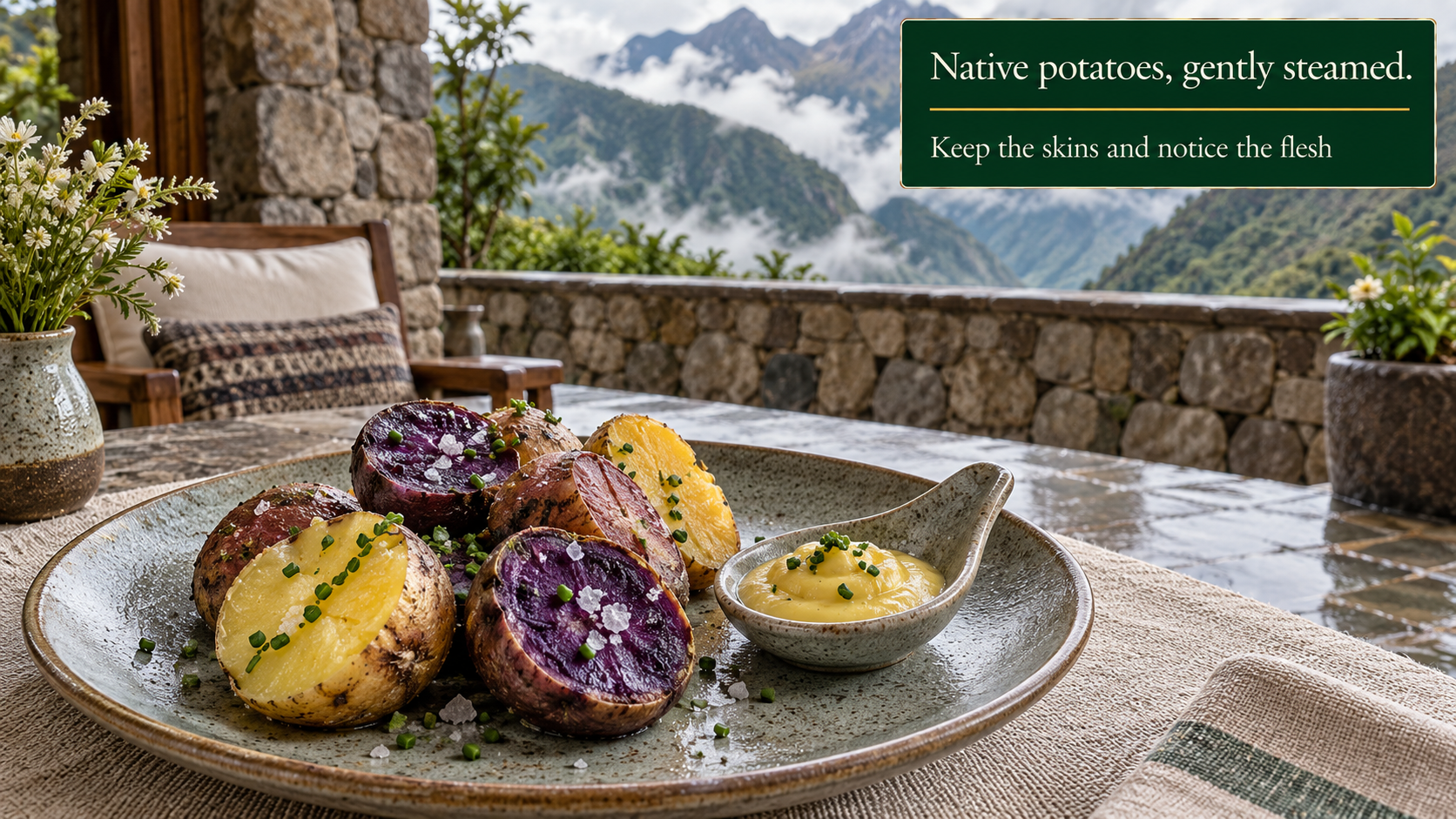
Ask for the particular variety if the kitchen knows it, where it was grown and why the cooking method suits it. A restrained potato dish can reveal texture and flavor without elaborate decoration. If several varieties are served together, ask what comparison the chef intends rather than assuming every visible difference indicates a different nutritional effect.
What should a potato tasting tell you?
A useful introduction identifies the ingredient and the preparation. You might compare a whole cooked potato with a puree or another composed dish, if that is what the kitchen actually offers. These are suggested tasting approaches, not a guarantee of a bookable potato flight at every venue.
Ask whether the potatoes come from a named grower or growing area, and distinguish a variety name from a broad regional label. When buying potatoes or discussing a market visit, respect the seller's knowledge and ask before photographing. The cultural and agricultural story deserves the same attention as a restaurant presentation.
Tarwi: preparation is part of the ingredient
Tarwi is the Andean lupin discussed in INIA's debittering research. The research describes processing to remove alkaloids. That matters to the culinary conversation: an untreated bean should not be treated as equivalent to a properly prepared food.
This article does not provide an improvised home-processing procedure or certify a seller's product by appearance. Ask a knowledgeable kitchen about its prepared tarwi and the dish in which it appears. If you have an allergy or an ingredient restriction, disclose it before eating. A traditional ingredient still deserves a clear conversation about preparation and suitability.
Tarwi and peanut allergies: ask before ordering
INIA identifies tarwi as Lupinus mutabilis, a lupin. The FDA advises that lupin can cause severe allergic reactions, especially in people with peanut allergy; reactions can also occur without it. If this applies to you, discuss tarwi with your clinician before the trip and tell the dining team before ordering.

Let native potatoes and prepared tarwi make a complete order
Potatoes and tarwi do different jobs in an Andean meal. Native potatoes can provide the main starchy accompaniment, while prepared tarwi adds the character of a legume. Ask for the composition of the whole serving before deciding that an ingredient mentioned on the menu will amount to the dinner you want.
Decide whether this is a tasting or your main meal
A potato tasting may be intentionally small. Ask whether it is an introductory course, a side or a substantial part of the main plate. If the kitchen offers several varieties, ask what it wants you to notice: cooking texture, flavor or the effect of different preparations. Color alone does not establish either the variety name or a meaningful health comparison.
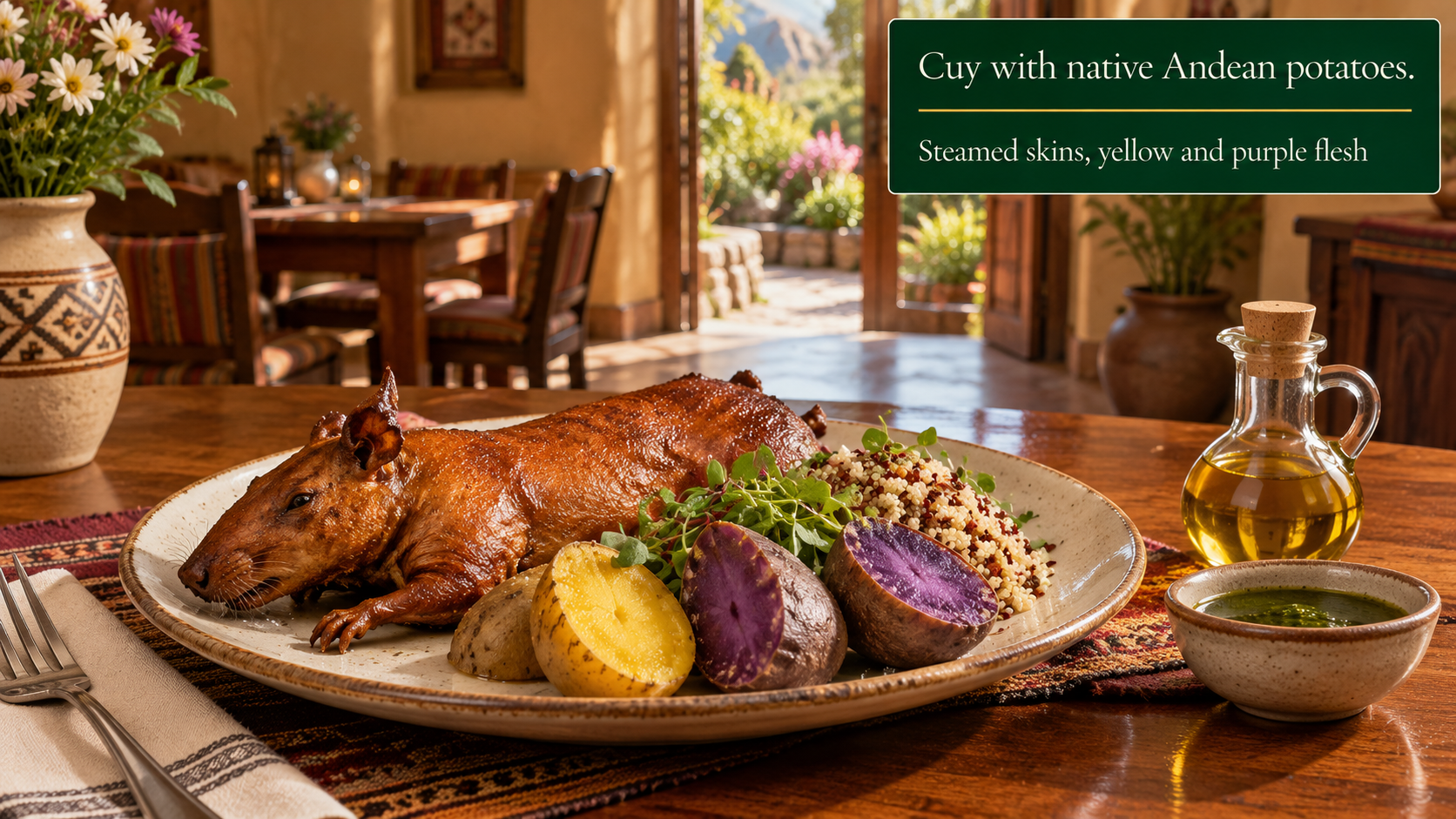
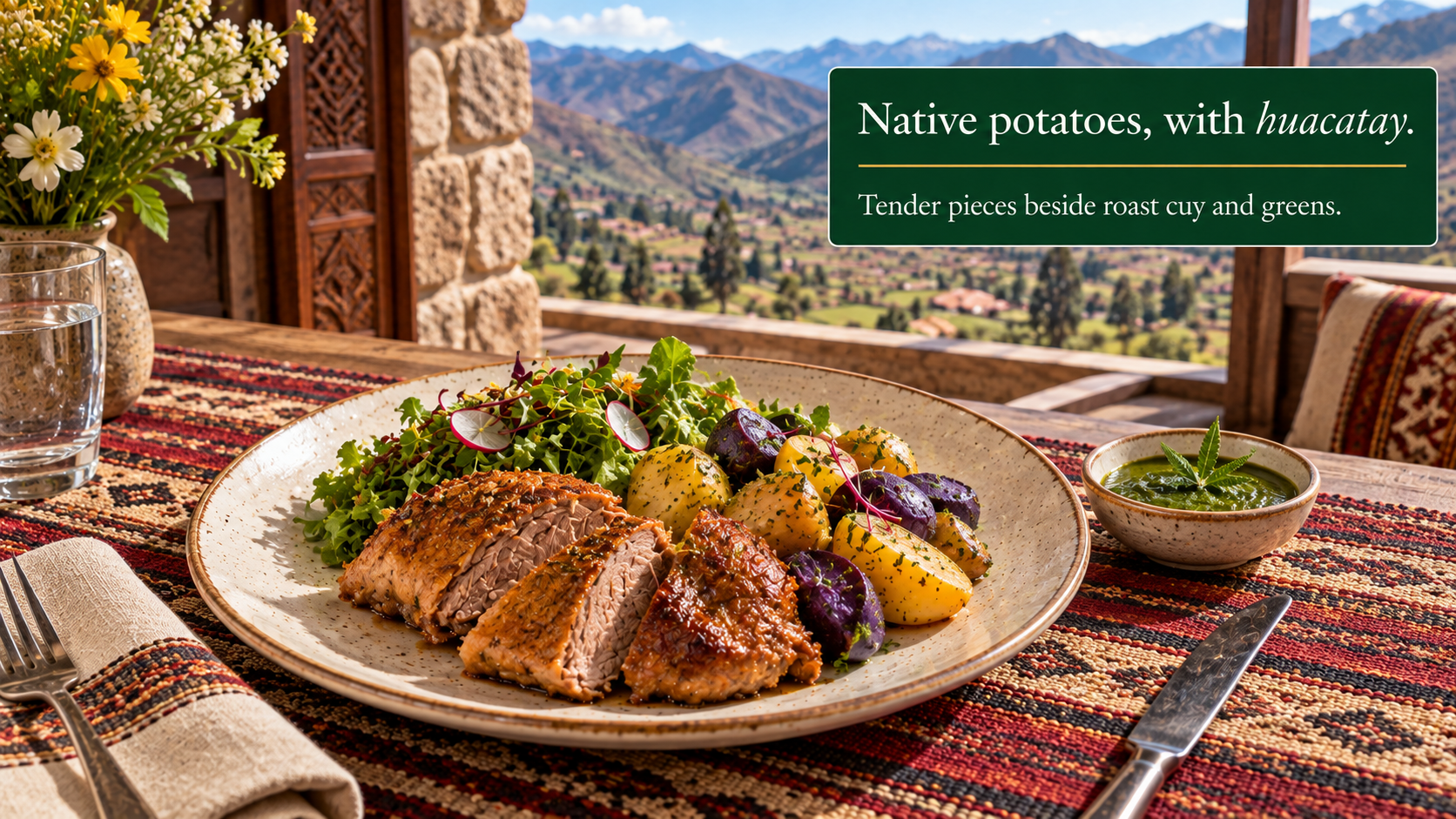
For a full dinner, discuss a recognizable potato portion with cooked vegetables and a main the kitchen can prepare well. Roast cuy, cooked alpaca or baked high-altitude Andean trout are possible directions to discuss with an elegant Andean hotel. None is promised here as a current menu combination. A whole cooked potato or clearly described puree also makes it easier to ask about butter, cream, oil and other additions.
Ask what the tarwi component actually is
The word tarwi might describe prepared whole beans, a puree or a small sauce component. Those forms will occupy different amounts of the plate. Ask whether the preparation is the principal legume portion or just a finish. If you are choosing a plant-based dinner, ask what else makes up the meal and whether stock, cheese or another animal ingredient enters the preparation.
Use prepared food supplied by a knowledgeable kitchen. INIA's work on tarwi processing concerns removal of alkaloids, and an untreated agricultural seed is a different product from food-ready tarwi. This ordering guide supplies no shortcut for debittering it yourself. Appearance and a pleasant sauce do not verify how an unknown product was processed.
Tarwi is a lupin. FDA guidance states that lupin can provoke severe allergic reactions, particularly in people with peanut allergy, and reactions can occur without peanut allergy too. Tell the restaurant before ordering when that matters. A smaller spoonful is not a solution to an allergy concern, and a tasting menu may need a different ingredient rather than a reduced portion.
Choose the accompaniments for the meal you want
Ask for tender cooked vegetables and a sauce served separately where practical. That gives potatoes, tarwi and the main course their own presence. If the proposed herb sauce contains peanuts or dairy, the kitchen should identify them; green color tells you very little about the rest of its recipe.
A suggested plate might pair steamed native potatoes with a modest prepared-tarwi portion, cooked greens and a separately chosen main. For a plant-based version, ask the chef to propose a satisfying complete dish from what is available. These are ordering directions, not tested recipes, fixed portions or a nutritional prescription.
Keep the specialist tarwi guide for its food forms and preparation questions, and the grain guides for a quinoa or kiwicha alternative. You do not need potatoes, tarwi and every Andean grain on the same plate. A considered choice leaves room to taste what the kitchen actually prepared and avoids mistaking a long ingredient list for a well-composed dinner.
Sources: cipotato.org; pgc-snia.inia.gob.pe; fda.gov
Continue with Tarwi in Peru: An Andean Legume at the Table, Quinoa in Peru: Breakfasts, Soups and Savory Plates, Fine Dining in the Sacred Valley: Choose the Experience, Then the Table, Cranberry beans with roast cuy and native potatoes.
Quinoa, kiwicha and cañihua: compare the preparations
The official Super Foods Peru product list includes quinoa, kiwicha and cañihua, alongside tarwi, native potatoes and other products. It establishes their place in a promotional product category, not a clinical certification of every claim made about them.
Ask which grain is used and how it contributes to the dish. Inkaterra's recipe collection includes a red-quinoa quinotto, an example of a chef's preparation. That recipe is a useful illustration, not proof of a current menu item. Let the actual dish lead the discussion of texture and cooking.
Aguaymanto and the appeal of fruit
Aguaymanto appears in the official Super Foods Peru product list. It gives you a verified Peruvian product to ask about when considering fruit, dessert or a beverage. Ask whether it is used fresh, preserved or as part of a composed preparation, and where the particular product comes from.
The listing does not guarantee that every restaurant carries it or identify a universal health benefit. A berry served with cacao or another ingredient can be appreciated as food. If a menu describes a nutritional effect, distinguish the actual evidence from promotional wording rather than transferring the broad superfood category to every individual dish.
Are goji berries native to the Andes?
For the commonly discussed goji species Lycium barbarum, Kew's Plants of the World Online gives a native range in northern and central China. Do not describe that species as indigenous Andean fruit. This does not mean a restaurant cannot use it as an introduced culinary ingredient.
Plant names matter. A broad common name is not enough to establish the origin of every species in a genus. If a host discusses a different local berry, ask for its actual name before making botanical claims. For a meal focused on Peruvian ingredients, aguaymanto provides a clearer documented starting point than an unsupported native-goji story.
What does superfood actually mean here?
In the source used here, Super Foods Peru is a promotional product category. It can direct attention to ingredients, but it does not prove a medical outcome from eating them. A dish also contains a portion, a preparation and other ingredients; the product name alone does not describe the entire meal.
Ask a chef about flavor and sourcing, and reserve personal nutrition or treatment questions for an appropriate qualified professional. This approach leaves room to enjoy the food without assigning it an effect it has not demonstrated. A menu can be sophisticated and rooted in local ingredients while making ordinary, precise claims.

How do these ingredients enter a luxury itinerary?
Choose a culinary format that gives the host time to explain the meal. The Sacred Valley dining guide compares first-party restaurant and immersion descriptions. Ask which of these ingredients is actually represented in the current menu rather than treating this article as a promised ingredient checklist.
If you want a producer-focused extension, Quillabamba coffee and cacao are separate interests with their own arrangements. A restaurant meal and an agricultural appointment offer different kinds of access. Decide which conversation you want and reserve the format that can reasonably provide it.
Turn an ingredient list into a dining appointment
Choose one point of curiosity and let it shape the request. For potatoes, ask for the varieties used and contrasting preparations rather than a promise to taste every regional type. For tarwi, ask how the prepared legume enters the dish and disclose any relevant allergy. For grains, compare the texture and role in the actual course.
MIL’s territory-led format, Muju’s provider-described local produce and Tambo’s separately booked Garden to Table activity offer different settings for those conversations. None guarantees a tarwi course or a native-potato flight on every date. Request the current menu and choose the appointment that answers your interest.
If you want a shorter experience, ask a restaurant about an ingredient-led meal instead of assuming you must book a full immersion. The Sacred Valley dining comparison distinguishes the formats and reservation requirements.
The Andean drinks and pairing guide considers preparation, sweetness and the occasion for the cup.
Explore individual ingredients in more detail
Use this overview to choose the part of Peru's food culture that interests you, then follow the ingredient guide for preparation and sourcing details. Cherry tomatoes, strawberries and valley produce connect the table to documented cultivation examples and questions for a grower.
For Amazonian flavors, compare aguaje fruit, drinks and desserts with camu camu and tart pairings. These guides distinguish tropical origin from where a dish is served. Moringa leaves have their own kitchen and evidence guide, while green vegetable juice explains preparation, fiber and freshness.
Continue exploring the table
Choose food-ready tarwi for salads and soups. Compare cooked quinoa breakfasts and savory plates. Recognize whole, popped and ground kiwicha. Distinguish cañihua grain from toasted cañihuaco. Choose prepared sacha inchi seeds or food oil. Choose the ingredient or preparation that interests you, and use its guide for the details before ordering.
Frequently Asked Questions
What is chocho?
Tarwi is the Andean lupin discussed in INIA's processing research. Its preparation is important: the research describes debittering to remove alkaloids. Ask a knowledgeable kitchen about the prepared ingredient and the actual dish, rather than treating an untreated bean as equivalent to food ready for serving.
Sources: Tarwi debittering process.
How to cook chochos?
Do not use this guide as permission to eat untreated tarwi. INIA's research describes debittering to remove alkaloids, and this article supplies no home-processing protocol. Use a properly prepared product from a knowledgeable provider and ask about ingredients and preparation before trying it.
Sources: Tarwi debittering process.
Which Peruvian foods are rich in protein?
Peru’s food tables list protein in several foods discussed here. Per 100 grams, the cooked tarwi or chocho entry with skin gives 11.6 grams; fresh trout gives 19.5 grams; alpaca meat gives 24.1 grams. These are specified reference foods, not measurements of a complete restaurant dish or an individualized dietary recommendation.
Sources: INS food composition tables: 100-gram reference entries.
What are Andean potatoes?
They are native potato varieties maintained across Andean communities and valued for differences in color, shape, flavor, and texture. The International Potato Center describes more than 4,000 native varieties across Peru, Bolivia, and Ecuador together. That regional figure should not be presented as a count for Peru alone or a promise of what one restaurant serves.
Sources: Native potato varieties.
What are Peruvian superfoods?
PROMPERU’s promotional Super Foods list includes Andean potatoes, grains, tarwi, maca, cacao, aguaymanto, and trout. It is a way to introduce regional ingredients, not a clinical certification or an assurance of benefits from one meal. Ask about the actual preparation and portion, and select dishes for their flavor and suitability for your own needs.
Sources: Official Super Foods Peru product list.
How many potatoes do they have in Peru?
The International Potato Center describes more than 4,000 native potato varieties across Peru, Bolivia and Ecuador together. That combined figure should not be reported as a Peru-only count. For dining, the useful distinction is diversity in taste, texture, shape and color, much of it maintained by communities, rather than one exaggerated national total.
Sources: Native potato varieties.
How do Peruvian potatoes differ?
Native varieties differ in taste, texture, shape and color, according to the International Potato Center. That gives a restaurant meaningful reasons to select different potatoes for a dish, rather than treating the differences as decoration alone. Ask which varieties are being used and how they behave in the preparation; appearance does not by itself establish a nutritional advantage.
Sources: Native potato varieties.
Is tarwi healthy?
The official cooked tarwi entry, with its skin, lists 11.6 grams of protein and 2.8 grams of fiber per 100 grams. Those values describe that preparation, not every product or serving. Proper debittering removes naturally present alkaloids, and lupin allergy is a separate concern, particularly for some people with peanut allergy.
Sources: INS food composition tables: 100-gram reference entries; FDA consumer advice on lupin allergy; INIA tarwi germplasm conservation guide, June 2026; Tarwi debittering process.
Who should not eat lupini beans?
Lupin can cause allergic reactions, which FDA warns may be severe. People with peanut allergy are particularly relevant, but reactions can also occur without peanut allergy. Tarwi is the Andean lupin Lupinus mutabilis, so disclose a known lupin or peanut allergy before ordering and do not assume a traditional preparation removes the allergy concern.
Sources: FDA consumer advice on lupin allergy; INIA tarwi germplasm conservation guide, June 2026.
Where to do a potato-tasting experience?
Native potato diversity is a useful focus for an Andean meal, but this guide does not verify a universally available standalone potato-tasting booking. MIL publishes a broader botanical immersion and tasting experience. Ask the venue whether native potatoes feature in the current menu, which varieties are included and whether it offers a separate tasting for your dates.
Sources: Native potato varieties; MIL Botanical Path and tasting menu.
Quinoa dishes that aren't salads?
Quinotto is one documented option: Inkaterra publishes a red-quinoa quinotto recipe, offering a different preparation from a cold quinoa salad. The existence of that recipe does not establish that every restaurant serves it today. Ask the dining room whether it can offer a similar warm quinoa dish and confirm its actual ingredients and dietary suitability.
Sources: Inkaterra chef recipes.
What are some popular grains from Peru?
PROMPERU’s official product list includes quinoa, kiwicha and cañihua among its Andean ingredients. Inkaterra’s published red-quinoa quinotto recipe provides one dining example. Ask which grains the current menu uses and how they are prepared; the product list is promotional, and a published recipe does not guarantee that every restaurant serves those ingredients today.
Sources: Official Super Foods Peru product list; Inkaterra chef recipes.
Which Andean ingredients can I ask for in vegetarian or vegan Peruvian dishes?
Native potatoes, quinoa, kiwicha, canihua and properly prepared tarwi offer ingredient starting points. Inkaterra also publishes a red-quinoa quinotto recipe, though that does not prove the finished dish is vegan or currently served. Ask the kitchen about stock, dairy, eggs, sauces and the full preparation; an Andean grain or vegetable does not make the entire dish vegetarian or vegan.
Sources: Official Super Foods Peru product list; Inkaterra chef recipes.
What is the English name for aguaymanto?
Aguaymanto is commonly called goldenberry or Cape gooseberry in English. PROMPERU identifies it as Physalis peruviana, a fruit associated with the Peruvian Andes. Knowing both names helps you recognize the ingredient when a restaurant switches between a Spanish menu and an English translation. PROMPERU: aguaymanto
Sources: Goldenberry Name.
Which potatoes hold their shape in soup?
Waxy potatoes usually suit a soup where you want recognizable pieces. University of Minnesota Extension says waxy, moist-fleshed potatoes hold together when cooked, while mealy potatoes can fall apart. At a Peruvian market, ask which local variety suits a chunky soup instead of assuming the color alone identifies its cooking texture. University of Minnesota Extension: growing potatoes
Sources: Potato Soup.
What is the tastiest potato variety?
There is no single best-tasting native potato. Varieties differ in flavor and texture, and the preparation changes what you notice. At a market or restaurant, describe the dish you have in mind and ask which named variety suits it. If several appear on a plate, ask the kitchen what differences it intended you to taste.
Sources: Native potato varieties.
What are some traditional dishes from the Andean region?
PROMPERU's Andean cuisine overview describes regional soups and pachamanca, an earth-oven meal, alongside staples such as potatoes and corn. These are introductions to regional traditions, not a checklist for every community or restaurant. Ask a host which preparation is relevant to the place you are visiting and how its ingredients are sourced and prepared.
Sources: Andean cuisine.
What are the ingredients in chicha morada?
Purple corn is the ingredient to recognize here. PROMPERU describes chicha morada made with cooked purple corn, pineapple, cinnamon and sugar. Recipes can vary, so ask what a particular kitchen adds and how sweet it serves the drink. The Andean drinks guide explains the beverage in more detail.
Sources: Chicha.
Is aguaje an Andean ingredient?
Aguaje is the fruit of Mauritia flexuosa, an Amazonian palm. A Sacred Valley kitchen may use ingredients from elsewhere in Peru, so where a dish is served does not establish where its fruit grows. Ask for the preparation and provenance of the actual ingredient. The aguaje guide covers its Amazonian food context.
Sources: Aguaje commercialization requirements; Aguaje export/product sheet.
Can golden berries be eaten raw?
Yes. Aguaymanto, also called goldenberry, can be eaten fresh when ripe. If it appears in a Sacred Valley tasting, ask whether the kitchen serves it fresh, preserved, or cooked, and where that batch came from. Fresh culinary use does not establish the hygiene of a particular market batch. The local fruit and vegetables guide covers choosing and preparing produce.
Sources: Goldenberry Fresh; Goldenberry Name; FDA: selecting and serving produce safely.
Put the plan in one place
Save the route, admission time, station names, and transfer details before you book the next part.
Open the trip-planning checklist