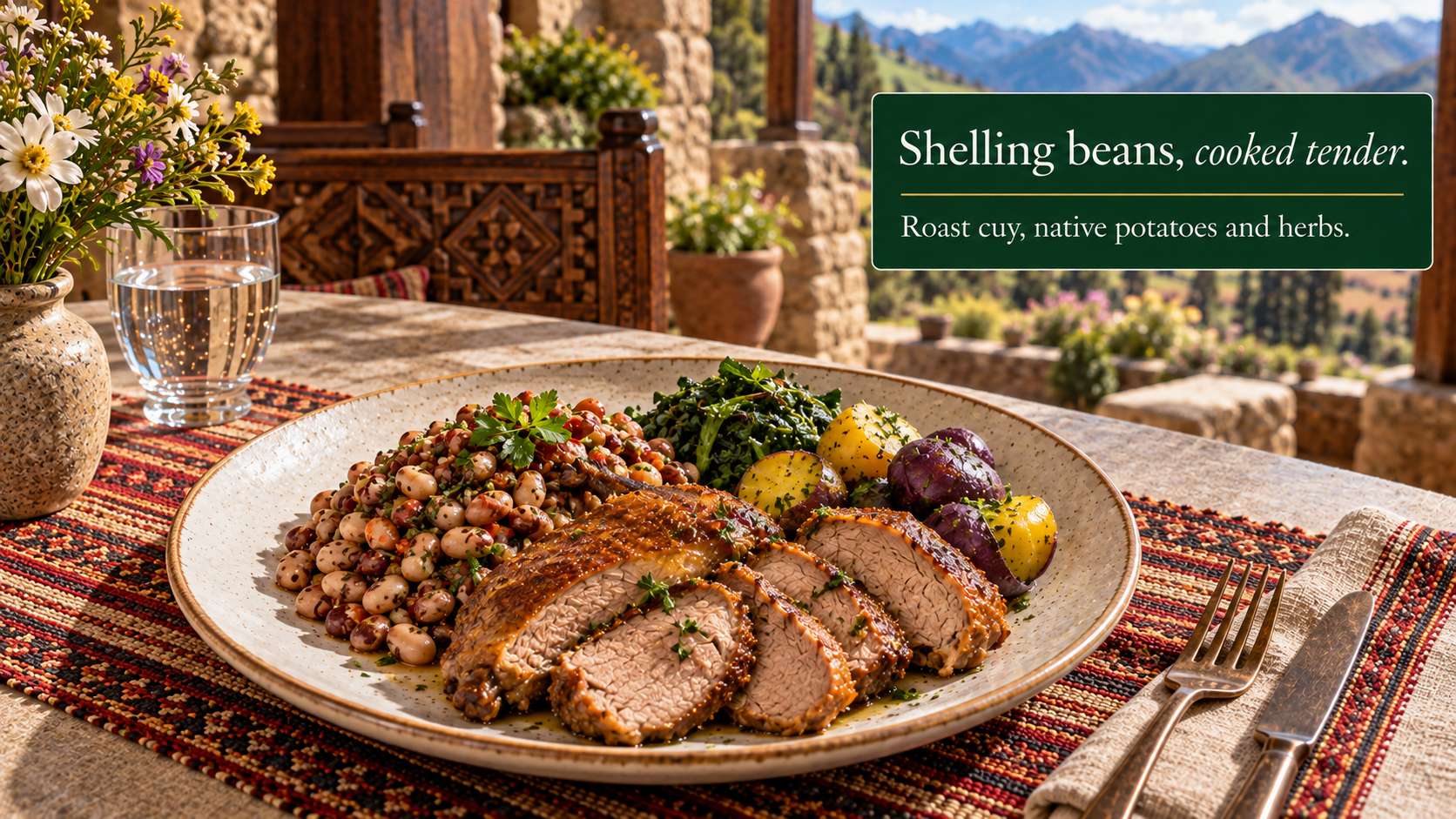
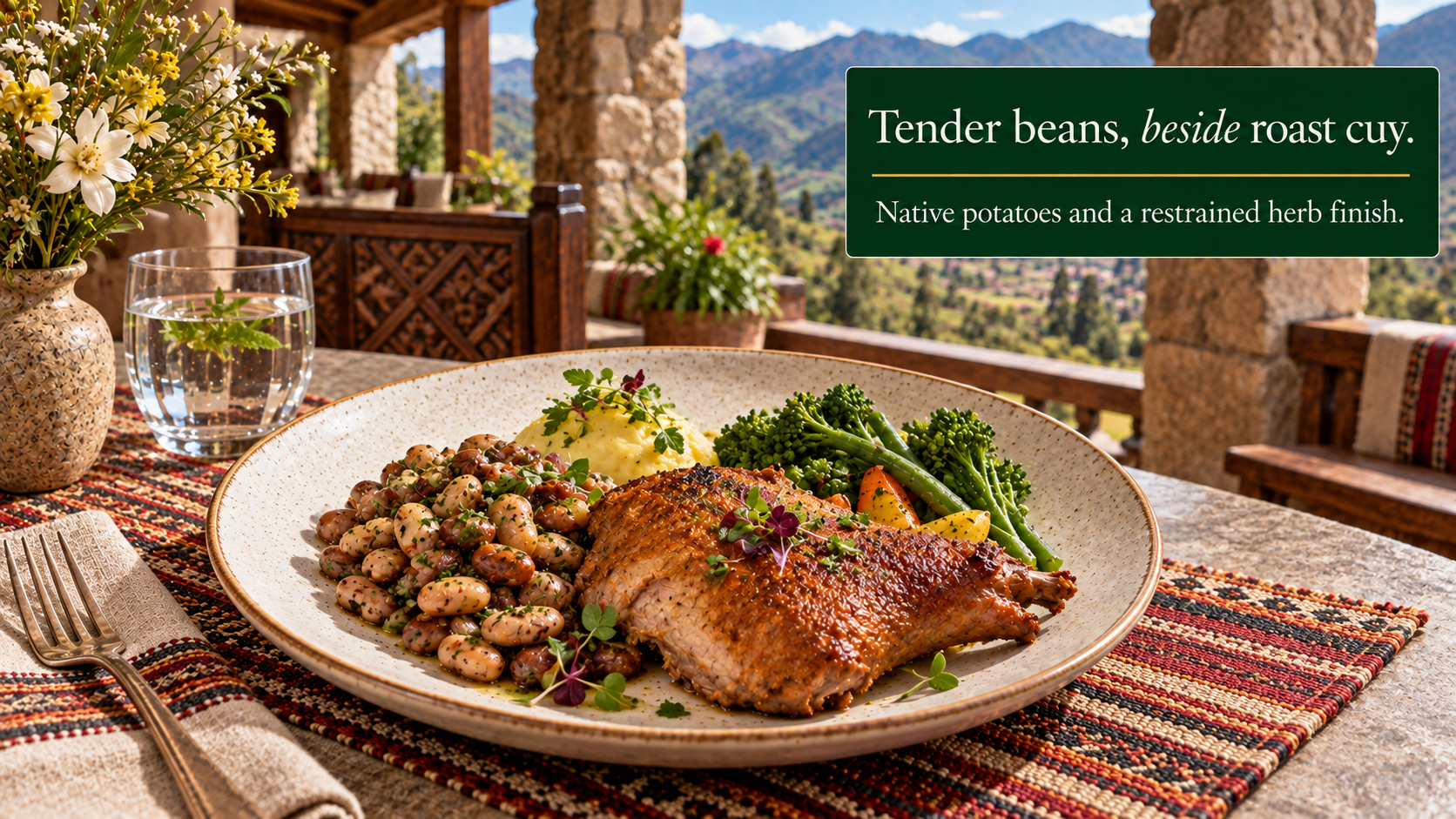
Cranberry shelling beans become creamy and more muted in color when cooked. A moist serving beside roast cuy and tender native potatoes offers three distinct textures without a heavy sauce.
Cranberry beans with roast cuy and native potatoes
Shell the beans when sold in mature pods, cook fresh or dried food-grade seeds fully, and expect their mottled appearance to change during cooking. Serve them moist beside roast cuy and tender native potatoes.
Taste and texture on the plate
NDSU Extension describes cranberry beans as creamy, with a chestnut-like flavor. Expect a gentler cooked appearance than the speckled dry seed: the red markings disappear during cooking. Their soft center works well beside a modest potato portion and roast cuy, with enough bean liquid to keep a combined bite moist.
The potatoes can stay in pieces if the variety holds together, or become a rough mash when floury. Keep the beans separately spoonable either way. A small herb finish can be offered at the side, but a thick sauce would make the three textures harder to notice. Start with a comfortable serving and add more beans after tasting.
Choosing the serving while traveling
Ask whether cranberry or borlotti beans are fresh shelled or prepared from dry, and whether they are served intact or as a mash. Confirm that the cuy is roasted and ask how the portion is presented, especially if you prefer less work around bones. Ask for potatoes that suit the texture you enjoy.
For scale, NDSU's table lists a half cup of cooked cranberry beans without added salt at about 120 calories, 8.3 grams of protein and 8.8 grams of fiber. Those figures describe the plain bean reference, not the full cuy-and-potato plate. Sauces and serving size change the meal.
Identify the seed and its food form
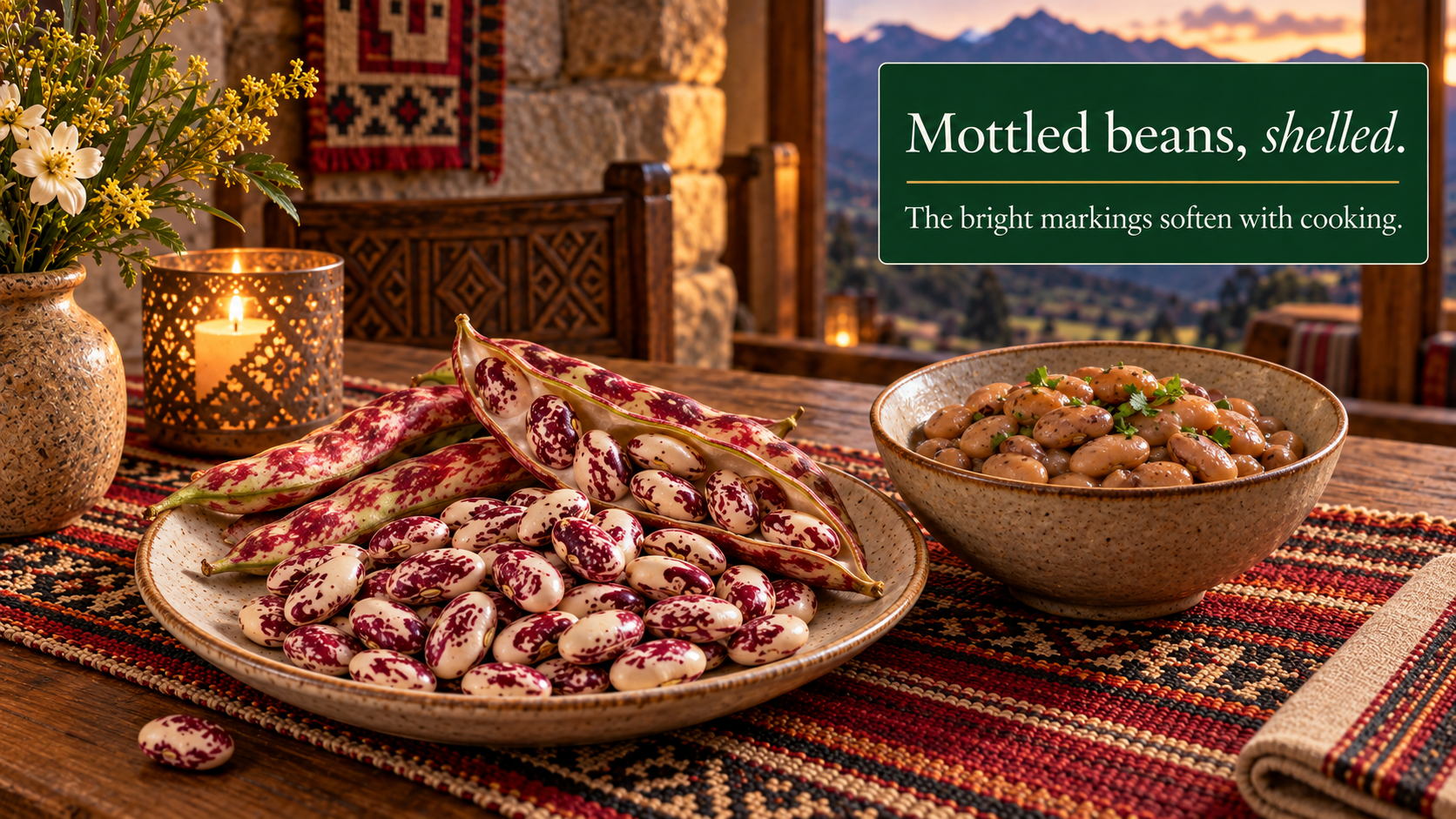
Cranberry and borlotti are names used for mottled shelling beans. A familiar type has a cream background with reddish markings, though mottling alone does not establish a named cultivar. Ask for the product label, particularly when a loose market bean could be confused with another speckled common bean.
The word shelling tells you which part is used at this stage: the developed seed removed from a pod that has become fibrous. University of Minnesota Extension distinguishes this stage from succulent snap beans and from fully dry beans. Do not treat a mature decorative-looking pod as a tender green-bean side dish.
Fresh shelled and dry are different starting points
Fresh shelled beans retain moisture and should be kept refrigerated. Dry beans have matured and dried further and need the preparation directed for that product. Penn State Extension distinguishes these forms because their handling and preservation processes differ. Cook the two forms separately when comparing them.
If you buy pods, open them and examine the beans before cooking. Discard damaged or moldy material. A bag of already shelled fresh beans saves work, but you still need to know how it has been stored. Dry beans should be labeled as food. A seed packet that shows a beautiful mottled crop is not a pantry substitute.
Penn State Extension: Dried Beans Versus Fresh Shelled Beans
Plan for cooking color to change
The maroon or pink flecks belong to the uncooked appearance. They may fade or become much less distinct during cooking, leaving a more muted bean and colored cooking liquid. A cooked serving does not have to reproduce the raw seed pattern to be successful. Describe the purchased product by its label and the cooked result by what you actually see.
For a comparison, set an uncooked sample aside in a separate dish before preparation and keep it clearly out of the meal. Do not scatter dry beans over the finished plate as a decorative topping. The useful table comparison is the tender cooked bean beside the potato and meat, the difference in texture between the accompaniments.
NDSU Extension: cranberry bean markings disappear during cooking
Cook the beans before coordinating the roast
Follow a validated preparation for the actual dry-bean product and cooking method, including its soaking and cooking directions, and cook the beans fully. Utah State's cited ten-minute preliminary boil appears within its kidney-bean guidance for slow cookers and microwaves; it is not a universal timetable for every common-bean variety. Do not substitute an unverified low-temperature process.
Fresh shelled beans follow their own supplier's cooking directions and still need cooking; their moist appearance does not make them a raw salad ingredient. Check several cooked seeds for an evenly soft center. Let the beans finish before trying to time an unfamiliar batch against the meat. They can be reheated safely with a little liquid when the rest of dinner is ready.
Utah State University Extension: cooking dry common beans safely · Penn State Extension: Dried Beans Versus Fresh Shelled Beans · NDSU Extension: refrigerated overnight bean soaking
Give the potatoes a defined texture
Choose food-grade native potatoes with sound skins and ask the seller which ones hold their shape after boiling. The native-potato label covers diverse varieties and textures. Color alone is a poor guide to whether a potato will be waxy, floury or liable to break apart. Cut similar-sized pieces or cook small potatoes whole.
Cook until a fork enters the center easily. Let steam escape briefly before plating so the potatoes do not release excess water into the beans. A flourier batch can be served as a rough mash instead of being forced into tidy slices. Keep the portion comfortable because the beans already supply another substantial part of this plate.
University of Minnesota Extension: potatoes and cooking textures
Serve roast cuy from a dependable food source
Use legally sourced food-grade cuy handled under an appropriate cold chain, with preparation suited to the cut. Keep raw meat, boards and utensils separate from cooked beans and washed produce. Have the meat cooked through using a verified food-safety method appropriate to cuy; surface browning is not evidence of a safe center.
This plate uses roast cuy rather than a fried preparation. Place a manageable portion alongside the beans, leaving space for the diner to cut around any bones. If the meat is served on the bone, make that clear at the table. A simple moist bean portion works better here than a heavy second sauce that obscures the meat and potatoes.
Use bean liquid to connect the plate
Lift the cooked beans with a broad spoon and add a little reserved cooking liquid so they remain moist. If the liquid is very thin, crush a few fully cooked beans into the portion. Keep the potato mostly separate so its texture remains noticeable. Season a small serving first, then adjust the pot only if needed.
A modest herb finish can be offered at the side. If you use lemon, add it after the beans have softened and taste the beans with potato before pouring on more. There is no need for a sweet reduction. The plate gets contrast from three different cooked textures, with enough moisture to make the meal comfortable to eat.
The images are editorial illustrations of ingredients and serving ideas. They do not document a named restaurant, a current harvest or an included retreat meal. Preparation guidance is not a tested recipe.
Leave room for the Sacred Valley
A visit to Machu Picchu can leave time for a good meal and a quieter stay in the valley. Ask Florian about The SoulSearching Experience, his five-day Sacred Valley seminar for 8-15 participants. Discuss dates, venue and meal arrangements directly.
Questions readers ask
Should I soak dry cranberry beans?
Follow the product directions. A refrigerated overnight soak is a useful starting method for dry common beans. Drain afterward and complete the cooking process; soaking alone does not make them ready to eat.
NDSU Extension: All About Beans · NDSU Extension: refrigerated overnight bean soaking
Where should an overnight soak happen?
Use the refrigerator for an overnight soak. Do not leave a warm bowl of hydrated beans on the counter all day. If the handling history is uncertain, replace the batch instead of trying to fix it with seasoning.
NDSU Extension: All About Beans · NDSU Extension: refrigerated overnight bean soaking
Should I cook in the soaking water?
For this preparation, drain and rinse the soaked beans and use fresh cooking water. Keep later cooking liquid separately if you want to moisten the finished serving. Soaking water and finished cooking liquid are different stages.
Can dry cranberry beans start and finish only in a low slow cooker?
Use a validated process for the exact dry-bean product and cooking method, follow its required soaking and cooking steps, and cook the beans fully. A long period on low heat does not by itself validate the preparation.
Utah State University Extension: cooking dry common beans safely
What if the centers remain hard?
Keep cooking with adequate water until the beans are fully tender. Older stock and cooking conditions can affect the result. Save acidic additions for after softening. Do not serve hard centers simply to preserve the outer shape.
How can I keep more beans intact?
After completing the validated cooking process for the actual beans, handle them gently and avoid vigorous stirring. Check tenderness before draining. A few broken beans are useful for thickening their liquid, and are preferable to an intact bean with an undercooked center.
NDSU Extension: All About Beans · Utah State University Extension: cooking dry common beans safely
Should I remove the pod or each seed's skin?
At the shelling stage, remove the developed seeds from the fibrous pod. Cook the seeds fully. Shelling does not mean individually peeling every seed skin. Discard damaged material and follow the directions appropriate to fresh shelled or dry food form.
University of Minnesota Extension: growing beans · Penn State Extension: Dried Beans Versus Fresh Shelled Beans
Do fresh shelled cranberry beans use the dry-bean process?
No. Fresh shelled and fully dry seeds are different starting forms. Keep fresh beans refrigerated and follow supplier directions for their cooking. Dry beans use the full dry-product preparation. Both need complete cooking before serving.
Penn State Extension: Dried Beans Versus Fresh Shelled Beans
What texture suits cranberry beans beside cuy?
Aim for a creamy, fully tender center with enough finished cooking liquid to keep the serving moist. A few broken beans can thicken that liquid. Do not stop at a hard center just to keep every seed looking perfect.
Can dry beans replace a ready-cooked product directly?
No. Prepare and fully cook the dry beans before using them in the finished meal. A canned bean has already been processed as a cooked food, while a dry seed needs its own complete cooking process.
NDSU Extension: All About Beans · Penn State Extension: Dried Beans Versus Fresh Shelled Beans
Should cooked beans be frozen with a little liquid?
A little finished cooking liquid is useful for reheating a moist serving. Cool and freeze meal-sized portions promptly, label them, and keep herbs or dressing separate. Do not freeze a partly cooked batch with the expectation that reheating will complete a safety process.
NDSU Extension: All About Beans · USDA FSIS: Leftovers and Food Safety
Should I assume cranberry leftovers keep for a special longer period?
No. Follow general safe leftover handling: prompt refrigeration in shallow containers, usually three to four refrigerated days, or freezing appropriate portions. Reheat hot leftovers to 165°F. Smell and the behavior of a different bean batch do not establish safety.
How can I make this meal for one?
Cook a manageable batch and portion it after cooking. Use a comfortable scoop for the meal and freeze the extra promptly with a little liquid. Keep vegetables and fresh herbs separate so the next plate can have a fresh accompaniment.
NDSU Extension: All About Beans · USDA FSIS: Leftovers and Food Safety
What if the beans break down too much?
If they have been safely cooked and are simply very soft, use them as a coarse mash or loose puree. Add reserved cooking liquid gradually. A softer serving can work well beside vegetables; it does not need to be presented as a whole-bean salad.
Can I keep the seasoning mild?
Yes. Begin with the cooked beans, a little salt if desired, and one modest culinary herb. Offer citrus separately. The meal does not require hot pepper, and a mild bean can remain the flavor you notice first.
Does cranberry bean mean a bean mixed with cranberries?
No. Cranberry is a bean type, also called Roman bean in NDSU's guide. Its mottled tan-red seed becomes more muted as the red specks disappear during cooking. This cuy-and-potato plate contains the cooked bean, not a berry sauce.
Can cranberry beans be served in a cool salad?
Fully cook the beans first, cool them promptly in shallow containers, and keep them refrigerated until serving. Add a restrained herb and citrus finish near the meal. A cool salad describes serving temperature, not a raw-bean preparation.
Can dried herbs replace the fresh finish?
Use a smaller amount and taste a serving first, because a dried herb is a different product with a different intensity. For huacatay, prepared paste also has its own ingredients and salt level. Do not exchange them spoon for spoon.
How do I keep the accompanying vegetables tender?
Cut dense vegetables smaller, give them a moist covered start, and uncover only after they begin to soften. Remove ready pieces while thicker ones continue cooking. A dark outside does not establish that the center is pleasant to eat.
What makes the complete plate enjoyable?
Start with fully tender beans and keep the accompaniments recognizable. Use a little cooking liquid to prevent dryness, offer the vegetables beside them, and taste a combined bite before adding a strong dressing. Adjust the portions to appetite.
Continue at the table
Put the guide into your plans
Prepare a dining request for the kitchenAnother dish to consider
- Oca with Roast Duck: An Andean Tuber at the Table
- Olluco at a Sacred Valley Table: The Bright Andean Tuber, Gently Cooked
- Mashua: An Andean Tuber Cooked for a Savory Sacred Valley Plate
- Arracacha Puree with Alpaca and Greens: An Andean Root Worth Ordering
- Pachamanca in the Sacred Valley: Herbs, Native Tubers and Slow-Cooked Food
- Encuentro de Dos Lawas: Chuño and Fresh Corn, Two Andean Soups at One Cusco Table
- Chairo Stew at Piedra & Sal: Moraya, Fava and Parsley, Read Closely