A cooked leek should reward a knife and fork: soft layers, a mild onion flavor, and enough shape to recognize what is on the plate. Early Giant suits a broth-braised accompaniment to alpaca; American Flag makes an oven-cooked partner for duck. Neither needs a fried coating or a sweet glaze to make a complete and inviting meal.
Vegetables at the Andean table
Braised and Roasted Leeks with Alpaca or Duck
Braised Early Giant leeks sit beside alpaca and quinoa, their pale layers softened in a shallow savory broth. American Flag leeks can be oven-cooked alongside a separately prepared duck portion and canihua. Wash carefully between the layers, choose a cut that suits the plate, and cook until tender. A restrained savory sauce lets the mild leek remain a generous vegetable component.
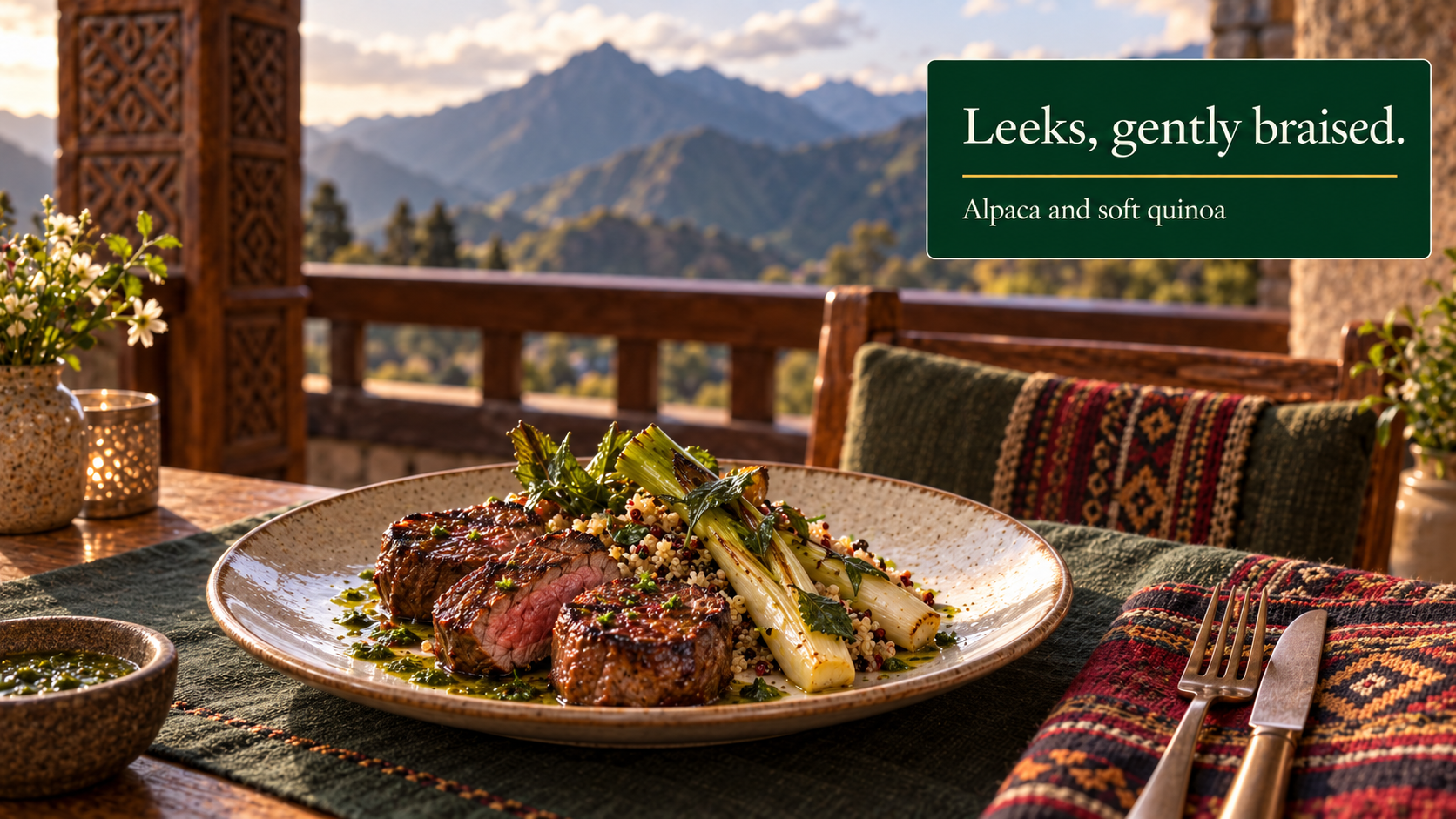
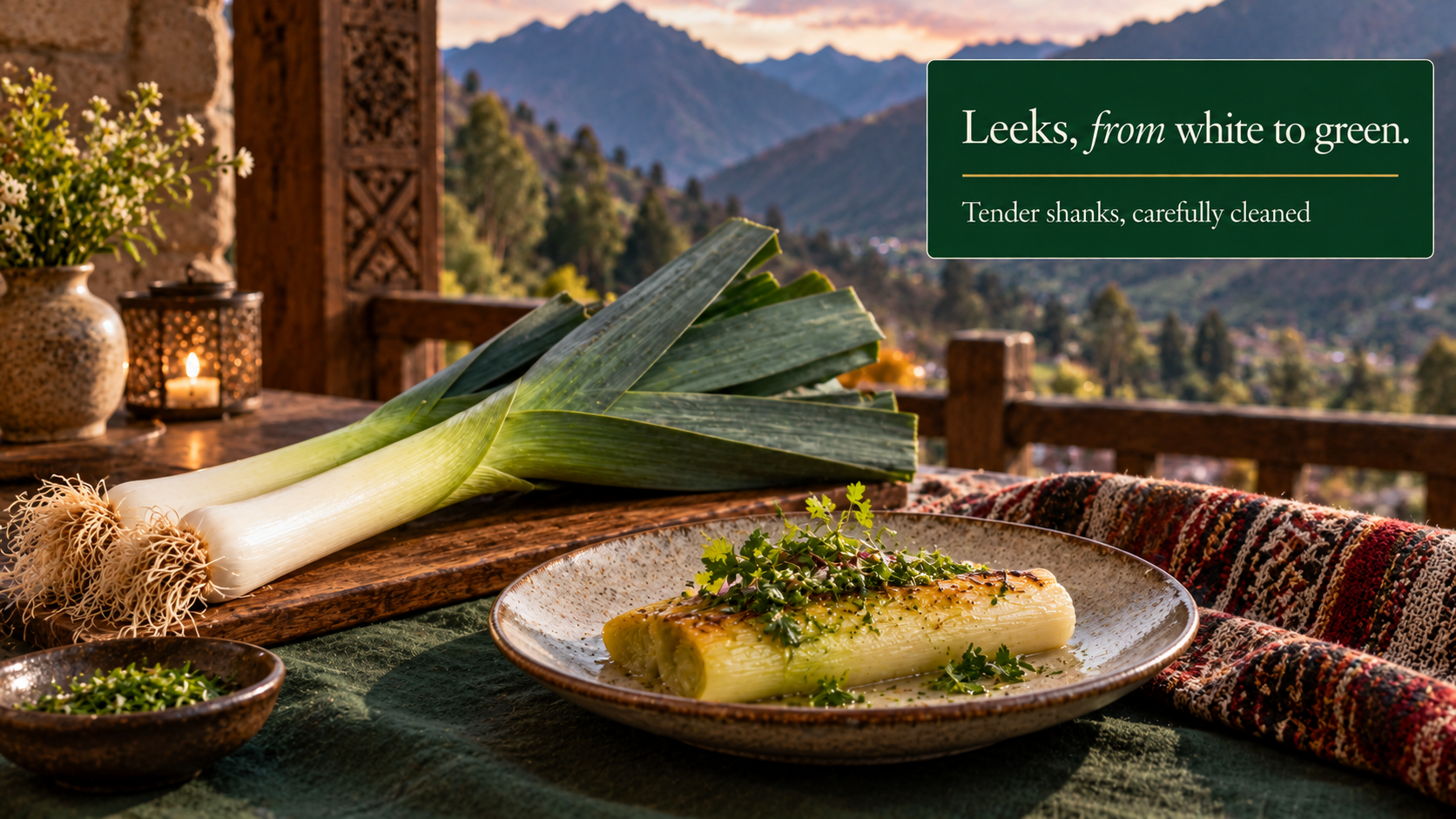
Braised Early Giant leeks with alpaca and quinoa
Wash intact leek lengths, cook covered in shallow savory stock until tender, and serve with separately cooked alpaca and quinoa.
Soft leek layers and a little broth make a gentle accompaniment to the meat and distinct grains.
Variety reference: Eden Brothers: Early Giant. Open pollinated; heirloom not explicitly established by product details.
Oven-cooked American Flag leeks with duck and canihua
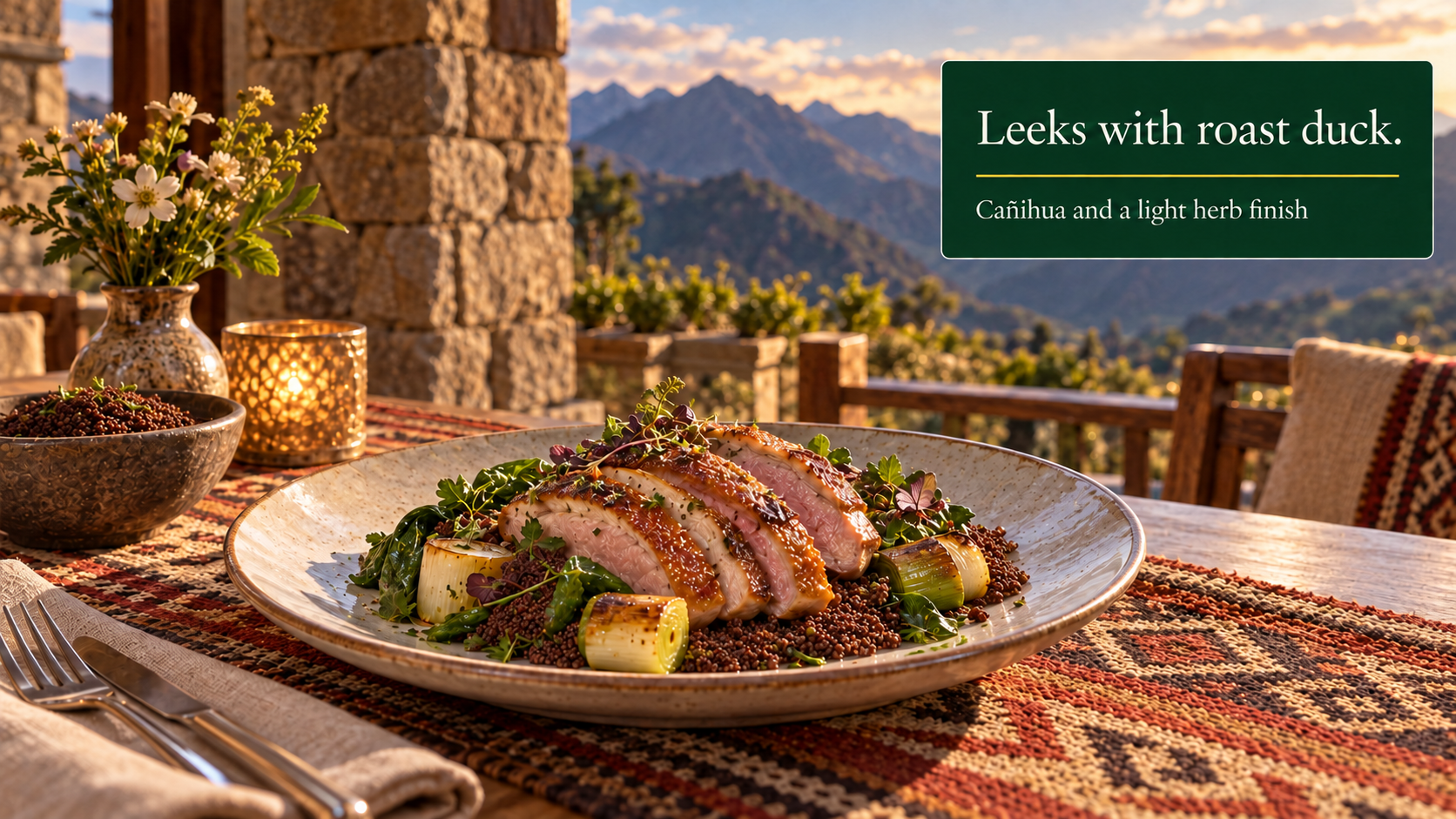
Cook washed leek halves covered with a little liquid, then uncover briefly; plate beside separately cooked duck and canihua.
Tender pale shanks balance the richer meat without requiring a sweet glaze or fried coating.
Variety reference: Eden Brothers: American Flag. Heirloom; open pollinated.
Early Giant: a shallow braise beside alpaca
For Early Giant, retain lengths of pale shank that will fit comfortably beside sliced alpaca. Trim away the root threads and any damaged leaves, then open the lengths enough to wash between their layers. Place the cleaned pieces in a shallow covered dish with a modest amount of savory stock. The liquid should soften the leeks without turning the finished plate into soup.
Cook until a knife passes easily through the thicker base. Lift the leeks carefully and let the liquid reduce separately if it needs concentrating. Spoon a little broth onto the plate, add cooked quinoa, and arrange the properly cooked alpaca alongside. A few chopped culinary herbs and lemon zest can sharpen the finish. Let the leek occupy its own generous portion rather than hiding it beneath the meat.
American Flag: oven-cooked leeks with duck and canihua
American Flag takes the second plate in a different direction. Halve the cleaned pale shanks lengthwise and arrange them cut side up in an oven dish with enough liquid to prevent the base from drying before it softens. Cover for the first stage, then uncover briefly if a little surface color is wanted. The target is a tender layered vegetable, not a crisp chip.
Serve the leeks with a separately prepared duck portion and cooked canihua. A small amount of the duck cooking juices can connect the components without coating every surface. Use lemon or a restrained herb dressing to keep the rich meat and mild leek in balance. Canihua supplies a separate, fine-textured element; native potatoes could replace it when a softer, more familiar starch is preferred.
Clean the layers for the cut you need
Leeks collect grit where the leaves wrap around one another. Wisconsin Extension specifically calls for thorough washing. For intact halves, split from the leafy end toward the base, fan the layers, and rinse while keeping enough of the base together for handling. Examine the inner folds rather than judging cleanliness from the outside.
For chopped leeks, cut first, separate the pieces in clean water, and lift them out so any settled grit stays behind. Follow with a clean rinse as needed and drain before cooking. Whole halves and chopped rounds are different handling problems: a method that is convenient for soup may dismantle the shape wanted for the alpaca plate. Cleanliness takes precedence over a perfectly symmetrical presentation.
Use pale shanks and green leaves deliberately
The pale part makes the tender centerpiece in these two dishes. Some light green can remain when it is sound and pleasant to cook. Darker leaves are generally tougher, so cut them more finely and allow more cooking if using them in a broth or soup. A hard or fibrous piece will not become appealing merely because it is labeled a low-waste ingredient.
Use sound trimmings in a small leek and native-potato soup. Simmer cleaned pieces with potato and stock, then blend or leave rustic. Serve with quinoa or high-altitude Andean trout if wanted.
Let the leek remain mild
Leeks have an onion-family flavor, but their cooked character makes them useful where a large amount of raw onion would dominate. The braised plate benefits from a clear savory liquid and a restrained herb finish. The duck plate can support slightly deeper cooking juices. Neither needs a sugary glaze to make the vegetable seem complete.
Adjust the final seasoning in small steps. If the plate tastes heavy, add a little citrus at service. Sacha inchi oil belongs only as a small cold finishing drizzle on the grain or completed plate.
Choose between a brothy plate and a richer dinner
The Early Giant plate suits someone who likes a gentle vegetable braise: tender leek layers, a little broth, quinoa, and alpaca. The American Flag plate is the richer choice, with duck juices and canihua. If you prefer less sauce, ask for it alongside so the leek can be tasted on its own.
A named leek variety matters less to a diner than tenderness and careful washing. At a restaurant, ask whether the leeks are served as intact halves or chopped into a soup, and whether the broth contains meat. Those details make the meal easier to choose. Along a Sacred Valley travel route, a quiet plate of well-cooked vegetables can be as welcome as a more elaborate dinner.
These dishes are serving ideas. Images illustrate the ingredients and preparations; they do not document a restaurant menu, a tested recipe or a current property harvest. The exact Eden Brothers catalog varieties remain research candidates.
Give the Sacred Valley a little more time
A trip built around Machu Picchu can also leave room for a good meal and a less hurried stay. Ask Florian about The SoulSearching Experience, his five-day Sacred Valley seminar for 8-15 participants. Discuss dates, venue and meal arrangements directly as you plan.
Questions readers ask
What do leeks taste like?
Leeks have an onion-family flavor that becomes a mild savory presence when cooked. That suits a gentle braise with alpaca or oven-cooked halves beside duck. Use a restrained sauce at first so you can taste the leek itself.
Why do leeks so often contain dirt?
Soil can lodge between the wrapped leaves. The outside may look clean while the inner folds remain gritty. Open the layers and rinse them thoroughly before cooking; for chopped dishes, separate the pieces during washing rather than rinsing an intact stalk only.
How can I clean leeks while keeping halves intact?
Split the upper layers lengthwise while retaining enough of the base to hold the piece together. Fan the folds under running water and inspect them closely. If grit remains inaccessible, separate more layers; a perfectly intact half matters less than a clean vegetable.
What is a simple first dish for someone new to leeks?
Try cleaned pale leek lengths cooked gently in shallow savory stock until tender. Serve with quinoa and a separately cooked protein. This makes the leek easy to taste without burying it in a complex casserole; Early Giant is the proposed catalog choice here.
Do leeks melt into soup, or can they stay tough?
Thinly sliced leeks soften more readily than large fibrous pieces. The pale shank suits a tender soup texture, while tough dark leaves need a different cut and more attention. Check a piece before blending or serving rather than assuming every part will disappear.
What can I do with the dark green leek leaves?
Use sound portions finely cut in a long-cooked broth or soup if their texture is acceptable. They are tougher than the pale shank. Remove damaged or very fibrous material, wash carefully, and avoid putting a leathery leaf on the plate simply to use every scrap.
Can onion replace leek in a soup?
Onion can supply a useful savory base, but it changes the flavor and texture. Add it as an intentional substitution rather than calling the result a leek soup. For the featured braised-leek plate, use actual leeks because their layered lengths are the main vegetable.
How can a bitter raw leek soup be made more pleasant?
A cooked soup may suit leeks better than an aggressively raw blend. Gently simmer a sound preparation until the leek softens, then adjust seasoning and texture. A little cooked potato can add body; do not try to fix spoiled ingredients with extra seasoning.
What can I make with one leftover leek?
Use it in a small leek and native-potato soup or cook it in shallow stock as a vegetable side. A single leek can also flavor cooked quinoa. Choose one clear use instead of preparing a large recipe with too little of its main ingredient.
What can I do with a large quantity of leeks?
Separate the intended uses before cooking: intact pale lengths for a braise, chopped portions for soup, and sound tougher leaves for broth. Clean each batch thoroughly. Plan storage promptly instead of making one oversized dish that will sit around uneaten.
How should leeks be stored before cooking?
Keep them refrigerated and wash thoroughly before preparation. The University of Rhode Island leek guide gives storage and preparation guidance. Plan the tender pale lengths for a braise or oven dish, and inspect the leaves before deciding whether the sound trimmings suit a broth.
Are leeks interchangeable with scallions?
They are different vegetables. Leeks provide substantial layered shanks for braising or oven cooking, while scallions make a smaller accompaniment. A scallion can contribute onion-family flavor, but it will not recreate an intact leek half on the duck or alpaca plate.
Can leeks also be eaten raw?
Michigan State Extension says washed leeks can be eaten raw. Thin slices are a different texture from the tender halves in these meals. For an introduction, keep the braised or oven-cooked serving and use a few finely cut raw pieces only if their stronger bite appeals.
Does a leek recipe weight include the parts that will be trimmed away?
Read the ingredient line: wording such as trimmed or chopped usually signals the usable portion. If it is unclear, weigh the cleaned leek you will actually cook and record that amount. This prevents a large discarded top from leaving the braise short of its main vegetable.
Can leeks be frozen for later soup?
Freezing is possible, but Michigan State Extension warns that it can make leeks mushy and give them a stronger, bitter flavor. For these plates, use fresh leeks when intact tender layers matter. If using frozen leeks in soup, follow their product instructions and expect a softer result.
Can leek soup be made without a stock cube?
Yes. A stock cube is one way to build the liquid, not a requirement. Use an appropriate vegetable broth or a well-seasoned vegetable base and taste before adding salt. The leek should still be noticeable; changing the stock should not turn the soup into a salty broth.
Can potato and leek soup be creamy without milk or cream?
Yes. Cook the potato and leek until tender, then mash or blend some of the cooked potato back into the broth. Add liquid gradually to reach the texture you like. A vegetable broth keeps this version separate from the duck or alpaca plates.
How should the duck beside oven-cooked leeks be checked for doneness?
Use a thermometer in the thickest part of the meat, avoiding bone. USDA recommends 165 F for poultry, including duck. Color and red juices do not replace that check. Bring the leeks and grain to the plate when the separately cooked duck is ready.
How can I rinse quinoa without losing the tiny seeds?
Use a fine-mesh strainer. Food Hero also suggests a clean coffee filter when a strainer is unavailable. Rinse quinoa that is not already pre-rinsed, drain it, and then cook according to a dependable method. A colander with large holes will lose the small seeds.
Can the cooked quinoa side be saved for another meal?
Yes, with prompt chilling rather than an overnight stay on the counter. Food Hero says to refrigerate leftovers within two hours. Keep the quinoa separate from extra sauce when possible so you can later use it in a grain bowl or alongside another cooked vegetable.