The spiral florets supply their own detail. Lemon and a small bowl of sesame dressing leave the green branches visible.
An illustrated serving concept in an Andean hotel setting.
Roasted duck with Romanesco and native potato puree
Set gently steamed Romanesco beside roasted duck and a small serving of native potato puree. Keep the florets intact, finish them with lemon, and offer the sesame dressing alongside so it does not cover the duck.
Explore duck in the ingredient guide. Confirm the actual preparation and availability with the kitchen.
Separate Romanesco along its branches and steam until the thickest parts are tender to your preference. Finish lightly with lemon and offer sesame dressing separately. The photographed OSC packet identifies Romanesco; it does not name a current restaurant supplier.
The featured ingredient, served on its own.
Illustrated serving concepts and an imagined Sacred Valley garden. These are not photographs of a named restaurant, a current harvest, or a tested recipe.
Recognize the vegetable on its own terms
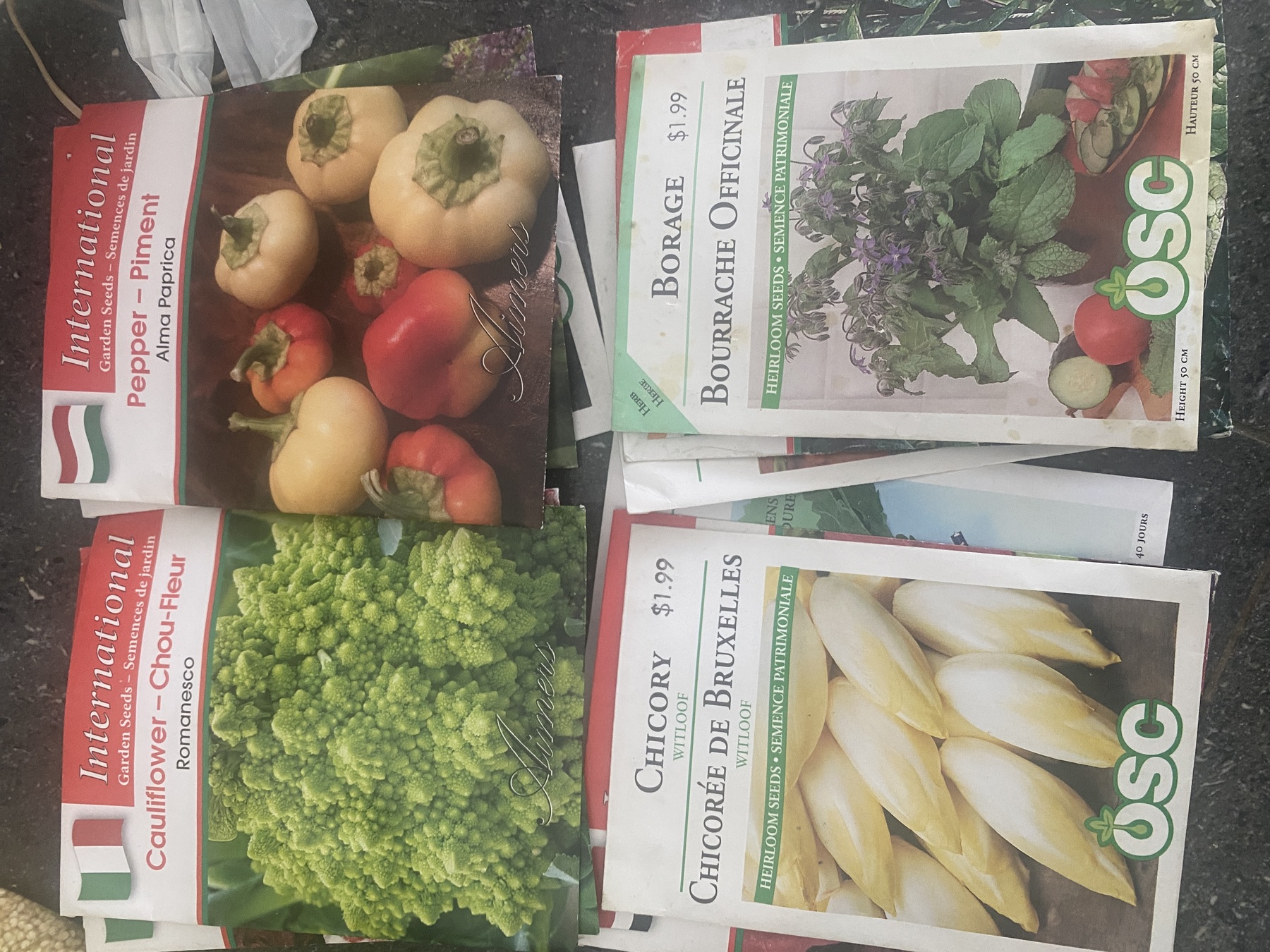
The packet reads Cauliflower, Romanesco. Its repeated pointed curds distinguish it from the rounded surface of an ordinary white cauliflower. Some sources call it Romanesco broccoli, but that name does not make it the same ingredient as the Yod Fah Chinese broccoli in the seed collection.
Follow those branching forms when you separate the head. Keeping some larger pieces gives the plate height; smaller florets can sit around them. A very finely chopped preparation is another dish, with less of the visible structure that makes this one appealing.
Steaming suits a serving focused on tender florets with their outline intact. Check the thicker parts as they soften. Pieces of similar size make that easier, while a mix of very small tips and thick branches needs more attention.
Roasting introduces browned surfaces. It may suit another meal, especially if you enjoy the tips taking on color. A whole head needs a different plan from separated florets; some published whole-head recipes begin with partial steaming. Choose the method first, rather than borrowing a cooking time from a different cut.
Lemon gives the serving a sharper edge. Sesame dressing adds a different texture, so a small side bowl is a useful way to offer it. Begin with less than you think the vegetable needs and taste before adding more.
Tahini contributes sesame's own natural fat even if a sauce has no separately added oil. That distinction matters when someone requests an oil-free preparation. A kitchen can explain its actual recipe. If sesame is unsuitable for a guest, plain lemon with a compatible herb offers a separate direction to discuss.
A second serving, with a different plate and setting.
Use the stems and leaves thoughtfully
The head is the obvious focus, but suitable leaves and the tender part of the stem can be used in cooking too. Trim damaged areas, wash them, and consider whether a firmer stem needs a different cut or more time than a floret.
They might belong in another cooked vegetable dish rather than crowding this plate. The goal is a serving that makes sense to eat. No one needs to balance a large intact stalk on a small dinner plate merely to show that the whole plant was used.
Borrow an approach from a menu, not a cultivar claim
Casa Ichu publishes a roasted cauliflower dish with pomegranate and citrus-carob sauce. The menu names cauliflower without identifying Romanesco. Muju's charcoal-grilled eggplant salad offers another example of a vegetable given the center of the plate.
Those descriptions can inspire the care given to a vegetable course. They do not establish that either restaurant serves this Romanesco-and-sesame combination. If the exact vegetable matters, ask the kitchen what it has before making a special trip.
Fit the vegetable to the rest of the meal
Romanesco can be a vegetable course beside cooked fish or a serving of grains and legumes. If the other plate already has a substantial sauce, lemon alone may be enough here. If it is the main vegetable dish, ask about the portion before ordering several additional sides.
For an unhurried meal around a Machu Picchu visit, make the transport arrangements first and leave room to order deliberately. A thoughtful lunch depends as much on the time you give it as on choosing an unfamiliar ingredient.
Two textures from one Romanesco head
A kitchen can keep the pointed florets intact while making a small, softer vegetable base from another cooked portion. For example, a spoonful of plainly mashed Romanesco could sit beneath several tender florets. The change comes from preparation rather than an elaborate garnish, and it gives the guest a soft element alongside pieces that still need a fork.
The mash should be judged before liquid is added. A little suitable cooking liquid may be enough to loosen it; cream is a separate recipe choice. Keep the sesame sauce beside the plate so the two soft components do not become one indistinct pool. This arrangement is a serving idea for the cook to adapt to the actual head.
Pair the florets with baked high-altitude Andean trout
Baked high-altitude Andean trout and quinoa give the Romanesco a clear place within a complete lunch. Arrange the fish beside the vegetable rather than on top of its delicate points. A little lemon can season both, while the separate sesame dressing remains available for the Romanesco and grain.
If the fish already arrives with a substantial sauce, the vegetable can stay plainly steamed. If the guest chooses sesame dressing, ask the kitchen to keep its amount modest and explain any additional ingredients. A warm plate helps the meal arrive together, but the florets should not spend a long wait in a covered bowl while the fish finishes. Preparing the components to meet at service protects the texture that makes Romanesco worth ordering.
Restaurant references
These published combinations offer useful comparisons. They do not establish that the restaurants use the photographed seed varieties or can prepare the illustration.
Roasting explicitly stated. Confirm oil and added sweetener in sauce. Full recipe, preparation fat, garnishes and restaurant substitutions are unverified.
Cusco; Undated live menu, checked October 12, 2026. A menu reference, separate from the pictured serving concept.
Muju, Rio Sagrado, a Belmond Hotel · Ensalada de berenjena a la parrilla
Eggplant, radish, squash-seed sauce, shiitake.
Charcoal grill (stated a la parrilla al carbón) The printed menu marks gluten-containing cereals and soy; ask which recipe components or cross-contact the symbols describe. Confirm grilling oil and sauce. Full recipe, preparation fat, garnishes and restaurant substitutions are unverified.
On the Urubamba-Ollantaytambo road, the official dining page names Muju. Its linked lunch and dinner menus are references to check with the restaurant. The older El Huerto menu dates from April 2025. These menu references are separate from the pictured serving concept.
Food can give the days around Machu Picchu a welcome sense of place. If you would also like time for reflection, explore a Sacred Valley retreat before or after your visit. Florian Rolke offers The SoulSearching Experience, a five-day seminar for 8-15 participants, with no plant medicine.
Ask for the current dates, venue, price and inclusions before arranging the rest of your trip. These dishes, restaurant visits and garden visits are ideas to explore; they are not confirmed seminar inclusions.
Questions about this dish
Adapted from public cooking questions and published FAQs. Answer sources are linked below each response. Broader ingredient questions are included where they help with this serving.
How does Romanesco differ from ordinary cauliflower?
Romanesco has a chartreuse head with pointed, repeating florets, while ordinary cauliflower has rounded curds. Its shape is part of the appeal on the plate. Handle the florets gently when separating them so the distinctive towers remain recognizable after cooking.
Choose steaming for a gentler preparation that keeps the towers intact, or roasting for browned edges. Both can work with lemon. Test the texture as it cooks and stop when the florets suit your preference rather than leaving them to soften indefinitely.
Yes, a whole head can be roasted. Feasting at Home suggests partly steaming it first so the center has a head start. Whole heads and separated florets need different cooking plans, so do not transfer a small-floret timing directly to a whole head.
Romanesco can be eaten raw, including as small florets in a salad or with a dip. Culinary edibility does not establish the hygiene of a particular serving. Wash it carefully, and consider a thoroughly cooked preparation where handling or water quality is uncertain.
Availability depends on where you are buying it. BelOrta's calendar describes its own regional supply and cannot establish a Sacred Valley harvest season. Ask a local seller or kitchen what is available during your visit and where that batch was grown.
Lemon and garlic are straightforward companions, while cheese or toasted nuts offer a richer finish. Choose the additions that suit the meal rather than using all of them. If avoiding dairy, confirm that cheese is absent from both the topping and sauce.
Romanesco tips can brown quickly in a hot oven. Browning is part of a roasted preparation, but the small tips deserve attention as cooking progresses. Check their color together with the tenderness of the thicker parts so the outside does not scorch.
Smaller florets expose more surface and cook faster, which can encourage browned edges. Check them sooner than larger pieces. If preserving the towers matters more than extra crispness, separate the branches gently instead of chopping every floret into very small pieces.
Does Romanesco have a stronger flavor than cauliflower?
Romanesco is generally described as mild, with a somewhat nuttier character than ordinary cauliflower. That comparison is a starting point rather than a promise about every head. A simple lemon finish leaves its flavor easy to taste, without many toppings.
Ohmydish recommends keeping its roasted Romanesco in the refrigerator for up to two days. Store it in a suitable covered container. A freshly roasted serving and reheated leftovers offer different textures, so plan the quantity around how you want to enjoy it.
An air fryer is one of the methods discussed in the source, but this plate uses gentle steaming. You can also choose an oven-roasted preparation if you prefer browned edges. Ask about added oil and the finished texture rather than assuming the appliance name tells you the whole method.
For a whole-head roast, trim the base so it sits steadily in the dish. For florets, follow the branching stems and separate the spires gently. This preserves more of their outline than cutting straight across all the pointed tops.
How long does a whole-head roast need without a microwave?
In a reader reply, This Silly Girl's Kitchen suggested roughly 50 to 60 minutes for the oven-only version. Treat that as guidance for its whole-head preparation. Head size matters, so test the center and watch the tips rather than assuming that time guarantees doneness.
How can I cook Romanesco while preserving its appearance?
Brief steaming is a useful choice when the shape is your priority. Separate the florets along their branches and handle them gently. Check as they soften, then finish with lemon to taste; prolonged cooking can leave the towers too soft to hold their form.
Ask produce sellers, specialty grocers or the restaurant kitchen whether they have Romanesco. Stock can change, and a discussion about U.S. shops does not identify a Peruvian supplier. Confirm the actual vegetable and its source before planning a meal around it.
Yes. Feasting at Home uses the leaves and stem alongside the florets. Trim damaged areas, wash everything, and remove a tough outer stem layer if needed before slicing the softer center. Using these parts changes the amount available for your serving.
Lime juice or vinegar can provide acidity when lemon is unavailable, although the flavor will change. Begin with a restrained amount and taste before adding more. The substitution suits an adjusted dish; it does not make the finished flavor identical to the lemon version.
Wash Romanesco under safe running water before cutting or cooking, and use clean hands, utensils and work surfaces. Do not use soap or household detergent on produce. Washing helps reduce contamination, but it cannot guarantee the safety of a raw serving.
Does an upscale restaurant guarantee safe raw garnishes?
No. A polished dining room or higher price does not verify water quality, refrigeration or produce handling. Where hygiene is uncertain, CDC favors thoroughly cooked food served hot. Ask that raw garnishes be omitted if that is the preparation you want.
Does the Baker Creek packet establish organic certification?
Baker Creek's FAQ states that its seeds are not certified organic. The packet also cannot establish how a particular harvested vegetable was grown. If organic production matters to your choice, ask about the actual grower and the basis of any certification claim.
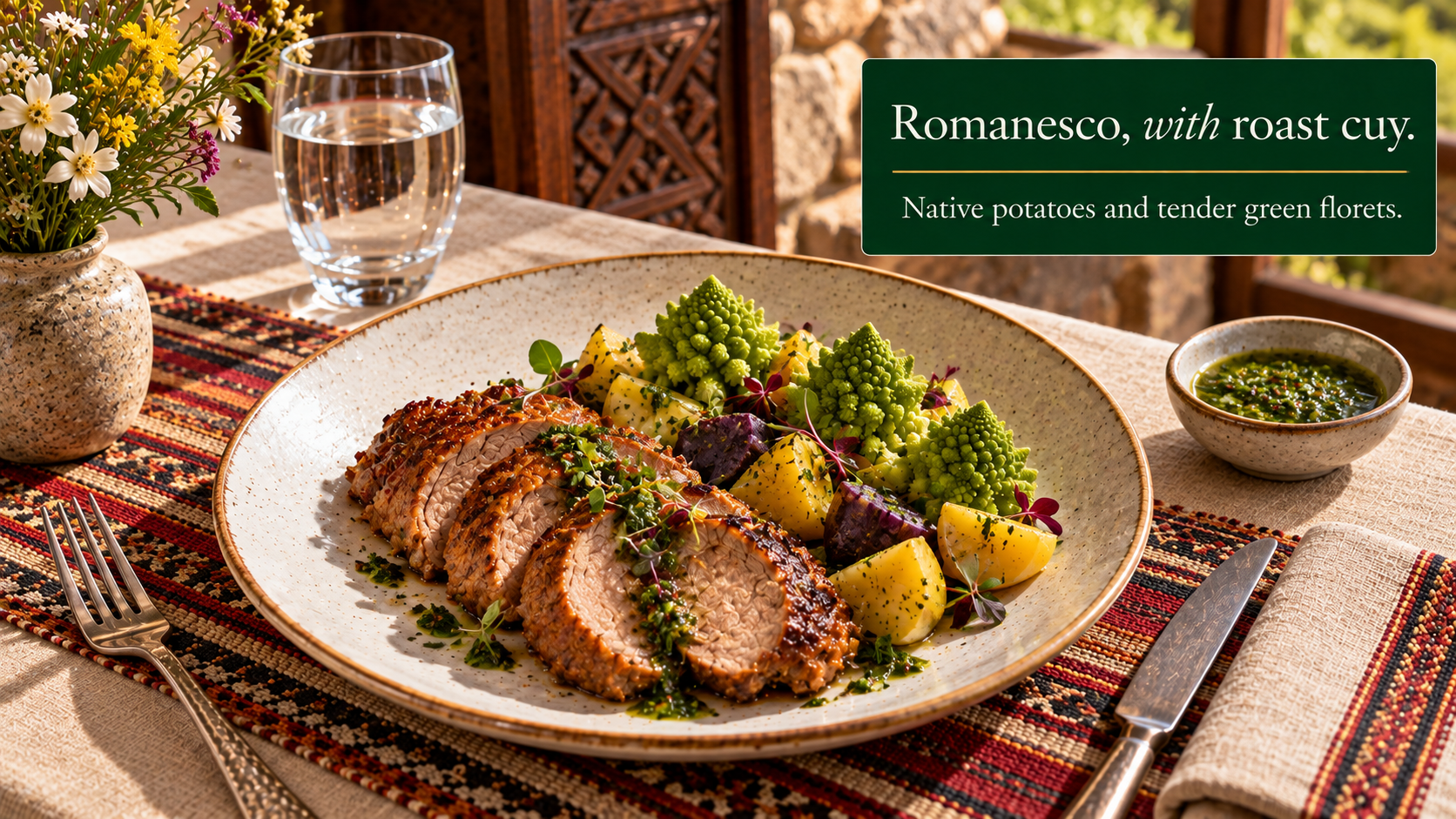
Cook Romanesco until the stems are tender, prepare native potatoes according to their actual texture, and serve both alongside safely cooked roast cuy. Keep the vegetable recognizable rather than hiding it in puree.
Romanesco can accompany roast cuy without repeating the duck-and-potato-puree plate. Here, recognizable florets and native-potato pieces give the meal a different texture, with a light finish offered at the side.
Romanesco, with roast cuy. Native potatoes and tender green florets.
Keep the Romanesco recognizable
University of Wisconsin Extension describes Romanesco's pale green head and pointed spiral clusters and notes that it can be prepared similarly to cauliflower or broccoli. Choose a dense sound head without discolored or soft areas. Its shape does not need an invented hybrid explanation at the table.
Wash and separate manageable florets. Split the thickest stem sections so they can cook alongside the smaller branches without leaving a firm center. Save very large centerpiece wedges for a preparation that can cook them evenly; a cluster that looks dramatic but is awkward to divide does little for this meal. Let the vegetable occupy a real serving portion beside the potatoes.
Steam the florets or use a covered oven dish with a little water until the thick stems yield easily. Drain before plating. If you want a drier surface, uncover briefly after tenderness is established. Watch the small tips, which can dry while a thick base is still firm.
A fork should enter the stem comfortably, and the diner should be able to separate a piece without sawing through it. Serve the florets mostly intact, reserving a softer batch for another presentation if they fall apart. A small squeeze of lemon can be tested on one portion after cooking. Do not add enough sauce to fill every spiral and hide the vegetable's own texture.
Choose potatoes that work as pieces
Ask the supplier which native-potato lot holds together during boiling. Color does not establish a waxy or floury texture. Use small potatoes or similar-sized pieces, cook until tender and let surface moisture escape before serving. If the batch proves floury, a rough mash is a sensible alternative, but describe the serving that way.
Use a moderate potato portion because Romanesco needs room and the cuy is the meat center. Set the potatoes alongside rather than under all the florets. This keeps the vegetable from sitting in wet starch and gives the diner a plain potato bite for comparison. A little chopped culinary herb can connect them without requiring a rich sauce.
Use legally sourced food-grade cuy from a dependable cold chain and cook it through using a verified method suited to the cut. Keep raw-meat equipment separate from the washed vegetable and cooked potatoes. Make any bones clear when serving, and offer a manageable portion beside the florets rather than hiding it under them.
The serving uses roast cuy, with no frying step. Keep any herb finish separate so the meat, potato and Romanesco can each be tasted. Refrigerate leftovers promptly in shallow containers within two hours, or one hour above 90°F. Use refrigerated leftovers within three to four days or freeze appropriate portions and reheat hot leftovers to 165°F.
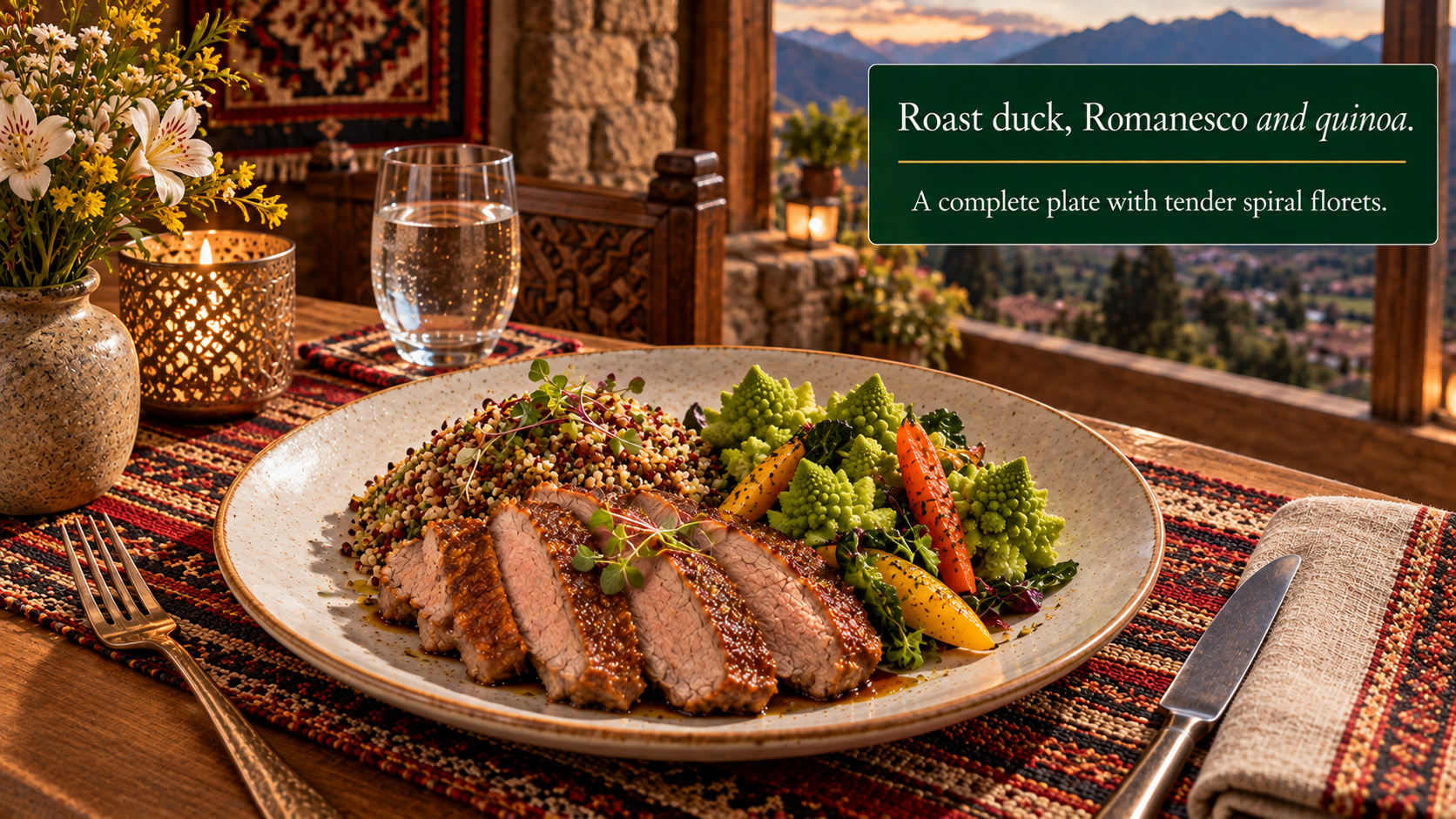
Keep the duck and Romanesco, replace potato puree with a modest portion of separately cooked quinoa, and adjust moisture so the grain stays fluffy and the florets remain tender.
Replacing potato puree with quinoa changes how the plate eats. The grain stays separate, the Romanesco needs to be drained well, and the duck can be served alongside rather than resting on a smooth potato foundation.
Roast duck, Romanesco and quinoa. A complete plate with tender spiral florets.
Choose the grain texture deliberately
Cook quinoa according to its package, using the product's preparation directions rather than treating it as an interchangeable scoop of potato. Let excess steam escape and fluff it before serving. A compact wet mound will behave differently from the loose grain intended for this plate.
Begin with a modest portion beside the duck. Because the plate no longer has potato puree to provide a soft coating, keep the quinoa comfortable to eat with the other components. A little suitable plain cooking liquid can be offered separately if needed. Do not drown the grain with meat juices before the diner has had a chance to taste it. This is a grain rotation, not the original puree dish under another name.
Prepare Romanesco for a separate vegetable portion
University of Wisconsin Extension describes Romanesco's pointed pale green clusters and notes that it can be prepared like cauliflower or broccoli. Choose a sound dense head, wash it and divide into manageable florets. Split thick stems so they can cook along with the finer branches.
Steam or use a covered oven dish with a little water until the stems are tender. Drain well before plating. The vegetable's released water matters more with loose grain than with a thick potato puree, so do not transfer a wet cooking tray directly onto the quinoa. Keep the florets recognizable and easy to divide with a fork. A brief uncovered finish is optional once the centers are ready.
Roast a food-grade duck cut using a suitable method and keep its raw equipment separate from cooked grain and washed vegetables. USDA recommends a minimum internal temperature of 165°F, measured with a food thermometer. Check the appropriate thick area rather than treating a browned surface or clear-looking juice as proof.
Drain excess rendered fat and carve a manageable portion for each serving. Put the duck beside the quinoa and Romanesco so people can combine the parts as they eat. This arrangement makes any added moisture easy to control. It also keeps the vegetable visible instead of hiding it below a large piece of meat or coating it with the contents of the roasting pan.
Taste a bite containing all three components before adding a sauce. A small amount of chopped culinary herb or lemon offered separately may be enough. Keep the serving savory, with no sweet reduction or fried topping. If the grain feels too prominent, reduce its portion and give more room to the vegetable rather than changing everything into a mixed bowl.
Refrigerate leftovers promptly in shallow containers within two hours, or one hour above 90°F. Use cooked refrigerated leftovers within three to four days or freeze suitable portions; reheat hot leftovers to 165°F. Keep grain and florets separate when storing to avoid excess moisture. Add a fresh light herb finish after reheating rather than expecting a stored dressing to retain the same flavor.