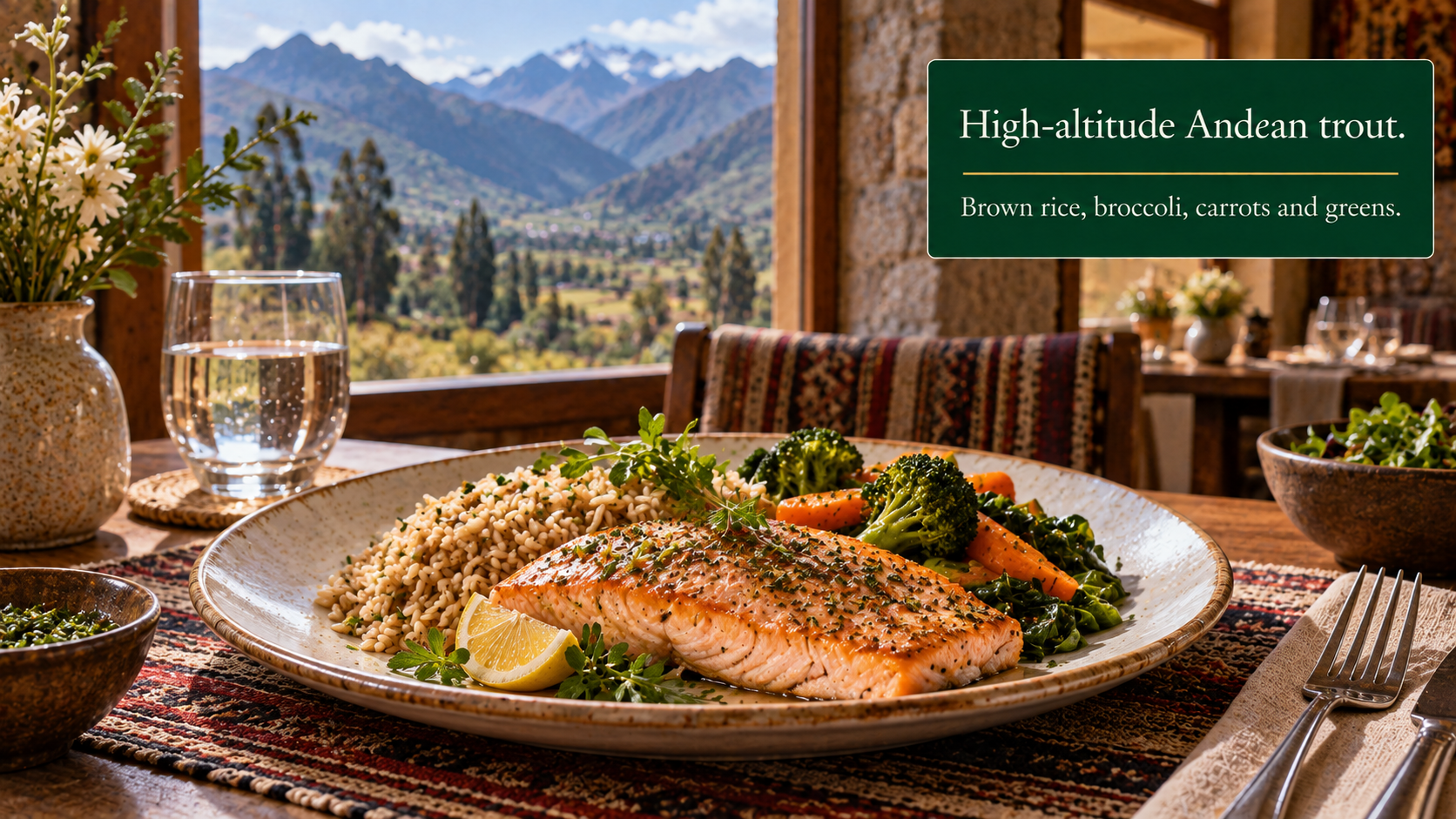
Brown rice has enough texture to hold its place beside delicate fish. Broccoli brings firmer green florets, carrots a little sweetness, and leaves a softer bite. Give each component enough room on the plate, then use herbs and citrus to bring them together.
Fruit, grains and savory plates
Brown Rice with high-altitude Andean trout and Vegetables
Cook brown rice until tender but still distinct, then serve it with high-altitude Andean trout, broccoli, carrots and greens. Keep the vegetables bright and place the fish beside the grain. Brown rice brings the gentle chew of a whole grain; herbs, citrus and a little cooking juice can connect the plate without a heavy sauce.
Give the rice its own texture
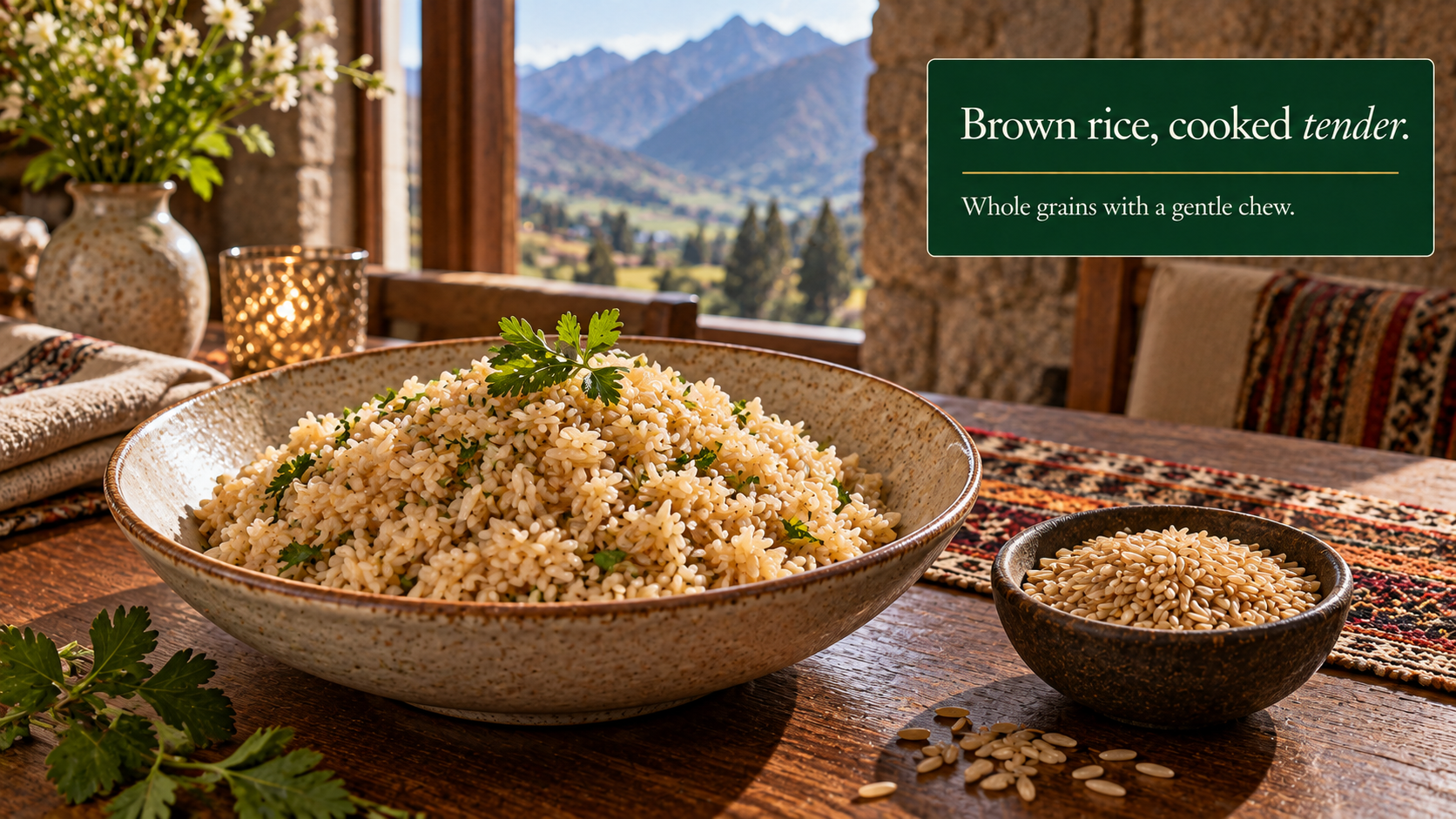
Brown rice retains the bran and germ that make it a whole grain. That gives it more chew than polished white rice. Follow the package method for the rice being used, then taste near the end rather than committing to a universal water ratio. A tender grain should have no hard center. Let it settle briefly before fluffing so it stays separate beside the fish.
Fold in chopped herbs and a little citrus after the steam subsides. Light seasoning lets the grain's own flavor remain clear. If it is ready before the fish, keep it safely hot or spread it into shallow portions and chill it as quickly as possible, ideally within one hour, for later use. Avoid leaving a deep pot at room temperature while dinner catches up.
Keep broccoli, carrots, and greens distinct
Cut the carrots into small pieces that can become tender without turning to mash. Steam or simmer them first; add broccoli later so the florets retain shape and color. Greens need still less time. Wash all three under running water before cutting, and use clean equipment. The order matters more than a single timer because the size and maturity of each vegetable vary.
For a composed plate, set the vegetables beside the rice rather than burying them in it. A forkful can take a little of each, while the diner can still taste the soft carrot, firm broccoli, and tender leaves individually. If the greens are assertive, chop them finely and let herbs or citrus tie them to the grain. There is no need for an oily sauce or a sweet glaze. A little separation also makes leftovers easier to pack: cooled rice, cooked fish, and cooked vegetables can be portioned without crushing the broccoli.
If serving several people, set out the cooked vegetables in their own bowls and spoon them onto each plate at the end. That keeps the broccoli from steaming further under the fish and lets someone take more greens or fewer carrots without dismantling the dish. Reserve citrus for the table so each diner can sharpen the high-altitude Andean trout or rice to taste. This is especially useful when the fish is mild and the greens vary in bitterness.
Let the high-altitude Andean trout finish the plate
Bake or steam the high-altitude Andean trout by a method suited to the cut, checking the thickest part with a food thermometer. FoodSafety.gov lists 145°F (63°C) for fish. Place it beside the warm rice so the fillet stays intact. A small spoonful of herb-scented cooking juices can connect the elements without soaking the vegetables.
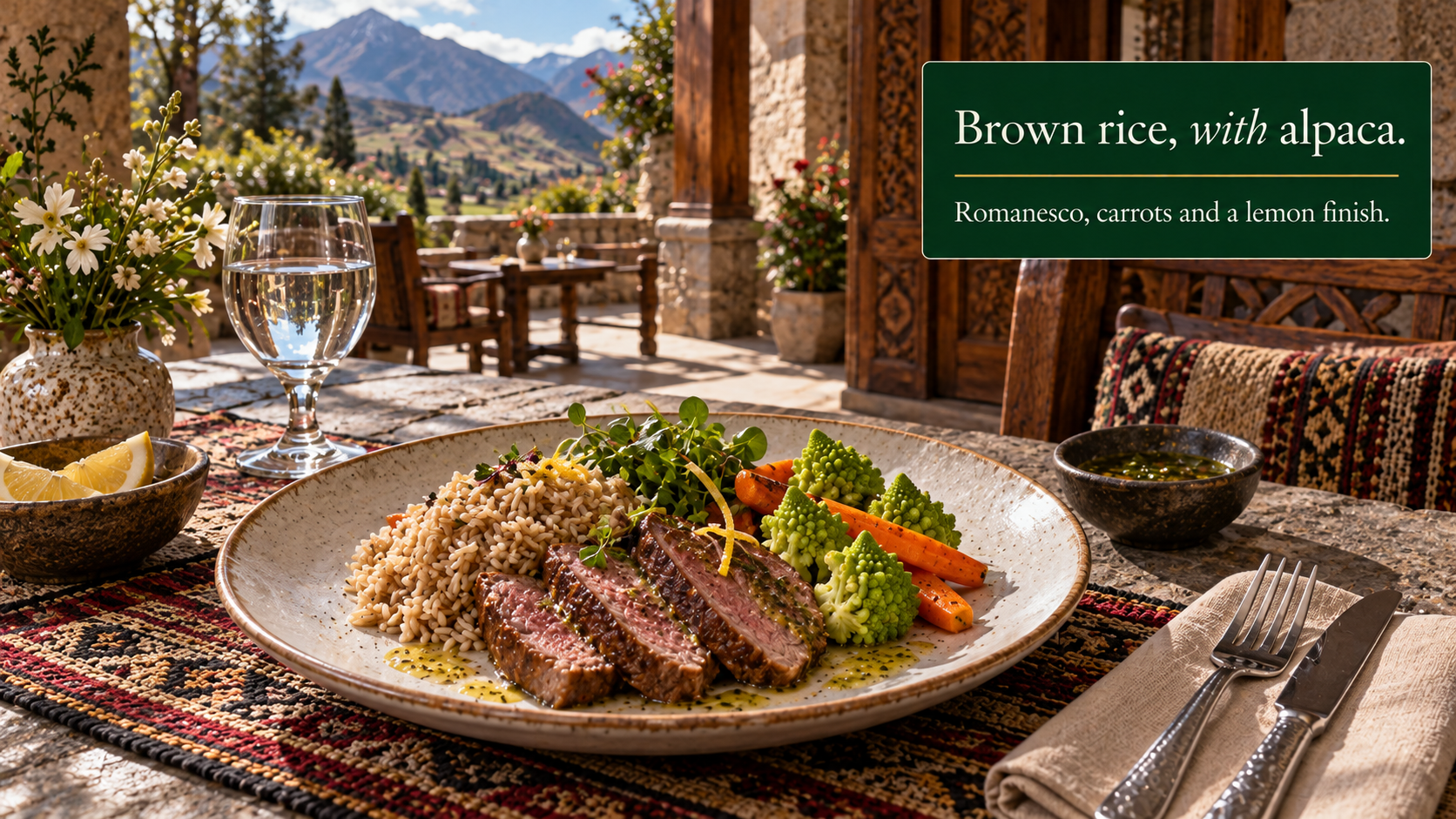
If provenance matters to your meal, ask what fish is being served and where it was raised or caught. For the second plate pictured here, cooked alpaca takes the place of fish, with Romanesco, carrots and the same brown-rice base. Lemon offered separately lets each diner adjust the finish.
Plan for the next meal when the pot is still warm
Rice is often cooked in a larger batch than one dinner needs. Spread extra rice into shallow portions, chill it as quickly as possible, ideally within one hour, then refrigerate and use it within 24 hours or freeze it. Keep cooked fish separate from the rice and vegetables. Reheat one portion until steaming hot throughout, once, rather than repeatedly warming the whole batch.
Vary the vegetables with what suits the meal: tender Romanesco instead of broccoli, small native potatoes in place of part of the rice, or another cooked green beside the carrots. Keep the grain portion comfortable for your appetite and leave enough room for the rest of the plate.
The images illustrate serving ideas, rather than a named restaurant menu, a current harvest or an included retreat meal. These are preparation guides, not tested recipes.
A little more time in the Sacred Valley
A Machu Picchu journey can leave space for more than the train and the citadel: a meal, a quieter morning and a conversation that has time to develop. Ask Florian about The SoulSearching Experience, his five-day Sacred Valley seminar for 8-15 participants. Discuss dates, venue and meal arrangements directly.
Questions readers ask
How should brown rice be cooked for the high-altitude Andean trout plate?
Use the instructions for the actual brown rice, then taste before the stated finish time. The goal here is tender whole grains with no hard center, not a universal water ratio. Let it rest covered briefly and fluff before adding herbs. Cook the high-altitude Andean trout separately so neither fish nor broccoli waits on the rice.
How can the rice keep its shape beside fish and vegetables?
Mushy rice can reflect too much water, too much cooking, or a method that does not suit that rice. Follow the package, measure consistently, and check texture near the end. Let the grain rest before fluffing. For this plate, keep moist greens and cooking juices beside the rice rather than stirring everything through it.
What if brown rice stays hard in a rice cooker?
A hard center means the grain needs more hydration or time, though the cause could also be the machine or batch size. Check the cooker's brown-rice setting and capacity, follow its instructions, and taste before serving. Do not use a very large water ratio from someone else's machine as a rule for this high-altitude Andean trout plate.
Should brown rice be rinsed before cooking?
Rinsing brown rice is a choice to make from the package directions and the cooking method. It will not remove the bran and germ that make brown rice a whole grain. Rinse in clean water if the package calls for it, then drain and use its stated liquid ratio. FDA says rinsing alone has little effect on arsenic levels in cooked rice.
Can brown rice replace white rice under the vegetables?
Yes, but give brown rice its own cooking time and liquid according to the package. It usually takes longer and has a chewier finish. Cook broccoli, carrots, and greens on their own schedule rather than leaving them in the pot throughout the rice cook. Fold herbs into the finished rice and plate the vegetables separately.
What if the rice pot foams over?
Use a pot with more headroom, reduce the heat to a steady simmer after the initial boil, and follow the cooker capacity limit. Do not seal a vent or leave a foaming pot unattended. The goal is controlled cooking, not a fixed water ratio. Let the finished grain settle before bringing it to the high-altitude Andean trout plate.
When should broccoli and greens join rice?
For this composed plate, cook the vegetables separately. Carrots need a longer head start, broccoli less, and tender greens only a brief finish. If a cooker has a suitable steaming tray, follow its directions and check each vegetable for tenderness. Avoid leaving the broccoli in with brown rice for the full grain cycle.
Can vegetables steam while the brown rice cooks?
They can if the appliance is designed for that use and its instructions allow the load, but the timings rarely match automatically. Start carrots earlier and add broccoli or greens later as appropriate. Keep raw fish separate from ready-to-eat produce and check the high-altitude Andean trout's safe endpoint independently. The goal is distinct, tender vegetables.
How can the rice taste good without a heavy sauce?
Cook the rice with water or a light, appropriately seasoned stock, then add chopped herbs and citrus after fluffing. A spoonful of juices from safely cooked high-altitude Andean trout can connect the plate, but avoid soaking the grain. Taste before salting because the vegetables and fish may already be seasoned.
What turns brown rice into a full savory dinner?
Give the grain partners with distinct roles: safely cooked high-altitude Andean trout for the main, broccoli for a firm green bite, carrots for tenderness, and leafy greens for volume. Keep the components visible and season them together with herbs and citrus. The result is more satisfying than a bowl of plain rice with a token vegetable.
Should the brown rice be salted during cooking?
Salt is a flavor choice, not a requirement for safe cooking. A lightly seasoned pot can make the grain pleasant on its own; herbs and citrus can also join after cooking. Taste the entire finished plate before adding more, especially if the high-altitude Andean trout or stock already brings salt. The rice should support, not dominate, the vegetables.
How should extra cooked rice be cooled?
Spread extra cooked rice in shallow portions. The UK Food Standards Agency advises chilling it as quickly as possible, ideally within one hour, then refrigerating and using it within 24 hours or freezing it. Keep the fish separate and cold. A deep pot left on the counter cools too slowly; reheating cannot reliably correct unsafe storage.
Why does refrigerated brown rice seem dry?
Chilled rice firms up, but keeping it at room temperature to preserve softness is unsafe. Cool it in small portions, ideally within one hour, and refrigerate it. Use refrigerated rice within 24 hours under the UK Food Standards Agency guidance. Reheat one portion until steaming hot throughout, adding a little water for softness, then bring fresh herbs or greens to the plate.
How can the rice be reheated for a second high-altitude Andean trout plate?
Reheat only rice that was cooled and refrigerated promptly. Put one portion in a covered oven-safe dish with a little water, then check that the center is steaming hot throughout. The FDA lists 165°F for leftovers; a food thermometer is more reliable than a fixed oven time. Do not carry cooked rice and fish warm for hours. Transport them cold.
Is soaking brown rice necessary for this plate?
Not necessarily. Some products and machines benefit from a specified soak, while others can be cooked directly. Follow the package and the appliance guidance, then judge the finished grain by tenderness. Keep soaking and cooking equipment clean, and do not treat an unmonitored warm soak as a substitute for the full cooking step.
Can brown rice be cooked in extra water and drained?
Yes, if the rice's package or a tested method supports it. Drain when tender and let excess steam escape before adding herbs. FDA notes that cooking rice in excess water and draining can reduce inorganic arsenic, while also affecting some nutrient retention. There is no need to make that method a universal rule for every grain.
How should uncooked brown rice be checked before dinner?
Read its package date and storage directions, then inspect for insects, moisture, mold, and an off smell. Brown rice can lose quality in storage because the retained germ contains oil. Keep it closed in a cool, dry place and buy quantities that will be used. Do not cook visibly damaged or spoiled grain to rescue it.
What if someone eats a large amount of rice every day?
There is no universal safe serving number for every individual. FDA says rice can fit in a varied, nutritious diet, and varying grain choices can reduce reliance on one source of inorganic arsenic. This high-altitude Andean trout-and-vegetable plate is one dinner idea, not a daily prescription.
Can the rice be left out instead of refrigerated to stay soft?
No. The UK Food Standards Agency advises cooling cooked rice quickly, ideally within one hour, then refrigerating it for no more than 24 hours before use or freezing it. Reheat only once, until steaming hot throughout. The FDA advises keeping refrigerators at 40°F or below. Water added during reheating can soften the rice; room-temperature storage is not a texture solution.
Can partly cooked brown rice wait while the fish cooks?
Do not build a meal around an unmonitored room-temperature pause for partly cooked rice. Finish the rice on its method's schedule, then hold it safely hot or cool it promptly. Prepare high-altitude Andean trout and vegetables separately near serving. Exact restaurant holding procedures require the kitchen's verified controls, not a guess from a home recipe.