Raspberries are soft enough to disappear into a grain bowl unless they are handled with intention. On this dinner plate, they remain a small fresh accent beside quinoa, steamed vegetables and roast cuy. Whole berries and strained pulp produce different experiences. Choosing one for a clear reason matters more than making the meal look full of fruit.
Raspberries With Quinoa, Steamed Vegetables and Roast Cuy
Keep quinoa and vegetables savory, then add a few sound raspberries at service or offer a little strained pulp separately. Pair the plate with roast cuy.
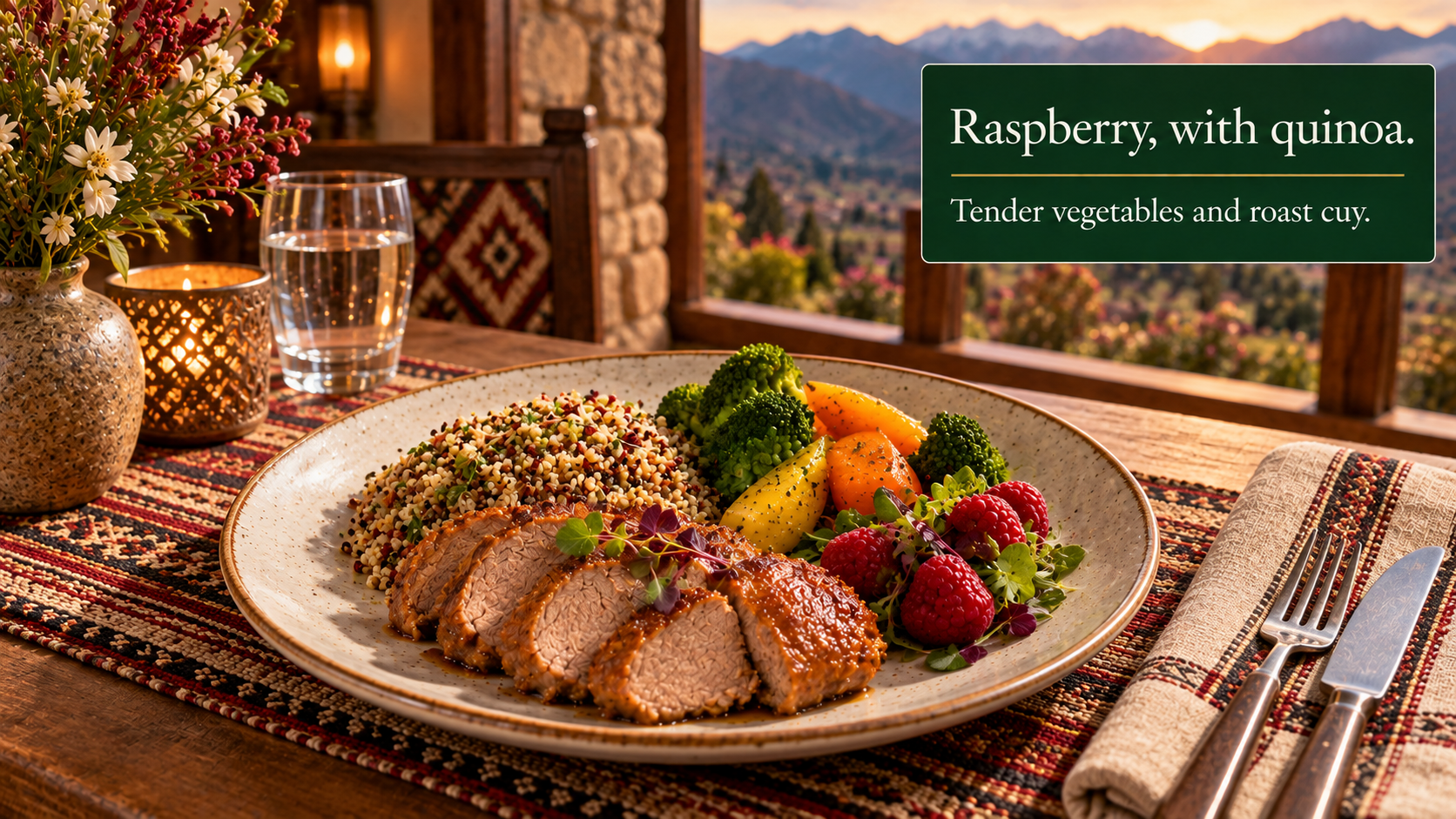
Choose berries for a fresh accompaniment
Look for plump berries that retain their structure, without mold, leaking decay or a tired fermented smell. A small punnet should be inspected throughout rather than judged by its top layer. Purdue Extension advises avoiding mushy raspberries. A fragile ripe berry is normal; a damaged berry that smears before it can be lifted is less useful for this serving.
Color alone cannot establish a cultivar or where the berries were grown. Red raspberries are familiar, but the fruit exists in different colors and forms. Use the supplier's identified edible product, and describe it plainly. The important dinner decision is whether the berry tastes pleasant enough to serve fresh and whether it will survive the short transfer from preparation bowl to plate.
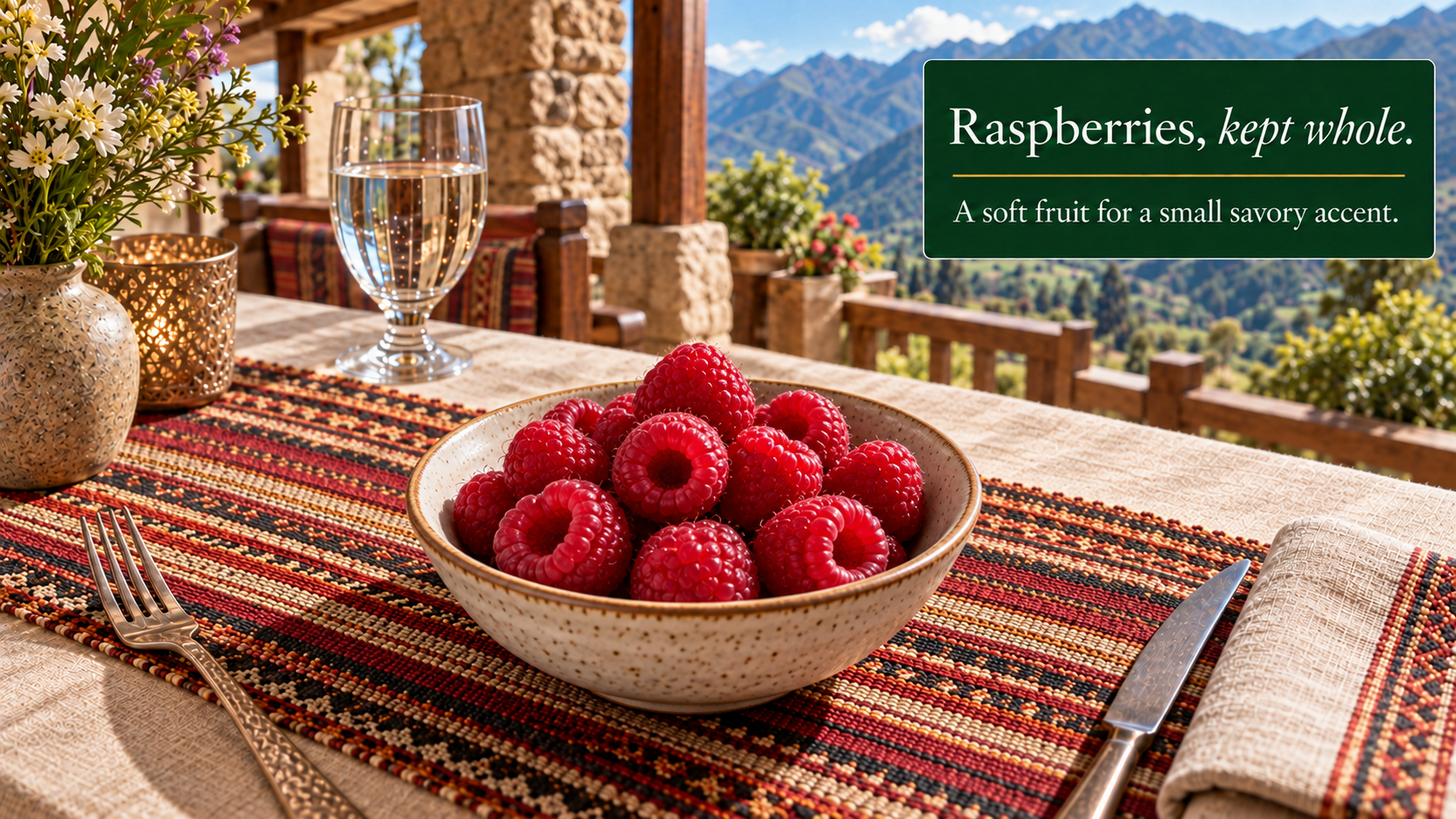
Choose whole fruit or pulp before assembling
Whole berries offer a distinct burst of tartness. They are best placed on the finished plate, where a guest can take one with a bite of grain or leave it for later. Folding them repeatedly through quinoa breaks the fruit and releases juice through the entire bowl. That can be intentional, but it removes the contrast proposed here.
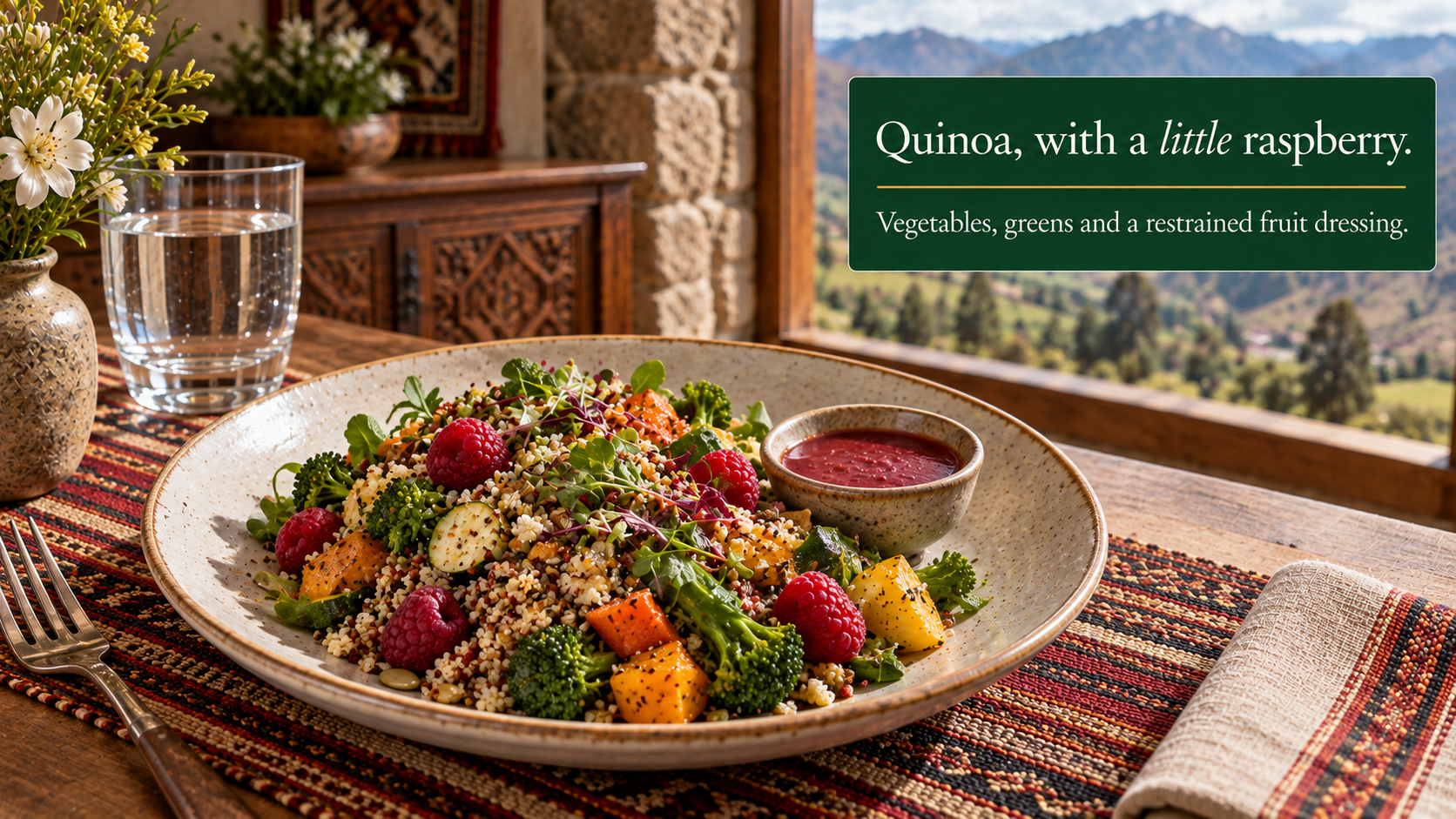
A strained raspberry dressing is useful when seeds or delicate whole fruit make service awkward. Mash a small portion and press it through a fine sieve. Loosen with water if needed and taste with quinoa before seasoning further. The pulp should remain a small accompaniment. A full bowl of quinoa submerged in berry juice belongs to a different meal.
Keep the quinoa loose and plainly seasoned
Cook the quinoa using the actual product instructions, and let excess steam escape before portioning. Separate grains make it easier to combine one bite with a berry without dragging the entire plate together. For a warm meal, serve quinoa warm rather than wet and scalding. Strong heat will make fresh raspberries collapse more quickly when they touch it.
A small amount of salt and chopped parsley is a sensible starting point. Taste the grain with the vegetables, cuy and berry before adding lemon. Raspberry can already supply the acidity that a cook might otherwise reach for. This is a savory grain component, so its seasoning should make sense even in a forkful that contains no fruit.
Steam vegetables for a clear contrast
Choose vegetables that can be steamed until tender while retaining their identity. A little carrot, green vegetable or cauliflower can provide a varied bite without another assertive sauce. Drain them well. Water left around the vegetables runs into the quinoa and thins a carefully judged raspberry dressing before the guest has tasted it.
Season the vegetables separately and arrange them beside the grain. Keep the raspberries away from the hottest surface until the last moment. A plate can look generous through well-prepared vegetables rather than a large fruit portion. The diner should be able to find calm savory bites between the roast meat and the berry's sharper flavor.
Give roast cuy a recognizable place on the plate
Ask the kitchen to describe the roast cuy preparation and how it is portioned for the guest. The berry accompaniment should not conceal the meat or require an elaborate coating. Serve it beside the cuy with quinoa and vegetables, keeping a little room between the fruit and any hot roasting juices.
A few berries are enough for the first trial. This is a practical tasting suggestion, not a medicinal dose or dietary prescription. Offer more separately if someone likes the combination. Guests new to cuy may prefer to learn its own flavor before adding fruit. A small dish of raspberry pulp gives them that choice without requiring the kitchen to prepare another complete plate.
Correct an imbalance by reducing its reach
If the raspberry pulp tastes too sour, first use less of it. Add a spoonful of water to loosen a concentrated dressing and taste with the grain again. A naturally sharp berry does not need to be made sweet to earn a place at dinner. The important question is how much of that tartness belongs in each bite.
If intact fruit tastes too assertive, move it to a separate small serving. If it is mild and very ripe, leave it whole and let the guest enjoy its aroma. Do not automatically add several sweeter fruits. That changes both the dish and the guest's decision. Restraint is a more reliable response than trying to repair a small accompaniment with a complicated mixture.
Make a comfortable first cuy plate
A guest trying roast cuy for the first time may appreciate a prepared portion and an explanation of how it will arrive. Ask about that before the meal, then keep the raspberry separate. Begin with a bite of meat and vegetables; add a berry to the quinoa when curious. The small fruit accent need not decide every mouthful. This makes the meal easier to approach without changing the roast preparation.
If whole berries are awkward to gather with the fork, choose a little strained pulp in a small dish. If the guest likes the fruit's own texture, leave a few intact berries beside the grain instead. Drain the vegetables and keep their seasoning simple. Comfortable cuts and sensible placement matter more than another decorative ingredient. Extra fruit can follow after the first portion, when the diner knows whether the combination appeals.
The images are editorial illustrations of ingredients and serving ideas. They do not document a named restaurant, a current harvest or an included retreat meal. Preparation guidance is not a tested recipe.
Leave room for the Sacred Valley
A visit to Machu Picchu can leave time for a good meal and a quieter stay in the valley. Ask Florian about The SoulSearching Experience, his five-day Sacred Valley seminar for 8-15 participants. Discuss dates, venue and meal arrangements directly.
Questions readers ask
Can raspberry belong in a savory meal?
Yes. Here a few berries or a little pulp sit beside quinoa, vegetables and roast cuy. Keep the rest of the plate savory.
How should roast cuy be approached with the raspberry accompaniment?
Ask how the meat is portioned, then try it plain before adding a little raspberry. Keep the fruit separate so the first cuy bite remains clear.
How can a raspberry accompaniment avoid the sweetness of preserves?
Use actual unsweetened berries or plain pulp. Keep the portion small and check any packaged ingredient rather than assuming a jam matches fresh fruit.
Must raspberry pulp be cooked down?
No. Mash and strain a small amount for a fresh accompaniment. A long reduction is unnecessary for the light savory serving proposed here.
How can raspberry seeds be removed from the dressing?
Press mashed pulp through a fine sieve. Keep the smooth portion and leave the retained solids out of this seed-free serving.
How can the raspberries stay whole beside quinoa?
Handle gently and add them after the grain and vegetables are plated. Avoid stirring them repeatedly through hot or wet quinoa.
Can frozen raspberries replace intact fresh ones without a change?
They can make a different pulp accompaniment, but do not promise the same firm whole-berry presentation after thawing. Name the actual product.
What if the raspberry pulp is too sharp?
Use a smaller amount and loosen with water if concentrated. Taste with quinoa before changing the whole meal; a little tartness can go far.
Does this raspberry accompaniment need an electric blender?
No. A fork and fine sieve can prepare a small smooth portion. A blender is unnecessary when a few berries provide all the pulp needed.
What is a restrained use for a large raspberry supply?
Reserve sound attractive berries for small fresh accompaniments. Preserve or store the rest appropriately rather than increasing every dinner portion to use them up.
Should roast cuy be expected to taste exactly like chicken?
No familiar comparison guarantees the experience. Ask about the actual roast preparation and taste the meat before adding the raspberry.
Can a guest request prepared cuy portions with the quinoa?
Discuss presentation with the kitchen before the meal. A prepared portion can make the quinoa, vegetables and fruit easier to eat together.
Does the quinoa need rinsing?
Follow the quinoa label, including rinsing when it is not pre-rinsed. Taste the cooked grain before adding raspberry. Its tartness should be a deliberate fruit accent beside cuy, rather than something used to cover an unpleasant grain preparation.
How can the tiny quinoa seeds be rinsed without losing them?
Use a fine-mesh strainer to retain quinoa during rinsing. If making smooth raspberry pulp, sieve the mashed fruit in a separate preparation step. The first task retains the grain; the second removes seed texture from the fruit accompaniment.
How can the quinoa stay separate on this plate?
Let excess steam escape from cooked quinoa and drain the steamed vegetables well. Add whole raspberries last, or offer strained pulp separately. Water from the vegetables and repeated stirring through berries would make this particular plate less distinct.
Can the cooked quinoa be kept for another meal?
Refrigerate the cooked quinoa promptly in a shallow covered container. Keep raspberries and any strained pulp separately under appropriate handling. For another cuy meal, inspect the fruit and decide anew whether intact berries or a small pulp serving fits.
Oregon State University Food Hero: Stovetop Quinoa · University of Minnesota Extension: Safe Food Temperatures, Heating and Cooling
Can quinoa be prepared and frozen separately?
Freeze a properly handled plain grain portion separately. Choose the raspberry form when assembling the later meal: sound fresh berries for an intact presentation, or a clearly described pulp accompaniment. Thawed berries should not be promised the same whole-fruit texture.
How should this quinoa be seasoned?
Use a little salt and parsley as a starting point, then taste with raspberry, steamed vegetables and cuy. The berry may already provide enough acidity. If it is very sharp, reduce the fruit portion before reaching for more dressing.
Does quinoa have to become a cold salad?
Serve the quinoa warm with roast cuy and steamed vegetables. Place a few raspberries on the finished plate or provide strained pulp in a side dish. This keeps the meal savory and lets a guest try the cuy before adding fruit.
Can fresh fruit sit beside warm grain?
Yes, but whole raspberries are delicate. Add them after plating the quinoa and drained vegetables, away from the hottest roasting juices. A separate small dish of strained pulp is another option when intact berries would be awkward to eat.