A good celery plate begins with the cut. Fine slices stay present in a grain salad without feeling stringy; longer pieces soften and perfume broth. For duck, tuck raw slices among herbs and cooked quinoa. For high-altitude Andean trout, simmer celery and leek into a restrained clear broth that leaves the fish's flavor intact.
Vegetables at the Andean table
Celery with Roast Duck or High-Altitude Andean Trout
Finely sliced Tall Utah 52-70 celery gives a roast duck and quinoa plate clean crunch. Pascal celery and leek make a clear broth beside high-altitude Andean trout and quinoa. The stalks and leaves have different jobs, and the actual harvested texture should decide the cut. Pascal is also a broad celery type, so the two seed labels do not prove two distinct crops.
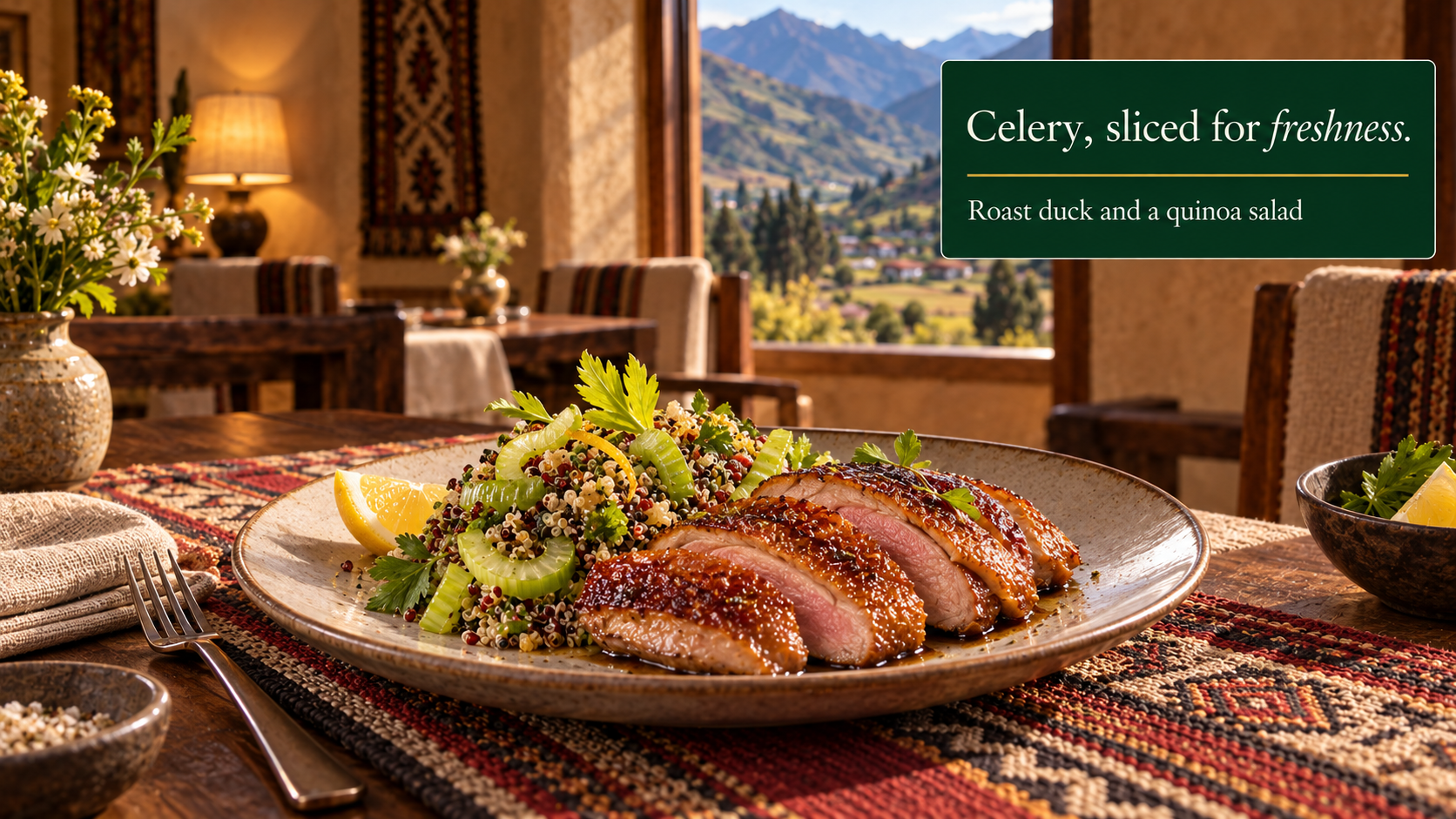
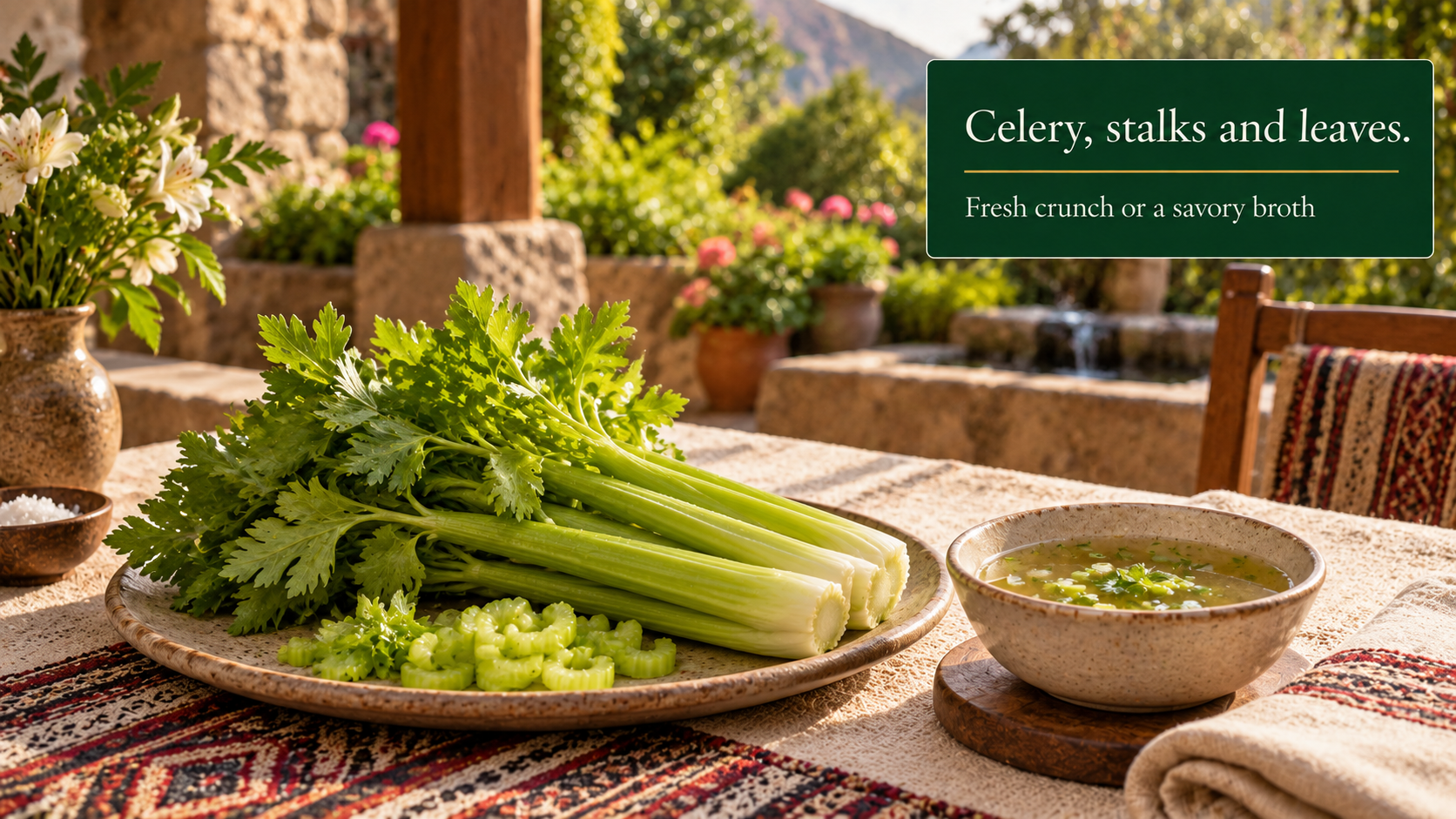
Finely sliced Tall Utah celery with roast duck and quinoa
Wash and finely slice raw celery; toss with cooked, cooled quinoa and herbs beside safely roasted duck.
The crisp stalk balances roast duck and tender quinoa; raw use depends on the actual harvest texture.
Variety reference: Eden Brothers: Tall Utah 52-70. Heirloom; open pollinated.
Pascal celery and leek clear broth with high-altitude Andean trout and quinoa
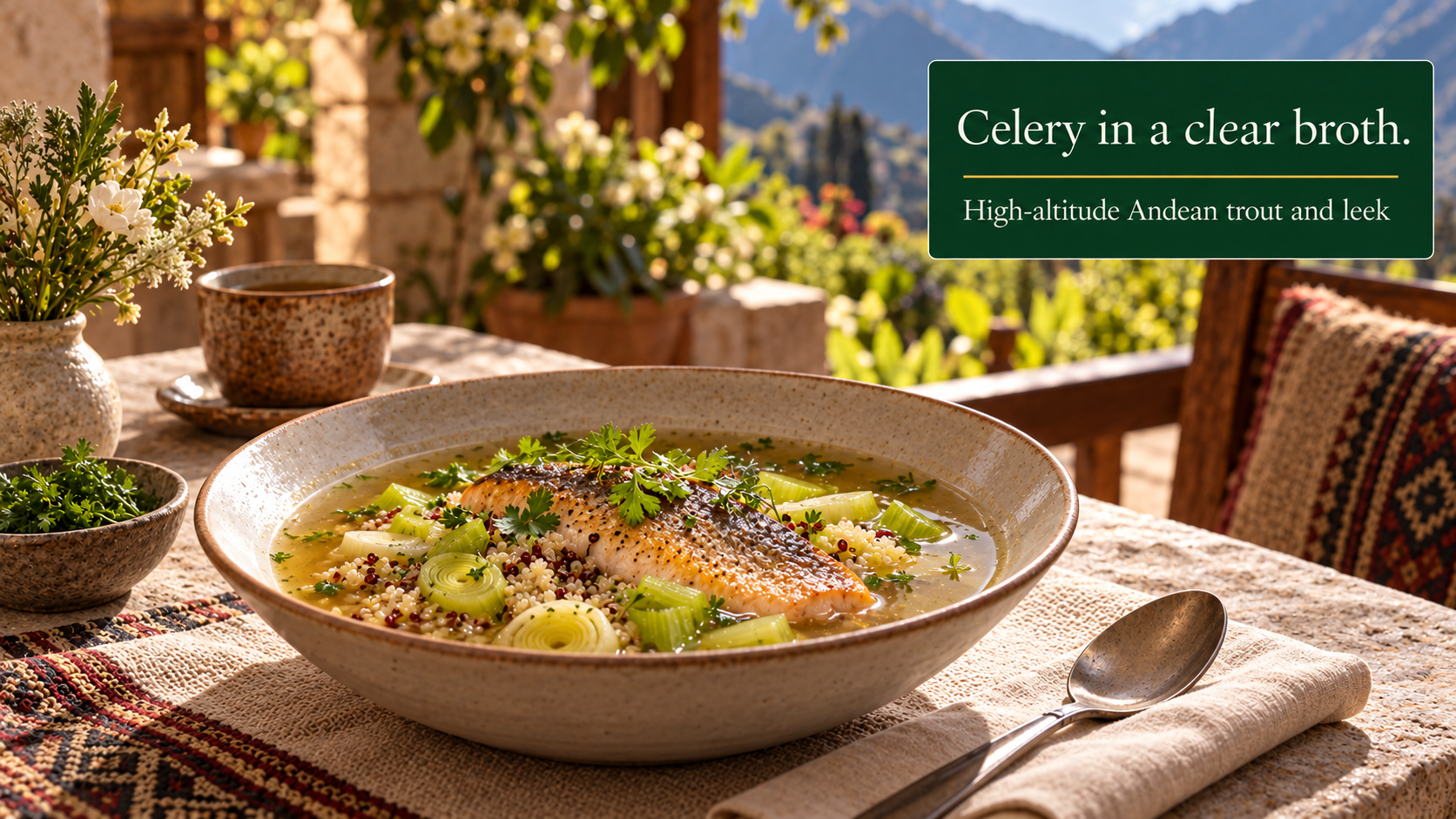
Simmer celery and leek in clear broth; serve with cooked high-altitude Andean trout and quinoa, adding leaves near service.
Aromatic celery supports a clear broth; Pascal may overlap Tall Utah as a broad type.
Variety reference: Eden Brothers: Pascal. Heirloom; open pollinated.
Keep the crunch where it counts
For roast duck, cool cooked quinoa promptly, then fold in thin celery crescents, chopped herbs, and citrus just before serving. Set safely cooked duck beside it. A small cold drizzle of sacha inchi oil can finish the grain. Celery gives the plate a fresh edge without a heavy dressing.
Use crisp inner ribs for raw slices when available. Outer ribs can be more stringy; pull the strings or shave the surface if the texture distracts. Wash stalks and leaves under running water before cutting.
Build a broth around the leaves
For high-altitude Andean trout, simmer chopped celery and leek in water or a light, seasoned stock. Keep the liquid clear and the vegetable pieces small enough for a spoon. Add clean celery leaves near the end for aroma. Serve broth beside safely cooked high-altitude Andean trout and quinoa, or spoon a little around the fish without submerging it.
The broth should taste of celery and leek, not of prolonged boiling. If the celery is a little soft but sound, this is a better destination than the raw duck salad. Taste the stalk first and discard anything spoiled.
Two more savory directions
Diced celery can enter a covered alpaca and native-potato pot early in the simmer, while herbs join near service. For roast cuy, use celery as a cool, finely cut herb salad beside tender potatoes. Add citrus just before eating to preserve the crisp stalk texture.
Keep raw celery apart from raw animal foods during preparation. Cook meats and fish to their appropriate safe endpoints. Finish sacha inchi oil cold after cooking, if using it.
Name the vegetable honestly
Eden lists Tall Utah 52-70 and Pascal as separate seed products. Pascal is also used as a broad celery type, so the names alone do not establish two distinct culinary experiences. Compare harvested stalks for tenderness and leaf aroma before assigning either name to a dish.
Use an exact cultivar name only when the supplier or harvest record confirms it. A harvest record can connect a named plant to the plate; a catalog image cannot.
These dishes are serving ideas. Images illustrate the ingredients and preparations; they do not document a restaurant menu, a tested recipe or a current property harvest. The exact Eden Brothers catalog varieties remain research candidates.
Give the Sacred Valley a little more time
A trip built around Machu Picchu can also leave room for a good meal and a less hurried stay. Ask Florian about The SoulSearching Experience, his five-day Sacred Valley seminar for 8-15 participants. Discuss dates, venue and meal arrangements directly as you plan.
Questions readers ask
Should celery strings be removed for a raw duck-and-quinoa salad?
Taste a slice before assembling the salad. If an outer stalk has tough strings, pull them from the cut end or shave that face lightly with a peeler. Tender inner ribs can be sliced directly. The goal is a pleasant bite beside quinoa and duck, not to strip every stalk by rule. Wash before slicing.
Can celery leaves go into the Pascal celery-and-leek broth?
Yes, if the leaves are sound and properly washed. Add chopped leaves near the end of the broth so their aromatic note stays distinct, while thicker stalk pieces can simmer earlier. Taste first because the leaves may be stronger than the ribs. Pascal is a catalog candidate here, not a verified harvest.
What can a cook do with extra celery stalks?
Use the firmest ribs thinly sliced in a cool grain salad. Dice the rest for a duck or alpaca broth, where long cooking makes a raw crunch unnecessary. Sound leaves can season the pot. If freezing for later cooked dishes, follow tested extension directions and expect the stalks to lose crispness.
Can slightly limp celery still flavor a cooked broth?
A loss of snap alone may make a sound stalk better for broth than salad. Inspect, smell, and taste it before use; discard celery that is slimy, moldy, or otherwise spoiled. Cooking is a texture choice, not a way to redeem unsafe produce. A clear broth also makes bitterness obvious, so taste before committing the whole batch.
How should celery be kept crisp before it is sliced for service?
Keep sound celery refrigerated and protect it from drying out. Wash it before preparing the dish, then cut close to service for the best snap. If prep must happen earlier, chill the cut celery in a clean covered container and drain it well before adding it to quinoa so the grain does not become watery.
Why does raw celery taste sharper in one plate than another?
Freshness, stalk position, cut size, and what the celery is served with all change the impression. For the duck-and-quinoa plate, slice a few ribs and compare them before deciding how much to add. A thin cut and citrus can distribute the flavor; no seed catalog can promise that two harvested bunches will taste identical.
Why are celery leaves missing from many purchased bunches?
Commercial bunches are often trimmed for handling and sale. If a verified garden harvest includes sound leaves, they can be washed and used in broth or as a chopped finish. The presence of leaves does not establish the Tall Utah or Pascal cultivar. Identify the plant and assess its condition before a menu or caption names it.
Could too much celery make the clear broth taste bitter?
It can contribute a stronger bitter edge, especially if a batch has coarse or flowering stalks, but a bitter broth can have several causes. Taste the washed celery and leek separately before simmering, start with a modest amount of leaves, and taste the broth as it develops. Do not rely on more salt or fish to hide a poor-tasting batch.
Can celery leaves become a salad ingredient instead of a garnish?
Yes, when they are identified, sound, and washed. Chop a modest amount into a quinoa salad with celery stalks, herbs, and citrus. Taste first because leaves can dominate a delicate high-altitude Andean trout plate. Treat them as a real ingredient, but do not assume all leaves in a photographed bunch came from one named Eden cultivar.
Can celery be frozen for a later broth?
Extension says celery can be frozen for cooked dishes, although freezing costs it its raw crunch. Follow its blanching, cooling, draining, packing, and labeling directions rather than treating a freezer as a guarantee of indefinite quality. Use thawed celery in the Pascal-and-leek broth, not in the crisp Tall Utah salad concept.
Is green celery unsafe because green potatoes can be unsafe?
No. Michigan State Extension explains that green celery does not produce the potato glycoalkaloid solanine. That does not remove ordinary produce handling duties: identify the vegetable, wash it, and reject spoiled stalks. Green color is normal for the Tall Utah and Pascal catalog descriptions and is not a reason to call a stalk unsafe.
Can a cook safely home-can plain celery for future meals?
Do not improvise a jarred plain-celery process. Oregon State Extension reports no tested home-canning instructions for celery alone. Freeze sound celery for cooked uses using current extension directions, or refrigerate it for near-term meals. Use tested preservation guidance; a garden ingredient is not automatically shelf-stable.
Can stalks from celery that is starting to flower be used in broth?
University of Maryland Extension says stalks and leaves from flowering celery can still be used, though stalks may be more fibrous and bitter. Taste and inspect the actual harvest. A covered broth is more forgiving of a firm texture than a raw salad, but strong bitterness may still be unwelcome. Do not assume this condition for the Eden candidates.
If celery broth was left out overnight, can boiling make it safe?
No. The extension answer says reheating cannot reliably make an overnight room-temperature broth safe. Discard it. For a celery-and-leek broth served with high-altitude Andean trout, plan cooling and refrigeration as part of the recipe: divide large volumes into shallow containers and chill promptly. A pleasant smell is not proof of safety.
How finely should celery be cut for quinoa salad?
For roast duck and quinoa, cut the washed ribs across the grain into thin crescents. A knife gives better control than trying to turn the stalk into long shreds. Pull tough strings first if the batch needs it. The pieces should stay crisp and visible, but small enough that no bite is only celery.
What if there is no celery for the clear broth?
Use leek and herbs for a different broth, and label the change honestly. No other vegetable supplies exactly the same celery note. A high-altitude Andean trout-and-quinoa plate can still work with a clear leek broth; do not call it Pascal celery broth if celery was unavailable or its seed identity was not confirmed.
How much celery is a recipe's 'sleeve'?
That informal term is ambiguous. For a finished dish, specify a weight, number of ribs, or amount of prepared sliced celery instead. A broad stalk count can vary markedly by size. The duck salad needs enough fine slices to give crunch without displacing quinoa, so taste a small batch and record the amount actually used.
Should celery be browned for a clear broth?
For the Pascal-and-leek clear broth, soften the chopped vegetables gently with a little water or stock and avoid browning if a pale, clean flavor is the goal. A darker cooked base would make a different dish. Taste the liquid before serving it beside high-altitude Andean trout and quinoa; leave the fish out of a long simmer.
Can celery be stored wrapped in foil?
Food-grade foil can protect refrigerated celery from drying, provided the stalks are sound and the storage is clean. Keep them cold and inspect before use. Wash just before cutting. For a crisp duck salad, condition matters more than the wrapper; if stalks have lost their snap but remain sound, use them in broth instead.
Why add celery to a savory sauce or broth at all?
Celery is an aromatic. In the high-altitude Andean trout broth it contributes a recognizable vegetable note alongside leek without requiring a thick sauce. If a diner dislikes that flavor, make a separate herb-and-leek broth rather than promising that cooking will erase it. The named Pascal listing identifies a seed product, not a guaranteed intensity.