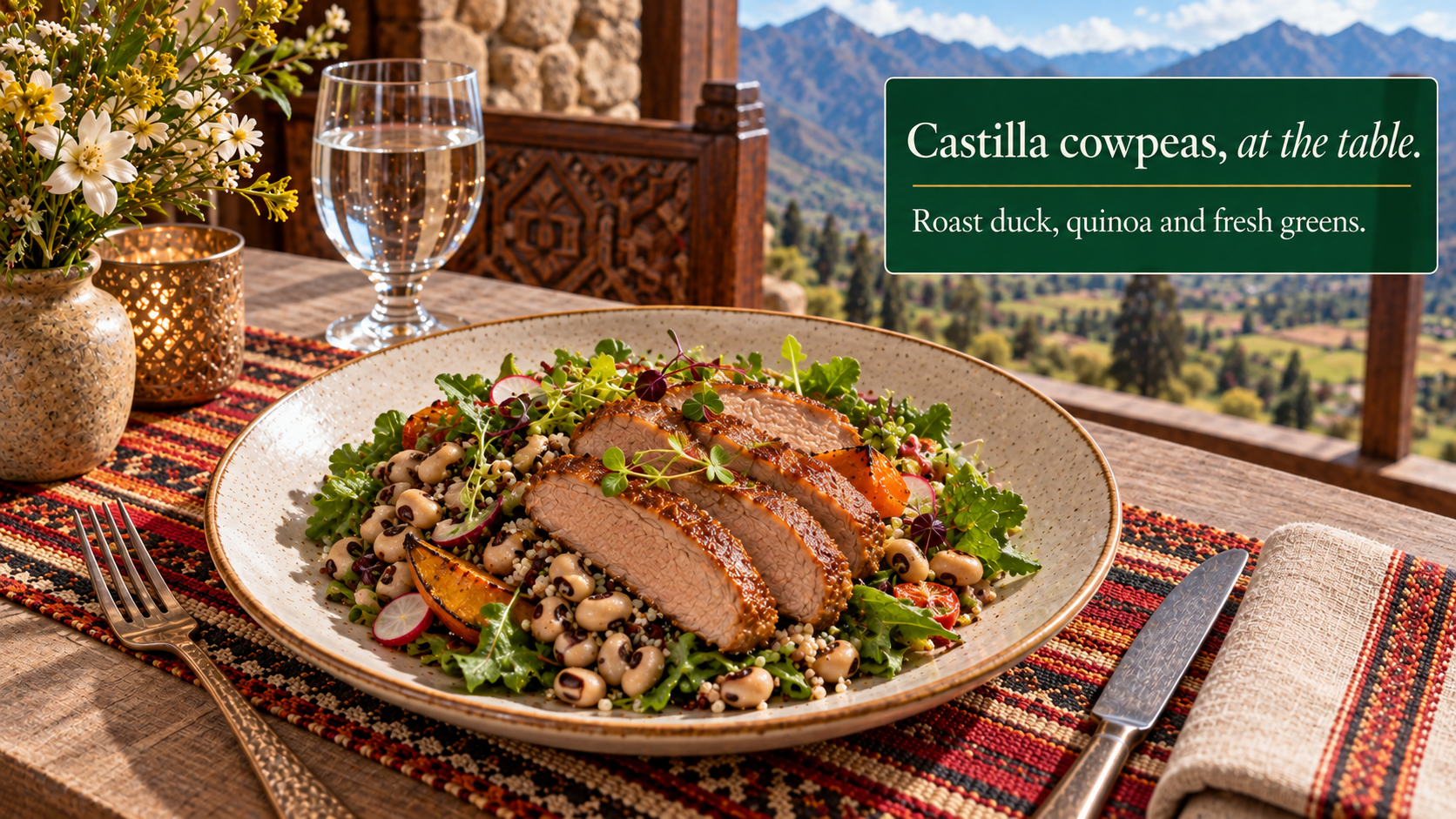
A lightly dressed Castilla cowpea salad offers tender seeds, a small quinoa portion and safely roasted duck. Its appeal is the contrast between separate grains, soft cowpeas and savory meat, with citrus added to taste.
Castilla cowpeas with roast duck and quinoa
In the Peruvian dry-bean standard, frijol castilla, ojo negro and caupi refer to Vigna unguiculata. Confirm the actual label, cook the product fully, and use the tender cowpeas in a salad beside roast duck and quinoa.
Taste and texture on the plate
For a salad, the cowpeas should be soft through the center while retaining enough shape for gentle mixing. Quinoa brings a finer grain texture, and roast duck makes the plate a substantial savory meal. Keep the dressing light enough that the cowpea flavor is still clear. A few chopped herbs are enough for a first version.
Serve warm cowpeas soon after cooking or chill them promptly for a cool salad. Both are cooked preparations. Place the duck beside the salad rather than mixing all the meat through it. That makes a small first serving easy and lets you decide whether you prefer the beans plain, lightly dressed, or in a combined bite.
Choosing the serving while traveling
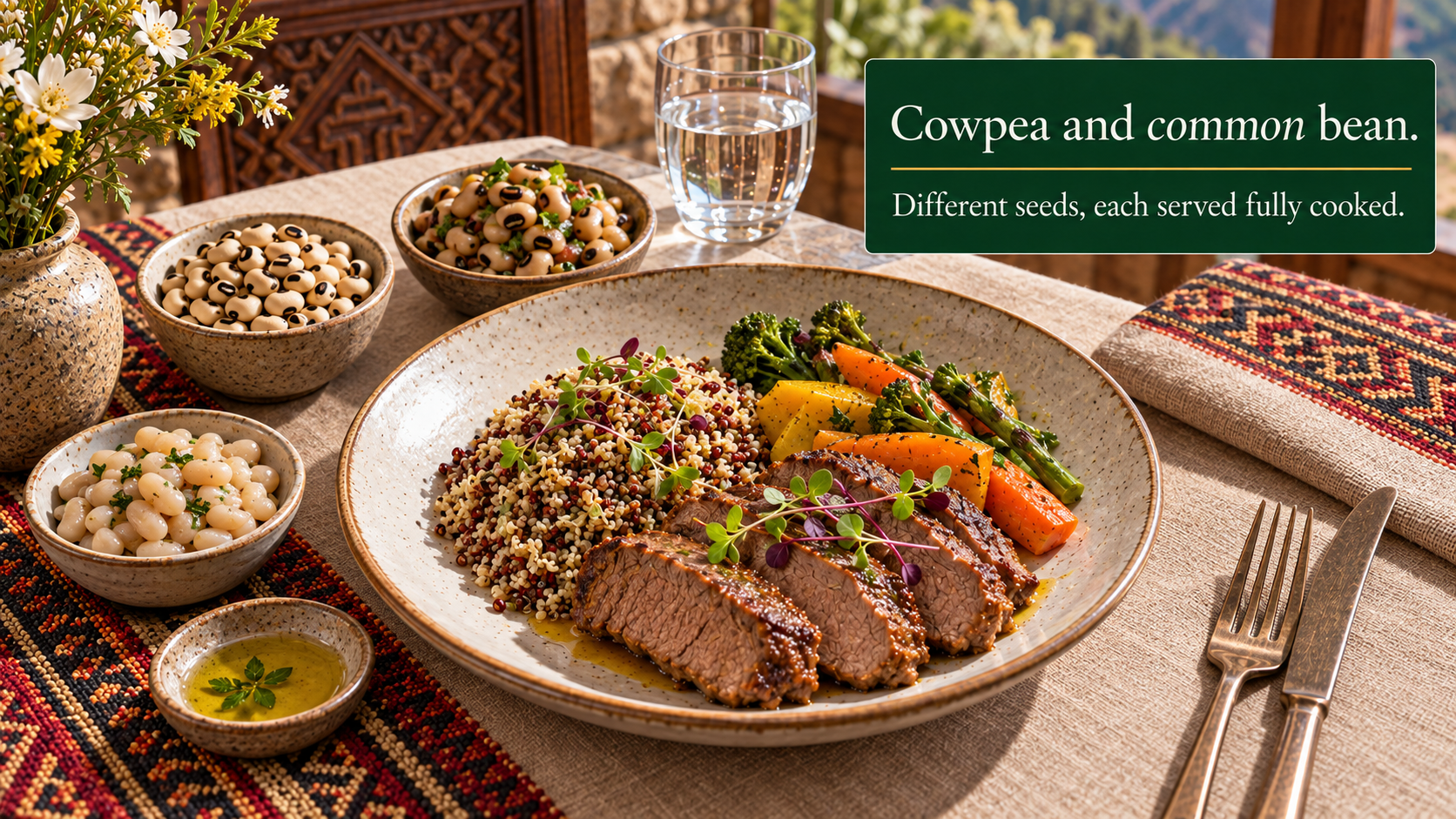
Ask for frijol castilla or caupi and check that the kitchen means cowpeas. Then ask whether the salad uses cooked dry seeds, fresh shelled seeds or a ready-cooked product. The answer helps explain the texture without turning the order into a botanical discussion. A cool salad should be kept chilled until service.
Request the dressing separately if you prefer a mild first taste, and check the duck's roast preparation. Cowpeas contribute plant protein and fiber as part of the legume group; duck and quinoa provide other substantial components. Let appetite set the portion rather than assuming the bowl needs equal amounts of every ingredient.
Use the species to resolve the name
INACAL's dry-bean standard separates Phaseolus vulgaris, the common bean, from Vigna unguiculata, listed as frijol castilla, frijol ojo negro and caupi. That distinction gives the shopper a useful question: what species does this package actually contain? Compare the canario common-bean guide for a separately documented Phaseolus example. A dark eye on a pale seed is familiar, but the common name alone should not overrule a contradictory supplier label.
If a seller uses Castilla loosely, ask for the original product information. Do not replace it with a guess from a photograph. A meal can be described simply as cooked cowpeas when the species is known but the cultivar is not. That is enough detail to choose a preparation and order it clearly.
Distinguish dry seeds from young pods
This salad uses shelled food-grade cowpea seeds. It is not a recipe for eating a mature fibrous pod. Yardlong beans belong within the cowpea species too, but the long young pods are a different vegetable form with their own preparation. Shared species does not make those forms interchangeable by weight or cooking time.
At the market, identify whether the cowpeas are dry, fresh shelled, frozen or already cooked. A can is a convenient cooked starting point; dry seeds need a complete cooking process. Buy from a supplier whose food handling and label you can assess. Avoid unlabeled planting material, even when the seeds resemble a familiar food.
NC State Extension: Yardlong Bean · Penn State Extension: Dried Beans Versus Fresh Shelled Beans
Cook for a tender salad, not a crunchy center
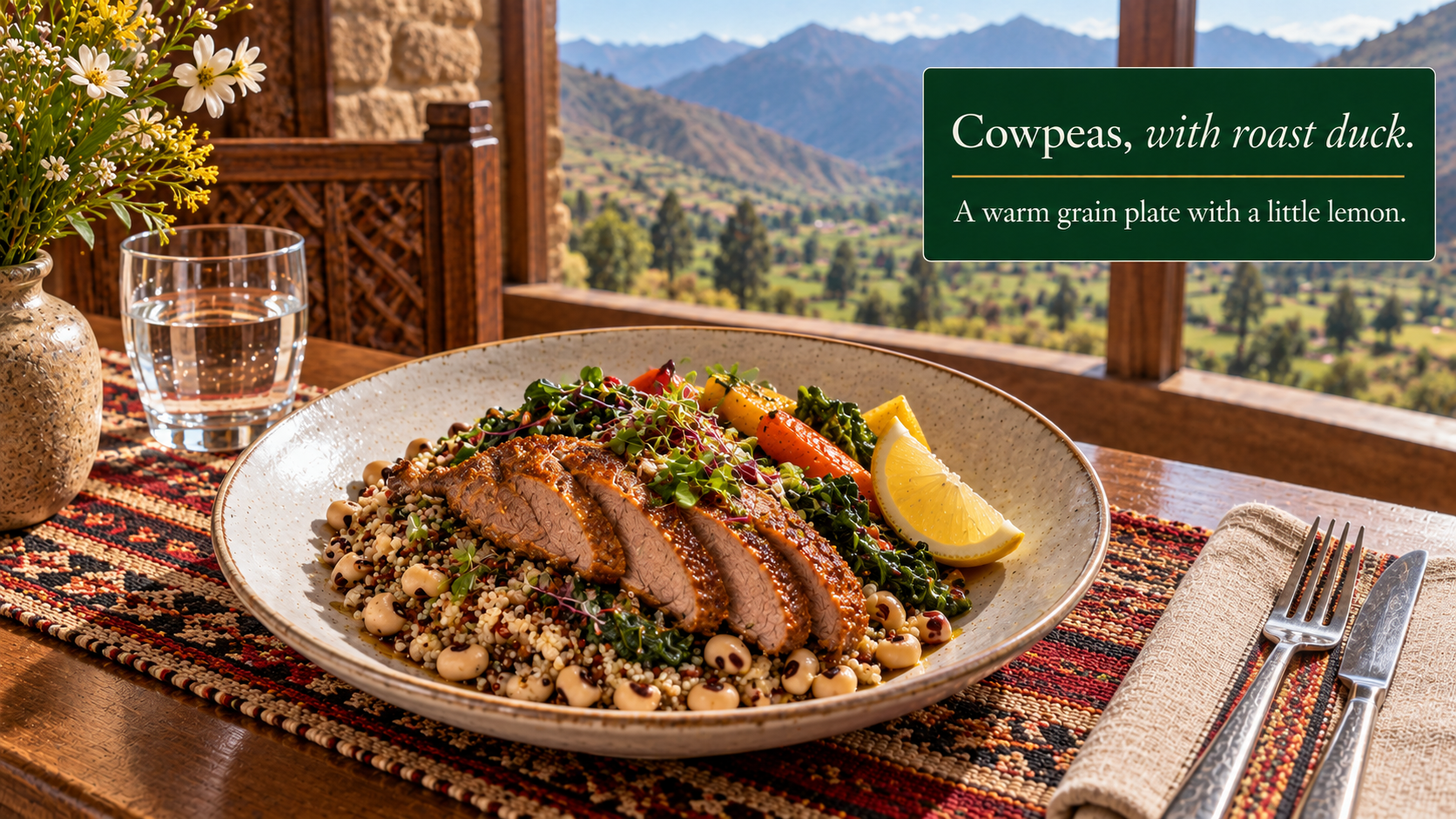
Sort and rinse dry cowpeas. Follow the package directions for soaking if required and for cooking in fresh water. Bring them through the directed boiling process and continue until fully tender. Sample several only after cooking, checking that the center yields easily. A salad does not require an undercooked seed to keep its shape.
If you use canned cowpeas, drain and rinse them before dressing. If you use frozen or fresh shelled cowpeas, follow the supplier's cooking instructions instead of copying the dry-product timetable. Drain gently once they are ready. Reserve a little plain cooking liquid if you want to loosen the finished dressing without adding oil.
NDSU Extension: All About Beans · Penn State Extension: Dried Beans Versus Fresh Shelled Beans
Keep the salad fresh but not crowded
Let the safely cooked cowpeas be the main visible ingredient of the salad. Add a little finely chopped washed herb, a small amount of onion if you enjoy it, and lemon or lime juice gradually. A few spoonfuls of the beans' own liquid can soften the sharpness. There is no need to bury them in a large bowl of dressing.
For a first serving, leave some cowpeas plain so you can compare them with the dressed portion. Fold with a broad spoon rather than beating them together. If the onion is stronger than expected, reduce the quantity rather than adding sweetener. The aim is a savory, lightly dressed salad that leaves room for the duck and grain.
Roast the duck separately and check temperature
Roast the duck using a method appropriate for the cut, keeping its raw juices and utensils away from the salad ingredients. USDA recommends cooking duck to a minimum internal temperature of 165°F, measured with a food thermometer. Color and browned skin do not establish the temperature inside a thick portion.
Carve the cooked duck on a clean surface and serve it alongside the cowpeas. You can remove excess rendered fat rather than turning it into a coating for the salad. This version gets its contrast from tender seeds, separate quinoa and savory meat. It needs no fried garnish. Keep the cowpeas clear of the raw-meat preparation area throughout assembly.
Give quinoa a modest place
Cook quinoa separately according to its package, then fluff it so it does not form a wet layer under the salad. Put a small mound beside the cowpeas and duck. This arrangement gives you control over the serving and makes the difference between the grain and the rounder seeds easy to notice.
Start with more cowpeas and vegetables if you want the salad to lead the meal, or increase the quinoa when appetite calls for it. These are serving choices rather than a fixed diet formula. Taste a bite with all three before adding more citrus. The duck may already provide enough savory intensity that a very sharp dressing becomes distracting.
Choose warm service or properly chilled service
For an immediate warm plate, serve the cowpeas soon after cooking with the dressing added at the end. For a chilled salad, cool them promptly in shallow containers in the refrigerator, rather than leaving a deep pot on the counter. Add fresh herbs nearer serving for a clearer flavor.
Keep the salad refrigerated until the meal. A room-temperature presentation is a short serving period, not a storage method. USDA's usual limit for perishable food is two hours outside refrigeration, shortened to one hour above 90°F. If you take the meal somewhere, keep it cold during transport and plate it when you are ready to eat.
Let the label guide substitutions
A common bean can make a pleasant salad, but changing to it creates a bean variation rather than proving the original ingredient was Castilla. Keep the product name with the cooking notes, especially if several pale pulses share the cupboard. The practical benefit of identification is a repeatable meal with the texture you intended.
For leftovers, refrigerate the components promptly and use them within three to four days, or freeze suitable portions. Reheat hot leftovers to 165°F. Store extra dressing separately where possible. A second serving can use fresh herbs and newly cooked grain without changing the identity of the cowpeas or adding an unsupported claim about where they were grown.
The images are editorial illustrations of ingredients and serving ideas. They do not document a named restaurant, a current harvest or an included retreat meal. Preparation guidance is not a tested recipe.
Leave room for the Sacred Valley
A visit to Machu Picchu can leave time for a good meal and a quieter stay in the valley. Ask Florian about The SoulSearching Experience, his five-day Sacred Valley seminar for 8-15 participants. Discuss dates, venue and meal arrangements directly.
Questions readers ask
Should I soak dry Castilla cowpeas?
For dry cowpeas, use the preparation directions on the actual package, including whether soaking is needed. Fresh shelled, frozen and ready-cooked cowpeas have different starting points. Finish dry or fresh products fully tender before making the salad.
NDSU Extension: All About Beans · Penn State Extension: Dried Beans Versus Fresh Shelled Beans
Where should an overnight soak happen?
Use the refrigerator for an overnight soak. Do not leave a warm bowl of hydrated beans on the counter all day. If the handling history is uncertain, replace the batch instead of trying to fix it with seasoning.
NDSU Extension: All About Beans · NDSU Extension: refrigerated overnight bean soaking
Should I cook in the soaking water?
For this preparation, drain and rinse the soaked beans and use fresh cooking water. Keep later cooking liquid separately if you want to moisten the finished serving. Soaking water and finished cooking liquid are different stages.
Can a low slow cooker replace the directed boiling process?
Use the verified cooking process for your cowpea product and appliance. Do not apply an unrelated common-bean timetable merely because both foods are called beans. Check full tenderness and follow all supplier preparation requirements.
NDSU Extension: All About Beans · Penn State Extension: Dried Beans Versus Fresh Shelled Beans
What if the centers remain hard?
Keep cooking with adequate water until the beans are fully tender. Older stock and cooking conditions can affect the result. Save acidic additions for after softening. Do not serve hard centers simply to preserve the outer shape.
How can I keep more beans intact?
Cook the Castilla cowpeas according to their own package until fully tender, then handle them gently and avoid vigorous stirring. Drain carefully. A few broken seeds are preferable to an intact seed with a hard center, and can help moisten the serving.
Is Castilla a common bean or a cowpea?
INACAL lists frijol castilla, ojo negro and caupi under Vigna unguiculata. It separates that species from Phaseolus vulgaris, the common bean. Confirm the supplier label before choosing a preparation, especially if several pale pulses are sold together.
INACAL: dry bean species and names · Library of Congress: Are black-eyed peas really peas?
What does fresh shelled cowpea mean for the salad?
It means a different starting food form from fully dry seeds. Keep fresh shelled cowpeas refrigerated and cook according to their product directions. Do not assume a dry-bean soaking or cooking timetable applies unchanged to fresh, frozen or ready-cooked products.
Penn State Extension: Dried Beans Versus Fresh Shelled Beans · NDSU Extension: refrigerated overnight bean soaking
How should a first batch of dry black-eyed peas be approached?
Follow the package's cowpea directions, including whether soaking is needed, and cook until the centers are fully tender. Make a manageable first batch. Do not import a common-bean timetable solely because both products are called beans.
NDSU Extension: All About Beans · Penn State Extension: Dried Beans Versus Fresh Shelled Beans
Can dry beans replace a ready-cooked product directly?
No. Prepare and fully cook the dry beans before using them in the finished meal. A canned bean has already been processed as a cooked food, while a dry seed needs its own complete cooking process.
NDSU Extension: All About Beans · Penn State Extension: Dried Beans Versus Fresh Shelled Beans
Should cooked beans be frozen with a little liquid?
A little finished cooking liquid is useful for reheating a moist serving. Cool and freeze meal-sized portions promptly, label them, and keep herbs or dressing separate. Do not freeze a partly cooked batch with the expectation that reheating will complete a safety process.
NDSU Extension: All About Beans · USDA FSIS: Leftovers and Food Safety
How long can I keep the cooked Castilla cowpeas serving refrigerated?
USDA generally recommends three to four days for refrigerated leftovers. Refrigerate promptly in shallow containers within two hours, or one hour above 90°F. Freeze portions you will not use in that period and reheat hot leftovers to 165°F.
How can I make this meal for one?
Cook a manageable batch and portion it after cooking. Use a comfortable scoop for the meal and freeze the extra promptly with a little liquid. Keep vegetables and fresh herbs separate so the next plate can have a fresh accompaniment.
NDSU Extension: All About Beans · USDA FSIS: Leftovers and Food Safety
What if the beans break down too much?
If they have been safely cooked and are simply very soft, use them as a coarse mash or loose puree. Add reserved cooking liquid gradually. A softer serving can work well beside vegetables; it does not need to be presented as a whole-bean salad.
Can the Castilla salad use canned or dry cowpeas?
Either can work when clearly identified. Drain and rinse a ready-cooked canned product; fully prepare dry cowpeas before making the salad. The two starting forms are not direct substitutes at the beginning of the cooking process.
What is a simple cowpea salad for this duck meal?
Use fully cooked cowpeas with a little finely chopped culinary herb and restrained citrus, keeping the dressing light. Serve the duck and quinoa alongside. Chill the salad promptly if it will be served cool and keep it refrigerated until the meal.
What is the duck safety check beside the cowpea salad?
USDA recommends a minimum internal temperature of 165°F, measured with a food thermometer. Keep the cooked cowpea salad clear of raw poultry juices and utensils. Skin color and tenderness do not replace the temperature check.
Can dried herbs replace the fresh finish?
Use a smaller amount and taste a serving first, because a dried herb is a different product with a different intensity. For huacatay, prepared paste also has its own ingredients and salt level. Do not exchange them spoon for spoon.
How do I keep the accompanying vegetables tender?
Cut dense vegetables smaller, give them a moist covered start, and uncover only after they begin to soften. Remove ready pieces while thicker ones continue cooking. A dark outside does not establish that the center is pleasant to eat.
What makes the complete plate enjoyable?
Start with fully tender beans and keep the accompaniments recognizable. Use a little cooking liquid to prevent dryness, offer the vegetables beside them, and taste a combined bite before adding a strong dressing. Adjust the portions to appetite.