Four citrus fruits can do four different jobs at dinner. Mandarin offers a juicy segment, lime and lemon offer adjustable acidity and aromatic zest, while kumquat can bring its peel into the bite. Beside alpaca, greens and quinoa, small amounts are enough. The useful question is which part of the fruit improves the meal, not how many citrus names appear on the menu.
Mandarin, Lime, Lemon and Kumquat on a Savory Plate
Use mandarin segments for fresh flesh, lime or lemon juice by the drop, and thin kumquat slices when their edible peel is pleasant. Remove seeds before serving.
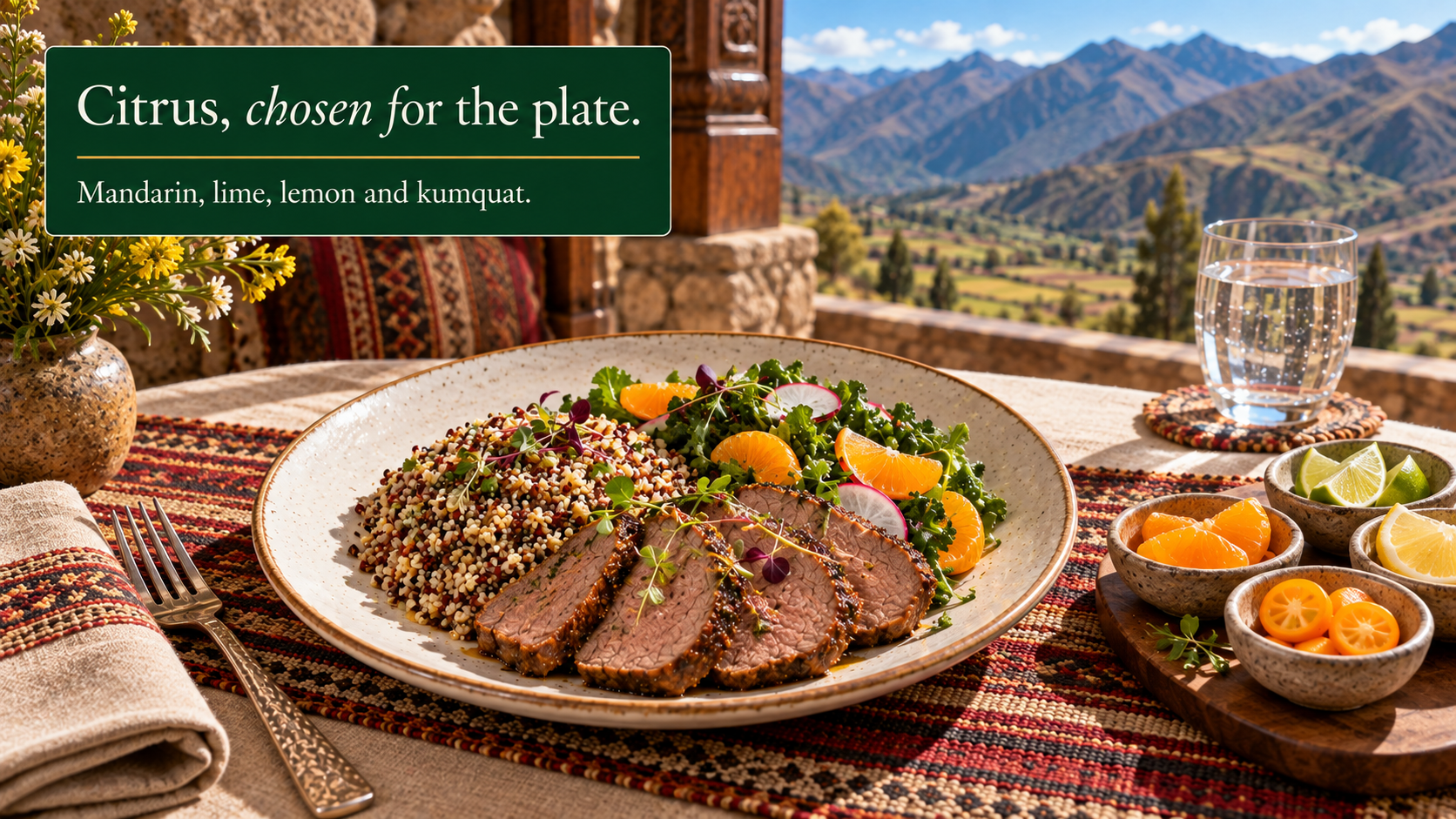
Give mandarin flesh a place of its own
Peel a sound mandarin, divide it into segments and check for seeds before plating. Remove tough strings or membranes when they distract, though there is no need to turn a simple accompaniment into an elaborate exercise. Taste a segment first. Some fruit is mild and sweet; some brings more acidity than expected.
A few segments can sit beside the greens or quinoa. Leave them whole enough to keep their juice until the guest takes a bite. Stirring mandarin vigorously through hot grain breaks the flesh and spreads sweetness everywhere. Separate segments offer a clearer choice, especially for someone who prefers the alpaca and grain entirely savory.
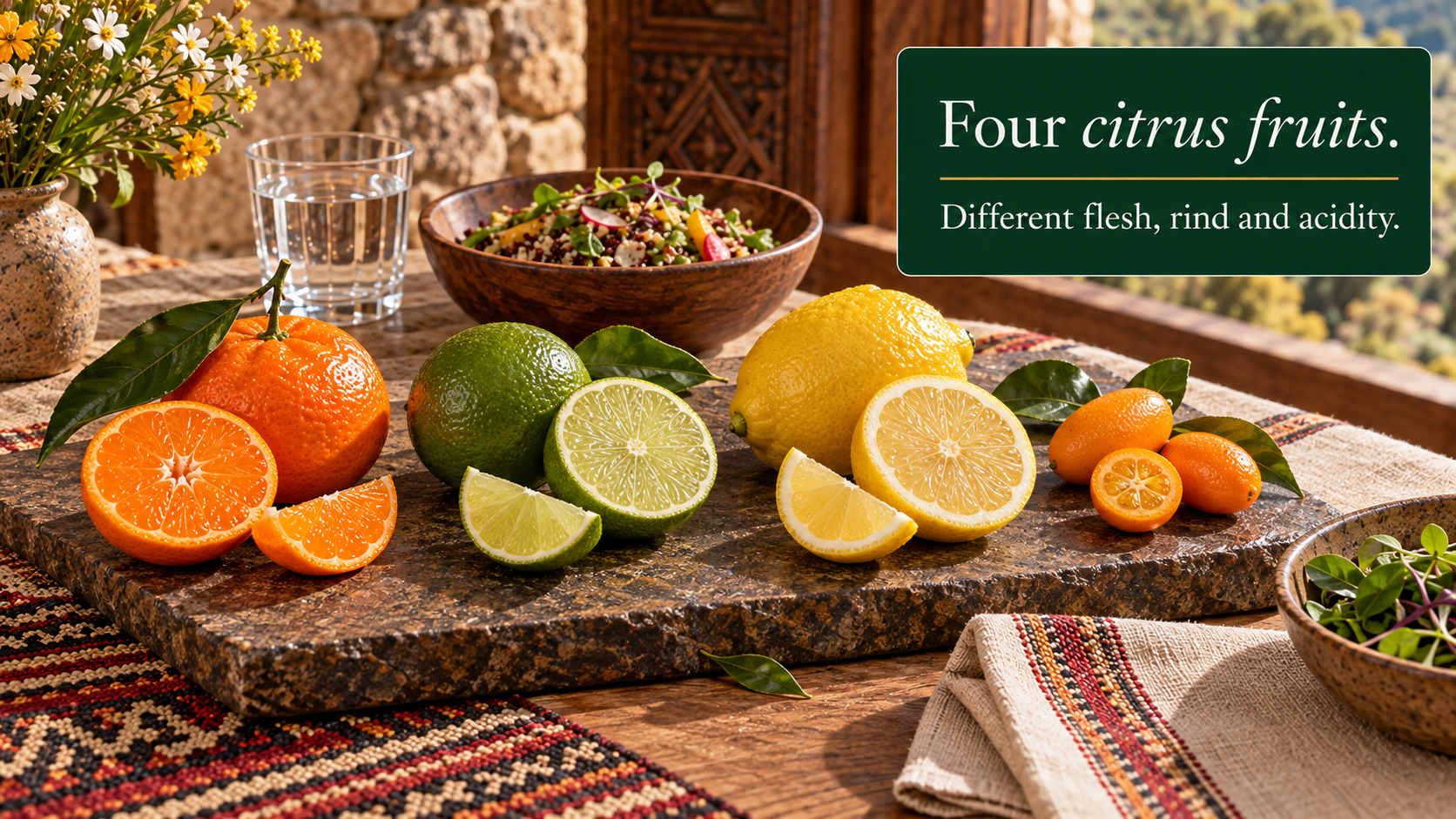
Use lime as an adjustable seasoning
For this meal, lime is chiefly a source of juice or a little finely grated outer zest. Squeeze a small amount into a separate dish and remove seeds before adding it to the greens. Taste in small increments. An entire squeezed fruit can overwhelm a plate intended for one diner, and its acidity may vary.
A lime wedge offered at the table is another option, but tell the guest what is already in the dressing. Adding more lime to an already sharp salad is easy to do inadvertently. The white inner pith and thick peel are not the target of this particular serving. Use the aromatic outer layer sparingly when its flavor is wanted.
Let lemon overlap with lime without calling them identical
Lemon can provide the same practical functions of acidity and zest, with a different aroma. Choose one juice for the first trial so the balance stays easy to judge. There is no requirement to mix lemon and lime in the same dressing. A plain spoonful of quinoa with the dressed greens reveals whether the amount is useful.
When grating zest, wash the fruit first and take only a little of the colored outer surface. Thick pith can contribute an unwelcome bitter note. Strain out seeds from the juice, and keep any remaining wedges separate from the prepared plate. They should be an optional adjustment, not a hidden second dressing.
Treat kumquat peel as part of the food decision
Kumquat is the useful contrast in this comparison. Its peel is commonly eaten with the fruit, so thin slices can carry both an aromatic outer layer and tart pulp. Wash the fruit, cut a sample and remove the seeds. Taste the whole slice rather than judging peel and pulp separately, since the combined bite is the point.
A very thin slice may work well beside quinoa and greens, while a thick piece can be tiring. Use a few slices at first and keep them separate from the mandarin. NParks documents raw kumquat and salad uses, but that does not identify a property cultivar. Fruit from an ornamental display also requires confirmation that it is appropriate food produce.
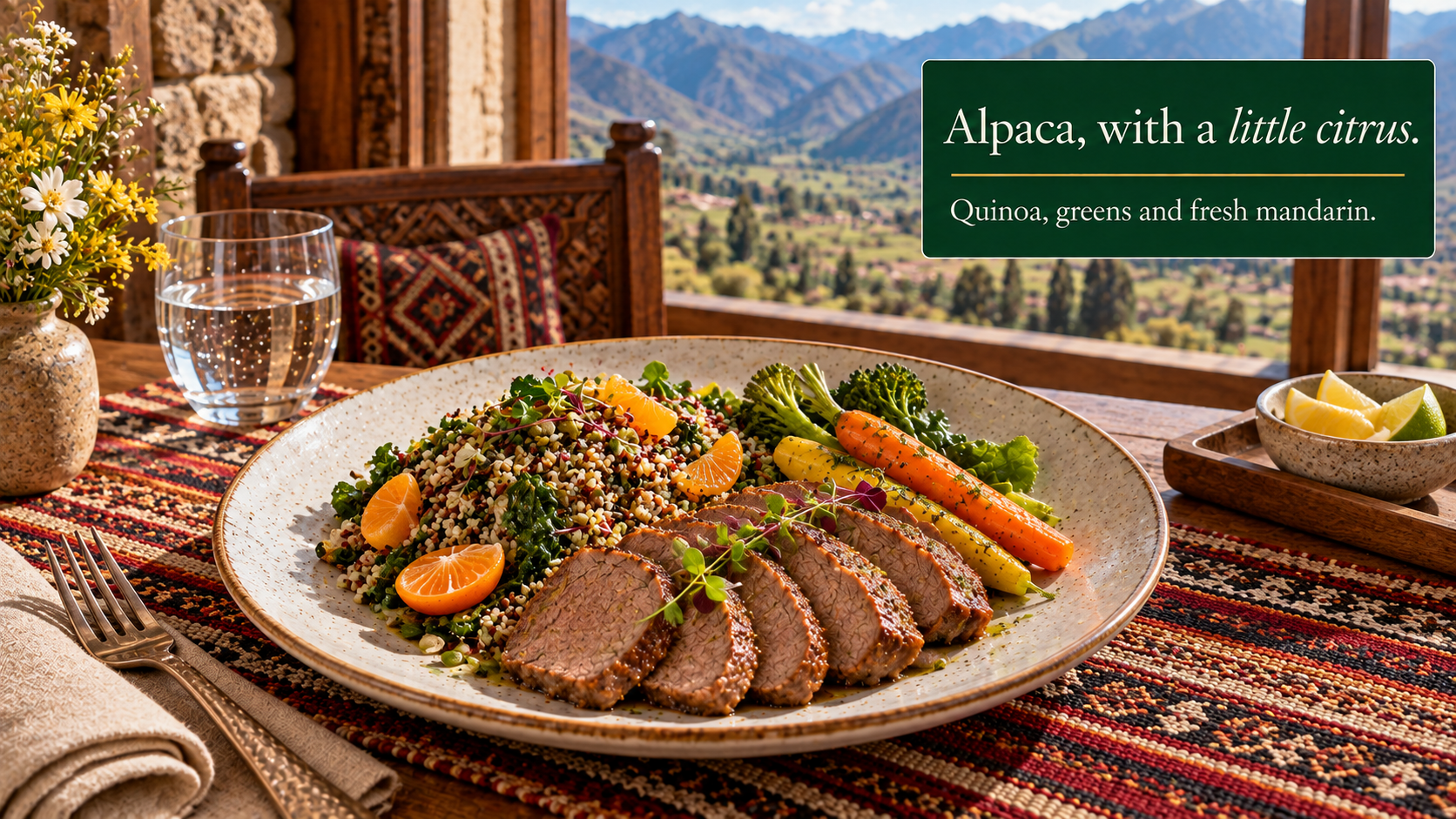
Choose one main citrus accent for alpaca
Build the dinner around simply prepared alpaca, loose cooked quinoa and greens. For a gentle first version, use mandarin segments with a few drops of lemon on the greens. For a more pointed flavor, omit the mandarin and try a few thin kumquat slices. These are two alternatives, not an instruction to pile all four fruits onto one plate.
Keep the citrus near the greens rather than coating every slice of meat. A diner can combine the components gradually. Start with a small fresh accompaniment and bring more if requested. The meat, grain and greens should still read clearly, and the fruit should provide a choice of flavor rather than dictate every bite.
Separate the peel, pith and seed decisions
Peel is not one universal category. Mandarin peel is normally removed for this segment serving; lime and lemon contribute a little outer zest if desired; kumquat may keep its edible peel in the slice. Seeds are removed from all four prepared accompaniments. Those clear distinctions are more useful than a blanket instruction to eat citrus whole.
Likewise, an edible fruit does not establish a use for every other plant part. Leaves, concentrated extracts and essential oils are separate products and are outside this meal. A fresh juice dressing is also different from a bottled sauce, which may contain additional ingredients. Check the label rather than assuming its name describes the complete product.
Order acidity separately from fruit pieces
A guest can ask for mandarin segments beside greens, a little lemon or lime dressing separately, or a few seeded kumquat slices. These requests describe different eating experiences. The first gives a juicy fruit bite, the second lets the diner control sourness, and the third includes aromatic peel. Decide which appeals before asking for several citrus accents on one plate.
A particularly good citrus fruit can be enjoyed simply. Taste the mandarin segment or kumquat slice on its own, then with quinoa and finally with alpaca. If the combination works, there is no need to add another dressing. If it feels too sharp, keep the fruit as a smaller side and continue with the savory meal. Removing seeds and cutting comfortable pieces turns an unfamiliar comparison into an ordinary, enjoyable table choice rather than a complicated tasting exercise.
The images are editorial illustrations of ingredients and serving ideas. They do not document a named restaurant, a current harvest or an included retreat meal. Preparation guidance is not a tested recipe.
Leave room for the Sacred Valley
A visit to Machu Picchu can leave time for a good meal and a quieter stay in the valley. Ask Florian about The SoulSearching Experience, his five-day Sacred Valley seminar for 8-15 participants. Discuss dates, venue and meal arrangements directly.
Questions readers ask
Which citrus in this comparison keeps its peel?
Kumquat can keep its edible peel in thin slices. Mandarin is peeled for segments; lemon and lime contribute juice or a little outer zest.
Why can kumquat taste unexpectedly sharp?
The whole bite combines peel and tart pulp, with variety and ripeness affecting the result. Try one thin slice before adding more to a meal.
Can kumquat belong beside alpaca and quinoa?
Yes. Try a few thin seeded slices beside the greens. Keep the first amount modest so the meat and grain remain clearly savory.
Can a tiny orange-looking fruit be assumed to be kumquat?
No. Confirm the food product before following a peel-eating instruction. Citrus names and lookalikes are not reliably settled by size or color.
Can mandarinquat peel be eaten in the same way as kumquat peel?
Confirm the identified hybrid and its food preparation with the supplier. This guide covers ordinary mandarin segments and identified kumquat slices, so it cannot settle an unknown hybrid.
What does zest add that juice does not?
A little colored outer zest contributes aroma. Juice chiefly adjusts acidity in this dish. Taste before using both, and avoid a thick scraping of pith.
Kansas State University Extension: Lemons · Utah State University Extension: Using Lemon Zest for Flavor
Can a guest request the plate without citrus?
Yes. Keep the greens and quinoa plainly seasoned and discuss a suitable alternative with the kitchen. An intolerance should not be answered with an assumed equivalent citrus.
Can lime juice replace lemon juice in this dressing?
It can make a suitable alternative, but taste and adjust the amount. The aroma and acidity of the actual fruits differ.
When should kumquat seeds be removed?
Slice and remove them before the prepared accompaniment is plated. Guests can then enjoy the peel and pulp without navigating seeds.
Does edible peel still need washing?
Yes. Wash fruit before cutting or zesting, including fruit that will be peeled. Use clean preparation surfaces.
How thick should the kumquat slices be?
Thin enough that peel and pulp share a comfortable bite. Try a slice with quinoa before deciding the final portion.
Should extra lemon be added to a kumquat plate automatically?
No. Taste the kumquat with greens and grain first. Its own tart pulp may already provide enough acidity.
Does the quinoa need rinsing?
Rinse the quinoa if its package requires it. Then taste the plain cooked grain before judging the citrus. Bitterness from thick lemon or lime pith is a different issue and is handled by choosing the fruit part carefully.
How can the tiny quinoa seeds be rinsed without losing them?
A fine-mesh strainer retains the quinoa during rinsing. Prepare citrus separately: peeled mandarin segments, thin seeded kumquat slices, or a little lemon or lime juice. Those fruit preparations enter at service rather than during the grain's rinse.
How can the quinoa stay separate on this plate?
Keep the cooked quinoa loose and add citrus by the bite. Leave mandarin segments intact and kumquat slices alongside; offer lemon or lime separately. Squeezing several fruits through the grain at once makes the intended acidity harder to control.
Can the cooked quinoa be kept for another meal?
Cool and refrigerate the plain cooked quinoa promptly in a shallow covered container. Keep citrus components separate. At the next meal, choose the fresh segments or slices you actually want rather than carrying yesterday's complete citrus mixture into the grain.
Oregon State University Food Hero: Stovetop Quinoa · University of Minnesota Extension: Safe Food Temperatures, Heating and Cooling
Can quinoa be prepared and frozen separately?
Freeze the properly handled plain grain portion on its own. Prepare the selected mandarin segments or kumquat slices for the later serving, with lemon or lime adjusted separately. The make-ahead quinoa does not require freezing every citrus component together.
How should this quinoa be seasoned?
Choose one citrus direction first. Mandarin segments can accompany lightly seasoned quinoa; kumquat supplies a different peel-and-pulp bite. Taste either version before adding lemon or lime, since extra juice may make an already tart mouthful unnecessarily sharp.
Does quinoa have to become a cold salad?
Warm quinoa can accompany alpaca and greens with citrus on the side. Use a few mandarin segments or thin kumquat slices, then offer juice separately if wanted. A cold salad combining all four fruits is not required.
Can fresh fruit sit beside warm grain?
Add the selected citrus near service. Keeping mandarin segments whole helps preserve their juicy bite, while thin kumquat slices retain their distinct peel texture. Put optional lemon or lime juice in a separate small dish.