Home › Peru at the Table
Peru at the Table: A Sacred Valley Food Guide
A memorable meal begins with attention: the texture of a potato, the fruit in a glass, the grain beside a cooked fish. Explore Peru's ingredients through flavor, preparation and the questions that help you choose well. These separate guides belong to the same Machu Picchu and Sacred Valley journey.
Choose the meal before the reservation
Start with Sacred Valley dining formats or an evening in Machu Picchu Pueblo. Use the ingredient guides below to shape a conversation with the kitchen. A public menu can inspire a choice; the restaurant must confirm the current dish, ingredients, access and timing.
Savory grains, legumes and food oils
Explore texture and preparation: a grain bowl, a vegetable plate or a carefully chosen food oil. Begin with the native potatoes and Andean ingredients guide, then follow the ingredient that interests you.

Tarwi in Peru: An Andean Legume at the Table
Try tarwi as a savory Andean legume. Understand debittering, lupin allergy, sourcing and useful questions before ordering it in the Sacred Valley.

Quinoa in Peru: Breakfasts, Soups and Savory Plates
Choose quinoa by texture and preparation. Find practical cooking guidance, Cusco crop context and questions to ask before ordering in the Sacred Valley.

Kiwicha: Andean Amaranth Beyond the Garnish
Explore kiwicha as cooked grain, popped amaranth or flour. Learn about savory uses, Cusco growing context and questions to ask before ordering.

Cañihua and Cañihuaco: Choose the Grain or Toasted Flour
Understand cañihua grain and toasted cañihuaco flour, explore savory food forms, and distinguish documented Cusco cultivation from unverified Valley menu claims.

Sacha Inchi: Prepared Seeds, Food Oil and Clear Origins
Choose food-ready sacha inchi seeds or edible oil, understand Amazonian provenance, and keep real savory examples separate from unproved supplement benefits.
From distinctive vegetables to a complete Andean meal

Explore 39 ingredient and serving guides, from Romanesco with roast duck to asparagus with lemon and chives, okra with baked trout and Golden Honeymoon honeydew. Each guide begins with a complete meal, then gives the vegetable or fruit its own portrait and a small garden study.

Illustrated serving concepts and imagined gardens, with names documented in the seed photographs. Current harvests, restaurant supply and retreat meal inclusions are not established by these images.
More of Peru at the table
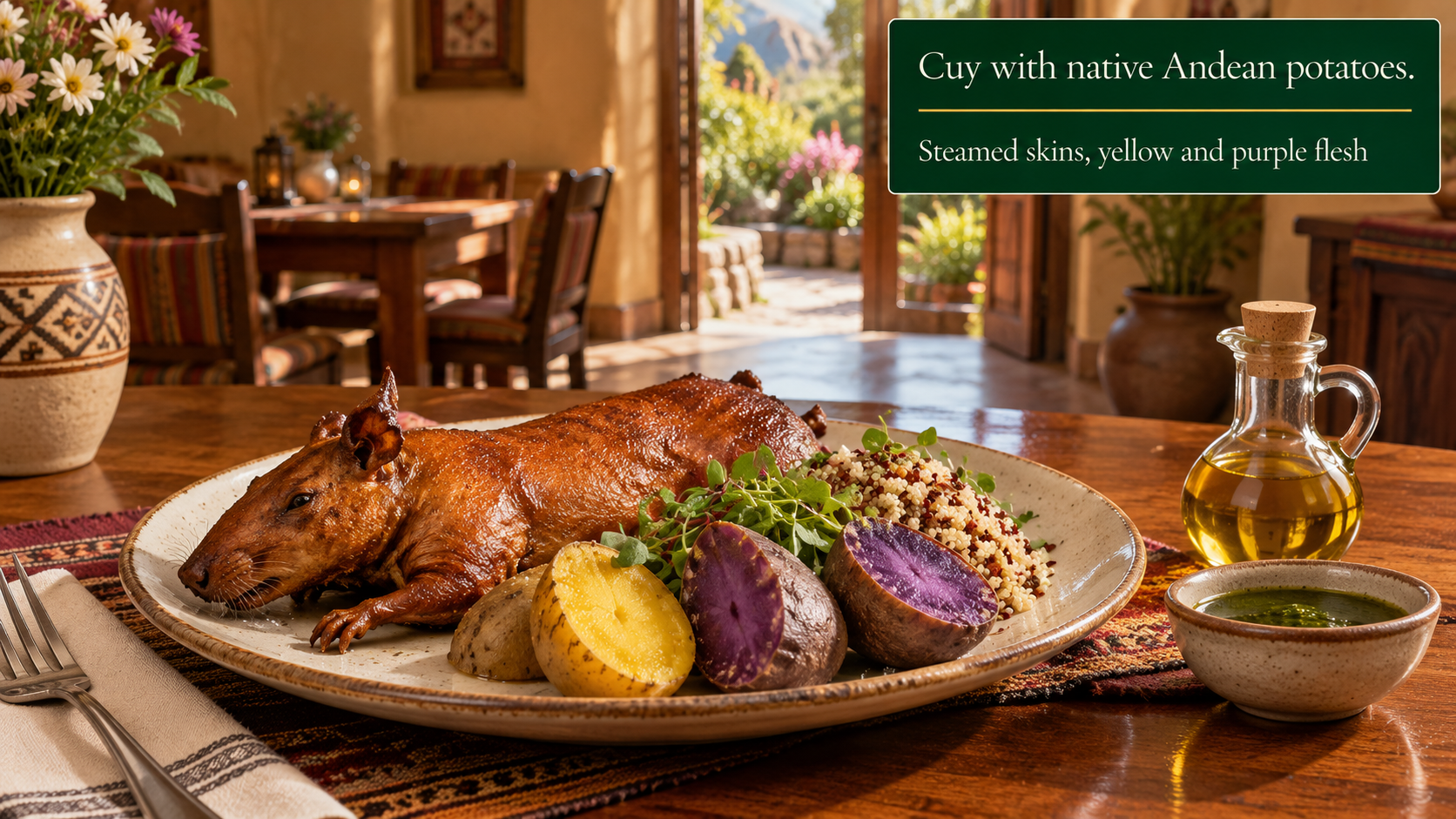
Native potatoes, quinoa, kiwicha and cañihua take a larger role beside cuy, duck and alpaca. Sacha inchi oil is offered as a cold finish; huacatay adds an aromatic leaf sauce.
Explore 40 new dishes and six new ingredient guides
Sacha inchi oil at the table · Prepared uncucha · Unsweetened dried Peruvian mango
Fruit, vegetables and the place they come from
Choose fruit for its flavor and food form. A fruit served in the Sacred Valley may come from another part of Peru. Ask about its supplier and season rather than assuming the surrounding hills are its farm. Fresh edible portions and savory pairings lead these guides.

Aguaje in Peru: Fruit, Aguajina and Unsweetened Choices
Explore aguaje fruit, pulp and aguajina with clear questions about added sugar, safe water and Amazonian sourcing, without a hormone or medical promise.

Camu Camu in Peru: Tart Fruit, Drinks and Savory Uses
Explore tart camu camu as fruit, an unsweetened drink request or a documented historical savory ingredient, with clear limits on vitamin C and local sourcing.

Sacred Valley Fruit and Vegetables: Cherry Tomatoes, Strawberries and Sourcing
Explore documented Sacred Valley fruit and tomato cultivation, seasonal questions, nearby sourcing, and what distance alone cannot tell you about nutrition.

Aguaymanto: Goldenberries on a Peruvian Table
Taste aguaymanto in fresh and savory preparations. Learn how to identify ripe fruit, handle it and assess a dated Sacred Valley salad menu.

Lúcuma in Peru: Fresh Fruit and Thoughtful Pairings
Choose ripe lúcuma or plain pulp for an unsweetened breakfast. Understand fresh fruit, powder, nutrition and practical questions to ask in the Sacred Valley.

Chirimoya in Peru: Choose, Ripen and Enjoy the Fruit
Choose fresh chirimoya by ripeness, condition, and edible flesh. Understand seeds, storage, Peruvian growing context, and sourcing in the Sacred Valley.

Palta in Peru: Avocado in a Well-Composed Meal
Choose Peruvian avocado by ripeness, variety and the whole plate. Explore genuine menu pairings, careful sourcing and a thoughtful Sacred Valley retreat stay.

Moringa in Peru: Leaf Dishes, Flavor and Sourcing
Learn how edible moringa leaves fit a meal, distinguish food from concentrated supplements, and separate Peruvian cultivation from unsupported health claims.
Drinks chosen for their ingredients
Explore maca, cacao and regional drinks alongside the individual ingredient guides. A fresh green juice, coconut water or an unfamiliar fruit drink deserves a clear ingredient list. Ask what has been added and how it is prepared. The botanical guides distinguish edible fruit, leaves and concentrated products; traditional use does not establish a medical benefit.

Coca Tea in Peru: Flavor, Altitude Claims and Travel Decisions
Understand coca tea before trying it in Peru: preparation, limits of altitude claims, drug-test evidence, and why taking coca home needs separate consideration.

Coconut Water in Peru: A Refreshing Choice, With Clear Expectations
Choose coconut water for flavor and refreshment, compare fresh and packaged options, and understand what small hydration studies do and do not show.

Green Juice in the Sacred Valley: Ingredients, Fiber and Freshness
Order a green juice that suits your taste: compare juice and blended vegetables, ask about water and washing, and enjoy ingredients without a detox promise.

Soursop in Peru: Guanabana Fruit and Leaf Tea Choices
Explore guanabana fruit, soursop leaf tea, tropical Peruvian growing areas, preparation, and evidence before choosing a drink in the Sacred Valley.

Noni Juice in Peru: Flavor, Ingredients and Evidence
Choose noni juice by taste, ingredients, processing, and sourcing. Understand Peruvian cultivation and the limits of health claims before a Valley tasting.
Cooked fish and regional delicacies
Choose the cut, cooking method, sauce and vegetables together. The individual guides explain provenance, preparation and portion questions, with current menus separated from historical examples. Explore the regional dining introduction before choosing a specific ingredient.

Alpaca Meat in Peru: An Andean Delicacy at a Refined Table
Explore alpaca as an Andean delicacy: cuts, cooking, thoughtful accompaniments, nutrition reference values, and useful questions before ordering a restaurant dish.

Cuy in Peru: A Traditional Delicacy, Thoughtfully Served
Choose how to try cuy in Peru: traditional preparations, plated portions, accompaniments, and what to ask if you prefer a discreet fine dining presentation.

Andean Trout: Choose Grilled, Steamed and Cooked Plates
Choose cooked trout in Peru with documented grilled and steamed dishes, clear questions about bones and sauces, and careful limits on regional sourcing claims.

Duck in the Sacred Valley: Cuts, Menus and Meal Choices
Choose duck by cut, preparation, portions, sauces, and current sourcing. Explore a dated Lucre menu example and practical poultry safety in Peru.
Leave room for the reason you came
A meal can become an enjoyable part of the days around your visit to Machu Picchu. This guide is published by Florian Rolke, who also offers The SoulSearching Experience. If you are considering the seminar, explore placing a Sacred Valley retreat before or after Machu Picchu. The seminar lasts five days, welcomes 8-15 participants and uses no plant medicine. Confirm its dates, venue, price and inclusions before reserving surrounding travel. Specific meals, restaurant visits and tastings remain unconfirmed.
For a wider stay, connect your choices with Sacred Valley luxury travel and the booking worksheet.


