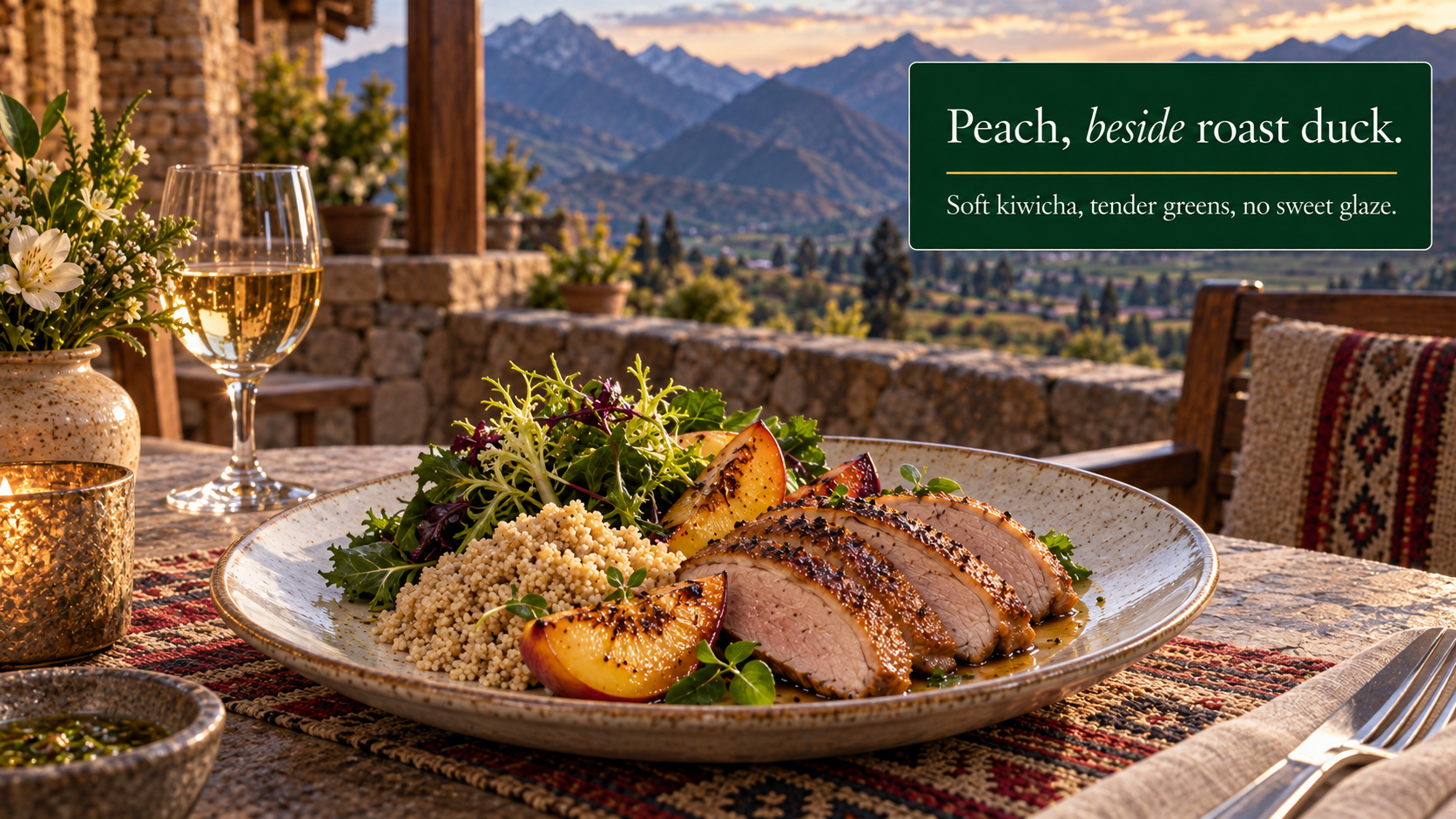
A few ripe peach wedges can change a duck dinner without turning it into a sweet dish. Keep their shape visible beside the meat, with soft kiwicha and a modest serving of greens. Nectarine offers a smooth-skinned alternative when peach fuzz is unwelcome. Choose whichever fruit tastes better that day.
Fruit, grains and savory plates
Peach and Nectarine Wedges with Roast Duck and Kiwicha
Serve a small portion of ripe peach or nectarine beside roast duck, soft cooked kiwicha, and greens. Leave tender washed skin on fresh wedges, or peel when its texture would distract. Remove the stone completely. The fruit can stay fresh or cook gently until tender, with herbs and a little lemon adjusted to its actual sweetness rather than a sugar glaze.
Choose the fruit for the bite you want
A peach should have enough flavor to be worth serving plain. Cut a sample before committing the whole batch to dinner. For fresh wedges, look for a ripe piece that still holds its shape under the knife. A very soft peach may be pleasant eaten with a spoon but awkward beside sliced duck. A hard, bland one will not become a better fresh accompaniment because the plate is elaborate.
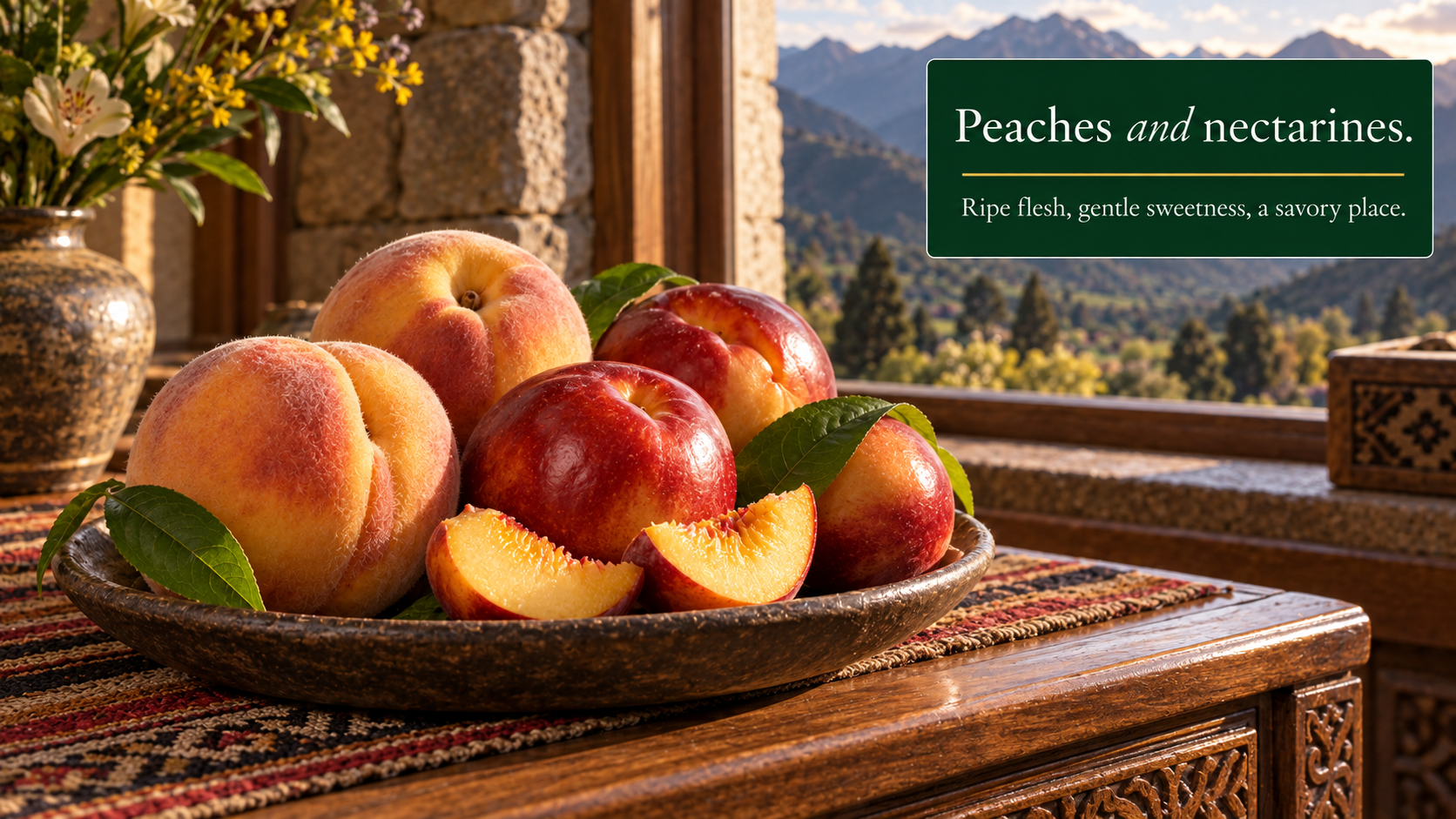
Peaches and nectarines belong to the same species. Clemson explains that the nectarine's smooth skin results from a natural mutation, rather than a peach-and-plum cross. That makes substitution straightforward at the level of meal planning, although individual fruit still differ in firmness and juice. Yellow and white flesh are choices to taste, not reliable rankings of sweetness.
Keep the skin when you enjoy it
Wash the whole fruit under running water before cutting, including fruit you intend to peel. Dry it gently. Purdue notes that peach skin can be eaten; leaving a tender skin on a fresh wedge preserves its outline. If the fuzz or a tougher peel spoils the bite, peel the fruit or choose a sound nectarine instead.
Remove the pit and inspect the cut surfaces for loose fragments. Freestone fruit releases more easily from the stone; clingstone fruit may need to be cut away in smaller pieces. Work with that difference rather than twisting a soft peach until it collapses. The edible fruit should arrive at the table ready for an ordinary forkful.
Fresh wedges or a gently cooked side
For the fresh version, cut manageable wedges and keep them separate from the duck's hot juices. Add a few tender herb leaves near service. A little lemon may help the particular fruit, but taste first. The point is to enjoy peach or nectarine with savory food, so neither syrup nor a sticky reduction belongs in this version.
For a warmer plate, arrange firm-ripe wedges in a shallow covered baking dish with just enough water to keep the bottom from drying. Cook gently until a fork enters easily, checking before the pieces lose their shape. Lift them out rather than flooding the plate with their liquid. This is a useful ordinary preparation when a slightly firmer fruit would feel out of place raw.
Give the duck and kiwicha their own space
Serve roast duck in comfortable portions beside a spoonful of soft cooked kiwicha. These very small amaranth seeds make a lightly cohesive accompaniment, quite different from the separate grains of a quinoa salad. Follow the method for the actual grain product, then taste for tenderness. Its mild flavor leaves room for both the savory duck and the fruit.
Place the greens between the grain and fruit, or offer them as a small side. Tender wilted greens suit the warm wedges; a crisp leaf salad suits fresh fruit. Start with a few wedges so the diner can combine them with the duck or enjoy a savory bite alone. An additional fruit sauce across the meat would repeat the same flavor.
Make the second plate different
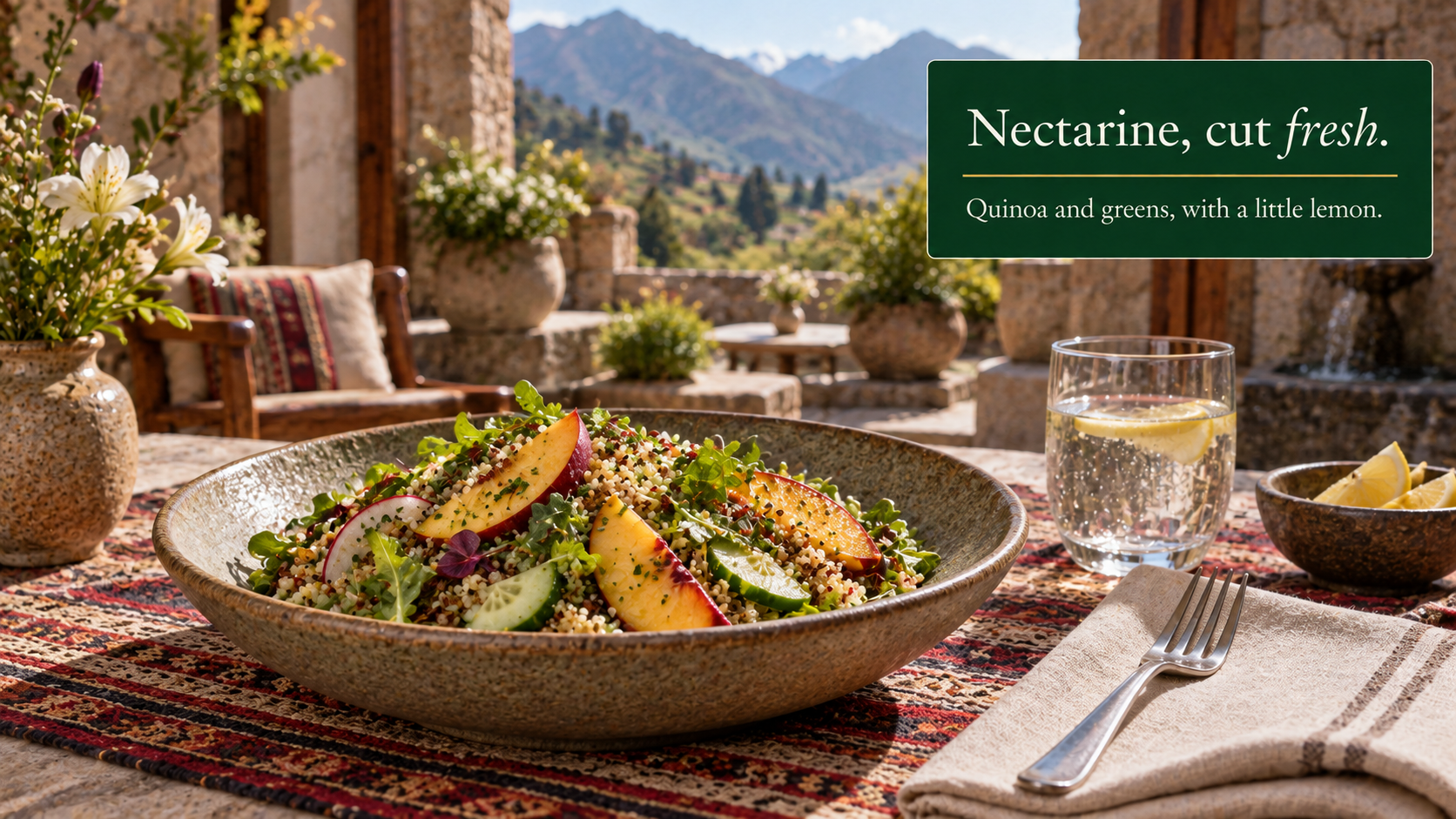
For the meat-free serving pictured here, use cooked quinoa with fresh nectarine wedges, cucumber and tender greens. Keep the fruit pieces large enough to recognize, and add a little lemon only after tasting. The quinoa gives this salad a more separate grain texture than the soft kiwicha alongside the duck.
Dress close to serving so the leaves stay lively and the cucumber does not release too much liquid into the grain. A few mint leaves can work, but keep their flavor behind the nectarine. For a warm meal, return to the roast duck, gently cooked peach and soft kiwicha, with greens served beside them.
Prepare only what the meal needs
Ripen firm nectarines at room temperature and refrigerate them once ripe, as Virginia Cooperative Extension advises. Keep cut fruit refrigerated, then assemble close to service for the best texture. Separate fruit and grain from raw poultry during preparation. Chill leftovers promptly rather than leaving a composed plate on the table while the evening continues.
A Sacred Valley dinner can make room for a fruit tasting within the meal. Ask which fruit is being used and whether it is served fresh, gently cooked or as a sauce. A few well-chosen wedges can be enough beside a roast.
The images illustrate serving ideas, rather than a named restaurant menu, a current harvest or an included retreat meal. These are preparation guides, not tested recipes.
A little more time in the Sacred Valley
A Machu Picchu journey can leave space for more than the train and the citadel: a meal, a quieter morning and a conversation that has time to develop. Ask Florian about The SoulSearching Experience, his five-day Sacred Valley seminar for 8-15 participants. Discuss dates, venue and meal arrangements directly.
Questions readers ask
Do peaches belong beside roast duck?
Yes. For this plate, offer a few fresh or gently cooked wedges beside the duck so their sweetness stays optional. Keep the meat savory and taste a bite with the fruit before adding lemon. A separate portion is easier to balance than a sweet coating over the entire meal.
Should I leave the peach skin on?
Tender peach skin can stay on a washed fresh wedge. Peel it when the fuzz or texture would distract, especially in a smooth preparation. A nectarine offers another choice if you want a smooth skin without peeling. Remove the stone before plating.
Is nectarine a peach-and-plum hybrid?
No. Clemson explains that a nectarine is a peach with a natural mutation that prevents skin fuzz. For dinner, choose by the flavor and texture of the actual fruit. A smooth-skinned nectarine can occupy the same small fruit-accompaniment role beside duck.
Does freestone matter for neat wedges?
Freestone flesh separates readily from the pit, making neat wedges easier to prepare. Clingstone flesh remains attached and may need to be cut away in smaller pieces. Both can be used, but plan the presentation around what you can cut cleanly instead of crushing soft fruit.
What should I do with firm peaches before dinner?
Let firm peaches ripen at room temperature in a loosely closed paper bag, away from direct sunlight. Check them rather than treating a fixed number of hours as a guarantee. Once ripe, chill them if they will not be used promptly. Choose another fruit if dinner arrives first.
Can a mealy peach still make a good side?
Taste a sound piece first. If its flavor is pleasant but the fresh texture disappoints, try a small gently cooked portion rather than fresh wedges. Cooking is not a promise to repair bland fruit. Discard spoiled fruit and do not use a sauce to conceal deterioration.
Can I use nectarine for the whole plate?
Yes. Use the same savory arrangement with ripe nectarine wedges, roast duck, soft kiwicha, and greens. Taste the fruit before adjusting acid or herbs because a change of fruit changes the balance. There is no need to imitate the exact sweetness of a peach.
Can nectarines be served gently cooked?
Yes. For this savory side, cook firm-ripe wedges gently with a little water until tender, checking while they still hold their shape. Lift them from excess liquid before plating. The goal is a soft fruit portion beside the meat, rather than jam or a baked dessert.
Can frozen nectarine replace fresh wedges?
Freezing is an option for holding fruit, but thawed texture will differ from a newly cut wedge. Use thawed fruit for a gently cooked or blended accompaniment when its flavor remains pleasant. For the crispest fresh presentation, choose fresh fruit and prepare only the portion needed.
How should I hold ripe whole nectarines?
Refrigerate ripe nectarines and check their condition before use. Virginia Cooperative Extension gives up to seven days for refrigerated ripe fruit, but an already bruised or very soft piece may need attention sooner. Keep cut fruit covered and chilled rather than giving it the whole fruit's holding time.
Can I assemble the fresh fruit side ahead?
Prepare the other components ahead if convenient, but keep the fruit and greens separate until close to serving. Refrigerate cut produce. Dressing and warm juices can change the texture, so assemble a small fresh portion rather than leaving the completed salad to wait.
Could rosemary season the peach accompaniment?
A little rosemary can provide a stronger aromatic direction for the warm fruit version. Start with less than you think you need and taste it beside the duck. If you prefer a delicate fresh side, leave the rosemary out and use a small amount of a tender herb instead.
Will the fresh peach side be as good as leftovers?
For the fresh version, assemble only what you intend to serve. Juicy fruit and dressed greens change texture as they sit. Refrigerate any leftovers promptly, but expect a softer side rather than the newly cut presentation. Keep uneaten fruit separate when planning another meal.
How does the peach side become a complete dinner?
Serve it with the specified roast duck, a modest portion of cooked kiwicha, and greens. The fruit supplies a small contrasting accompaniment rather than carrying the dinner alone. Keep those components distinct enough that the diner can enjoy them together or separately.
How can I keep the kiwicha savory beside peach?
Cook the grain without sweeteners, then taste it with a little suitable savory broth or a restrained herb finish. Keep the fruit separate so its juice does not flavor the whole grain portion. Soft kiwicha can accompany duck without becoming a breakfast-style sweet porridge.
Should the cooked kiwicha be fluffy like quinoa?
Expect small soft seeds that can hold together more than fluffy quinoa. Follow the actual grain product and adjust water and cooking time for the intended texture. Oregon State gives different approaches for more separate grain and softer porridge. For this plate, aim for a soft spoonful beside the duck.
How do I estimate the greens and fruit for guests?
Prepare one complete sample plate before scaling the meal. Add enough greens for a distinct vegetable portion and only a few fruit wedges at first. Fruit and lettuce sizes vary, so counting whole fruits or heads without checking the edible portion can be misleading.
Can fresh wedges go beside warm duck and kiwicha?
Yes. Keep the fresh fruit beside the warm components instead of underneath them. Add the greens near service so they retain the texture you intended. The contrast is the reason for choosing a fresh side; the entire plate does not need to be the same temperature.
Does the peach side need nuts for texture?
No. Fruit skin, fresh cucumber, and the greens can provide enough variation alongside soft kiwicha. Keep the side simple if nuts do not suit a guest. Adding several toppings can hide the fruit you chose; a separate fruit wedge is allowed to remain a simple pleasure.
Can I identify freestone peaches by appearance alone?
Do not assume a skin color proves how the pit will release. Ask the seller for the variety or freestone label, then test a fruit if practical. If the batch clings tightly to the stone, cut away smaller pieces and choose a presentation that suits them.