
In this guide · 7 sections and FAQs
- What do the four common property descriptions mean?
- If you want somewhere to live, what should you inspect first?
- What changes when the house stands on a chacra?
- When does a terreno become a building project?
- Does a lote have services and independent title?
- How can you compare the work each option requires?
- Why does the final stretch of access matter?
- Frequently asked questions
Leer esta comparación en español
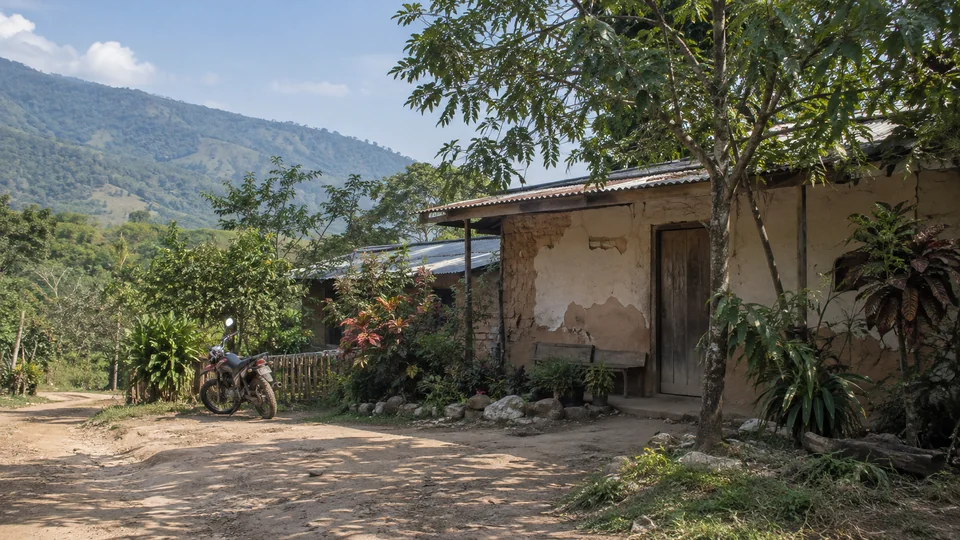
For this library, a country house is an existing rural home with practical road access; a chacra is cultivated land with a dwelling; a terreno is land without construction; and a lote is a defined parcel, often in a subdivision or closer to town. Advertisements may use these words differently. Confirm the actual house, crops, access and right offered before treating the label as a complete description.
The same Quillabamba property can be advertised as land, a farm, and a country house. The words are useful clues, but they leave different questions unanswered. You need to know what already exists, what you would have to build or repair, and what responsibility starts when you buy.
Use these descriptions as practical reading guidance. They are not legal classifications. This comparison focuses on Quillabamba and nearby Santa Ana sectors. The English buying hub and Cusco and Quillabamba location guide help keep a broader Cusco search tied to the place you intend.
In this library, the four categories have a defined search purpose: a country house combines an existing rural dwelling with practical road access; a chacra combines cultivated land with a dwelling and care tasks; a terreno has no construction; a lote is a defined parcel, often in a subdivision or closer to town. These are editorial categories. Actual advertisements may use the words more broadly, and none of the labels proves title, independent registration, services or permission to build.
What do the four common property descriptions mean?
Read the original Spanish alongside an English translation whenever possible. Then ask the seller to describe the actual parcel and everything included.
| Listing word | Practical starting meaning | What the word leaves unresolved |
|---|---|---|
| Casa de campo | Existing rural home valued for practical road access | Actual arrival, dwelling condition, included land, services, and legal status |
| Chacra | Cultivated land with a dwelling in this library | House condition, crop records, care tasks, services, and the final walk from the road |
| Terreno | Land without construction in this library | Actual parcel, relevant rights, services, access, and intended-use feasibility |
| Lote | Defined parcel, often in a subdivision or near town | Exact boundaries, legal independence, actual services, and permitted use |
The distinction is about your next questions. For a house, start with the building and its household routine. For a farm, add the agricultural operation. For vacant land, ask what the future project would require. A listing may combine these situations.
A portal's English interface does not turn its descriptions into verified English definitions. The accessible Properstar province index includes Quillabamba and Santa Ana labels, but individual entries still need their locations and features checked. The public listing index
If you want somewhere to live, what should you inspect first?
Begin with the home you would actually occupy. Walk through every room, open doors where permitted, and identify the water, sanitation, electricity, and route to the entrance. Ask which fixtures and furnishings are included, then check the building with an independent qualified professional.
A simple house may meet your needs well. It may also need work that is difficult to see during a brief viewing. Focus on dry usable rooms, roof condition, ventilation, drainage, sanitation, and the repairs necessary before moving in. Compare the practical condition with your own expectations rather than with polished photographs of country houses elsewhere.
If the house is adobe, tell the inspector and ask for an assessment appropriate to that construction. Do not equate the material with either a defect or a guarantee of traditional quality. The actual building, its alterations, and its maintenance history need examination.
What changes when the house stands on a chacra?
The household and the land can require different people and budgets. A house inspection answers some living questions. It does not establish the health of crops or the soundness of an agricultural operation.
Coffee and cacao are part of Quillabamba's documented productive context. MINCETUR describes both in its record for the COCLA plant in Santa Ana. That context should encourage questions about the specific farm, rather than assumptions that every planted property earns money. MINCETUR's COCLA record
Ask who does the work now, what happens when you are absent, and which tasks cannot wait for your next visit. Request crop and expense records if production contributes to the price. The coffee and cacao farm guide examines those records and the handover in more detail.
If you mainly want a home and a garden, make that purpose explicit. You may value planted land without wanting to operate a commercial farm. Establish what ongoing maintenance would still be necessary and affordable.
When does a terreno become a building project?
When the home you need is not already present, the purchase includes a separate project. You must assess the exact site, the intended use, services, access, design, construction, and management before treating vacant ground as a future home.
A flat-looking photograph is a poor substitute for a site assessment. Ask a qualified technical professional to identify ground suitable for your intended layout and any conditions requiring investigation. Discuss drainage, slope, the route for materials, and the location of water and sanitation arrangements.
Clarify the parcel's status and construction requirements with appropriate local professionals and authorities. This article does not declare any offered land buildable. Keep written answers tied to the exact parcel and project you described.
An older Pisac account describes a buyer building after living in Cusco and encountering budget pressure. Its useful point is the difference between buying land and completing a home, rather than today's construction price or a typical project timeline. The first-person account
Does a lote have services and independent title?
The advertisement must answer those questions separately. Ask what documents identify the plot, what interest is for sale, and how the plot shown relates to the records. Have an independent legal professional review the proposed transaction.
For services, establish what is already connected and what is only nearby. A pipe or electrical line beside the road may leave provider requirements, costs, permissions, and physical work unresolved. Ask who will complete any promised work and how completion would be verified.
Use the SUNARP and CRI guide for document questions. Keep the advertised plot number, parcel plan, legal records, and site location together so a favorable answer about one does not accidentally get applied to another.
How can you compare the work each option requires?
Complete this table for the actual properties you are considering. The descriptions suggest a starting point; inspection determines the work.
| Your intended purchase | Work to establish before committing | Work to budget after purchase |
|---|---|---|
| Existing country house | Building condition, services, included land, and legal review | Necessary repairs, household costs, and grounds maintenance |
| Working chacra with a house | House checks plus crop records, facilities, people, and handover | Household costs and an independently assessed operating plan |
| Vacant terreno | Site suitability, intended-use requirements, access, and connection feasibility | Design, construction, services, and supervision |
| Offered lote | Exact parcel identity, rights, subdivision context, and service status | The work needed to reach your intended use |
Write down dependencies as well as costs. A building project may require service arrangements first. A farm may need attention before you move into the house. An apparently finished house may need sanitation or roof work before ordinary living is practical.
Why does the final stretch of access matter?
A property can be near a main road while its entrance is reached by a track, shared route, or footpath. Follow the whole route with the transport you expect to use. Notice where you would unload groceries, building materials, or farm supplies.
Keep physical access and the right to use it as separate checks. A convenient path can still require document review, and a documented route still needs a practical assessment. The rural access and water guide organizes both kinds of question.
Before requesting options, describe your purpose in ordinary language: a house to live in, a farm to operate, or land for a future house. Add the repairs and management you are prepared to accept. That brief makes the four labels useful while keeping the final decision grounded in the property you inspect.
What would you like to find here?
A home among plants, a farm you can care for or space for a project. Tell us what matters to you before you arrange a visit.
Talk on WhatsApp →Frequently asked questions
Is casa de campo the same as a luxury villa?
A casa de campo is a country-house description, and the building may be simple. Ask for photographs and inspection of the actual house, including its roof, walls, sanitation, and services. Luxury villa imagery from another Cusco location does not establish the condition, furnishings, or standard of a Quillabamba house.
Does chacra mean a profitable commercial farm?
In this library, a chacra combines cultivated land with a dwelling. It does not establish income, production scale or business records. Ask about planted areas, crop condition, management, sales evidence and costs before treating part of the asking price as supported by agricultural earnings.
Can a terreno already have a house?
In this library, terreno means land without construction. A seller may use terreno more broadly, so ask about buildings and included items before assigning an offer to a category. Connect any structures with the parcel and right proposed, then review their condition separately from the label.
Does lote mean urban land?
Do not infer urban classification from the word alone. Ask which parcel is being offered, its administrative and planning status, and what documents support the description. A seller may use lote simply to identify a plot. Have the relevant local professionals clarify the status before budgeting for construction.
Which property type is easiest for a first-time buyer?
The easiest option depends on your needs and the particular property's condition. An existing house may reduce the need to build, while introducing repair questions. A farm adds operational responsibilities; vacant land adds development work. Compare the tasks you can manage and obtain professional support for the checks you cannot perform.
Can one property be both a chacra and a casa de campo?
Yes, the advertising descriptions can overlap when agricultural land includes a home. Ask the seller to itemize the house, crop areas, other structures, equipment, and services. Assess housing condition and agricultural operation separately, then examine whether their combined responsibilities match the way you want to live.
What should I ask when a house is described as adobe?
Request an independent building inspection suited to the construction. Ask about the roof, visible moisture, foundations, wall condition, alterations, and sanitation. Find out which repairs are urgent and obtain qualified estimates. The word adobe describes a material; it does not by itself establish safety, comfort, or renovation cost.
Does an existing house prove that new construction is allowed?
The presence of a building does not answer every question about its status or additional construction. Ask a local professional and the relevant authority what applies to the exact parcel and intended project. Keep those answers separate from the seller's description of the house as finished or ready to use.
How much land do I need for a house and garden?
Begin with the activities and facilities you want rather than selecting a universal area. Consider the actual usable ground, slope, access, water, and space around the house. A qualified designer or technical adviser can help assess the proposed layout. The advertised total area alone does not determine practical suitability.
Should I prefer vacant land to avoid house repairs?
Vacant land removes some existing-building questions but creates a future housing project. Investigate site suitability, intended-use permission, design, services, access, construction management, and costs. Compare that complete undertaking with repairing an inspected existing home. Neither choice becomes simpler merely because the advertisement contains fewer buildings.
Are services at the roadside the same as connected services?
Ask where each service actually reaches, which property has an active connection, and what is required to serve the offered parcel. Confirm arrangements with the relevant provider or professional. A nearby line, pipe, or neighboring connection can be useful context without proving your home will have a usable supply.
Can I compare properties just by their total area?
Compare area alongside usable ground and your intended activity. Two equally sized parcels can have different slope, access, building space, existing crops, and maintenance needs. Establish which measurements are supported and what the legal interest covers. An area figure cannot show whether the property fits your household or project.
Is a gated plot easier to verify?
A gate may help identify an entrance, but it does not establish the boundaries, ownership, or right to use the route. Match the property shown with the relevant documents and technical assessment. Ask who controls the gate and whether access relies on arrangements involving another property.
What if the English translation says farm but the Spanish says terreno?
Return to the original description and ask what activities and structures actually exist. Translation can select a narrower term than the evidence supports. Request clarification in writing and keep both versions. Judge the property through verified features rather than choosing the English word that best matches your plans.
Should a crop area be included in the home's maintenance budget?
Yes, investigate the work required even when crop income is not your main objective. Determine who maintains planted areas, what tools or materials are needed, and who acts when you are away. Keep estimated crop receipts separate from household expenses until the agricultural evidence supports including them.
Does a paved-road listing mean a vehicle reaches the house?
It may refer only to a nearby main road or frontage. Inspect the full route to the entrance and any final track, shared crossing, gate, or footpath. Clarify the right to use each section. A photo of pavement does not answer whether your vehicle can reach the actual dwelling.
How do I compare a renovated house with a basic house?
Have both inspected, then compare the work needed for your intended use. New paint or fittings can conceal unresolved problems; a basic house may still require substantial repairs. Obtain estimates with a defined scope. Compare usable rooms and essential services before assigning value to decorative finishes.
What should I decide before requesting property options?
Describe the life or project you want: an existing home, agricultural operation, future building site, or a combination. Specify essential access, services, usable space, and the work you can accept. That brief helps screen listings while leaving the exact property, documents, condition, and costs open for verification.