
In this guide · 7 sections and FAQs
- What does the local coffee and cacao context tell you?
- Are you buying a working operation or a planted property?
- Which records let you examine the income claim?
- What should an independent agricultural inspection cover?
- How do water, access, and the house affect the farm?
- What expenses can arrive before crop receipts?
- What must the handover make clear?
- Frequently asked questions
Buying a coffee or cacao farm near Quillabamba means evaluating both land and an agricultural operation. Confirm the exact parcel, title, access, and water, then examine crop condition, harvest and sales records, operating costs, and the work required after purchase. Use an independent agricultural specialist for site assessment. Regional crop reputation and a seller's income estimate cannot establish future yields or profit.
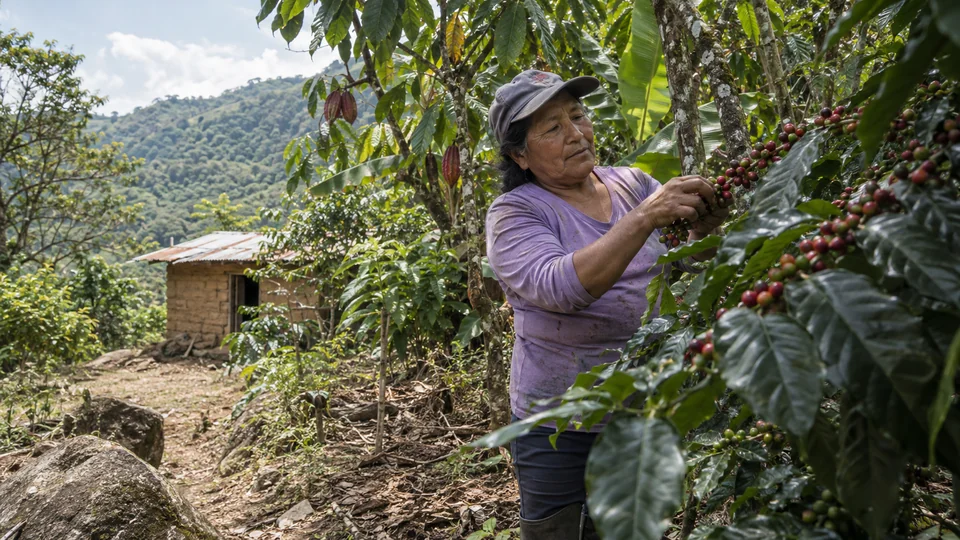
Coffee plants, cacao trees, and a simple house can make a farm near Quillabamba feel like a complete plan. Before buying, separate three things: the land you would own, the agricultural operation you would manage, and the place where you would live. Each needs evidence.
This guide concerns Quillabamba and nearby Santa Ana sectors. A property elsewhere in La Convencion does not enter the local search simply because an advertisement uses Quillabamba as a familiar reference. Start with the Cusco and Quillabamba location guide if the district or entrance is uncertain.
What does the local coffee and cacao context tell you?
Coffee and cacao have a documented local connection. MINCETUR's record for the COCLA industrial plant identifies Quillabamba, Santa Ana, and describes coffee collection and processing alongside cacao products. It establishes productive context around the town. It does not confirm a particular farm's membership, buyer relationship, quality, output, or eligibility for a program. MINCETUR's COCLA record
That distinction matters when a seller presents regional reputation as part of the price. Ask what the advertised farm itself has produced, how that product was sold, and what evidence connects the receipts to this operation.
An English forum discussion from 2015 includes a foreign buyer's wish to own land permanently and grow food, with a Cusco-area reply. It demonstrates one person's concern, rather than a current Quillabamba request or proof that farming will support a household. The historic buyer discussion
Are you buying a working operation or a planted property?
A planted property may have trees without a well-documented business. A working operation should be examined through the people, equipment, records, and processes that keep it functioning.
Ask the seller to walk through a full year. What happens before harvest? Who performs the work? Where does the product go? Which tools belong to the sale? How are costs recorded? Request the details even if your plan is to change the management later.
INIA's coffee manual treats establishment, management, harvest, and postharvest as separate technical subjects. Its cacao manual also covers cultivation and harvest handling. These are professional reference frameworks, developed in other research contexts. They do not supply a ready-made prescription for a Quillabamba parcel. INIA coffee manual, 2022 and INIA cacao manual, 2023
Which records let you examine the income claim?
Keep quantities and money in separate columns. A reported harvest is not necessarily a sale, and gross sales do not show profit. Ask your agricultural adviser and financial adviser to examine the relevant parts.
| Record to request | Question it helps answer | Limit to keep visible |
|---|---|---|
| Dated harvest records | What quantity was collected, from which area, and when? | Unclear units or mixed sources weaken comparisons |
| Buyer receipts or settlements | What product was sold and what was actually received? | One receipt does not establish recurring income |
| Labor and input expenses | What did the operation cost during the same period? | Unrecorded household work may hide real effort |
| Processing and transport records | How did the crop reach a saleable stage and buyer? | Equipment or services may belong to someone else |
| Crop-management history | What work, replacements, and problems occurred? | A verbal account needs supporting inspection |
| Certification or membership documents | Which organization recognizes what, and for whom? | Transfer, scope, and current status need direct confirmation |
Look for several periods where possible. If records use different product forms, a specialist should explain the relationship rather than accepting an informal conversion. Note gaps plainly. Missing information belongs in the decision, not in a confident estimate constructed to fill the gap.
What should an independent agricultural inspection cover?
Choose a qualified professional who can assess the specific crop and site. Give them the seller's records in advance and explain your intended use. Living on a small farm, operating it commercially, and owning it while absent create different questions.
The assessment should help you understand crop condition, variation across the parcel, management needs, facilities, and the uncertainty surrounding production estimates. Ask the professional what they observed directly, what depended on seller information, and what needs further investigation.
For soil questions, INIA publishes guidance on interpreting analyses for coffee and cacao. The useful lesson for a buyer is to seek proper sampling and interpretation, rather than treating a laboratory result as a universal approval of land. INIA soil-analysis manual, 2025
Do not ask this guide to select planting density, treatment, fertilizer, irrigation volume, or a guaranteed yield. Those decisions require the professional's parcel-specific work.
How do water, access, and the house affect the farm?
A productive parcel still needs a workable route for people, materials, and harvested product. Walk the entrance and the path through the farm. Clarify where vehicles can reach, what is shared, and what changes during wetter periods.
Identify water sources and uses separately. Household drinking water, irrigation, storage, and processing needs should not be merged into one seller statement that the property has water. Ask your advisers to check the physical arrangements and relevant documents. The rural access and water guide covers the questions to take into that review.
If there is an adobe or other existing house, arrange a building inspection. Room count and exterior appearance do not establish condition. Give particular attention to the roof, visible moisture, foundations, sanitation, and the services your household would need. Value the home and agricultural operation separately enough to understand where the asking price is coming from.
What expenses can arrive before crop receipts?
Prepare an operating calendar with the specialist and the people who would perform the work. You need to know when money is required, even if the farm's annual sales appear encouraging.
| Period or event | Expense to investigate | Evidence to obtain |
|---|---|---|
| Purchase and handover | Document review, technical inspections, travel, and asset checks | Written scope and estimates |
| Initial management | Immediate crop work and equipment or facility repairs | Independent assessment and supplier estimates |
| Routine operation | Labor, materials, transport, and management | Historical records and current quotations |
| Harvest and sale | Collection, handling, processing, delivery, and payment timing | Actual arrangements and prior settlements |
| Household use | House repairs, utilities, food, and travel to town | Inspection findings and a separate living budget |
| Absence or disruption | Supervision and essential work if you cannot attend | A practical plan with identified responsibilities |
Prepare a lower-income case as well as the seller's expected case. Include your own living costs without counting the hoped-for harvest twice. Do not assume that increased attention or a new crop variety will pay for the purchase.
What must the handover make clear?
Inventory the land, dwelling, tools, stored products and records before discussing continuing management. Identify what is included in the sale and what belongs to workers, contractors or another operator. Standing crops and unfinished work need their own handover questions.
If you will live abroad, separate the person who checks the farm from the person authorized to spend, arrange work or sell produce. Discuss how the actual work will be paid for. A caretaker should not be expected to advance personal money or accept responsibility for every problem simply because the owner is away.
| Decision | What to write down before you leave |
|---|---|
| Routine checks | Which areas are checked, by whom, how often, and what is outside that role |
| Evidence | Date, location, photographs of agreed points, and questions needing your response |
| Spending and work | Approval channel, any agreed limit, who pays, and what happens if you cannot be reached |
| Keys and equipment | Who receives each item, its condition, and whether another person may use it |
| Absence | Alternate contact, work that must be arranged, and what can wait |
| Former owner staying involved | Specific duties, reporting, payment arrangements, and how the arrangement ends |
Keep dated observations in the Spanish visit notebook. It saves on your device; export a copy if you want another person to review it. A photograph of one point cannot establish what happened across the whole farm between checks.
The arrangement's legal treatment depends on its actual terms. Have ongoing work, payment, residence and representation reviewed for the proposed agreement. Continue the ownership and seller-authority checks through the SUNARP and CRI guide.
What would you like to find here?
A home among plants, a farm you can care for or space for a project. Tell us what matters to you before you arrange a visit.
Talk on WhatsApp →Frequently asked questions
Does a coffee farm automatically earn income after purchase?
Existing plants do not guarantee a profitable harvest. Their condition, management needs, labor, processing arrangements, buyers, and prices all need investigation. Establish when money must be spent and when receipts might arrive. Build a household budget that can cover the farm's obligations if the expected crop income is delayed or lower.
What is the first information to request from a farm seller?
Request the exact location, the legal interest being sold, land area, crop areas, existing buildings, and recent production records. Ask what equipment and any harvested crop are included. These basics help you decide whether an agricultural inspection is worthwhile and prevent a planted property from being assessed only through attractive photographs.
How many harvest records should I review?
Request all available records across multiple harvest periods and explain any missing periods. One unusually favorable harvest provides a narrow picture. Your specialist can help judge whether the available history supports the seller's account. Preserve the dates, units, product form, buyer receipts, and related operating costs so comparisons remain meaningful.
Can I compare coffee cherries with bags of dry coffee?
They represent different stages and may use different units. Record exactly what was weighed or sold and ask how the seller connects the stages. Have an agricultural professional check any conversion used in the valuation. Comparing unlike quantities can make a farm appear more productive than its records actually establish.
Are cacao beans in a photograph proof of farm production?
A photograph can show a product without establishing where it grew, which harvest it came from, or how much was sold. Link photographs to dates, field observations, harvest records, and buyer receipts. They can help explain an operation but cannot independently prove annual production or future sales.
What if the seller has no written farm records?
Treat the production history as unverified and ask what evidence can be reconstructed. Receipts, buyer confirmations, dated photographs, and independent inspection may answer some questions. They may still leave substantial uncertainty. Avoid assigning a firm income value to the farm until the evidence supports that part of the price.
Should I buy land first and learn farming later?
You can learn, but an existing crop may require decisions immediately after purchase. Arrange competent local support before accepting operational responsibility. If your goal is mainly a home and garden, consider whether a working farm adds more cost and management than you want during your first year.
Can the former owner continue managing the farm?
That is a proposed arrangement to investigate, rather than an automatic solution. Clarify duties, access, reporting, payment, equipment use, authority, and how the arrangement ends. Use appropriate professional advice for the agreement. Your purchase assessment should also consider what happens if the former owner becomes unavailable.
Does a farm include cooperative membership or certification?
Do not assume that a land sale transfers a person's membership, supply relationship, or certification. Ask for the relevant documents and obtain confirmation from the organization concerned. Record what applies to the property, the operator, or particular production. A label in an advertisement does not resolve transfer or eligibility.
How do I assess a farm advertised as organic?
Ask which certification or documented production standard the seller means, who holds it, its scope, dates, and current status. Verify those details with the relevant organization. If there is no certification, ask for the actual management history. Keep marketing terminology separate from independently supported claims about the operation.
Does a coffee award nearby increase this farm's value?
An award establishes something about the particular producer and product recognized. It does not grade another farm's soil, plants, management, or coffee. Evaluate the parcel's own records and samples with qualified help. Nearby success can justify asking informed questions, but it cannot substitute for property-specific evidence.
Can I change a coffee parcel to cacao?
Treat a change of crop as a separate technical and financial project. A qualified agricultural professional should assess site conditions, existing plants, water, soils, and the proposed operation. This guide does not prescribe crop conversion. Do not include assumed future cacao income in the purchase budget before that assessment.
Is a soil test enough to approve the purchase?
A soil test can inform agricultural assessment when sampling and interpretation are appropriate. It does not establish title, access, water entitlement, plant health, market arrangements, or housing condition. Use it within a wider inspection, and ask your specialist which parts of the parcel were sampled and what remains uncertain.
Can I live in a house on the farm immediately?
Inspect the house separately from the crops. Check structure, roof, moisture, sanitation, water for household use, electricity, and the route to the entrance. Clarify the building's status with local professionals. A seller describing a farm as having a house does not establish that the house is ready for your household.
Should I inspect only during harvest?
Harvest can reveal valuable operational details, but it is one part of the year. Review the work and expenditure required between harvests, and investigate wetter-period access and water conditions. Discuss the most informative inspection timing with your specialist. A single visit cannot show every seasonal responsibility.
What happens to the crop growing when the sale completes?
Ask who owns it, who will harvest it, who pays the workers, and who receives the proceeds. Record the agreed handover clearly with professional help. Also identify stored crop, equipment, unfinished work, and buyer commitments. Ambiguity about the current harvest can persist after the land itself changes hands.
How do I compare a coffee farm with a cacao farm?
Compare the actual operations through verified output, costs, crop condition, labor needs, facilities, and the support you can obtain. Do not choose by a generalized income claim for either crop. If you lack experience, ask a specialist to explain which responsibilities you would take on in each specific property.
What should make me pause before paying a deposit?
Pause when the property, rights, production evidence, included assets, or handover remain unclear. Identify the unresolved issue and what evidence would answer it. Have your independent advisers review any proposed commitment. An appealing crop story should not rush a decision whose important physical and legal checks are unfinished.