
In this guide · 8 sections and FAQs
- Where does the journey really end?
- Is the physical route also a route you have a right to use?
- How would the final walk fit your household?
- What does the water arrangement actually supply?
- What needs checking about water quality and legal use?
- Which services exist at the actual parcel?
- What can weather information establish before a visit?
- How do you turn these checks into a purchase decision?
- Frequently asked questions
In Peru, checking land access rights before buying rural property means separating the physical route from the legal right to use it. Identify where the approach crosses neighboring land and what documents support use of each section, including any registered easement, and have a qualified local professional interpret the records. A site visit or a seller's explanation does not answer the legal question, so also confirm who maintains the route.
A house beside fruit trees may be easy to picture. Bringing groceries to that house, getting water to the kitchen, and making a work call are the details that make the picture usable. For rural land near Quillabamba, start at the beginning of the journey and follow it all the way to the place where you would live.
This guide concerns Quillabamba and nearby Santa Ana sectors. It gives you a way to organize observations and requests before a purchase. The regional search guide helps narrow the location and property type; the checks below help test a serious candidate.
Where does the journey really end?
“Road access” can describe several different things. A vehicle may reach the parcel boundary, a parking area near it, or a point followed by a walk. Ask the seller to identify the exact endpoint. For a chacra with an existing adobe dwelling, continue to the door and the areas of cultivated ground you intend to use.
Record the return journey too. An approach demonstrated in a seller's vehicle may not match the transport you will rely on. Try the routine you expect to follow, where practical: arriving from town, carrying purchases, and arranging the trip back. Give the date, vehicle, and conditions with every observation.
| Route stage | What to record at the site | What remains to verify |
|---|---|---|
| Starting point | Where your everyday trip begins | The transport you will actually use |
| Main road and turnoff | Junction, signs, and dated route images | Relevant interruptions and alternative arrangements |
| Local track | Surface, slope, narrow sections, and visible drainage | Maintenance responsibilities and changing conditions |
| Vehicle endpoint | Gate, parking point, or place the vehicle stops | Permission to use it and suitable delivery arrangements |
| Final walking section | Exact path, steps, surface, and loads you would carry | Rights to cross each relevant piece of land |
| House or intended use area | The complete approach to the door or chosen point | Building, technical, and intended-use checks |
| Return trip | How you leave and reach your next destination | Whether that routine is workable at relevant times |
Keep the route map and parcel map distinct. A pin in the middle of land does not identify its usable entrance.
Is the physical route also a route you have a right to use?
A walk demonstrates where someone went. It does not establish who owns the ground under the route or the right offered to a future buyer. Identify where the approach crosses neighboring land and what supports use of each section.
Request the relevant documents and ask a qualified local professional to interpret them. A registered easement may be part of that review, along with the specific route, parties, and use described. SUNARP's property-registration regulation addresses the registration of easements, but reading the regulation does not establish a right for your parcel. SUNARP's property-registration regulation
Do not let a document review stop at the property's entrance if your route uses other land before reaching it. Equally, do not expect a site visit to answer the legal question. The SUNARP and title guide explains how registry information fits into a wider review.
Ask how routine maintenance is organized. Who clears drainage, repairs a damaged section, and contributes to costs? Request dated examples and evidence of any arrangement you expect to rely on. A familiar path can still leave responsibilities unclear.
How would the final walk fit your household?
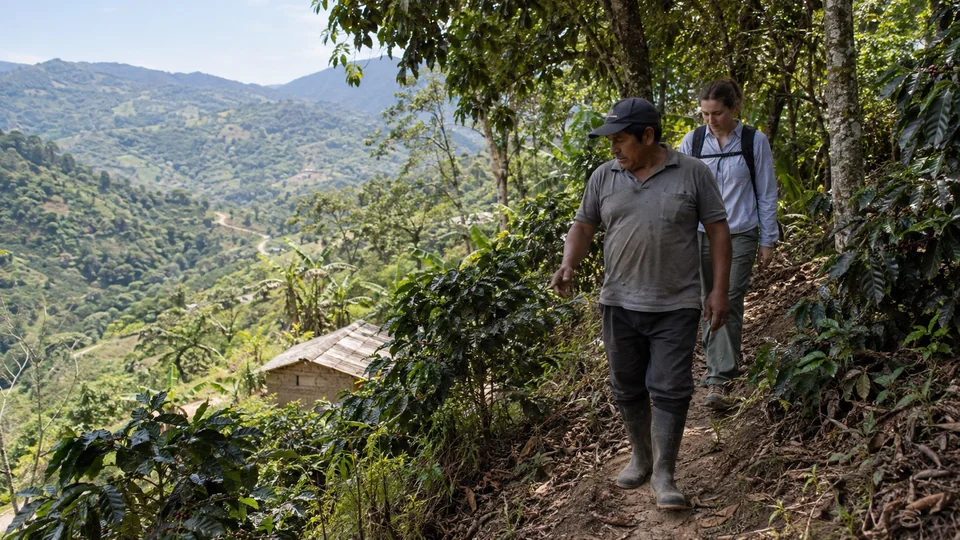
A walking approach can be part of the appeal of a rural home: you leave the road and pass through plants on the way in. Assess that pleasure beside the work it creates. The same path carries groceries, visitors, repair materials, and whatever you need during an ordinary week.
Walk the actual section with the people who will use it, when conditions allow. Note steps, slope, surface, shade, and places where water collects. Consider your expected loads and how deliveries would arrive. A short walk for one person can be inconvenient for another, and distance alone does not describe the effort.
For vacant land, add construction logistics to the question. Where would equipment and materials stop? Who would move them onward, and what arrangements would that require? Obtain a practical assessment before assuming a house can be built or supplied simply because you can reach the site on foot.
Record observations without overstating them. “Walked from the parking point to the door on this date” is useful evidence. “Easy access all year” requires much more than that visit can provide.
What do the Spanish water and access words mean in this guide?
Use this reading aid during a conversation. Ask the person to show you the feature they mean; the word alone does not establish the condition of a property.
| Word | What to ask to be shown |
|---|---|
| Trocha | The vehicle route, its surface and the point where driving ends |
| Camino de herradura | The walking or pack-animal route actually being described |
| Manante or manantial | The source of the water being offered |
| Manguera | The hose, its route and where it receives water |
| Tanque | The storage tank, its condition and how it is filled |
| Linderos | The boundaries the person is identifying on the ground |
These are practical descriptions for reading this article, not legal translations. A tank does not answer the source question. A route on the ground does not answer the right-of-use question.
What does the water arrangement actually supply?
Trace the arrangement from source to use. Ask where the water comes from, how it reaches the property, what storage exists, and who operates and maintains each part. Separate the household supply from irrigation, even if they share some infrastructure.
A running tap is an observation at one time. It cannot establish enough water for your plans, drinking-water quality, permitted use, or future availability. A planted parcel also needs an agricultural assessment suited to what you intend to maintain or change.
| Water or service question | Evidence to request | Limit of a simple viewing |
|---|---|---|
| Source and delivery | Supplier or source details, route, and responsible parties | Visible pipes do not establish the full arrangement |
| Household supply | Existing connection information and relevant quality records | Flow during a visit does not establish drinking-water suitability |
| Irrigation | Authorized use, intended demand, and technical assessment | Existing crops do not establish capacity for expansion |
| Storage and operation | Tank details, operating arrangements, and upkeep | A tank's presence does not prove supply continuity |
| Water-use authorization | Complete readable resolution, named holder, authorized source and use, and professional comparison with the parcel and intended activity | A seller's statement does not identify the licensed holder or use |
| Holder change | Applicable authority's requirements for the transaction | A sale does not itself demonstrate completion of the procedure |
| Electricity or sewer | Provider confirmation and existing-connection records | Nearby infrastructure does not prove a parcel connection |
| Proposed work | Approvals, responsibilities, and realistic cost estimates | A proposed connection is different from a functioning one |
For any existing dwelling, check where water enters the house and how wastewater is handled. For empty land, ask what a proposed household arrangement would require. Keep those costs in the purchase-cost worksheet and compare candidates through the land-price guide.
What needs checking about water quality and legal use?
Water that looks clear is not proof that it is suitable for drinking. Peru's drinking-water regulation addresses several types of quality criteria, including microbiological and chemical characteristics. Ask the supplier or relevant health authority about appropriate evidence and arrange qualified assessment where necessary. MINSA's drinking-water quality regulation
Water-use permission is a separate question. ANA describes a water-use license in terms of a particular purpose and place. Request the complete resolution and record its number, named holder, source, authorized use, and location. Have those details compared with the property and activity you intend to acquire. ANA's water-license service
A purchase should not be treated as automatic transfer of a license. ANA's published guidance describes extinction of an existing license and a new grant when the holder changes. That notice comes from a particular local water administration; ask the authority responsible for this parcel to confirm the applicable process. It supplies no guarantee of a result, cost, or completion date for your transaction. ANA's guidance on changing the license holder
If a river or channel is relevant to your plans, ask the appropriate professional and authority to review any water-margin restrictions for the exact site. Avoid using a universal distance as a substitute for that work. ANA's explanation of water margins
Which services exist at the actual parcel?
Check existing services and proposed services separately. Quillabamba's water and sewer provider is a starting point for an inquiry, rather than evidence that a rural parcel has either connection. Contact the provider with the location and relevant connection details. EPS EMAQ's official page
For electricity, ask who supplies the property, what connection exists, and what records identify it. Poles nearby do not answer those questions. Have appropriate technical help assess the installation and intended household demands. For a new connection, ask the provider what approvals and work are required.
For communication, use OSIPTEL's Checa tu señal tool as a screening aid. Its information comes from operator-declared coverage. The agency explains differences between mapped coverage categories; that information does not promise the performance of your phone, connection, or work tasks at the house. OSIPTEL's coverage-map explanation
Test at the exact place where you would work, using the device and operator you expect to use. Record the task, date, location, and any interruptions. A video call on a hill elsewhere on the parcel may say little about a desk inside the dwelling. If you need an alternative, check its availability directly rather than assuming one exists.
What can weather information establish before a visit?
Check SENAMHI's Quillabamba forecast close to the trip and read its area and validity dates. It helps plan a visit. It does not certify a local track, the final walking section, or access throughout wetter periods. SENAMHI's Quillabamba forecast
Ask for dated examples of route interruptions, drainage work, and maintenance. Compare them with your observations and obtain appropriate professional assessment for issues that matter to your use. If conditions prevent a safe visit, reschedule or arrange another way to gather the required evidence.
Record weather alongside the viewing. You should be able to distinguish what you saw on that day from what someone reported about other periods. Neither a favorable forecast nor a sunny photograph settles the seasonal question.
How do you turn these checks into a purchase decision?
Keep a file with four clear distinctions: observed at a dated visit, reported by someone, supported by a named document or reviewer, and still unresolved. Attach each item to the precise route section, water arrangement, or service it concerns.
If you are abroad, send an independent visitor the same brief and require the same distinctions in the report. Use the remote-purchase guide to organize representation and document work alongside the site review.
Before committing, ask whether the evidence supports your intended routine and what remains uncertain. A property may be appealing because of its house, plants, or walking approach. The decision becomes stronger when you also understand how you will reach it, supply it, maintain it, and substantiate the rights on which that life depends.
What would you like to find here?
A home among plants, a farm you can care for or space for a project. Tell us what matters to you before you arrange a visit.
Talk on WhatsApp →Frequently asked questions
What counts as checking the whole access route?
Start where your regular journey would begin and follow every stage to the intended entrance or house. Record the main road, turnoff, local track, parking point, and any final walk. Include the return trip and the tasks you expect to do, such as carrying groceries or arranging a delivery.
Does a visible path prove legal access?
No. A physical route and a substantiated right to use it are separate questions. Ask what land the route crosses and what documents support its use. Have a qualified local professional review the relevant records and arrangements. A seller's explanation or a successful walk does not complete that review.
Can a car reaching the gate prove year-round access?
It proves only what happened on that visit with that vehicle and those conditions. Record the date and route, ask about wetter periods and maintenance, and seek corroborating evidence. Do not convert one successful trip into a promise that the same journey will remain available throughout the year.
How should I assess a final walking section?
Walk the exact section if conditions allow and consider it as part of your routine. Note the surface, slope, shade, steps, and what you would carry. Include household members who will use it. Clarify how deliveries, building materials, and repairs would reach the property before relying on vehicle access nearby.
Who should confirm the rights to a route across other land?
Use a qualified local lawyer or other appropriate property professional to examine the documents and identify the parties and land involved. Ask how the arrangement applies to the route you observed and your intended use. Local familiarity with a path can inform questions, but it does not replace that legal review.
What should I ask about road maintenance?
Find out who currently does the work, what sections they cover, how decisions and costs are shared, and what evidence supports the arrangement. Ask about past interruptions and repairs with dates. Keep informal expectations separate from commitments you can rely on, especially when more than one owner uses the same route.
Does water running from a tap mean the supply is adequate?
It shows water was present at that point and time. It does not establish availability at other times, sufficient quantity for your intended uses, quality, or a right to use it. Identify the source, delivery arrangement, storage, maintenance, and relevant documents, then arrange the appropriate technical and legal checks.
Can I judge drinking water by its appearance?
Clear-looking water is not evidence that it is suitable for drinking. Ask the supplier or relevant health authority about applicable quality information and arrange qualified assessment where needed. Keep household drinking-water questions separate from irrigation requirements. A photograph, taste, or informal assurance cannot answer the full quality question.
Does a property's water license pass automatically to the buyer?
Do not assume that it does. ANA has published guidance describing extinction of the existing license and a new grant when the holder changes. Check the actual resolution, holder, source, use, and location, then ask the applicable local water authority what procedure and evidence your particular transaction requires.
What details should I request from a water resolution?
Request a complete readable copy and record the resolution number, named holder, authorized source, use, and location. Ask a qualified professional to compare it with the property and activity you intend to buy. Having a document with the word water on it does not establish that it covers this parcel.
Can one water arrangement serve both the house and crops?
It may involve different quality needs, quantities, permissions, and responsibilities. Map how water reaches each use and ask what supports both arrangements. Review drinking-water information separately from irrigation supply and authorized use. Do not assume a functioning household tap establishes enough suitable water for an expanded cultivation plan.
Does being near Quillabamba guarantee public water or sewer connections?
No. A provider serving the town does not establish a connection to a particular rural parcel. Confirm the exact address or pin, existing account and connection where relevant, and any proposed extension with the provider. Ask about requirements and costs before treating a planned service as part of the property.
What do I need to check about electricity?
Establish whether a functioning connection exists at the actual property, who supplies it, and what records identify the arrangement. Ask the provider about a proposed connection rather than relying on poles nearby. Have appropriate technical help assess the installation and your intended uses, including any changes needed for the household.
Can OSIPTEL's coverage map confirm working internet at the house?
Use it to screen the exact location and operators, then test at the intended workspace. The map presents operator-declared coverage information and cannot promise your calls, uploads, or particular device performance. Record the operator, device, location, date, and tasks tested so the result has a clear and limited meaning.
How do I test connectivity for remote work?
Try the tasks you actually need from the place where you would work, using your expected equipment and operator. Record calls, uploads, and any interruptions at relevant times. Check possible alternatives directly. A successful test provides evidence for that occasion; it does not establish continuous service or a contractual performance guarantee.
Can a weather forecast prove that the access road stays usable?
No. SENAMHI's forecast helps plan a visit within its stated area and validity period. It does not certify the route or describe every season. Keep the forecast beside dated observations, maintenance information, and professional assessment where appropriate. Recheck conditions before traveling rather than relying on an earlier viewing.
What if the seller says a water or service connection will be added?
Record it as proposed work. Ask the responsible provider or authority what approval, materials, route, timing, and costs are actually required. Decide who would carry those responsibilities and how they would be documented. Until the relevant checks are complete, do not evaluate the property as if the service already exists.
What should an independent visitor send me if I am abroad?
Give them a precise brief covering the full route, vehicle endpoint, walking section, water points, existing services, and unanswered questions. Request dated observations and identify which claims came from the seller. Separate their photographs from document review and technical conclusions. A useful report makes uncertainty visible instead of smoothing it away.
When are access and water checks complete enough for a decision?
When the evidence addresses your intended use and the remaining uncertainty is understood. Physical observations, rights to the route, water permissions, supply, quality, and maintenance may require different reviewers. Ask those reviewers to identify unresolved issues before committing. A neat checklist alone cannot establish that the property meets your needs.