
In this guide · 9 sections and FAQs
- What does the advertised price actually represent?
- Which properties belong in the same comparison?
- How do you standardize square meters and hectares?
- What if a listing contradicts itself?
- Why must the rights be checked before the price?
- How much of the total area fits your intended use?
- How do access, services, and house condition change the offer?
- How do you remove duplicates and preserve proposal dates?
- When can the comparison support your next decision?
- Frequently asked questions
Compare land asking prices in Cusco and Quillabamba only after identifying the exact location, property type, area, currency, included assets, and rights being offered. Normalize hectares and square meters, remove duplicate advertisements, and record proposal dates. Then assess usable ground, access, services, houses, and any agricultural operation. An asking price is not a verified completed-sale price, and a lower price per square meter does not establish better value.
Two advertisements can show land near Quillabamba at very different prices and still tell you little about which offer suits you. One may include a house and connected services. Another may cover a larger agricultural parcel, an uncertain area, or a different legal interest.
Start by identifying the offer. Then put the numbers into comparable units. This guide explains asking-price comparisons for Cusco-region buyers considering Quillabamba and nearby Santa Ana sectors. It does not publish a market average, confirm available inventory, or estimate future returns.
What does the advertised price actually represent?
An asking price is a seller's proposed figure. It is not a verified completed-sale price. Record the original advertisement and obtain a dated confirmation of the proposal before relying on it.
Ask whether the price covers the whole property shown, a particular plot, a share, or some other interest. Clarify included buildings, fixtures, equipment, crops, and other assets. Establish the currency and whether the figure is a total or a unit price.
The English buying hub and Cusco and Quillabamba location guide help you confirm the search area. A Cusco label covers many locations; it does not make a Sacred Valley property a local Quillabamba comparison.
Which properties belong in the same comparison?
Group offers by the purpose you are considering. Comparing a serviced lot, a simple country house, and a working farm only by total area can hide the very features you need.
| Offer type | Information to establish | What the asking price alone cannot tell you |
|---|---|---|
| Lote or specified plot | Exact parcel, rights, area, status, and service connections | Whether the offered plot is ready for your intended project |
| Vacant terreno | Site identity, usable ground, access, and intended-use requirements | What would be needed to create the home you want |
| Casa de campo | House condition, included land, fixtures, and household services | Whether the building is suitable without substantial work |
| Working chacra | Crop areas, records, facilities, included equipment, and handover | Whether the agricultural operation produces reliable net income |
Use the four-property guide to define your purpose. Compare a house you can inspect with another actual house, or a proposed building site with another site requiring similar work. Keep differences visible rather than forcing every property into a single ranking.
For a working farm, follow the coffee and cacao farm guide. Unsupported harvest projections should not become an assumed value component.
How do you standardize square meters and hectares?
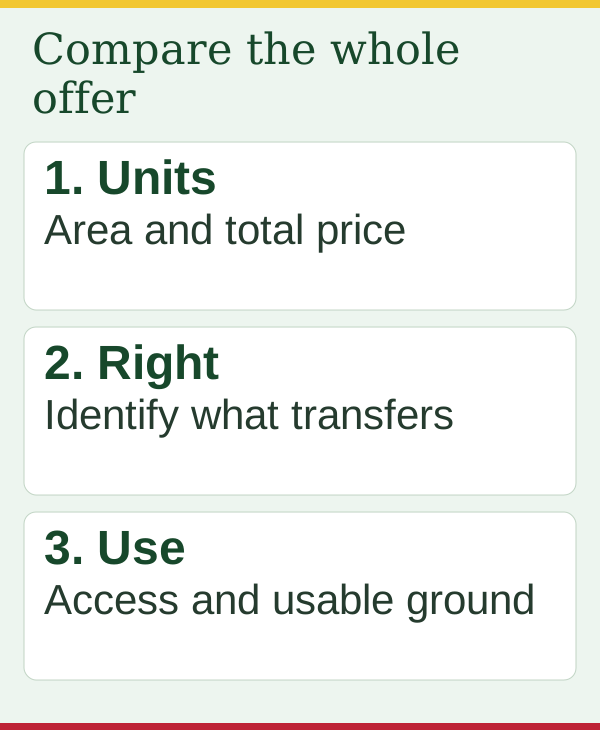
One hectare equals 10,000 m². Convert hectare figures before comparing them with square-meter figures, and retain the original unit in your notes.
The basic calculation is total asking price divided by the stated land area. Label the result as an asking price per square meter. It is only as reliable as the price and area you entered.
The following numbers are INVENTED arithmetic examples. They are not actual inventory, local prices, market averages, or valuation evidence.
| Invented example | Invented asking price | Invented total area | Calculation |
|---|---|---|---|
| A | S/80,000 | 2,000 m² | S/80,000 ÷ 2,000 = S/40 per m² |
| B | S/150,000 | 1 hectare = 10,000 m² | S/150,000 ÷ 10,000 = S/15 per m² |
Example B has a lower calculated unit asking price. That does not establish better value. Its rights, location, usable ground, access, services, and condition are deliberately unspecified.
Keep land area distinct from the floor area of a house. If a seller quotes price per hectare, also confirm the total price for the exact area and interest offered. Leave missing or disputed inputs unresolved.
What if a listing contradicts itself?
Keep both versions before asking for a correction. Record the advertisement date, the currency and the area used in each version. A mismatch tells you what needs clarification; it does not tell you which figure is correct.
| Difference | Question to resolve |
|---|---|
| Price in the heading differs from the description | Which total asking price applies, in which currency and on what date? |
| Area is stated in different units | What is the original area and what supports it? |
| The house or crops appear in one version only | What is included in the actual proposal? |
You can enter the options in the Spanish property comparison tool. It keeps each option in its original currency and shows which amounts remain missing. Export a copy before changing important figures. Use the notes to preserve the earlier version and the question it raised.
This is a record of your comparison, not a transaction-price dataset. Until the conflicting inputs are clarified, the calculated unit price remains provisional.
Why must the rights be checked before the price?
The legal interest is part of what you are evaluating. A price for an identified whole parcel cannot automatically be compared with a price for shares in a larger property.
SUNARP's buyer guidance tells buyers to know the property's registry entry and check the registered seller. It also addresses transfers of acciones y derechos through the share in the whole property. Use independent legal review to establish how the specific offer relates to those records. SUNARP's purchase guidance
Ask your adviser to explain the interest for sale, seller authority, and the relationship between the documents and the ground shown. The SUNARP and CRI guide organizes the title questions. A low asking price cannot resolve an unidentified property or unclear rights.
How much of the total area fits your intended use?
Total area answers a measurement question. It does not establish how much ground serves your intended home, garden, access, or farm operation.
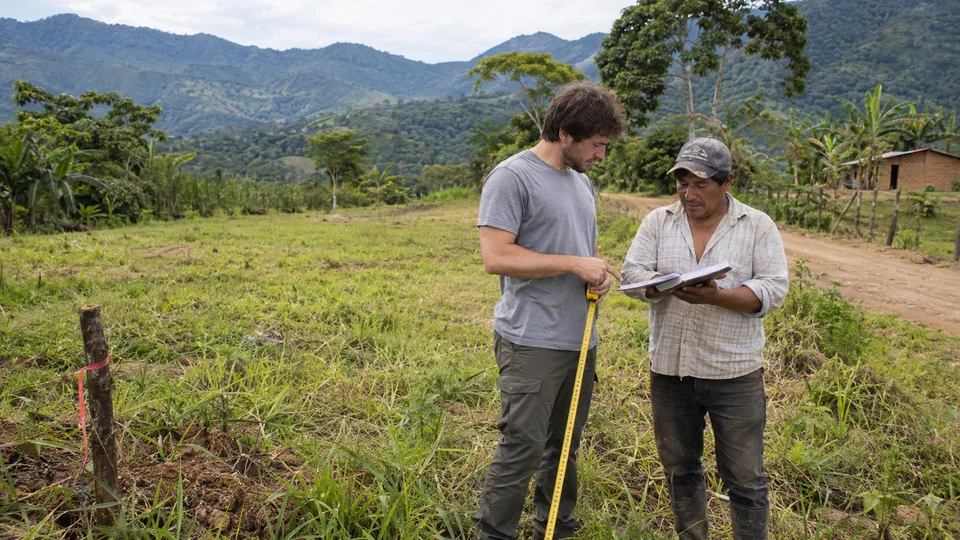
Walk the site and obtain appropriate technical assessment. Identify slope, drainage, boundaries, existing structures, and the space relevant to your proposed layout. Ask what was measured and what remains uncertain. Avoid assigning a convenient usable-area percentage from photographs.
Nearby houses do not establish buildability on the offered parcel. Clarify the exact property's status and intended-use requirements with local professionals and the relevant authority. Keep any assessed usable area separate from an unsupported promise that every part can be developed.
How do access, services, and house condition change the offer?
Follow the complete route to the entrance. A main road nearby is different from practical vehicle access to the house. Check the route physically and have the relevant rights reviewed.
For each service, distinguish an active connection from infrastructure nearby or promised future work. Ask the relevant provider or professional what applies to the actual parcel. The access and water guide covers those checks.
An existing house deserves its own inspection. New paint, an adobe description, or an appealing room count cannot establish condition. Record what is useful to your household and what requires repair. These differences inform your assessment without supplying a universal price premium.
How do you remove duplicates and preserve proposal dates?
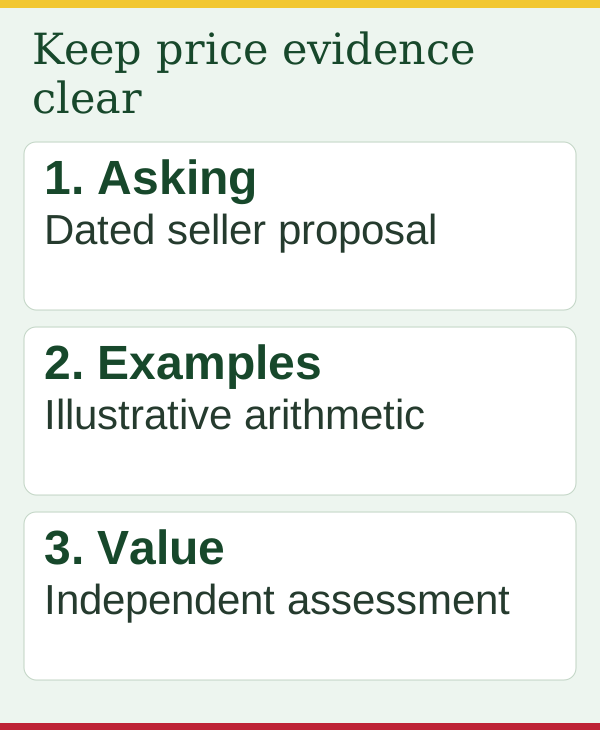
Give each candidate property one comparison record. Attach its advertisements, reference numbers, photographs, and dated seller confirmations. When entries appear to describe the same parcel, group them as suspected duplicates until confirmed.
Do not average every repeated advertisement as a separate property. Preserve conflicting prices and later revisions rather than silently deleting the history. An old post is evidence of an old publication, not current availability or a closed sale.
Compare exact locations as well. The Quillabamba and Sacred Valley comparison helps you assess the household tradeoffs behind a regional choice.
When can the comparison support your next decision?
A useful shortlist shows the dated asking price, original currency, supported area, rights, included assets, physical findings, and unresolved questions for each property. It can tell you which offers deserve further inspection. It does not itself establish fair market value.
If you need a value opinion, provide the evidence to a qualified valuer. Keep acquisition expenses in a separate budget using the purchase costs and taxes guide. That budget answers what buying would cost; this comparison answers what each asking price is attached to.
What would you like to find here?
A home among plants, a farm you can care for or space for a project. Tell us what matters to you before you arrange a visit.
Talk on WhatsApp →Frequently asked questions
What is an asking price in a land advertisement?
It is the price a seller or publisher presents for an offer, subject to the details and date of that proposal. It is not proof of the amount a buyer eventually paid. Confirm the price directly and establish the exact property, rights, assets, and currency it covers before comparing it.
Can online advertisements establish the average Quillabamba sale price?
An average of advertisements would describe the selected asking-price sample, with its duplicates, missing fields, and property differences. It would not establish completed sale prices. This guide does not publish a local market average. Build a verified comparison of actual candidates rather than treating a portal summary as a transaction dataset.
How do I convert hectares into square meters?
One hectare equals 10,000 square meters. Multiply the hectare area by 10,000 before comparing it with a parcel advertised in square meters. Keep the original figure and unit beside the conversion. The calculation standardizes the unit, but the property's area still needs appropriate documentary and technical verification.
What should I do when an advertisement gives no area?
Ask which parcel or interest the price covers and request the supporting area information. Leave the unit-price field unresolved until the seller clarifies it. Do not infer area from photographs, a neighboring advertisement, or a portal's missing field. A precise calculation cannot repair an uncertain input.
Which area should I use for a price-per-square-meter calculation?
State exactly which area you use, such as the supported total parcel area. Keep usable ground and any built area in separate fields. Ask your technical adviser how the measurements relate to the site and documents. Mixing total land, house floor area, and estimated usable space produces misleading comparisons.
Is a lower unit asking price always a better offer?
No. It says the stated price is lower relative to the area used in the calculation. It leaves rights, location, usable ground, access, services, buildings, and agricultural responsibilities unresolved. Assess those differences against your intended use before drawing a value conclusion from the unit price.
Why do larger parcels sometimes look cheaper per square meter?
A larger area spreads the total asking price over more square meters, but the offered properties may be materially different. Investigate slope, usable space, services, access, and rights. This guide does not establish a local discount pattern for large parcels or assume that extra land improves a household's purchase.
How should I compare a farm price with a lot price?
Compare them within their own intended uses first. A farm may include crops, facilities, equipment, and operating responsibilities. A lot may involve a separate building project and service questions. A single unit-price ranking hides those differences. Examine what each offer includes before deciding whether either fits your purpose.
Does an existing house justify a higher land price?
It may contribute to the offer, but its usefulness and condition need assessment. Identify the building and included fixtures, arrange an independent inspection, and obtain estimates for necessary work. Avoid assigning a value simply because a listing says house or country home; the actual structure may differ substantially from your needs.
How can I recognize duplicate land advertisements?
Compare the parcel location, area, photographs, description, reference numbers, and included features. Similar entries may represent the same property, but confirmation is necessary. Group suspected duplicates and ask for clarification. Keep their different prices and dates visible without counting each publication as a separate parcel or new market evidence.
Which date matters in a price comparison?
Keep both the publication date and the date the seller confirmed the proposal. An old listing may still be visible without a current offer. Record later changes with their dates instead of overwriting the history. Compare proposals that have been confirmed for the same decision period wherever practical.
What if the displayed price differs from the description?
Ask which figure is the current asking price, which currency applies, and what the price includes. Preserve the conflicting information and the dated clarification. A portal may display a converted amount or retain older text. Do not select the lower figure merely because it makes the property look more affordable.
Should I compare dollar and sol prices directly?
Keep the original quoted currency with each proposal. If you convert for a comparison worksheet, use one stated exchange rate and date consistently and mark the result as a calculation. Confirm the seller's actual payment proposal separately. A portal's converted display does not settle the currency or amount of an agreement.
How do shares or derechos affect the price comparison?
First establish the legal interest being offered with an independent professional. Ask how any stated share relates to the whole property and to the ground shown during the visit. Do not compare its price as though it necessarily represents a separately identified, independently transferable plot of the same area.
Does a low price compensate for unresolved documents?
A lower asking price does not establish what rights you would receive or resolve the transaction's legal questions. Identify the missing information and obtain independent review. Keep the offer outside the verified comparison until the uncertainty is understood. Price arithmetic cannot substitute for confirming the property and seller authority.
How should steep or irregular land enter the comparison?
Record total area and obtain a technical assessment of the ground relevant to your intended use. Ask about slope, drainage, practical access, and layout constraints. Do not invent a usable-area percentage from photographs. A low total-area unit price may leave the part you need unsuitable or uncertain.
Do neighboring houses prove that the parcel is buildable?
Nearby houses provide context, but they do not establish the offered parcel's status or permission for your intended project. Ask qualified local professionals and the relevant authority about the exact site. Keep any confirmed requirements with the comparison rather than assigning building potential solely from neighboring development.
How should road access and services affect my shortlist?
Record what is physically usable, what is documented, and what remains promised or merely nearby. Follow the complete access route and confirm each relevant service arrangement. Compare those findings against your intended use. Avoid adding a speculative premium or discount before you understand the actual differences between the properties.
Can expected coffee or cacao income support the asking price?
Investigate the particular farm's production, sales, costs, crop condition, and management needs with qualified help. A seller's projection or regional crop reputation does not establish future returns. Keep unsupported income assumptions out of the price comparison and use verified records to understand the agricultural part of the offer.
When is a price comparison ready for professional valuation?
A useful file identifies the exact candidates, their dated proposals, areas, rights, included assets, and known physical differences. It also shows unresolved fields rather than hiding them. Give that file to a qualified valuer if you need an independent value opinion; your worksheet organizes evidence but does not itself establish market value.