Home › Sacred Valley & Beyond › Kiwicha: Andean Amaranth Beyond the Garnish
Kiwicha: Andean Amaranth Beyond the Garnish
The short answer
Kiwicha is Andean grain amaranth, which may appear as cooked seed, popped grain or flour. Choose the food form before choosing a dish. A warm preparation can be creamy, while popped kiwicha adds crunch. Ask about other grains, broth and toppings, and distinguish documented Cusco cultivation from the supplier behind your actual serving.

On this page
- What does kiwicha mean on a menu?
- Is there a documented Cusco growing connection?
- How does cooked kiwicha differ from quinoa?
- What is a useful method for a warm bowl?
- Can kiwicha be savory?
- How is popped kiwicha used?
- Which food form suits your meal?
- Does kiwicha need quinoa’s rinsing explanation?
- What nutrition and dietary claims are useful?
- How can you fit it into a comfortable day?
- Sources
- Continue exploring the table
- Frequently asked questions
A few popped seeds and a warm grain bowl can both be called kiwicha, but they offer very different meals. Ask which food form the kitchen is using before you order.
Kiwicha has a documented connection to Cusco agriculture and plenty of room in savory cooking. This guide explains the difference between cooked and popped grain, a practical generic amaranth method and the questions that clarify a restaurant preparation. It keeps nutrition comparisons tied to the actual serving and avoids treating every ingredient called amaranth as the same crop or plant part.
What does kiwicha mean on a menu?
Kiwicha is Andean grain amaranth, identified as Amaranthus caudatus in INIA’s Cusco agricultural guidance. On a menu it may mean cooked seed, popped grain or a flour ingredient. Ask which form is used before choosing the dish. A spoonful of popped kiwicha over vegetables will feel very different from a warm bowl of the simmered grain.
The wider word amaranth can also refer to other species or to edible leaves. This guide concerns the grain associated with Andean kiwicha. That distinction helps you avoid ordering a dish on the basis of a recipe written for a different plant part. INIA Cusco kiwicha guide
Is there a documented Cusco growing connection?
Yes. INIA’s production guide addresses kiwicha grown in Cusco, and the Andenes agricultural station documents the named INIA 414 Taray variety. Those are concrete agricultural references, rather than evidence drawn only from the ingredient’s appearance in a hotel breakfast. INIA 414 Taray
They do not identify what is in a particular bowl. A restaurant could use another variety or buy its grain through a distributor from another region. Ask where the grain was grown if origin matters, and distinguish that from the place where it was popped, milled or cooked. The Sacred Valley produce guide provides broader context for asking about a kitchen’s ingredients.
How does cooked kiwicha differ from quinoa?
It is a different crop with a different kitchen character. FAO distinguishes Amaranthus caudatus from Chenopodium quinoa. Both can appear in Andean-grain dishes, but that does not require them to behave identically in a pan. FAO crop distinction
Oregon State University’s Food Hero describes cooked grain amaranth as creamy and slightly nutty. Its method varies water and cooking time to suit the desired texture. That is useful when choosing a warm bowl: expect a preparation that can become cohesive, rather than assuming separate rice-like grains. If you want a firmer grain accompaniment, ask how the kitchen achieves it. A flour or popped topping is a different option again.
What is a useful method for a warm bowl?
Food Hero’s grain-amaranth recipe uses one cup of seed with two to three cups of water. Bring the water to a boil, add the grain, then reduce the heat and simmer with the pan covered for 25 to 30 minutes, or until the texture suits the dish. Food Hero stovetop amaranth
This is a generic grain-amaranth method, not a trial of every Peruvian kiwicha variety. Follow the actual food product’s instructions and check the result. Less liquid and shorter cooking favor more separate grains; more liquid and time favor a creamier cereal. Decide what you are making before judging the outcome. A soft preparation can be exactly right for one meal and unsuitable for another.

Can kiwicha be savory?
Yes. Food Hero suggests herbs such as rosemary or thyme, nuts or seeds and vegetables for savory grain amaranth. Its basic method does not require sugar. You can therefore discuss a warm herb-seasoned bowl or vegetable accompaniment without asking a kitchen to turn it into a sweet breakfast preparation.
For a homemade adaptation, prepare the grain by a suitable method and add vegetables whose handling and cooking you can manage. Keep the seasoning simple at first so you can notice the grain. In a restaurant, ask about broth, cheese, butter and sauces. A savory description does not automatically mean vegan, and the actual additions matter more than an appealing phrase about ancient grains.
How is popped kiwicha used?
Popped grain provides a different texture from a simmered bowl. Food Hero demonstrates dry popping in a hot pan in small batches, keeping the seeds moving so they pop without burning. For a meal, a small amount can add a light crunch over a suitable savory preparation. Food Hero popping instructions
If you are buying the popped product rather than making it, inspect its ingredient list. Plain popped kiwicha and a sweetened packaged mix are different purchases. Follow the package’s storage instructions, and add a crisp topping near service if texture matters. The sources here do not establish a universal storage duration for loose popped grain bought from a market.
Which food form suits your meal?
Ask what the kitchen means by kiwicha. The preparation can tell you whether it will be the main component of the meal or a small finishing element.
| Food form | Practical role | Useful question |
|---|---|---|
| Whole raw food-grade grain | Ingredient for cooking | What method and texture does the product recommend? |
| Simmered grain | Warm cereal or savory bowl | Is it creamy, and what liquid is used? |
| Grain mixed with rice or oats | A blended accompaniment | Which other grains and ingredients are included? |
| Popped kiwicha | A crisp topping | Is it plain or sweetened? |
| Kiwicha flour | An ingredient in dough or sauce | What else is in the recipe? |
Food Hero also suggests blending some amaranth with another grain. Follow instructions suited to the mixture, rather than combining two complete cooking methods by guesswork. The Sacred Valley dining guide helps you place that ingredient decision within the restaurant occasion.
Does kiwicha need quinoa’s rinsing explanation?
Do not assume that every small Andean seed needs the same preparation. Peru’s Ministry of Environment distinguishes kiwicha from quinoa regarding saponins. That is a reason to avoid copying a quinoa bitterness explanation directly into a kiwicha recipe. It is also completely separate from the multi-day debittering needed for raw tarwi. Ministry ingredient discussion
Follow the grain product’s directions and inspect for debris. If a recipe calls for washing, use suitable water and a strainer fine enough to retain the seed. For dry popping, follow that method’s actual directions instead of pouring wet grain into a hot pan. Keep the method consistent while learning it; changing the grain form changes the task.

What nutrition and dietary claims are useful?
Peru’s INS table lists kiwicha as an identified food with protein, fat, dietary fiber and minerals. Its low-water sample should not be treated as the composition of a hydrated bowl. Ask what serving and preparation a number refers to before comparing it with another food. INS food table
Plain grain amaranth is gluten-free, as University of Arizona Extension explains. A completed dish can contain wheat flour, sauces or another grain, however, and handling matters for diners who need to avoid gluten. Arizona Extension amaranth guide The ingredient’s nutrition does not certify a restaurant preparation or make a tiny topping equivalent to a full grain serving.
How can you fit it into a comfortable day?
A hypothetical lunch illustrates the choice: you prefer a vegetable plate with a little crunch, and the kitchen offers plain popped kiwicha as a topping. You ask about the dressing and other ingredients, then choose a portion that fits the rest of lunch. Another day, a warm savory grain bowl may suit you better. Nothing requires making every meal an ingredient lesson.
Allow time for a meal within your Sacred Valley stay. The publisher, Florian Rolke, also offers The SoulSearching Experience, a five-day seminar in the valley for 8-15 participants, with no plant medicine. That separate invitation is for readers considering a more reflective stay; its food arrangements and other inclusions require confirmation.
Kiwicha with a savory place at the table
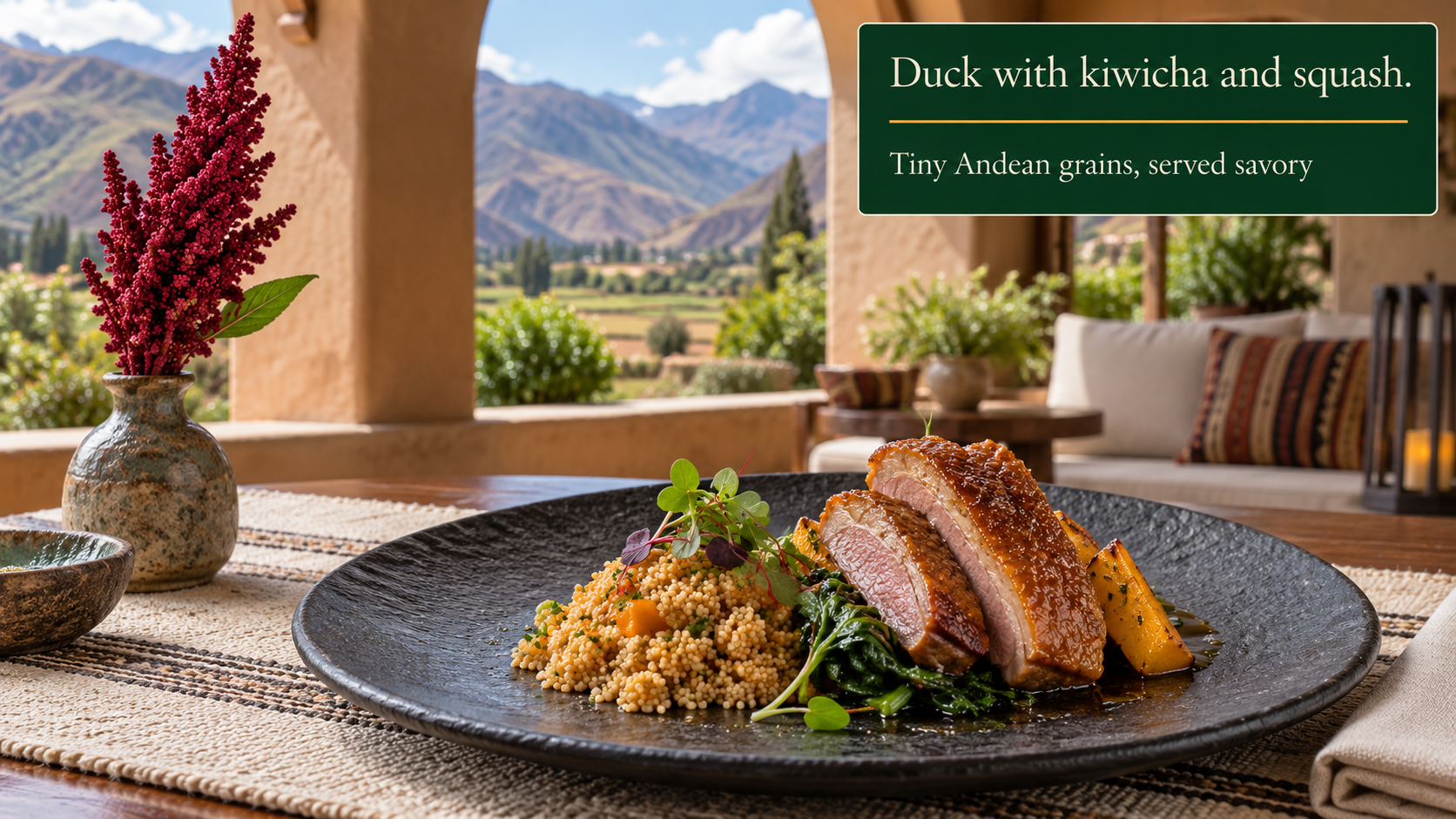
Kiwicha adds plant protein and dietary fiber
Kiwicha can contribute plant protein and dietary fiber, giving it nutritional value alongside its fine texture. Protein provides building material for the body's tissues, while dietary fiber supports bowel regularity. INS lists 13.1 grams of protein and 7.1 grams of fiber per 100 grams of its reference food, popped kiwicha from Huánuco. These values describe that popped product. A light sprinkle supplies a smaller amount, and a soft cooked grain serving contains more water. Ask which form is served so the ingredient's contribution stays clear.
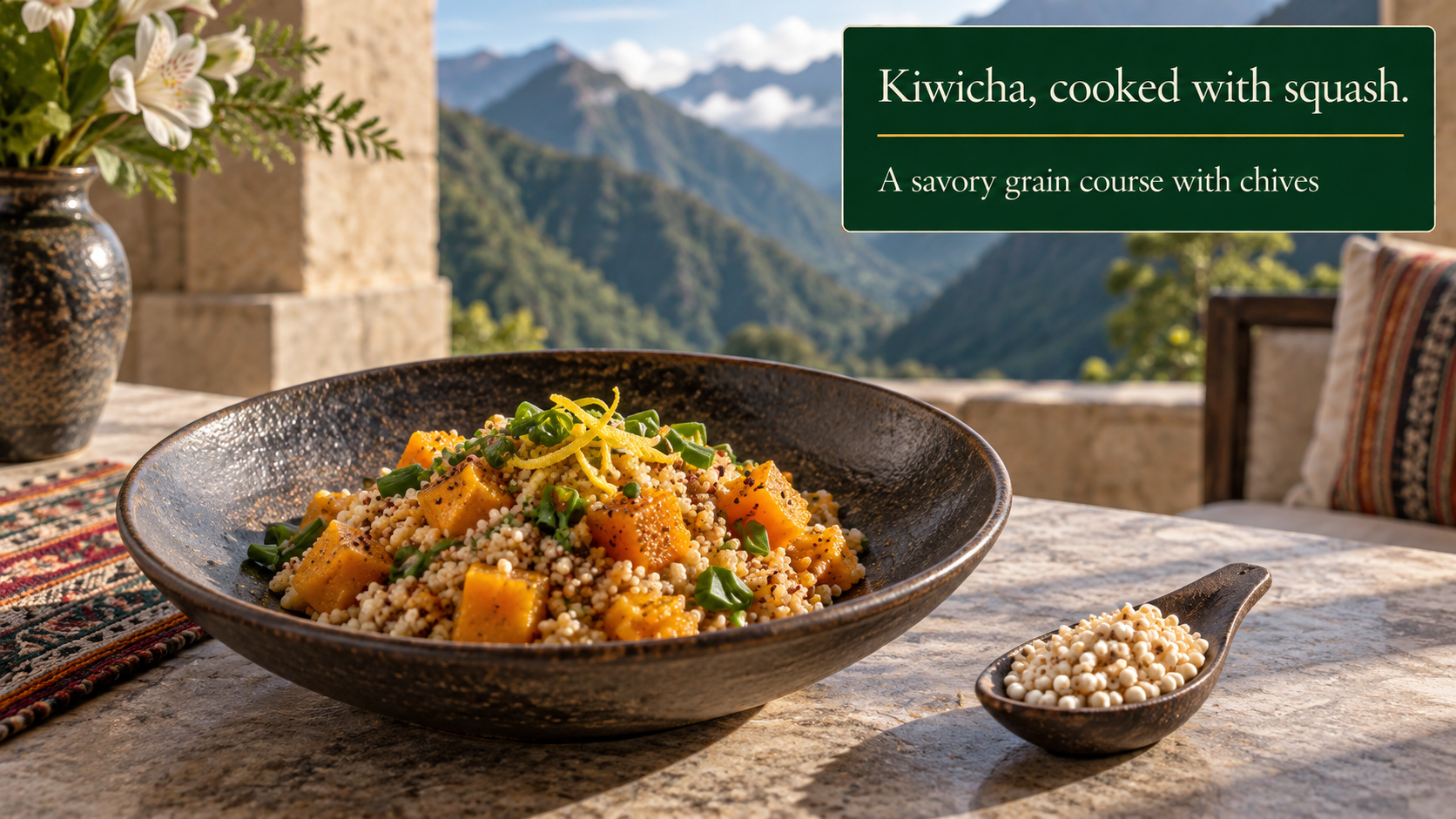
Give cooked kiwicha a course of its own
Kiwicha deserves more room than a scattering over a finished dish. Cooked amaranth can become a soft, spoonable accompaniment, with a character quite different from the separate grains of quinoa graneada. Oregon State University's Food Hero provides a stovetop amaranth preparation. The exact texture depends on the grain, liquid and method, so ask what the kitchen means by kiwicha on the menu.
One proposed dinner places this softer grain beside roast chicken, mushrooms and cooked greens, with the sauce served separately. A second gives it a place in a vegetable soup. These are dining ideas for a professional kitchen to interpret, without a claim that either dish is a fixed Sacred Valley tradition.
Popped grain and whole cooked grain make different meals
Popped kiwicha provides a lighter texture and can finish a savory plate. It should be identified as popped rather than confused with uncooked seed. A small amount over a soup or tender roasted vegetable can be enjoyable, but it does not supply the substance of a full grain portion. Ask whether the chef intends the kiwicha as a garnish or a more substantial component.
INIA documents popped and milled forms as well as culinary uses. Its published preparations include sweets, so the ingredient name alone does not establish an unsweetened dish. For a savory meal, ask whether the popped product is plain and whether sugar, syrup or another binder has already been added.
Flour opens another set of savory possibilities
Kiwicha flour changes the way the grain enters a dish. INIA describes a flour made from popped grain in one of its tamal preparations. That is not the same product as whole raw seed, and the complete recipe contains additional ingredients. A flour-based course should be described through its preparation rather than presented as a bowl of intact grains.
For a proposed contemporary serving, a small savory steamed portion could accompany tender meat and vegetables. The kitchen would need to develop and test the recipe before offering it. Ask what other flour, fat and seasoning it uses. Kiwicha flour on an ingredient list does not by itself make the completed dish gluten-free or suitable for every dietary preference.
Ask which amaranth the name describes
The Andean grain kiwicha is commonly identified as Amaranthus caudatus. Amaranth is also a wider group of plants. INIA conserves several Amaranthus species, so a photograph of any ornamental amaranth is not automatically a portrait of the particular food crop or cultivar discussed at the table. A variety name gives the conversation more precision.
INIA's central-highlands guide describes Oscar Blanco with a pale pink, erect panicle. It also describes a different selection with a red-purple, drooping panicle. That variation is useful: the food crop does not require one universal red tassel shape. Match the source description when a plant portrait names the variety.
Appreciate its nutrition at the portion you eat
The INS food tables distinguish grain products by food form. Dry kiwicha, flour and a cooked preparation have different water contents and different amounts of other ingredients. A nutrient figure for dry grain should remain attached to dry grain. It cannot be copied onto a small garnish, a sweet bar or a cream-enriched side dish.
Kiwicha contributes food energy and protein, with its nutritional role depending on portion and preparation. In a varied meal, that is a useful reason to consider it beside vegetables and your chosen main course. Claims that an ordinary kiwicha serving cures anemia, produces weight loss or prevents cancer go beyond what these food-composition and agronomy sources establish.
Panicles can bring an accurate agricultural detail to the table
A kiwicha arrangement should have branching flower heads composed of many tiny flowers, carried above broad leaves on substantial stems. Depending on the variety, the heads may stand upright or hang. They should never look like wheat ears fitted with large kernels. The fine grain that eventually separates from the head is much smaller than a wheat kernel.
A few stems from a named pink or red-purple variety could stand in a narrow ceramic vessel, placed where they do not shed into the dishes. That decorative proposal can echo the crop without claiming that the restaurant grows it. The grain on the plate can still be sourced independently; a graceful table detail is not a provenance certificate.
Prepared-food and plant illustrations. No current restaurant dish, harvest or seminar inclusion is established.
Sources
INIA supports the Cusco crop context. INS provides ingredient-composition information. Food Hero supplies named generic amaranth methods, while FAO and the Ministry of Environment clarify crop distinctions. These references do not prove a restaurant’s current stock, variety or farm supplier.
Continue exploring the table
Distinguish cañihua grain from its toasted flour. Choose the ingredient or preparation that interests you, and use its guide for the details before ordering.
Frequently Asked Questions
What is amaranth, and how does kiwicha relate to it?
Kiwicha is the Andean grain amaranth identified as Amaranthus caudatus in INIA’s Cusco production guide. Amaranth is also a wider plant name, so recipes may concern another species or the leaves rather than grain. Confirm the food form before applying a generic amaranth recipe to the ingredient you have.
Sources: Buenas prácticas agrícolas en la producción de kiwicha en el Cusco; Quinoa in the Kitchen.
How do you cook grain amaranth?
Food Hero’s generic grain-amaranth recipe simmers the seed in water with the pan covered until the texture suits the dish. It is a practical starting point for a grain bowl, not a cultivar-specific trial of Peruvian kiwicha. Use the product’s instructions and decide whether you want a creamy porridge or a firmer preparation.
Sources: Stovetop Amaranth; Buenas prácticas agrícolas en la producción de kiwicha en el Cusco.
Is amaranth gluten-free?
Plain grain amaranth is a gluten-free ingredient, as University of Arizona Extension explains, but a finished kiwicha dish can contain wheat flour, mixed grains or sauces. The name does not certify the preparation. If you must avoid gluten, check the actual product and kitchen handling instead of assuming a decorative topping makes the meal suitable.
Sources: Ancient Rediscovering Food Grain Amaranth; Buenas prácticas agrícolas en la producción de kiwicha en el Cusco.
Can grain amaranth be cooked in a rice cooker?
The primary cooking method supplied here is Food Hero’s stovetop recipe, not a tested rice-cooker program. Check your appliance and grain product before trying another method. Tiny amaranth seeds can produce a creamy texture, so do not expect the separate grains or identical water requirements of white rice.
Sources: Stovetop Amaranth.
How should amaranth be stored?
Keep the raw grain in its labeled food package or an appropriate closed container, and follow the supplier’s storage guidance. Cooked amaranth is a different product: Food Hero instructs refrigerating leftovers within two hours. That preparation should not be treated as a dry pantry ingredient simply because it began as seed.
Sources: Stovetop Amaranth.
Can amaranth flour be used in baking?
Flour and whole grain are different food forms, so a simmered-grain recipe does not tell you how much flour to add to dough. Use a recipe developed for that flour and identify any other flours included. For a savory travel meal, ask whether kiwicha is a flour ingredient, cooked seed or popped topping.
Sources: Buenas prácticas agrícolas en la producción de kiwicha en el Cusco; Stovetop Amaranth.
How long does grain amaranth take to cook?
Food Hero’s recipe calls for a covered simmer of 25 to 30 minutes, with texture as the stopping point. That timing describes its method, not every kiwicha cultivar or high-altitude kitchen. Check the grains and add cooking time or liquid as needed within a suitable recipe rather than demanding a fixed countdown.
Sources: Stovetop Amaranth.
Can amaranth replace rice?
It can fill a similar role in some meals, but its texture differs. Food Hero suggests changing water and cooking time for separate grains versus creamy cereal, and also blending amaranth with another grain. If you want a loose accompaniment, ask how the kitchen prepares it rather than expecting a one-for-one rice imitation.
Sources: Stovetop Amaranth.
Is amaranth suitable for vegetarian and vegan meals?
The plain seed is a plant ingredient; the completed dish determines the answer. Food Hero’s toppings include milk and other additions, while savory versions can use herbs and vegetables. Ask about broth, dairy, eggs and sauces when ordering kiwicha. A grain garnish does not identify everything in the bowl.
Sources: Stovetop Amaranth.
Must amaranth be rinsed before cooking?
Follow the food product’s instructions and inspect the grain for debris. Do not transfer quinoa’s saponin-removal explanation automatically to kiwicha: Peru’s Ministry of Environment distinguishes kiwicha from quinoa on that point. If rinsing tiny seeds, use equipment that retains them and suitable water; tarwi’s multi-day debittering is a separate process.
Sources: Recetario culinario diversidad biológica; Stovetop Amaranth.
Can cooked amaranth be frozen?
The primary amaranth recipe here specifies prompt refrigeration but does not provide a tested freezer-storage duration. If freezing a batch, follow a suitable food-storage guide or product recipe rather than borrowing a quinoa manufacturer’s months-long claim. For a trip without reliable cold storage, prepare the amount you will eat.
Sources: Stovetop Amaranth.
Can spices or herbs be added to amaranth?
Yes. Food Hero suggests rosemary or thyme, nuts or seeds and vegetables for a savory amaranth dish. These are recipe options, not a requirement to sweeten it. Tell a restaurant whether you prefer a mild herb flavor or a more strongly seasoned preparation and ask about the other ingredients.
Sources: Stovetop Amaranth.
Should amaranth be soaked before cooking?
Food Hero’s supplied stovetop recipe does not require a separate soaking step. If you use another method, follow that recipe’s directions for liquid and time. Do not claim that overnight soaking guarantees better nutrient absorption or borrow tarwi’s debittering instructions; kiwicha and raw Andean lupin require different preparation decisions.
Sources: Stovetop Amaranth; Recetario culinario diversidad biológica.
What water-to-amaranth ratio should you use?
Food Hero uses one cup of grain amaranth with two to three cups of water. Its notes explain that less water and shorter cooking favor more separate grains, while more water and time favor creaminess. This is a named method; product instructions and the texture you want remain useful checks.
Sources: Stovetop Amaranth.
Should the pot be covered when cooking amaranth?
Food Hero’s method covers the pan after reducing the heat to a simmer. The lid is part of that recipe’s liquid and timing instructions. Removing it changes evaporation, so keep the method consistent while learning it rather than mixing one recipe’s ratio with another recipe’s uncovered technique.
Sources: Stovetop Amaranth.
When should amaranth be salted?
The primary method here does not compare salting before and after cooking or establish a universal advantage. Season a savory preparation according to its recipe and your taste, accounting for any salted broth or toppings. You can begin with a plain cooked batch to understand the grain before adjusting the seasoning.
Sources: Stovetop Amaranth.
When should fat be added to amaranth?
Food Hero’s basic simmer uses grain and water; fat is not required by that method. Its dry-popping instructions also use a dry pan. If you prefer oil in a savory bowl, add it as part of your chosen recipe or dressing, without claiming that one timing produces a proven nutritional advantage.
Sources: Stovetop Amaranth.
How can you tell when cooked amaranth is ready?
Use the texture suited to the dish rather than waiting for it to resemble rice. Food Hero directs cooking until the preparation reaches the texture you like when fluffed or stirred, and describes the result as creamy and slightly nutty. If it is too dense for your bowl, adjust within your recipe’s liquid guidance.
Sources: Stovetop Amaranth.
Does popped amaranth need to be eaten immediately?
Food Hero demonstrates dry popping but does not establish a tested shelf life for the popped grain. For crispness, make a small batch and add it near service. If buying packaged popped kiwicha, follow its label rather than assigning a storage duration from an unsourced comparison with popcorn.
Sources: Stovetop Amaranth.
Should amaranth be rinsed before popping?
Food Hero’s popping directions add seed to a hot dry pan and do not include a rinsing stage. Use clean food-grade grain and follow the product’s instructions. Wet seed changes the process, so do not pour freshly washed grain directly into the pan and expect the same result as that dry-popping method.
Sources: Stovetop Amaranth.
Put the plan in one place
Save the route, admission time, station names, and transfer details before you book the next part.
Open the trip-planning checklist