Soft bronze cups and firmer red-edged leaves deserve different treatment. These four lettuce plates build on the existing ingredient guide, pairing each catalog choice with a savory main and a manageable portion of grain or potatoes.
Vegetables at the Andean table
Red and Bronze Lettuce with Four Savory Andean Meals
Use Bronze Mignonette as soft cups beside duck and quinoa, Rouge D'Hiver as a ribbed salad beside high-altitude Andean trout and potatoes, Ruby as a red-leaf side with alpaca and quinoa, and Salad Bowl - Red with cuy and kiwicha. Wash, dry, and dress gently, keeping the hot components beside the fresh leaves until serving.
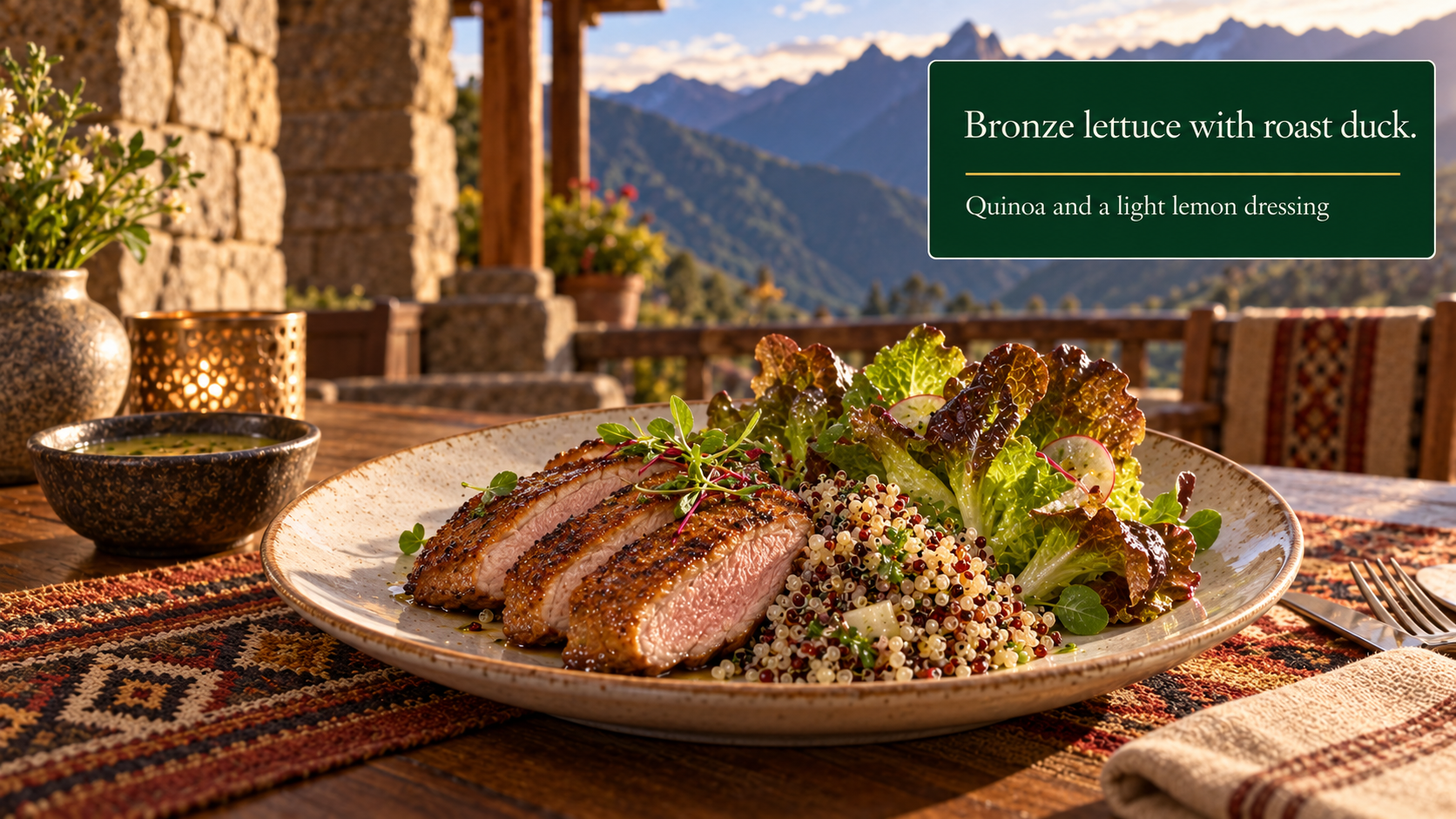
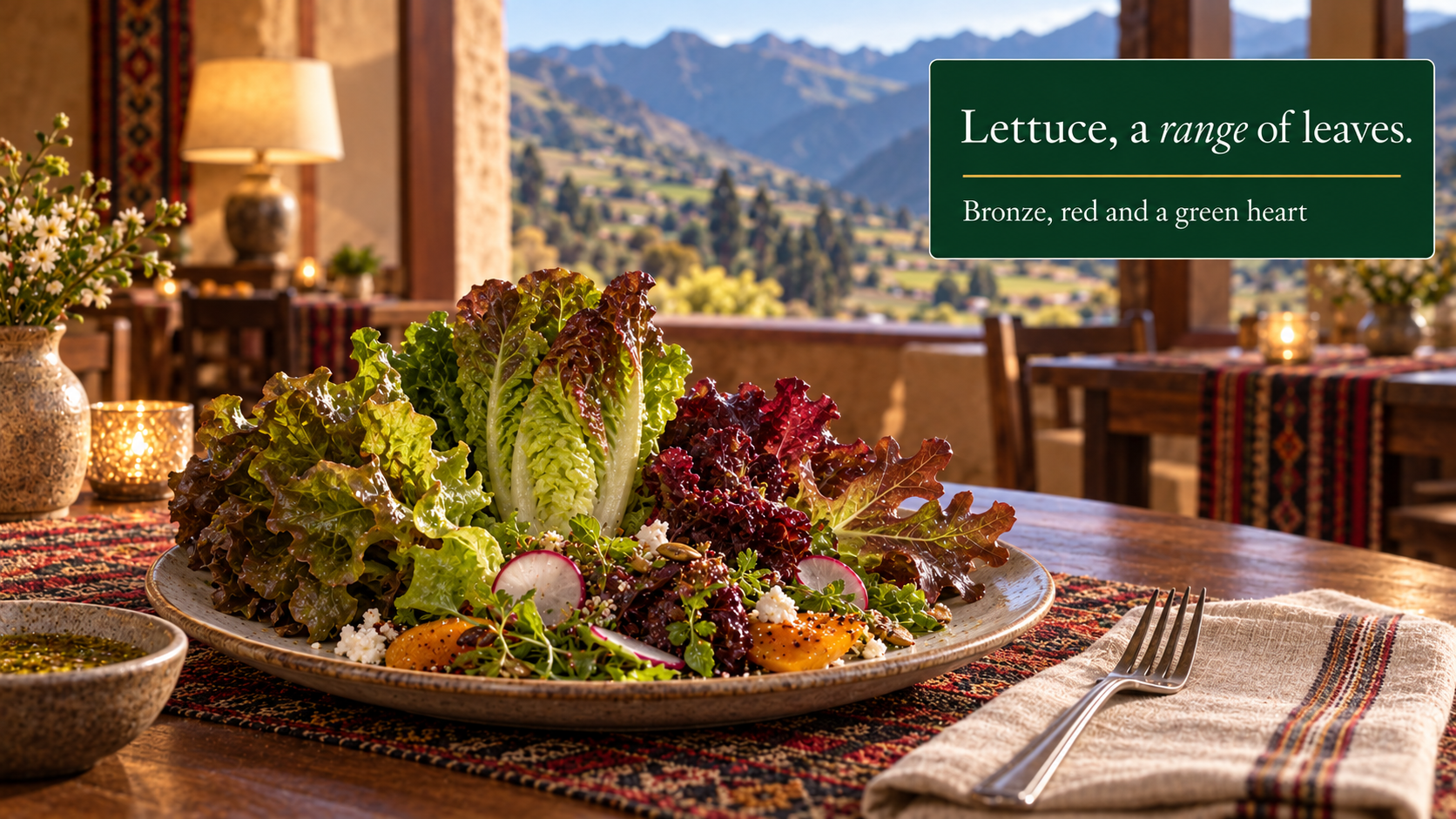
Bronze lettuce cups with duck and quinoa
Keep small leaves whole; offer modest portions of cooked filling beside them.
The butterhead form creates a soft cup and displays the bronze leaves.
Variety reference: Eden Brothers: Bronze Mignonette. Heirloom; open pollinated.
Rouge D'Hiver salad with high-altitude Andean trout and potatoes
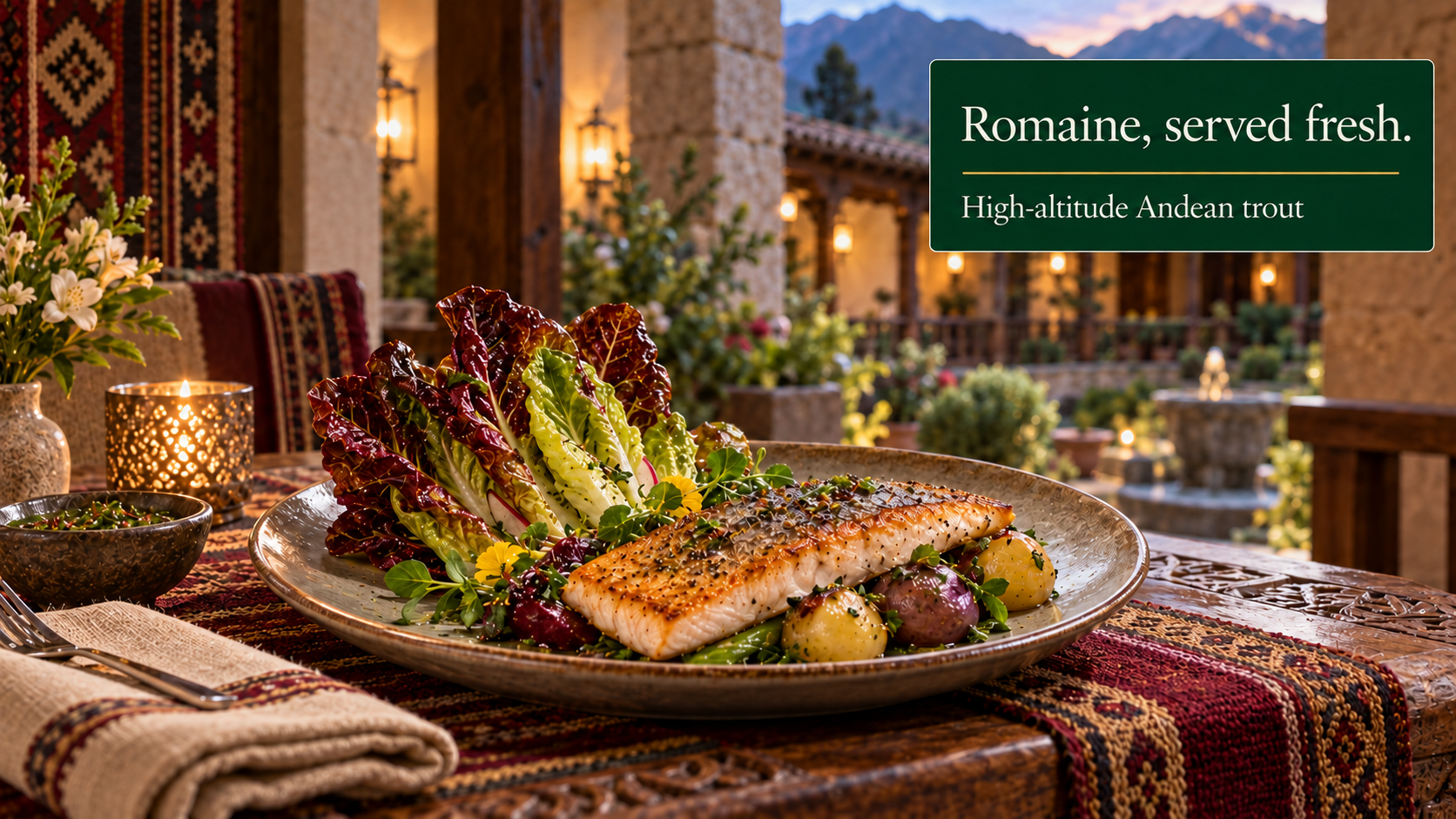
Cut manageable pieces with some rib; dress lightly and add fish after it stops steaming.
Green hearts and bronze-red outer leaves offer color within one romaine-type head.
Variety reference: Eden Brothers: Rouge D'Hiver. Heirloom stated; classic French heirloom.
Ruby lettuce beside alpaca and quinoa
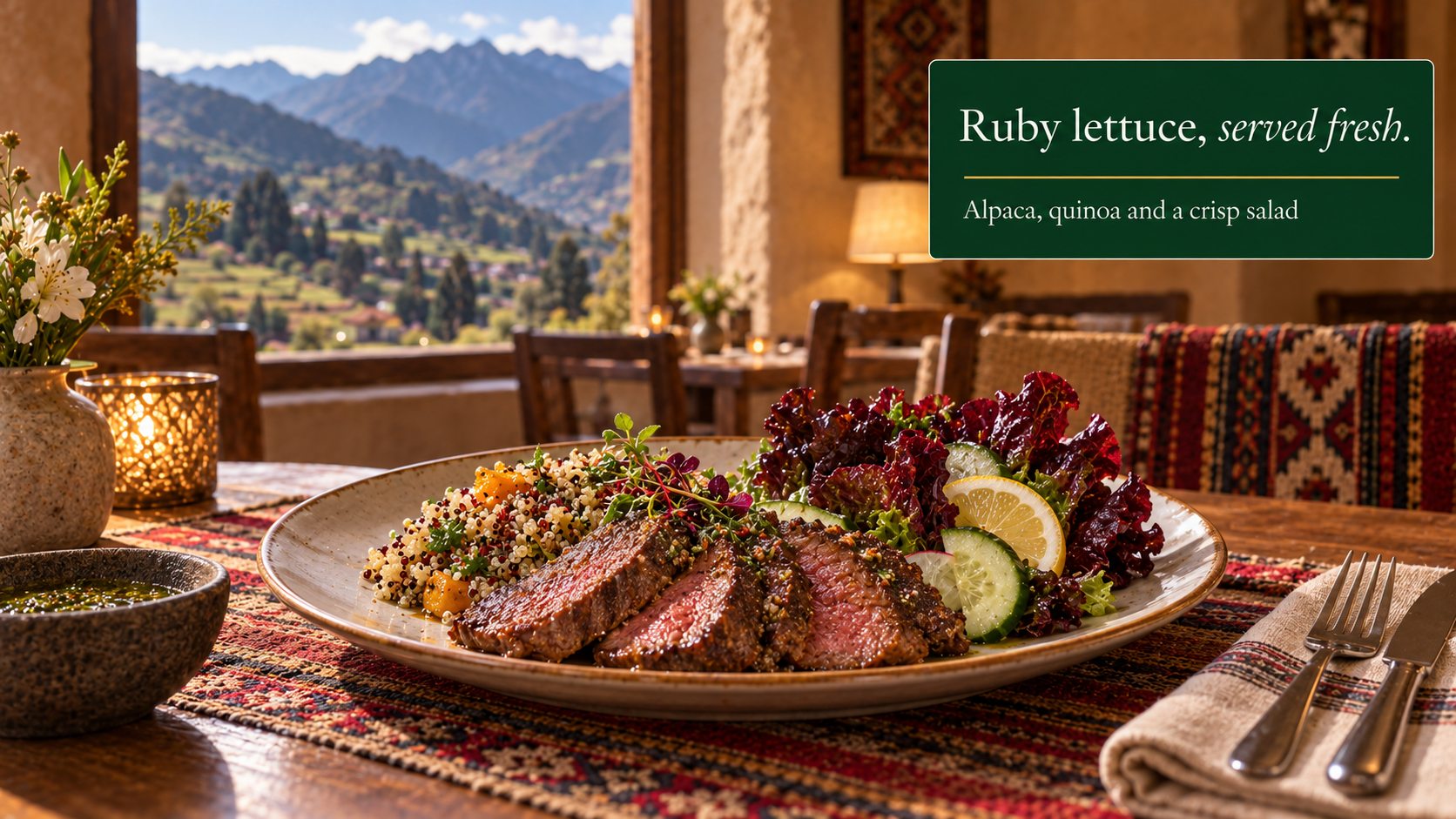
Tear broad pieces; keep the savory main and grain alongside.
Red leaves stay visible and provide a fresh break between bites of the main.
Variety reference: Eden Brothers: Ruby. Heirloom; open pollinated.
Burgundy loose leaves with cuy and kiwicha and cucumber
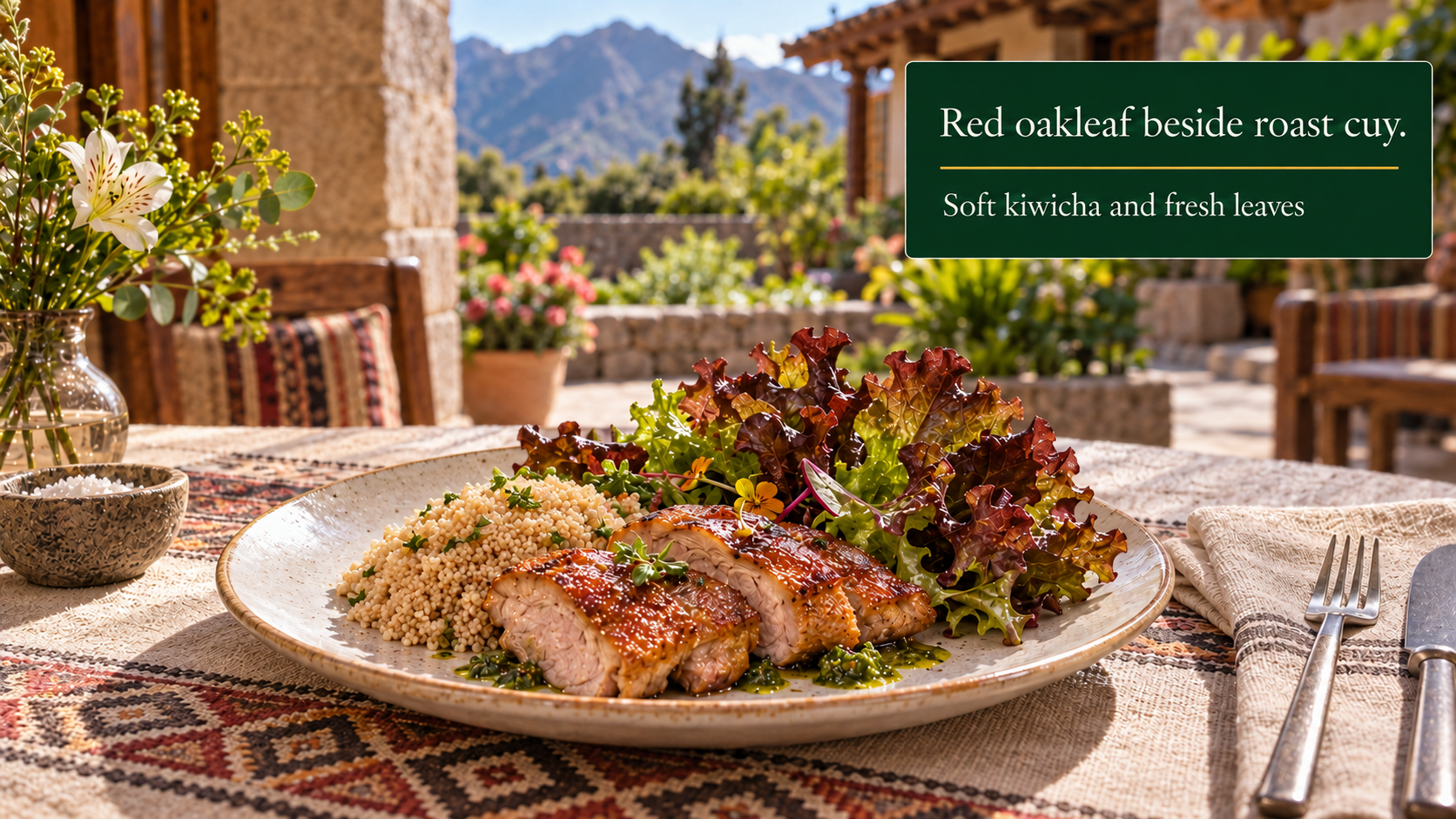
Mix leaf sizes and dress shortly before service.
Loose bronze-burgundy leaves make a light side. Organic refers to the seed SKU, not the meal.
Variety reference: Eden Brothers: Salad Bowl - Red. Heirloom; open pollinated; organic seed listing.
Bronze Mignonette cups with duck and quinoa
Keep the smaller butterhead leaves whole, choosing pieces that form shallow cups without tearing. Eden describes Bronze Mignonette as bronze-leaved and crisp. The exact leaf in your hand still matters: use the tender center for cups and tear large outer leaves into a separate salad.
Arrange a small amount of cooked duck and cooled quinoa beside the cups so guests can combine them as they like. A spoonful of grain is enough to give the leaf some substance without overloading it. Keep the meat's cooking juices separate. A warm filling can be pleasant, but a steaming heap quickly changes a fresh leaf into a wilted wrapper.
Rouge D'Hiver with high-altitude Andean trout and potatoes
The green heart and reddish-bronze outer leaves provide a natural contrast in one romaine-type head. Cut broad leaves into manageable pieces, retaining some rib for crunch. Put a few cooked potato pieces beside them, then add flaked, fully cooked high-altitude Andean trout after it has stopped steaming.
Dress lightly in a bowl, then transfer the leaves without excess liquid. Retain some rib for a crunchier texture than the butterhead cups.
Ruby leaves with alpaca and quinoa
Use Ruby as a clearly visible red-leaf component, not a finely shredded garnish lost under the main. Tear broad pieces small enough to eat comfortably. Serve beside cooked alpaca with a small portion of prepared quinoa and a separate herb dressing. This arrangement leaves the crisp salad available between bites of the richer main.
Taste the raw leaf before dressing it. Color alone does not establish sweetness, tenderness, or bitterness in a particular harvest. If a leaf is too tough or unpleasantly bitter for the intended salad, choose a better leaf rather than trying to bury it beneath a stronger sauce.
Salad Bowl - Red with cuy and a light cucumber dressing
Loose bronze-burgundy leaves can make a relaxed side to sliced roast cuy. Mix larger leaves with smaller ones, leaving enough space for their shape to show. A few pieces of cucumber provide a second texture. Keep a little cooked kiwicha in a separate portion so it does not weigh down the salad.
Salad Bowl - Red is represented by an organic seed listing. That label describes the purchased seed product, not the meal. Check current availability when sourcing seed.
Dry leaves, light hands, timely service
Remove damaged leaves, rinse the leaves you need, and dry them gently. Toss lightly close to serving, leaving excess dressing in the bowl. Sacha inchi oil, if chosen, belongs in the cold dressing. A shared meal can be part of a Sacred Valley visit without assuming that a particular dish is included in a seminar.
These dishes are serving ideas. Images illustrate the ingredients and preparations; they do not document a restaurant menu, a tested recipe or a current property harvest. The exact Eden Brothers catalog varieties remain research candidates.
Give the Sacred Valley a little more time
A trip built around Machu Picchu can also leave room for a good meal and a less hurried stay. Ask Florian about The SoulSearching Experience, his five-day Sacred Valley seminar for 8-15 participants. Discuss dates, venue and meal arrangements directly as you plan.
Questions readers ask
Can I assemble the lettuce plates before guests arrive?
Prepare components separately and refrigerate the leaves. Dress and arrange them close to serving. Keep cooked mains and their juices alongside, rather than resting them on the fresh salad while it waits.
Can I substitute another lettuce for Bronze Mignonette?
Yes, but choose for the task. Soft leaves suit shallow cups; firmer romaine ribs give a crunchier salad. A substitute changes the texture and appearance, even when the meal still works.
Does bronze or red lettuce need a sweet dressing?
No. A light lemon-and-herb dressing is a good starting point for these savory plates. Taste a dressed leaf before adding more. There is no need to copy a honey dressing.
Do I need nuts to make these lettuce sides interesting?
No. Firm cucumber, lettuce ribs, and the grain or potatoes already provide contrasting textures. Nuts are optional, and they should be omitted or served separately when a guest needs to avoid them.
Why use Bronze Mignonette for cups rather than shredded salad?
Eden identifies Bronze Mignonette as a butterhead. Its leaf shape makes a shallow cup a useful proposed treatment. Use a suitable actual leaf, keeping the filling modest enough to avoid tearing.
Should I cut all the lettuce before storing it?
Keep the portion you are not using attached to the head where practical. Minnesota recommends refrigerating unwashed lettuce, then rinsing the leaves selected for use. Prepare only what the meal needs.
Should washed lettuce be wet when I dress it?
Remove the wash water first. A spinner or clean towel helps, and dry leaves let a small amount of dressing do its job without collecting in a watery pool.
Do ready-to-eat packaged leaves need the same preparation as garden lettuce?
Follow the package labeling. FDA says produce labeled prewashed and ready to eat can be used without further washing. Keep it away from raw-meat utensils and follow current recall instructions where relevant.
When should I wash lettuce for these plates?
Separate the leaves you will use, remove damaged portions, and rinse under running water before cutting or tearing. Dry gently. Washing is ordinary preparation, not a guarantee that recalled produce is safe.
Should I tear or cut the red and bronze leaves?
Either can make a pleasant plate. Tear broad tender leaves into comfortable bites, or use a clean sharp knife for a neater cut. Avoid crushing the leaves while handling them.
How should I handle a lettuce that tastes more bitter than expected?
Taste before dressing and compare a tender inner leaf with the outer portion. Choose leaves you enjoy. A stronger dressing cannot guarantee that an unsuitable harvest becomes a good fresh side.
Can I cook these lettuces instead of serving them fresh?
Lettuce can be cooked, but that creates a different dish and texture. These particular plates use fresh leaves for contrast. Choose a separate cooked preparation rather than expecting the same result.
Can I freeze the lettuce for these crisp sides?
Freezing will not preserve the fresh salad texture. Keep sound lettuce refrigerated for near-term use and prepare a suitable amount. A cooked soup is a different destination for surplus, not a substitute for crisp leaves.
How can I stop a lettuce cup from splitting?
Use a flexible intact leaf and reduce the filling. Offer an open cup rather than forcing a tight roll. Let hot fillings stop steaming before they meet the leaf.
What belongs beside these lettuce sides?
Use the specified cooked main and a modest grain or potato portion. The lettuce supplies the fresh component. Keeping those roles visible makes dinner easier to portion and more pleasant to eat.
Can I mix the four lettuces in one side?
Yes, if you enjoy the result. Mix soft leaves with a little firmer rib for texture, and keep the pieces manageable. Minnesota specifically suggests combining lettuce types for variety and color.
How should I estimate lettuce for a group?
Prepare one suitable side portion, then scale from its edible amount. Head sizes and discarded outer leaves vary. Plan around the whole dinner rather than promising a fixed number of heads.
How much grain should go into a lettuce cup?
Use a modest spoonful that the leaf can support without tearing. Serve additional grain beside the cup. A crowded leaf is harder to eat and hides the lettuce you selected.
Can warm meat or high-altitude Andean trout go on the lettuce?
Let it stop steaming first and add it near service, or keep it alongside. The intent is a fresh leaf with a savory component, rather than an accidentally wilted salad.
Can the lettuce component be served without animal ingredients?
Yes. Use a plant-only dressing and keep the meat or high-altitude Andean trout separate. A vegetable-only plate needs its own meal planning; removing the main does not automatically replace its role.