Start with the head you actually have
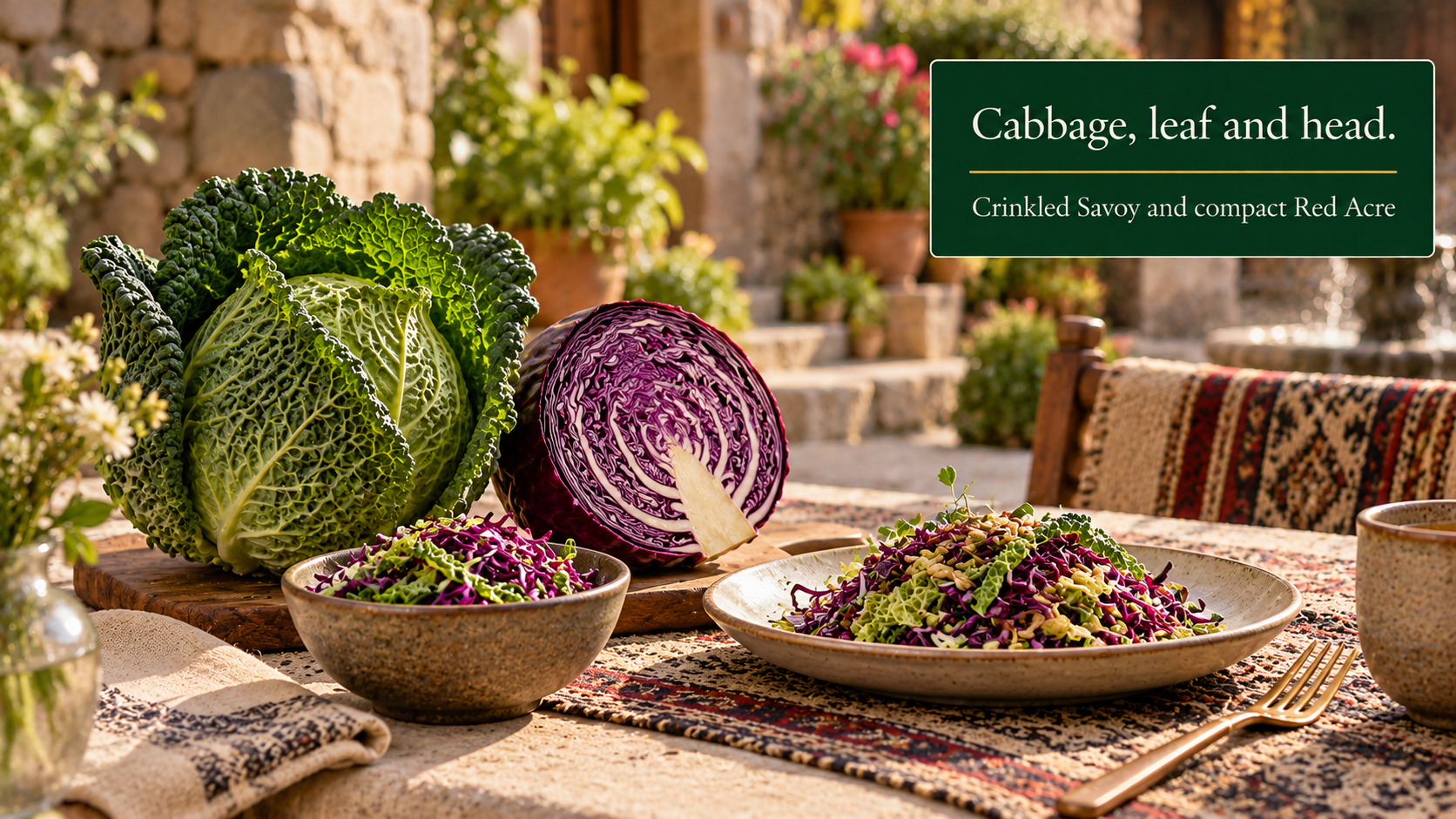
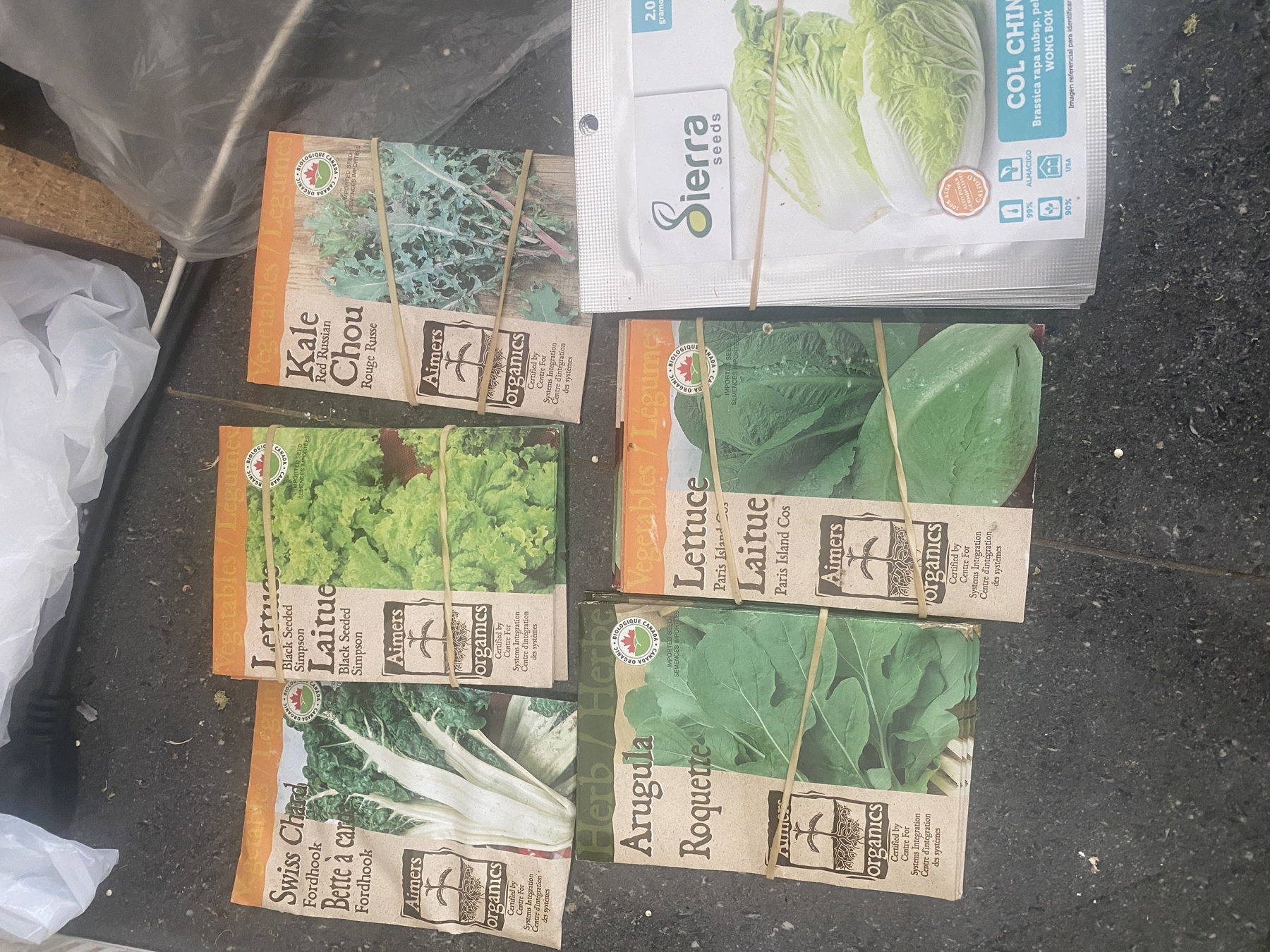
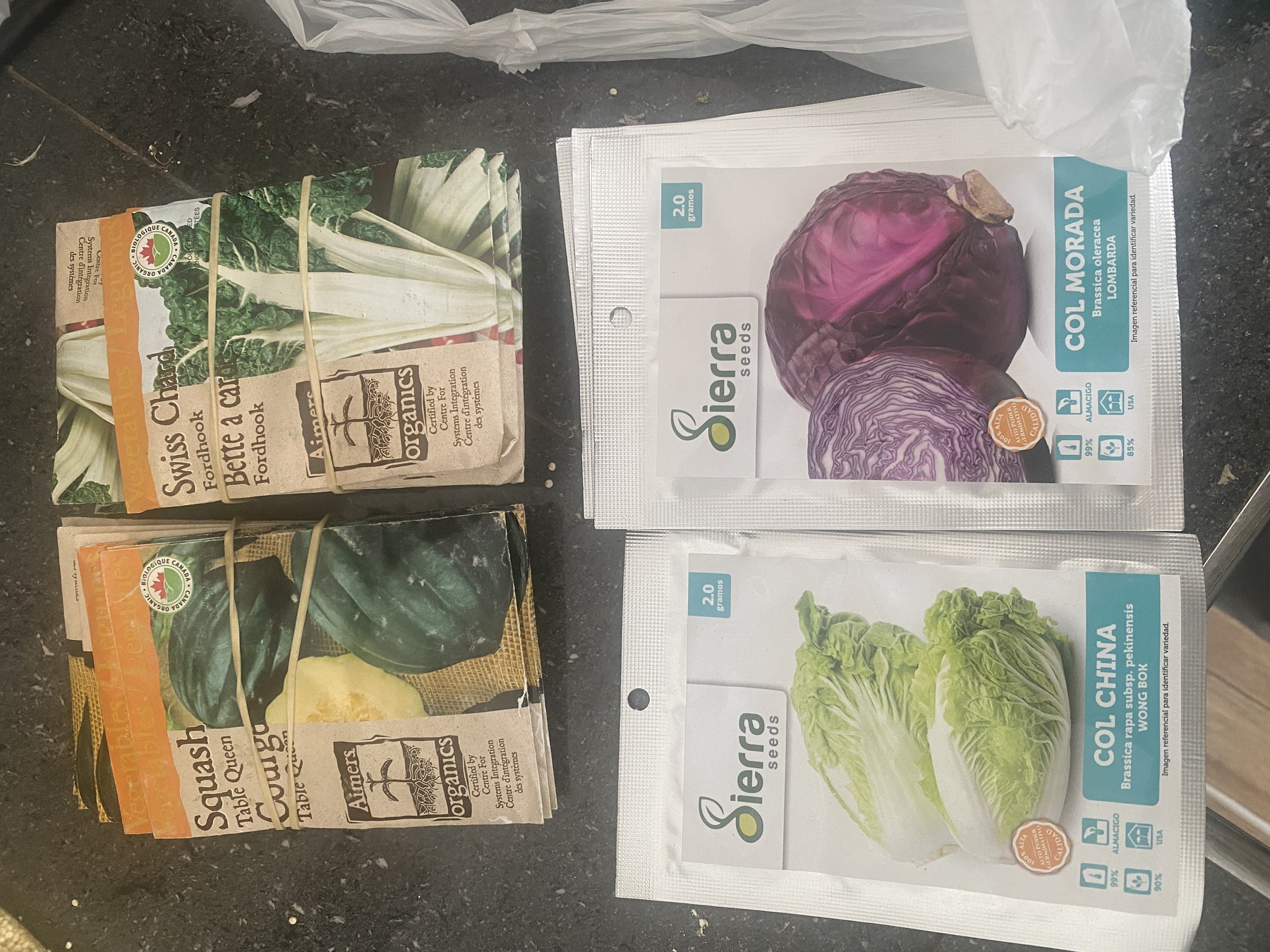
The packet labeled Lombarda belongs to the red cabbage part of this collection. Its compact layered head suggests wedges or fine ribbons. Wong Bok is a Chinese cabbage, commonly grouped with napa cabbage, with crinkled leaves and thick pale ribs. It should not be pictured as a purple ball.
These differences are useful at the table. Red cabbage offers a firmer texture and deep color; Wong Bok can make a gentler, more delicate cooked serving. The seed photographs identify the planning ingredients. They do not establish the cultivar or place of origin of cabbage offered by a particular hotel.
Give a red wedge time and moisture
A red cabbage wedge can be cooked covered with a small amount of savory stock until the dense layers are tender. Leaving a little core attached helps the wedge stay together. Thinly sliced cabbage is another choice when a looser, spoonable serving is wanted.
This concept uses a savory braise rather than a sugary sweet and sour preparation. A little lemon or vinegar can be offered at the table. Red cabbage pigments respond to acidity, so the cooked shade can vary. That change should not be confused with a guarantee that every unusual color is harmless; condition and handling still matter.
Treat Wong Bok ribs and leaves separately
The pale ribs of Wong Bok need longer to soften than the thin leafy tops. Cut them into manageable pieces and start them first in a shallow broth, then add the leafy pieces. The result can keep a little structure without leaving a tough center.
A second presentation uses larger leaves, gently cooked and folded beside a few intact rib sections. That makes the difference from the red wedge obvious. It is an original serving idea rather than a claim about a traditional local recipe. Ask the kitchen which cabbage it has before selecting a method.
Let roast duck supply the richness
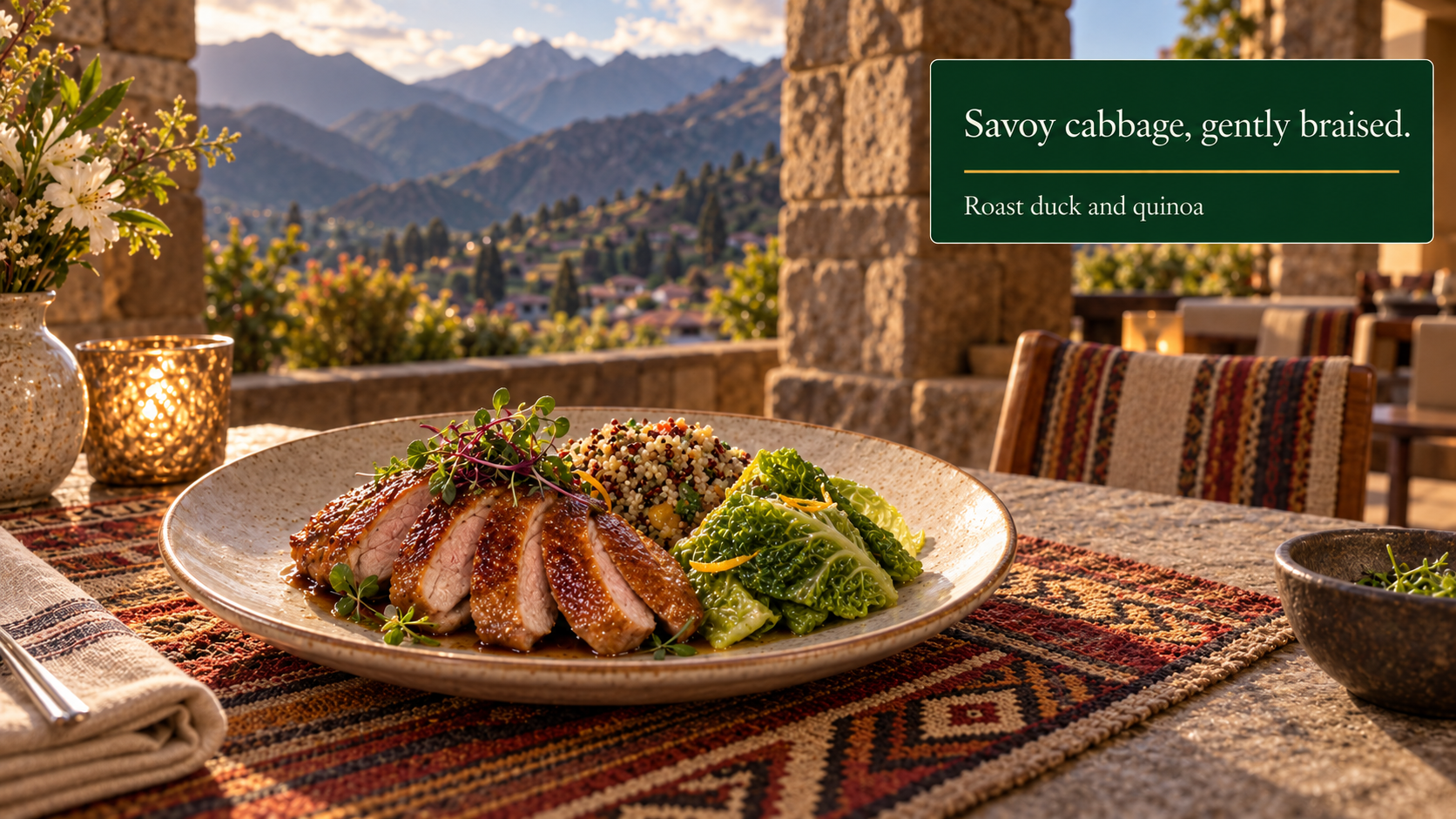
For a complete dinner, place roast duck beside the cabbage with cooked quinoa or a baked Andean potato. Keep the duck sauce separate if it is sweetened. The vegetable can bring moisture and contrast without needing to be glazed itself.
The red cabbage version feels substantial, with a clearly cut wedge and a small amount of its own cooking liquid. The Wong Bok version is softer and paler. Both are imagined hotel dining plates served for guests, not meals that guests are expected to prepare. Availability, portions, and the final cooking method need a real kitchen's confirmation.
A second cabbage course can stay simple
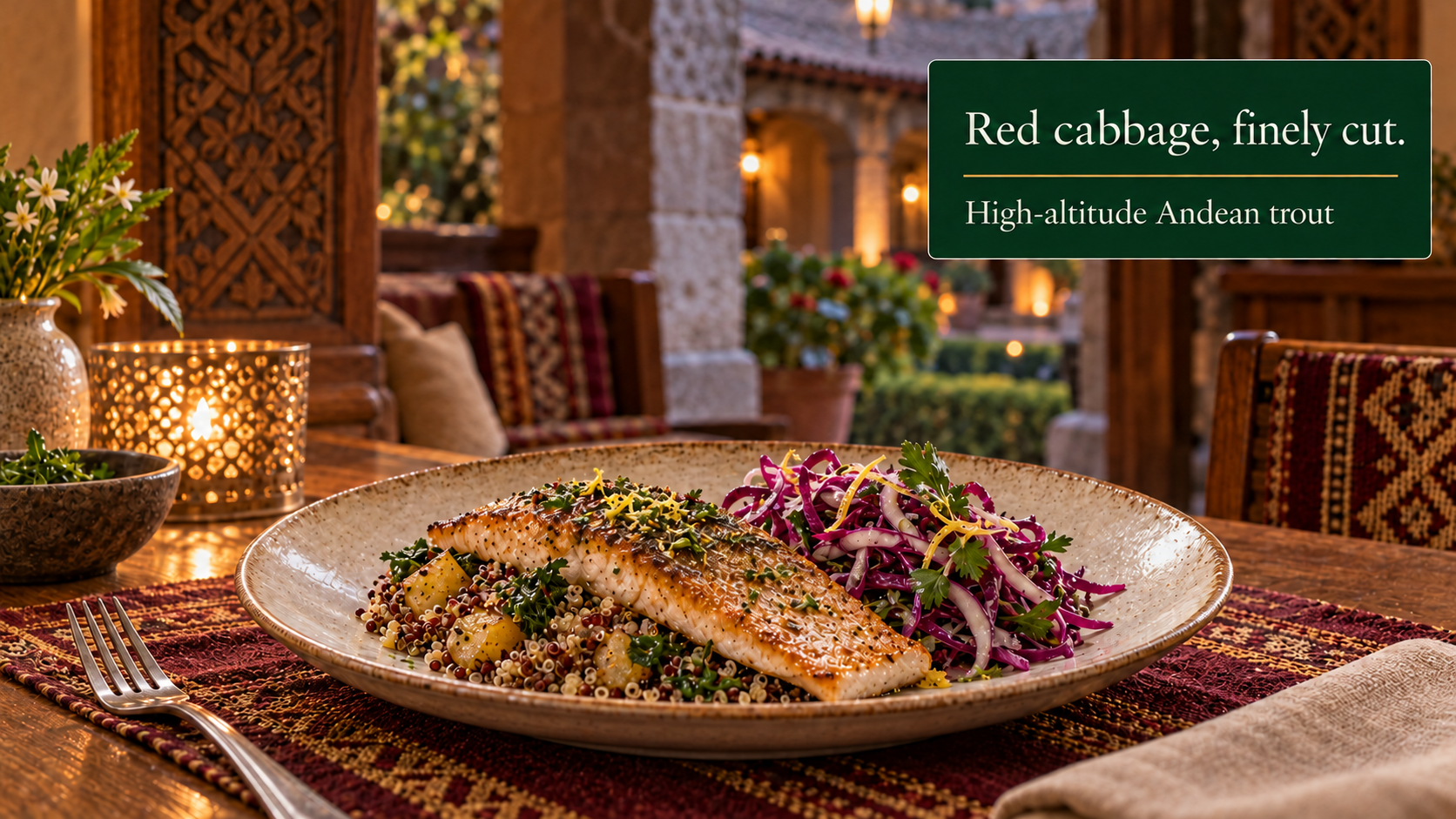
Finely sliced cooked red cabbage can accompany warm lentils and parsley as a smaller vegetable course. Keep the lentils distinct instead of folding everything into one dark mixture. A bowl of lemon dressing alongside gives the diner control over the final sharpness.
For Wong Bok, a clear mushroom broth offers another direction. The thick ribs give the bowl substance, while the leafy tops soften into the liquid. Neither variation requires frying, a thickened sweet sauce, or a white rice base. These combinations are culinary proposals; they have not been tested as recipes with measured quantities.
Keep fresh cooking apart from preservation
A braised cabbage dish and a jar of fermented cabbage are different projects. Adding vinegar to a dinner plate does not turn it into a shelf stable preserve. If you want sauerkraut, kimchi, or canned cabbage, use an appropriate tested preservation method rather than adapting this serving description.
For the fresh vegetable, select sound leaves and remove damaged outer material. Wash produce with safe running water before preparation. Store leftovers promptly according to normal cooked food guidance. A sharp or unpleasant smell, slime, or uncertain storage history should not be hidden beneath spices or a stronger sauce.
A familiar ingredient can anchor an unfamiliar place
Cabbage may be a reassuring choice when you are traveling and want a warm, straightforward dinner. Ask for a vegetable serving that is cooked through, with the sauce and accompaniments described plainly. That conversation can be short and specific.
If The SoulSearching Experience is part of your Sacred Valley visit, leave space in the itinerary to eat without rushing. The retreat lasts five days, but this dinner concept is not a stated inclusion. Restaurant arrangements, current vegetables, and any separate Machu Picchu travel plans should be confirmed on their own terms.