Machu Picchu Luxury Travel

Cabbage by Variety: Lombarda, Wong Bok, Savoy and Red Acre

Published by Florian Rolke

Choose a warm cabbage side or a crisp slaw first. Lombarda and Wong Bok offer different braises beside roast duck; Savoy gives a softer leaf, while finely cut Red Acre brings crunch beside high-altitude Andean trout. The variety names identify these serving ideas, not a verified local harvest.

An illustrated serving concept in an Andean hotel setting.

Roast duck with red cabbage and apple

Braised red cabbage brings moisture and a gentle sweet note from the apple itself. It can accompany roast duck without a syrupy sauce. Ask for tender cabbage ribbons and a small serving of potato puree.

Explore duck in the ingredient guide. Confirm the actual preparation and availability with the kitchen.

Lombarda red cabbage suits a slow, moist braise; Wong Bok has tender leafy tops and thicker pale ribs that need different timing. Pair either cooked cabbage with roast duck and quinoa. Their colors, structure, and cooking needs should remain distinct.

The featured ingredient, served on its own.

Illustrated serving concepts and an imagined Sacred Valley garden. These are not photographs of a named restaurant, a current harvest, or a tested recipe.

Start with the head you actually have

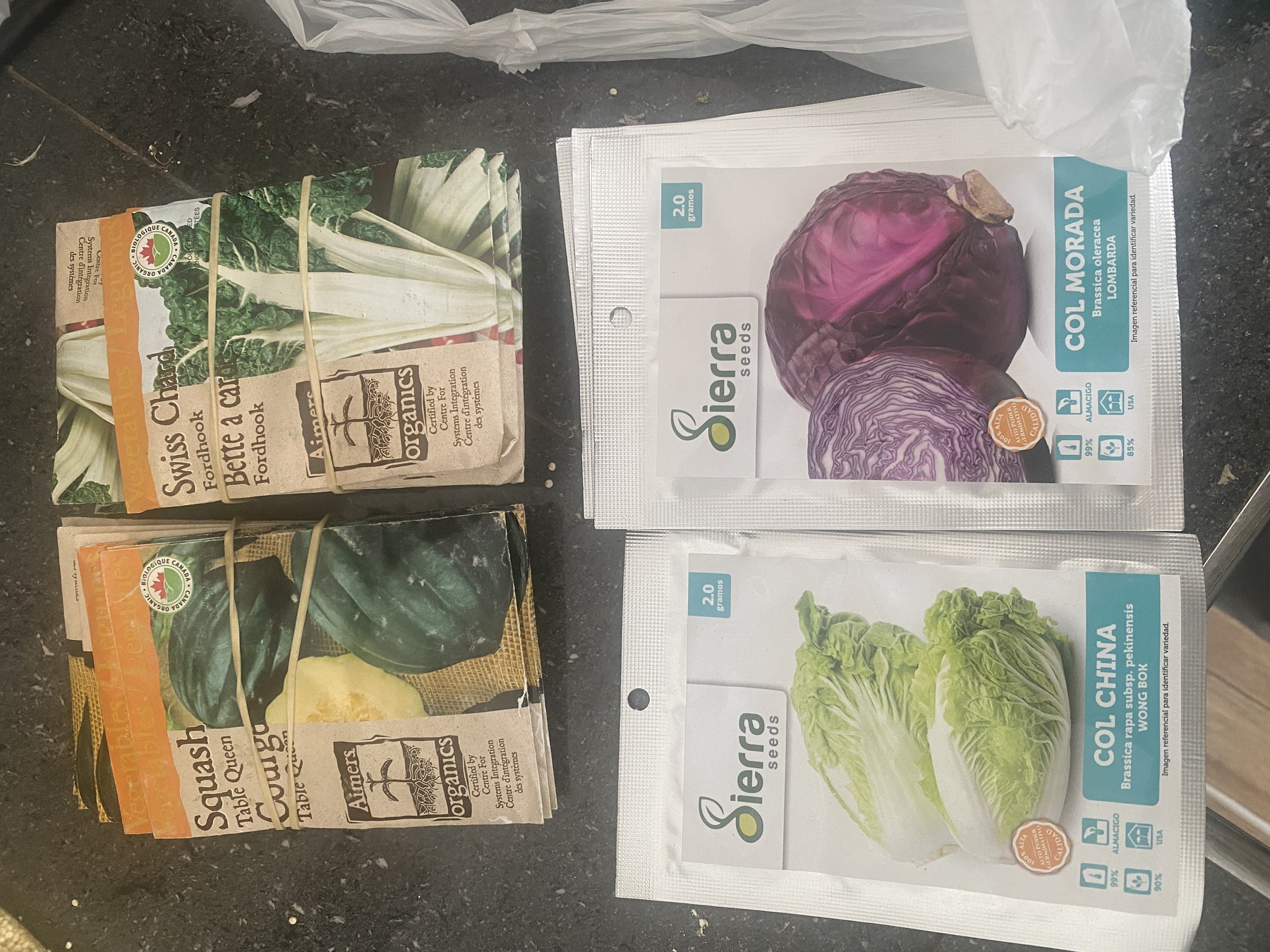
The packet labeled Lombarda belongs to the red cabbage part of this collection. Its compact layered head suggests wedges or fine ribbons. Wong Bok is a Chinese cabbage, commonly grouped with napa cabbage, with crinkled leaves and thick pale ribs. It should not be pictured as a purple ball.

These differences are useful at the table. Red cabbage offers a firmer texture and deep color; Wong Bok can make a gentler, more delicate cooked serving. The seed photographs identify the planning ingredients. They do not establish the cultivar or place of origin of cabbage offered by a particular hotel.

Give a red wedge time and moisture

A red cabbage wedge can be cooked covered with a small amount of savory stock until the dense layers are tender. Leaving a little core attached helps the wedge stay together. Thinly sliced cabbage is another choice when a looser, spoonable serving is wanted.

This concept uses a savory braise rather than a sugary sweet and sour preparation. A little lemon or vinegar can be offered at the table. Red cabbage pigments respond to acidity, so the cooked shade can vary. That change should not be confused with a guarantee that every unusual color is harmless; condition and handling still matter.

Treat Wong Bok ribs and leaves separately

The pale ribs of Wong Bok need longer to soften than the thin leafy tops. Cut them into manageable pieces and start them first in a shallow broth, then add the leafy pieces. The result can keep a little structure without leaving a tough center.

A second presentation uses larger leaves, gently cooked and folded beside a few intact rib sections. That makes the difference from the red wedge obvious. It is an original serving idea rather than a claim about a traditional local recipe. Ask the kitchen which cabbage it has before selecting a method.

Let roast duck supply the richness

For a complete dinner, place roast duck beside the cabbage with cooked quinoa or a baked Andean potato. Keep the duck sauce separate if it is sweetened. The vegetable can bring moisture and contrast without needing to be glazed itself.

The red cabbage version feels substantial, with a clearly cut wedge and a small amount of its own cooking liquid. The Wong Bok version is softer and paler. Both are imagined hotel dining plates served for guests, not meals that guests are expected to prepare. Availability, portions, and the final cooking method need a real kitchen's confirmation.

A second cabbage course can stay simple

Finely sliced cooked red cabbage can accompany warm lentils and parsley as a smaller vegetable course. Keep the lentils distinct instead of folding everything into one dark mixture. A bowl of lemon dressing alongside gives the diner control over the final sharpness.

For Wong Bok, a clear mushroom broth offers another direction. The thick ribs give the bowl substance, while the leafy tops soften into the liquid. Neither variation requires frying, a thickened sweet sauce, or a white rice base. These combinations are culinary proposals; they have not been tested as recipes with measured quantities.

Keep fresh cooking apart from preservation

A braised cabbage dish and a jar of fermented cabbage are different projects. Adding vinegar to a dinner plate does not turn it into a shelf stable preserve. If you want sauerkraut, kimchi, or canned cabbage, use an appropriate tested preservation method rather than adapting this serving description.

For the fresh vegetable, select sound leaves and remove damaged outer material. Wash produce with safe running water before preparation. Store leftovers promptly according to normal cooked food guidance. A sharp or unpleasant smell, slime, or uncertain storage history should not be hidden beneath spices or a stronger sauce.

A familiar ingredient can anchor an unfamiliar place

Cabbage may be a reassuring choice when you are traveling and want a warm, straightforward dinner. Ask for a vegetable serving that is cooked through, with the sauce and accompaniments described plainly. That conversation can be short and specific.

If The SoulSearching Experience is part of your Sacred Valley visit, leave space in the itinerary to eat without rushing. The retreat lasts five days, but this dinner concept is not a stated inclusion. Restaurant arrangements, current vegetables, and any separate Machu Picchu travel plans should be confirmed on their own terms.
More named varieties, served differently

These additional meals keep the photographed varieties distinct. The kitchen prepares the food; the images suggest combinations to discuss, rather than a tested menu.

Roast duck with gently braised Wong Bok

Illustrated complete meal: Roast duck with gently braised Wong Bok
Ingredient serving: Wong Bok

Wong Bok offers a pale cabbage course that differs sharply from burgundy red-cabbage ribbons. A lengthwise wedge could keep its white ribs and crinkled light-green leaves together through a gentle braise. Serve enough cooking liquid to keep the cut surface moist, with the duck alongside. The guest should be able to separate tender pieces easily, without meeting a dense core hidden beneath an attractive outer leaf.

For the rest of the meal, cooked canihua could sit in a small separate mound beside carved roast duck. A few steamed skin-on native-potato halves could complete the warm plate, with the flesh visible at the cut. If wanted, offer a little food-grade sacha inchi oil as a cold finish after cooking, never as a frying oil.

A proposed serving, with preparation and supply to be confirmed by the kitchen.

A table within a longer stay

Food can give the days around Machu Picchu a welcome sense of place. If you would also like time for reflection, explore a Sacred Valley retreat before or after your visit. Florian Rolke offers The SoulSearching Experience, a five-day seminar for 8-15 participants, with no plant medicine.

Ask for the current dates, venue, price and inclusions before arranging the rest of your trip. These dishes, restaurant visits and garden visits are ideas to explore; they are not confirmed seminar inclusions.

Savoy and Red Acre: warm leaves or a crisp slaw

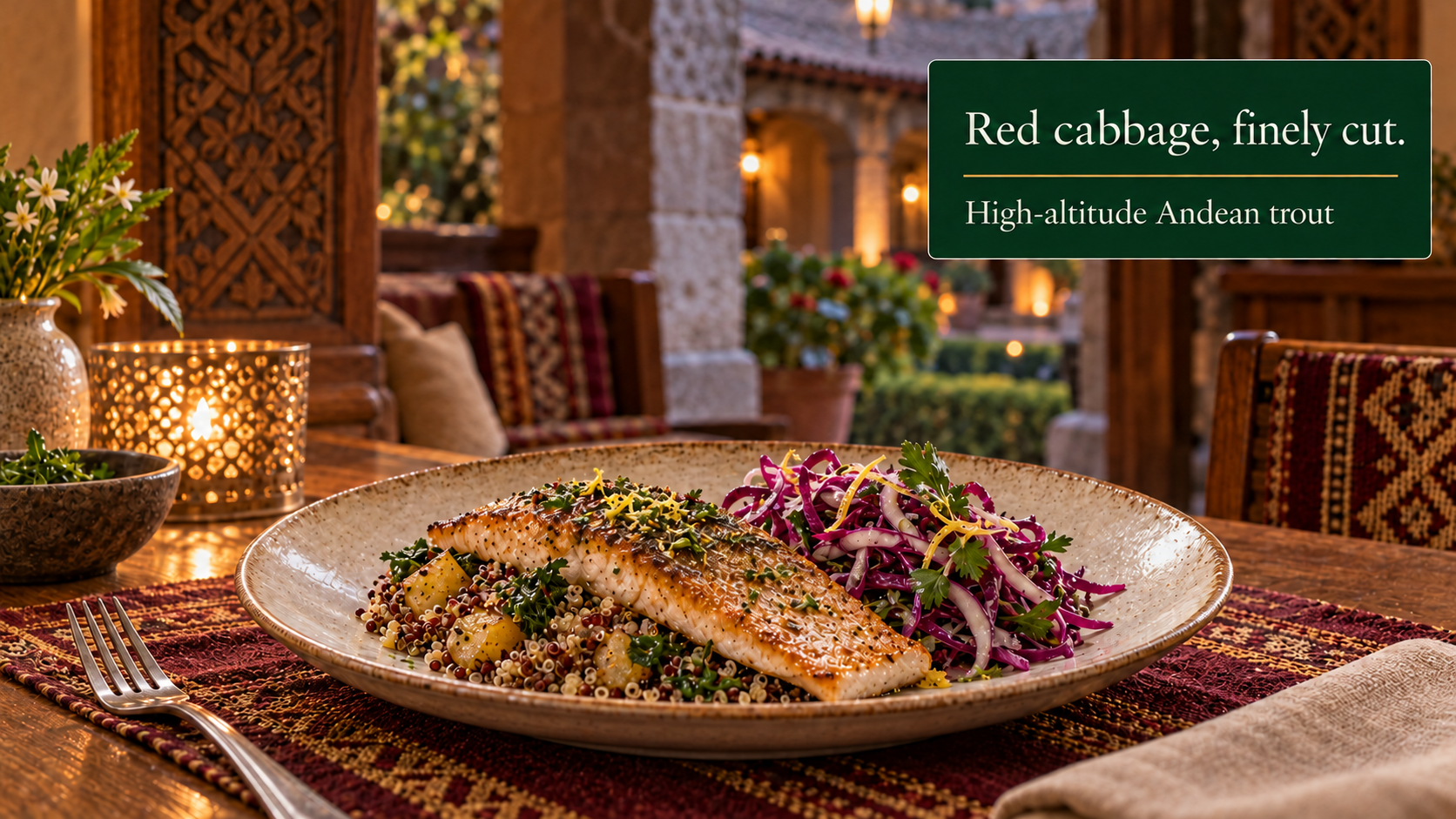
Savoy's crinkled leaves can be shredded and gently braised beside roast duck and quinoa. Red Acre's purple-red head suits a fresh, finely cut slaw beside high-altitude Andean trout and quinoa. Dress the slaw close to serving to keep its bite. The garden inventory mentions red cabbage under the broad name Lombarda; it does not verify the exact Red Acre cultivar.

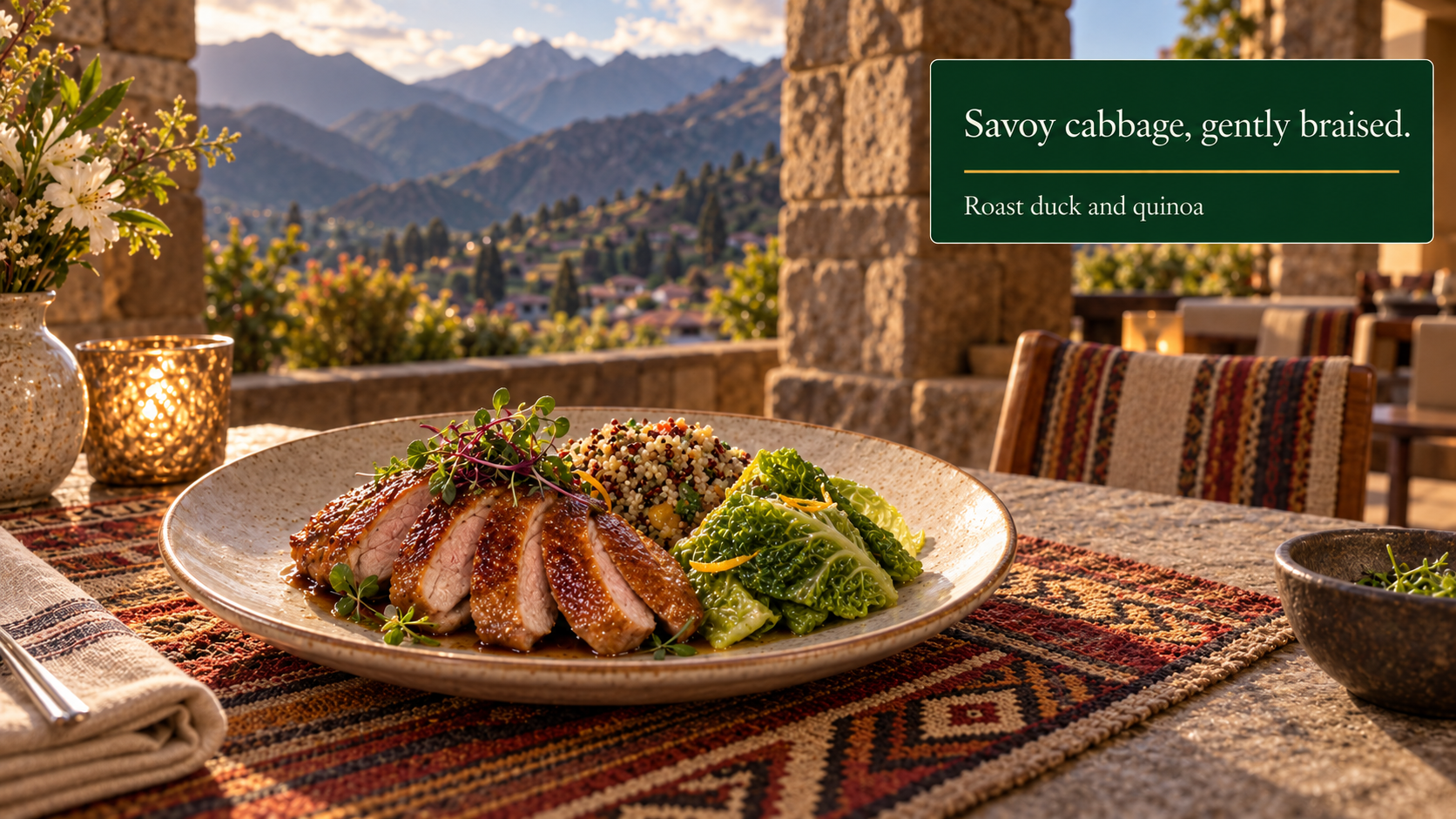
Savoy cabbage, gently braised. Roast duck and quinoa Illustrated serving concept.

One cabbage gives a warm, soft-edged side; the other gives cool crunch and color. Savoy needs just enough moisture and covered heat to relax its leaves. Red Acre needs a fine cut, careful washing, and a bright dressing added when the fish is ready. Both fit an Andean table without heavy sauces or plain boiled cabbage.

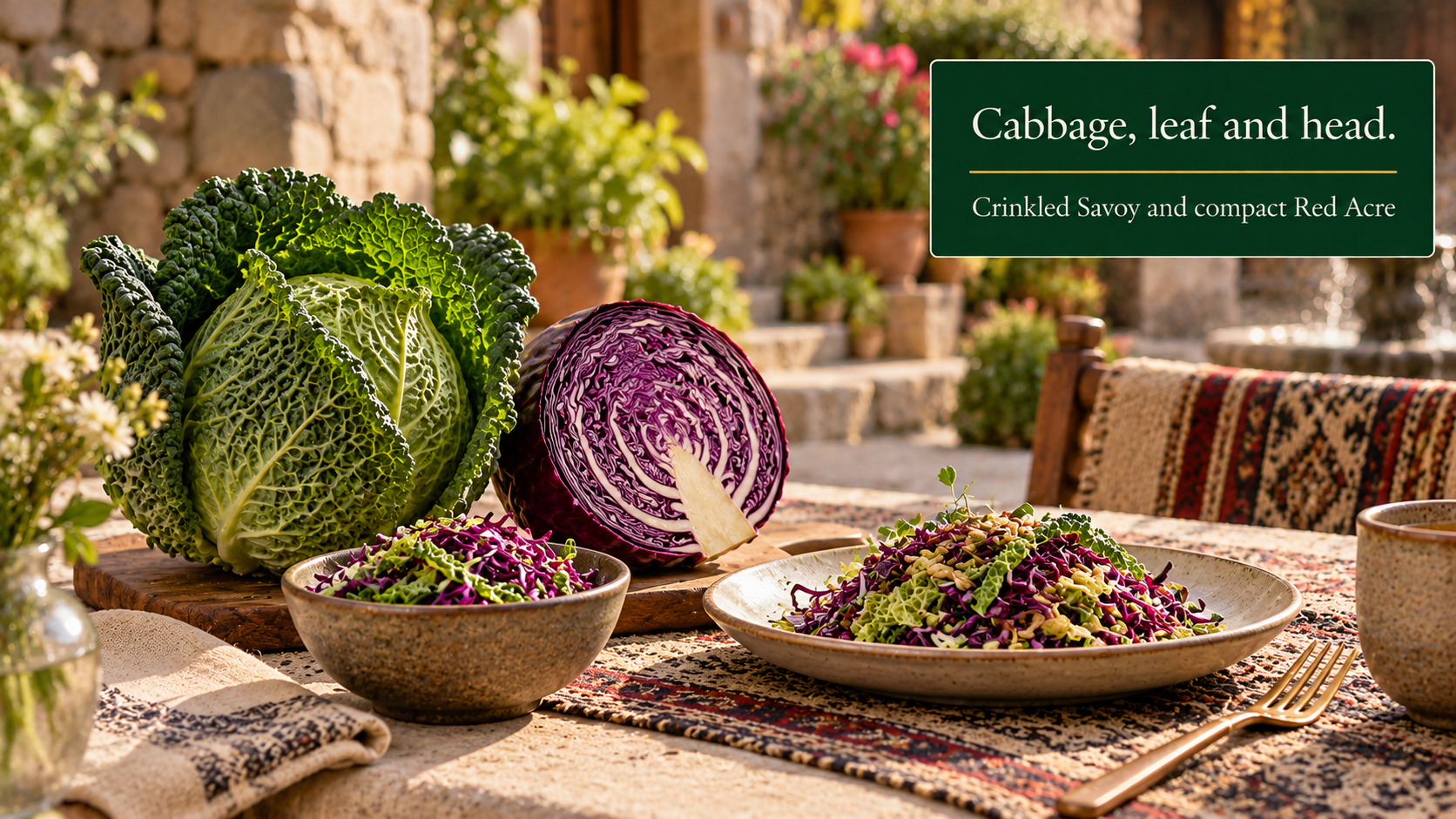
Cabbage, leaf and head. Crinkled Savoy and compact Red Acre Illustrated ingredient study.

Gently braised Savoy with roast duck and quinoa

Braise washed leaves until tender, then serve with safely roasted duck and quinoa.

The crinkled, tender leaf holds savory grains and meat without a heavy starch wrapper.

Variety reference: Eden Brothers: Savoy. Heirloom; open pollinated.

Fresh Red Acre slaw with high-altitude Andean trout and quinoa

Red cabbage, finely cut. High-altitude Andean trout Illustrated serving concept.

Finely shred washed leaves, dress close to service, and serve with cooked high-altitude Andean trout and quinoa.

Acid and crunch brighten the high-altitude Andean trout and quinoa plate without a heavy sauce.

Variety reference: Eden Brothers: Red Acre. Heirloom; open pollinated; organic seed listing.

Savoy makes a tender braised side

Shred washed Savoy leaves and soften them in a covered pan with a little water until tender. Add chopped herbs near the end. Set the cabbage beside safely roasted duck, cooked quinoa, and native potatoes. The leaves should still have some texture and a clear vegetable flavor.

A second plate can put braised Savoy beside alpaca and canihua. Taste during cooking because leaf thickness varies; a fixed minute count from a seed listing cannot tell you when the actual head is ready.

Red Acre brightens a plate

Shred washed red cabbage finely. Toss it with citrus, herbs, and a small cold finish of sacha inchi oil close to service. Serve the slaw beside safely cooked high-altitude Andean trout and quinoa, if the fish origin is verified. Keeping the slaw separate protects both its crunch and the grain's color.

A warm version can be braised slowly with a little water and acid until tender beside duck. Red cabbage pigments change with the acidity of the cooking liquid; citrus or vinegar tends to keep the red hue. The color can shift without indicating that the dish is unsafe, but assess freshness and handling separately.

Let the head set the cut

Savoy also makes a warm side for roast cuy and native potatoes. Shred the leaves across the rib and cook in a little water until tender, then finish with herbs. Keep the cabbage as a separate side so its texture stays distinct from the grain and meat.

The Red Acre slaw should be crisp enough to hold its cut after dressing. If a head is too tough for raw service, gently braise it instead. A softer braise and fresh slaw serve different roles, and the actual leaves should choose which plate they join.

Name the cabbage on the plate

The Eden catalog lists Savoy and Red Acre. The reported Quillabamba inventory includes red cabbage under the broad name Lombarda, which does not establish that the exact Red Acre cultivar is growing there. A seed or planting record can establish a precise variety name.

For the cook, the immediate test is more direct: a head with firm, bright leaves suits the fresh slaw, while thick sound leaves may be more satisfying after a gentle braise. Discard leaves showing spoilage.

Continue at the table

Questions about cabbage at the table

steaming cabbage?

Cabbage can be steamed without butter. If a recipe includes butter, that is a flavor and fat choice rather than a requirement for steam to soften the leaves.

my german red cabbage does not have much liquid. red german cabbage is dry?

A covered pan limits evaporation during a braise. Check the liquid as it cooks and add a little plain stock or water if necessary rather than allowing the base to dry out.

How to fold cabbage leaves for cooking?

Separate sound leaves carefully and soften them before folding. A broad thick rib may need trimming or a longer cook; tender Wong Bok leaves are different from a dense red cabbage wedge.

How to efficiently shred a lot of cabbage?

A sharp knife, food processor, or guarded slicer can work depending on batch size. Cut the head into stable manageable sections and choose a method you can use safely.

Can cabbage leaf (stalk leaf not the outer leaf) be eaten?

Identified culinary cabbage has edible leaves beyond the tight head, but older outer leaves can be tough or damaged. This plate uses sound prepared leaves rather than unknown stalk foliage.

What does "wedge" mean, as in "wedge" a head of Cabbage?

Cut the head lengthwise into triangular sections, usually keeping some core attached so the layers hold together. Adjust the wedge size to the head and cooking method.

What's the best way for inexperienced cook to finely cut cabbage?

Use a stable cutting board and cut the cabbage into manageable pieces before slicing. Thin ribbons and wedges serve different dishes, so there is no need to shred a braised wedge.

Why is a head of cabbage green, yet it appears white when chopped for cole slaw?

The outer leaves receive more light and are often greener than the inner layers. Removing outer leaves can leave a much paler head for chopping.

A recipe instructs to boil a whole head of cabbage, can I boil individual leaves instead?

Yes, when the recipe's purpose is to soften leaves. Whole head boiling is often used to help release intact leaves; individual leaves can be cooked with their own timing.

Why is my red cabbage suddenly turning blue when cooking, while it never did so before?

Red cabbage pigments respond to acidity and can shift toward blue in more alkaline conditions. Color changes explain appearance, but do not establish food safety.

What is the slightly slimy stuff on on the white parts of bok-choy and Chinese cabbage?

Unexpected slime needs caution. Do not assume a slimy cabbage is suitable merely because some vegetables become slippery in cooking; inspect the product and discard spoiled or doubtful material.

Can red cabbage replace green cabbage in a raw slaw?

Yes, a sound red cabbage can make a slaw, though the finished plate will be purple-red and the flavor and firmness may differ. Slice it finely and taste before dressing. The proposed Red Acre slaw sits beside high-altitude Andean trout and quinoa. This does not establish that the existing broad Lombarda garden label is the Red Acre cultivar.

Can Savoy be served as a warm side instead of boiled plain?

Yes. Shred washed Savoy and gently braise it with a little water in a covered pan until tender but textured. Serve it with roast duck and quinoa. Taste as it cooks; leaf thickness and cut size vary. The goal is a vegetable side with character, not a boiled mass.

What is a useful dinner for a whole Savoy cabbage?

Use part of the head as a gently braised side for roast duck and quinoa. Keep another sound portion refrigerated for a later meal rather than cooking everything at once. Wash leaves before preparation, remove damaged outer leaves, and track how much a household actually eats. A whole head does not imply a fixed number of servings.

What can Savoy contribute beside a meat main course?

A covered braise gives Savoy a tender but distinct side beside roast duck and quinoa. Add herbs near the end, and serve the cabbage separately so the grain does not become wet. Native potatoes can complete the plate. Cook the meat to an appropriate safe endpoint; cabbage timing cannot judge poultry safety.

Can Savoy be used in a dish other than soup?

A gentle braise is a straightforward option. Shred sound washed leaves, add a little water, cover, and cook until tender while preserving some bite. Put the greens next to roast duck and quinoa with herbs. This avoids relying on soup or a flour wrapper, and leaves the cabbage identifiable on the plate.

Can Savoy leaves be served raw?

Identified, sound cabbage can be eaten raw after proper washing. Savoy's crinkled leaves can be finely shredded, though the featured Eden plate braises them for a warm duck side. If making a raw slaw, taste the actual head and cut it thin. Do not label an unknown cabbage from a photo as Savoy without confirmation.

How far ahead can Red Acre slaw be dressed?

Shred and chill the washed cabbage, then add citrus and herbs near service when a crisp high-altitude Andean trout-side slaw is desired. Earlier dressing changes texture and can draw moisture into the bowl. Keep prepared slaw refrigerated and separate from raw fish. The serving window should be governed by food handling, not appearance alone.

Can red cabbage stain a finished meal?

It can tint nearby moist food. For a Red Acre slaw, plate it beside the high-altitude Andean trout and quinoa instead of mixing it through the whole grain portion, especially if clean color matters. Dress close to service. This is a presentation choice, not a sign that the cabbage is unsafe.

Why is white cabbage commonly chosen for coleslaw?

White cabbage is one option, but a slaw can also use red or Savoy cabbage. The American Academy of Pediatrics recipe notes that red cabbage has a stronger taste than green and suggests green or Savoy for a milder starting point. For the proposed Red Acre slaw, choose it for its red-cabbage flavor and color. This is a serving idea; ask the kitchen which cabbage and dressing are actually being used.

Adapted question: Seasoned Advice (CC BY-SA 4.0). · Answer reference

Should cabbage be washed if its outer leaves will be removed?

Yes. Remove damaged or heavily contaminated outer leaves and wash the remaining sound cabbage under running water before cutting. Raw Red Acre slaw deserves particular care because it will not be cooked. Do not rely on citrus dressing to sanitize it, and keep raw animal foods off the slaw board.

Should the cabbage core go into a Savoy braise?

The dense core cooks differently from shredded leaves. For a tender Savoy side, cut it out, or slice a sound inner core separately and cook it longer. Keeping large hard chunks among delicate leaves makes the plate uneven. Wash the head and trim damaged portions first.

Why does Red Acre slaw become watery after dressing?

Shredded cabbage releases moisture as it sits in dressing. For the high-altitude Andean trout plate, dry washed cabbage well and add citrus close to service. A separate salt-and-drain step can make a softer slaw, but this fresh version aims for crunch. Refrigerate prepared slaw.

Why might Savoy still be tough after long cooking?

Age, thick outer leaves, and large ribs can affect texture, but a remote thread cannot diagnose a head. For the braised Savoy side, remove hard ribs if necessary, cut evenly, and taste as it cooks. Long simmering is no substitute for checking the actual leaf. Discard spoiled cabbage.

Is a food processor useful for fine Red Acre slaw?

Either a sharp knife or a clean food processor can make fine shreds. Choose the cut that gives an even, crisp bite beside high-altitude Andean trout; do not pulverize the leaves. Wash and dry the cabbage first, and dress near service. A processor helps only if its cut and cleanup fit the kitchen.

Can red cabbage be used beyond a raw slaw?

Yes. Gently braise shredded red cabbage with a little water and acid for a warm side beside duck and native potatoes. It will be softer than fresh slaw and may tint the cooking liquid. Keep that a separate meal choice, not a description of the photographed raw slaw beside high-altitude Andean trout and quinoa.

From the seed photographs

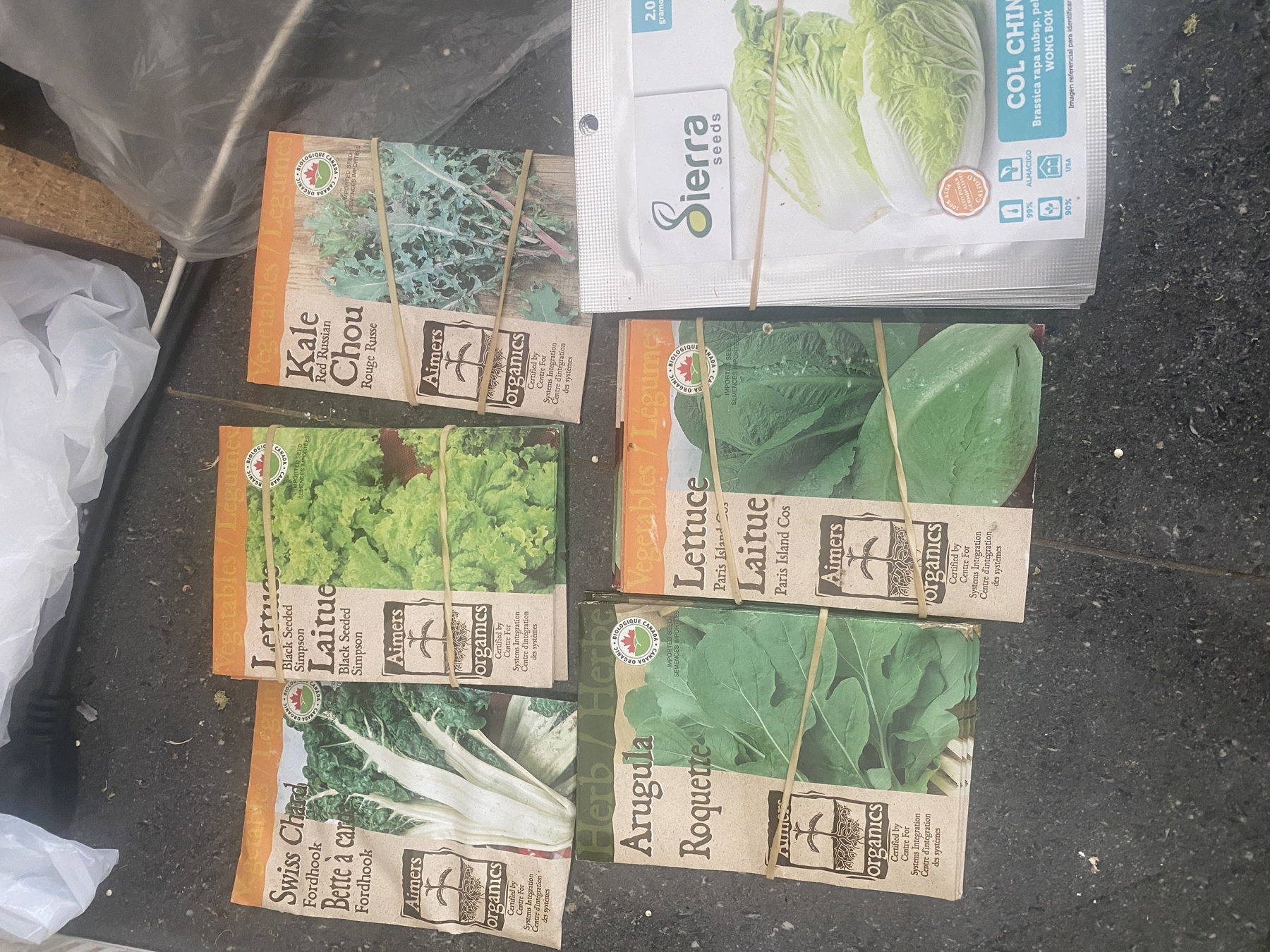
The packet photographs establish names and visible seed labels. They do not establish planting, harvest, growing certification or restaurant supply.

View the relevant seed photographs
Seed-packet photograph IMG_8260
IMG_8260
Seed-packet photograph IMG_8261
IMG_8261

Continue at the table

More varieties, served as a complete meal

Braised Savoy and Red Cabbage Slaw with Andean Meals adds distinct serving ideas and explains how these catalog varieties compare.