Home › Sacred Valley & Beyond › Sacha Inchi: Prepared Seeds, Food Oil and Clear Origins
Sacha Inchi: Prepared Seeds, Food Oil and Clear Origins
The short answer
Choose sacha inchi as a clearly labeled food product: prepared edible seeds, food oil or another specified food form. Its Amazonian crop background does not prove that a restaurant's serving was grown in the Sacred Valley. Roasting and food processing matter, and plant omega-3 ALA should not be presented as nutritionally identical to fish EPA and DHA.

On this page
- What is sacha inchi, and which food should you choose?
- What is the difference between roasted seeds and oil?
- Can you eat the seeds raw?
- How does it fit a savory meal?
- Is it an Amazonian crop or a Sacred Valley crop?
- What does its omega-3 content actually mean?
- How should you assess flavor and seasoning?
- What should you look for when buying a bottle or packet?
- How can a food interest fit a meaningful Valley stay?
- Sources
- Frequently asked questions
- Confirm the finishing oil before you plan a meal around it
Sacha inchi is easier to understand when you separate the seed from the oil. One can arrive as a prepared savory snack; the other may become part of a dressing. A protein powder or cosmetic bottle requires another decision entirely. This guide starts with food forms and practical label questions, then explains Amazonian provenance and the limits of nutrition language. It includes a genuine historical restaurant example without promising current availability. The aim is a considered tasting or purchase, with the product and its preparation clearly identified before its reputation enters the conversation.
What is sacha inchi, and which food should you choose?
Sacha inchi is an oilseed from Plukenetia volubilis, a plant associated with the Peruvian Amazon. For a traveler, the most useful distinction is between prepared edible seeds, food oil and other products bearing the same ingredient name.
Roasted seeds can be a savory food. Oil is a different ingredient, used in a dressing or other preparation. Protein flour and cosmetic oil belong to separate product categories. A name on the front of a bottle does not tell you how it should be used.
INIA describes the plant as an oilseed in the Euphorbiaceae family and records names including forest peanut and Inca peanut. Those common names help identify it, but they do not turn it botanically into an ordinary peanut. INIA cultivation reference
What is the difference between roasted seeds and oil?
The edible seed retains the whole prepared food, while oil is the extracted fat. They serve different purposes at the table and should not be treated as interchangeable nutrition products.
| Product | What to establish before choosing | Suitable context to discuss |
|---|---|---|
| Roasted edible seeds | Ingredients, seasoning and ready-to-eat status | A small savory snack or garnish |
| Cooked edible seeds | The producer's food preparation and intended use | A prepared savory dish |
| Food-grade oil | That the bottle is intended for food, plus handling directions | A dressing or other use allowed by its label |
| Protein flour or powder | Complete ingredients and preparation instructions | A food preparation described by the producer |
| Cosmetic oil | Its stated external-use purpose | Keep it separate from edible purchases |
In 2025, Peru's INACAL described standards spanning roasted products, protein flour, snacks, press cake and oils for food and cosmetic use. The existence of those categories does not certify every market product. It does explain why you should look beyond the crop name. INACAL
Can you eat the seeds raw?
Choose a product prepared and sold as edible food rather than experimenting with raw agricultural seeds. Traditional food uses described in an INIA manual include roasting and cooking with salt. A raw seed supplied for cultivation is a different purchase from a ready-to-eat snack. Historical culinary uses
The distinction has scientific support. An original laboratory study examined roasting of sacha inchi seeds grown in southeastern Brazil. Roasting reduced several measured antinutrients, but not saponins, and also changed oil oxidation characteristics. Its results do not establish a universal home-roasting protocol or prove a human health outcome. Original roasting study
For a travel tasting, food-ready products remove the need to improvise processing. Read the preparation information and ask the seller if the seeds are ready to eat. If the intended use is unclear, select a clearly labeled food product instead of assuming a quick toast will resolve it.

How does it fit a savory meal?
Prepared seeds can contribute a seed garnish or snack, and food oil can belong in a dressing. Those are possibilities to discuss with a kitchen, not claims that every Valley restaurant has sacha inchi available.
A genuine documented example appears in Rio Sagrado's historical El Huerto menu from 2025: Urubamba trout with fava bean hummus and sacha inchi. The menu does not specify whether that sacha inchi component was seed, oil or another preparation. Keep the description at that level. Historical El Huerto menu
The property now names its restaurant Muju and links a different light-bites menu. The old dish is therefore useful culinary inspiration, not a current order recommendation. Ask the kitchen about its present menu. Our Sacred Valley dining guide covers that wider planning decision, while the cooked trout guide focuses on preparations of the fish itself.
Is it an Amazonian crop or a Sacred Valley crop?
Its Peruvian agricultural context is Amazonian. INIA's cultivation reference lists its occurrence in several regions, including San Martín, Ucayali, Amazonas, Madre de Dios, Junín, Cusco, Huánuco and Loreto. That is regional background, not the origin label for a specific packet or restaurant dish.
Cusco-region occurrence does not prove that seeds were grown beside Urubamba or near your accommodation. The region contains different environments, and a product offered in the Valley can have arrived through a wider supply chain.
If origin matters, ask for the producer and growing area on the label. “Peruvian” is useful but broad; “from this region” needs a region attached to it. The Quillabamba coffee-region guide explains another food landscape within the larger Cusco region. It does not establish a sacha inchi farm visit or a combined tour.
What does its omega-3 content actually mean?
Sacha inchi oil contains alpha-linolenic acid, or ALA, a plant omega-3. That is different from the EPA and DHA associated with seafood. The NIH explains that the body can convert some ALA into EPA and DHA, but only in limited amounts. A seed or plant oil should not be described as an identical substitute for every nutritional property of fish. NIH omega-3 facts
For a meal, the useful question is what the product contributes and whether you enjoy it. A bottle's composition does not establish the amount in a restaurant dressing. A laboratory antioxidant result does not demonstrate that a serving treats inflammation, changes cholesterol or prevents disease.
This guide offers no supplement dose or treatment recommendation. If you are choosing a supplement for a medical reason, that is a different decision from trying a prepared food on vacation and deserves individual advice from a qualified clinician.
How should you assess flavor and seasoning?
Ask for a small tasting or a modest prepared serving if the seller offers one. A plain roasted seed and a heavily seasoned snack may give you different experiences. Salt, spice, sweet coating or flavoring belong in the ingredient description, rather than disappearing behind the crop's reputation.
The roasting study describes the strong bitter taste of raw seeds as one reason seeds are commonly consumed roasted. It does not establish a single flavor response for every processed product. The honest approach is to identify the food form and judge that particular serving yourself.
For a savory preference, choose a preparation without a sweet coating and ask what has been added. If sacha inchi is only a minor garnish, you can appreciate the composed dish without treating it as a substantial serving of the seed.

Confirm the finishing oil before you plan a meal around it
For a cold sacha inchi finish, the first decision is whether the kitchen has an identifiable edible oil and is willing to serve it that way. A pictured bottle does not establish a hotel's stock. Ask before making the ingredient part of your dinner plan, then let a small amount finish food after cooking.
Keep the request specific
Ask whether the product is food oil, which producer supplies it and what the bottle says about use and storage. Sacha inchi also appears as prepared seeds, flour and cosmetic oil. Those categories are not interchangeable. A restaurant that has roasted edible seeds may still have no sacha inchi oil available for a dressing.
Say that you want the oil added after cooking or offered in a small separate pourer. That makes the intended preparation clear without requiring the staff to infer it from a general request for a healthy oil. It also leaves the cooked protein, grain and vegetables available to someone who prefers to omit the finish.
Choose one part of the plate for the oil
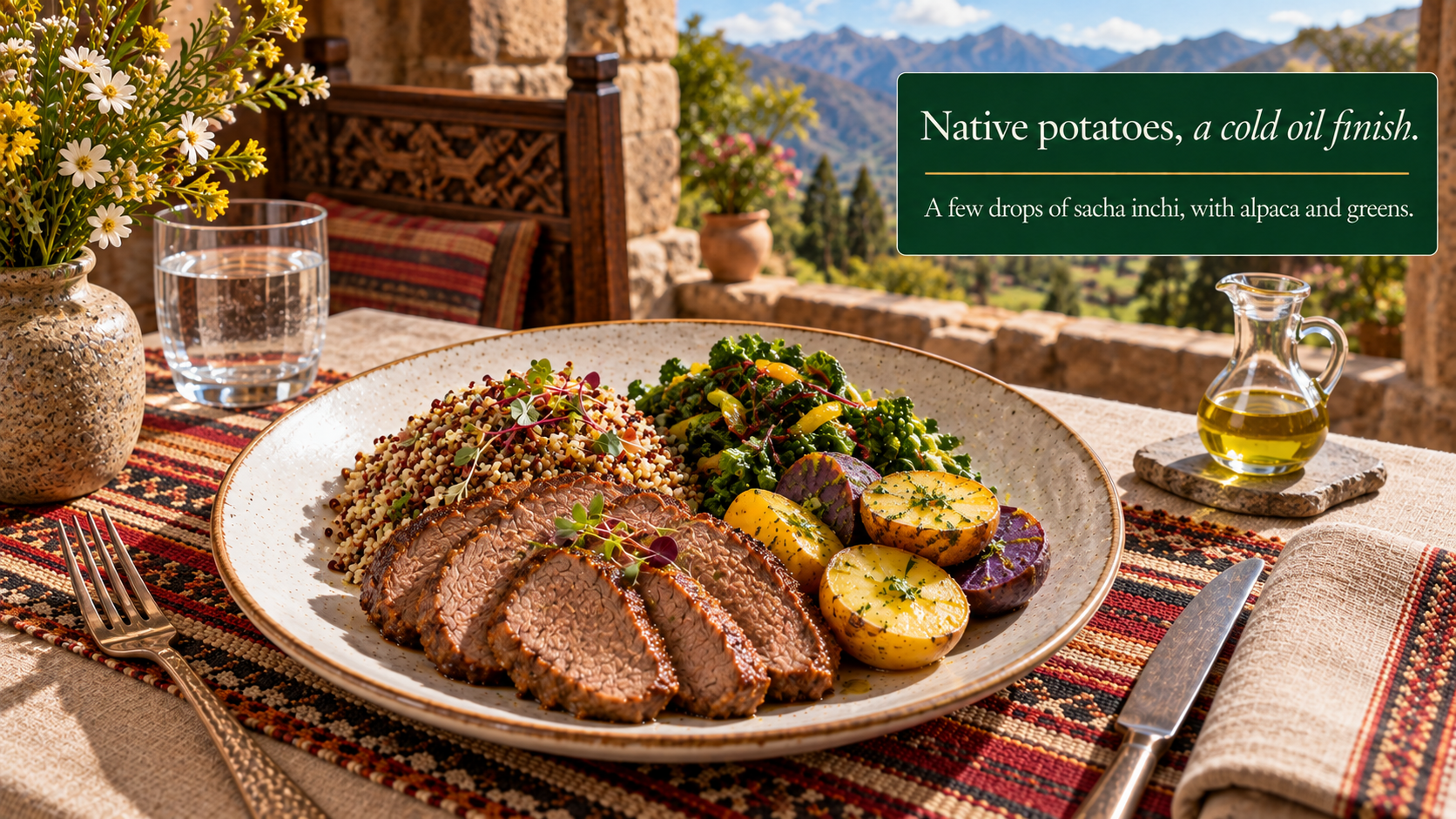
A warm cooked potato or tender vegetable gives the oil a clear place. Ask for a small amount on that component after it leaves the cooking heat. The entire meal does not need an oily coating. Cooked alpaca with quinoa and vegetables could provide one setting; baked high-altitude Andean trout with potatoes and cooked greens could provide another.
These are proposed hotel-kitchen combinations. Taste a plain bite of potato first, then one with a small amount of the oil. A guest can simply enjoy dinner with the oil offered alongside. A separate small bowl is a courtesy, not a supplement dose or a mandatory daily serving.
If the kitchen cannot obtain a suitable oil, enjoy the meal it can prepare. Prepared sacha inchi seeds are a different option only when their product and preparation are clear; they are not an equivalent volume-for-volume replacement. Raw agricultural seed should never become an improvised substitute for the missing finishing oil.
Handle the actual product
Follow the oil maker's label rather than a universal shelf life inferred from the plant name. Ask the kitchen to use its normal product-identification and storage procedures. A shared table bottle needs the same clear food status as a bottle bought from a shop. Attractive packaging does not tell you whether the product is edible or has been handled as directed.
The cold finish is a culinary choice for this proposed serving. It does not establish that every sacha inchi oil has the same smoke point or that crossing an invented temperature makes it toxic. Do not turn a simple service request into a technical claim the available product evidence cannot support.
Keep origin and nutrition in proportion
A bottle bought or served in the Sacred Valley does not prove the seed grew there. INIA places sacha inchi within Peru's wider Amazonian agricultural context. Keep a specific origin attached to the producer or growing area actually supplied, and leave the rest unclaimed.
The oil's plant omega-3 is ALA, which NIH distinguishes from EPA and DHA. That background does not tell you the nutrient amount in an unmeasured pour or demonstrate a health outcome from dinner. The practical decision remains whether you enjoy this identifiable edible oil in a small cold finish on a well-prepared meal.
Sources: gob.pe; repositorio.inia.gob.pe; ods.od.nih.gov
Continue with Native Potatoes, Tarwi and Andean Ingredients Worth Knowing, Andean Trout: Choose Grilled, Steamed and Cooked Plates, Ripe Fig, Greens and Prepared Sacha Inchi With Alpaca.
How can a food interest fit a meaningful Valley stay?
A food conversation can widen your sense of Peru without requiring a supplement regimen or another scheduled excursion. You might notice how an Amazonian oilseed appears beside an Andean grain or fish, then ask which component the kitchen used. That is enough to make a meal more attentive.
For other savory ingredients, the tarwi guide explains a different prepared seed food, and the regional ingredient overview connects several interests without replacing their individual preparation guidance.
This publication is connected to Florian Rolke and The SoulSearching Experience, a five-day Sacred Valley seminar for 8-15 participants with no plant medicine. The retreat planning guide explains the broader stay. Sacha inchi tastings, cooking sessions and specific meals are not confirmed seminar inclusions. The food choices described here remain your independent travel options.
Sacha inchi oil, visible at the table
Make the food oil visible at the table
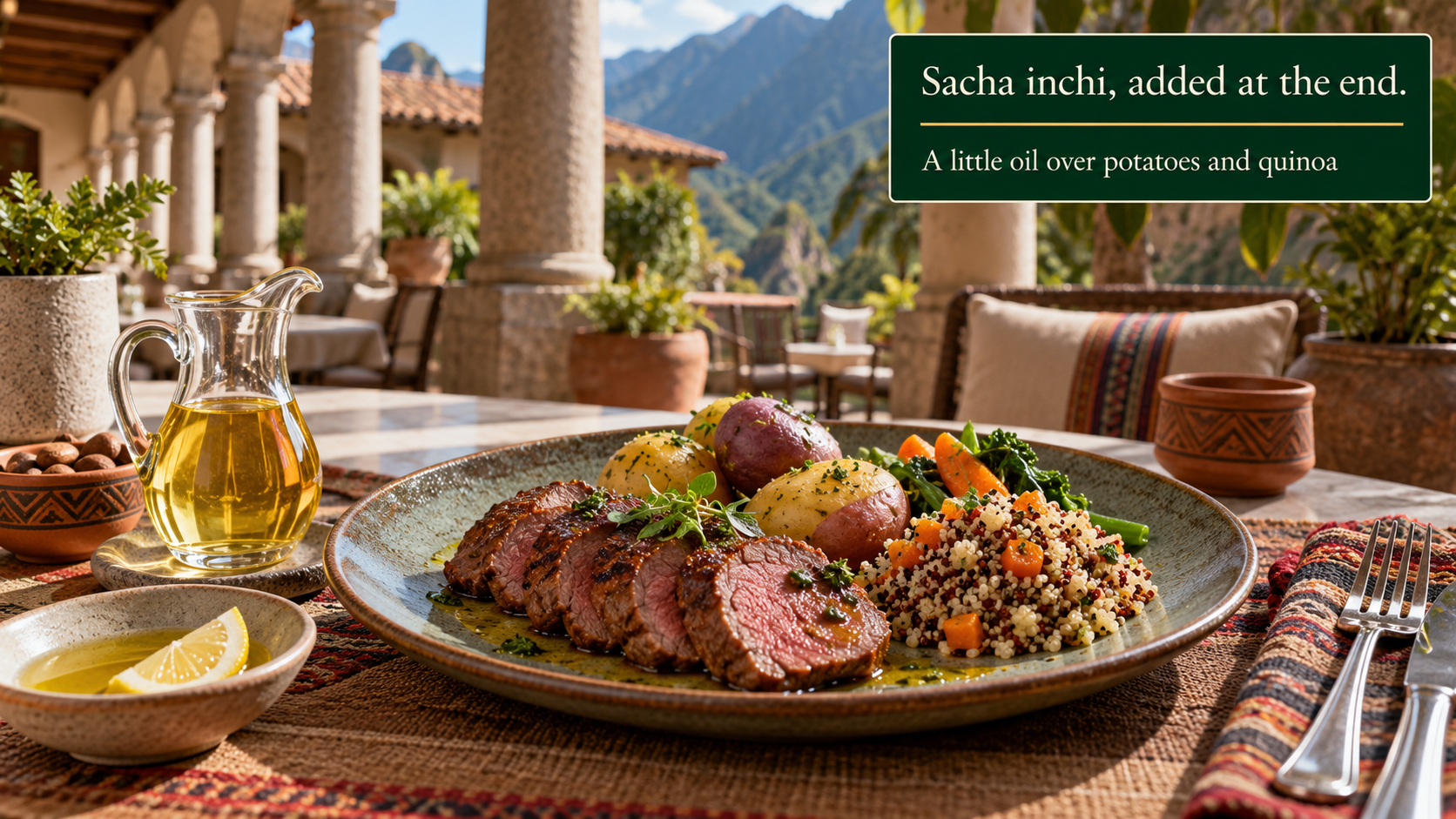
The oil deserves a role of its own. A small food-grade bottle or pourer beside a composed plate tells the guest what the ingredient actually is. It should not be represented only by a pile of seeds when the proposed use is a dressing. The seed and the extracted oil are distinct food forms.
For this concept, a little sacha inchi oil is combined with lemon and chopped culinary herbs after the vegetables are cooked. The kitchen can offer it separately so the diner chooses how much to add. That arrangement makes the flavor available without requiring a heavy sauce or an unmeasured oil soak.
Choose a cold finish for this preparation
A cold dressing is the intended use here. Add the oil after cooking and use the bottle's handling instructions. The concept involves neither frying the meat in it nor heating a pan of it to make the ingredient feel more prominent. A distinctive ingredient can be recognizable in a modest quantity.
This is a culinary design choice, not a universal claim that every sacha inchi oil becomes toxic at a particular temperature. Smoke points, stability and processing depend on the actual oil and product. Do not invent a temperature limit from a photograph or a general description of plant oils. Ask the supplier when the intended use is unclear.
Place it beside alpaca and vegetables
Cooked alpaca, quinoa and tender broccoli make one possible main plate. The oil can finish the broccoli or become part of a small hydrated-chia, lemon-and-herb dressing. The meat does not need a sugary glaze, and the grains do not need to be processed white rice to make the meal satisfying.
Another proposed plate uses baked high-altitude Andean trout with cooked greens and the same oil offered separately. The food combinations are editorial ideas, not observations from a restaurant menu. The kitchen prepares them. A guest can enjoy the result without a demonstration, cooking class or requirement to learn a new preparation during the visit.
Use the right omega-3 language
Sacha inchi oil is associated with alpha-linolenic acid, or ALA, a plant omega-3. The NIH distinguishes ALA from EPA and DHA. The body can convert some ALA into those longer-chain forms, but conversion is limited. A plant oil should therefore not be sold as identical to fish in every nutritional respect.
ALA is a legitimate nutrient contribution, not an excuse to promise brain repair, hormone balance or protection from every cardiovascular problem. A small pour has no established nutrient dose until its amount and the product composition are known. A clear food label helps answer that question more honestly than the word superfood.
Keep promising human studies in proportion
Researchers have studied sacha inchi oil in people. A preliminary 2025 randomized trial included 54 patients with several metabolic conditions, using measured oil softgels alongside prescribed medication for 12 weeks. It reported changes in some blood-pressure and lipid measures, with no effect on glycemic markers.
That is more informative than a laboratory antioxidant claim, but it still does not demonstrate that an occasional restaurant dressing treats disease. The study population, dose, formulation and duration matter. A separate small exposure study examined blood fatty acids after single oil doses; it was not a trial of long-term disease prevention. Neither study turns this meal into a prescription.
Keep the Amazonian origin specific
Sacha inchi belongs in Peru's Amazonian agricultural story. INIA's cultivation reference describes the crop and its growing context. A bottle sold in the Sacred Valley may have traveled through that broader food system. The serving location is not proof of the cultivation site.
Ask for the producer and growing area when origin is important. Cusco is a large and environmentally varied region, so a reference to Cusco does not establish a farm in the highland Valley. An imagined trellised-vine image can explain the plant without documenting a garden. The product label and supplier remain the evidence for the oil actually placed on the table.
A small bottle still needs ordinary care
Buy a clearly labeled edible product and follow its date and storage directions. Keep cosmetic oil separate from food oil. Protect the food bottle as directed, close it after use and avoid using an uncertain product merely because it has an attractive origin story.
For a traveler attending The SoulSearching Experience, a prepared meal can be a comfortable part of time in Peru. This oil concept adds an ingredient to consider with the kitchen. It does not establish a seminar inclusion, a supplier partnership or a current menu. The point is a well-prepared savory meal with a visible ingredient and an understandable purpose.
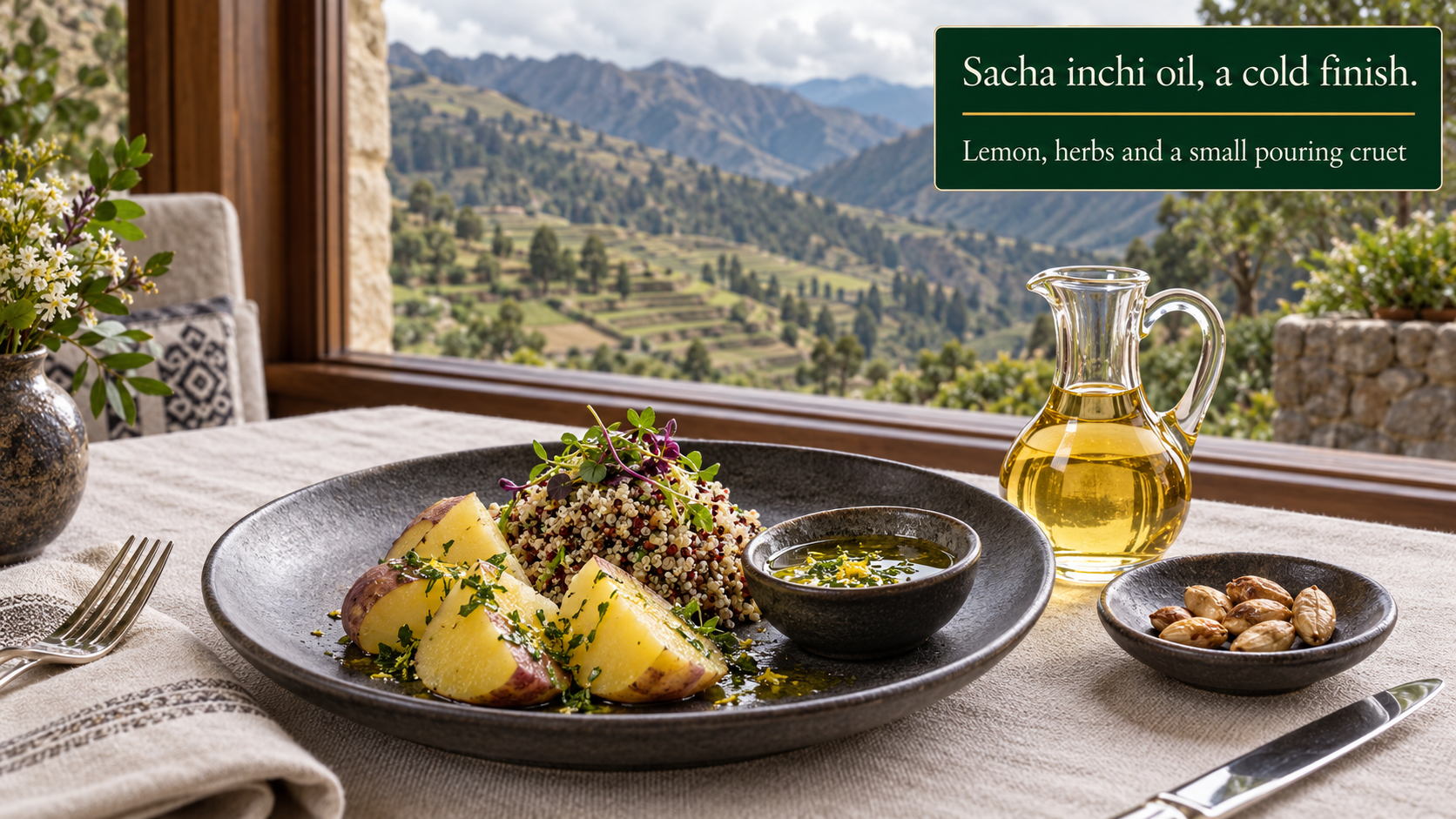
Prepared-food and plant illustrations. No current restaurant dish, harvest or seminar inclusion is established.
Sources
The main references are INIA's cultivation and culinary records, INACAL's 2025 product-category notice, the original roasting experiment and NIH's nutrient guidance, linked beside the relevant claims. The historical El Huerto dish is dated explicitly. Agricultural background, a laboratory result and a menu composition answer different questions and are not interchangeable proof.
Frequently Asked Questions
What food is sacha inchi?
Sacha inchi is the oilseed crop Plukenetia volubilis, identified by INIA in the Euphorbiaceae family. For eating, the practical distinction is the product form: prepared seeds, food oil or a specified processed ingredient. A bag of seed for planting and a bottle intended for cosmetics are different purchases from a labeled food.
Sources: Cultivo de Sacha Inchi; Sacha inchi food-quality standards overview.
Which other names might I see for sacha inchi?
INIA records common names including forest peanut and Inca peanut. Those names help you recognize the ingredient, but they do not make it botanically identical to a peanut. Confirm Plukenetia volubilis and the food form on the label, and keep allergy suitability separate from the nickname.
Sources: Cultivo de Sacha Inchi; FDA food allergy facts.
What distinguishes sacha inchi oil from the seeds?
The oil is one product made from the oilseed, while prepared kernels are another food form. INACAL describes standards covering both oils and processed food products. Read intended use carefully because its overview includes food and cosmetic oils; the shared crop name does not make every bottle suitable for eating.
Sources: Cultivo de Sacha Inchi; Sacha inchi food-quality standards overview.
Does sacha inchi oil supply the same omega-3s as fish oil?
The comparison needs the specific fatty acids. Sacha inchi contains plant omega-3 ALA, while NIH distinguishes that from EPA and DHA associated with seafood. Human conversion of ALA to EPA and DHA is limited. Treating equal-looking omega-3 claims as nutritionally interchangeable would overlook that difference.
Sources: Sacha inchi roasting and antinutrients; Omega-3 fatty acids consumer facts.
Should I eat raw sacha inchi seeds?
Choose a clearly labeled product prepared for eating. Traditional culinary references describe roasted or salt-cooked seeds, and an original laboratory study found processing affected antinutrients. That study does not supply a universal home-roasting safety recipe. Do not assume unprocessed agricultural seed is a ready-to-eat snack.
Sources: Sacha inchi cultivation, culinary uses section; Sacha inchi roasting and antinutrients.
Is there a daily dose of sacha inchi oil for this food guide?
There is no prescribed supplement dose here. Decide first whether you are choosing a food ingredient or a health supplement, and follow the actual product's intended use. NIH's omega-3 information does not establish a personal sacha inchi oil dose; discuss treatment or supplementation goals with your clinician.
Sources: Omega-3 fatty acids consumer facts; Sacha inchi food-quality standards overview.
How should I approach a serving of prepared sacha inchi seeds?
Use the food label's serving information and consider the rest of the meal, rather than treating a handful as a required daily treatment. The primary references establish prepared food forms and composition research, not a universal seed allowance. Seasoning, serving size and the actual product can change what you are eating.
Sources: Sacha inchi food-quality standards overview; Sacha inchi roasting and antinutrients.
Where does sacha inchi come from?
INIA places it in a Peruvian Amazonian agricultural context and lists occurrence in several regions, including Cusco. Cusco is a large region with varied environments. That reference does not prove cultivation beside a Sacred Valley restaurant, so ask for the producer and growing area if you want a specific origin.
Sources: Cultivo de Sacha Inchi.
How can I choose a sacha inchi food oil?
Start with a clearly identified edible oil, an ingredient list, producer details, storage instructions and a sound package. INACAL's standards cover multiple product types, including cosmetic oil, so intended use is essential. This guide does not rank brands or establish that an attractive label proves independent certification.
Does a sacha inchi seed label prove a no-beef requirement is met?
The seed is a plant ingredient, but the finished food or supplement requires its own ingredient check. Ask about coatings, added ingredients and capsule materials if relevant. Botanical identity does not establish religious certification, and an unfamiliar prepared product should be checked against your own dietary requirements.
Sources: Cultivo de Sacha Inchi; Sacha inchi food-quality standards overview.
Where should I look for sacha inchi nutrition amounts?
Use nutrition information for the actual product and serving. The original roasting study analyzed particular Brazilian-grown seeds under laboratory conditions; it does not measure every Peruvian snack, food oil or restaurant topping. A whole prepared seed and an oil are different products, so do not copy one set of numbers across them.
Sources: Sacha inchi roasting and antinutrients; Sacha inchi food-quality standards overview.
What flavor differences should I expect between sacha inchi products?
One supplier describes its roasted seed snack as nutty with a woody note and its oil as milder. Those are product descriptions, not our tasting verdict or a promise about every brand. Seasoning and processing can change the experience, so identify the form and choose a modest first tasting that suits your preferences.
Sources: Incaliving seed snack description; Incaliving FAQ: published protein-powder processing claim.
How can sacha inchi fit a savory cooked meal?
Historical culinary references describe prepared seeds used in savory dishes, including as a substitute ingredient for peanut. A 2025 El Huerto menu also listed sacha inchi with Urubamba trout and fava hummus. The menu did not specify the sacha form, so do not infer an oil or a particular cooking process from it.
Sources: Sacha inchi cultivation, culinary uses section; El Huerto, Rio Sagrado (Belmond) public menu.
How should I decide how long to keep a sacha inchi product?
Follow the actual package's date and storage instructions, including any directions after opening. Oil, roasted seeds and flour are separate products, so one supplier's shelf-life statement cannot set a universal window. Check the package condition and intended food use before buying, and ask the producer when the instructions are unclear.
Why is Incaliving’s sacha inchi protein powder not gelatinized?
Incaliving states its powder is derived from cooked sacha inchi seeds and is not gelatinized. That is the supplier's dated processing statement. The sources here do not independently verify its starch explanation or the current manufacturing process; check the actual package and ask the producer about preparation.
Sources: Incaliving FAQ: published protein-powder processing claim; Sacha inchi food-quality standards overview.
Are seeds, oil and protein powder interchangeable foods?
Treat them as different food forms with different labels and uses. Official standards distinguish processed seed products, protein flour and oils. The composition measured in one seed experiment does not establish identical nutrition across all three, and none should be presented as a guaranteed disease treatment because it shares the sacha inchi name.
Sources: Sacha inchi food-quality standards overview; Sacha inchi roasting and antinutrients.
What does the roasting research actually show?
The original 2018 study examined Brazilian-grown seeds and how roasting changed measured antinutrients and oil characteristics. It helps explain why processing deserves attention. It was not a study of travelers' health, restaurant meals or a universal kitchen method, and its laboratory findings should not become a promise of clinical benefit.
Sources: Sacha inchi roasting and antinutrients.
Does the plant ingredient establish every dietary label on a finished product?
No. Sacha inchi is a plant oilseed, but a prepared snack, flour mixture or capsule has its own complete ingredients and handling. Read the finished product label and any relevant certification rather than assuming vegan, gluten-free or other dietary status from the crop name. Ask the producer about an unresolved requirement.
Sources: Cultivo de Sacha Inchi; Sacha inchi food-quality standards overview.
Does being called a seed settle whether sacha inchi suits a nut allergy?
No. Its botanical family and common peanut names do not establish an individual's allergy tolerance. FDA emphasizes identifying and avoiding a person's allergenic foods. If you have a food allergy, discuss an unfamiliar seed product with your clinician and verify the finished product's ingredients and handling rather than testing a nickname at lunch.
Sources: Cultivo de Sacha Inchi; FDA food allergy facts.
What should I ask a shop when looking for sacha inchi?
Ask whether it carries prepared edible seeds, food oil or the particular processed ingredient you want, then read the package. This research does not establish day-specific stock at a Sacred Valley shop. A seller should be able to explain intended use, producer and storage; a crop name alone is insufficient.
Put the plan in one place
Save the route, admission time, station names, and transfer details before you book the next part.
Open the trip-planning checklist