A ripe fig needs little help at dinner. Its soft center and tender skin make a useful contrast to greens, while prepared sacha inchi seeds supply a firmer bite. Beside alpaca, the fig can be a small fresh accompaniment rather than the beginning of a sweet course. This arrangement depends on sound fruit and a verified ready-to-eat seed product.
Ripe Fig, Greens and Prepared Sacha Inchi With Alpaca
Use sound ripe figs in generous wedges, lightly dressed greens and food-grade prepared sacha inchi seeds. Serve them beside simply cooked alpaca, keeping the fig fresh.
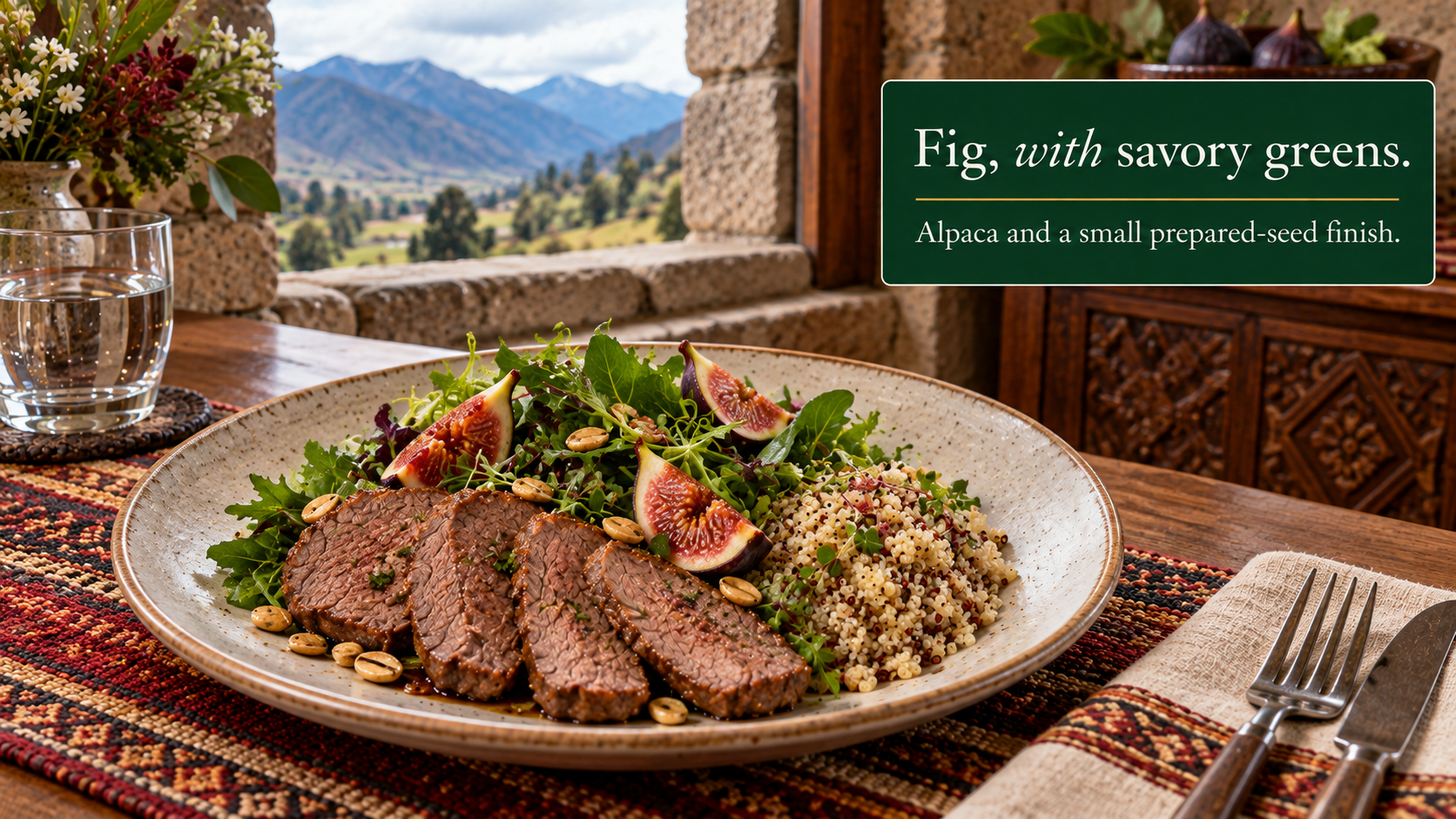
Choose fresh figs that can travel from board to plate
Fresh figs are delicate. For this plate, choose fruit that yields gently and smells pleasantly of fruit, without mold, leaking decay or an unwanted fermented odor. A fig can be very ripe and still sound, but it should not collapse before it reaches the table. Buy a quantity that the kitchen can use promptly rather than planning a long decorative display.
Open a sample to judge the center. Fresh figs differ in interior color and sweetness, and a dark outside does not prove a particular named variety. The goal is flesh that can be enjoyed raw and divided into broad wedges. A very soft sound fig can be spooned onto a separate small dish, though it will create a different texture from the plated wedges.
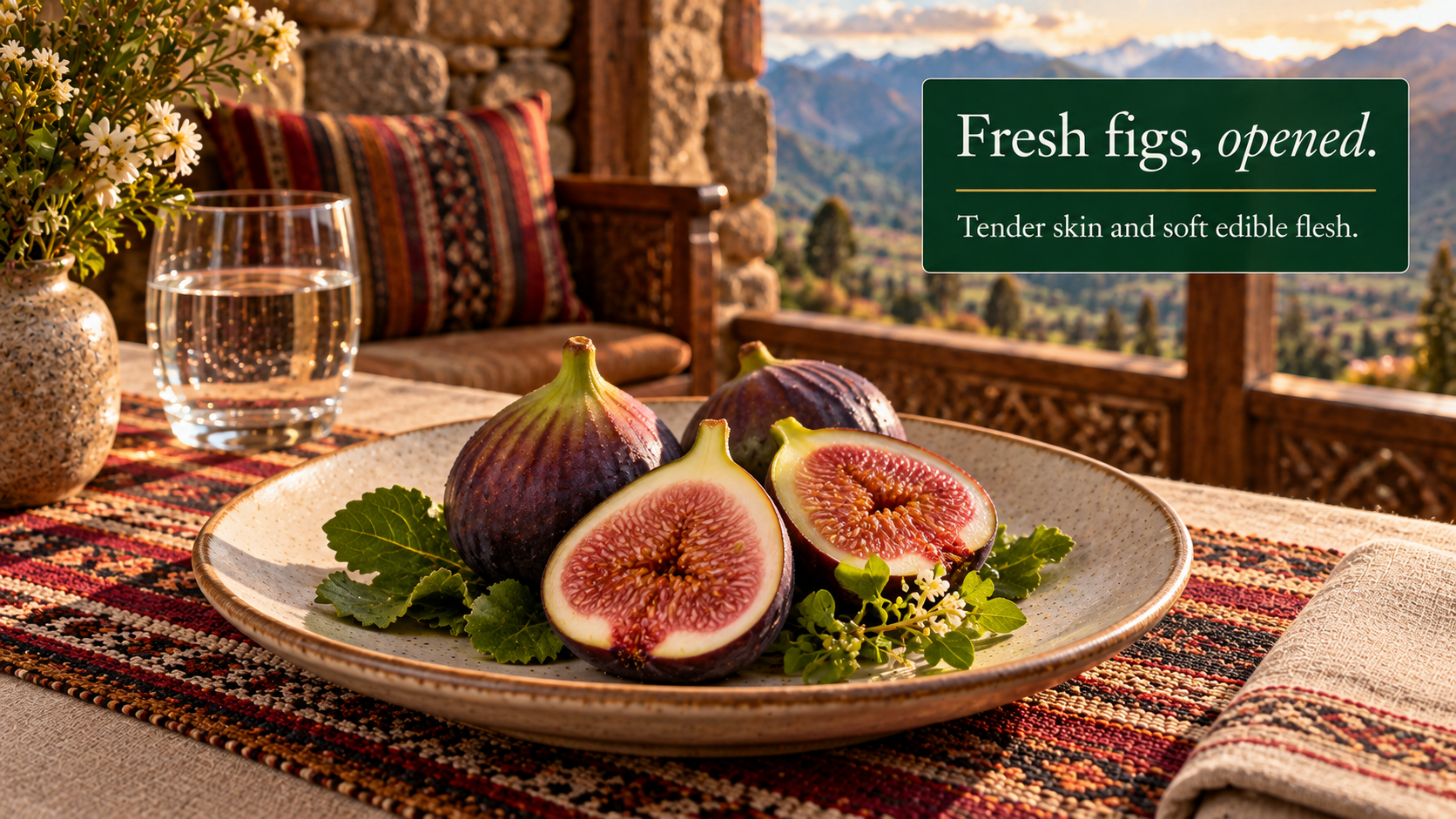
Keep the skin when it is pleasant to eat
Wash the fig gently close to preparation and trim away its hard stem. Tender skin can remain on the wedge. Peeling every fig is unnecessary when the skin tastes good and helps the piece hold together. If an individual skin is tough or distracts from the fruit, peel that fruit or offer its flesh separately.
Cut from the stem end into quarters or broad halves, depending on size. A knife that slices cleanly preserves the seed-filled center better than squeezing the fruit apart. The tiny seeds within the fig belong to its familiar fresh eating texture. They are different from the separate sacha inchi seeds added for crunch, and the menu should not blur the two.
Use prepared sacha inchi, with the label checked
Choose a packaged food product explicitly prepared for eating, such as commercially roasted sacha inchi seeds. Raw planting seed is not an interchangeable ingredient. Ask the supplier how the food product has been processed and follow its label. A generic description such as seeds from the property does not establish that it is ready to serve.
Taste the prepared seeds before adding them. A strong roasted flavor can take over a mild fig, so begin with a small scattering. Chop them coarsely if whole seeds make the accompaniment awkward to eat. Keep some aside for guests who prefer a softer plate or need to avoid that ingredient. Choose a prepared seed whose flavor and texture suit the actual meal.
Choose greens with a tender bite
Use a modest portion of sound salad greens or tender cooked greens. The fresh version gives a crisp contrast to the fig; the cooked version creates a quieter warm plate. In either case, drain away excess water before arranging the fruit. A puddle under a ripe fig dulls its flavor and makes the seeds soften quickly.
A little citrus can season the leaves, but taste it away from the fig first. The fruit may already have a delicate tartness. Dress the greens lightly and set the fig on top or beside them near service. Mixing the whole bowl vigorously will smear the flesh across the leaves and remove the contrast that makes this accompaniment useful.
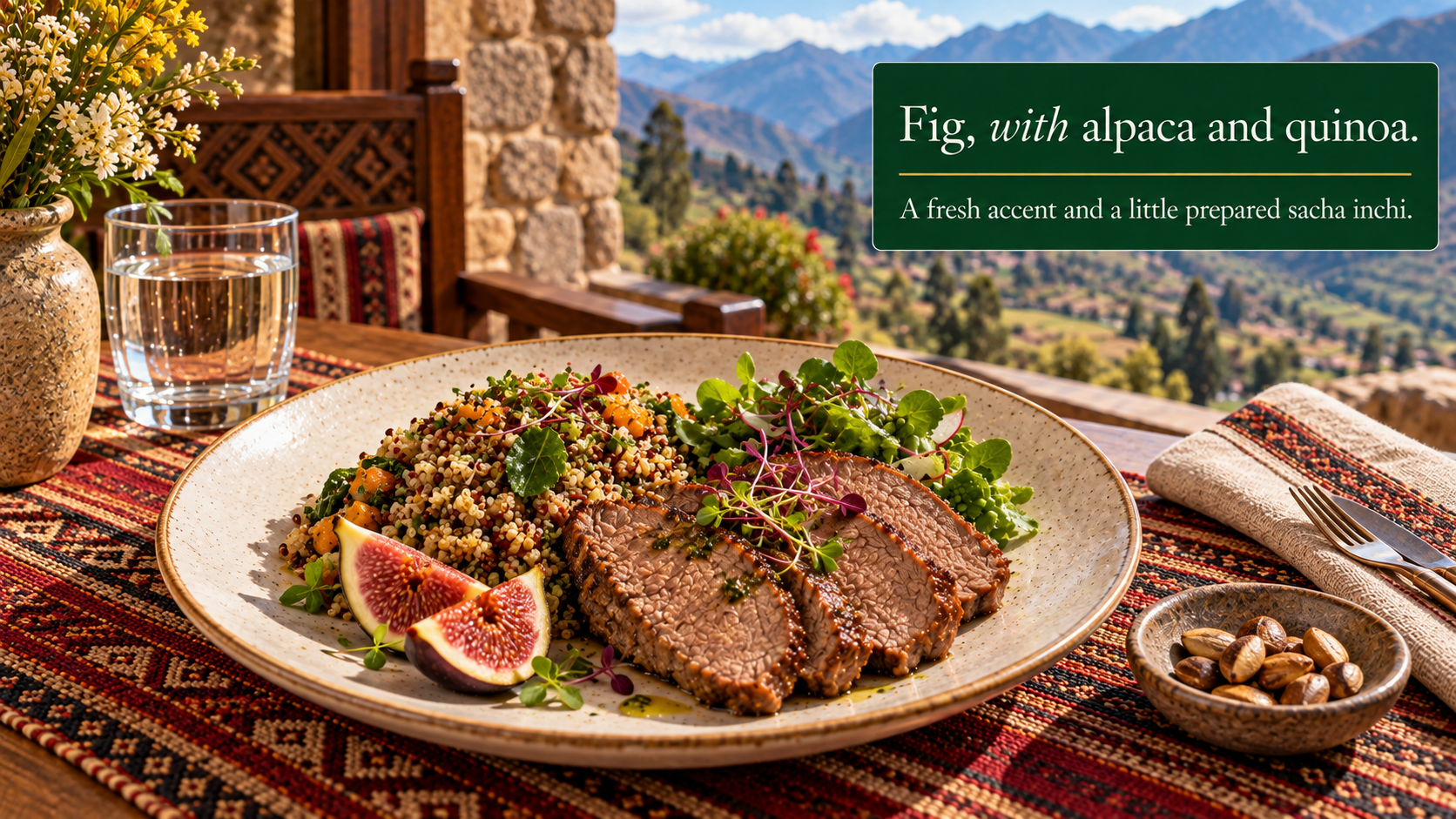
Let alpaca carry the savory center
Serve the alpaca in an ordinary savory preparation, with its cooking method described by the kitchen. Set the fig and greens beside the meat rather than covering it with a sweet puree. The guest can combine a little fig with one bite and enjoy the next bite of meat without fruit. This makes the pairing accessible even to someone who is unsure about fruit at dinner.
For the first kitchen trial, use a few wedges, a small portion of greens and a restrained scattering of prepared seeds. Adjust from actual tasting rather than a fixed visual ratio. If another starch is needed, offer it separately. Adding grain automatically can obscure a plate whose main interest is the relationship between alpaca, soft fig and the firmer seed texture.
Time the final assembly
Prepare the greens and seed product first, leaving the figs for the final short stretch of work. Keep sound fruit cool as appropriate and handle it gently. Cut only the quantity needed for the immediate service. Broad wedges are easier to lift with a small spoon or flat utensil than with fingers pressing their sides.
The FDA recommends washing fresh produce under running water and separating it from raw meat preparation. For this plate, that means a clean fruit board and clean utensils after the alpaca preparation is finished. No soap or produce detergent is needed. A carefully assembled fresh accompaniment still requires ordinary food handling, even when the fruit comes from a familiar tree.
Let the guest choose the seed texture
A side dish of prepared sacha inchi makes the plate easier to adjust. A guest can begin with fig and greens alone, then add a few seed pieces to discover the firmer bite. Someone who dislikes hard toppings can leave them out without losing the fresh fruit. Where an ingredient must be avoided, ask for a separately prepared plate; picking visible pieces off an assembled dish is a different request.
The ready-to-eat seed product deserves as much attention as the fig. Ask for its name and preparation, and taste its seasoning before scattering it. A heavily salted or strongly roasted product may need a much smaller amount. Broad fig wedges, leaves that are easy to gather and a deliberately small seed portion make the accompaniment comfortable beside alpaca. The result can remain elegant without becoming a dense mixed salad.
The images are editorial illustrations of ingredients and serving ideas. They do not document a named restaurant, a current harvest or an included retreat meal. Preparation guidance is not a tested recipe.
Leave room for the Sacred Valley
A visit to Machu Picchu can leave time for a good meal and a quieter stay in the valley. Ask Florian about The SoulSearching Experience, his five-day Sacred Valley seminar for 8-15 participants. Discuss dates, venue and meal arrangements directly.
Questions readers ask
What should a ripe fresh fig contribute here?
Expect soft fruit with its own mild to rich sweetness, depending on variety. Taste a sample first; bland or unpleasant fruit need not go on the plate.
Should a fresh fig be as concentrated as a dried fig?
No. Fresh fruit has more moisture and a different bite. Choose pleasant ripe fresh figs instead of expecting the dense sweetness of the dried product.
Must the figs be peeled?
Leave a pleasant tender skin on. Peel an individual fruit when its skin feels tough or distracting; the proposed serving depends on the actual bite.
What if fig skin texture bothers a guest?
Offer a peeled wedge or a small spoonful of flesh separately. Do not insist on the skin simply because another diner enjoys it.
Should the hard fig stem remain in the eating portion?
Trim the hard stem before making broad wedges. The soft fresh fruit is the accompaniment; a woody stem need not become the guest's problem.
Are the tiny seeds inside a ripe fig eaten with the flesh?
Yes. They belong to the ordinary texture of ripe edible fig flesh. Trim the hard stem; the separate sacha inchi topping is a different ingredient.
Will frozen figs make the same neat fresh wedges?
Thawing can soften their texture. For this fresh wedge serving choose sound fresh fruit, and describe a thawed soft preparation as a different version.
How should the kitchen judge figs before using them?
Open and taste a sound sample. It should be pleasant to eat raw, without mold, decay or an unwanted fermented odor.
Can ripe figs remain fresh in a savory meal?
Yes. Broad fresh wedges can sit with greens and prepared seeds beside alpaca. Keep the fruit separate enough to combine a bite gradually.
Should soft thawed figs be substituted silently?
No. They may still be usable food, but they give a softer experience. Tell the guest and retest the changed accompaniment.
Can raw planting seed replace the prepared topping?
No. Use an identified food-grade prepared seed product and follow its label. Raw planting material is not an interchangeable ready-to-eat ingredient.
What is the separate seed ingredient on this plate?
Sacha inchi is Plukenetia volubilis. Here the ingredient is a food-ready prepared seed product, used sparingly for a firmer bite beside soft fig.
How much prepared seed flavor belongs beside fig?
Taste the actual product first. Begin with a small scattering so a strongly roasted flavor does not overwhelm the softer fruit.
Are the oil, seeds and powder interchangeable here?
No. The proposed topping is prepared seeds. If using culinary oil elsewhere, keep it to a tiny cold finish; powder makes another preparation entirely.
How should the unused seed product be kept?
Follow its producer's storage instructions and keep the package closed. Taste before later use rather than assuming every prepared product has the same shelf life.
Should an unfamiliar seed topping be assumed suitable for every guest?
No. Name the exact ingredient and check individual requirements with the diner and kitchen. Keep a separately prepared seed-free portion when needed.
What should a supplier confirm about the seeds?
Ask for a labeled culinary product, its preparation method and storage instructions. A bag described only as property seed does not answer those questions.
Does a little seed garnish justify a health promise?
No. This is a texture and flavor choice. A small garnish does not establish a treatment effect or make different sacha inchi products equivalent.
Can the fresh figs sit beside warm alpaca?
Yes. Keep them away from the hottest meat juices and assemble near service. Their fresh soft texture can contrast with the warm savory portion.
Can the crunchy topping be offered separately?
Yes. Keep the specifically named prepared sacha inchi in a small dish. Guests can add a little or choose greens and figs without it.