Clean watermelon cubes, crisp cucumber, and herbs offer a cool side to baked high-altitude Andean trout. The plate uses the fruit's own sweetness without syrup, dessert sauce, or a sweetened drink.
An illustrated serving concept in an Andean hotel setting.
Baked high-altitude Andean trout with a separate watermelon and cucumber salad
Keep the cool fruit on a separate plate beside the cooked fish. White, yellow and red flesh can introduce the photographed watermelon range without extra sweetener. Choose the actual cultivar before naming the color.
Explore High-altitude Andean trout in the ingredient guide. Confirm the actual preparation and availability with the kitchen.
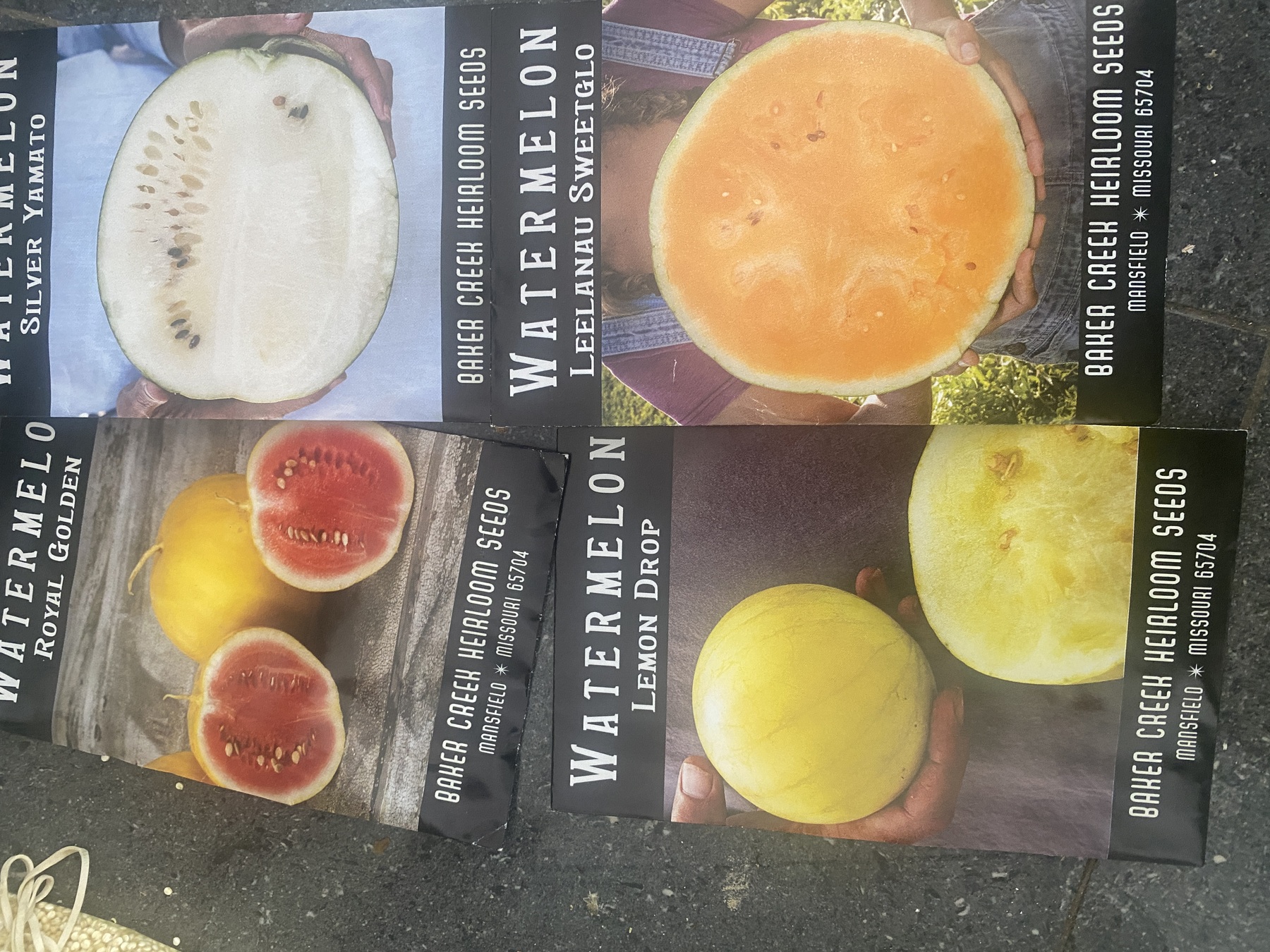
Serve ripe watermelon in a small savory cucumber-and-herb salad beside baked high-altitude Andean trout and quinoa. Silver Yamato has white flesh; Royal Golden refers to its maturing golden rind and has red flesh. The seven packets are distinct, not a single mixed-color guarantee.
The featured ingredient, served on its own.
Illustrated serving concepts and an imagined Sacred Valley garden. These are not photographs of a named restaurant, a current harvest, or a tested recipe.
A savory setting changes the role of the fruit
Watermelon does not have to end a meal in a large sweet bowl. A small portion with cucumber and fresh herbs can sit beside high-altitude Andean trout as a cool salad. Keep the dressing restrained so the fruit remains recognizable and the plate does not become a sweetened sauce with fish underneath.
Baked high-altitude Andean trout supplies the main protein portion, with quinoa or a plain potato for substance. The watermelon is one component of lunch. Serve the cool salad separately from the hot fish and starch, allowing the guest to combine them without warming the entire bowl of fruit.
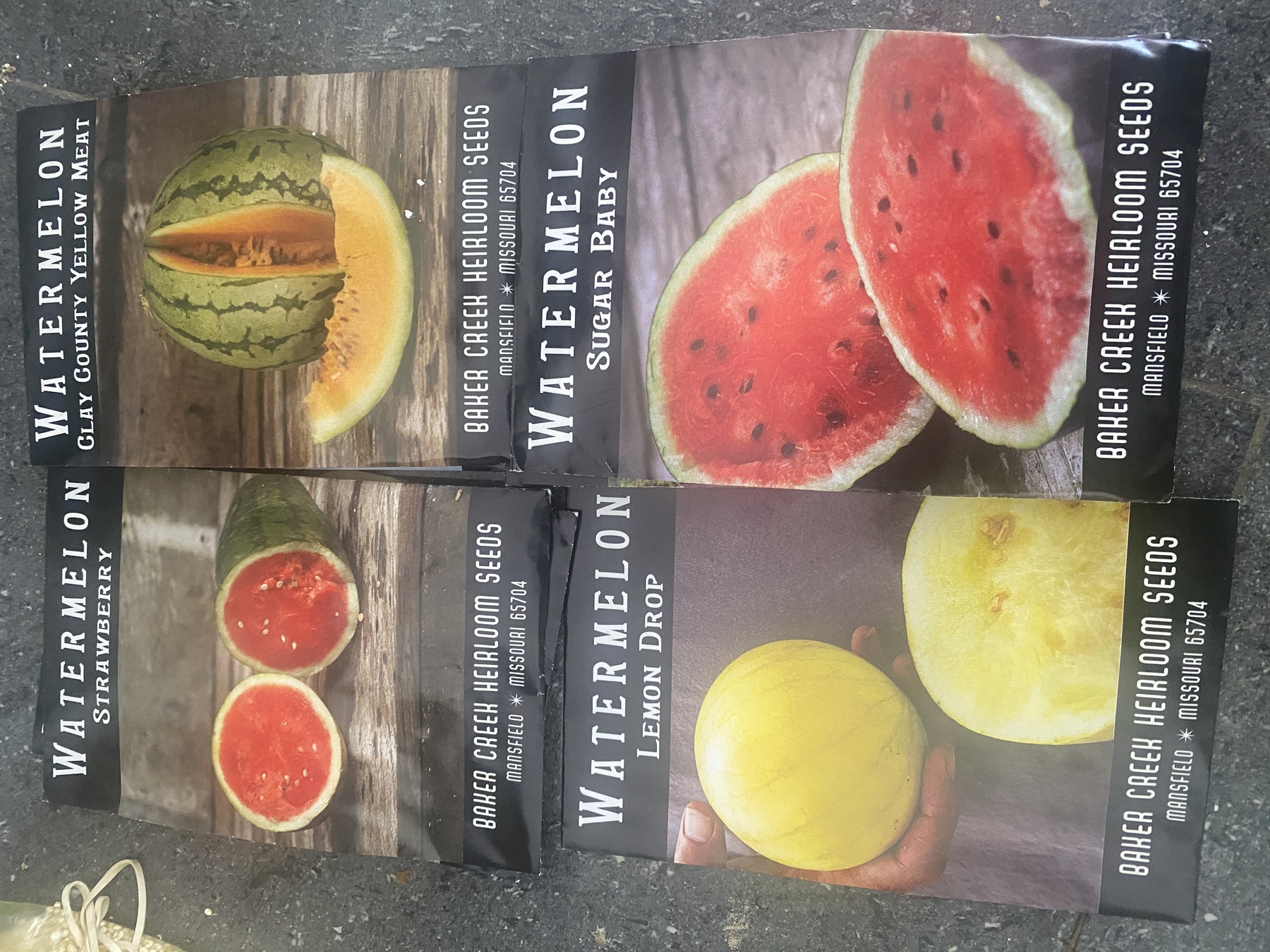
The photographed collection contains Clay County Yellow Meat, Leelanau Sweetglo, Lemon Drop, Royal Golden, Silver Yamato, Strawberry, and Sugar Baby. Lemon Drop appears in two photographs of the same packet. That repeat is not an eighth variety. Each name deserves its own identification rather than a general promise of rainbow fruit.
Baker Creek's descriptions distinguish yellow-fleshed types from red or pink types. Clay County Yellow Meat and Lemon Drop are yellow-fleshed entries; Leelanau Sweetglo is described as orange-fleshed. Strawberry and Sugar Baby belong on the red-to-pink side of the planning discussion, with actual harvested color checked before illustration or service.
Silver Yamato has white flesh. A photograph or illustration showing its interior as bright yellow would misidentify the cultivar. Its pale color is part of the interest of the variety, but it is not proof that it is unripe or nutritionally superior to another watermelon.
Royal Golden requires a different distinction: the rind changes toward golden yellow with maturity, while its interior is red. A golden exterior and a yellow interior are not the same trait. Keep those traits separate in both a cut-fruit study and any description the hotel uses for a mixed salad.
For an actual serving, the cook needs sound ripe fruit, clean cutting equipment, and enough working space to handle a large melon safely. A producer's maturity description can help identify a variety, but an unopened fruit cannot be guaranteed sweet by its packet name or a single shopping trick.
Wash the outside before cutting so surface contamination is less likely to move inward with the knife. Keep the cutting board stable. Remove hard seeds when that suits the serving, and check the texture of the pieces rather than trying to hide an overripe batch under herbs.
Watermelon and cucumber release moisture after cutting, especially with salt. For a neat salad beside hot fish, the cook can prepare clean, manageable pieces and season near service. A shallow dish or a separate small bowl keeps the juice from flooding the quinoa.
A little citrus may be pleasant, but no exact acidity is implied and it does not preserve the salad for a buffet. Keep cut fruit appropriately chilled until service. A picture of a salad in mountain sunshine is a presentation idea, not guidance to leave cut melon unrefrigerated.
Mint or another suitable fresh herb can give the fruit a savory direction. There is no need for syrup, sweetened cream, ice cream, or a sugary drink. Cheese is optional rather than invisible; if included, it adds dairy and changes the dish's ingredient profile.
Ask the actual kitchen for baked high-altitude Andean trout and the cucumber-watermelon side, and confirm the cooking method for the quinoa or potato. A separate dressing lets the guest adjust the citrus and salt without soaking every piece of fruit before the plate reaches the table.
A spreading vine needs a real site assessment
Watermelon is a warmth-demanding crop with a spreading habit. Lemon Drop combines yellow flesh with a golden rind, unlike Royal Golden. A small garden illustration can show fruit developing near the ground, but it should not squeeze a mature planting into an unrealistically tiny upright bush. Supplier maturity estimates belong to their growing context, not a guaranteed highland calendar.
The seed collection suggests possibilities for a Sacred Valley table. It does not prove a local crop or a seminar menu. The SoulSearching Experience is a five-day retreat and seminar for 8-15 people with no plant medicine; this meal and any garden supply remain unconfirmed.
These additional meals keep the photographed varieties distinct. The kitchen prepares the food; the images suggest combinations to discuss, rather than a tested menu.
Roast cuy beside Clay County Yellow Meat watermelon
Clay County Yellow Meat introduces yellow watermelon flesh beneath a green rind. A modest wedge can make that distinction clear before prepared pieces join cucumber and mint. Keep the cool side separate from the cuy and grain. Yellow cubes alone would lose the outside-inside comparison, while a whole large melon would dominate a dinner setting that is meant to feel composed and comfortable for a guest.
For the rest of the meal, cooked black quinoa could sit in a small separate mound beside carved roast cuy. Keep sauces modest and separate so each guest can choose how much moisture to add without covering the main ingredient.
Leelanau Sweetglo adds an orange watermelon option, with flesh closer to tangerine than lemon yellow. A rind-on wedge beside the prepared side salad keeps that difference visible. Its juicy pieces can accompany duck without becoming a sauce. Give the melon and cucumber their own shallow plate so the warm main course remains distinct, and let mint and a little lime keep the fruit course straightforward.
A complete serving could bring together carved roast duck and cooked canihua, leaving the featured vegetable or fruit enough room to remain recognizable. Keep sauces modest and separate so each guest can choose how much moisture to add without covering the main ingredient.
Illustrated complete meal: Roast cuy beside Lemon Drop watermelon
Ingredient serving: Lemon Drop
Lemon Drop is unusually small, with a yellow rind and yellow flesh in the intended golden form. Showing both in one wedge is more informative than scattering yellow cubes across a plate. Beside carved cuy, the miniature watermelon can become a modest fresh side with cucumber. Its naturally sweet flavor needs no added sugar, and its small scale should remain believable in the table composition.
Let cooked red quinoa carry its own part of the meal beside carved roast cuy, with the featured accompaniment kept generous and clearly visible. If wanted, offer a little food-grade sacha inchi oil as a cold finish after cooking, never as a frying oil.
Illustrated complete meal: Roast duck beside Royal Golden watermelon
Ingredient serving: Royal Golden
Royal Golden offers a useful surprise: the ripe golden-yellow rind surrounds pinkish-red flesh. Keep one cut edge in view so it cannot be confused with yellow-fleshed Lemon Drop. The remaining pieces could join cucumber and mint on a separate plate beside duck. That arrangement gives the guest a clear choice between the warm savory course and a cool fruit accompaniment, without mixing their juices together.
Keep carved roast duck in a modest portion, with cooked white quinoa served where its texture remains easy to enjoy. Keep sauces modest and separate so each guest can choose how much moisture to add without covering the main ingredient.
Strawberry watermelon is a named watermelon choice, with red flesh inside an oblong striped fruit. It does not call for strawberries on the plate. A rind-on portion could sit beside a small cucumber-and-mint side, letting the red interior stay recognizable. Serve the salad separately from the roast cuy, with enough space that the fruit feels like an intentional accompaniment rather than decoration around the meat.
For the rest of the meal, cooked canihua could sit in a small separate mound beside carved roast cuy. Keep sauces modest and separate so each guest can choose how much moisture to add without covering the main ingredient.
Sugar Baby keeps the watermelon comparison compact. Its small round form, dark-green rind and deep-red flesh differ from the larger striped and golden-rind choices. A narrow wedge and a few prepared pieces could accompany cucumber and mint on their own side plate. The duck remains the warm main course, while the cool fruit offers a clear change of texture without a sweet dressing or glaze.
A complete serving could bring together carved roast duck and cooked black quinoa, leaving the featured vegetable or fruit enough room to remain recognizable. If wanted, offer a little food-grade sacha inchi oil as a cold finish after cooking, never as a frying oil.
Food can give the days around Machu Picchu a welcome sense of place. If you would also like time for reflection, explore a Sacred Valley retreat before or after your visit. Florian Rolke offers The SoulSearching Experience, a five-day seminar for 8-15 participants, with no plant medicine.
Ask for the current dates, venue, price and inclusions before arranging the rest of your trip. These dishes, restaurant visits and garden visits are ideas to explore; they are not confirmed seminar inclusions.
Questions about this dish
Adapted from public cooking questions and published FAQs. Answer sources are linked below each response. Broader ingredient questions are included where they help with this serving.
How big do Silver Yamato watermelons get?
Baker Creek describes fruit about 6-10 pounds. That is a supplier variety description, not a local yield promise. Its important cut-fruit trait here is white or silver flesh.
Does the Royal Golden watermelon start out yellow?
The supplier says the rind turns golden yellow as it matures. The flesh is pinkish-red. Do not use the mature exterior color to depict a yellow interior.
Is the yellow flesh of Clay County Yellow Meat watermelon naturally occurring?
The supplier describes an established yellow-fleshed heirloom variety. The flesh color is a cultivar trait, not something created by adding a coloring to the cut fruit.
Is Leelanau Sweetglo a good watermelon for cooler climates?
The supplier describes it as early and suitable for northern growing. Its flesh is tangerine-orange. Those traits inform a trial, but do not establish Sacred Valley suitability or yield.
Baker Creek describes small fruit of roughly 1-2 pounds. The supplier describes yellow flesh and a golden skin, while noting some green-skinned fruit. Keep that different from Royal Golden's red interior.
Baker Creek describes oblong fruit about 15-25 pounds, with strawberry-red flesh. That is a variety description rather than an observed local harvest. Portion the actual sound fruit for the salad.
Baker Creek describes an icebox-type fruit around 6-10 pounds with deep-red flesh. The packet is inspiration for a possible crop, not proof of a local supply or guaranteed size.
The proposed salad uses the fruit fresh to keep its cool, crisp role beside high-altitude Andean trout. Heating changes that role and releases moisture. A cooked watermelon dish would need its own recipe and expectations.
What type of knife befits peeling/skinning melons and squashes?
Use equipment that handles the actual fruit safely, a stable cutting board, and manageable pieces. A hotel kitchen should choose the knife and technique. A slippery whole melon is not a useful place for decorative cutting improvisation.
A hole has several possible causes and cannot be declared safe from a brief description. Buy sound produce from a reliable supplier and reject a fruit showing decay or uncertain damage rather than rely on a cutting trick.
For a neat salad, cut manageable pieces and remove hard seeds as you encounter them. The best approach depends on the actual fruit. This guide does not assume any of the photographed packets is a seedless variety.
How can I check if a watermelon is sweet or not when buying?
No single external cue guarantees sweetness. Check variety, maturity information, and sound condition with the seller. A descriptive packet name cannot establish the eating quality of an unopened fruit.
Choose sound fruit without obvious decay or damage, and use supplier or variety-specific maturity information where available. The resulting flesh still needs inspection before it enters a fresh salad.
Obvious decay, leaking, mold, or badly deteriorated flesh call for rejection. Do not hide a questionable batch under herbs or dressing. Once cut, appropriate refrigeration and clean handling are essential.
Cause of watermelon rind rotting (at room temperature)
The specific cause needs the fruit and storage history examined. A rotting rind is not a reason to serve the melon after superficial trimming. This meal should start with sound fruit from a reliable source.
Watermelon - picking and managing them during heat
A fresh salad needs appropriate cold holding after cutting. A sunny presentation image is not a storage recommendation. Ask the kitchen how the cut fruit is managed until service.
Storage depends on the produce and whether it has been cut. For this meal, cut watermelon and the prepared salad need appropriate refrigeration. Do not apply a whole-fruit storage practice to a ready-to-eat batch.
Is there a way to make compressed watermelon without a vacuum machine?
Compression is optional. The proposed hotel salad uses ordinary clean cubes, with no special equipment needed to justify the fruit's role. A different technique should be chosen for its texture rather than its novelty.
A forum photograph cannot verify the photographed seed collection or the identity of an actual crop elsewhere. The seven named packets here have separate records. Confirm the cultivar before assigning flesh or rind colors.
There is no universal depth that can be promised safe after an unspecified contamination. Washing is not sterilization, and uncertain contamination needs proper food-safety assessment. Start this raw salad with sound, reliably supplied fruit.