Split lengthwise, a slender Ping Tung eggplant leaves room for tomato and herbs. The skin holds its outline while the flesh softens.
An illustrated serving concept in an Andean hotel setting.
Baked high-altitude Andean trout with Ping Tung eggplant
A baked high-altitude Andean trout fillet turns the lengthwise eggplant into a full savory meal. Keep the softened tomato and herbs with the eggplant, and use the fish's portion and preparation as the next question for the kitchen.
Explore High-altitude Andean trout in the ingredient guide. Confirm the actual preparation and availability with the kitchen.
Ping Tung's slender form suits a lengthwise cut. Grill until the flesh is tender throughout, then add tomato and herbs. Ask about oil in the marinade and during cooking if the amount matters to your meal.
The featured ingredient, served on its own.
Illustrated serving concepts and an imagined Sacred Valley garden. These are not photographs of a named restaurant, a current harvest, or a tested recipe.
Choose the variety and the cut together
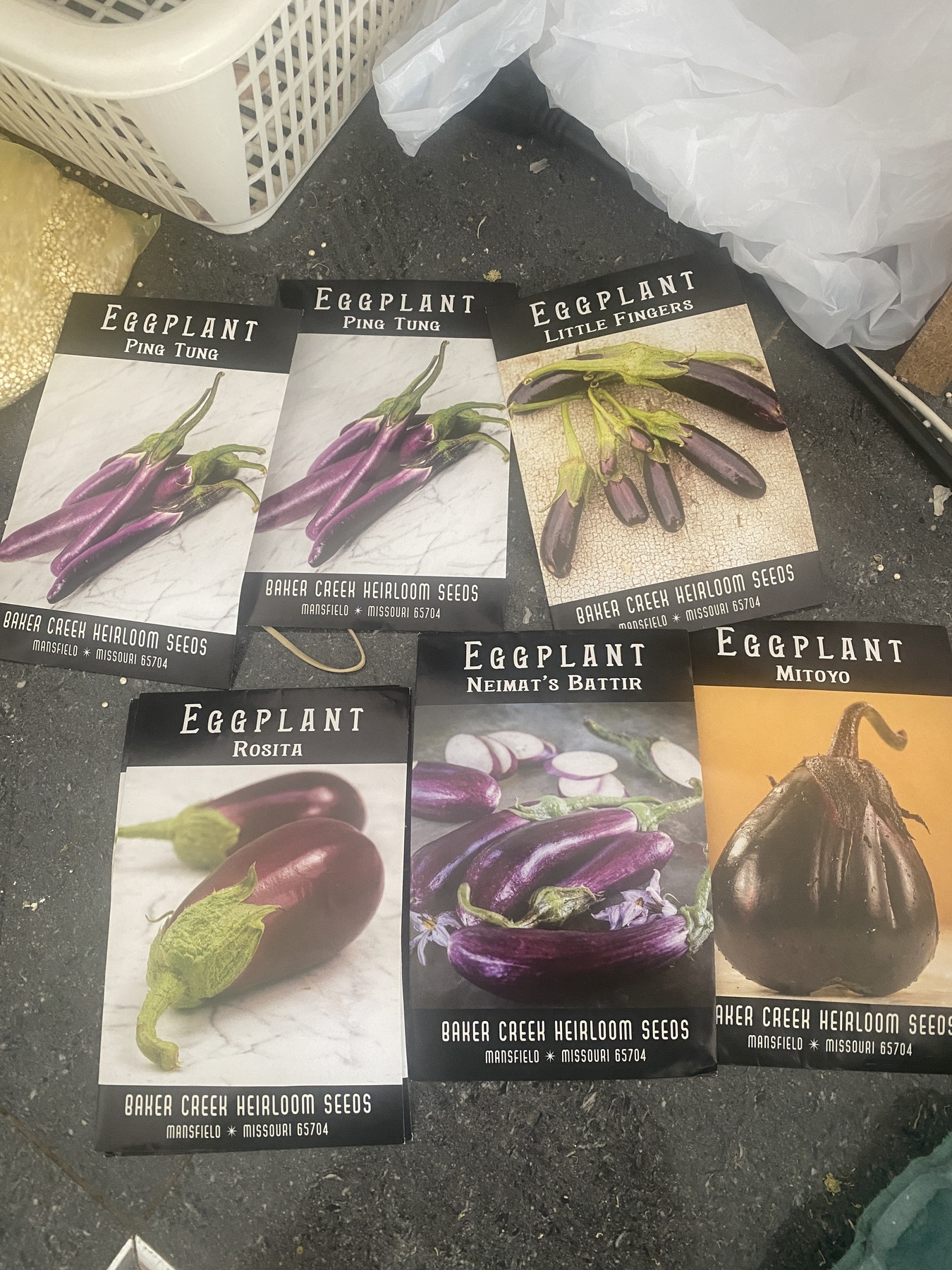
The collection includes Ping Tung, Little Fingers, Rosita, Neimat's Battir, and Mitoyo, plus a separate Rosa Bianca packet. These names should not become interchangeable labels beneath one generic purple vegetable. Ping Tung is notably long and narrow; Rosita is broader and lavender-pink.
For this plate, the lengthwise cut follows Ping Tung's form. Little Fingers could support a smaller serving, while a broader eggplant may need another cut to reach a comparable thickness. Rosa Bianca and Rosita are different names and varieties. Keep that distinction when asking a grower or cook what is available.
Attractive stripes on the surface do not establish that the center is cooked. Eggplant can remain spongy when it needs more time. Even cuts help the pieces finish together, and the flesh should be checked before the dish is assembled.
The illustrated serving suggests a gentle grill with tomato and herbs added around the cooked flesh. It is a proposed composition, not a tested cooking schedule. A complete grill recipe will specify thickness, heat, and any oil or marinade; those details matter more than a universal number of minutes.
Eggplant can take up oil during cooking. If you want a preparation without frying, say so and ask how the kitchen prepares the pieces. Grilled, roasted, and fried are different methods, but a grilled label alone does not tell you how much oil was applied.
A measured amount of oil belongs to a particular recipe. Steaming or baking is another direction if the cook offers it. Keep the tomato accompaniment separate until the eggplant is ready, then choose how much moisture and dressing the finished plate needs.
A second serving, with a different plate and setting.
Let tomato supply contrast
Softened tomato can sit beside the eggplant or be spooned over part of it. Parsley and a little garlic give the cook room to season without covering every surface. A broad pool of sauce would create a different eating experience.
For a larger meal, cooked quinoa or food-ready tarwi could be offered separately. Those are pairing ideas, not a promise about an included restaurant side. Choose the additional plate for appetite and texture rather than assuming a vegetable main needs a large garnish to look complete.
Compare actual restaurant vegetable courses
Muju's published eggplant salad explicitly identifies charcoal grilling and names radish, shiitake, and a squash-seed sauce. Its menu also marks gluten-containing cereals and soy. The short ingredient description does not explain those components, so ask about the full preparation if they affect your order.
UCHU lists vegetable skewers, while Pietra pairs quinoa with grilled zucchini, pepper and eggplant, Parmesan and olive oil. Pietra's published ingredients include Parmesan despite a vegan label elsewhere in the description. These are real menu leads to discuss; none verifies Ping Tung fruit or the tomato-and-parsley recipe pictured here.
Keep the plate and the story specific
A packet can identify the seed the owner selected. The harvest needs its own story: which plant produced it, where it grew, and when it reached the kitchen. If those details are not available, the variety can still be explored as a culinary idea.
At a Sacred Valley table, the useful question is simple: which eggplant can the kitchen prepare gently today? A precise answer is more valuable than a long list of supposed benefits. Let the vegetable's texture, sauce, and portion determine the order.
Broader fruit can make a different composed serving
Mitoyo need not copy the lengthwise presentation of Ping Tung. Baker Creek describes its fruit as oval to teardrop-shaped, which suggests broad pieces for a roasted vegetable portion. Neimat's Battir has purple-striped fruit in the supplier description; a clean cut can leave some of that skin visible while exposing enough flesh for the cook to judge tenderness.
Rosita and Rosa Bianca remain separate culinary choices. Rather than assign them identical cooking times, the kitchen can inspect the fruit it receives and cut pieces to a comparable thickness. Rosita's lavender-pink appearance is part of its supplier description. Rosa Bianca should be identified by its own name, then prepared for the texture wanted instead of treated as another label for Rosita.
Little Fingers offers a smaller-fruited alternative to a broad eggplant serving. A few tender pieces could sit beside roast alpaca, with softened tomato spooned around them and quinoa kept separate. Ping Tung can take the same accompaniments in lengthwise portions. The choice is about the shape and amount of vegetable the guest wants to eat.
For any of the six culinary varieties, ask for a fully tender center and a nonfried preparation. Tomato can provide moisture without a heavy coating. If the alpaca already has a sauce, serve the tomato in a modest amount, leaving some eggplant uncovered. A guest should be able to cut through the flesh easily, with the skin offering a pleasant edge rather than requiring the entire piece to be pulled apart.
Golden Eggs is separate from these six culinary varieties and remains outside this serving until its identity and intended food use are verified.
These published combinations offer useful comparisons. They do not establish that the restaurants use the photographed seed varieties or can prepare the illustration.
Muju, Rio Sagrado, a Belmond Hotel · Ensalada de berenjena a la parrilla
Eggplant, radish, squash-seed sauce, shiitake.
Charcoal grill (stated a la parrilla al carbón) The printed menu marks gluten-containing cereals and soy; ask which recipe components or cross-contact the symbols describe. Confirm grilling oil and sauce. Full recipe, preparation fat, garnishes and restaurant substitutions are unverified.
Urubamba-Ollantaytambo road; Current official dining page names Muju. Live-linked lunch PDF created July 15, 2026; dinner PDF created July 16 and modified July 31, 2026. El Huerto PDF is April 2025 history.. A menu reference, separate from the pictured serving concept.
Grilled skewers explicitly. Confirm vegetables, no pre-frying, unsweetened marinade and oil identity/quantity; ask how sides apply. Full recipe, preparation fat, garnishes and restaurant substitutions are unverified.
Cusco; undated; observed 2026-10-12. A menu reference, separate from the pictured serving concept.
Quinoa with grilled zucchini, pepper and eggplant, parmesan, olive oil.
Vegetables explicitly grilled; quinoa risotto style. Confirm no pre-frying, sugar, oil quantity. Menu calls it vegan but lists parmesan: flag inconsistency. Full recipe, preparation fat, garnishes and restaurant substitutions are unverified.
Cusco; undated; observed 2026-10-12. A menu reference, separate from the pictured serving concept.
These additional meals keep the photographed varieties distinct. The kitchen prepares the food; the images suggest combinations to discuss, rather than a tested menu.
Roast cuy with Little Fingers eggplant
Illustrated complete meal: Roast cuy with Little Fingers eggplant
Ingredient serving: Little Fingers
Little Fingers could make a generous vegetable portion from several small eggplants rather than one broad slice. Split lengthwise, their short red-purple skins frame the pale flesh as it softens. They should remain easy to cut beside the roast cuy. Tomato can provide moisture around the pieces, leaving enough eggplant visible to show why this small-fruited choice differs from a long Ping Tung serving.
Keep carved roast cuy in a modest portion, with cooked red quinoa served where its texture remains easy to enjoy. A few steamed skin-on native-potato halves could complete the warm plate, with the flesh visible at the cut. Keep sauces modest and separate so each guest can choose how much moisture to add without covering the main ingredient.
Illustrated complete meal: Roast duck with broad Mitoyo eggplant portions
Ingredient serving: Mitoyo
Mitoyo suggests broad, tender wedges rather than narrow strips. The nearly black skin belongs around an oval or teardrop-shaped fruit, giving each cooked portion a substantial pale center. That shape can balance neatly carved duck without requiring a heavy coating. Softened tomato could sit beside the eggplant, with some surfaces left clear so the guest can judge the tenderness and follow the original outline.
For the rest of the meal, cooked canihua could sit in a small separate mound beside carved roast duck. If wanted, offer a little food-grade sacha inchi oil as a cold finish after cooking, never as a frying oil. Keep sauces modest and separate so each guest can choose how much moisture to add without covering the main ingredient.
Illustrated complete meal: Roast cuy with Neimat's Battir eggplant
Ingredient serving: Neimat’s Battir
The purple-striped skin of Neimat's Battir is most useful when a broad piece remains recognizable after cooking. A gentle roast could soften the pale flesh while leaving a subdued striped edge. Serve it beside cuy rather than hiding it beneath meat or sauce. Cutting the pieces to a similar thickness is a more useful preparation decision than expecting every eggplant variety to follow the same cooking schedule.
A complete serving could bring together carved roast cuy and cooked white quinoa, leaving the featured vegetable or fruit enough room to remain recognizable. A few steamed skin-on native-potato halves could complete the warm plate, with the flesh visible at the cut.
Illustrated complete meal: Roast duck with Rosa Bianca and native potatoes
Ingredient serving: Rosa Bianca
Rosa Bianca has a rounded, gently scalloped outline and pink-lavender skin shaded with white. Broad cooked wedges could preserve some of that character beside carved duck. It should not become another label for smooth, oblong Rosita. Leave the skin visible on several pieces, but let tenderness guide the cut and cooking method; an attractive pale edge is less useful if the flesh remains stubbornly firm.
Let a small savory serving of cooked kiwicha carry its own part of the meal beside carved roast duck, with the featured accompaniment kept generous and clearly visible. A small spoon of yellow-fleshed native-potato mash could provide a softer companion. Offer a little huacatay leaf sauce separately, leaving the vegetable and meat easy to taste on their own.
Illustrated complete meal: Roast cuy with Rosita and red quinoa
Ingredient serving: Rosita
Rosita's lavender-pink skin follows a broader oblong form than a slender Asian eggplant. A few lengthwise pieces could show that outline beside roast cuy, with softened tomato and parsley offered around the vegetable. The cooked color will be quieter than the fresh skin. That is part of an honest serving: retain the shape and a little pink skin without demanding that a cooked eggplant stay brightly colored.
Keep carved roast cuy in a modest portion, with cooked red quinoa served where its texture remains easy to enjoy. If wanted, offer a little food-grade sacha inchi oil as a cold finish after cooking, never as a frying oil.
Food can give the days around Machu Picchu a welcome sense of place. If you would also like time for reflection, explore a Sacred Valley retreat before or after your visit. Florian Rolke offers The SoulSearching Experience, a five-day seminar for 8-15 participants, with no plant medicine.
Ask for the current dates, venue, price and inclusions before arranging the rest of your trip. These dishes, restaurant visits and garden visits are ideas to explore; they are not confirmed seminar inclusions.
Questions about this dish
Adapted from public cooking questions and published FAQs. Answer sources are linked below each response. Broader ingredient questions are included where they help with this serving.
Is salting eggplant essential?
Salting is optional for many fresh, mild eggplants. Purdue notes that fresh Asian and Italian types may not need it. Decide according to the fruit and the preparation you have chosen, rather than assuming every eggplant requires the same preliminary treatment.
Peeling is optional for many grilled and roasted preparations. Keeping the skin can help slices or cubes hold together, while removing it gives a different texture. If the skin seems too tough for the dish you want, peel before following your chosen method.
Undercooked eggplant can remain spongy or tough instead of becoming tender. Cut pieces evenly so they cook at a similar rate, and test the flesh before serving. If the outside has browned first, it still needs enough cooking for the center to soften.
Measure the oil for your chosen method rather than adding more each time the surface looks dry. Roasting is one alternative to repeated additions in a pan. Spread the pieces evenly and check tenderness, keeping the finished sauce separate until you decide how much is needed.
Yes. Roasted eggplant flesh can be packed in an airtight container and frozen for a later dip. Thaw it in the refrigerator before using it. This is a way to prepare a soft ingredient ahead, rather than preserve the texture of freshly grilled slices.
How should I choose eggplants for flavor and fewer seeds?
Choose firm fruit with a fresh green calyx and avoid obvious damage. Those signs help with selection, but the outside cannot guarantee a particular seed count or flavor. Cultivar matters too: Rosita and long, slender Ping Tung should not be treated as identical fruit.
For the freshest preparation, cut eggplant near cooking time. If preparing it ahead, keep the cut pieces covered and refrigerated, using clean tools and surfaces. That is general produce-handling guidance; it does not guarantee that an overnight batch will match freshly cut eggplant.
Previously cooked and frozen eggplant can work in dips, stews or casseroles. Thaw it in the refrigerator before using it in your chosen preparation. Expect a softer ingredient, and choose a dish that suits that texture rather than expecting a fresh-grilled finish.
Yes. A conventional oven can roast whole eggplant for soft flesh or smaller pieces for browned surfaces. Choose the form that suits the meal and follow that method through. You do not need a gas burner simply to make a roasted eggplant dish.
Should roasted whole eggplant be drained before making a dip?
Draining excess liquid can help when you want a thick eggplant dip. Let the roasted flesh release surplus moisture before mixing the other ingredients, then judge the consistency. That texture choice does not mean every grilled slice or roasted side needs to be drained.
Do long slender and round eggplants taste different?
Cultivars can differ in flavor, seeds, skin and shape. Ping Tung is slender, while Baker Creek describes Rosita as broader with mild flesh. For a useful cooking comparison, cut pieces to similar thickness. Their names alone do not guarantee an identical result.
Use a rimmed baking sheet to contain oil and juices. A parchment-lined tray is one option used in the Love and Lemons roast recipe. Keep the arrangement suited to the cooking method so easy cleanup does not come at the expense of an overcrowded pan.
Often, yes. Different eggplants can work in a roasted dish, although the finished texture and flavor may change. Match the cut to the fruit rather than exchanging whole eggplants by count. Cook the pieces until tender, checking them as they brown.
Use fresh eggplant promptly. Purdue allows storage in a cool place away from direct sunlight or in the refrigerator crisper for up to five days. Check the fruit's condition before cooking rather than assuming the storage period guarantees its quality.
Give the cubes space in a single layer. When pieces are crowded together, they tend to steam instead of browning. Add the finishing sauce near serving so you can judge the texture first, rather than immediately covering the roasted pieces with extra liquid.
Several eggplant types can be grilled. Choose cuts that are even enough to cook together and large enough to stay on the grate. Long, narrow fruit may suit a different cut from a broad eggplant; tenderness matters more than the cultivar name alone.
Yes. An oil, vinegar and garlic marinade is one published approach for eggplant slices before grilling. Use a complete preparation suited to your cut, and season to taste. Marinating is a flavor choice; it does not guarantee identical results across every variety.
Foolproof Living suggests about six to eight minutes in total for its grilled slices, turning halfway through. Thickness and grill heat affect that estimate. Check that the flesh is tender and the surfaces browned, and allow those cues to guide when you remove it.
Yes. A preheated stovetop grill pan offers an indoor option. Arrange the slices so they can make good contact with the cooking surface, and cook until browned and tender. Follow a grill-pan method rather than assuming an outdoor grill timing will transfer exactly.
Yes. Dried herbs can substitute when fresh ones are unavailable, but start with less because they are more concentrated in flavor. Taste and adjust the finished dish. Keep the choice focused on the herb you want rather than automatically adding several extra seasonings.