Green beans are the tender pods of the common bean, Phaseolus vulgaris. Cooked pods can accompany roast duck or roast cuy, or become the vegetable center of a quinoa plate, broth, or tarwi combination. Yellow and purple pod varieties expand ingredient choices, although cooking can change their color. These serving ideas describe possible meals, not a confirmed Quillabamba harvest or retreat menu.
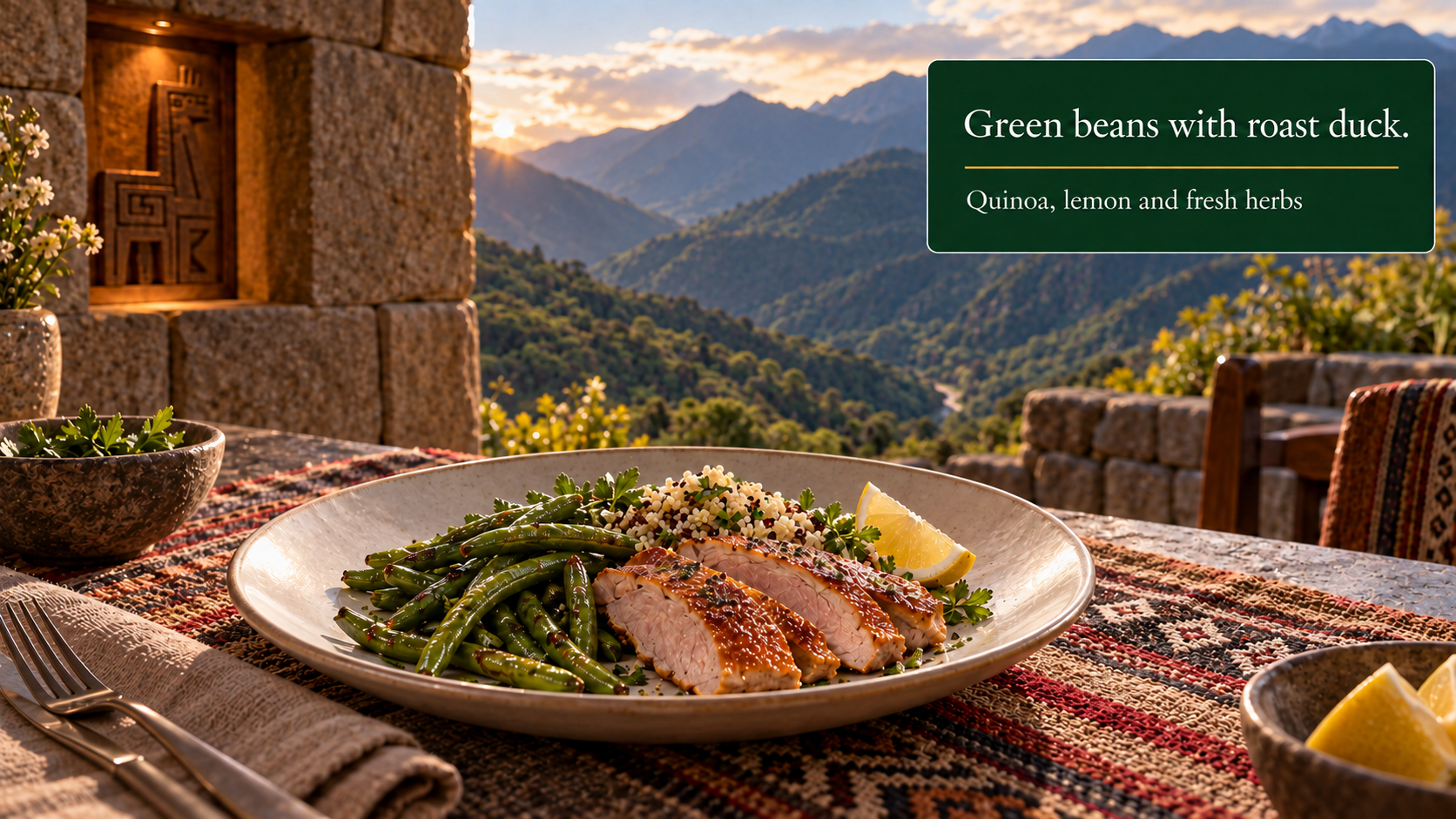
Tender cooked green beans with roast duck and quinoa. Serving concept.
Tender pods offer a distinct vegetable shape, a choice of cooked textures, and several ways to build a savory meal around recognizable ingredients.
Green beans are a pod vegetable
Green beans bring a slender shape and a clean, green flavor to a plate. Here the name means the tender, immature pods of the common bean, Phaseolus vulgaris, eaten with their small seeds still inside. Minnesota Extension distinguishes these snap beans from green shell beans, whose fuller seeds are removed from increasingly fibrous pods, and from mature dry beans. That distinction matters when a menu simply says beans. A serving of tender pods looks and eats quite differently from a bowl of creamy shelled seeds.
Green is also an imperfect color description. Common-bean snap varieties can have yellow, purple, or striped pods. Yellow wax beans belong in the same culinary conversation. Purple pods can turn dark green during cooking, so a purple seed photograph does not promise a purple finished dish. For a diner, useful descriptions include the pod's tenderness, whether it is served whole or cut, and the sauce around it. An unfamiliar cultivar name alone says less about the actual meal.
There is room for both a neatly tender bean and a softer bean in a savory broth. The important choice is deliberate texture. A long pod beside a roast should be easy to cut and eat without dragging the rest of the meal across the plate. Short pieces work better in a spoon dish, where each mouthful can contain vegetables and broth together. A bean that remains unpleasantly stringy is a different problem from a bean intentionally cooked soft.
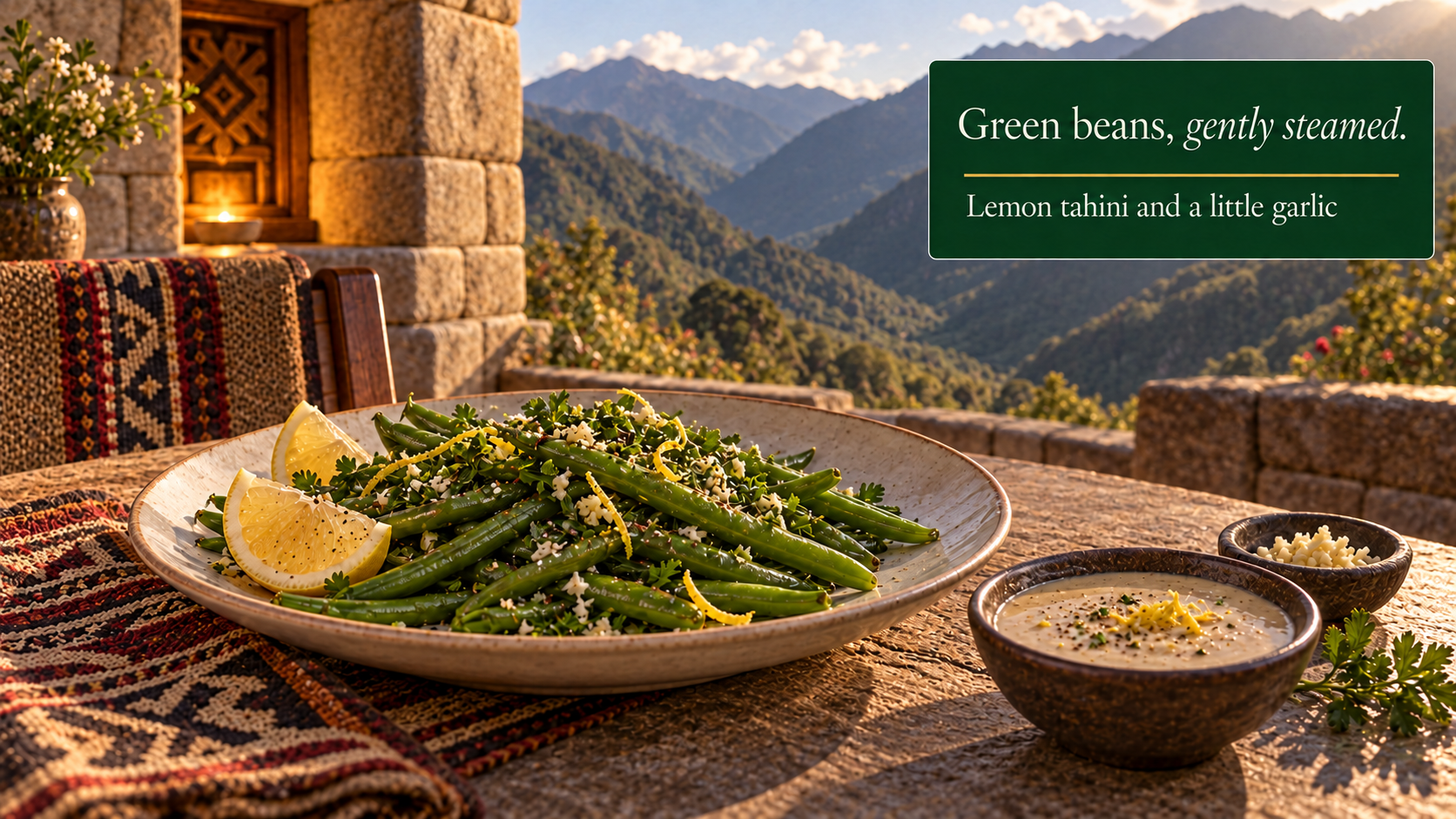
Slender pods can make a restrained side: cooked beans, a light gloss of olive oil, a little citrus, and a few chopped herbs. Wider flat pods invite a broader cut and a more generous sauce. Neither requires a fried coating. The herb choice should be specific enough to recognize rather than a mixture that obscures the vegetable. Parsley and lemon suggest one direction; a modest amount of cilantro and lime suggests another. These are proposed serving combinations, with the final balance left to the actual ingredients.
Cooked green beans with lemon and a small sesame dressing. Serving concept.
Roasted beans with tomato and herbs
Roasting offers another nonfried presentation. Oregon State University's Food Hero publishes a roasted green bean preparation, establishing this as an ordinary cooked food form rather than a special dietary treatment. On a composed plate, roasted pods could sit beside softened tomatoes and a small spoonful of their juices. The beans provide a narrow, savory element while the tomatoes supply moisture. A few pieces of roasted onion can connect the two without turning the plate into a mixed vegetable heap.
The appealing detail is the contrast between the surface of the bean and the wetter tomato. A heavy blanket of cheese or sweet glaze would make a different dish, and neither is necessary for interest. For a quieter presentation, the beans could be arranged loosely along a serving dish with tomato at one end and herbs scattered where they will be eaten. This is an editorial meal concept, not a tested recipe or a claim that roasting preserves a particular amount of any nutrient.
With roast duck, green beans could provide a distinct vegetable portion beside a small pool of savory sauce. The pods should remain recognizable instead of disappearing beneath the meat. A little citrus in the vegetable dressing can keep successive bites interesting, while the duck retains its own seasoning. This is a pairing suggestion rather than a claim about a traditional Peruvian preparation. The amount of duck, sauce, and added fat still determines the character of the whole meal.
A nonfried cuy presentation offers another possibility. Roasted or braised cuy could be served with tender beans, a spoonful of quinoa, and cooked tomatoes. The beans bring length and color to a plate that might otherwise be mostly browned meat and grain. Serving the components separately allows the diner to choose combinations rather than receiving everything under one strong sauce. Neither cuy nor duck needs a health halo to justify its place. The useful description is what was cooked, how it was prepared, and what accompanies it.
A warm quinoa plate that keeps the beans visible
Green beans can also lead a meal without meat. Picture warm quinoa with short lengths of cooked bean, roasted squash, softened onion, and an herb dressing. Keeping some beans on top makes the vegetable easy to identify. Mixing every ingredient into a dense mound would lose the visual pleasure of the pods and make their texture harder to notice. A shallow bowl gives room for separate patches of quinoa, vegetables, and dressing.
The flavors can move in several directions without inventing a new ingredient list for each season. Tomato and parsley give a savory, juicy version. Roasted pepper and a little lime make another. A mushroom broth served around the quinoa creates a softer, spoonable meal. The grain should support the beans rather than merely provide a platform for garnish. A meaningful vegetable portion and a modest number of well-chosen accompaniments make this concept more convincing than a long list of fashionable toppings. No particular nutritional outcome follows from the name quinoa alone.
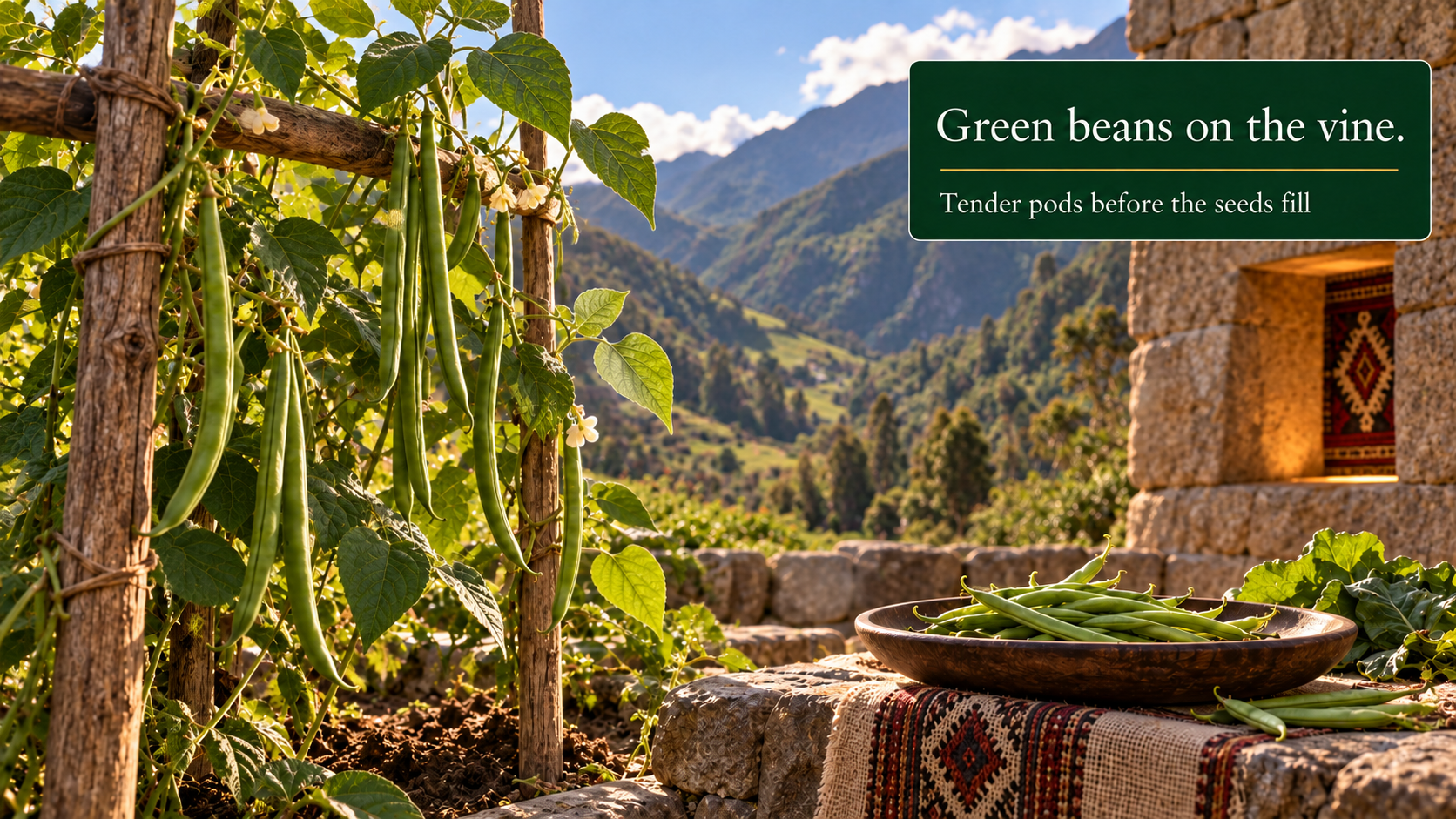
An illustrated common-bean plant with tender green pods. A plant study, not a photograph of the Quillabamba property.
Tarwi and green beans have different jobs
Tarwi can appear alongside green beans, but the two ingredients should not be described as interchangeable. Tender common-bean pods are the vegetable element in this guide. Tarwi contributes a separate edible seed component when supplied as properly processed, food-grade lupin. An editorial plate might combine cooked green beans with prepared tarwi, tomatoes, a small amount of quinoa, and a citrus-herb dressing. The pods provide shape, while the seeds and grain create a more substantial center.
The practical menu question is whether tarwi is included, optional, or absent, especially for someone who needs clear ingredient information. A pleasant description should name the dressing and the principal ingredients instead of hiding them inside a vague wellness label. This guide does not provide processing instructions for bitter lupin or suggest tasting unidentified seeds. For the meal concept, the starting point is an ingredient already suitable for food use. The same restraint applies to claims: adding tarwi does not make a dish automatically suitable for every diet.
Broth, vegetables, and the place of nutrition
A savory soup gives green beans a different role from a side dish. Cut pods could share a clear vegetable broth with squash, tomato, and a little cooked quinoa. A richer version might include pieces of cooked duck, with the vegetables still visible. Cutting the beans to a spoon-friendly length helps the dish feel intentional. A small amount of herb added at service can give the broth a clear identity without requiring cream, fried toppings, or an elaborate garnish.
USDA MyPlate places green and wax beans among other vegetables, while mature cooked beans belong to a different food-group discussion. That is a useful correction to the assumption that every food called a bean supplies the same kind of serving. A green-bean side is not nutritionally identical to a bowl of mature pallares. For everyday menu reading, it is more helpful to identify the vegetable, protein food, grain, and sauce on the plate than to attach an unsupported clean-food certification to the entire meal.
Yardlong or asparagus beans require a separate name. Kew places the long-podded vegetable within Vigna unguiculata subsp. sesquipedalis, rather than Phaseolus vulgaris. A long green pod in a photograph is therefore not enough to identify the ingredient. The difference need not become a botanical lecture at the table. A clear ingredient label can say common-bean pods or yardlong beans, followed by the actual preparation.
The user reports food production at a Quillabamba property, but the green-bean cultivar, harvest quantities, and current availability have not been independently established here. A future meal description can become more specific when those records exist. Seed-catalog choices below are planning references, not evidence of what is planted or served. Useful confirmation would include a named crop, a dated harvest, and the cooked dish actually offered. Until then, these plates remain food ideas. They do not establish a retreat inclusion, a promised garden harvest, or an invitation for guests to prepare their own meals.
Leave enough time to enjoy a good meal. If Machu Picchu brings you to Peru, ask about The SoulSearching Experience, Florian's five-day Sacred Valley seminar for 8-15 participants. Confirm the dates, venue and meal arrangements directly when planning.
For softer green beans, choose a moist preparation rather than a brief roast. Texas A&M's dilled-bean recipe warms cut beans in broth with onion, bell pepper, and dill. Its tender-crisp endpoint can be adjusted to the diner's preferred softness. Start with young pods, because mature leathery pods will remain less pleasant even after longer cooking.
How should green beans be prepared for a cooked meal?
Rinse fresh pods under cool running water, remove the stem tips, and leave them whole or cut them to suit the dish. Mississippi State Extension gives these basic preparation steps. Cook them separately when the rest of the meal has a different timetable, then combine them with the sauce or vegetables near serving.
How do I make crisp juicy green beans like I had in a restaurant?
For a firm cooked bite, try a recipe with a defined short cooking step. Health Canada's mixed-bean salad boils trimmed green and yellow pods for three minutes, drains them, and rinses them cold. That suits a salad. A warm restaurant-style side can use the same cooked pods with its dressing added at service.
Yes. Cooked green beans can be blended with vegetable broth into a light puree, then finished with herbs and a little lemon. The result will be greener and less starchy than a puree of shelled pallares because snap beans include the pod. Serve a small portion beside roast vegetables or quinoa rather than expecting a potato-like texture.
Do purple green-bean pods keep their color when cooked?
Do not promise that purple common-bean pods will remain purple after cooking. Minnesota Extension specifically notes that purple coloring disappears during cooking and the beans become dark green. For a cooked meal, choose the variety for its eating qualities and describe the finished food honestly. A purple ingredient photograph should not imply a purple finished side dish.
A squeaky or waxy description does not reveal one definite cause. Check both the pod and the preparation: older pods with prominent seeds can be tough, while cooking changes texture too. Try a clearly specified roast or broth preparation and compare the result. Adding more oil alone will not remove fibrous pod tissue.
Fresh and frozen green beans can both work, but they enter a recipe in different conditions. Use the form the recipe specifies rather than automatically adding a separate blanching step. Texas A&M's dilled-bean recipe accepts frozen or canned cut beans and heats them in broth. Fresh pods first need washing, trimming, and the recipe's cooking step.
Roasting gives a straightforward warm side. Food Hero coats green beans lightly with oil, salt, and pepper, then roasts them at 425 F for 15 to 18 minutes, stirring during cooking. Serve the cooked pods beside duck and quinoa, or with roasted vegetables. Those accompaniments are meal suggestions rather than part of the published recipe.
A creamy mushroom green-bean casserole is savory and earthy, with soft beans and a rich sauce; the topping changes its final texture. A lighter table interpretation could keep cooked beans visible under a small amount of mushroom sauce, alongside quinoa or roast poultry. That is a serving suggestion, while the familiar casserole name covers many different recipes.
There is no single best stringless variety for every meal or location. Supplier descriptions can identify candidates, but they do not prove local performance. Eden Brothers lists Blue Lake FM1K with green pods, while Baker Creek lists slender Calima pods. Treat these as future planning references and judge a food serving by the actual pod's tenderness and preparation.
Which named green-bean varieties offer different pod colors or shapes?
Color and shape offer useful variety: common-bean snap pods may be green, yellow, purple, or striped. Baker Creek's Calima and Dragon Tongue Bush and Eden Brothers' Blue Lake FM1K are named planning candidates. Purple coloring can change during cooking. These catalog choices are not evidence of planting at Quillabamba, and local crop suitability has not been established here.
Can a restaurant green-bean seasoning be identified from a description?
Ask the restaurant if you want its actual seasoning; a description cannot establish the recipe. For a similarly aromatic direction, cooked beans can take tomato, onion, herbs, and a little citrus. For a more specific published alternative, Texas A&M pairs green beans with broth, onion, bell pepper, and dill. That creates a clear savory flavor without needing a heavy sauce.
Ideas of what to add in with a can of green beans?
Add drained canned green beans to a cooked-bean salad with onion and sweet pepper. Purdue Extension's version combines lima, green, and kidney beans with Italian dressing, then chills the mixture for at least an hour. For a warm serving instead, broth and dill offer another direction. Choose one seasoning style so the beans remain recognizable.
Stringiness can come from the pod's maturity, not a missing cooking trick. Iowa State explains that snap beans are intended for eating before their seeds become large; older pods become tough and stringy. Select slender tender pods and remove any obvious seam strings during preparation. Use mature shelling beans as a different ingredient rather than expecting tender pods.
Wash and trim the fresh pods, then choose a preparation that fits the plate. Mississippi State Extension suggests roasting with a little olive oil, salt, and pepper at 400 F for 20 to 25 minutes, turning halfway. This produces a warm vegetable side that can accompany poultry, grain, or other roasted vegetables.
Lemon zest, garlic, or a restrained scattering of grated cheese are options suggested with Food Hero's roasted beans. For a quieter plate, choose just lemon and herbs. If the main dish already has a rich sauce, keep the beans lightly dressed so their flavor and shape remain distinct. Season the whole plate rather than adding every topping at once.
Uses for canned green beans that aren't casseroles?
Try a mixed-bean salad instead of another casserole. Illinois Extension combines green, wax, lima, and kidney beans with onion, celery, and pepper, then adds a mustard-and-herb dressing. The contrast comes from the vegetables and dressing rather than a baked crust. Use the linked recipe for proportions and keep the finished salad refrigerated.
Any recipe ideas for a main dish involving green beans?
Build a substantial bowl around cooked green beans, quinoa, roasted squash, and herbs, or serve the beans beside duck or cuy. The pods provide the vegetable portion, while grain and the other ingredients give the meal substance. USDA classifies green and wax beans among other vegetables, so they are different from a mature pulse serving.
How can green beans appear in several different meals?
Use some in a warm dish and freeze a portion while it is still in good condition. University of Maine Extension recommends blanching before freezing and cooling promptly in an ice-water bath for better quality. Follow its linked freezing guidance. This keeps the surplus available for later meals instead of repeating the same side every day.
Is blanching green beans for freezing the same as cooking them for a meal?
For freezing, blanching briefly heats the beans before rapid cooling and packing. It is a preparation step for preserving quality, not the same as finishing a side dish. University of Maine Extension recommends an ice-water bath after blanching. Use current freezing directions with specified quantities and timing, then cook the frozen beans as the eventual recipe directs.
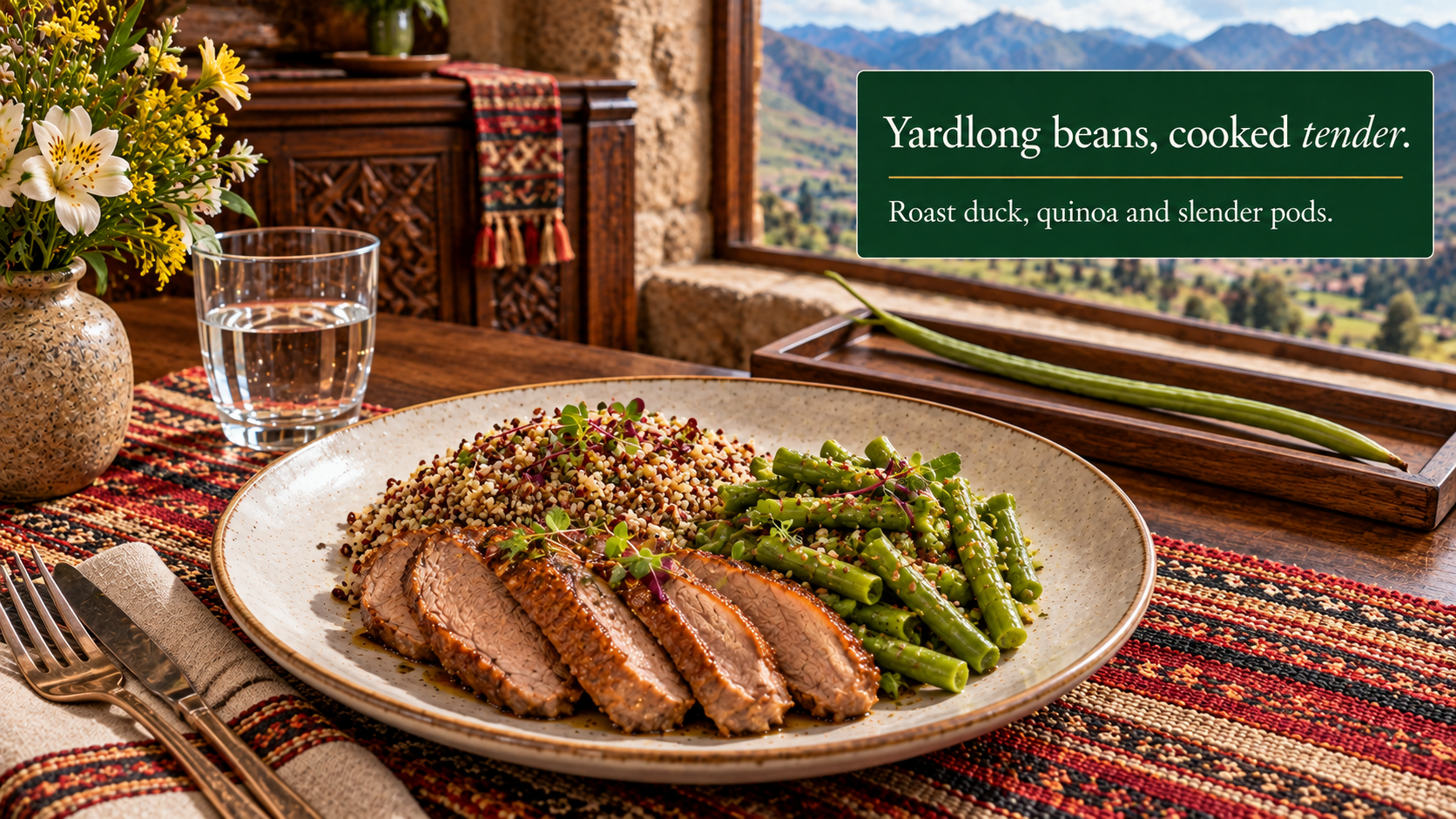
Confirm yardlong beans on the label, choose young supple pods, cut them into manageable lengths and cook until tender. Serve beside roast duck and quinoa.
The long pod becomes useful at dinner when it is cut for the fork and cooked for tenderness. This version gives yardlong beans a full place beside roast duck and quinoa, rather than leaving them as a botanical comparison.
Yardlong beans, cooked tender. Roast duck, quinoa and slender pods.
Choose the edible pod stage
NC State Extension places yardlong beans within Vigna unguiculata subsp. sesquipedalis, the long-podded cowpea form. Confirm the food product rather than assuming that an unusually long common-bean pod is the same ingredient. Choose supple young pods before the seeds make large bulges. Pods that are leathery or dry are a poor starting point for this vegetable serving.
Rinse under running water, remove the ends and inspect the length for damage. Cut into short, reasonably even sections. Long strands can look dramatic, but a manageable cut is easier to eat with carved duck and loose grain. Keep the food name on any storage container if other green pods are in the kitchen.
Steam or simmer the cut pods until their thickest parts are pleasantly tender. Check the food rather than stopping merely because the color is bright. If the pieces are very uneven, cut the thicker ones smaller before cooking. Drain well so the serving does not leave a pool beneath the quinoa.
For this plate the pods are fully cooked. There is no need for a raw garnish or a very brief flash in a pan. Start with light seasoning and taste a cooked piece before adding a herb finish. If an older batch remains fibrous after adequate cooking, choose a better pod lot next time rather than adding more sauce to hide the texture.
Coordinate with duck and quinoa
Roast the duck separately using a safe method appropriate to the cut. USDA recommends duck reach 165°F internally, checked with a food thermometer. Keep raw poultry equipment away from washed pods and cooked grain. Drain excess rendered fat rather than using it to fry the beans.
Cook quinoa according to the package and fluff it before plating. Serve a modest grain mound with the yardlong beans alongside and a manageable duck portion beside them. Finish the pods nearer the meal so they remain pleasant to bite. If the duck takes longer than expected, hold the components safely or refrigerate them promptly instead of leaving a finished tray at room temperature.
Try the cooked pod with quinoa and a small piece of duck. Add lemon or lime a little at a time if the serving needs sharpness. Keep a herb dressing at the side when you want the bean flavor to remain easy to compare. A light finish is enough; the vegetable should not be coated with a sweet glaze.
Refrigerate leftovers promptly in shallow containers within two hours, or one hour above 90°F. Use refrigerated leftovers within three to four days or freeze appropriate portions; reheat hot leftovers to 165°F. Store the beans separately if possible. Reheated pods will be softer, so serve them as a tender vegetable accompaniment instead of expecting the original bite.
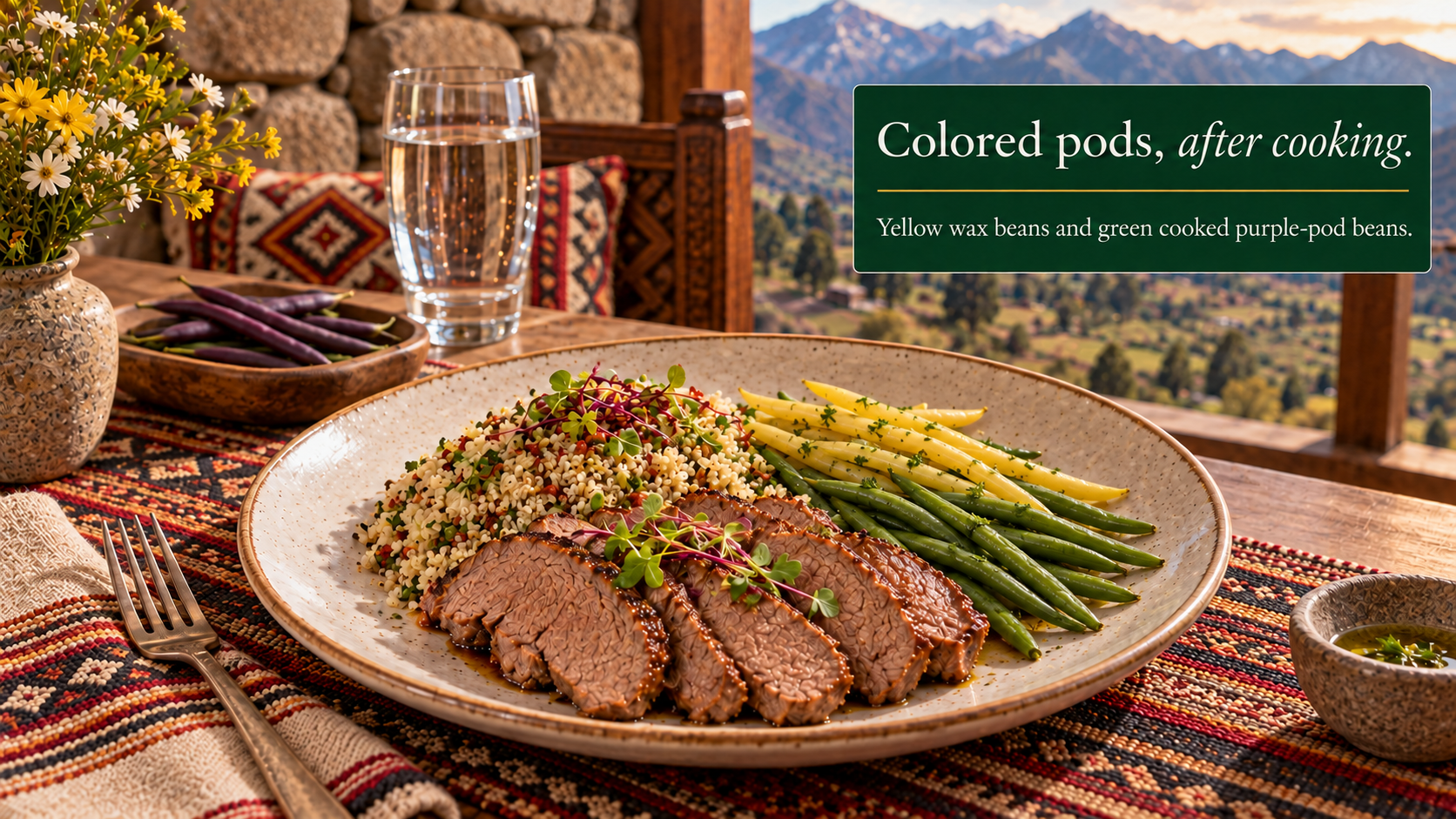
Cook both bean types fully and expect purple pods to become green. Compare their actual tenderness, shape and flavor beside alpaca and quinoa instead of serving them undercooked to preserve color.
The most useful color comparison includes the cooked result. Yellow wax pods offer a pale contrast, while purple common-bean pods usually become green during cooking. Both belong on the plate as tender vegetables.
Colored pods, after cooking. Yellow wax beans and green cooked purple-pod beans.
Keep food identity separate from a color label
University of Minnesota Extension describes common-bean pods in green, yellow, purple and striped forms. Yellow wax describes a pod type, not a layer of wax that must be peeled away. Purple describes the uncooked pod color and cannot, by itself, identify a named cultivar. Retain any supplier label that gives a more specific variety.
Select young, sound pods with a manageable thickness and without large seed bulges. For a useful tasting, compare similar stages of maturity rather than a very young purple bean with an overgrown yellow one. The food quality you buy will matter more than arranging two contrasting colors on the raw tray.
University of Minnesota Extension explicitly notes that purple coloring disappears during cooking and the pods appear dark green. That change is an ordinary outcome. The finished comparison should therefore show yellow and green cooked pods, even when the shopping note says yellow wax and purple pod beans.
Keep a separate uncooked sample away from the finished food if you want to demonstrate the change. Do not use raw pods as a decorative substitute for the cooked serving. This dish cooks both samples fully. An attractive purple raw color is not a reason to stop before the texture is ready, and the change does not mean the ingredient was mislabeled.
Trim the stem ends after washing and cut similar lengths if the pods are not being served whole. Cook the colors separately when their thickness or maturity differs, stopping each batch when pleasantly tender. Drain before plating. Tossing them together at the beginning makes it harder to remove one that is ready sooner.
Use the same modest seasoning for the first tasting. Place a few of each alongside safely prepared food-grade alpaca and a small portion of quinoa. Keep the meat's preparation separate from the vegetables. The beans should occupy a meaningful vegetable portion, with enough space to try one type alone and then with grain and meat.
Compare what is actually different
Taste the finished pods for tenderness, sweetness and any fibrous strings. Do not announce a flavor winner from raw color. If one batch is tougher, consider maturity, cut and cooking before concluding that every bean of that color has the same quality. Keep cultivar names only when the product records support them.
Offer citrus separately if you want to test it on one bite. Refrigerate cooked leftovers promptly in shallow containers within two hours, or one hour above 90°F. Use them within three to four days or freeze appropriate portions and reheat hot leftovers to 165°F. Store a label describing both the original purple pod and its green cooked appearance so the later serving is clear.
Choose pod texture and food form, fresh/frozen/canned, and broader vegetable dishes. Keep approved yardlong, yellow-wax and purple-pod sections, acknowledging species/stage differences rather than merging their identity into common snap beans.