Breadfruit makes more sense when you approach it as a starchy ingredient. A firm mature fruit can become a warm, tender component of lunch, with enough substance to sit beside fish, vegetables, and a modest portion of Andean grain. The first decision happens before the oven is switched on: identify what you have and decide which stage of maturity suits the meal. A fruit intended for a savory roast should not be chosen by the same criteria as one being allowed to soften and sweeten.
Breadfruit for Savory Meals: Choosing, Cooking, and Serving the Starchy Fruit
For a savory meal, choose mature breadfruit that is still firm and cook it until tender. Its starchy flesh can be steamed, boiled, or roasted, then served in the role of a potato. Breadfruit and breadnut are different species, and some breadfruit contains seeds. Confirm the fruit's identity and maturity before choosing a preparation; a tropical tree's requirements also need to match its actual growing site.

Breadfruit and breadnut are different ingredients
The National Tropical Botanical Garden identifies breadfruit as Artocarpus altilis and breadnut as Artocarpus camansi. Breadnut is a related species with numerous seeds that are commonly cooked. Breadfruit itself can contain no seeds or many, depending on the variety. That means seed count alone is not a reliable species label, and a common Spanish name such as árbol de pan may need clarification from the grower.
Ask what the planting material was called when it was obtained, and whether a knowledgeable grower has identified the fruiting tree. Photographing the whole fruit, the cut interior, and the leaves provides a useful record for an identification discussion. Florian reports breadfruit growing and producing on his Quillabamba property as of October 15, 2026. The precise taxon and cultivar remain unconfirmed. It does not silently convert the report into a named seedless variety.
Match maturity to the meal
A mature but firm breadfruit is the useful starting point for a savory starchy dish. The Breadfruit Institute explains that this stage is commonly cooked and can replace a starchy root vegetable in a recipe. Soft ripe fruit belongs to a different preparation decision because its texture and sweetness change. The important distinction is maturity in the kitchen, not whether the ingredient is botanically a fruit or sounds unfamiliar.
When ordering for a meal, say what you plan to cook. A supplier who knows you need firm mature flesh can give a better answer than one asked only for ripe breadfruit. Once a sample is available, cook a small portion before planning a large service. Check whether it holds a wedge, breaks into a mash, or needs a gentler handling method. Build the plate around that result. A reliable kitchen decision comes from the actual batch rather than an assumed texture attached to the name.
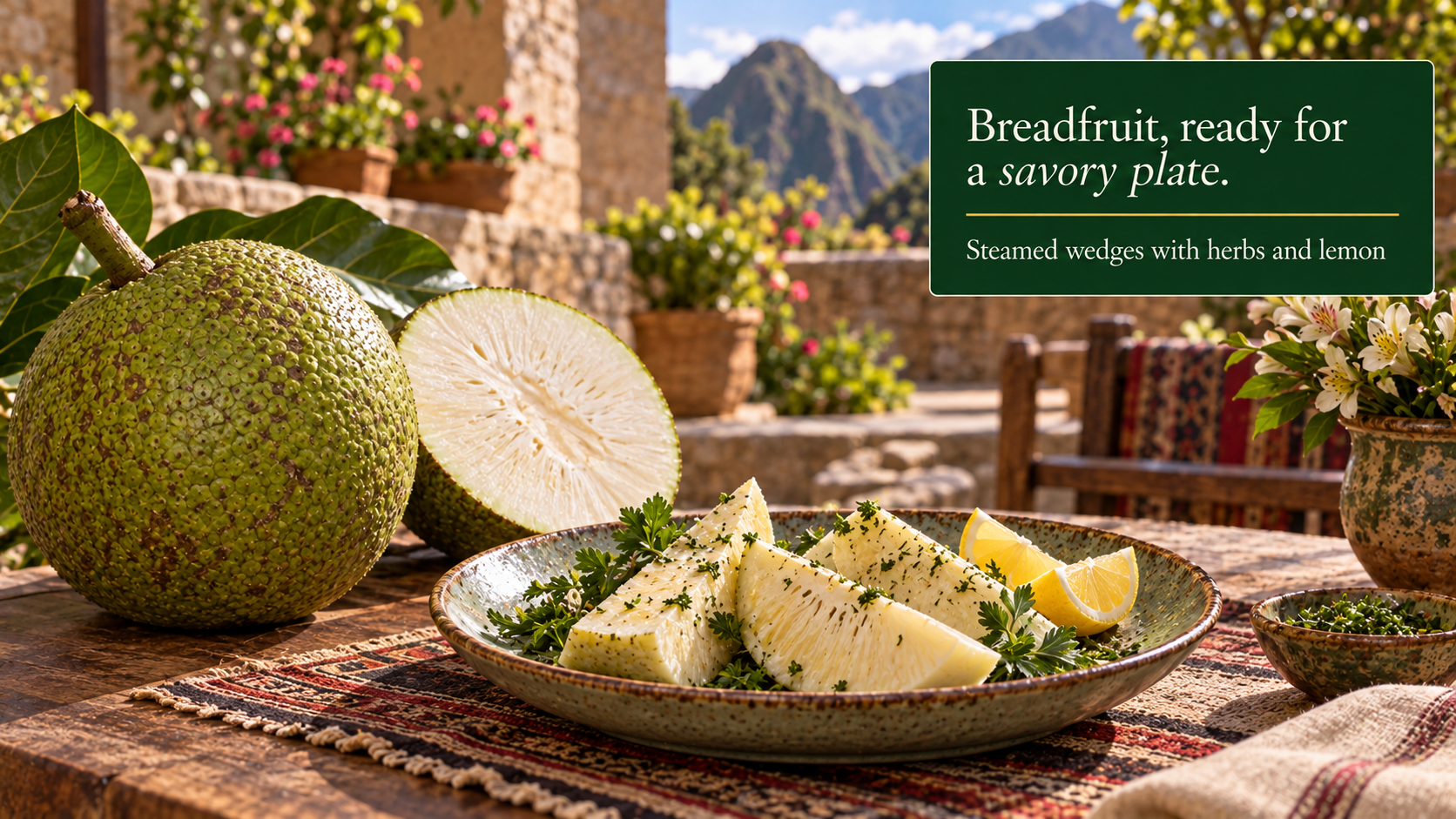
Prepare it on a stable surface
Breadfruit can release sticky latex. The Breadfruit Institute's handling guidance includes removing the stem, allowing sap to drain, washing, and dividing the fruit into manageable pieces. A hard central core is removed, and peeling may be done before or after cooking. The practical point for a guest kitchen is to allow preparation time and choose tools that can be cleaned easily. A large round fruit should be stabilized before cutting.
Keep the preparation area separate from the finished plate. Wash the outside before opening, inspect the flesh, and discard unsuitable fruit rather than trying to hide damage in a mash. If someone is unfamiliar with the ingredient, a demonstration on a single fruit is more useful than rushing through a large pile. The finished portion should contain tender edible flesh without a tough core or awkward pieces of skin. Guests should be able to eat the meal comfortably without needing to complete the preparation themselves.
Choose a cooking method for the texture you want
For the first trial, steaming gives the cook a straightforward way to check tenderness without allowing the pieces to dry excessively. Boiling is another option when a soft mash is the goal. An oven preparation can suit wedges or a larger piece, provided the flesh becomes properly tender. These are established methods described by the Breadfruit Institute; the final seasoning and plate design below are proposed kitchen choices.
Test with a fork and taste a small cooked piece before serving. A browned surface does not prove that the center is ready. If the outside is drying before the middle softens, revise the piece size or use a covered cooking stage. Season after you understand the batch. Olive oil, a little salt, and chopped herbs can be enough for an initial tasting. A heavy sauce would make it harder to judge the texture and decide whether breadfruit should be the main starch or a smaller accent.
Proposed plates with fish, duck, or alpaca
One proposed plate places steamed breadfruit beside herb-roasted high-altitude Andean trout, a small serving of quinoa, and green vegetables. Use a light lemon and herb dressing on the vegetables, with the breadfruit available to take up a little of it. Because both breadfruit and quinoa contribute substance, the grain portion can be restrained. The objective is a comfortable meal with recognizable components, rather than several large starch portions competing for room.
A second concept uses roast duck, breadfruit wedges finished in the oven, and a cañihua salad with herbs and cucumber. A third combines grilled alpaca with a soft breadfruit mash and a small spoonful of cooked kiwicha alongside roasted vegetables. These are editorial proposals for testing. They do not establish an actual menu, an included seminar meal, or a claim that the meat and fruit came from the same growing area. Name a producer only after the kitchen has confirmed the source.
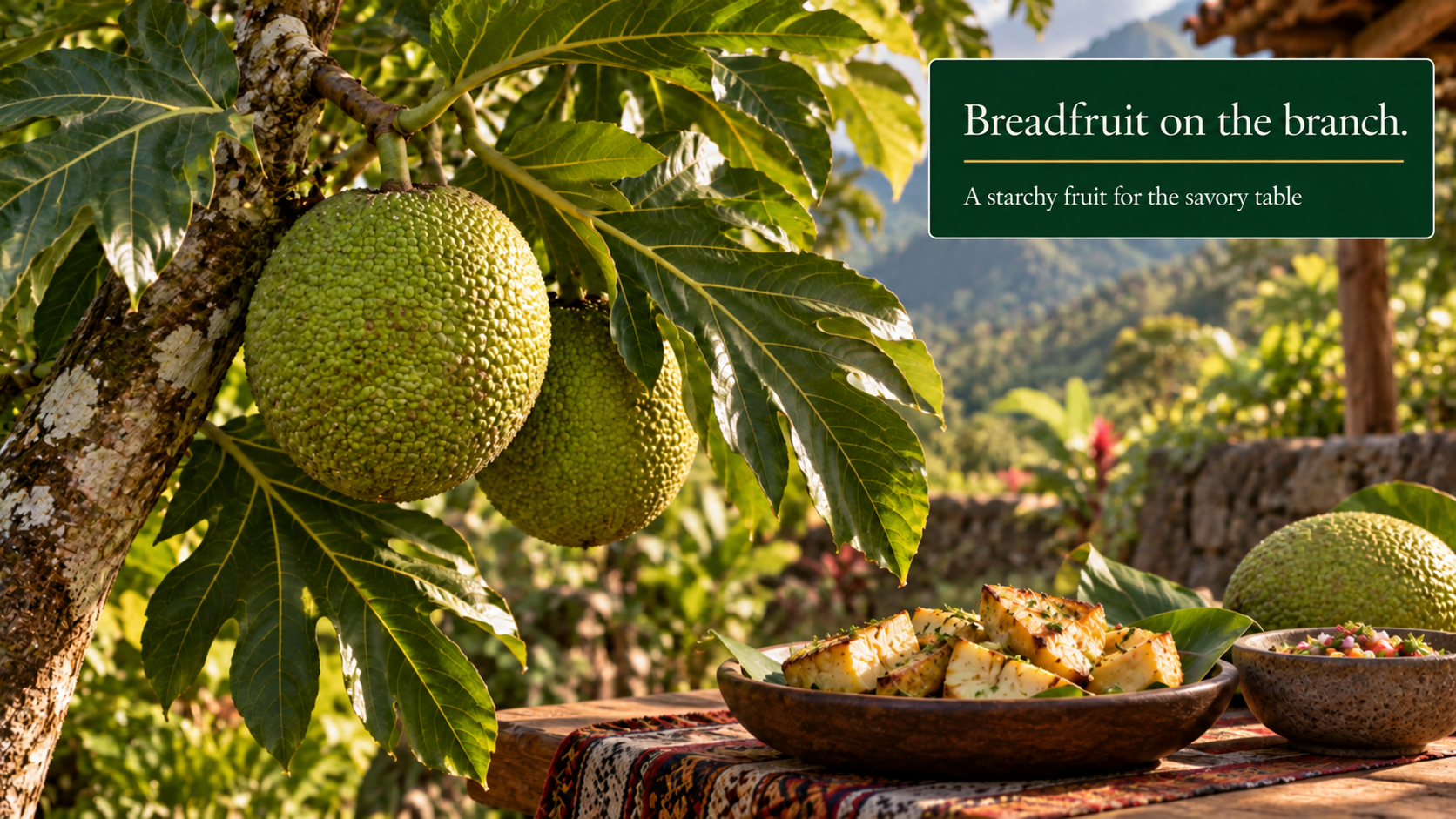
Breadnut needs its own preparation decision
If the fruit proves to be breadnut, do not simply follow a seedless-breadfruit plate photograph. The botanical garden describes cooked breadnut seeds as an important edible portion, with boiled or roasted seeds having a chestnut-like texture and flavor. The immature fruit can also be used in cooked vegetable preparations. Those details describe a different ingredient balance from a large wedge of breadfruit flesh.
For a kitchen trial, separate the identification question from the recipe question. First establish the species and the edible portion being supplied. Then choose a preparation supported for that ingredient and have an experienced cook evaluate it. A menu should say breadnut when breadnut is what is being served. It is possible to tell an interesting story about related trees without smoothing away the distinctions. A grower benefits from the same precision because seed propagation, fruit structure, and the value of a harvest can differ between the plants.
Warm-climate abundance needs a precise location
Breadfruit gives a visitor a different picture of a staple food: a substantial cooked portion can come from a tree. That is relevant to someone interested in a productive home garden, but the setting matters. The Breadfruit Institute describes a tropical crop with limits under cold conditions. Florian's production report concerns the Quillabamba property. A proposed Sacred Valley meal is a dining setting, not evidence that the same tree would perform identically beside the dining room.
For someone assessing a lifestyle with productive land, ask to see the actual tree and dated harvest records. Learn who maintains it and how the fruit is used when it is available. Those details make the collection understandable without turning an ingredient article into an investment offer. A specimen that is attractive during a visit does not establish yields, management costs, or a continuous kitchen supply. The value here is seeing a working food ingredient in context and understanding how it could enter a carefully prepared meal.
Plan supply before promising the dish
Breadfruit is a substantial fruit, so kitchen planning should begin with the number of suitable portions a particular batch will yield. Open and cook a sample, account for peel and core, and decide which parts of the planned plate depend on the breadfruit's texture. If the supplier offers several stages of maturity, keep them labeled rather than mixing them in one box. A simple receiving note saves confusion when more than one cook is preparing the service.
For visitors, a clear description might say cooked breadfruit with high-altitude Andean trout and quinoa, followed by the confirmed origin of the fruit. If the breadfruit came from a different region, that is useful information rather than a flaw to disguise. The tree study belongs after the food explanation: whole fruit, cut flesh, then leaves and canopy. Any imagined garden scene should be labeled as an illustration. The evidence needed to show a productive planting is a dated record of the real tree and harvest, not a convincing generated garden scene.
Leave time for the Sacred Valley
Leave enough time to enjoy a good meal. If Machu Picchu brings you to Peru, ask about The SoulSearching Experience, Florian's five-day Sacred Valley seminar for 8-15 participants. Confirm the dates, venue and meal arrangements directly when planning.
Questions readers ask
How do I choose breadfruit for a savory meal?
Choose mature breadfruit that is still firm and starchy for roasting, steaming, boiling, or frying. The National Tropical Botanical Garden notes that mature fruit can show slight browning or cracking between skin sections; indicators vary by variety. Soft, aromatic ripe breadfruit is better suited to sweet preparations and is the stage that may be eaten raw. A green, immature fruit is a different culinary stage and often has a watery or rubbery texture.
What should I establish before cooking an unfamiliar breadfruit-like fruit?
First confirm that the fruit is breadfruit, Artocarpus altilis, through a reliable seller or plant record. For a savory dish, choose mature, firm fruit. Wash it, drain sticky latex from the stem end when practical, and remove the hard core before or after cooking. A shop label or online identification thread alone may be wrong, so do not prepare an unidentified fruit for eating.
Can breadfruit be roasted in pieces, and what are simple ways to cook it?
Yes. Breadfruit can be cooked whole or cut into manageable pieces; the National Tropical Botanical Garden describes roasting, steaming, boiling, and frying. Wash the fruit, handle its sticky latex, and remove the hard core before or after cooking. For firm mature fruit, cook until the flesh is tender enough to pierce with a fork. If using a published recipe, follow its cut size and cooking method rather than assuming one time fits every fruit.
What does breadfruit taste like at different stages?
Mature, firm breadfruit is a mild starchy food that can stand in for potato in savory cooking. At the soft, ripe stage, its flesh becomes sweet and custard-like; that is also the stage the National Tropical Botanical Garden describes as suitable for eating raw. Flavor and texture change with stage and variety, so a raw ripe tasting does not predict the character of roasted mature breadfruit.
Is breadfruit commonly sold by roadside vendors?
Availability depends on the region, harvest, and local sellers, so a report of one roadside purchase does not support a general claim. In producing areas, ask sellers whether their fruit is mature and firm for savory cooking or soft and ripe for sweet use. Breadfruit is perishable and ripens quickly after harvest, which also affects how and when it is offered.
How should I use frozen breadfruit?
Check whether the package contains raw, partly cooked, or fully cooked breadfruit, and follow its label. The National Tropical Botanical Garden recommends freezing cooked pieces for later meals. Thaw frozen homemade pieces in the refrigerator, then heat or finish cooking until tender. A piece frozen raw may have more latex flavor or a different texture, so do not assume it will behave like a ready-to-eat product.
How can I make canned breadfruit less salty before cooking?
Read the can's label first; its brine and cooking status matter. Draining and rinsing can reduce salt on canned vegetables, although it will not necessarily remove salt absorbed by breadfruit. Taste a small piece, then use unsalted ingredients in the dish and adjust seasoning at the end. Discard a can that is leaking, bulging, badly damaged, or otherwise unsafe rather than trying to salvage it.
How can I distinguish normal ripening from a breadfruit I should discard?
Breadfruit changes quickly after harvest: firm mature fruit becomes soft and aromatic as it ripens. A darker exterior alone does not settle whether the inside is usable, especially after refrigeration. Open it and inspect for mold, extensive rot, or a clearly off condition; discard rotten produce. If sound but soft and sweet, use a ripe-fruit recipe rather than expecting a firm, savory potato-like texture.
Is breadfruit the same thing as jackfruit?
Breadfruit and jackfruit are related but are different species and should not be treated as interchangeable without considering the recipe. Breadfruit is Artocarpus altilis and is commonly served as a starchy cooked food when mature. Jackfruit is Artocarpus heterophyllus and its culinary use depends on its own stage of maturity. Confirm the fruit's identity before following a breadfruit preparation guide.
What does the name ʻulu mean on a menu or food package?
ʻUlu is the Hawaiian name for breadfruit. A menu may use that name for the cooked fruit itself or for a dish made from it, so ask how it was prepared and whether it is firm and savory or soft and sweet. The name alone does not identify a specific recipe, ingredient list, or allergen status. For packaged food, read the label.
Do all breadfruit varieties taste the same when fully ripe?
No. Breadfruit varieties differ, and the National Tropical Botanical Garden describes different culinary uses as fruit moves from firm and starchy to soft and sweet. Very ripe fruit can suit sweet dishes, but a particular person's preferred flavor is not guaranteed by the word breadfruit. Ask for a locally known variety and taste a sound ripe fruit before planning a large batch.
Do you peel breadfruit before eating it?
Breadfruit is commonly peeled for the table, but the timing is flexible. The National Tropical Botanical Garden says the skin can be removed before or after cooking and is easier to peel afterward. Wash the fruit first, cook it according to its maturity, and remove the peel if you want a softer texture. The hard central core is a separate part to trim away.
How should cooked breadfruit leftovers be stored?
Treat cooked breadfruit as a perishable leftover. Put it in a covered, shallow container and refrigerate within two hours of cooking, or within one hour if the food has been exposed to temperatures above 90°F. FoodSafety.gov advises using refrigerated leftovers within three to four days or freezing them. This general food-safety rule matters more than judging a cooked piece by smell alone.
How does breadfruit flour differ from cooked breadfruit?
Breadfruit flour is dried and milled fruit, so it behaves differently from steamed wedges or a fresh puree. Check whether a package contains pure breadfruit or a flour blend. For the table pictured here, whole cooked breadfruit supplies a recognizable savory accompaniment, with a texture guests can compare directly with native potatoes or other cooked roots.
How can I reduce sticky breadfruit sap during preparation?
The Breadfruit Institute recommends removing the stem and standing the fruit upside down so sticky latex can drain, a few hours before cooking or the previous day. Wash the fruit before preparing it and wash the knife repeatedly so sap does not dry on it. Set the fruit securely before cutting rather than trying to force a rolling whole fruit.
Can very ripe breadfruit be eaten without cooking?
Yes, the Breadfruit Institute describes sound, fully ripe breadfruit as creamy and sweet and suitable for eating raw. This is different from the firm mature stage normally cooked as a starch. Serve a small spoonful of the soft flesh as fruit; use firm mature breadfruit when the meal calls for steamed wedges or a potato-like accompaniment.
Can breadfruit be a regular starch in a varied meal?
Breadfruit can take the starch position in an ordinary meal, much as potato or rice would. The Breadfruit Institute describes mature fruit in that role. A plate could pair steamed breadfruit with vegetables and fish, duck, or beans. Regular use need not mean frying it every time or expecting breadfruit alone to supply the household's whole diet.
Can cooked breadfruit be served as a savory mash?
Yes. Firm mature breadfruit can be steamed until tender and mashed for a soft savory accompaniment. The Breadfruit Institute explains that cooked mature fruit can replace potatoes in many dishes. A small portion could sit beneath vegetable broth or beside roast poultry, with herbs and enough moisture to keep the mash pleasant rather than dry.
Can breadfruit work in a savory coconut-based dish?
Yes. Steamed breadfruit can take a savory sauce with coconut, onion and herbs. The Breadfruit Institute describes breadfruit in dishes such as curry. Keep enough of the fruit visible to enjoy its texture, and taste the sauce before adding salt. Coconut is a flavor choice here, rather than a reason to make a heavy or sweet dish.
Should the hard central core of breadfruit be removed?
Remove the hard central core when preparing breadfruit. The Breadfruit Institute describes coring as a standard step that can be done before or after cooking. It is separate from peeling the outside. Removing both the tough core and the peel leaves the softer flesh for steamed wedges, a savory mash or another cooked serving.
Continue reading
- Pacay: How to Eat the Fresh White Fruit Inside the Pod
- Guava for the Table: Choosing the Fruit and Using It in Savory Meals
- Pomegranate in Savory Meals: Choosing Whole Fruit and Serving the Arils