White cauliflower carries a browned edge beautifully, while a purple head invites a gentler preparation. One plate builds around roasted florets and high-altitude Andean trout; the other uses steamed cauliflower to lighten alpaca and grain. The pleasure is in the contrast: tender branching florets, separate grains, a savory protein, and just enough herb or citrus to bring the forkful together.
Vegetables at the Andean table
White and Purple Cauliflower with Quinoa and Cañihua
Roast white Snowball Y Improved in substantial florets for a high-altitude Andean trout and quinoa plate. Steam Amethyst F1 for a tender purple accent beside alpaca and canihua. Both preparations work best with restrained sauces and a clear contrast between vegetable, grain, and protein. Amethyst F1 is a hybrid, and its cooked color can soften or change rather than remaining bright purple.
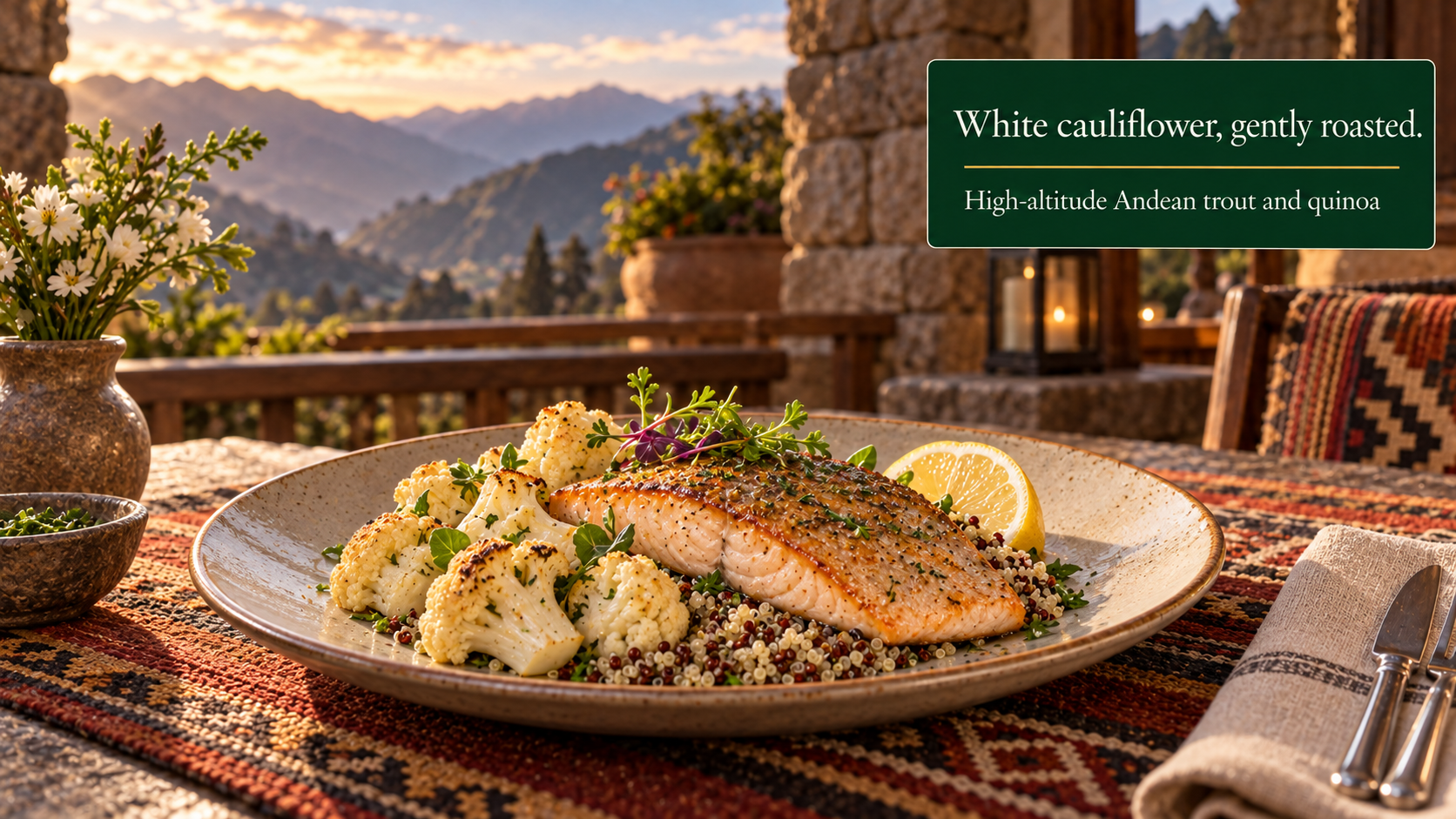
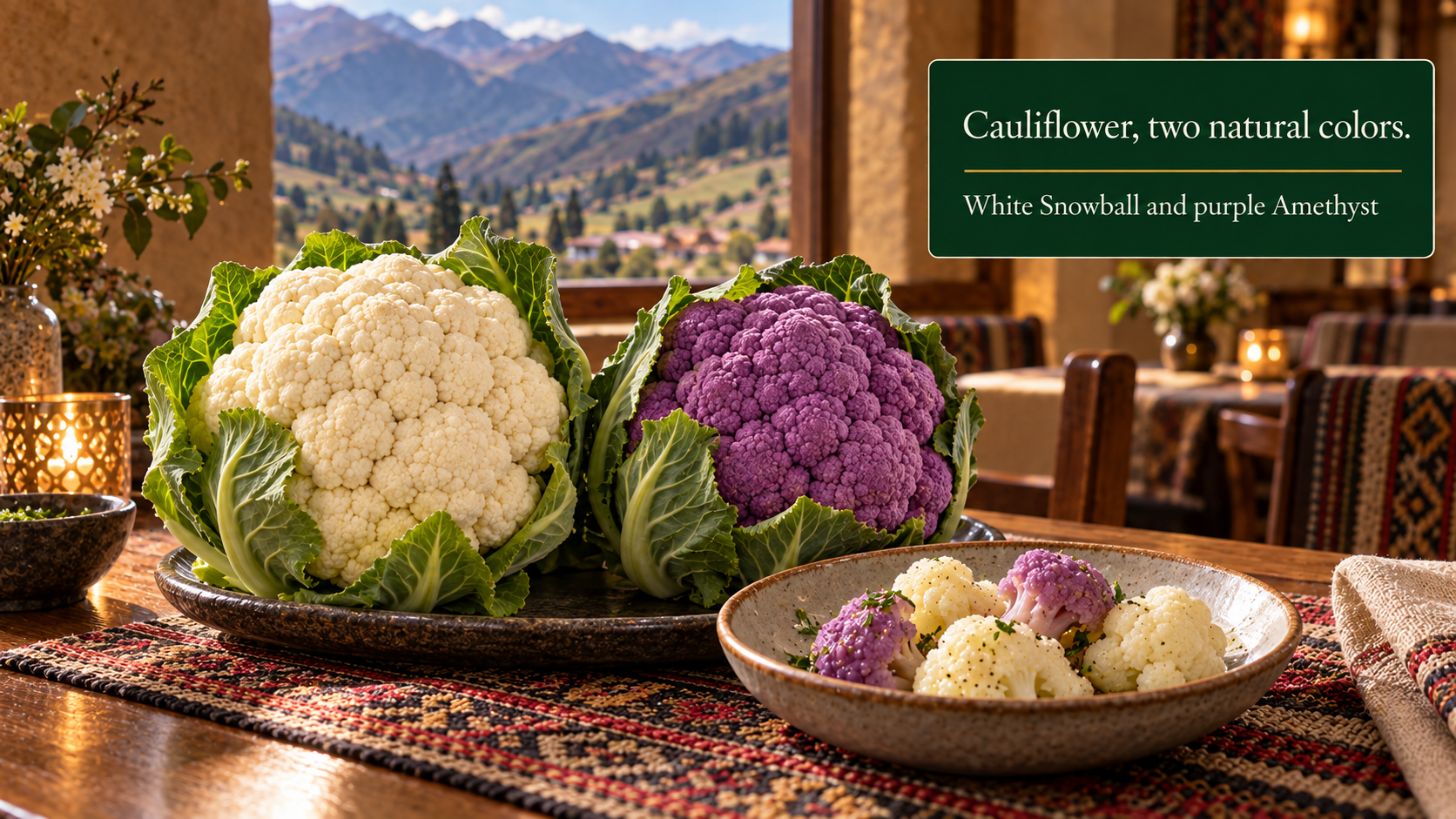
Roasted Snowball Y Improved with high-altitude Andean trout, quinoa, and lemon herbs
Roast substantial white florets until tender with lightly browned edges; serve with separately cooked high-altitude Andean trout and quinoa. Finish with herbs and lemon.
The pale vegetable gives the browned edges visual definition and leaves the fish and grain identifiable.
Variety reference: Eden Brothers: Snowball Y Improved. Heirloom; open pollinated.
Steamed Amethyst F1 with alpaca, canihua, and a light herb sauce
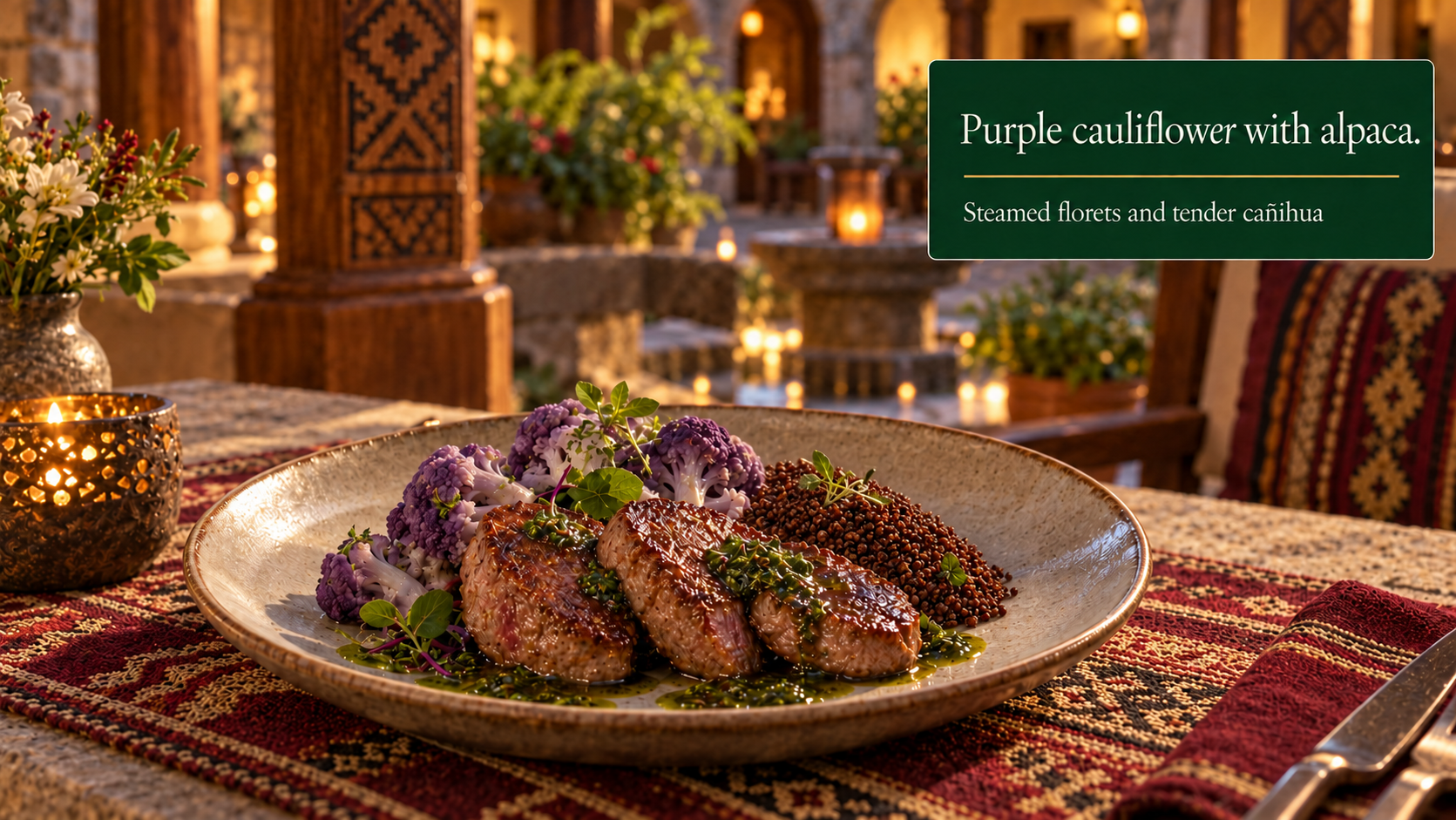
Steam even florets until tender but intact, drain, and plate with properly cooked alpaca and canihua.
Gentle cooking makes a softer vegetable counterpoint; purple color is allowed to become modest or change.
Variety reference: Eden Brothers: Amethyst F1. Hybrid (F1).
Snowball with high-altitude Andean trout, quinoa, and lemon herbs
Use Snowball Y Improved for a plate of roasted white cauliflower, cooked quinoa, and separately cooked high-altitude Andean trout. Divide the head into substantial florets with enough stem to hold them together. Wash and dry them, then spread them with room between the pieces. Oven roasting should leave the thick stems tender and the exposed edges lightly browned. Aim for a forkful that contains both a soft interior and an intact branching shape.
Place the quinoa in a loose strip rather than a deep mound. Add the cauliflower beside it, then the high-altitude Andean trout, with chopped parsley or another identified culinary herb. Offer lemon at the edge of the plate so the diner can adjust the acidity. A little sacha inchi oil may finish the cooled grain or completed plate; keep it out of the roasting tray. The cauliflower has its own generous place beside the fish and grain.
Amethyst with alpaca and canihua
Amethyst F1 calls for a different treatment: steamed florets beside sliced, properly cooked alpaca and tender canihua. Cut the cauliflower into fairly even pieces and check the thickest stems as they cook. Lift the florets out while they still hold their shape. Let excess moisture drain before plating so the grain does not become a wet bed under the vegetable.
The finished cauliflower may be a subdued purple, lavender, or a changed shade rather than the vivid color of a fresh head. Iowa State Extension explains that purple cauliflower contains anthocyanin pigments and that cooking conditions affect color. Enjoy the natural range of muted color and use a pale herb sauce sparingly, where it will not cover every floret.
Choose the cut before choosing the sauce
Large florets suit both featured plates because they can be served and eaten without collapsing into crumbs. Smaller pieces would be useful in a broth or a bowl of quinoa, but they create a different dish. If a cauliflower steak breaks into florets, the meal can still work beautifully; there is no need to hide it under puree or call a broken slice a failure.
A smooth cauliflower spoonful can accompany duck or cuy on another occasion. Cook the cauliflower until it can be mashed, drain it thoroughly, and loosen the mash gradually with a suitable cooking liquid. The actual head, its water content, and the preferred texture determine how much liquid the mash needs.
Make the grain and vegetable do different jobs
Quinoa gives the roasted Snowball plate a small, separate grain texture. Canihua creates a fine-textured base for the steamed Amethyst plate. Keep each grain identifiable rather than mixing everything into a single beige mass. Native potatoes can take the starch role instead when that is the better ingredient on hand; serve a few cooked pieces and allow the cauliflower its own space.
For a meat-free variation, increase the cooked grain and add a suitable cooked legume. Do not describe cauliflower alone as equivalent to a protein portion. A plate can be vegetable-led without pretending that every component supplies the same nutrients or serves the same purpose. Taste a forkful with all the components before deciding how much dressing or sauce the plate needs.
Buy for freshness, name the variety only when known
Look for a sound head with firm florets, then wash it under running water before cutting. FDA guidance recommends clean hands and utensils and does not recommend soap or commercial produce wash. Remove damaged portions; discard rotten produce. Keep the raw fish and meat, their boards, and their juices separate from the washed cauliflower and herbs.
An ordinary white cauliflower can be used for the roasted plate, and a food-grade purple cauliflower for the steamed version. Name the cultivar only when the supplier can confirm it. When choosing fish, ask where it was raised or caught. High-altitude Andean trout has a different sourcing story from vegetables produced in warmer Quillabamba.
Choose the cauliflower plate for the meal you want
For a lighter-feeling lunch, choose high-altitude Andean trout, roasted white cauliflower, and quinoa with lemon on the side. For a more savory dinner, alpaca with canihua and steamed purple florets offers a different balance. Neither plate needs a heavy starter; a small clear broth or a simple vegetable first course leaves room to enjoy the main ingredients.
At a restaurant, ask whether cauliflower is roasted, steamed, or pureed if texture matters to you. Ask separately about the sauce and the source of the high-altitude Andean trout. Those small questions help you choose a meal you will enjoy while traveling between different Peruvian food regions. Food can be part of the pleasure of a Sacred Valley stay without every ingredient sharing the same climate or origin.
These dishes are serving ideas. Images illustrate the ingredients and preparations; they do not document a restaurant menu, a tested recipe or a current property harvest. The exact Eden Brothers catalog varieties remain research candidates.
Give the Sacred Valley a little more time
A trip built around Machu Picchu can also leave room for a good meal and a less hurried stay. Ask Florian about The SoulSearching Experience, his five-day Sacred Valley seminar for 8-15 participants. Discuss dates, venue and meal arrangements directly as you plan.
Questions readers ask
What is a satisfying way to serve cauliflower as part of dinner?
Give it a substantial place beside a protein and cooked grain. The Snowball concept uses roasted florets with high-altitude Andean trout and quinoa; Amethyst is steamed beside alpaca and canihua. A little herb sauce connects the components without concealing the vegetable.
How can purple cauliflower be cooked without expecting an unchanged color?
Steam the florets gently and stop when the stems are tender. Purple pigments can respond to heat and cooking conditions, so expect a modest or altered shade. The proposed Amethyst plate uses natural cooked color rather than promising vivid fresh-head purple.
Does purple cauliflower taste like purple cabbage?
Do not expect the color to make it taste like cabbage. Purple cauliflower is still cauliflower. Taste the actual head after cooking; in the Amethyst dish, a restrained herb sauce leaves room to notice its flavor instead of masking it.
Is purple cauliflower naturally colored?
Yes. Purple cauliflower varieties contain anthocyanin pigments. That explains a natural purple head without implying added dye. Amethyst F1 is a named hybrid seed listing; hybrid status and natural pigment are separate facts, and neither proves local cultivation.
How can roasted cauliflower have a tender center and browned edges?
Cut reasonably even florets, dry them after washing, and leave space on the tray. Check a thick stem before removing the batch. For the Snowball plate, aim for light browning and tenderness rather than a hard, deeply charred crust.
Can soggy roasted cauliflower be improved?
Return sound, freshly cooked pieces to an uncrowded hot oven if more surface drying is wanted, checking them closely. They will continue softening, so a crisp exterior may not be recoverable. A soft cauliflower accompaniment or puree can be the better meal choice.
What should I do if cooked cauliflower tastes bitter?
Taste a small cooked piece before assembling the plate. Mild bitterness can be balanced with the grain, savory protein, and a little lemon-herb accompaniment. Do not use a strong sauce to disguise produce that otherwise seems spoiled or unsuitable to eat.
How should fresh cauliflower be prepared for freezing?
Use a tested blanching-and-freezing procedure rather than putting an unprepared head straight into the freezer. The National Center for Home Food Preservation gives cauliflower-specific directions. Frozen florets are useful for later cooked dishes, although freezing will not preserve fresh-head texture exactly.
Can cauliflower leaves be used in a meal?
Sound, tender leaves can join a cooked vegetable dish, but remove damaged material and wash them well. Treat thick ribs separately from thin leaf portions so each can soften. Keep the featured florets as the main vegetable on the two proposed plates.
Should cauliflower be washed before cooking?
Yes. Rinse it under running water and separate the florets enough to inspect the branching surfaces. Use clean hands and utensils. FDA advises against soap and commercial produce wash; washing is an ordinary preparation step, not a guarantee that badly damaged produce can be salvaged.
How can I reduce the strong smell when cooking cauliflower?
Cook only until the texture you want and avoid a prolonged boil. The UDC cauliflower guide recommends quick cooking to limit the odor. For these plates, check steamed florets early and ventilate the cooking area rather than masking the vegetable with extra sauce.
How can cauliflower mash be kept from becoming watery?
Cook the cauliflower until soft, drain it well, and add any loosening liquid gradually while mashing. A soup-like quantity of liquid will make a soup-like result. For a high-altitude Andean trout plate, keep the mash thick enough to sit beside the grain rather than flooding it.
Can cauliflower replace native potatoes in the meal?
It can replace the vegetable component you choose to remove, but it does not reproduce potato flavor, starchiness, or texture. Keep quinoa or another suitable starch when the meal needs it. Enjoy cauliflower mash as its own preparation instead of expecting an identical potato mash.
What oven temperature is a useful starting point for roasted cauliflower?
Oregon State Food Hero starts equal-sized florets at 400 F and roasts them for about 30 minutes, until fork-tender. Give the pieces space and check their stems rather than relying only on the clock. That method is a useful reference for the white cauliflower beside high-altitude Andean trout.
Is a cauliflower steak a complete replacement for a meat portion?
A steak is a way of cutting the vegetable. It does not make cauliflower nutritionally equivalent to meat. Keep a suitable protein food alongside it, such as high-altitude Andean trout or a cooked legume, and choose quinoa or native potatoes according to the appetite and meal.
Should the quinoa beside cauliflower be rinsed?
Check the package. Food Hero calls for rinsing quinoa that is not already pre-rinsed, using a fine-mesh strainer. Rinsing helps with its bitter surface coating; drain it before adding the measured cooking water so the grain portion stays predictable.
Does quinoa add meaningful protein to a cauliflower plate?
Quinoa contributes protein, but the amount depends on the cooked portion. Penn State lists about 8 grams per cooked cup. A small garnish supplies less, so keep the high-altitude Andean trout, alpaca, or a suitable cooked legume as an intentional part of the meal.
How can I make the high-altitude Andean trout portion easier to eat without bones?
Ask for a fillet prepared with pin bones removed, then inspect it before cooking and again while portioning. Filleting does not justify an absolute boneless promise. Serve the fish beside the cauliflower rather than burying it under vegetables where small bones are harder to notice.
How can high-altitude Andean trout be cooked through without drying it out unnecessarily?
Use a food thermometer in the thickest part rather than adding a large safety margin by guesswork. FDA recommends 145 F for most seafood. Check thinner pieces sooner and serve promptly with the vegetable and quinoa once the fish reaches the recommended endpoint.
Can good frozen high-altitude Andean trout work as well as fish from a fresh counter?
A counter label alone does not establish better quality. Oregon State notes that previously frozen fish can be high quality. Look for good handling and sound condition, ask about thawing, and use FDA thawing guidance. The cauliflower plate does not require a never-frozen fish claim.
Continue at the table
- Romanesco, Gently Steamed with Lemon and Sesame
- Lemon Tahini for Alpaca and Steamed Vegetables
- Culinary Herbs with high-altitude Andean trout: Burnet, Cress, Lovage, and Lemongrass
- Cañihua and cañihuaco: forms and preparation
- High-altitude Andean trout: grilled and baked preparations
- All the new vegetable dishes
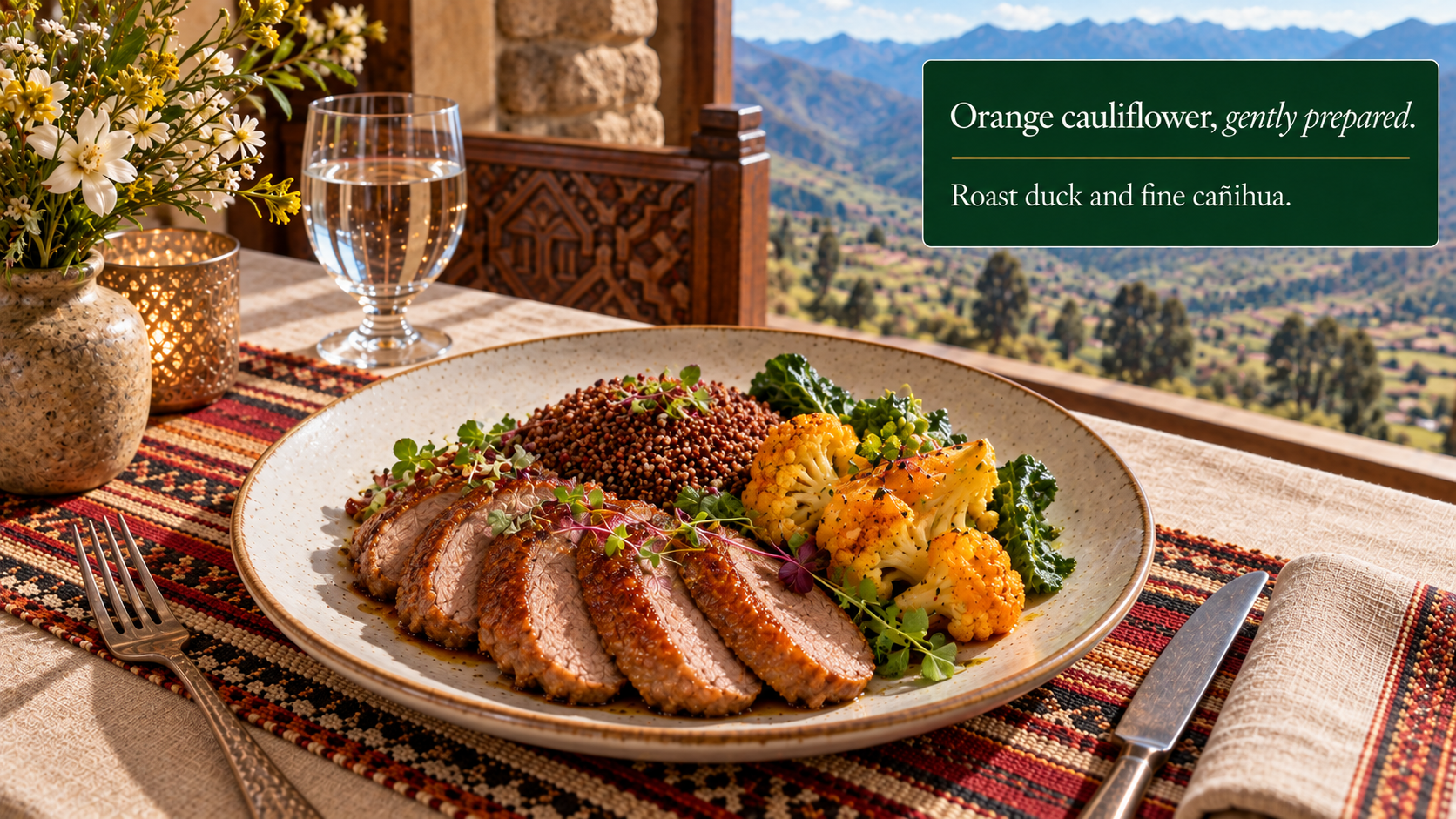
Orange cauliflower with roast duck and canihua
Orange cauliflower is a real cauliflower type. Use a verified product label, cook the florets until tender and serve with safely roasted duck and fine red-brown canihua. Do not identify the cultivar from color alone.
Orange cauliflower deserves its own cooked serving. Tender florets beside roast duck and canihua show the ingredient more clearly than treating orange as a color substitution in a photograph of another dish.
Use a real cultivar example carefully
Johnny's Selected Seeds describes Flame Star as an F1 cauliflower with a pastel orange head. That catalog record supports the existence and appearance of a named orange cultivar. It does not establish that an unlabelled orange cauliflower is Flame Star, that the cultivar grows at the intended property, or that the vegetable is available from a particular market.
Buy a food-grade head and use its actual product name. If no cultivar is recorded, orange cauliflower is an honest description. Choose a compact sound head without soft or slimy areas. An orange head does not need a medical benefit claim to justify choosing it for a meal.
Johnny's Selected Seeds: Flame Star orange cauliflower · Purdue Extension: Cauliflower
Cut the florets for tenderness
Wash the head and divide it into manageable florets, splitting thick stems so they can cook with the smaller pieces. Steam or cook in a covered dish with a little water until a fork enters the stems comfortably. Drain well. If you prefer a drier exterior, give the tender florets a brief uncovered oven finish.
Check the thick stem rather than relying on browned tips. Small branches can dry before a large center cooks through. For this plate, the florets should stay recognizable and easy to eat alongside the grain. A soft orange hue is enough. There is no need to coat them with colored spice just to force a brighter appearance.
Give canihua its own fine-grained texture
Cook food-grade canihua according to its package and aim for a moist but separate accompaniment. Its very fine red-brown grains belong beside the cauliflower as themselves; they should not be described as large quinoa rings. Keep the portion modest so the vegetable remains prominent rather than disappearing on a deep grain bed.
Roast the duck separately using a suitable method and a thermometer. USDA recommends duck reach 165°F internally. Keep raw poultry equipment away from the florets and cooked grain. Drain excess rendered fat and serve a carved portion alongside, leaving room to taste the cauliflower plain before taking a bite with duck and canihua.
Finish lightly and save the texture honestly
A small amount of chopped culinary herb or lemon offered separately can connect the components. Taste the cauliflower with the duck first; the meat may already bring enough seasoning. The vegetable needs no sweet glaze, fried crumb or thick sauce. Adjust the grain portion to appetite rather than making every component equal.
Cool leftovers promptly in shallow containers and refrigerate within two hours, or one hour above 90°F. Use them within three to four days or freeze appropriate portions and reheat hot leftovers to 165°F. Store cauliflower apart from the grain where possible. On the second meal, expect softer florets and serve them that way rather than promising the original shape and bite.