Fresh chocolate-colored strips, a raw purple salad, and a tender orange half filled with quinoa give three peppers different jobs. This page builds on the existing roasted sweet pepper guide, with distinct preparations for high-altitude Andean trout, alpaca, and duck.
Vegetables at the Andean table
Chocolate, Purple and Orange Peppers at the Andean Table
Keep Purple Beauty raw to display its purple skin, cut Sweet Chocolate to show its red interior, and roast Orange King as a shallow quinoa-filled half. The fresh chocolate strips accompany high-altitude Andean trout and quinoa, the purple salad accompanies alpaca and cañihua, and the filled orange pepper sits beside roast duck.
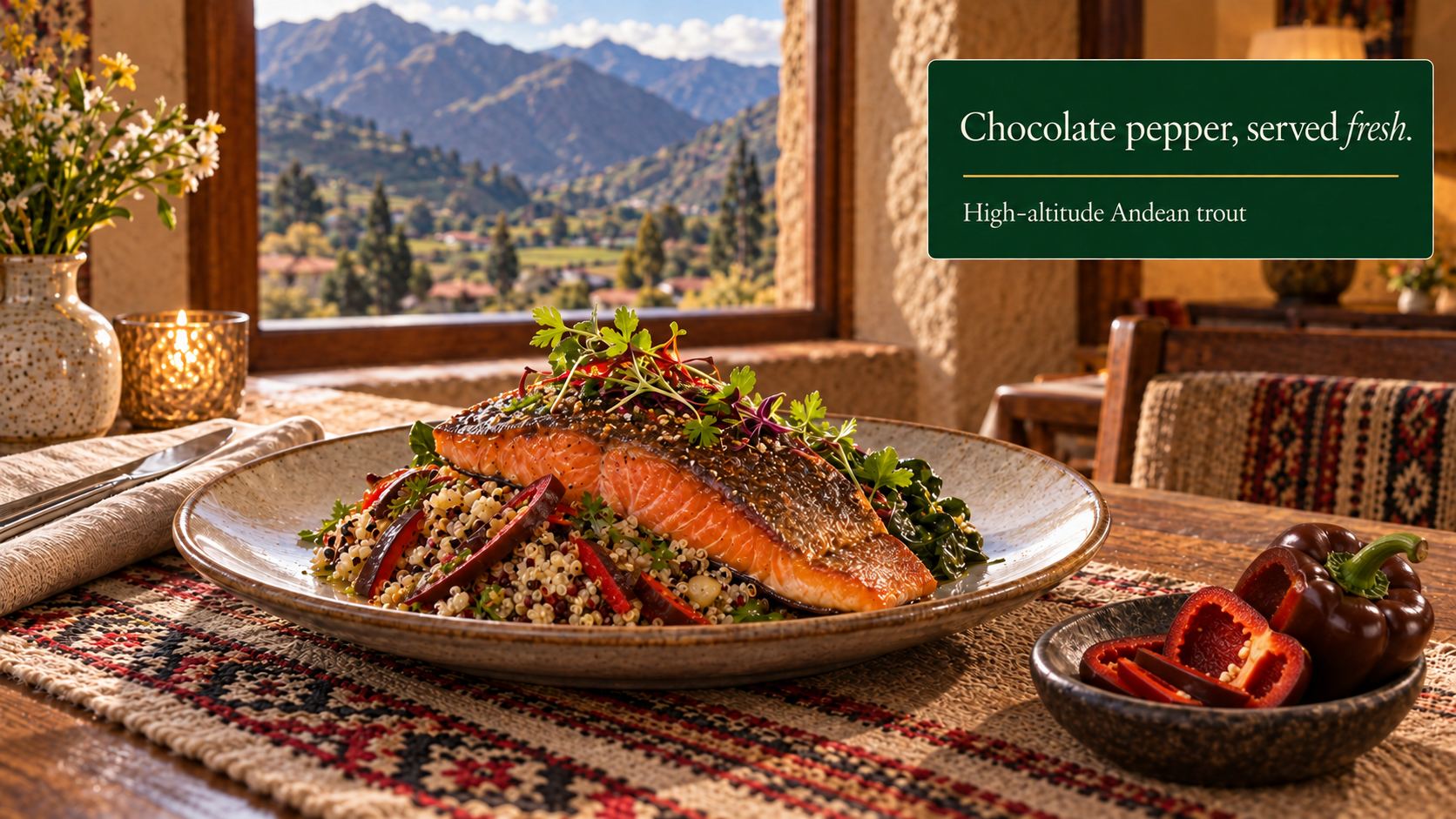
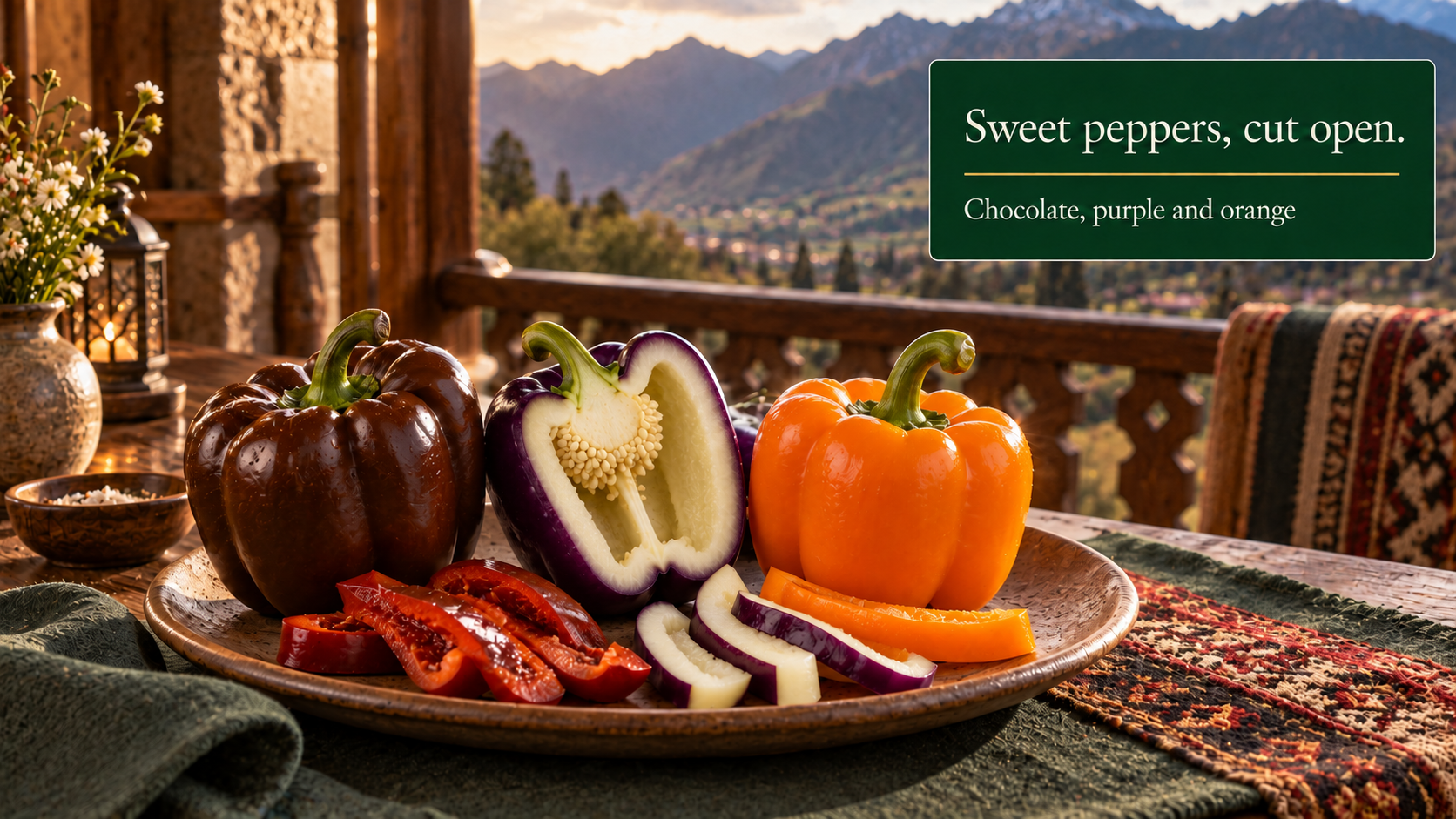
Chocolate pepper strips with high-altitude Andean trout and quinoa
Serve raw, turning a few strips to show their red interior.
The skin-interior contrast is clear without heat. Check Chocolate Bell/Chocolate Beauty naming before procurement.
Variety reference: Eden Brothers: Sweet Chocolate. Open pollinated; heirloom in heading; organic seed listing.
Purple pepper salad with alpaca and cañihua
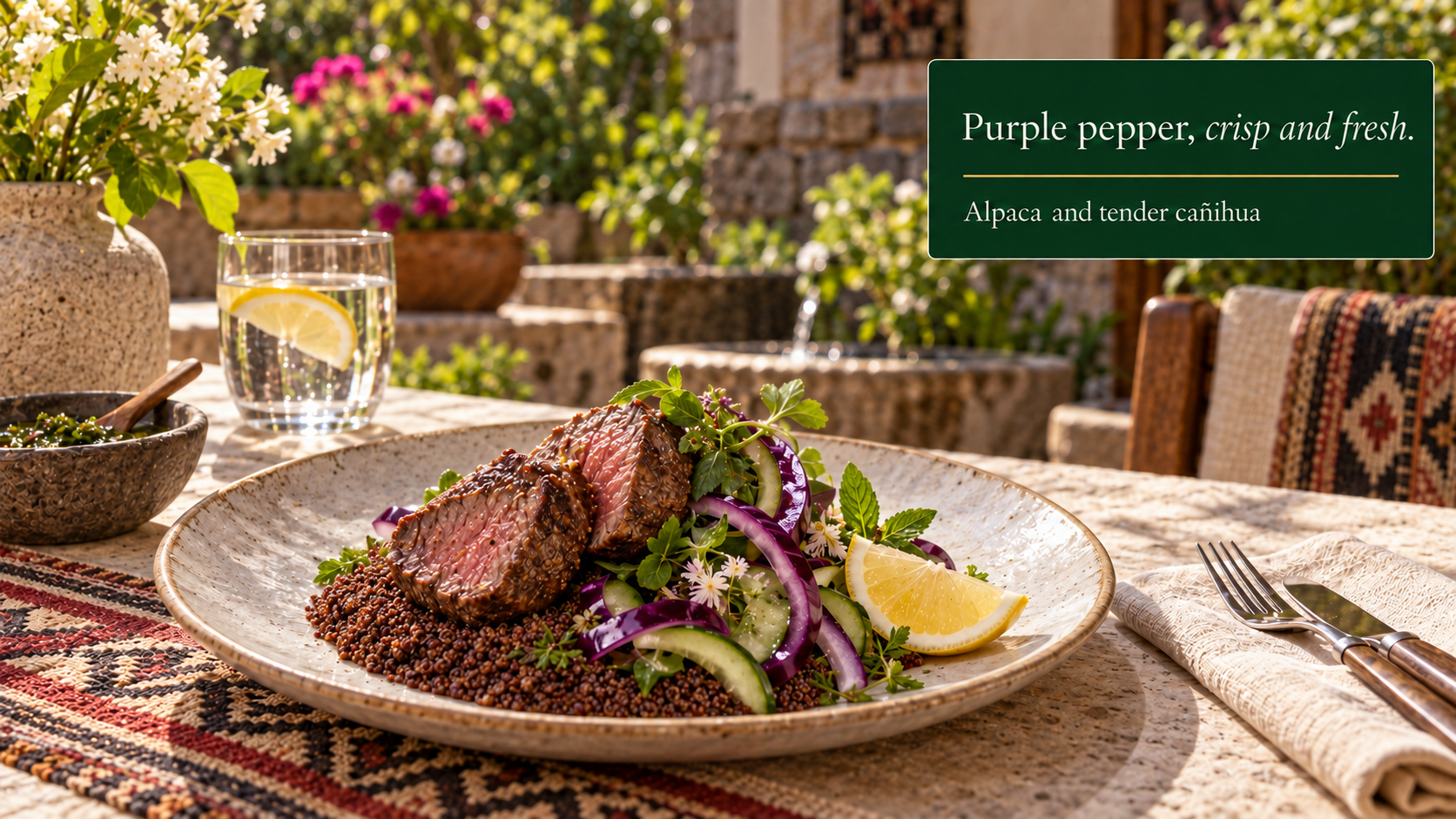
Cut fresh squares and dress lightly near serving.
Raw service displays deep-purple skin without promising purple after cooking.
Variety reference: Eden Brothers: Purple Beauty. Heirloom; open pollinated.
Quinoa-filled Orange King with roast duck
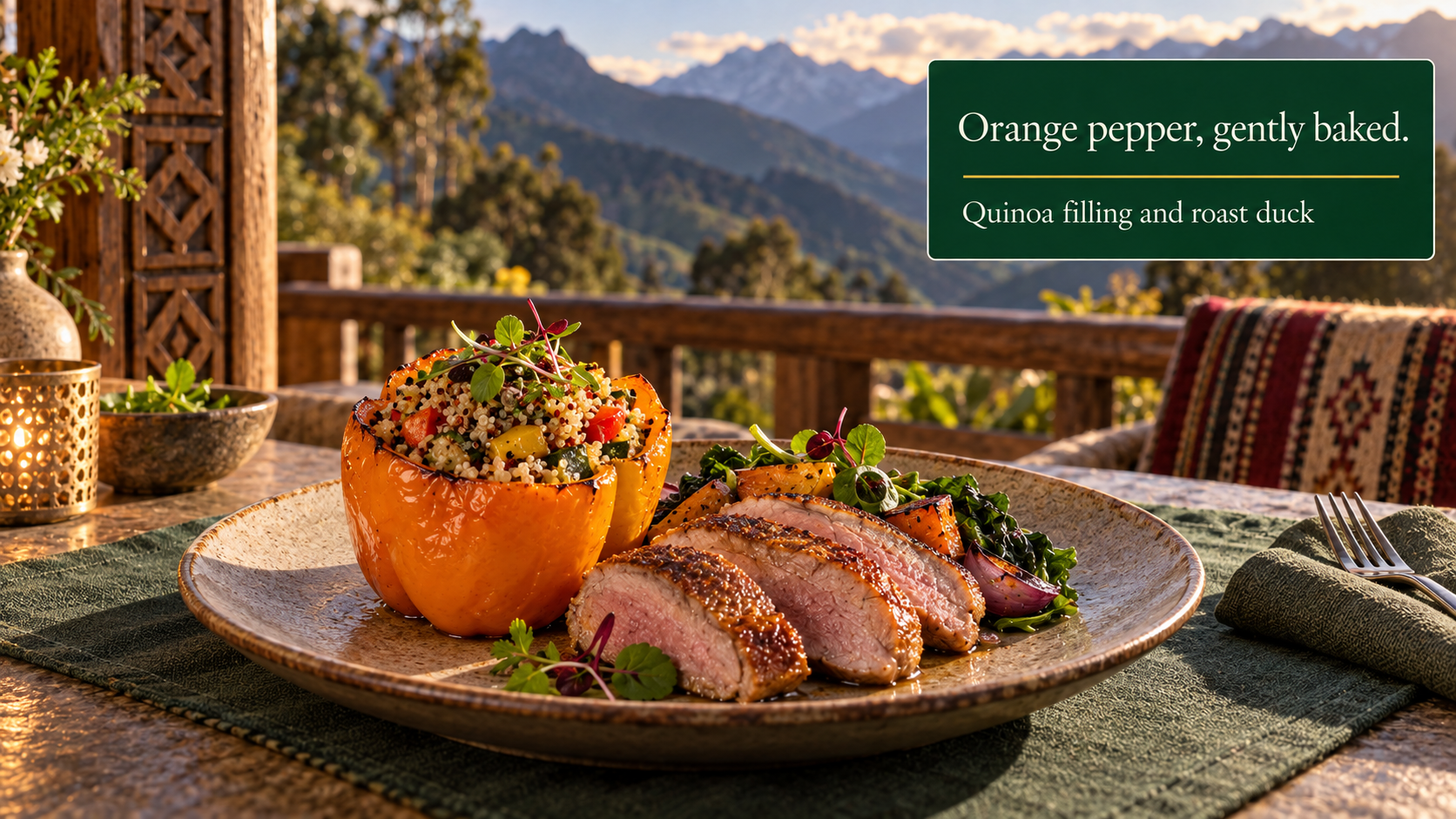
Partly cook shallow pepper halves, fill with cooked quinoa and vegetables, and finish until tender.
Large orange bells make a useful edible container, with a manageable grain portion.
Variety reference: Eden Brothers: Orange King. Open pollinated; heirloom not stated.
Sweet Chocolate strips with high-altitude Andean trout and quinoa
Halve the washed Sweet Chocolate, remove the stem and seeds, and trim the internal ribs if preferred. Cut short strips, turning a few to show the brick-red interior against the chocolate-colored skin.
Serve beside cooked high-altitude Andean trout and quinoa with herbs. Sweet Chocolate has a naming caveat: Chocolate Bell and Chocolate Beauty appear in associated labels or imagery. Confirm the supplier's identity before treating those as separate cultivars.
Purple Beauty with alpaca and cañihua
Cut Purple Beauty into bite-sized squares or short strips for a fresh salad. This is the clearest choice when you want the deep-purple exterior to remain visible. Serve it with cucumber, a little parsley, and a restrained lemon dressing beside cooked alpaca and cañihua. Guests can combine the crisp pepper with the warmer components as they eat.
Raw service displays the purple skin. A cooked treatment needs its own color check. Eden identifies Purple Beauty as heirloom and open-pollinated. These are seed classifications rather than meal certifications.
Orange King halves with quinoa and roast duck
Cut Orange King through the stem end to make shallow halves, removing the core and seeds. Cook the empty halves until they begin to soften, then add a modest amount of already cooked quinoa with chopped vegetables and herbs. Finish until the pepper is tender enough to cut at the table. The filling should sit inside the half rather than form a towering mound.
Serve one suitable half as a vegetable-and-grain component beside roast duck, adjusting the portion to the fruit's actual size. Using cooked grain avoids asking the pepper to stay in the oven while dry quinoa absorbs its water. Keep any meat in this version separately cooked and served, so the pepper's doneness does not become the test for the main.
Choose raw crunch or cooked softness
University of Arizona guidance includes raw spears and chopped pepper in salads, as well as roasting, steaming, and grilling. Choose the method for the texture you want. Fresh strips offer a crisp bite. Roasted flesh is softer and easier to spread through a grain dish. Neither needs a sugary glaze.
For a soft roasted side, check tenderness rather than pursuing a blackened finish. Peel loosened skin from blistered peppers for a smooth puree. Retain tender skin for a chunky side if you enjoy it.
Give the pepper a useful share of dinner
Decide whether pepper is the main vegetable, a salad accent, or a container for quinoa, then portion accordingly. A filled half needs less additional grain than a few raw strips. Sacha inchi oil is a cold finishing option, added sparingly after cooking or to the raw salad.
These dishes are serving ideas. Images illustrate the ingredients and preparations; they do not document a restaurant menu, a tested recipe or a current property harvest. The exact Eden Brothers catalog varieties remain research candidates.
Give the Sacred Valley a little more time
A trip built around Machu Picchu can also leave room for a good meal and a less hurried stay. Ask Florian about The SoulSearching Experience, his five-day Sacred Valley seminar for 8-15 participants. Discuss dates, venue and meal arrangements directly as you plan.
Questions readers ask
Does Sweet Chocolate mean the pepper tastes like chocolate?
The name describes a brown exterior, not a cocoa ingredient. Eden's Sweet Chocolate listing describes a chocolate-colored outside and brick-red inside. Taste the actual pepper as a sweet pepper, without promising a chocolate flavor.
Should I expect Purple Beauty to stay purple after cooking?
Do not build the plate around that assumption. The proposed Purple Beauty salad is raw so its exterior remains visible. A cooked treatment needs its own color check before it is described or illustrated.
Can I choose pepper color without considering flavor?
Taste still matters. Arizona Extension notes that red, orange, and yellow bells are generally sweeter than green ones. Choose the actual pepper for the dish rather than assuming every color tastes identical.
How should I cut peppers for a roasted side?
Remove the stem, core, and seeds, then cut pieces of similar size. Leave space on the tray and check tenderness. Smaller pieces cook differently from the filled Orange King halves.
When is peeling roasted pepper worth the effort?
Peel a blistered pepper when you want soft, smooth flesh for a puree or dressing. For a chunky side, decide whether the cooked skin is pleasant. Raw salad strips normally keep their skin.
How do I know a blistered pepper is ready to peel?
Look for skin that has blistered and loosened, then let the pepper cool enough to handle. Separate that technique from simply roasting pieces until tender; the two preparations serve different textures.
Should I soften Orange King before adding the filling?
Partly cook the empty halves first. That lets you check the shell separately before adding cooked quinoa. Finish until the pepper is tender enough to cut easily.
Why use cooked quinoa in the Orange King filling?
It removes the uncertainty of hydrating dry grain inside a pepper. Prepare the quinoa separately, then combine with the vegetables and fill the partly cooked shell. Finish for the pepper texture you want.
Can I serve the Orange King and quinoa separately?
Yes. Roast pepper pieces and serve the cooked quinoa beside them if you prefer an easier-to-cut plate. The filled half is a presentation choice, not a requirement for enjoying the combination.
Is the Orange King shell intended to be eaten?
Yes. In this proposed dish the tender pepper is the vegetable component, not a disposable bowl. Cook it to a pleasant texture and remove the stem, core, and seeds before filling.
Can frozen pepper replace the fresh strips in these salads?
Use fresh pepper when you want a crisp strip with clearly visible skin. Frozen pepper is better reserved for cooked preparations where a softer texture is acceptable, rather than recreating the raw salad.
Can I preserve surplus peppers for another cooked meal?
Yes. Follow a reliable pepper-freezing method, portion for your intended use, and label the package. Keep this separate from a claim that thawed pieces will have the same texture as newly cut pepper.
Should the number of lobes decide which pepper I serve raw?
No. Oregon State explains that the male/female pepper claim is a myth. Choose by the variety, condition, wall texture, and flavor you want. Lobe count does not establish a cooking role.
What if pepper overwhelms the rest of the plate?
Offer it as a separate side and use a smaller portion. The diner can combine it with the main as desired. This is preferable to mixing a disliked flavor through every spoonful of grain.
Do I need to peel the raw Sweet Chocolate and Purple Beauty strips?
No peeling step is proposed for those fresh salads. Wash, core, and cut them, retaining the skin that supplies their distinctive appearance. If the actual skin feels unpleasant, choose a different preparation.
What seasoning suits these pepper plates without a sweet glaze?
Start with herbs and a little lemon, then taste with the main. For raw strips, a small cold finishing-oil dressing is enough. Keep seasoning restrained so the pepper remains recognizable.
How can I keep the Orange King half from collapsing?
Check tenderness during the empty-shell step and finish only as long as needed after filling. Avoid a watery filling and an oversized mound. The actual pepper's texture should guide the final cooking.
Why cut Orange King into shallow halves?
A lengthwise half rests more easily in the dish and gives the guest a manageable portion. It also displays the filling. Choose a stable actual piece rather than assuming every fruit has the same shape.
Can I prepare the Orange King filling ahead?
Cook and refrigerate the filling separately, then fill and finish the peppers near the meal. Keep the components cold during storage and follow ordinary leftover handling. Starting cold can change the finishing time.
Does the quinoa-filled pepper need another large grain side?
Usually the pepper already supplies the grain component of this duck plate. Add another vegetable if desired and portion the main thoughtfully. A second large quinoa serving would repeat the filling's role.
Continue at the table
- Roasted Sweet Peppers with Alpaca and Quinoa: the original ingredient guide.
- Cucumber, Mint and Plain Yogurt with Baked high-altitude Andean trout
- Culinary Herbs with high-altitude Andean trout: Burnet, Cress, Lovage, and Lemongrass
- Cañihua and cañihuaco: forms and preparation
- Duck at the Peruvian table
- All the new vegetable dishes
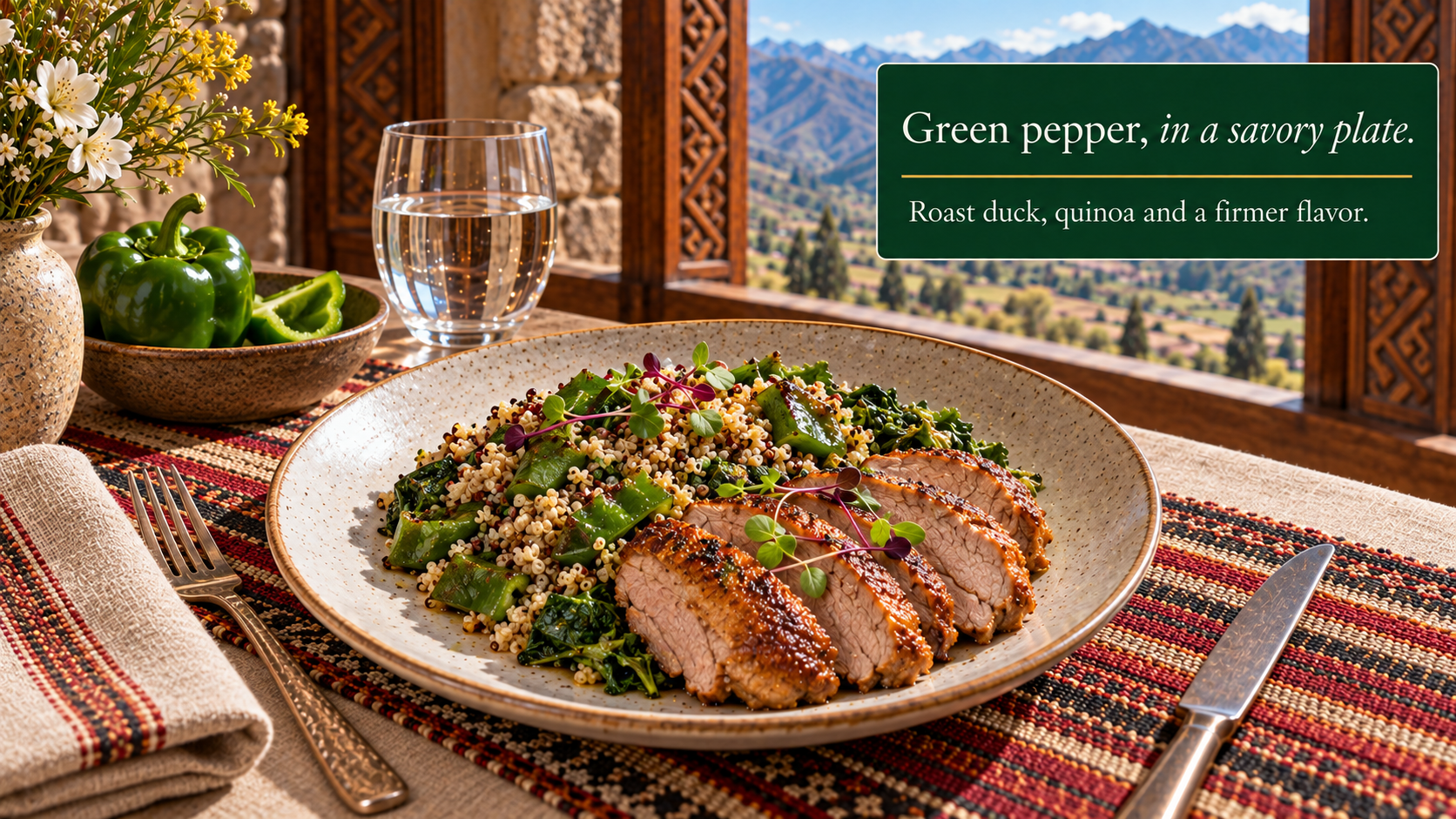
Green sweet pepper with roast duck and quinoa
Use a verified sweet bell pepper, remove the stem and seeds, and cook the pieces until tender. Its green stage can taste different from a ripe colored pepper; compare actual products without identifying a cultivar from color.
Green pepper brings a different flavor decision to the sweet-pepper plate. Cooked strips beside duck and quinoa let the diner notice that flavor without relying on a raw color comparison.
Confirm sweet pepper before choosing the color
University of Minnesota Extension notes that many peppers have good quality while green and can also be harvested when ripened. Green is a stage that occurs across many varieties, not one named cultivar. A green color also does not prove a pepper is mild. Confirm a food-grade sweet bell pepper with the supplier before making this serving.
Keep cultivar names only when labels support them. An unidentified green pepper should not inherit the name of a nearby orange or chocolate pepper. Choose sound fruit with firm walls and without wet decay. If the pepper is unexpectedly hot, it creates a different dish and should not be served as though it were a mild bell pepper.
Cook strips that keep a comfortable bite
Wash the pepper and remove the stem, core and seeds. Cut broad strips of similar thickness. Cook in a covered oven dish with a little water until beginning to soften, then uncover if you want a drier surface. There is no need for a frying step or a sweet glaze.
Taste a cooked strip before seasoning the whole tray. The flavor may be more grassy or less sweet than the ripe colored peppers you usually buy, but describe the actual batch rather than promising every green pepper will taste the same. If the skin feels distracting after cooking, remove it from the serving. Tender flesh matters more than preserving an immaculate strip.
Compare with a ripe pepper only if useful
If you have a verified ripe sweet pepper, cook a few comparable pieces beside the green one. Use the same restrained seasoning so the contrast is about the vegetables rather than two different sauces. Keep the comparison small; the meal does not require buying several colors just to fill a tray.
Plate the green strips with a modest mound of separately cooked quinoa. Roast the duck using a method appropriate to the cut and check a minimum internal temperature of 165°F, as USDA recommends. Keep raw poultry juices away from the peppers and cooked grain. Drain excess rendered fat rather than using it to fry the vegetable finish.
Balance the finished serving
Try a bite of duck, quinoa and green pepper before adding citrus. If the green flavor seems strong, reduce its portion and add more mild vegetables or greens rather than covering it with sugar. A small herb finish can stay at the side. The aim is a plate you want to eat, not a requirement to prefer one ripeness stage.
Refrigerate cooked leftovers promptly in shallow containers within two hours, or one hour above 90°F. Use them within three to four days or freeze appropriate portions, reheating hot leftovers to 165°F. Store peppers apart from the grain when possible so released liquid does not soak it. Reheated strips can be served as a softer accompaniment.