Choose Blue Lake FM1K for tender pods beside roast duck and quinoa, or Early Thorogreen for small shelled pallares beside roast cuy and native potatoes. These named catalog beans use different edible parts. A quick green-pod cooking method does not supply preparation instructions for lima beans.
Vegetables at the Andean table
Blue Lake Pods or Thorogreen Pallares: Choose the Bean Plate
Blue Lake FM1K is a green snap bean: the tender pod belongs on the plate. Early Thorogreen is a lima bean: shell it and serve the properly cooked seeds. Try the green pods with roast duck and quinoa, or the small pallares beside roast cuy and native potatoes. The two preparations give beans different roles in an Andean meal.
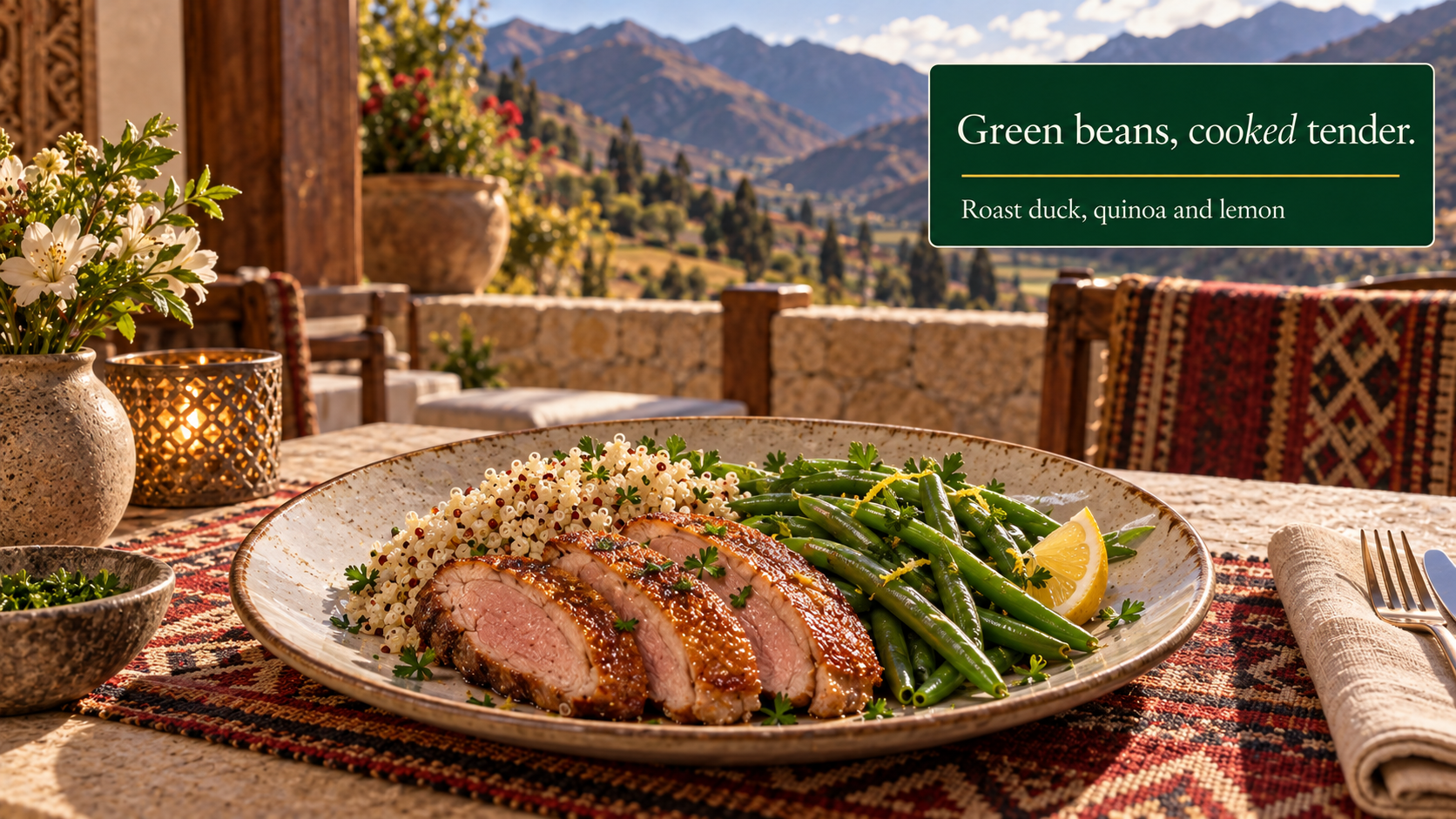
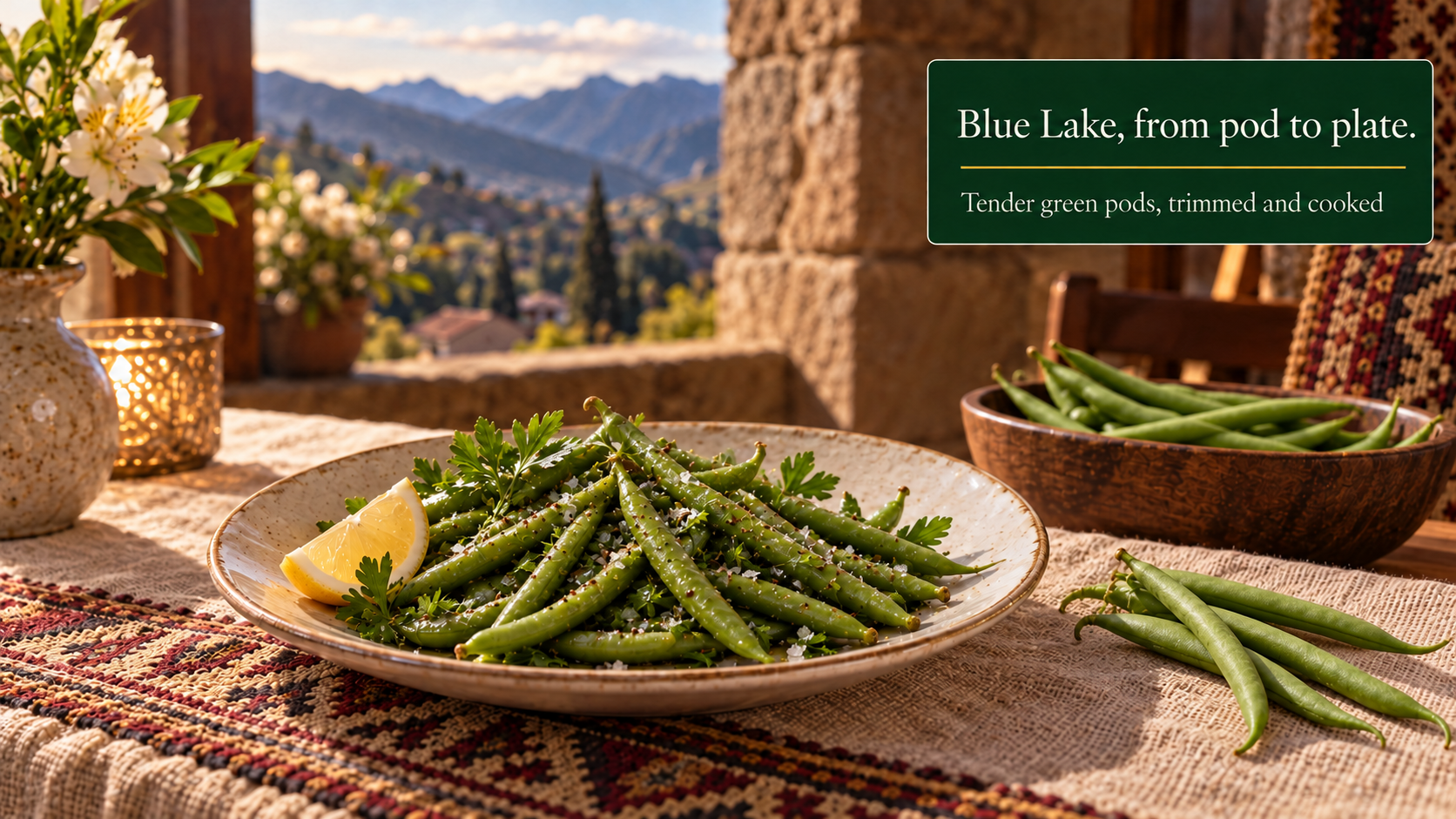
Blue Lake pods with roast duck and quinoa
Trim the washed green pods and cook them separately until they have the tenderness you enjoy. Place them beside roast duck and cooked quinoa, with lemon and chopped parsley. Keep the pods visible; they do not need a sweet glaze or a coating of hot oil.
The narrow pods give the plate a clear vegetable component. Quinoa takes up a little of the savory liquid, while lemon can be added to the beans without changing every bite of the duck.
Variety reference: Eden Brothers: Blue Lake FM1K. Heirloom; open pollinated.
Thorogreen pallares with roast cuy and native potatoes
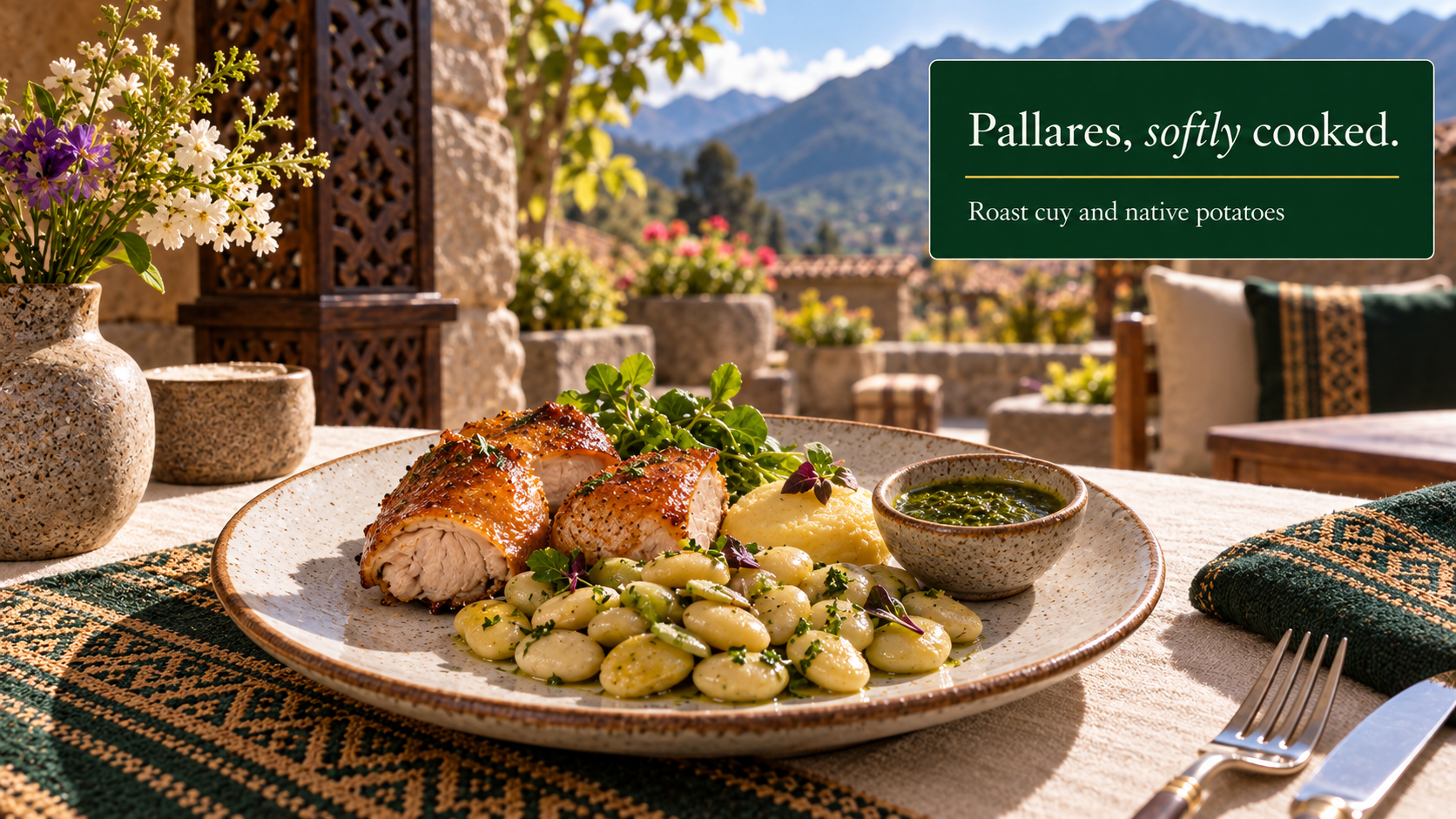
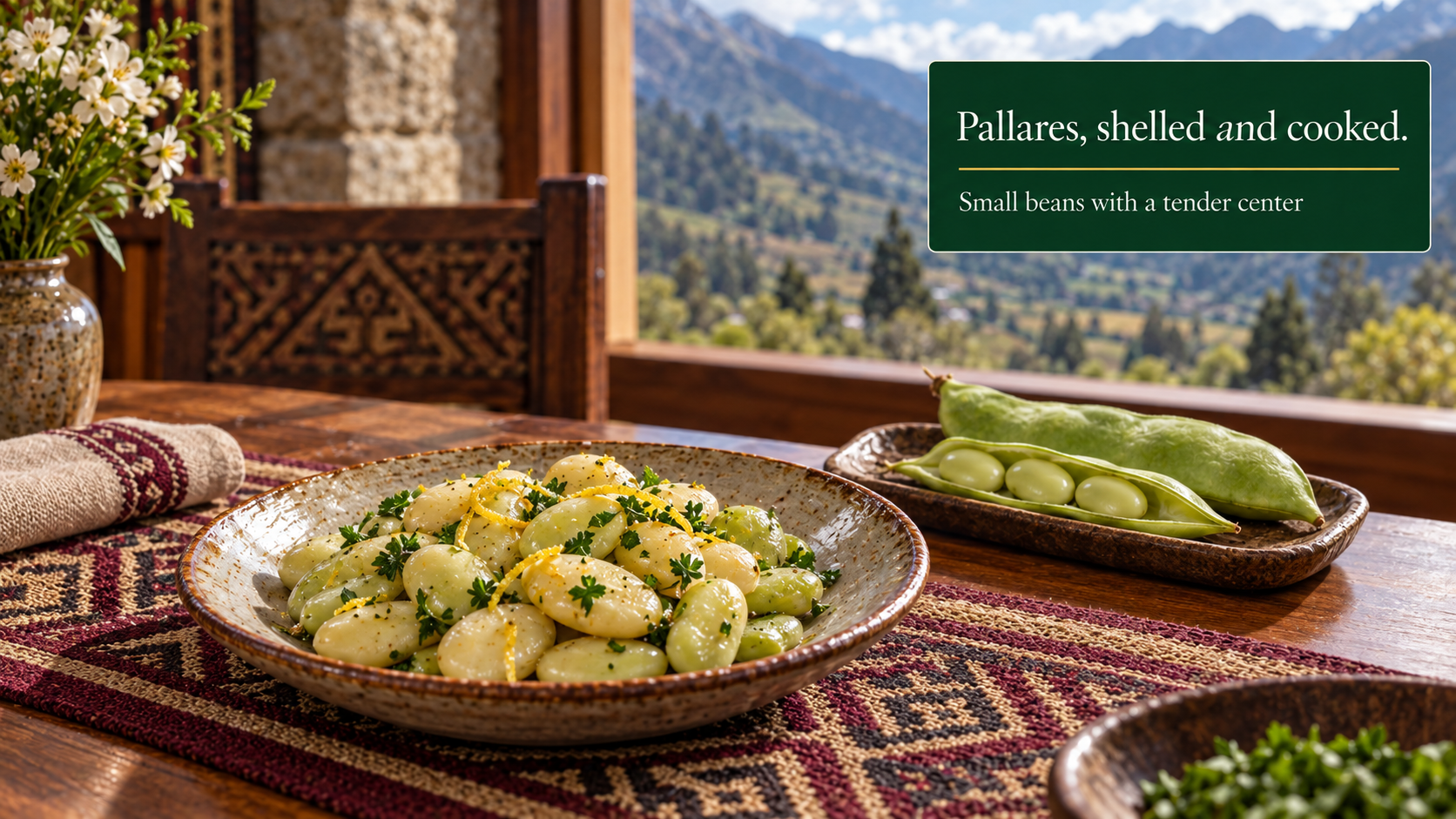
Use food-grade shelled lima beans with reliable preparation instructions, and cook them fully before assembling the plate. Serve a modest spoonful beside boneless roast cuy and a small amount of native potato puree. Offer huacatay sauce separately so the beans retain their own flavor.
The small cooked seeds make a soft accompaniment. Keeping the potato portion modest leaves room to taste the beans rather than covering them with mash. Tender green leaves add another texture without turning the meal into a crowded mixed bowl.
Variety reference: Eden Brothers: Early Thorogreen. Heirloom; open pollinated.
The pod and the seed are different ingredients
Eden Brothers identifies Blue Lake FM1K as Phaseolus vulgaris, a stringless snap-bean type. Early Thorogreen is Phaseolus lunatus, a small lima or shell bean. Both listings call the seed heirloom and open pollinated. Those descriptions identify catalog choices; they do not make the two vegetables interchangeable at the table.
For the Blue Lake dish, select tender green pods without an exaggerated row of large seeds. For the Thorogreen dish, the seeds have been removed from their pods and cooked. Do not copy the quick cooking step for a green vegetable pod onto an unfamiliar shelled-lima product.
Keep the green pods pleasant to eat
Rinse the green beans under running water and trim the stem ends. Leave short, tender pods whole; cut longer ones into pieces that can be lifted comfortably with a fork. A stringless catalog description is useful, but the actual pod still needs checking. Fibrous, overgrown beans will not become a fine side simply because their seed name sounds promising.
Moist cooking suits the tender finish shown here. Cook the pods independently of the duck and quinoa so you can check their texture. Drain before plating, then add lemon and parsley lightly. If you prefer a little sacha inchi oil, offer it as a small cold finish at the table, rather than using it to fry the beans.
Let the small pallares remain visible
Early Thorogreen is listed as a baby lima type. The serving therefore shows small cooked beans, not a mound of oversized white butter beans. Cooked color can be pale green, cream or a muted mixture of the two. A photograph of raw green seeds is not a promise that the completed dish will remain the same bright shade.
Lift the cooked beans gently rather than stirring them hard into the puree. A few intact beans are easier to appreciate than an anonymous mash. If they become very soft, a soup or a soft bean puree is another meal, rather than a plating failure that needs hiding beneath the meat.
Match the preparation to the product
Fresh shelled, frozen, canned and dried beans arrive in different states. Check the label and use preparation guidance for that particular food. Canned beans may already be cooked; frozen vegetables are not automatically ready to eat. A named seed variety does not supply a tested cooking time for every harvest or packaged product.
Lima beans need proper preparation and should not be served raw. Oregon State Extension discusses their cyanogenic compounds and explains that method and product matter. Its discussion of commercially grown U.S. beans is not a safety certification for an unidentified local harvest. If the food source or instructions are unclear, resolve that with the supplier before planning the meal. Sowing seed belongs in the garden, not on a dinner plate.
Compose the rest of the meal around the beans
The green-pod plate already has duck, quinoa and a substantial vegetable side. It needs very little else. A wedge of lemon is often more useful than an additional sauce. Serve the grain loosely enough that the diner can take a little with the duck or the beans.
The cuy plate gives the shelled pallares more space. Use the native potato puree as a small accompaniment, with the beans arranged beside it. Ask for an oven-cooked cuy preparation when that is what you prefer, and discuss the herb sauce separately. These are choices about the meal you would enjoy, rather than a reason to turn every course into a tasting exercise.
Leave room to enjoy the Sacred Valley
A good lunch is easier to appreciate when there is time to sit down. Keep the train journey, Machu Picchu entry and a substantial meal from competing for the same rushed hour. The pod-versus-seed comparison is a small example of what becomes interesting when food has a little attention.
If your visit to Peru can include a longer Sacred Valley stay, ask Florian about The SoulSearching Experience. Discuss the actual dates, venue and meal arrangements as you plan; the dishes illustrated here are ideas for the table rather than a promised retreat menu.
These dishes are serving ideas. Images illustrate the ingredients and preparations; they do not document a restaurant menu, a tested recipe or a current property harvest. The exact Eden Brothers catalog varieties remain research candidates.
Give the Sacred Valley a little more time
A trip built around Machu Picchu can also leave room for a good meal and a less hurried stay. Ask Florian about The SoulSearching Experience, his five-day Sacred Valley seminar for 8-15 participants. Discuss dates, venue and meal arrangements directly as you plan.
Questions readers ask
How do I make green beans softer?
For softer green beans, choose a moist preparation rather than a brief roast. Texas A&M's dilled-bean recipe warms cut beans in broth with onion, bell pepper, and dill. Its tender-crisp endpoint can be adjusted to the diner's preferred softness. Start with young pods, because mature leathery pods will remain less pleasant even after longer cooking.
How do fresh shell beans differ from dried beans?
Keep the ingredient form explicit. Fresh shelled beans and dried beans are different starting points, so a recipe written for one should not silently be applied to the other. Community cooks report texture differences, but the actual result depends on the bean and preparation. In this comparison, Blue Lake is the green-pod dish; Early Thorogreen is the shelled lima-bean dish. Confirm whether the latter starts fresh, frozen or dried before choosing a recipe.
Question adapted from Seasoned Advice (CC BY-SA 3.0). Answer reference Answer reference Answer reference Answer reference
How do I make crisp juicy green beans like I had in a restaurant?
For a firm cooked bite, try a recipe with a defined short cooking step. Health Canada's mixed-bean salad boils trimmed green and yellow pods for three minutes, drains them, and rinses them cold. That suits a salad. A warm restaurant-style side can use the same cooked pods with its dressing added at service.
Can green beans be served as a flavorful puree?
Yes. Cooked green beans can be blended with vegetable broth into a light puree, then finished with herbs and a little lemon. The result will be greener and less starchy than a puree of shelled pallares because snap beans include the pod. Serve a small portion beside roast vegetables or quinoa rather than expecting a potato-like texture.
Why can cooked green beans squeak against the teeth?
Some diners notice a squeak in cooked green pods. The public answer describes it as a cooking-texture issue and suggests trying a separate initial cook before combining the beans with a thick sauce. Treat that as a culinary experiment, not a safety test or a guaranteed cure. For this comparison, ask for the pod texture you prefer; it is a different experience from a soft shelled-lima side.
Question adapted from Seasoned Advice (CC BY-SA 3.0). Answer reference Answer reference Answer reference
Can dried baby lima beans directly replace frozen lima beans in a recipe?
Treat dried and frozen lima beans as different ingredients. The public question describes a recipe requiring frozen limas while the cook has dried ones. Use preparation directions for the exact dried lima product before incorporating it into a finished dish, rather than treating the frozen-bean step as sufficient. No universal bean cooking time follows from this substitution.
Question adapted from Seasoned Advice (CC BY-SA 3.0). Answer reference Answer reference Answer reference
Can the green-pod dish be served without frying?
Yes. The Blue Lake plate uses a moist preparation, then draining and a light lemon-herb finish. Cook the duck and quinoa separately and bring the components together at service. The beans do not need a hot-oil coating or a crisp fried shell to make a satisfying vegetable side.
Does Blue Lake FM1K mean that every pod will be free of tough fibers?
Eden Brothers describes Blue Lake FM1K as a stringless snap bean. Still select tender food pods and check them as you trim. A catalog description does not make an overgrown, leathery pod pleasant to eat, and it is not a comparison proving that one variety is best for every diner.
How can I avoid tough, stringy green beans?
Stringiness can come from the pod's maturity, not a missing cooking trick. Iowa State explains that snap beans are intended for eating before their seeds become large; older pods become tough and stringy. Select slender tender pods and remove any obvious seam strings during preparation. Use mature shelling beans as a different ingredient rather than expecting tender pods.
How can garlic coat green beans instead of collecting below them?
A contributor in the linked discussion describes cooking the beans first, then tossing them with garlic in a bowl. For a plated side, ask whether the garlic will season the pods or arrive in a separate dressing. This is a culinary suggestion, not a promise about the preparation a particular restaurant uses.
Question adapted from Seasoned Advice (CC BY-SA 3.0). Answer reference Answer reference Answer reference Answer reference
What savory dishes can feature pallares?
Try three clear food forms: whole pallares in broth, cooked beans in a marinated salad, or a smooth puree beside roasted vegetables. Purdue Extension provides a cooked lima, kidney, and green-bean salad with onion and pepper. For a Peruvian plate, quinoa and a separate vegetable portion could accompany the beans without hiding their broad shape.
What should I do if lima-bean preparation instructions are unclear?
For dry baby lima beans, USDA's household fact sheet gives a practical starting method: sort, soak, drain, and rinse, then cook in fresh water brought to a boil and reduced to low heat. It suggests about an hour after soaking. Follow the actual product's instructions, since a canned or frozen bean starts at a different stage.
Are lima beans an acquired taste?
You may prefer pallares in a different texture or sauce. A small serving of creamy beans with tomato and herbs, or a chilled cooked-bean salad with crunchy vegetables, offers a different experience from a plain bowl. If the dish is unexpectedly bitter, do not assume that is the flavor you must learn to enjoy; use the separate bitterness guidance.
How do I Jazz up Lima Beans?
Give the beans one clear seasoning direction. Onion and garlic suit a warm broth; mustard, thyme, vinegar, and a little oil suit a chilled salad. Illinois Extension uses the latter combination in its four-bean salad. For another meal, serve cooked pallares with tomato and herbs beside quinoa, letting the bean texture remain noticeable.
What the heck are butter beans?
Butter bean is commonly used as another name for lima bean, Phaseolus lunatus, as Oregon State's extension discussion explains. Naming varies, so check the product rather than assuming every large white bean is a lima bean. In Peru, INIA identifies pallar with Phaseolus lunatus. The food form, including dry, fresh shelled, frozen, or canned, still matters.
Do fresh shelled beans need the overnight soak used for dried beans?
Fresh shelled beans and dried beans are different starting ingredients. The linked shelling-bean guide treats fresh beans separately and does not use an overnight soak. For Early Thorogreen, confirm the supplied form and follow preparation directions for that actual lima-bean product. A general shelling-bean comparison does not replace its cooking instructions.
Question adapted from Seasoned Advice (CC BY-SA 4.0). Answer reference Answer reference Answer reference Answer reference
How to cook large lima beans without losing so much of it in the water?
For whole beans, use directions for the actual product and stop handling them roughly once they are cooked. If a batch breaks apart, turn that texture into a smooth soup or puree instead of repeatedly straining away the softened beans. Serve the puree with roasted vegetables, or keep some whole beans on top to make the ingredient clear.
Why are my lima beans bitter?
Do not try to solve unexpectedly bitter lima beans simply by masking the taste or continuing to sample them. Confirm identification, food-grade sourcing, and appropriate preparation with the supplier or a food-safety professional. Oregon State explains that lima beans contain cyanogenic compounds and that cultivar and preparation matter. Bitterness alone cannot establish the cause or prove safety.
Can cooked pallares be served cold in a salad?
Yes. Cook and cool the beans before assembling a salad. Purdue Extension combines lima, kidney, and green beans with onion and green pepper, then marinates them with dressing in the refrigerator for at least an hour. For a restrained savory plate, serve a modest portion beside vegetables rather than assuming every bean dish must be hot.
Why do lima beans need different safety guidance from a quick green side?
Lima beans contain cyanogenic compounds, and preparation matters. Oregon State Extension discusses how the food source and processing affect the issue. Use identified food-grade beans and product-specific preparation guidance; do not treat unfamiliar raw shelled beans as a quick salad ingredient. A U.S. seed listing does not verify the safety of a particular local harvest.
Continue at the table
- Scarlet Runner Beans: Cooked Pods and Seeds in a Duck Meal
- Culinary Herbs with high-altitude Andean trout: Burnet, Cress, Lovage, and Lemongrass
- Parsley Chimichurri Beside Alpaca and Roasted Vegetables
- Quinoa in Peru: breakfasts, soups and savory plates
- Cuy: choosing a cooked preparation
- Green beans at the Peruvian table
- Pallares at the Peruvian table
- All the new vegetable dishes
More ways to serve the ingredient
Put the guide into your plans
Prepare a dining request for the kitchenAnother dish to consider
- Habas in Peru: Fresh Broad Beans at the Table
- Young Winged Beans with Quinoa and Cooked Fish: A Clean Savory Plate for the Sacred Valley
- Chickpeas with Quinoa, Vegetables and Lemon Tahini: A Savory Plate for the Sacred Valley Table
- Cushuro at the Table: What This Andean Food Really Is, and How It Could Be Served
- Solterito with Habas: An Andean Cooked Salad at a Sacred Valley Table