A scattering of pomegranate arils can change a savory plate without becoming its main ingredient. Each one contributes a little juice and a seed to bite through. That makes selection important: the best fruit for a quiet grain salad may be different from the best fruit for a tart dressing. Start by opening one pomegranate and tasting it. The color of the rind is less useful than knowing how the arils feel and what their acidity will do beside the rest of the meal.
Pomegranate in Savory Meals: Choosing Whole Fruit and Serving the Arils
Pomegranate's edible portion is the juicy aril surrounding each seed. Choose sound whole fruit and taste a sample because acidity, color, and seed hardness differ among varieties. The fruit does not ripen after harvest. Separate arils from the rind and white membranes, then add them close to service for a fresh accent in savory meals. Confirm the origin of the actual batch before calling it property-grown.
The aril includes the seed
Pomegranate is Punica granatum. University of Georgia extension describes the edible arils as juicy structures around seeds, with seed hardness and juice character varying among cultivars. In ordinary conversation they are often simply called seeds. A menu can use that familiar word, but a cook should understand the whole bite: a little juice followed by the seed inside. Removing the rind does not produce a seedless ingredient.
A first tasting should therefore include texture as well as sweetness. Try an aril by itself before putting a generous handful over a dish. If the seeds feel too firm for the intended presentation, a small amount of strained juice may be a better kitchen choice. Another batch may suit whole arils very well. Neither outcome proves one fruit superior in every use. It tells the cook which form will be comfortable for the people eating this meal.
Whole fruit gives you a clearer starting point
Buying whole pomegranates lets you inspect the rind and open a representative sample. Look for sound fruit without decay or fresh damage. UC Davis notes that eating quality depends on maturity at harvest because pomegranates do not ripen afterward. Leaving an unsuitable fruit on the counter should not be treated as a way to improve its flavor. Ask the seller about the batch and taste when a sample is available.
Do not choose only the darkest red rind or assume that a pale aril must be inferior. Cultivars can differ in appearance and taste. For a planned dinner, the useful question is whether this batch provides the acidity and texture the dish needs. If buying ready-separated arils, ask when they were prepared and how they have been kept. Convenience can be worthwhile, but it gives you fewer clues about the whole fruit and makes a reliable supplier more important.
Open the fruit without crushing the ingredient
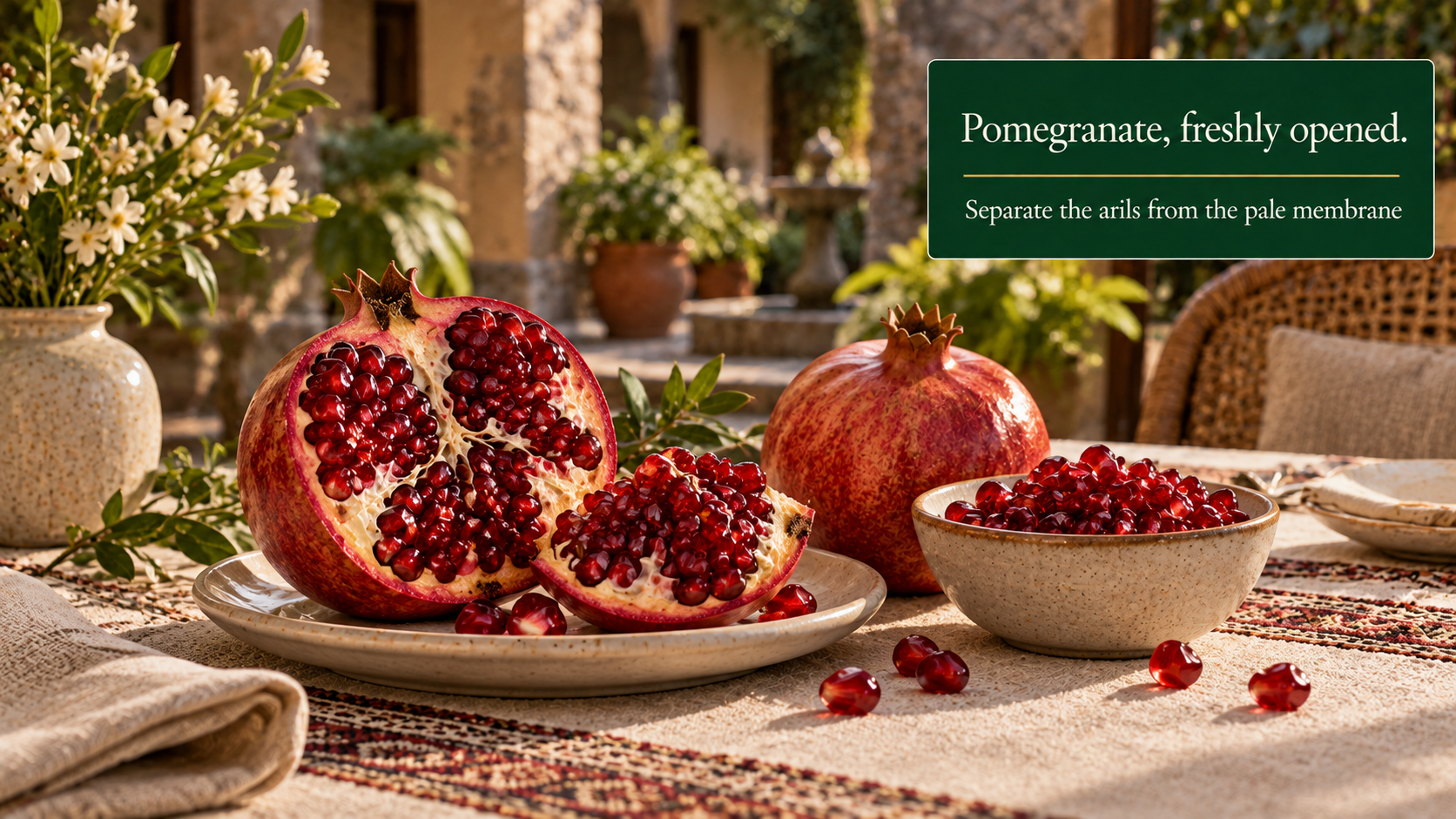
A controlled opening method is easier than cutting straight through every aril. University of California instructions describe removing the top, scoring the rind along the sections, and opening the fruit by hand. The arils can be loosened over water, with floating membrane removed before straining. Use a stable board and work slowly enough to see the sections. The goal is clean arils rather than a board covered with broken fruit.
For a meal, drain the portion well before placing it over cooked grain or leaves. Check for pieces of white membrane and rind as you work. Keep a separate bowl for the rejected parts so they do not find their way back into the serving dish. If the inside shows decay or an unpleasant condition, do not disguise it in a dressing. A whole pomegranate should be opened and checked before its appearance is used to decorate a shared table.
Use the arils as an accent, not a sweet coating
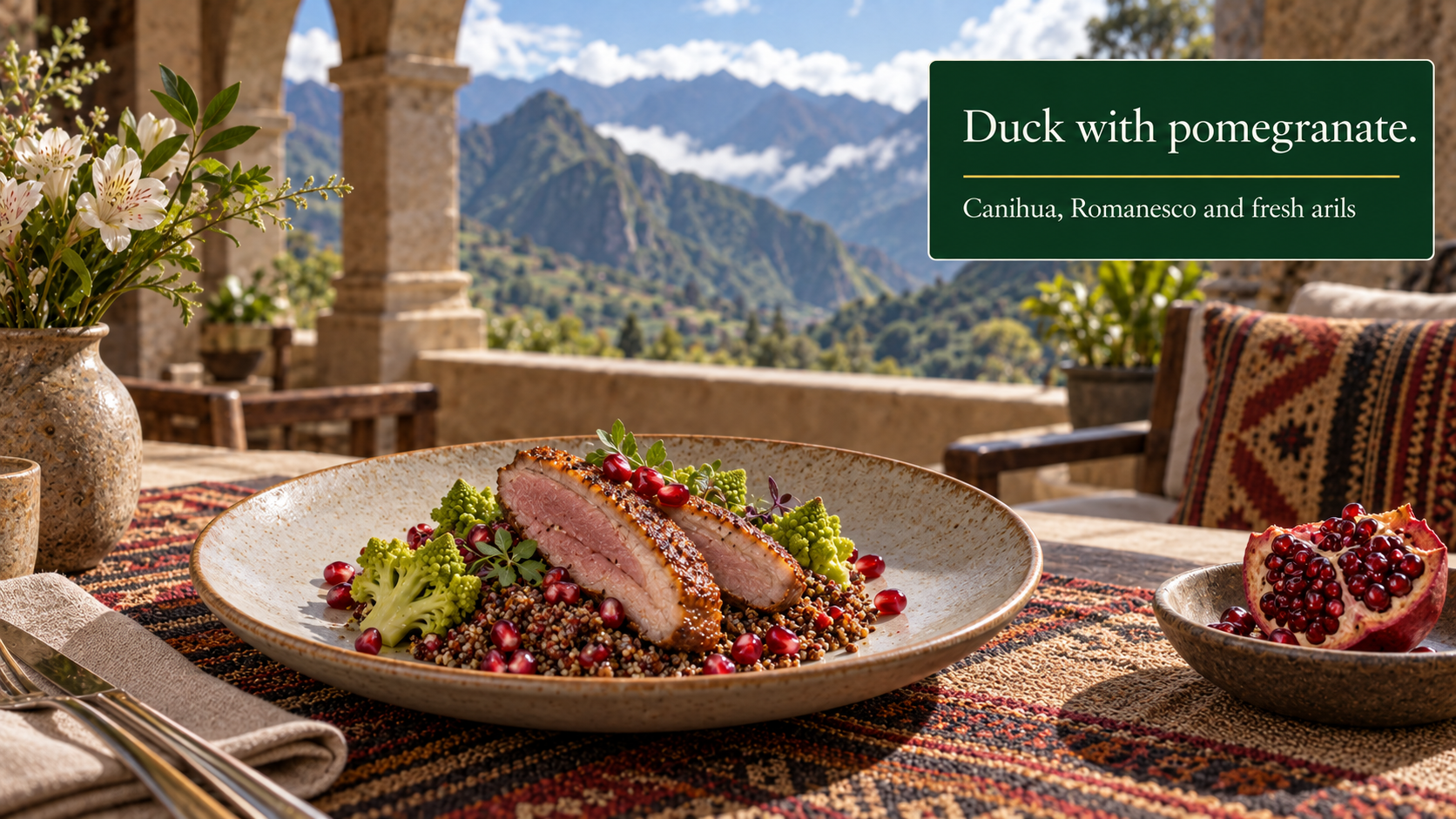
A proposed use is to add a small amount to quinoa that has already been seasoned with herbs, vegetables, and a restrained citrus dressing. Taste the grain first and add the arils afterward. That way the fruit remains a distinct bite instead of determining the flavor of the whole bowl. If the batch is sharply acidic, reduce other acidic ingredients. If it is gentler, the vegetables and herbs can provide the sharper contrast.
There is no need to reduce the juice into a sugary glaze. A few intact arils can give a meal a fresh interruption between warm, savory bites. Keep some in a small serving bowl so guests can add more if they like the texture. For a first service, this is more considerate than covering every component. The cook can learn from what diners actually enjoy and adjust the next plate rather than treating a dramatic red garnish as an automatic improvement.
Three proposed plates with Andean grains
One concept pairs roast duck with a warm cañihua and roasted vegetable salad, finished with a small spoonful of pomegranate arils. Leave the duck savory and use the fruit on the grain rather than as a thick sauce over the skin. Another plate uses high-altitude Andean trout, quinoa, tender greens, and pomegranate served on the cool salad portion. Confirm the fish's producer and production location before putting that origin claim on a menu.
A third concept pairs grilled alpaca with quinoa, cucumber, and herbs, with the arils added just before service. All three are kitchen proposals, not descriptions of meals already being served. A taste test should decide whether whole arils suit the batch and the guests. A diner who dislikes the seed texture can be offered a fruit-free portion of the grain. The complete meal should still work without the garnish; that is a useful check that the protein and vegetables have received proper attention.
The origin of this batch should be stated plainly
Florian reports pomegranate growing and producing on the Quillabamba property as of October 15, 2026. When a meal actually uses fruit from those plants, the kitchen can say so and record the harvest. If a service uses purchased pomegranates, give the real supplier or market origin when known. The property story should not be attached automatically to every pomegranate that later appears on a plate.
For a visitor, a useful sourcing statement distinguishes the place of growing from the place of dining. Fruit from Quillabamba can be discussed in relation to a Sacred Valley menu without implying that the tree grew beside the dining room. It also does not establish a standing supply arrangement or an included retreat meal. Ask what is available for the actual date. A short accurate answer about a batch is more valuable than a sweeping claim about an entirely property-grown table.
A fruiting plant is part of the lifestyle record
Pomegranate can interest a visitor as both a recognizable ingredient and a productive plant. A person considering a home with land may want to understand what the existing collection contributes to ordinary meals. The useful account begins with the particular plant and its fruit. Florian reports production on the Quillabamba property, while the identity of a cultivar, the amount harvested, and the timing of future fruit remain matters for the plant record.
During a visit, an opened sample and a dated harvest note can make that story concrete. Ask how the fruit is selected for household use and what happens to a batch that is too tart or awkwardly seeded for a particular plate. Those answers show the relationship between a collection and a kitchen. They do not establish a property's financial return or promise complete food independence. A thoughtful lifestyle account can appreciate the pleasure of serving home-grown fruit while remaining accurate about the work and other ingredients behind the meal.
Make the whole-fruit story visible
A complete plate photograph should show a realistic quantity of pomegranate relative to the protein, grain, and vegetables. A second image can show the opened fruit, the separated arils, and the rind set aside. Those views explain the ingredient more honestly than an overflowing bowl of red juice. Keep the white membrane visible in the cut specimen if it helps guests understand what was removed during preparation.
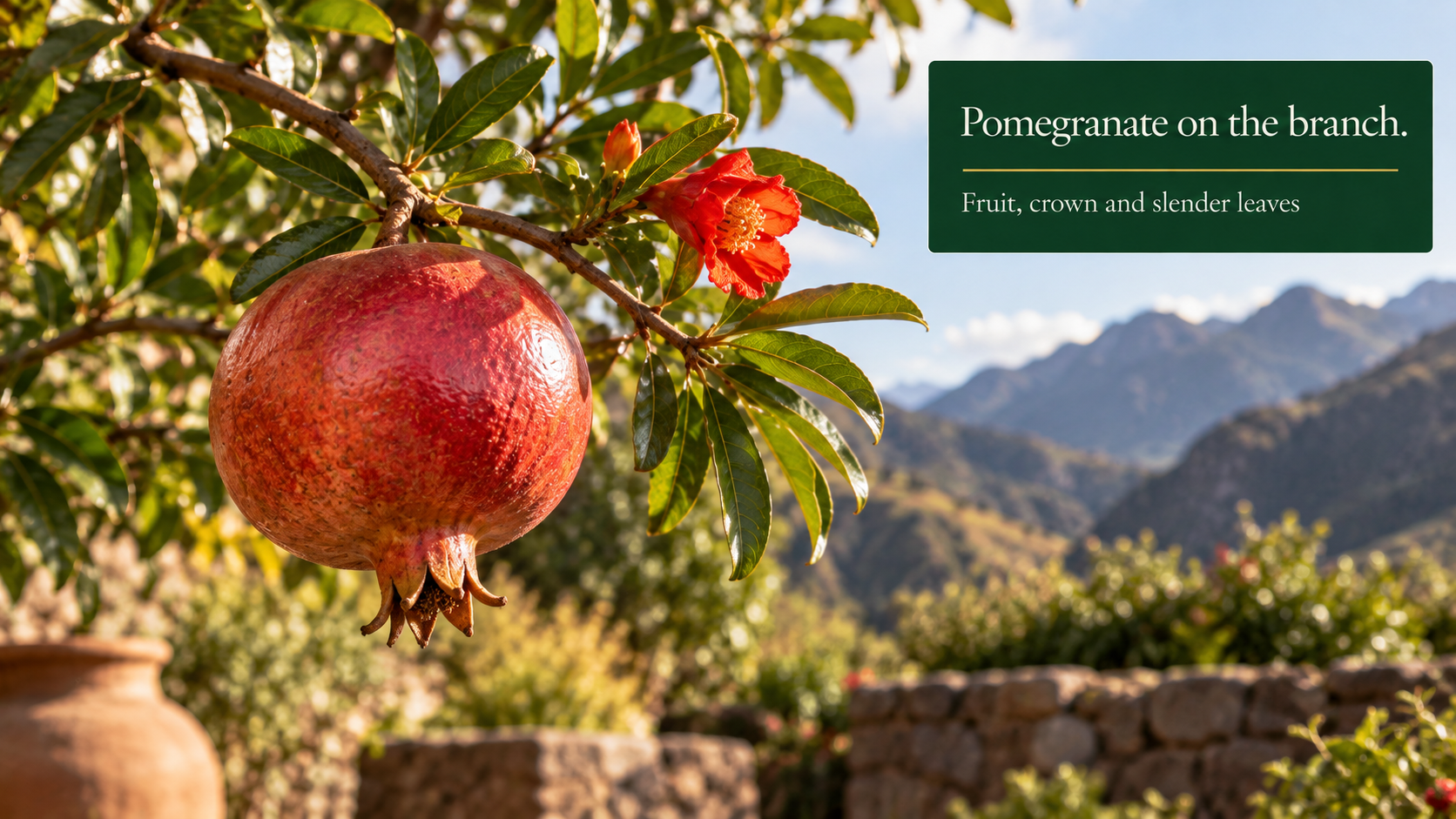
A plant illustration can then show the shrub or small tree with fruit, labeled as a conceptual study. It should not be presented as a photograph of the Quillabamba planting. Real documentation can be added when dated images of that plant and its harvest are available. The same care applies to a cultivar name: use one only when the growing record supports it. The fruit itself supplies the visual interest, so the article can remain specific about what is known and what has simply been proposed for the table.
Leave time for the Sacred Valley
Leave enough time to enjoy a good meal. If Machu Picchu brings you to Peru, ask about The SoulSearching Experience, Florian's five-day Sacred Valley seminar for 8-15 participants. Confirm the dates, venue and meal arrangements directly when planning.
Questions readers ask
Which part of a pomegranate do people eat?
The usual edible portion is the aril: a juicy covering with a seed inside. Many people chew and swallow the whole aril, though seed firmness varies and others prefer to release the juice and discard the harder seed. Remove the peel and white internal membrane when preparing a fresh serving. For a savory dish, scatter clean arils over the finished food so their texture remains noticeable.
What should I do with discolored or damaged pomegranate arils?
Sort out individual arils that are brown, mushy, or visibly spoiled. If the fruit has widespread mold, rot, or an off condition, discard it rather than trying to rescue a few good-looking pieces. University of Georgia describes browning and softening of arils as possible storage damage; the FDA advises throwing away produce that looks rotten. Appearance alone cannot diagnose every food-safety issue.
How can I remove pomegranate arils with less mess?
Wash the intact fruit first. Score the rind lightly, break it into sections, and ease the arils away from the white membrane over a bowl. A bowl of clean water can help the white pith float while arils sink. Drain and dry the arils before adding them to a salad or savory plate. Working gently reduces broken arils and juice splashes, though no technique makes the job completely mess-free.
How should I store whole pomegranates or loose arils?
Keep whole fruit cool and inspect it before opening. Once arils are removed, refrigerate them in a clean covered container and use them while their texture remains fresh. For longer storage, University of California Master Food Preservers recommends freezing arils in a single layer before packing them into freezer-safe bags. This lets you take out a small amount for a savory garnish without thawing a whole batch.
How can I extract juice from pomegranate arils?
First separate clean arils from the rind and white membrane. University of California Master Food Preservers describes briefly pulsing the arils, then pressing the mixture through a fine strainer. Work gently if you want to avoid a harsh seed flavor. The juice can be served as a drink or reduced for a savory sauce, but safe storage and any canning method need a tested recipe.
Can pomegranate arils naturally be pale instead of red?
Yes. University of Georgia notes that pomegranate juice can range from light pink to dark red and may be yellow or clear in some varieties. Color alone does not prove spoilage. Check that arils are firm and free of mold or widespread browning, and consider the cultivar if known. Discard fruit that looks rotten rather than relying on a color chart to judge safety.
Should I wash a purchased container of ready-to-eat pomegranate arils?
Read the package. FDA says produce marked pre-washed or ready-to-eat can be used without another wash, provided you keep it away from dirty surfaces and utensils. Keep pre-cut or packaged produce refrigerated. If a container does not say ready-to-eat, follow its directions and use clean hands and equipment. Rinsing cannot repair a spoiled or mishandled package.
What can I do with half a pomegranate before it spoils?
Remove the remaining arils and refrigerate them in a clean covered container. Scatter a small handful over greens, beans, grain dishes, or cooked vegetables just before serving, where their juice and texture will be noticeable. If you have more than you can use soon, freeze clean arils in a single layer and pack them after they harden. Discard any that become moldy or rotten.
How can I use fresh pomegranate beyond a leafy salad?
Fresh arils can finish a grain bowl, bean dish, roasted vegetable plate, or savory yogurt. Pomegranate juice can become a sauce, and a reduced syrup can supply sweet-tart flavor in a dressing. These are flexible serving ideas, not proof of a specific traditional dish. Keep the arils separate until serving if you want their fresh texture and color to remain distinct.
How can pomegranate molasses work in a savory meal?
Pomegranate molasses is a concentrated sweet-tart syrup, not the same texture as fresh arils. University of California Master Food Preservers describes using it in dressings, marinades, dips, and over roasted vegetables. Begin with a little, taste, then balance with oil, water, or other ingredients for your dish. If you make it at home, follow a tested reduction and refrigerator-storage method rather than treating it as shelf-stable.
What is pomegranate powder used for in savory cooking?
Check the package first: powder could mean dried ground arils, known as anardana, or another pomegranate-derived product. University of California Master Food Preservers describes dried arils as a tangy ingredient for curries, stews, breads, and pilafs. Add a small amount and taste before adding more. It is more concentrated and texturally different from fresh arils, so do not substitute equal volumes automatically.
How can pomegranate add fruit to a savory salad without dominating it?
Treat the arils as a small finishing accent among greens, vegetables, grains, or beans. Their tart juice and crunch can brighten the plate without turning it into a fruit bowl. Add them near serving time so they do not bleed into every component. Adjust the dressing after tasting the fruit; pomegranates vary in sweetness and acidity by cultivar. The exact combination is a matter of preference.
How can I keep a pomegranate sauce for a savory dish from tasting too sweet?
Start by reducing added sugar rather than trying to hide it with more sour ingredients. Pomegranate flavor itself varies from tart to sweet by cultivar. If the sauce still needs brightness, add a small amount of lemon juice or another suitable acid and taste again. A separate savory component, such as toasted nuts or spices, may help balance the plate. Follow food-safe cooking guidance for any meat in the dish.
How can pomegranate sauce be thickened without making it very sweet?
For a pomegranate-forward sauce, start with less added water and reduce the liquid gently. University of California's pomegranate molasses method shows that juice can thicken through slow evaporation even without added sugar. Taste as it concentrates, because tartness will intensify too. If the sauce includes meat, cook the meat to its safe temperature separately and follow a tested recipe for that dish.
Will thawed pomegranate arils have the same texture as fresh ones?
Do not expect the exact fresh bite after freezing and thawing. Frozen fruit can soften as its structure changes. Use fresh arils when a distinct juicy crunch is central to the plate; use a thawed portion where softer fruit is acceptable. Utah State recommends freezing arils in a single layer before transferring them to freezer containers.
Can surplus pomegranate arils be frozen in usable portions?
Yes. Utah State Extension recommends spreading arils in a single layer, freezing them quickly, then transferring them to moisture-resistant freezer bags or containers. This makes it easier to take out a portion rather than thaw the entire harvest. Juice can also be frozen with expansion space. Label the container and choose the form that suits later meals.
Will a purchased pomegranate ripen further on the counter?
No. UC Davis explains that pomegranates do not ripen after harvest, so they should be picked at eating maturity. Waiting on the counter is not a dependable way to turn a sour purchased fruit into a sweeter one. If the sound fruit is tart, use a restrained amount where acidity is welcome rather than waiting for it to behave like a banana.
Do all pomegranates have equally hard seeds?
No. University of Georgia explains that seed hardness varies with cultivar. That matters when whole arils are used as a garnish: one fruit may give a comfortable bite while another feels much firmer. Try a small portion before covering a plate. If the texture is unwelcome, strained juice provides pomegranate flavor without the same seed bite.
Is pomegranate supposed to taste sweet or tart?
Both are possible. University of Georgia describes pomegranate juice ranging from very acidic to very sweet, with cultivar differences affecting the experience. Taste a sound sample before deciding how much belongs on the plate. Tart arils can provide a small bright accent beside grain or roast vegetables; a sweeter batch may work as a more generous fresh-fruit portion.
Can rind color alone establish that a pomegranate is ready to eat?
No single red shade identifies eating maturity for every pomegranate. Cultivars differ in rind and aril color, and UC Davis emphasizes harvesting at maturity rather than relying on later ripening. For a purchased fruit, look for sound condition and assess a cut sample when possible. A supplier who knows the cultivar can explain its expected appearance more accurately.
Continue reading
- Pacay: How to Eat the Fresh White Fruit Inside the Pod
- Breadfruit for Savory Meals: Choosing, Cooking, and Serving the Starchy Fruit
- Guava for the Table: Choosing the Fruit and Using It in Savory Meals