A long green pod does not immediately suggest fresh fruit. Open pacay and the explanation appears: pale, soft cushions wrapped around individual seeds. The pleasure is in that change of texture, from firm shell to delicate edible aril. For a first tasting, leave the fruit recognizable. Serve a few fresh pieces beside a savory meal, or open a pod at the table before setting the seeds aside. There is no need to turn it into a confection to understand its appeal.
Pacay: How to Eat the Fresh White Fruit Inside the Pod
Pacay is a pod fruit whose soft white arils surround large seeds. Open a sound pod and eat the fresh white portion, separating it from the seeds and shell. The name can refer to different Inga species, so a market name cannot identify a particular tree. Its gentle sweetness works best as a fresh accompaniment, with portions kept separate from hot food.
What pacay means, and why the species matters
Pacay, pacae, guaba, and ice-cream bean overlap in everyday use. They are useful names for shopping and conversation, but they do not guarantee the same botanical species in every region. Kew recognizes Inga feuilleei as an accepted species and records the names pacay and ice-cream bean. Other food references describe Inga edulis under related names. A guide can explain that connection without assigning either name to an unidentified tree.
When visiting a growing collection, ask how the tree was identified. A nursery label is a starting point; a record of flowers, leaves, pods, and seed source provides a stronger account. Florian reports pacay growing and producing on his Quillabamba property as of October 15, 2026. It does not settle the exact Inga species, and this article leaves that question open.
Kew: Plants of the World OnlineBussmann and Sharon (2015), Plantas medicinales de los Andes y la Amazonia: La Flora mágica y medicinal del Norte del Perú, p. 150 (PDF page 78).
The edible portion is the white aril
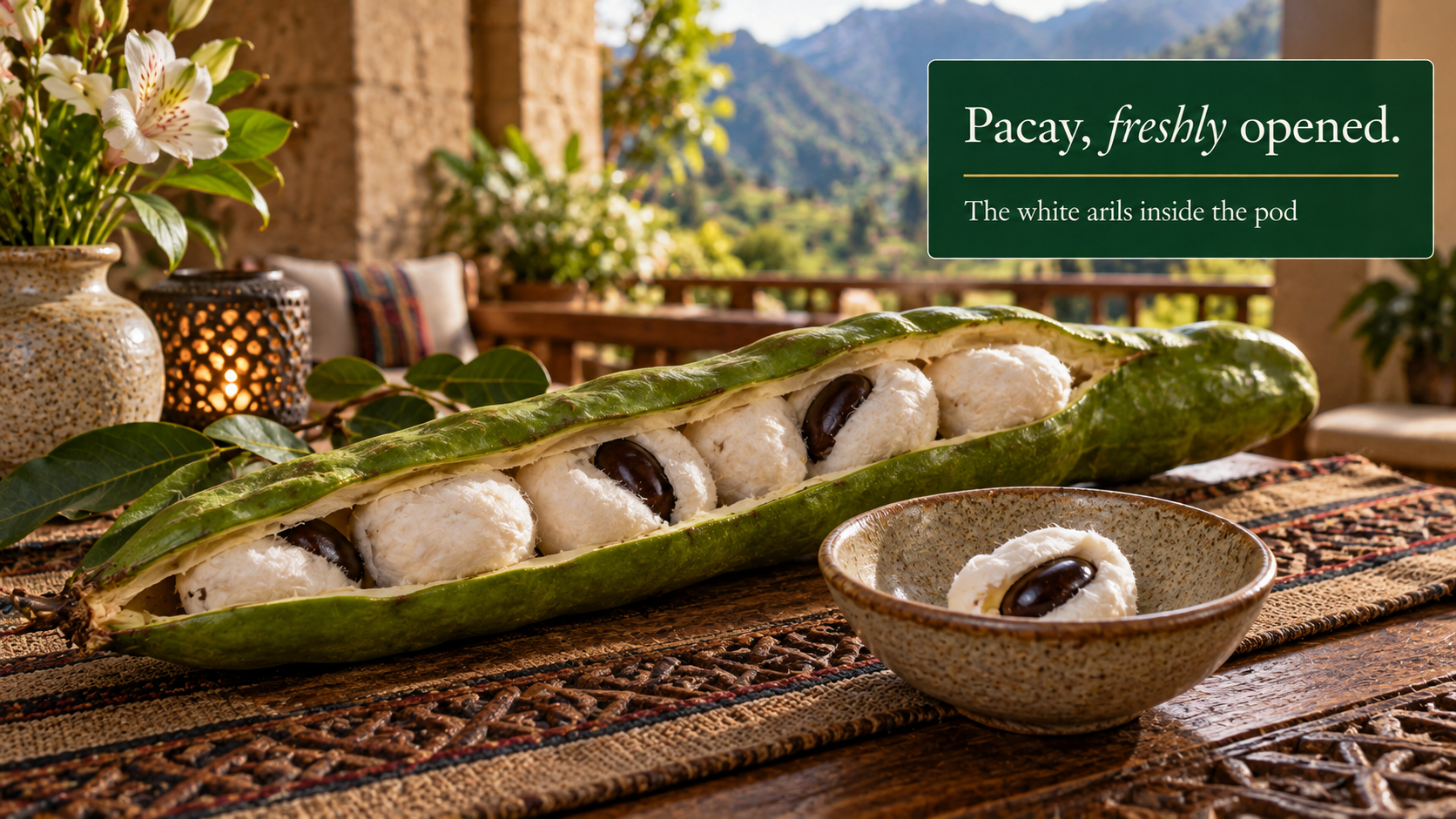
The part to look for is the white material surrounding each large seed. Food and forestry references describe that portion as sweet and fibrous or cottony. Those words describe its structure more accurately than the familiar English name does. It is fresh fruit with a soft, lightly textured bite. The dark seed and the pod wall are separate parts, and a first-time eater should be shown that distinction before tasting.
For a served portion, separate the aril carefully and set the seed aside. Do not present a bowl of whole seed-covered pieces without explaining what is inside. Keeping the edible portion identifiable also makes it easier for guests to choose how much they want. This guide does not give instructions for eating or processing the seeds. A source discussing one edible plant part should never be treated as permission to eat every part of the plant.
Choose a pod you can inspect
For a visitor buying fruit, the most useful purchase is often a small quantity that can be opened soon. Ask the seller to show a representative pod. Look at the edible portion itself rather than judging only the impressive length of the shell. A sound, clean interior matters more than a dramatic specimen. Avoid fruit with visible mold, an unpleasant fermented smell, or damaged sections that leave the inside exposed.
At a restaurant or guest table, inspect the fruit before arranging the plate. A pretty shell is useful for explaining the plant, but it should not hide an unsuitable interior. If several pods are being served, open them individually rather than mixing everything before checking. A separate bowl for shells and seeds keeps the tasting orderly. The aim is a relaxed fresh-fruit service in which guests can recognize what they are eating and leave the inedible parts without awkwardness.
Let its texture determine the preparation
Start with a plain piece before deciding on a pairing. Notice whether the aril feels especially fluffy, moist, or fibrous, and whether its sweetness is quiet or pronounced. This is a kitchen tasting exercise, not a promise that every pod tastes alike. Different plant material and harvest conditions can produce a different experience. A useful menu description should follow the fruit in front of the cook rather than a fixed comparison copied from a catalog.
As an editorial serving choice, keep pacay fresh and away from the heat of a roast or stew. Put it in a small side dish or add it to the cool part of a plate just before service. Dress the vegetables separately so the aril does not become saturated with oil or citrus. A restrained portion can give a savory meal a fresh ending without turning the whole dish sweet. There is little reason to bury its unusual texture under a thick sauce.
Three savory meals with a fresh pacay accompaniment
One proposed lunch is high-altitude Andean trout with quinoa, cucumber, and a few fresh pacay arils served in a separate small bowl. Keep the fish savory, with herbs and lemon, and let the fruit remain a distinct cool bite. The grain can carry the vegetable juices while the arils stay dry enough to show their texture. This is a meal concept for a kitchen to test, with the high-altitude Andean trout's producer and growing location confirmed before they appear on a menu.
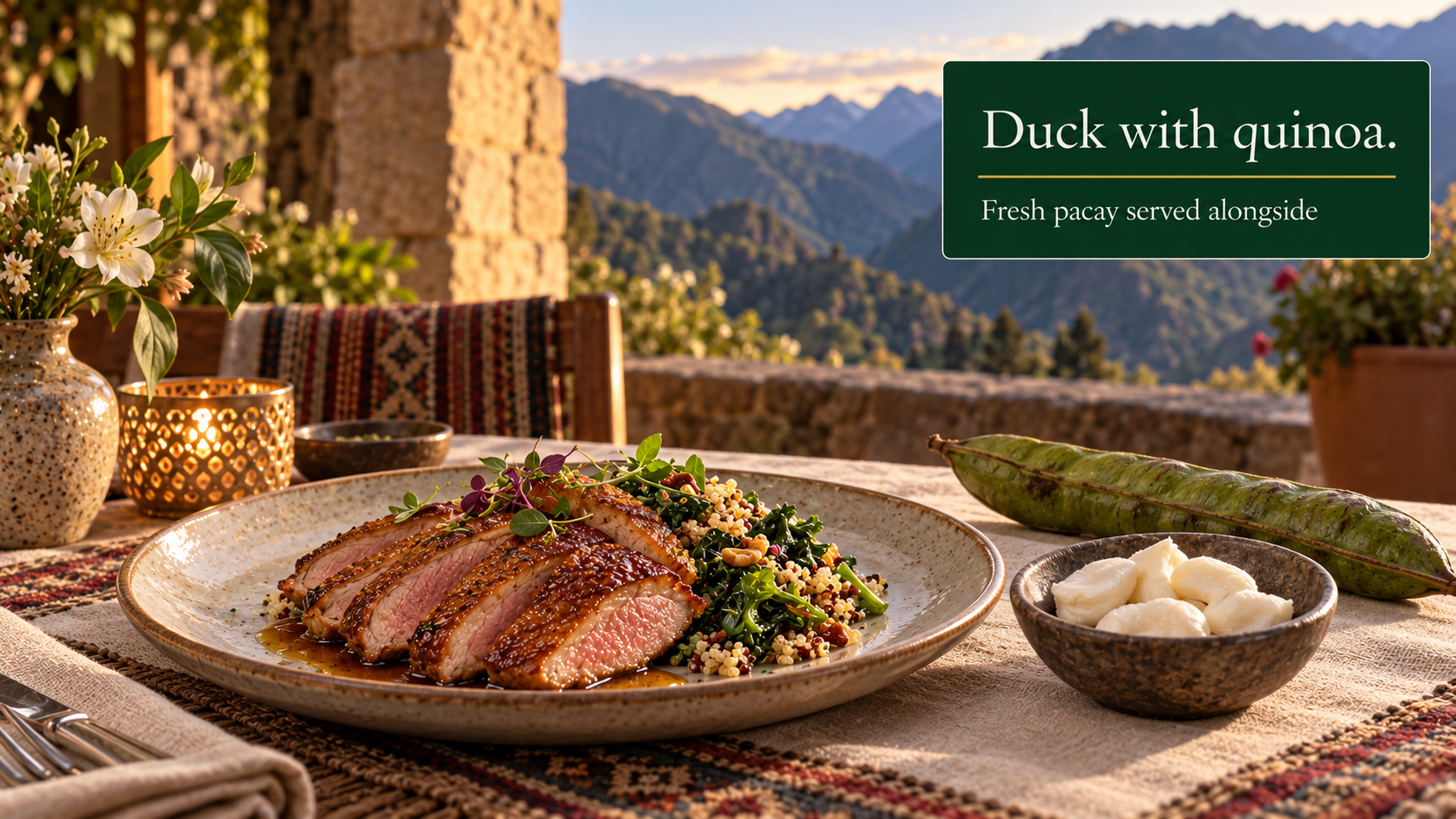
A second proposal pairs sliced roast duck with cooked cañihua and tender greens, followed by a small fresh pacay portion. A third uses grilled alpaca, a warm quinoa and roasted vegetable salad, and pacay beside the salad rather than underneath the hot meat. These combinations deliberately avoid sweet glazes. The fruit does not need to become a sauce to belong at a carefully prepared table. Portions and availability would be decided by the kitchen for the actual service.
What a producing collection tells a visitor
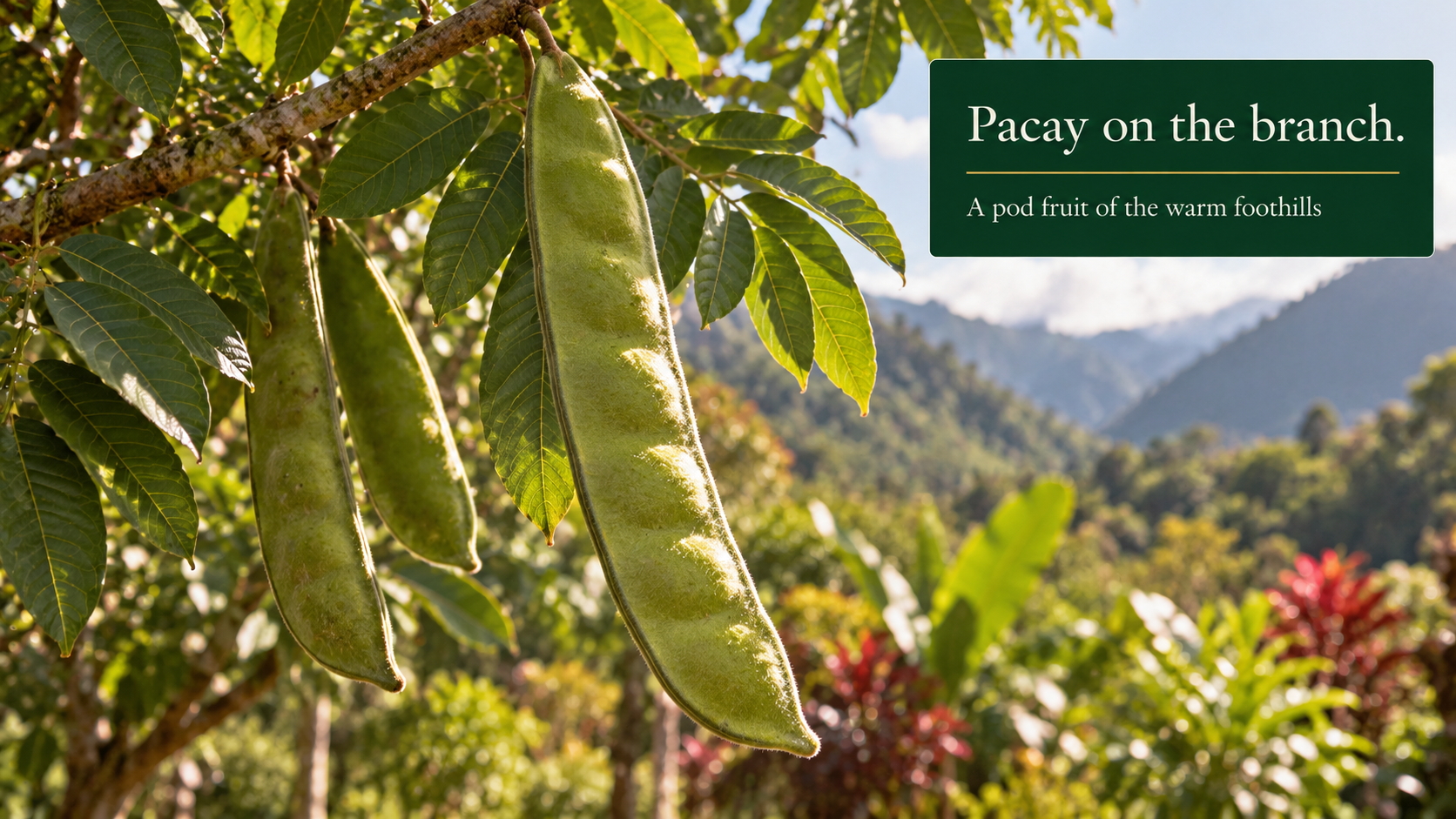
For a visitor considering a longer stay or a home with productive land, a mature fruit tree can make daily life tangible. Pacay is an example of food that may be unfamiliar even to someone who knows Peru's better-known crops. An opened pod is a useful introduction: it shows a real ingredient and a way to eat it. Florian reports the tree growing and producing on the Quillabamba property; the exact species and the amount available remain separate questions.
If productive land is part of a visit, ask to see the growing record and a current harvest when seasonally available. A plant list alone cannot show the work needed to maintain a collection, and a single attractive pod cannot establish an annual yield. A walk that identifies the tree and explains where its fruit goes provides a more concrete account. This is a food and lifestyle discussion, not a land listing or a forecast of what another property will produce.
Separate the current harvest from the wider collection
A planted collection and today's kitchen supply answer different questions. For a tasting, ask whether the pacay came from the collection, another named grower, or a market purchase. Then ask when it was harvested or purchased and whether the identity was checked. These are practical questions about the fruit being served. They are more informative than an unqualified claim that everything on the table came from the surrounding garden.
For the grower, a simple harvest note can record the tree label, pod condition, amount collected, and kitchen response. A photo of the opened pod can help compare later harvests, though it cannot by itself prove a species. If the fruit is unavailable, keep the description honest and serve another ingredient. None of the proposed meals establishes an included seminar menu, a guaranteed tasting, or a daily harvest. Those details depend on the actual event arrangements and the produce available at the time.
How to present the fruit without losing the food story
At the table, a short explanation is enough: this is pacay, the fresh white portion surrounds a large seed, and the shell and seed are set aside. Let guests inspect an opened pod before serving a clean portion. An illustrated menu could show the complete savory meal first, a closer view of the edible arils next, and the tree afterward. That order answers the visitor's immediate question about what they will eat before moving into botany.
For a garden discussion, label the plant at the level the evidence supports. Inga species is preferable to a confident but unverified species name. A proposed illustration of pods on a branch should be marked as a plant study rather than presented as a photograph of the actual collection. The ingredient has enough interest in its real form: a protective pod, a delicate white edible portion, and a fresh taste that can be served plainly. It does not need an invented harvest story.
Leave time for the Sacred Valley
Leave enough time to enjoy a good meal. If Machu Picchu brings you to Peru, ask about The SoulSearching Experience, Florian's five-day Sacred Valley seminar for 8-15 participants. Confirm the dates, venue and meal arrangements directly when planning.
Questions readers ask
What do pacay's white pulp and texture taste like?
The part usually eaten fresh is the white, cottony material around each seed. Botanical references describe it as sweet, while the ice-cream name is a loose comparison, not a promise that it tastes like a frozen dessert. Eat a little from a correctly identified, sound pod and describe the flavor in your own words. Texture and sweetness can differ among Inga species and individual fruit.
Where might a traveler encounter pacay, and when is it available?
Pacay is a familiar Peruvian name for Inga fruit, and several Inga species can be sold as ice-cream bean. A single traveler's market sighting does not establish a season or reliable availability in another town. Ask a local seller which fruit is being offered and whether the pod is fresh. The Quillabamba planting reported for this project does not establish a visitor harvest schedule or sale.
Is pacay the same as every ice-cream bean?
No single common name resolves the species. Kew identifies Inga edulis as the best-known ice-cream bean and also names Inga feuillei as pacay in Peru. Other Inga species may carry similar names and produce pods with different shapes or flavor. For a precise plant label, obtain a botanical identification from the tree or a reliable nursery record rather than assuming a social-media photograph proves the species.
How is fresh pacay usually eaten?
Open a correctly identified, sound Inga pod and eat the white, soft covering around the seeds. That is the fresh snack described by botanical sources. The large seeds and green pod are separate parts; do not assume they can be eaten raw because the white material is edible. The simple fresh serving needs no recipe, though a confirmed edible fruit can be paired with a meal as a separate fruit course.
Is pacay cleaner to eat than an apple or banana?
The tough pod can keep the white pulp enclosed until opening, which some people find convenient. That is a personal handling preference, not a food-safety ranking. Wash the outside before cutting, use clean hands and utensils, and discard a pod with obvious rot or damaged contents. Those basic steps matter more than a claim that any one fruit is inherently the cleanest snack.
Is guaba the same fruit as guava or guayaba?
The names can be confusing. Inga pod fruits may be called guaba, while ordinary guava is Psidium guajava, often called guayaba in Spanish. These are different plants. Ask to see the fruit: an Inga pod contains white pulp around large dark seeds; a guava is a fleshy fruit with many much smaller seeds. A spoken market name alone cannot settle its identity.
Can I treat pacay seeds like ordinary cooked beans?
Do not substitute unidentified Inga seeds into a common-bean recipe. Pacay names can cover different species, and advice about the edible white pulp does not establish a seed preparation. This guide serves the fresh white portion and sets the seeds aside. If a cook proposes a seed dish, ask for a verified species and a suitable authoritative preparation reference first.
Does pacay need a recipe, or can it accompany a savory meal?
A fresh tasting is enough to introduce the white edible portion. For this collection, we suggest a small separate bowl beside roast duck and quinoa so the soft fruit stays distinct from the hot food. That pairing is an editorial serving idea. It is not a traditional recipe claim, a photographed restaurant plate or a confirmed retreat meal.
Does an Inga tree have a role beyond its fresh fruit?
Inga trees have documented roles in tropical agroforestry, including shade in coffee and cacao systems. That context helps explain why a fruit tree might belong in a larger productive landscape. Its actual role on a property depends on the identified species, layout and management. It does not establish an edible use for the leaves, shell or other plant parts.
How can I choose a pacay pod that is ready to eat?
Ask the grower or seller to identify a mature pod from that particular tree, ideally with an opened example. Inga fruits differ in shape and size, so one color rule is a poor guide for every fruit sold as pacay. Choose sound pods with fresh-looking contents. A useful first purchase is a pod you can open and enjoy soon.
Should I open all my pacay pods before serving?
Open only what you expect to serve, keeping the rest intact until needed. The fresh white covering is the attraction, so there is little advantage in exposing every piece early. Buy modestly when you are still learning the fruit. The sources reviewed do not establish a dependable storage period across all Inga species or local handling conditions.
What should make me reject a pacay pod?
Pass over fruit with obvious decay, mold, leaking damage, or a distinctly unpleasant smell when opened. Do not taste questionable pulp to decide whether it is acceptable. With a fruit that is new to you, have the seller show you a sound example for comparison. FDA guidance supports choosing undamaged produce and discarding rotten fruit.
Why might a pacay seed already be sprouting inside the pod?
Inga seeds can begin germinating while they are still inside ripe fruit, a behavior described by rare-fruit specialists. That explains why a market pod may contain a seed that looks ready to grow. It does not turn the seed into a salad sprout. For the fresh snack, keep to the familiar white covering and set the seed aside.
How should I compare two Inga fruits offered for tasting?
Compare small pieces from clearly identified, equally fresh pods. Notice sweetness, aroma and how much white pulp surrounds each seed. Let your own preference guide the choice. Kew documents several edible-fruited Inga species with different pods, so two fruits sold under related names need not give the same tasting experience.
Does seeing an ice-cream bean tree in a cooler garden establish that it will produce fruit there?
Survival and useful fruit production are different observations. For a property visit, ask to see the actual tree, its identified fruit, and the recent harvest record. Florian reports production at Quillabamba; that report should not be transferred to another site. A cold-tolerance discussion from California or Australia cannot establish production at a highland Sacred Valley property.
What should I expect to see when visiting an established pacay planting?
Expect a woody Inga plant bearing bean-like pods rather than a row of ordinary vegetable beans. Kew describes trees and shrubs within the genus, with different fruit shapes. On a visit, connect the local name with the actual plant and a sound pod. The established setting is part of the interest, while the exact taxon of Florian's tree remains unconfirmed.
What should I ask about the source of pacay served at a meal?
Ask who grew or collected the pods, where they came from, and how recently they were harvested. A recognizable local name does not establish organic certification or a particular harvesting standard. For this project, Florian's report concerns producing plants at Quillabamba. It does not establish the provenance of every pod that might be bought for a separately arranged meal.
Why might the quinoa served with pacay taste bitter?
Quinoa can retain a bitter-tasting saponin coating. Check whether the package is pre-rinsed; otherwise rinse the seeds in a fine-mesh strainer and drain before cooking. Keep the grain savory with herbs and a suitable broth. Serve the pacay arils separately so their delicate texture remains distinct rather than trying to use their sweetness to cover an unpleasant grain.
How should the roast duck beside fresh pacay be checked for doneness?
Use a food thermometer in the thickest part of the duck, avoiding bone. USDA recommends 165 F for poultry, including duck. Color or the appearance of juices cannot replace that measurement. Serve the cooked duck with its savory grain and greens, keeping fresh pacay in a separate small dish so it remains a cool fruit accompaniment.
How can the high-altitude Andean trout-and-pacay meal be easier to eat without small fish bones?
Ask for a high-altitude Andean trout fillet prepared with pin bones removed, and inspect it while portioning. A fillet is not an absolute guarantee that every bone is gone. Keep the fish visible beside the quinoa and vegetables rather than mixing it blindly through them. The pacay can remain in its own small bowl, with its seeds set aside separately.
Continue reading
- Breadfruit for Savory Meals: Choosing, Cooking, and Serving the Starchy Fruit
- Guava for the Table: Choosing the Fruit and Using It in Savory Meals
- Pomegranate in Savory Meals: Choosing Whole Fruit and Serving the Arils