Guava can announce itself before it reaches the table, but a strong aroma is only one version of the fruit. Some guavas are chosen for crisp pale flesh; others are eaten softer, with pink or red interiors. That difference changes the meal. A firm slice can sit comfortably beside cucumber and herbs, while a softer fruit may be better passed through a sieve for a small spoonful of dressing. Begin with the fruit's actual texture, then decide what the plate needs.
Guava for the Table: Choosing the Fruit and Using It in Savory Meals
Ordinary guava is Psidium guajava, a fruit with edible flesh and small, often hard seeds. Varieties differ in flesh color, aroma, acidity, and preferred eating stage. Ask whether a batch is intended for crisp eating or soft ripe fruit, then taste it before dressing a dish. Guava can accompany savory meals as fresh slices or a restrained fruit dressing without added sugar.

Start with ordinary guava, Psidium guajava
Guava in this guide means Psidium guajava. The University of Florida identifies it under the names guava and guayaba and distinguishes related fruit species. That botanical anchor matters when a market has several fruits with overlapping local names. Guava is separate from guanábana or soursop, and from pacay pods sometimes described with a similar-sounding name. A fresh-fruit guide should make the distinction before discussing taste or uses.
Florian reports guava growing and producing on his Quillabamba property as of October 15, 2026. That gives the ingredient a real connection to the collection. It does not establish a cultivar name or identify the color of every harvest. When discussing a particular tree, use its documented label and the cut fruit rather than assigning a familiar variety from a picture. A plain description such as pink-fleshed guava can be more useful than an attractive but unconfirmed cultivar name.
Choose texture before choosing a recipe
University of Florida guidance separates guavas commonly eaten soft and ripe from some white-fleshed types chosen while still crisp. It also describes a range of sweetness, acidity, and aroma. For the shopper, the practical lesson is to ask how the particular batch is normally eaten. Do not use softness alone as a universal test, and do not assume that every pale guava is unripe or every green-skinned fruit unsuitable.
Buy one or two to taste before committing a menu to them. Cut a sample and notice the firmness around the seed center as well as the outer flesh. A slice that holds together can become part of a composed salad. A very soft fruit asks for a different approach. If the flavor is already intense, the rest of the dish can stay simple. The cook's job is to make that fruit pleasant to eat, not force every guava into the same puree.
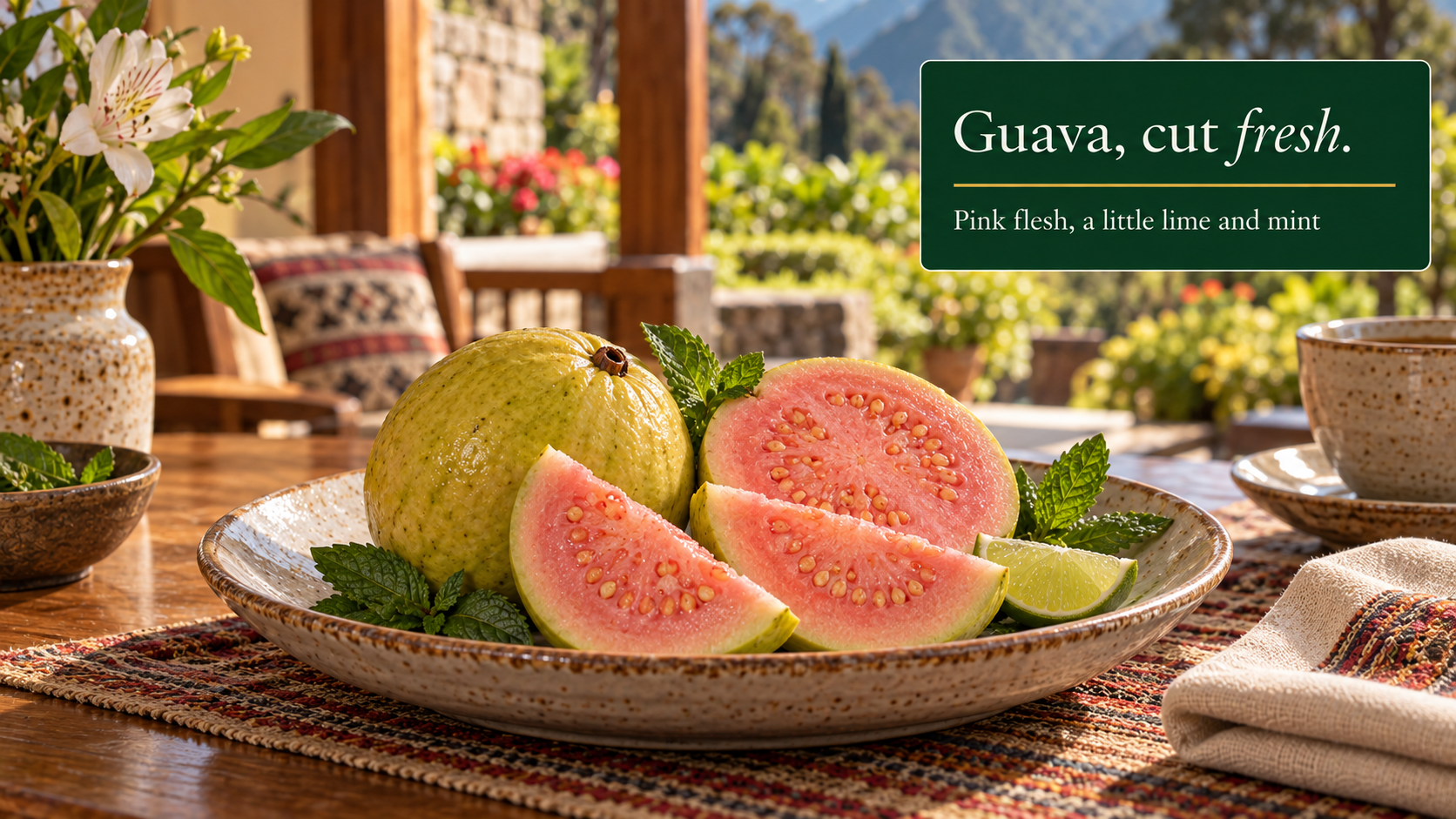
Prepare a portion guests can eat comfortably
Wash the fruit before cutting and inspect the interior on a clean board. Guava contains small seeds, and their hardness can be the most noticeable part of a first tasting. Tell guests what to expect. A small wedge is useful for someone who wants to explore the whole texture; a smooth dressing suits a diner who would rather avoid the hard seed center. Neither presentation needs to hide what the fruit is.
For a smooth preparation, pass softened edible flesh through a suitable sieve instead of promising that an ordinary blender will make the seeds disappear. For slices, choose the cut that works with the sample and keep the pieces manageable. Do not include fruit with visible spoilage because the outside looked acceptable. A kitchen can keep one sound cut fruit available for explanation while serving clean portions on the plate. That makes the ingredient recognizable without asking guests to sort through a large bowl of seeds.
Keep the flavor fresh rather than turning it into a glaze
A proposed savory use is a small guava and cucumber salad, dressed lightly with citrus and herbs after the fruit has been tasted. Adjust the citrus to the batch rather than following an automatic formula. A more acidic guava may need very little. A softer fruit can instead contribute a spoonful of unsweetened dressing to a grain salad, with the main protein left savory.
The measure of success is whether a guest can still recognize the guava. A thick sweet glaze on every component would make that harder. Put a test portion beside the cooked meal and taste the combination while the fish or meat is still warm. If the fruit overwhelms the dish, serve it separately. There is no need to prove that a fruit belongs in a savory meal by cooking it into a sauce. A cool fresh accompaniment is a complete culinary role.
Three proposed meals that give guava room
For a first concept, serve herb-roasted high-altitude Andean trout with quinoa and a cool salad of firm guava, cucumber, and chopped herbs. Keep the salad juices away from the fish until the guest chooses to combine them. Ask the kitchen where its high-altitude Andean trout was raised or caught and which supplier provided it. The guava's Quillabamba connection can be stated separately when that is the batch being used.
Another concept combines roast duck with cañihua, tender greens, and a little sieved guava dressing offered alongside. A third pairs grilled alpaca with a warm quinoa and vegetable salad and fresh guava wedges on a small side plate. These are proposed meals for testing, with no added sugar, frying, or sticky reduction. The portion of fruit should support the meal rather than cover it. None is a promise that a named dish is included in a seminar or available on every visit.
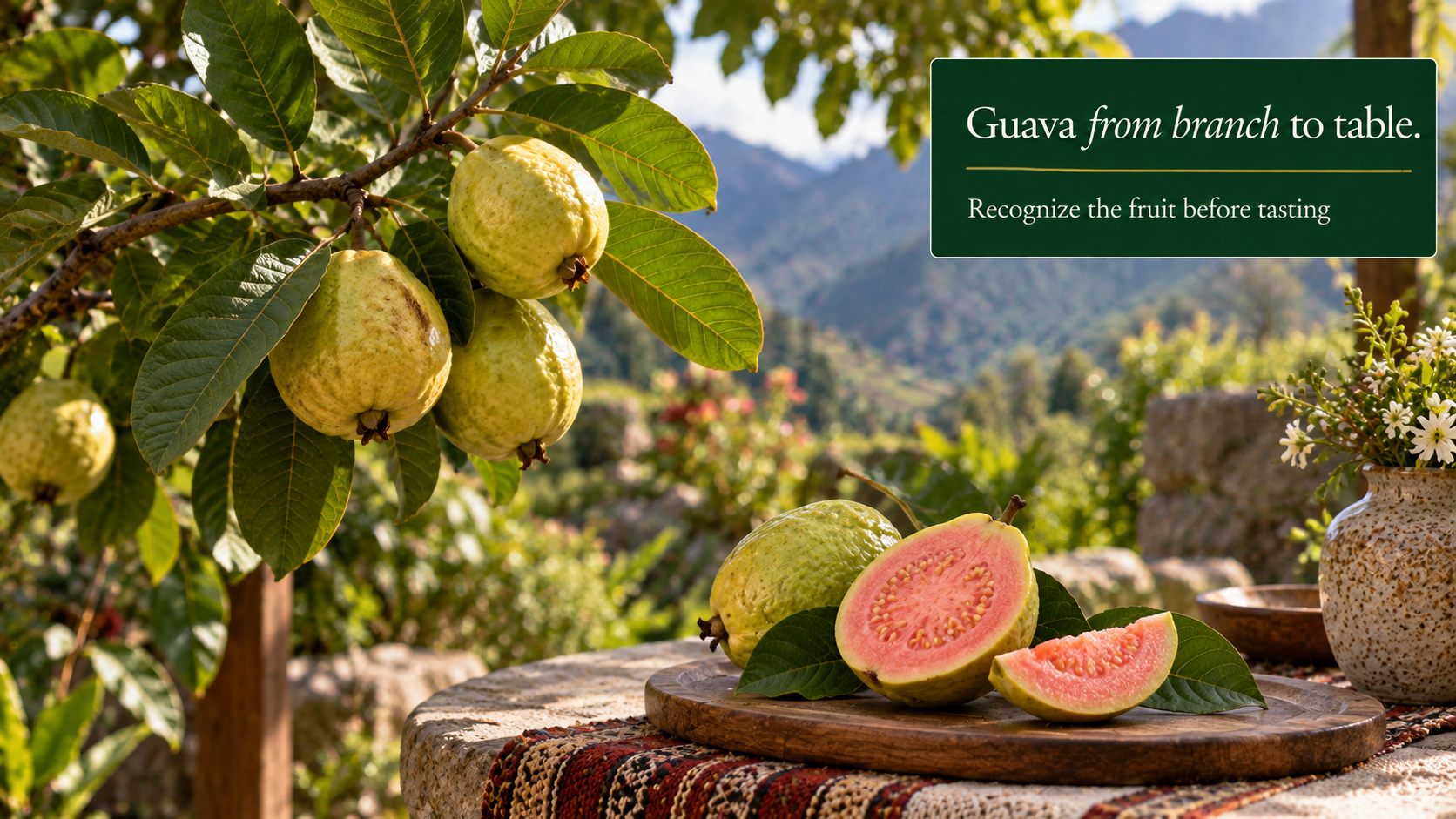
From a Quillabamba harvest to a Sacred Valley table
A regional ingredient story is strongest when the locations remain clear. The growing tree belongs to the reported Quillabamba property. A meal discussed for Sacred Valley dining belongs to the place where it is cooked and served. Connecting the two does not require pretending the growing conditions are identical, and it does not establish an ongoing delivery arrangement. Confirm the actual batch before describing it as fruit from that property.
For a kitchen purchase, record whether the fruit came from the property, another grower, or a market supplier. Ask which stage it was harvested for and how it was handled in transit. A producer name, purchase date, and batch description give the cook useful information. They also let a menu tell the truth in a short sentence. If a later service uses a different source, update the wording. The same ingredient can have a changing supply story without becoming less interesting.
Guava as part of a productive Quillabamba lifestyle
For a foreign visitor imagining a longer stay in the region, a fruiting guava tree makes a broad idea of productive living easier to understand. It has a direct route to the table: pick a suitable fruit, inspect it, and decide whether to serve slices or a small dressing. The reported production on Florian's Quillabamba property supplies that context. It does not require a claim that all neighboring properties have the same conditions or the same variety.
A useful property visit would connect the named tree with its actual fruit and a record of when harvests occur. Ask who manages the collection and which fruit the household or kitchen prefers. These are concrete lifestyle questions, especially for someone used to buying every ingredient from a store. They remain separate from a property valuation, a land offer, or a claim of food self-sufficiency. One productive fruit tree can enrich a table while still depending on the wider work and sourcing of a real household.
A useful tasting is specific and modest
Serve a first-time guest a small plain piece before the composed dish. Explain whether this batch is intended to be crisp or soft, and point out the seeds. Then let the diner try the fruit with the herbs or grain. The comparison gives more information than a long list of supposed benefits. Guava does not need to be presented as medicine to earn a place in a well-prepared meal.
For photographs or illustrations, begin with a complete savory plate so the portion and culinary role are clear. Follow with the cut fruit and then a plant study. An imagined branch should not be described as documentation of the Quillabamba tree, and a pink interior in an illustration should not become a cultivar claim. A dated photograph of the actual cut fruit can later add that evidence. Until then, keep the image a proposed presentation and the written description tied to the fruit being discussed.
Leave time for the Sacred Valley
Leave enough time to enjoy a good meal. If Machu Picchu brings you to Peru, ask about The SoulSearching Experience, Florian's five-day Sacred Valley seminar for 8-15 participants. Confirm the dates, venue and meal arrangements directly when planning.
Questions readers ask
Which parts of guava can I eat fresh?
For ordinary guava, Psidium guajava, the washed skin and flesh can be eaten together, or the fruit can be peeled. The interior contains many small, sometimes hard seeds, which you may leave in or remove for a smoother serving. Varieties differ in size, peel thickness, acidity, and seediness, so the fruit in front of you may feel unlike another person's guava. Discard fruit with signs of rot or insect infestation.
What can I do if guava seeds feel too hard?
Guava seeds can be hard enough to make a fresh bite unpleasant. You do not have to chew them: cut around the seed-rich center, scoop it out, or push soft pulp through a sieve or food mill for a smoother texture. For a drink, strain after pulping if that is the texture you prefer. Do not use an individual's comment about swallowing seeds as a substitute for assessing your own needs.
How can I tell whether guava is ready to eat?
Readiness depends on the variety and the way you want to serve it. UF/IFAS says pink or red guavas for fresh eating are commonly picked as the peel lightens toward yellow, then allowed to soften. Some white varieties are deliberately eaten firm and green to light green. A fragrant, sound fruit is a better starting point than a rule that all guavas must be soft or yellow.
How can I make a simple guava drink?
Wash sound guavas, trim damaged spots, then pulp or blend the flesh with potable water to the texture you want. Strain if the hard seeds bother you. The University of Hawaii's food guide also describes boiling and straining fruit to extract juice. Serve freshly made juice promptly or keep it chilled; the FDA cautions that untreated fresh juice can carry foodborne germs, especially for higher-risk drinkers.
Will fresh guava taste like guava-flavored drinks or candy?
Not necessarily. UF/IFAS describes a wide range of guava flavors and aromas, from mild to strongly aromatic and from sweet to highly acidic. White guavas eaten crisp and green can give a different impression from ripe pink or red fruit. Try a small portion of a known variety before building a savory dish around it; packaged flavors often include sugar or other ingredients.
Where can guava vinaigrette fit into a savory meal?
Use it as a dressing for greens or a grain-and-vegetable bowl, or spoon a little over a cooked dish just before serving. Start with a small amount because bottled vinaigrettes vary in sweetness and acidity. For fresh guava instead, remove hard seeds if desired and mix the pulp into a dressing. Check the purchased product's ingredient label and follow its storage directions.
Where can I look for fresh guava in the United States?
Fresh guava may appear in a supermarket's specialty produce section or at a Latin American or Asian grocery, depending on the area and season. Call ahead and ask whether the fruit is ordinary guava, Psidium guajava, since pineapple guava and strawberry guava are different species. Check that the fruit is sound and choose its ripeness for the planned meal. Availability cannot be promised for a particular store.
When is a strong guava smell normal, and when should I discard the fruit?
Some guava varieties have a pronounced aroma, and UF/IFAS documents substantial variation in scent and flavor. A strong smell alone does not identify spoilage or prove that a fruit is safe. Inspect for visible mold, rot, damaged flesh, and insect infestation; discard fruit that looks rotten. Store sound ripe guava as recommended for the variety and use it promptly in a fresh dish.
What simple seasonings can make guava work in a savory plate?
A little salt, chile, or lime can give a crisp guava a savory direction; start lightly and adjust by taste. This is a serving idea, not a fixed traditional recipe or a claim that every guava needs seasoning. UF/IFAS notes that some white varieties are deliberately eaten green and crisp, while ripe pink types are softer and sweeter. Choose the fruit stage for the texture you want.
Should you let guavas ripen on the counter or refrigerate them?
If a guava is mature but still firm, room temperature can let it soften for fresh eating. University of Florida extension says both green and ripe guavas can be refrigerated for five to seven days, while its consumer guidance suggests refrigerating ripe fruit for up to a week. Check individual fruit often, because a damaged or very soft guava may spoil sooner. Wash just before cutting.
Can frozen guava be used in sauces or drinks?
Yes, frozen guava is useful when the meal calls for blended or cooked fruit rather than crisp slices. Freeze sound, washed fruit or pulp in small, airtight portions, label the date, and thaw in the refrigerator. Expect a softer texture after thawing. University of Minnesota extension explains that freezing changes fruit texture and does not kill bacteria, so clean handling still matters.
Are pink and white guavas equally suited to fresh eating?
Both can be enjoyed fresh, but the desired texture may differ. University of Florida describes pink or red types commonly eaten ripe and softer, and certain white types enjoyed crisp before full softening. Color alone does not rank sweetness. For a composed plate, choose an actual fruit whose texture suits slicing, spooning, or making a smooth accompaniment.
Can a large Thai-style guava still be common guava?
Yes. Common guava, Psidium guajava, varies widely in size, shape, flesh color, seediness, and texture. University of Florida documents that range and several crisp white-fleshed types. A large fruit is not automatically another species, but size alone cannot establish its identity or cultivar either. Ask for the label and describe the cut fruit accurately.
How should canned guava be treated differently from fresh fruit?
Check the packing liquid and added ingredients. Guava in syrup is a different food from plain fresh fruit, and a soft canned portion will not give the same texture as a crisp slice. For the fresh plate described here, choose fresh guava. If a prepared fruit is needed for a sauce, look for an unsweetened product with a clear ingredient list.
Is guava paste a substitute for a fresh guava portion?
Guava paste is a concentrated prepared product with a different texture and often added sugar. Read the ingredients rather than treating it as a portion of fresh fruit. For this collection's savory dishes, fresh guava or an unsweetened puree gives more control over sweetness while keeping the ingredient recognizable. The paste need not be part of the meal.
Does a pink-guava label identify a named cultivar?
No. Pink flesh is a description shared by multiple common-guava cultivars. University of Florida lists several named pink or red types, so the color cannot select one of them by itself. For a food description, pink-fleshed guava is adequate. Use a cultivar name only when the source records actually establish it, including for the Quillabamba planting.
Is pineapple guava the same fruit as ordinary guava?
No. Common guava in this guide is Psidium guajava. University of Florida lists feijoa, often called pineapple guava, as a related but distinct species, along with strawberry guava. Shared common names do not make the fruits interchangeable. Confirm the ingredient before applying a common-guava description, especially when the fruit comes from an uncertain nursery or market label.
What should I check before choosing dried guava for a meal?
Decide whether you want dried slices, a fruit leather, or a commercially prepared snack, because they have different textures and ingredients. For a savory plate, choose a product whose label makes added sugar and other ingredients clear. If drying the fruit yourself, use current extension guidance for the chosen method rather than guessing the shelf life from a forum comment.
Does flesh color alone make one guava a better nutritional choice?
Flesh color alone is not enough to rank an individual fruit's overall nutritional value. University of Florida identifies common guava as a vitamin C source and documents considerable cultivar variation. Choose a sound fruit you enjoy and consider the portion and preparation. A fresh serving, a sweetened drink, and guava paste are different foods even when their color looks similar.
How should whole guava be washed before slicing or eating?
Rinse the whole guava under plain running water and gently rub its surface before cutting, even if you plan to remove the peel. FDA advises washing produce before peeling so the knife does not transfer surface dirt onto the flesh. Use clean hands and utensils; soap and produce wash are unnecessary. Washing does not certify damaged or contaminated fruit as safe.
Continue reading
- Pacay: How to Eat the Fresh White Fruit Inside the Pod
- Breadfruit for Savory Meals: Choosing, Cooking, and Serving the Starchy Fruit
- Pomegranate in Savory Meals: Choosing Whole Fruit and Serving the Arils