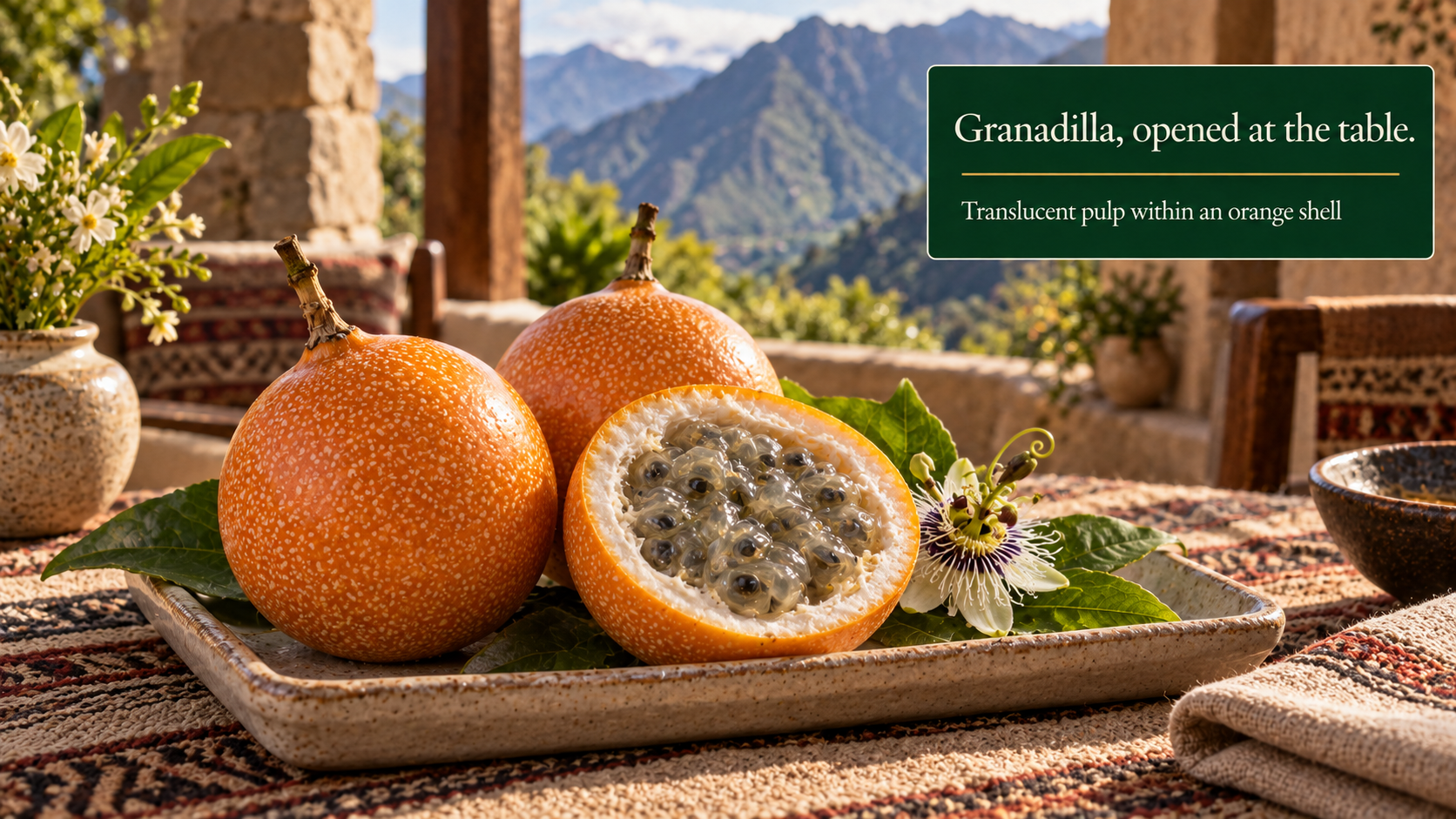
Granadilla is well suited to a quiet first tasting. Open the shell, lift a spoonful of the translucent pulp and seeds, and try it before adding anything. That is enough to show why a fruit can be useful without being squeezed into juice or sweetened. For a savory table, the same restraint helps: a small fresh portion beside high-altitude Andean trout and quinoa can be more convincing than a sauce that makes every ingredient taste of fruit. Its identity matters because granadilla and tart maracuyá lead a cook toward different decisions.
Granadilla: Opening and Serving the Sweet Fruit Beside Savory Meals
Sweet granadilla is Passiflora ligularis, distinct from the Passiflora edulis commonly sold as maracuyá or passion fruit. Open its firm shell and eat the fresh pulp with the seeds, leaving the shell aside. Taste a sample before using it in a meal: granadilla usually offers a gentler sweetness than tart maracuyá, so it should not automatically replace the acid in a dressing.
Sweet granadilla is a particular species
This guide concerns Passiflora ligularis, the sweet granadilla recognized by Kew and Peru's agricultural research material. Maracuyá is usually associated with Passiflora edulis. Both belong to the passionflower group, but they are not interchangeable names for a single ingredient. A book or nursery using granadilla broadly may require a second check. The shape of a flower alone should not replace a proper record of the plant being grown.
For a market purchase, ask for sweet granadilla and inspect a cut sample if there is doubt. For a growing collection, keep the source label and compare it with leaves, flowers, and fruit. Florian reports granadilla growing and producing on the Quillabamba property as of October 15, 2026. It does not establish a cultivar name, and this guide does not attach one. A clear species-level description is sufficient for explaining the food.
Kew: Plants of the World OnlineINIA PeruBussmann and Sharon (2015), Plantas medicinales de los Andes y la Amazonia: La Flora mágica y medicinal del Norte del Perú, p. 150 (PDF page 78).
Let the fresh pulp be the first preparation
Agricultural references describe sweet granadilla as a fruit especially suited to fresh consumption. That is a useful starting point for a visitor who has never tried it. Open a sound fruit and taste the pulp plainly. The seed is part of the eating texture, unlike pacay, where the large seed is separated from the white aril. Explaining that difference prevents a guest from assuming that all unfamiliar fruit should be handled in the same way.
Serve a small spoonful before discussing combinations. Notice the balance of sweetness and acidity and the sensation of the seeds. A second tasting with food can then answer a real culinary question: does this batch work better as a separate fresh portion or mixed through a small cool salad? There is no obligation to process it further. A fruit can be an intentional part of a meal while remaining close to the way it came out of its shell.
Choose sound fruit and open it cleanly
The shell protects the pulp, but it still deserves inspection. Choose fruit without obvious decay, leaking damage, or an unpleasant smell. Wash the outside before opening and use a clean work surface. A restaurant should check the interior before placing a half fruit on the plate. The fact that a shell looks attractive does not settle whether the pulp inside is suitable for service.
For a first-time guest, a small spoon and a stable dish make the tasting easier. Open the fruit without leaving loose shell fragments in the edible portion, and keep a bowl nearby for the discarded shell. If serving pulp separately, transfer it carefully so guests can see the seeds rather than encounter an unexplained texture in a sauce. A separate portion also lets the diner decide whether to combine it with the savory meal or enjoy it between other bites. That choice is part of a considerate service.
Do not substitute it blindly for maracuyá
Sweet granadilla and maracuyá may both appear in recipes under the broad English term passion fruit. Before replacing one with the other, ask what the original ingredient was supposed to do. A tart pulp may be supplying the sharpness in a dressing. A sweeter granadilla can supply aroma and a fresh seed texture without providing the same acidic effect. Taste the actual fruit rather than treating the English name as a recipe instruction.
For a proposed dressing, make a small test portion with the granadilla first. Add any separate citrus carefully and taste again with the intended grain or vegetable. Keep the protein out of the experiment until the balance is pleasant. If the dressing needs too much adjustment, serve the pulp in a small bowl instead. That approach respects the ingredient rather than forcing it to imitate another fruit. It also helps a kitchen communicate accurately when a visitor asks whether the meal contains granadilla or maracuyá.
Three proposed meals with a cool granadilla portion
One meal concept serves herb-roasted high-altitude Andean trout with quinoa, cucumber, and a small granadilla half in a separate dish. Keep the fish savory and let guests spoon the fruit between bites. A second concept pairs roast duck with cañihua and greens, with a modest bowl of fresh granadilla pulp alongside. The fruit's role is a cool accompaniment; it is not a sweet glaze over the meat.
A third proposal uses grilled alpaca, quinoa with roasted vegetables, and a small cucumber-herb salad finished with a little granadilla pulp after testing the balance. All three meals need kitchen trials and appropriate handling of the actual ingredients. They are not an announced menu or a promise of included seminar dining. The high-altitude Andean trout's producer and high-altitude origin should be verified for the batch. Where the granadilla comes from the Quillabamba property, that origin can be stated separately and accurately.
Quillabamba production and Sacred Valley dining are different settings
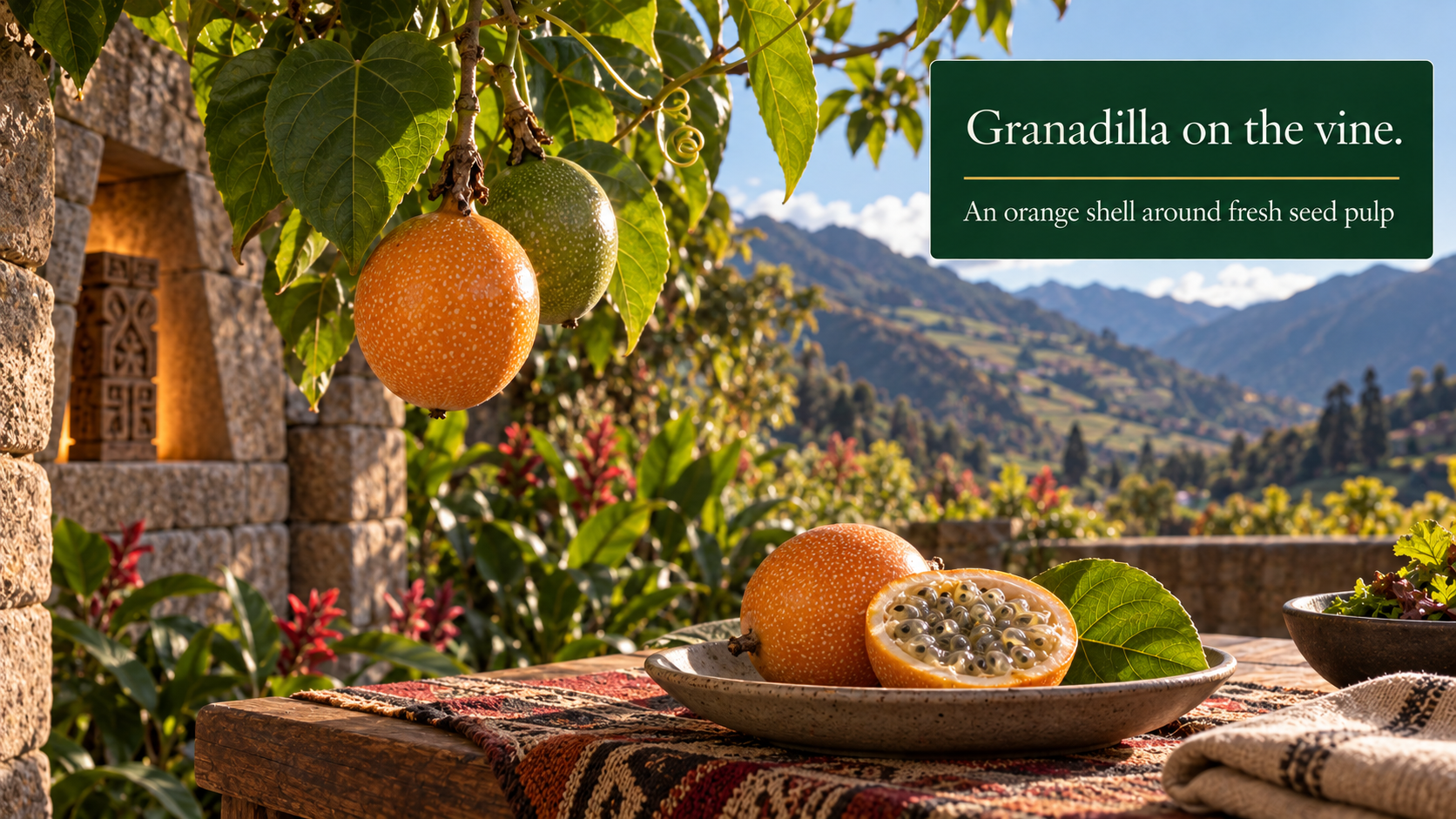
The current growing report places these plants on Florian's Quillabamba property. That gives a visitor a concrete regional connection to discuss, while keeping the location distinct from a Sacred Valley dining room. The two places do not have to share the same conditions for the ingredient story to make sense. A menu can name both the growing origin and the place of service when the actual batch supports that account.
For a particular lunch, the kitchen should know whether the fruit was harvested from the property, obtained from another grower, or bought at a market. Record that origin and keep it with the receiving information. A change of supplier should lead to a change in the menu wording, not a silent extension of the property claim. Production on the property also does not establish how much fruit will be available for a future date. Confirm the service plan when the meal is actually being arranged.
A fruiting vine adds another way to eat
Granadilla introduces a different form of abundance to a productive home: a climbing plant with fruit that can be opened and served with little kitchen processing. Peru's INIA material discusses the crop in parts of the Cusco region, including La Convención, which gives the subject regional substance. The reported Quillabamba production makes the connection more immediate. None of that requires a claim that every highland garden or every property being considered will support the same vine.
For a visitor interested in a home with land, the meaningful evidence is the existing plant, its label, and a dated account of its fruit. Ask how the fruit is used and who cares for the collection. A tasting beside a savory meal can explain the appeal of that lifestyle better than a list of ambitious planting promises. This ingredient page does not describe a property for sale, a return on investment, or a self-sufficiency plan. It shows one edible fruit within a reported producing collection.
Show the meal, then the fruit, then the vine
A complete meal image should make the granadilla portion understandable. Show the savory high-altitude Andean trout or other protein, the grain, the vegetables, and the fruit in a realistic amount. A close view can then show the opened shell and translucent seed-filled pulp. This order answers what the guest is eating before asking them to interpret an unfamiliar flower or an abundant vine.
The plant study can show leaves, tendrils, a flower, and fruit, but it should be labeled as an illustration unless it documents the real planting. A beautiful generated vine cannot prove a Quillabamba harvest. Dated photographs and a plant record can supply that evidence later. For the visitor at the table, the immediate information remains simple: this is sweet granadilla, the fresh pulp and seeds are the food, and the shell is set aside. Let the taste explain the rest before adding a larger garden story.
Leave time for the Sacred Valley
Leave enough time to enjoy a good meal. If Machu Picchu brings you to Peru, ask about The SoulSearching Experience, Florian's five-day Sacred Valley seminar for 8-15 participants. Confirm the dates, venue and meal arrangements directly when planning.
Questions readers ask
How do I eat sweet granadilla?
For correctly identified sweet granadilla, Passiflora ligularis, wash the rind before opening it. Break or cut the brittle orange shell and spoon out the edible pulp and seeds. The University of Florida describes passion fruit pulp with small seeds as a fresh spoon fruit, while Kew lists sweet granadilla fruit as eaten raw. Leave the thick rind aside. Serve it plain or beside a savory meal as a fresh fruit course.
How is sweet granadilla different from other passion fruits?
Sweet granadilla usually means Passiflora ligularis, which UF/IFAS distinguishes from purple and yellow forms of Passiflora edulis. Its ripe shell is orange, and its flavor is generally sweeter and less tart than those other commonly sold passion fruits. Common names overlap by country, so confirm a fruit's identity through a dependable seller or botanical record before applying a species-specific serving or growing claim.
How does sweet granadilla taste compared with purple or yellow passion fruit?
UF/IFAS describes Passiflora ligularis as sweet and contrasts it with the more tart purple and yellow passion fruits it profiles. That comparison helps set expectations for eating the pulp plain, but ripeness and individual fruit still affect flavor. Do not assume every fruit labeled granadilla is the same species; regional names can cover different members of the passion fruit group.
How can I judge whether a sweet granadilla is ready to open?
A sound orange shell is a useful starting point for sweet granadilla, and UF/IFAS describes its peel as thick and brittle. Do not borrow a single wrinkle rule from purple passion fruit, which is a different species. Wash the shell before opening, inspect the pulp, and discard fruit that is visibly rotten or moldy. A crack in the shell calls for closer inspection rather than an automatic safety verdict.
Where might I find sweet granadilla?
UF/IFAS identifies Peru among the leading producers of sweet granadilla and the United States among its import markets, but that does not guarantee it in a particular store or season. Ask a produce seller for sweet granadilla or Passiflora ligularis and verify the fruit rather than relying on the broad label passion fruit. The project's Quillabamba inventory reports production, not a public fruit sale.
How should whole sweet granadilla be kept before serving?
Keep sound, intact fruit in a cool place for short holding, and refrigerate ripe fruit if it will not be eaten promptly. Wash the shell before opening so dirt on the outside does not move to the pulp. Once cut, cover and refrigerate the edible pulp promptly. Storage advice for generic passion fruit may refer to another Passiflora species, so avoid a fixed shelf-life promise for unidentified fruit.
Can sweet granadilla pulp be frozen for later use?
You can remove the pulp of a correctly identified, sound sweet granadilla and freeze it in small, labeled, airtight portions for a later drink or topping. Wash the shell before opening and use clean utensils. Freezing preserves fruit quality longer but does not sterilize it. Expect the thawed texture to differ from fresh pulp; use it where texture matters less.
Does sweet granadilla need cooking before it is served?
The pulp and seeds of correctly identified sweet granadilla, Passiflora ligularis, are typically eaten fresh after opening the shell. Kew records the fruit as edible raw. Wash the outside before cutting, then spoon out the pulp. It can also become a topping for a cooked dish, but there is no need to cook the fruit itself just to serve it.
How can I make a smoother granadilla juice without the seeds?
Spoon the fresh pulp into a fine sieve and press gently with the back of a spoon so the liquid passes through. Straining gives a smoother result than eating the seed-filled pulp from the shell. Taste a small amount before adding water or citrus. There is no need to add sugar to introduce the fruit's mild flavor.
Must I swallow granadilla seeds whole, or can I chew them?
The seeds belong to the normal fresh-eating experience, and people differ in whether they enjoy the crunch. You can chew the pulp and seeds rather than treating whole swallowing as a rule. If the texture does not appeal, strain the pulp for its juice instead. This is a serving preference, with no need to force yourself to enjoy the seeds.
Is the white lining inside granadilla the part I should serve?
The seed-filled, gelatinous center is the ordinary fresh portion to scoop into a dish or eat with a spoon. SENA distinguishes that center from the white, spongy layer beneath the hard shell. Leave the lining behind for a straightforward first serving. An individual's forum habit is not a reason to make the lining the featured food.
Can a recipe for giant granadilla tell me how to use sweet granadilla?
Check the species before following it. Giant granadilla is Passiflora quadrangularis, while the sweet granadilla covered here is Passiflora ligularis. A recipe involving thick fruit flesh or rind may concern the giant species and should not be transferred automatically. For sweet granadilla, begin with the seed-filled center and the fresh serving described in this guide.
Can I identify sweet granadilla by a commercial passionfruit name alone?
Use the botanical name and the fruit itself, rather than assuming that every golden passionfruit label means the same thing. This guide concerns Passiflora ligularis. A seller's trade name may describe a different fruit or vary by market. If you are buying for a particular meal, ask what species and product the supplier actually means.
Is sweet granadilla part of a permanent planted setting or an annual vegetable bed?
Sweet granadilla is a perennial climber, rather than a short-season vegetable such as a bush bean. A supported vine can form part of an established planting. On a visit, look at the actual vine and its recent fruit, then ask about its age and care. The plant's growth habit alone does not establish its harvest quantity.
How can I include granadilla in a fresh fruit plate without losing its texture?
Keep the pulp in a small bowl or spoon it over cut fruit shortly before serving. Guests can then notice the contrast between the soft coating and the seeds. Taste the fruit combination before adding citrus, since it may already have enough acidity. A separate small bowl also lets people choose whether they want the seeds.
Can granadilla accompany a savory meal instead of becoming a sugary dessert?
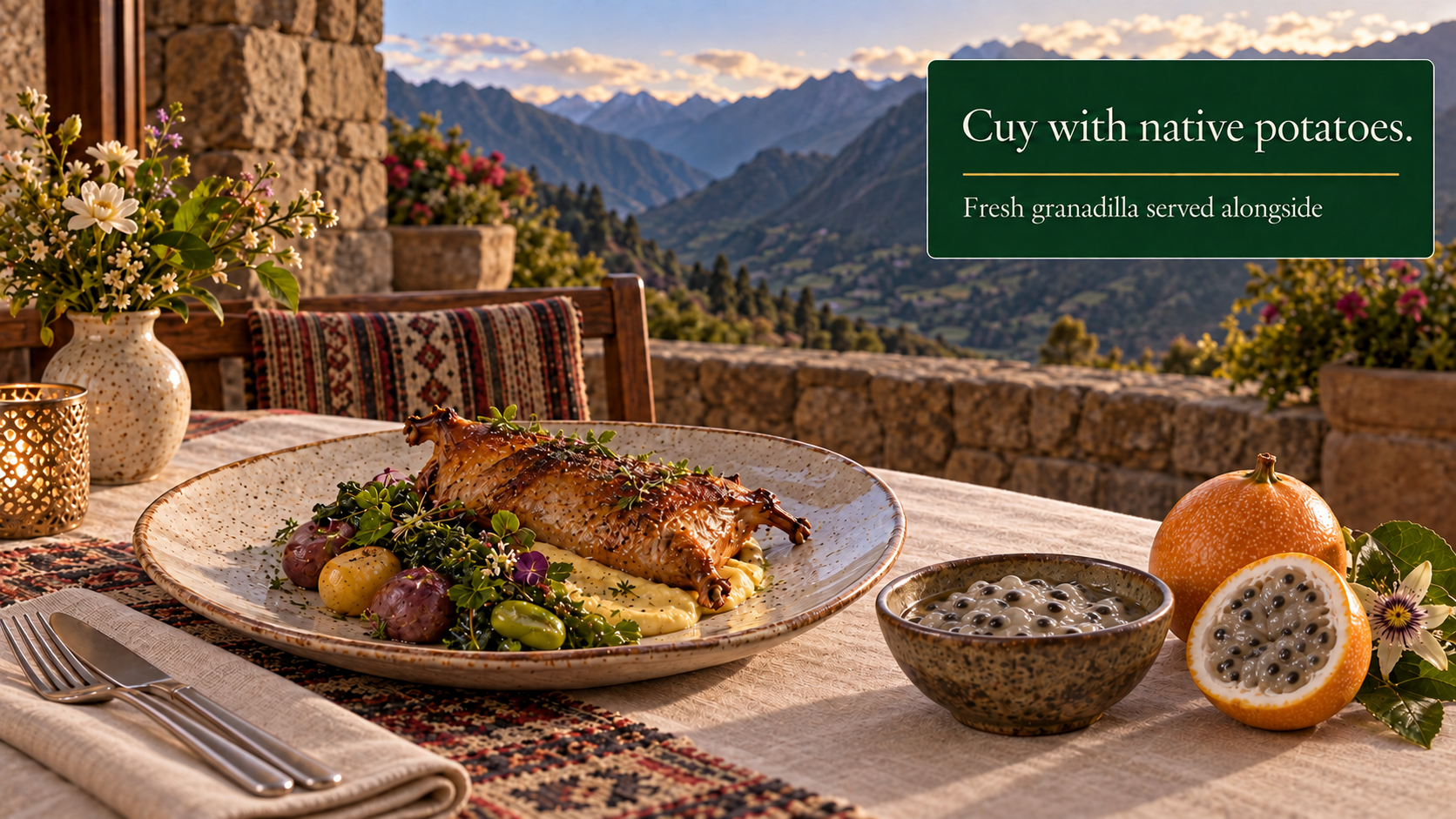
Serve the fresh pulp in a small bowl alongside a savory meal, or taste a little in an unsweetened dressing. High-altitude Andean trout with quinoa and vegetables is one possible pairing; roast cuy with native potatoes is another. Keep the fruit distinct enough to recognize, and let its own flavor guide the portion.
Does a healthy granadilla vine establish a reliable supply of fruit?
A living vine and a documented harvest answer different questions. Ask which plant produced the fruit, when it was picked, and what quantity was usable. This keeps the garden story tied to real food. Florian reports the listed plants in production at Quillabamba, but the supplied information does not quantify a regular granadilla supply for meals or visitors.
What is cuy in a meal of cooked meat, native potatoes, and fresh granadilla?
Cuy is guinea pig, a recognized food in Peru. Preparation matters when choosing a meal: Peru Travel lists cuy al horno, or oven-cooked cuy, alongside other forms. Ask for the cooking method you prefer. Native potatoes can provide the starch, while a small granadilla half stays a separate fresh accompaniment rather than becoming a glaze over the meat.
Should the native-potato accompaniment be peeled before boiling?
Wash and scrub the potatoes first, whether you keep the skin or remove it. Peeling is a serving choice when the skin is sound and suitable to eat; Food Hero describes potatoes as peeled if desired. For an easy plate beside cuy and fresh granadilla, cook manageable pieces until tender and choose the skin texture you enjoy.
When should fresh herbs be added to a savory plate served with granadilla?
Add a delicate fresh herb finish near the end or at service so it remains noticeable. Stronger dried herbs can season a longer-cooked broth earlier. Keep the quantity modest around sweet granadilla: the herbs can dress the meat, potatoes, or quinoa while the fruit remains a separate spoonful that can be tasted on its own.
Continue reading
- Pacay: How to Eat the Fresh White Fruit Inside the Pod
- Breadfruit for Savory Meals: Choosing, Cooking, and Serving the Starchy Fruit
- Guava for the Table: Choosing the Fruit and Using It in Savory Meals