A clear blue flower infusion can accompany a separate baked-high-altitude Andean trout lunch. A small citrus wedge lets a guest choose acidity, while the drink stays free of syrup and supplement claims.
An illustrated serving concept in an Andean hotel setting.
High-altitude Andean trout and vegetables with an unsweetened flower infusion
A small separate cup can accompany a simple fish lunch when its ingredients are confirmed. This concept uses food-grade Clitoria ternatea flowers and no added sweetener. It makes no claim about a restaurant menu or a therapeutic effect.
Explore High-altitude Andean trout in the ingredient guide. Confirm the actual preparation and availability with the kitchen.
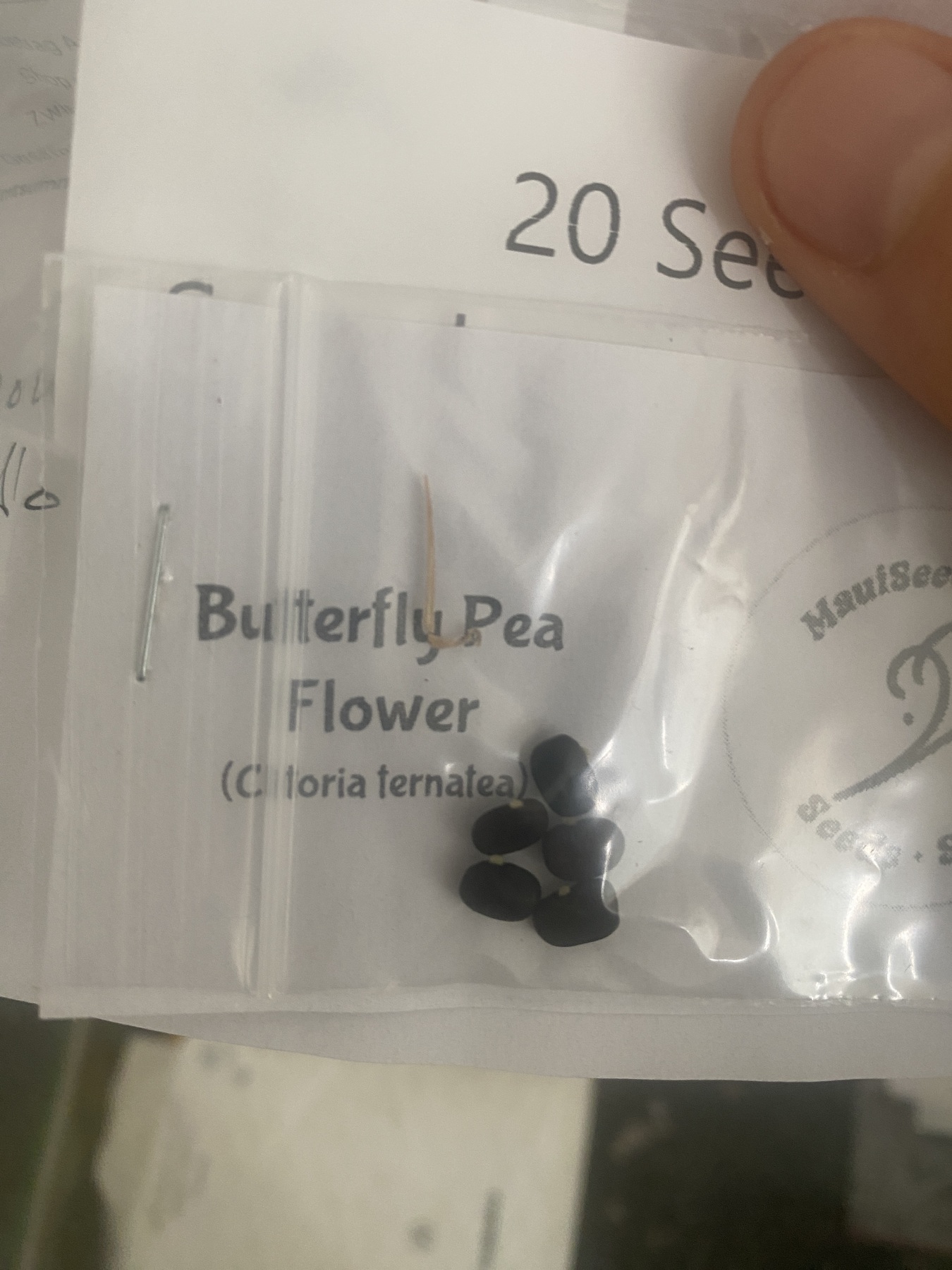
A possible drink is an unsweetened infusion made from verified food-grade Clitoria ternatea flowers. The flower's blue pigment changes with acidity; that visual effect is not a health claim. The photographed seeds do not by themselves establish an edible harvest or suitability for every guest.
The featured ingredient, served on its own.
Illustrated serving concepts and an imagined Sacred Valley garden. These are not photographs of a named restaurant, a current harvest, or a tested recipe.
Name the plant before admiring the color
The photographed label names Clitoria ternatea, commonly called butterfly pea or blue pea. The supplier wording is partly visible, and a nearby note about seed quantity is not conclusively attached to the packet. Those limits matter when the collection becomes a botanical guide rather than a decorative mood board.
Singapore's National Parks Board records edible flowers for this species and describes their use as a blue food dye. That supports a specific edible-part discussion. It does not make every blue garden flower suitable for an infusion or verify the identity of a plant raised from this seed lot.
Use food-grade flowers rather than seed or root preparations
For the proposed drink, the ingredient would be verified food-grade flowers intended for human consumption. Seeds sold for planting are not tea. Nor does the plant's membership in the legume family make its pods an automatic substitute for familiar peas. The scope here stays with the flowers.
A florist's blossom or an ornamental planting may have an unsuitable treatment history. A kitchen would need a reliable supplier or a verified food-growing process before service. Flowers supplied for eating should arrive with a clear identity and intended use, ready for the kitchen to handle as a food ingredient.
National Parks Board publications describe butterfly-pea floral tea and the change from blue toward purple or pink when ingredients alter the drink's pH. A small separate citrus wedge can make that effect visible at the table. The guest can choose how sour the drink becomes.
A brighter blue is not proof of a stronger health benefit, and the color change is not evidence of detoxification. Nor does it mean the drink needs sweetener. Plain water and food-grade flowers make a different ingredient list from a cocktail syrup or a powdered supplement blend.
A hotel kitchen could follow the food supplier's directions for the actual dried flowers, prepare a strained infusion with potable water, and serve it plain. Flower size, dryness, and desired strength vary, so this guide does not invent one universally correct gram dose or steep time.
If the drink will be served cold, the kitchen should cool and hold it appropriately rather than leave a large batch on display. Ask what else goes into the glass. A blue beverage may contain sugar, syrup, alcohol, caffeine-bearing tea, or flavoring even when the menu leads with butterfly pea.
Let the meal remain a meal
Baked high-altitude Andean trout, quinoa, and a familiar vegetable portion can provide lunch independently of the drink. The infusion is a possible beverage choice, not the reason the meal is nourishing. A clean glass and a clear ingredient list matter more than a theatrical presentation. Plain water should be an easy alternative for a guest who prefers it or has a reason to avoid an unfamiliar botanical.
The infusion can be offered warm or cool in a small clear glass, with any citrus on the side. Keeping it separate from the fish plate makes the meal work equally well for a guest who chooses plain water.
Food use and individual dietary needs
Food-use documentation does not establish a treatment for anxiety, memory problems, diabetes, or another condition. Research on extracts and isolated compounds cannot be silently transferred to an ordinary glass. This page gives no therapeutic dose and makes no guarantee of safety for everyone.
Ask the kitchen for the complete ingredient list, including any true tea, sweetener, citrus, or other herbs added to the glass. The food supplier's instructions should match the actual product. A guest with a relevant dietary restriction can choose plain water while the kitchen checks the ingredients.
Butterfly pea is a tropical climbing legume with compound leaves and conspicuous flowers. A modest support can explain its growth habit in an imagined garden study. That illustration does not prove its hardiness, yield, flowering time, or suitability for a particular Sacred Valley site.
The SoulSearching Experience is a five-day retreat and seminar for 8-15 people with no plant medicine. An unsweetened culinary flower infusion is described only as a possible ordinary beverage, with no confirmed menu inclusion, exact venue, or special ceremonial role.
Food can give the days around Machu Picchu a welcome sense of place. If you would also like time for reflection, explore a Sacred Valley retreat before or after your visit. Florian Rolke offers The SoulSearching Experience, a five-day seminar for 8-15 participants, with no plant medicine.
Ask for the current dates, venue, price and inclusions before arranging the rest of your trip. These dishes, restaurant visits and garden visits are ideas to explore; they are not confirmed seminar inclusions.
Questions about this dish
Adapted from public cooking questions and published FAQs. Answer sources are linked below each response. Broader ingredient questions are included where they help with this serving.
What is butterfly pea?
The plant discussed is Clitoria ternatea, a tropical climbing legume. National Parks records its flowers as an edible part used for blue food coloring. The photographed seeds still require identity and food-use verification.
How big does the butterfly pea vine get, and does it need support?
It is a climbing plant suited to a support such as a trellis. Actual growth depends on conditions. The garden illustration shows that habit without claiming a present Sacred Valley planting or a tested local yield.
What do butterfly pea flowers look like, and what are they used for?
National Parks describes several flower-color forms and the use of blue flowers for edible dye. This guide considers only verified food-grade flowers for an infusion, not every plant part or an unidentified blue flower.
National Parks records seed propagation. A real crop needs suitable growing conditions and identity verification. Planting seeds are not an infusion ingredient, and no local germination or flowering result is claimed.
National Parks records edible flowers of Clitoria ternatea. That specific food-use record is not a blanket safety guarantee for every plant part, extract, guest, or ornamental treatment history. This proposal stays with verified food-grade flowers.
The flower pigments respond to changes in acidity. National Parks describes adding pH-changing ingredients to shift the floral tea toward purple or pink. A citrus wedge can demonstrate the effect without a medicinal claim.
Use the food supplier's directions and the kitchen's established handling process for the actual product. Either intended service needs clean water and appropriate storage. This page does not validate a universal cold-brew safety method.
Whole food-grade flowers can be strained for a clear infusion. A powder is a different product whose label may include other ingredients. Do not substitute seed powder or a concentrated supplement on the assumption that all forms are equivalent.
A kitchen can plan a chilled beverage under its established food-handling procedure, but this page sets no validated storage life. Prepare with potable water, cool appropriately, and confirm the actual holding process.
It often names an infusion of Clitoria ternatea flowers, but a marketing name does not establish ingredients. Check the label for other teas, sweeteners, or flavorings before treating the drink as a plain flower infusion.
How many butterfly pea flowers do I need for one cup?
Follow the food supplier's directions for the actual dried flowers and desired culinary strength. Flower size and condition vary. This guide does not invent a gram dose or equate a darker color with a medical benefit.
A plain Clitoria ternatea flower-and-water infusion is caffeine-free, as described in the University of Ruhuna research abstract. Blends may include caffeinated true tea, so confirm the complete product label or kitchen recipe rather than rely on the name blue tea.
A plain infusion is generally described as mild and earthy rather than naturally sweet. The proposed glass is unsweetened. Citrus changes the acidity, while a blend can have a different flavor and ingredient list.
The cited publisher describes cold brewing, but this guide does not validate its method for every kitchen or guest. A hotel should follow an established food-safe process and the actual food supplier's directions.
Product identity, flower condition, concentration, water chemistry, and added acidic ingredients can affect appearance. The color does not test safety or identity. Check the ingredient and preparation before adding more product.
Plain flowers and water do not include added sugar. A prepared drink can still contain syrup, honey, or sweetened flavoring. Ask for an unsweetened infusion and confirm the complete recipe.
The plain infusion is often described as mildly earthy rather than strongly perfumed. That is a sensory description, not a health claim. Flavor varies with the product and any ingredients added by the kitchen.
Preference determines the answer. A separate citrus wedge lets a guest choose acidity without syrup. If other herbs are added, each needs a reliable food identity and suitability check; plain water remains an easy alternative.
Does a butterfly-pea infusion need an alkaline additive?
Changing pH changes butterfly-pea pigment, but the proposed drink needs no alkaline additive. Use only food ingredients in an established recipe. A color experiment is not a reason to serve an unfamiliar chemical.
The final mixture's acidity and other ingredients can affect the pigment. This guide proposes a plain strained infusion, not a gelatin preparation. Its blue-to-purple change is chemistry, not a test of safety or health benefit.