A small whole-fruit botanical study can explain bilimbi while a separate, ordinary high-altitude Andean trout meal remains complete without it. No bilimbi garnish, drink, or portion is recommended.
Illustration: a separate lemon-and-high-altitude Andean trout meal, with whole bilimbi shown only for botanical identification.
A separate high-altitude Andean trout course beside a bilimbi study
The fish course uses ordinary lemon and cooked vegetables. The whole bilimbi fruits sit apart as a botanical study; they are not a sauce, a drink or a proposed tasting portion. The article explains why this fruit is held out of the serving plan.
Explore High-altitude Andean trout in the ingredient guide. Confirm the actual preparation and availability with the kitchen.
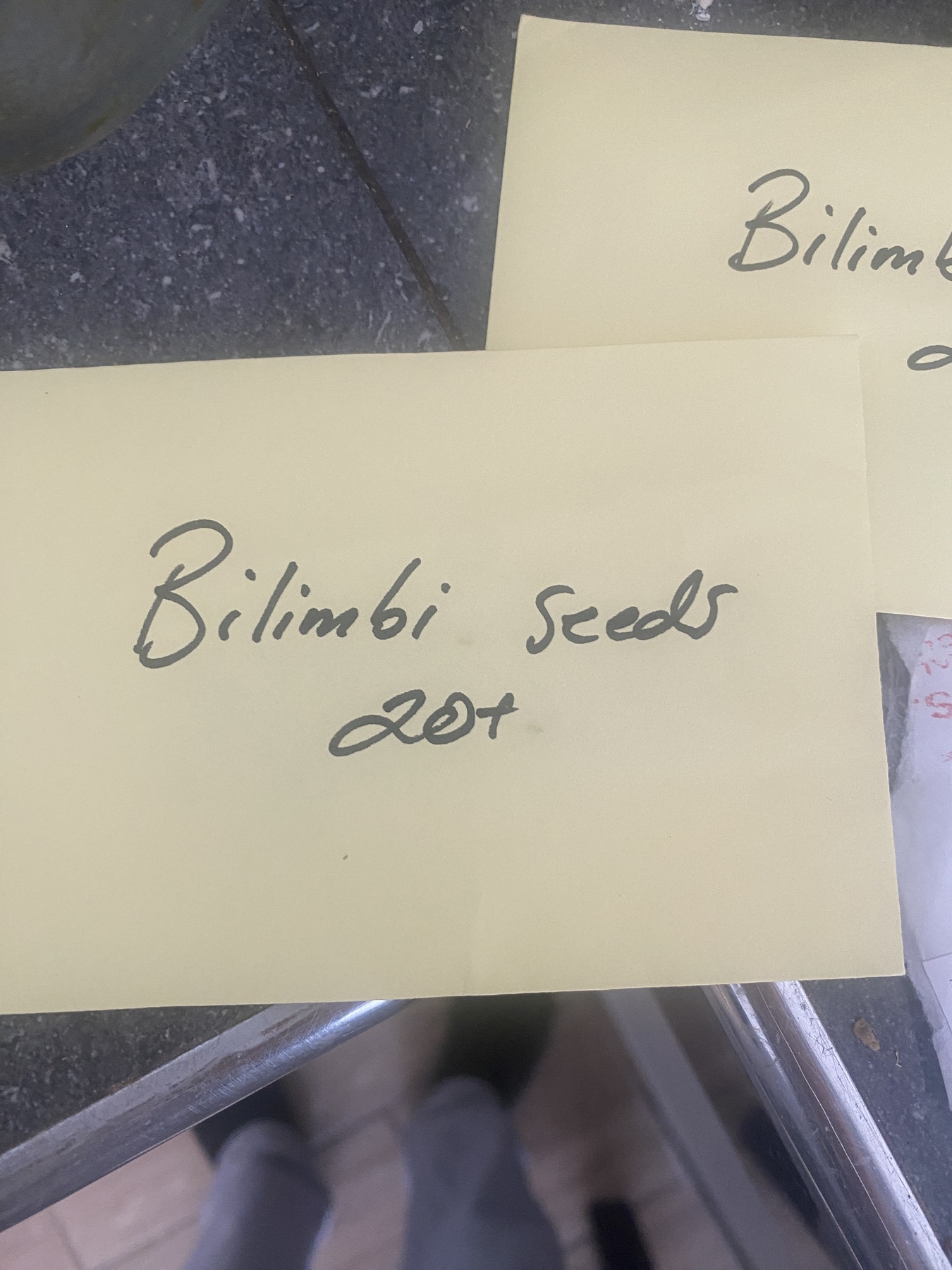
The handwritten bilimbi label does not establish the seed's identity. Published medical case reports link bilimbi juice to acute oxalate kidney injury. This page makes no serving recommendation and does not propose bilimbi juice, concentrated preparations, or a wellness use.
The featured ingredient, served on its own.
Illustrated serving concepts and an imagined Sacred Valley garden. These are not photographs of a named restaurant, a current harvest, or a tested recipe.
A handwritten name starts an investigation
The collection has a handwritten bilimbi label, without an independently verified supplier or seed identity. The botanical species to investigate is Averrhoa bilimbi. Until that identity is established, the label should not become permission to consume a plant grown from the packet.
Bilimbi's elongated fruit can invite comparison with a small cucumber, but it grows on a tree rather than a cucumber vine. A botanical illustration can explain that difference. It cannot confirm the seed lot, prove a local harvest, or substitute for competent identification of an actual specimen.
Bilimbi has culinary uses as a sharply sour fruit in parts of the tropics, and its juice is also promoted in traditional remedies. These are separate facts from whether a proposed hotel serving has been assessed for guests. A long history of use cannot establish a universal safe quantity.
This guide does not turn the fruit into a detox ingredient or offer an acid substitute measured by guesswork. It does not recommend leaves, roots, seeds, dried fruit, extracts, or juice. Each preparation would require its own identity and suitability assessment rather than borrowing reassurance from the word natural.
A published case series reported acute kidney injury after bilimbi juice consumption, with kidney biopsies showing calcium oxalate deposition. The researchers described ten patients, seven of whom needed hemodialysis. Those are clinical observations, not a prediction of the outcome of every exposure.
Another report describes two patients after bilimbi fruit juice, including one who required dialysis. Together these primary reports provide a concrete reason not to market concentrated bilimbi juice as a wellness drink. They also show why a short ingredient list cannot be treated as a safety guarantee.
The case reports do not supply a broadly validated safe portion for every hotel guest. They cannot be reversed into a recipe by taking a reported amount and choosing something smaller. Kidney function, concentration, the amount consumed, and other circumstances can matter, and this page does not perform that medical assessment.
A sour taste is not a measurement of oxalate or a test of suitability. Boiling, drying, diluting, or adding other ingredients is not presented as a proven method of making bilimbi acceptable. The serving decision remains on hold rather than being hidden behind a tiny garnish.
A separate plate of baked high-altitude Andean trout, quinoa, and familiar cooked vegetables offers a complete hotel lunch while the bilimbi question remains unresolved. The botanical image can stay educational and clearly separate from the served meal. It should not imply that a fruit on the side is intended for tasting.
This approach gives the packet a place in the collection without making a culinary claim beyond the evidence. No guest needs to eat an unfamiliar ingredient for the page to be useful. A supplier, kitchen, and appropriately qualified professional would need to resolve the relevant questions before any future food-use proposal.
Kidney concerns belong with qualified care
People with kidney disease or a history of relevant kidney problems should not use this guide to self-test bilimbi. Published reports and clinical advice on the ingredient deserve individual medical interpretation. Anyone who becomes unwell after consuming it should tell a clinician exactly what preparation and amount were involved.
The FAQ sources below are distinguished by type. A publisher's horticultural question is evidence that the question was published, not evidence of search volume, clinical review, or the safety of that publisher's answer. The medical reports support the safety discussion directly.
Bilimbi's tropical tree habit belongs in the garden study, along with its compound leaves and clustered fruit. The image should never become a report that the tree is growing at a Sacred Valley hotel. Local suitability requires assessment of the actual site and species, including cold exposure.
The SoulSearching Experience is a five-day retreat and seminar for 8-15 people with no plant medicine. This bilimbi page is an identification and evidence guide, not a menu inclusion or a medicinal offering. No price, venue, planting, harvest, or guest serving is established here.
Food can give the days around Machu Picchu a welcome sense of place. If you would also like time for reflection, explore a Sacred Valley retreat before or after your visit. Florian Rolke offers The SoulSearching Experience, a five-day seminar for 8-15 participants, with no plant medicine.
Ask for the current dates, venue, price and inclusions before arranging the rest of your trip. These dishes, restaurant visits and garden visits are ideas to explore; they are not confirmed seminar inclusions.
Questions about this dish
Adapted from public cooking questions and published FAQs. Answer sources are linked below each response. Broader ingredient questions are included where they help with this serving.
How do you eat bilimbi?
Culinary records describe the sour fruit as a relish or souring ingredient. This guide makes no serving recommendation because the photographed identity is unverified and medical reports document kidney injury after juice.
National Parks describes the fruit as very sour. That flavor explains its traditional relish role, but taste cannot measure oxalate or establish an individually safe quantity. No tasting portion is proposed here.
Season and availability depend on the tropical growing site. No Sacred Valley tree, harvest, supplier, or current season is established by the handwritten label. Ask for evidence of an actual crop before making a supply claim.
National Parks describes fruit changing from light green to yellowish green as it ripens. That is a botanical description, not a safety test or instruction to eat an unverified plant.
It should not be promoted here as a wellness ingredient. Primary clinical reports document acute oxalate kidney injury after bilimbi juice, including cases requiring dialysis. This guide provides no therapeutic benefit or safe-serving claim.
No amount is recommended in this guide. Published case reports do not establish a universal safe portion, and an unverified handwritten seed label adds an identity problem. Keep the proposed high-altitude Andean trout meal complete without bilimbi.
Primary reports link bilimbi juice consumption with calcium oxalate deposition and acute kidney injury. A ten-patient series included seven people who required dialysis. This guide excludes juice and concentrated preparations.
No. Bilimbi is Averrhoa bilimbi and starfruit is Averrhoa carambola. They are related but distinct fruits. The relationship does not establish safety or justify an interchangeable serving recommendation.
Bilimbi, cucumber tree, and belimbing are among the common names recorded by National Parks. It is a tropical tree, not a cucumber vine. Verify the actual seed lot before applying the botanical description.
National Parks lists full sun for the tropical tree. That is botanical growing guidance from its setting, not proof that a particular Sacred Valley location can support a productive tree.
National Parks describes moderate water needs and a moist, well-drained soil. The real schedule depends on the site and growing system. No fixed-day watering calendar or current local planting is established here.
National Parks describes a small tree that can reach about 5-10 meters. A small ingredient-study image should not imply it is an annual vegetable suitable for a shallow kitchen bed.
National Parks lists a moderate growth rate. Growth depends on conditions, and a rate category cannot establish a fruiting date. No claim is made that these photographed seeds have germinated or produced a tree.
A full-size or fruiting date cannot be guaranteed from this seed photograph. Tree development depends on identity, propagation, and conditions. Treat it as a long-term horticultural question rather than an imminent hotel supply.
A real tree needs a sound long-term site and appropriate horticultural care. This guide gives no pruning recipe to force it into a small bed. Food suitability remains a separate unresolved question.
Survival and a healthy productive tree are different questions. National Parks lists full sun; low light should not be assumed to support fruit production. A local assessment is needed.
National Parks describes fertile loamy, moist, well-drained soil. That general description should guide a site assessment rather than be turned into a universal potting formula for every hotel garden.
National Parks places it in a tropical climate context. This guide does not establish a safe low-temperature threshold. A grower needs local cold-exposure information before proposing an outdoor tree.
It can grow outdoors in suitable tropical conditions. That does not prove highland suitability or establish a Sacred Valley planting. The hypothetical garden image remains a species study, not a harvest report.
Bilimbi flowers and fruit can form on the trunk and older branches, a habit called cauliflory. University of Hawai‘i's crop note documents those flower positions. It is a botanical growth trait, not evidence that a photographed seed has become a fruiting tree.