Tender pods keep their shape while softened tomato takes on a little body. Fully cooked high-altitude Andean trout turns the vegetable serving into a complete meal, with a modest plain starch alongside.
An illustrated serving concept in an Andean hotel setting.
Baked high-altitude Andean trout with okra, tomato and herbs
Tender pods and softened tomato can accompany baked high-altitude Andean trout without a fried coating. Some natural thickening belongs to okra. Choose the pods for their tenderness and keep the tomato component light enough to leave the fish visible.
Explore High-altitude Andean trout in the ingredient guide. Confirm the actual preparation and availability with the kitchen.
Choose tender young okra and ask for a light tomato-broth preparation beside baked high-altitude Andean trout. Okra naturally thickens liquid; a woody mature pod does not become tender just because it spends longer in the pot.
The featured ingredient, served on its own.
Illustrated serving concepts and an imagined Sacred Valley garden. These are not photographs of a named restaurant, a current harvest, or a tested recipe.
Start with the pod, not a battle against slime
Okra's texture makes more sense when the kitchen decides what job it should do. Cut pods release mucilage that gives liquid body. In a restrained tomato broth, that can be useful. On a plate intended to have separate, firm vegetable pieces, generous chopping and prolonged wet cooking point in another direction.
Neither result is automatically a mistake. For this dish, young pods would be cooked gently until tender, with the tomato component kept light enough to spoon around the high-altitude Andean trout. The goal is a recognizable vegetable portion, not a dense pot of sauce.
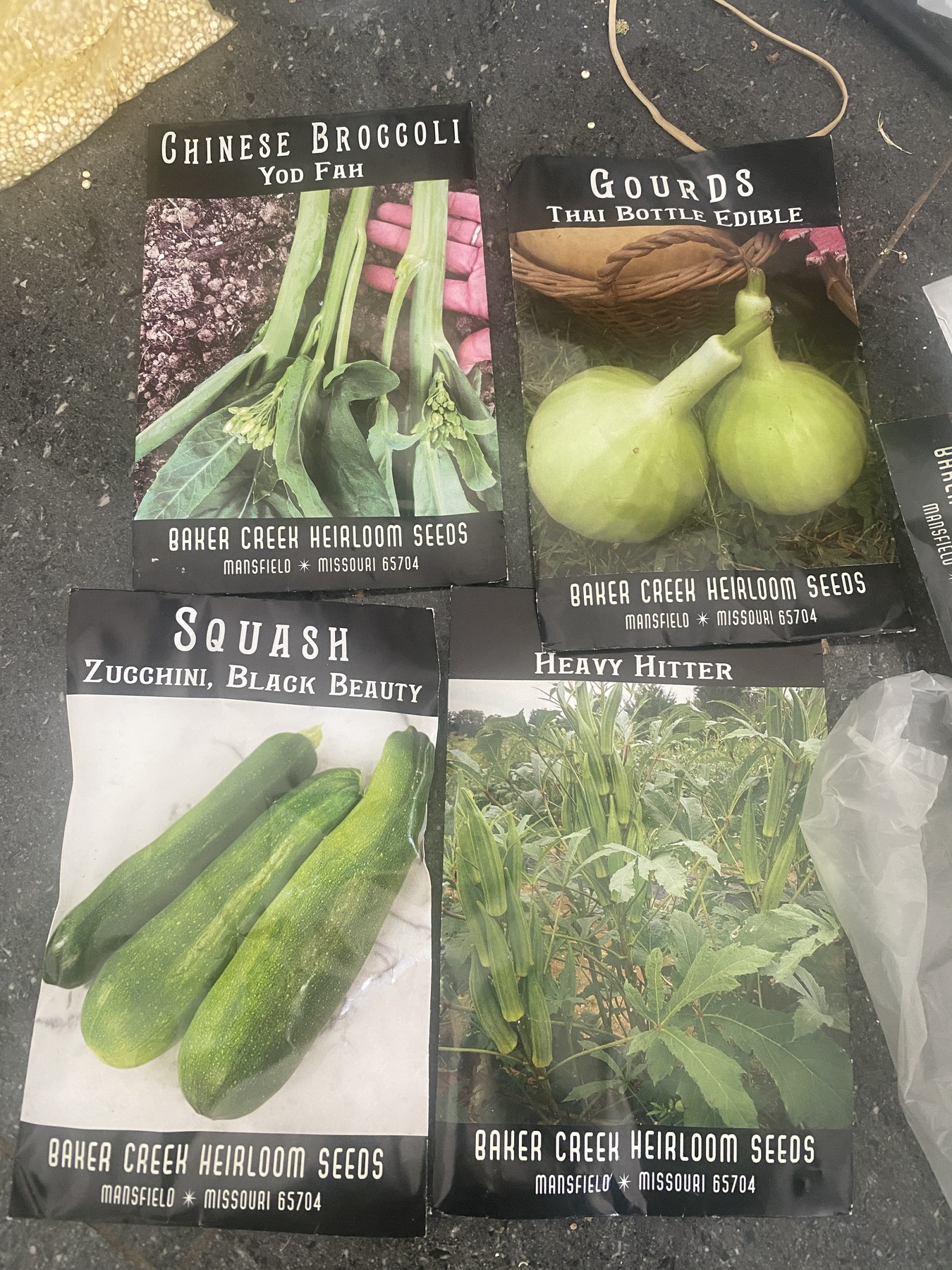
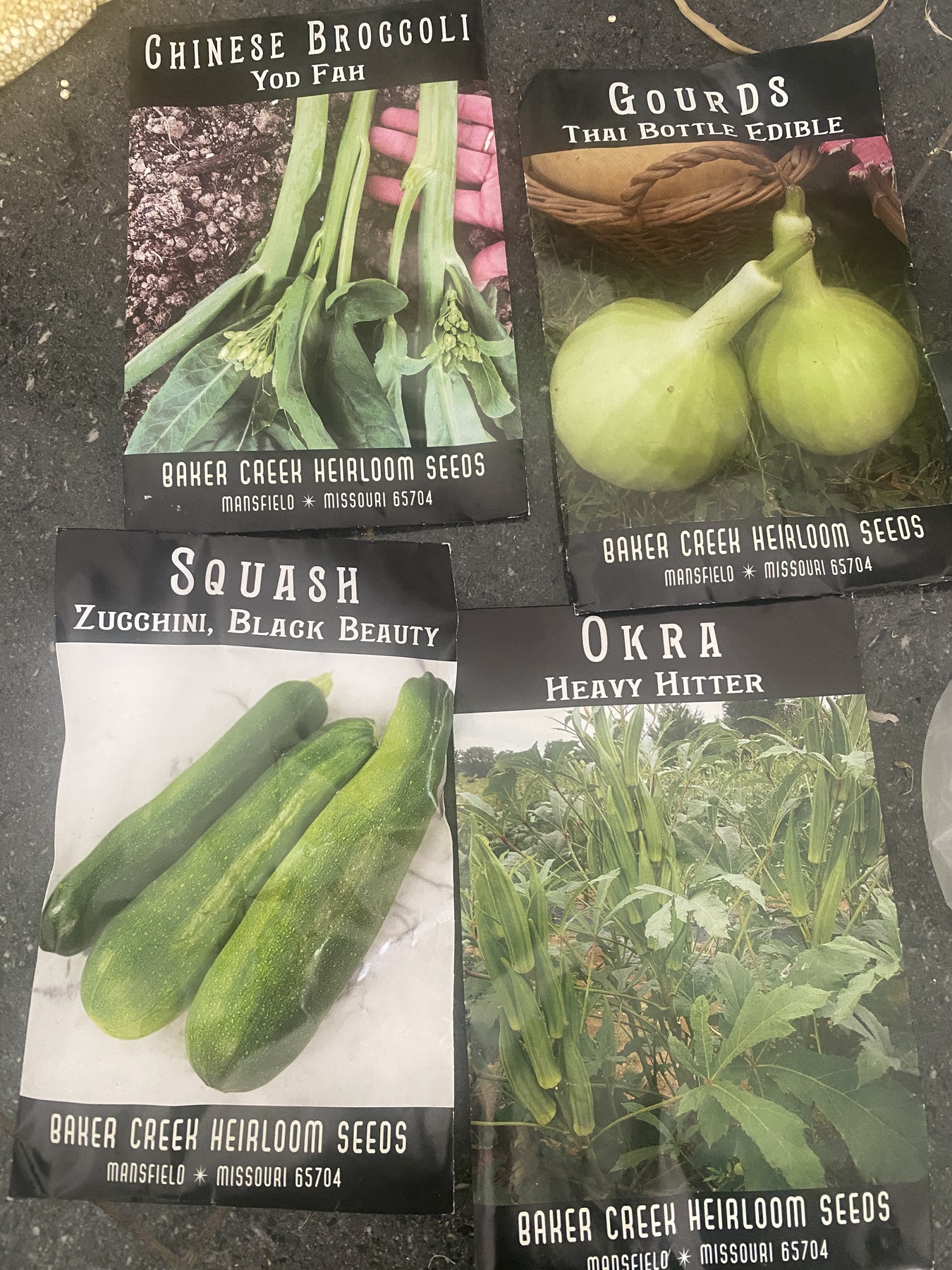
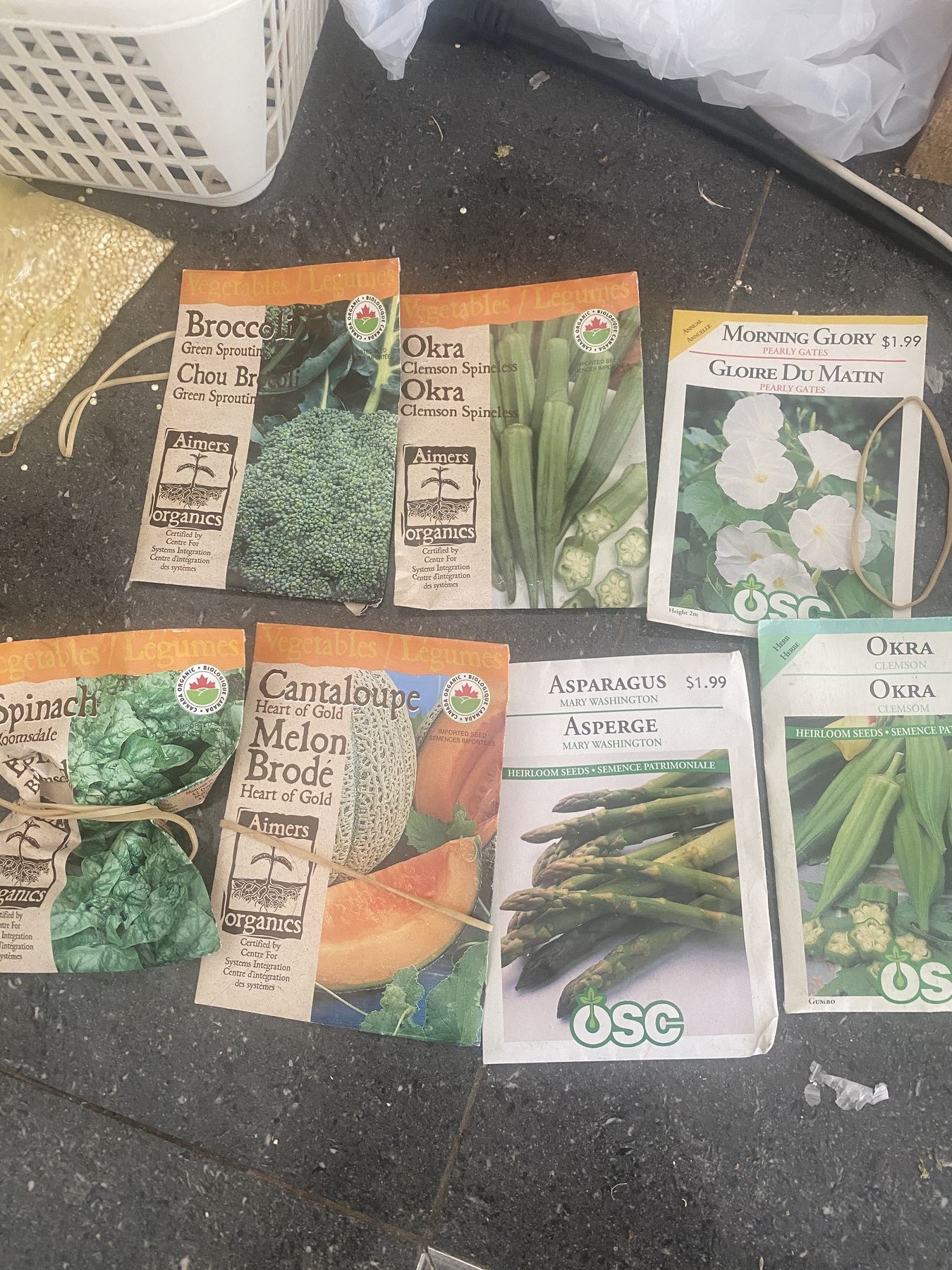
The collection contains packets labeled Clemson, Clemson Spineless, and Heavy Hitter. The visible Clemson packet stops at Clemson; a clipped edge is not permission to add Spineless. Heavy Hitter appears in two photographs of the same physical packet, so those pictures do not establish two different varieties.
A variety description can help a grower choose what to trial, but the kitchen still has to inspect the harvested pods. Promised productivity, packet maturity estimates, and a named strain do not guarantee that every pod will be tender or that the variety will suit an untested Sacred Valley site.
Iowa State recommends harvesting okra pods at roughly 2-4 inches long, while Clemson emphasizes frequent harvesting before pods toughen. Those are useful general guides. Cultivar and growing conditions still matter, and a cook should reject a fibrous pod rather than insist that a size measurement proves good eating.
At the market, ask for young culinary okra with no obvious deterioration. In the kitchen, a small trimming cut quickly reveals whether the pod is supple or tough. Mature seed-saving pods have a different purpose. They should not be slipped into a tender vegetable course to avoid waste.
A cook can soften chopped tomato with a little water or suitable stock, add the prepared okra, and simmer only until the vegetable reaches the desired texture. Small pods may remain whole after trimming. The exact liquid and time depend on the batch, so this guide does not pretend to supply a tested universal formula.
No breading, deep frying, or frying oil is needed for this concept. If the kitchen uses a prepared stock, ask about its ingredients. A dish described as vegetables in broth can still contain dairy, gluten-containing ingredients, or other additions that matter to a guest.
Baked high-altitude Andean trout provides the center of the plate
Place a baked high-altitude Andean trout portion beside the okra and tomato, with quinoa or a plainly prepared potato as the starch. The fish should stay visible instead of disappearing under a thick blanket of sauce. A few green herbs can connect the components without a sugary glaze.
The tomato broth can be served sparingly on the plate, with more brought separately if the guest prefers a looser vegetable course. Ask the actual kitchen whether the fish, vegetables, and starch can be prepared as requested. Fish bones and relevant allergies remain practical table questions even when the ingredient list sounds short.
The plant needs warmth and regular attention
Okra is an upright warm-season vegetable, not a trailing gourd. Its flower and developing pod make a particularly clear garden illustration: a crop can be attractive long before the serving reaches the plate. Some people find the plant's hairs irritating and use gloves and long sleeves when harvesting.
Warmth, a suitable soil, watering, and repeated picking affect the grower's result. American extension calendars are not planting calendars for a Peruvian valley. A local grower would need to evaluate the actual conditions before any of these packets could be described as a reliable kitchen crop.
Order the okra as a separate vegetable beside baked high-altitude Andean trout and plainly prepared quinoa or potato. Ask for a light tomato broth rather than a dense sauce, and decide whether the pods should stay whole. The fish remains the center of the plate, with the okra giving the vegetable course its own texture. A small spoon of broth can moisten the quinoa; more liquid can arrive separately, where it will not soften the high-altitude Andean trout before the guest has begun eating.
During a Sacred Valley visit, the meal could offer a quiet pause between activities. It is not a confirmed meal at The SoulSearching Experience, the five-day retreat and seminar for 8-15 participants with no plant medicine. Menu availability and inclusions require confirmation.
A table within a longer stay
Food can give the days around Machu Picchu a welcome sense of place. If you would also like time for reflection, explore a Sacred Valley retreat before or after your visit. Florian Rolke offers The SoulSearching Experience, a five-day seminar for 8-15 participants, with no plant medicine.
Ask for the current dates, venue, price and inclusions before arranging the rest of your trip. These dishes, restaurant visits and garden visits are ideas to explore; they are not confirmed seminar inclusions.
Questions about this dish
Adapted from public cooking questions and published FAQs. Answer sources are linked below each response. Broader ingredient questions are included where they help with this serving.
How can I choose tender okra at the market?
Choose young, tender culinary pods and inspect the actual batch. General harvest guidance is about 2-4 inches, but cultivar and conditions matter. A woody pod should not be promised tender because it falls inside a size range.
A fibrous mature pod is unsuitable for the tender course described here. Longer cooking is not a dependable rescue. A grower may reserve suitable mature pods for seed, which is a different purpose from serving young vegetables.
It is okra's mucilage, which can give liquid body. In a light tomato broth that can be useful. The preparation should make the amount and texture deliberate rather than treat the ingredient as a fault.
Are there alternatives to okra as a thickening agent?
Okra is both a vegetable and a thickener, so replacing it changes the dish. A sauce can be adjusted by other culinary methods, but for this proposed serving a different vegetable would become a different accompaniment.
Frozen okra can suit a cooked dish, but thawing changes the texture and releases liquid. The cook should account for that moisture. This guide does not claim that frozen and freshly harvested pods give identical results.
How can okra be the featured vegetable in a complete meal?
A light tomato-broth okra course is a suitable nonfried direction. Here it is paired with baked high-altitude Andean trout and quinoa to make the complete meal, while keeping the vegetable identifiable.
Why pour water over the covering plate while cooking okra?
That is a recipe-specific technique, not a required safety step for okra. The kitchen can use its established method to cook tender pods in a small amount of suitable liquid without frying.
Iowa State recommends pods roughly 2-4 inches long and tender, with regular picking. Those figures are general guidance rather than a guarantee for every cultivar. Sensitive harvesters may need gloves and long sleeves.
The supplier emphasizes frequent picking. In warm productive conditions pods can develop quickly, so a grower checks the plants often and harvests while tender. Daily production is not a guarantee for a particular Sacred Valley site.
Is Clemson Spineless a good choice for small gardens?
Plant habit and available space need assessment before choosing a variety. The packet does not establish a yield from a tiny bed. Keep adequate room for the plant and safe harvesting access.
Seed quality, suitable warmth, moisture, and planting conditions all need checking. A diagnosis requires the actual setup. Supplier germination guidance is useful, but it should not become a guaranteed calendar for a highland garden.
How productive is Heavy Hitter okra compared to other varieties?
The supplier presents Heavy Hitter as a productive selection. That is a supplier description, not verified local trial data. No local yield comparison or regular kitchen supply has been established.
Can I grow Heavy Hitter okra in northern climates?
The supplier discusses starting and timing for cooler regions, but okra remains warmth-demanding. Northern U.S. advice does not settle Sacred Valley performance. The grower needs actual night temperatures and a suitable warm season.
Do I need to prune Heavy Hitter okra to improve yield?
Pruning is a management choice, not a universal requirement or a yield guarantee. Consult the cultivar's supplier guidance and a local grower. Do not turn an untested pruning idea into a claim of reliable hotel production.
It is a mild savory vegetable, with texture often more noticeable than its flavor. In this proposed dish, tomato and herbs give the broth character while the tender pod remains recognizable.
The proposed method is gentle cooking in a light tomato broth, without a fried coating. Start with tender pods and stop at the intended texture. Confirm every broth and sauce ingredient with the actual kitchen.
No pods can have several causes, including weather, plant stage, and crop conditions. The actual garden needs assessment; the seed label alone cannot diagnose it. Okra's warm-season requirements are a useful starting point.
Pruning decisions depend on plant condition, space, and growing goals. Follow reliable local crop guidance before pruning a vigorous plant. The food harvest still depends on tender young pods.
Yes. The National Center for Home Food Preservation gives a blanching, cooling, draining, and packaging method for tender okra. Follow that tested guidance rather than assume a refrigerator will keep a frozen bag unchanged.
Yes. Small tender pods can remain whole after washing and appropriate trimming. In this proposed meal, the cook can simmer them gently in tomato broth, keeping an intact vegetable portion beside the high-altitude Andean trout.