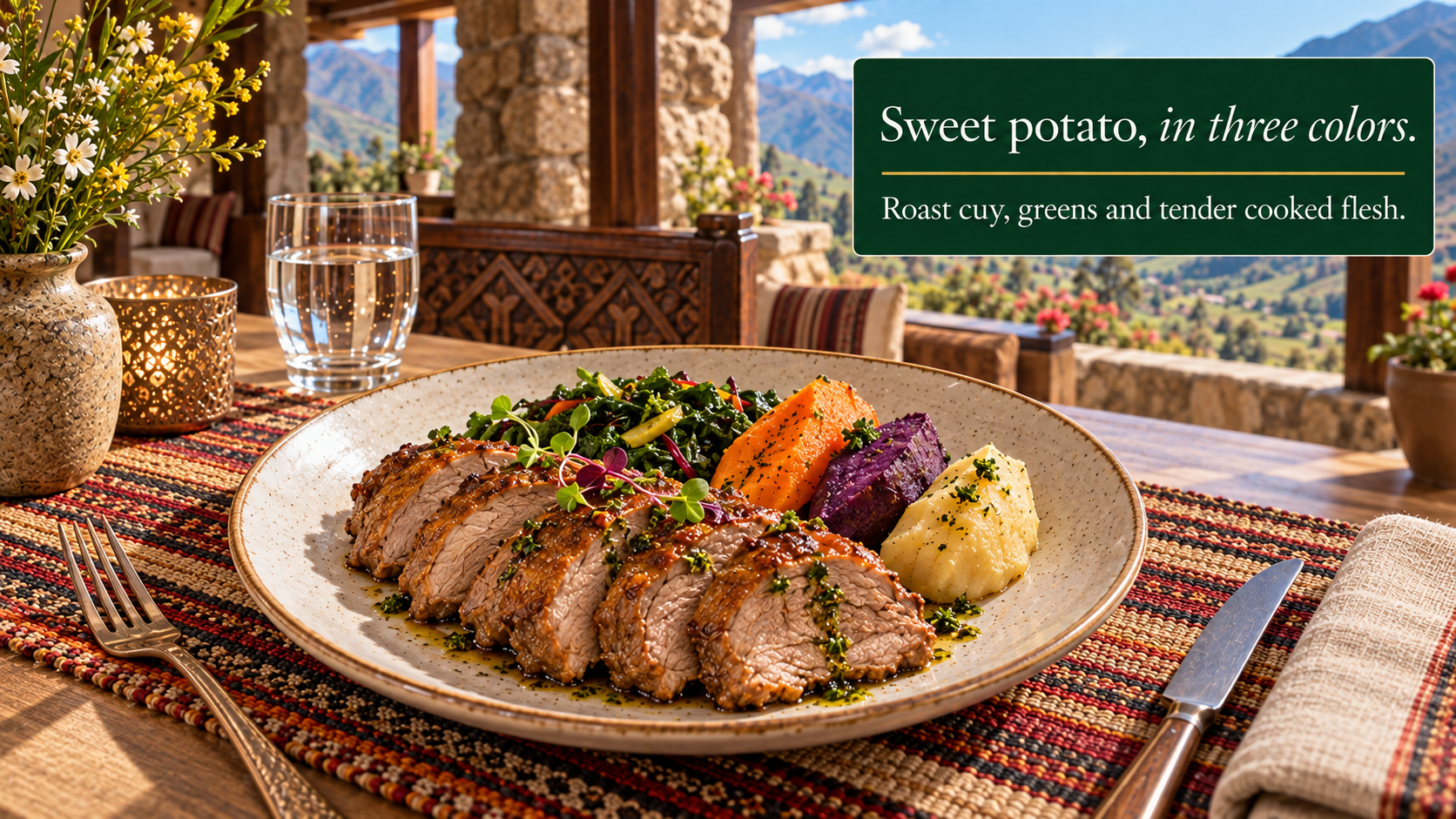
Small portions of orange-, purple- and white-fleshed sweet potato make a savory tasting beside roast cuy and greens. Cook each root until tender and compare the actual flavor and texture rather than choosing a winner by color.
Orange, purple and white sweet potatoes with roast cuy
Compare labeled sweet-potato products after cooking each until tender. Flesh color is useful to describe, but it does not establish a cultivar or a fixed texture. Serve modest portions of the colors beside roast cuy and greens.
Taste and texture on the plate
Taste a plain cooked piece of each color before combining it with the cuy. One batch may be softer and moister, another denser or more crumbly. Those differences become useful when choosing a favorite preparation: a dense sample may be comfortable in small steamed pieces, while a softer one may suit a rough mash.
Roast cuy supplies the savory contrast, so the roots need no added sugar. Give the greens a generous place beside the tasting portions. Keep a little citrus available if you enjoy a sharper bite, but try it on one portion first. A fair comparison starts with each root cooked pleasantly, even if that requires different times.
Choosing the serving while traveling
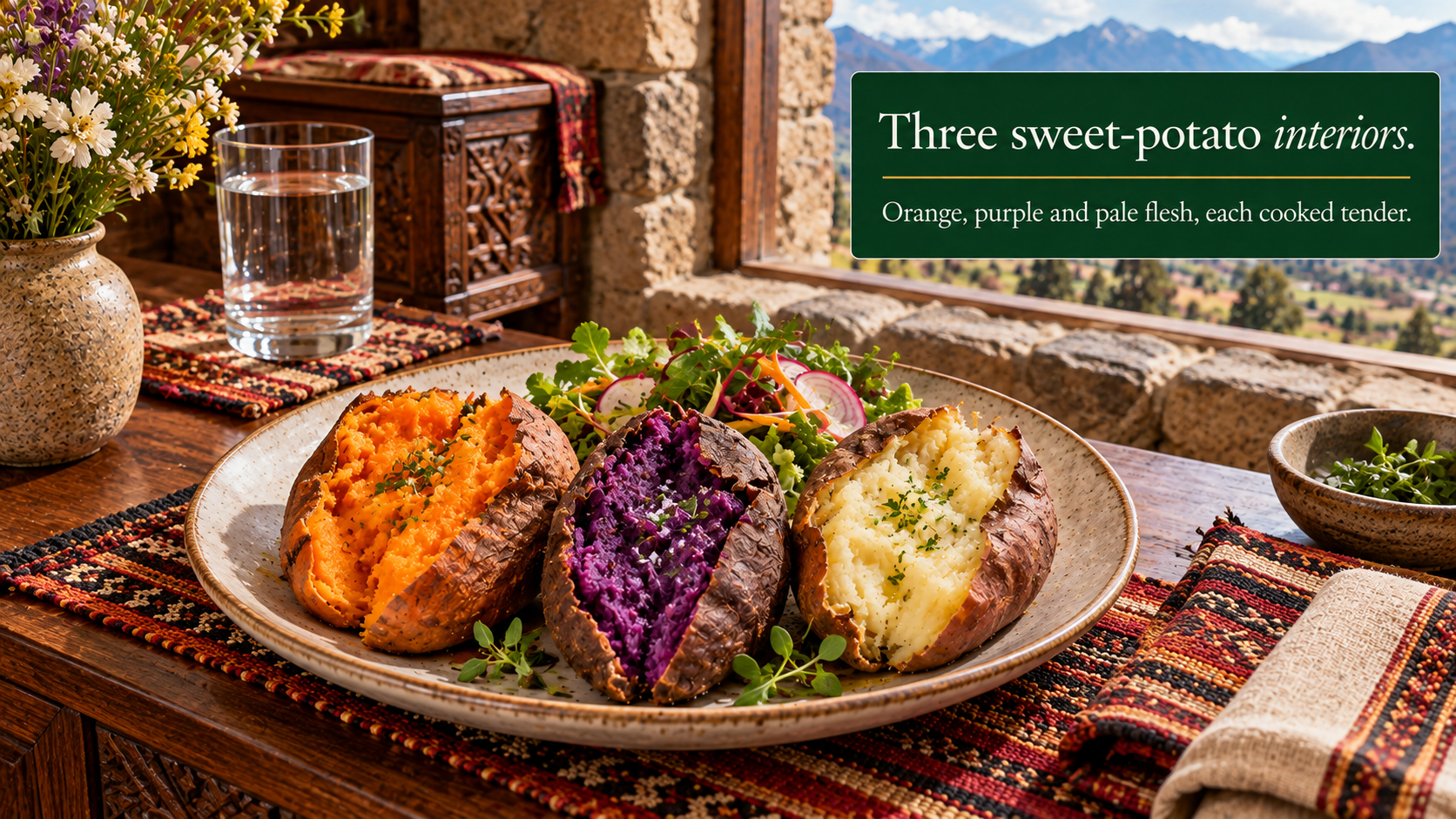
Ask whether a menu means orange, purple or white flesh, because skin color can be misleading. If several types are available, request a small comparison rather than three full side portions. Confirm roast cuy and ask whether the serving is carved or on the bone. You can enjoy one sweet-potato color without making the whole meal a tasting.
The roots supply a substantial starchy component, alongside the meal's meat and greens. Color alone is not a sufficient basis for assigning a cultivar, precise nutrient total or medical benefit. Choose the texture you enjoy and a portion that leaves room for the rest of dinner.
Name the crop before the color
Sweet potatoes are a different crop from ordinary potatoes and from true yams. Color names describe their flesh but do not establish a cultivar. University of New Hampshire Extension lists orange-fleshed Beauregard and a white-fleshed Japanese type with purple skin, which illustrates why skin color alone is not enough.
Ask the seller for the actual name and cut one purchased root only when you are ready to prepare it. A purple-skinned root may have pale flesh. Use the name on the product label if it is specific, and use orange-, purple- or white-fleshed sweet potato when that is all you can verify. Do not call an unidentified purple root ube.
University of New Hampshire Extension: sweetpotato varieties
Choose a fair comparison
Buy sound roots without soft, wet or damaged areas. For an enjoyable tasting, choose manageable sizes and similar freshness rather than a giant specimen of one type and tiny roots of another. Keep the types separate through preparation so you can say which piece came from which product.
The comparison does not have to involve equal-sized finished portions. You may prefer more of one after tasting. Start with a small amount of each and keep the rest available separately. This avoids turning an unfamiliar root into an oversized compulsory serving. It also leaves room for roast cuy and greens rather than making the plate a display of starch alone.
Use a moist route to tenderness
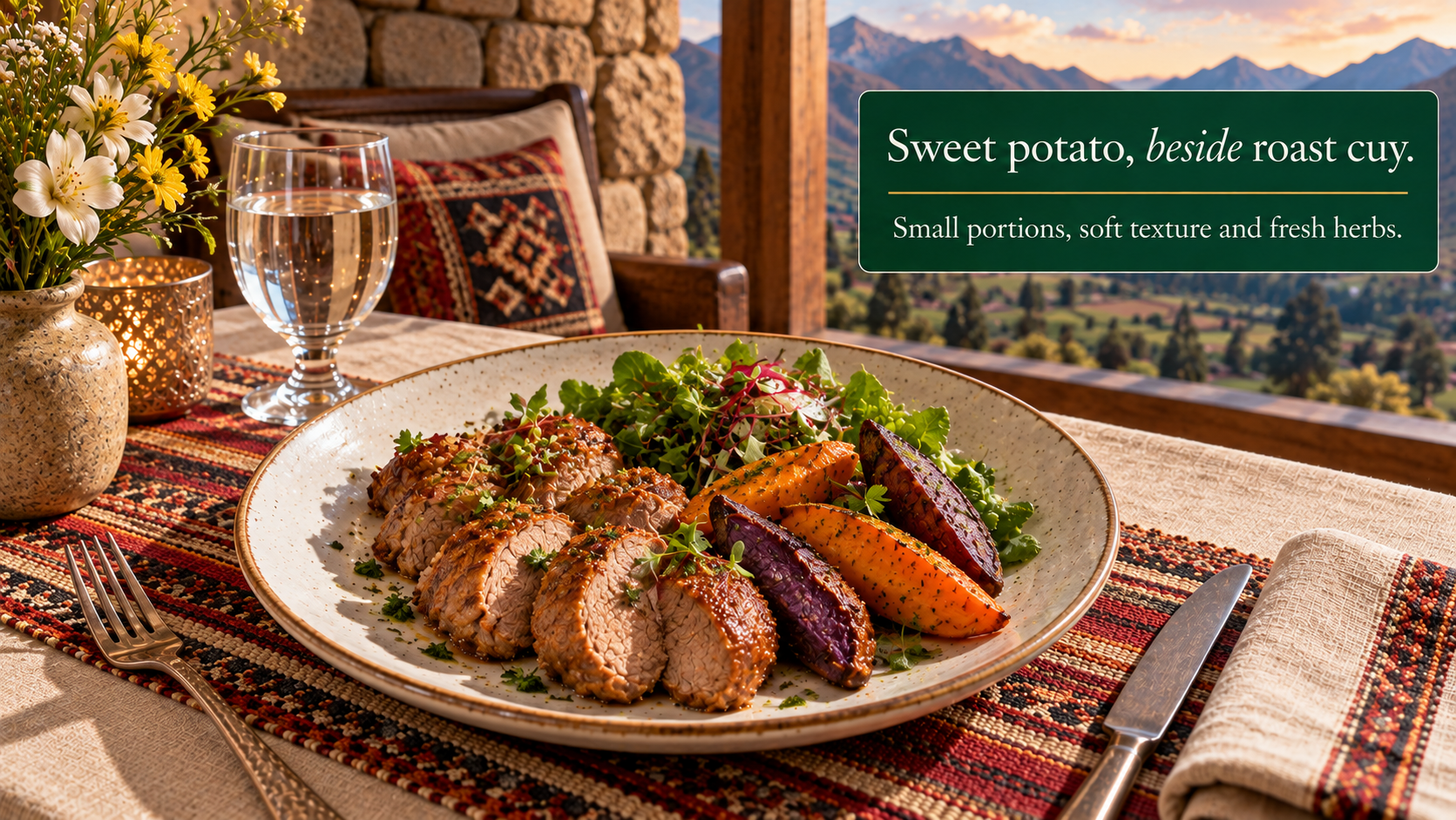
Wash the roots well and cook them with a method suitable for their size, such as steaming, boiling cut pieces, or baking. A moist method is especially useful when a sample seems dry or dense. The University of Florida's purple-sweet-potato recipe material includes cooking cubed purple sweet potato in water until soft.
Cook the colors separately if they need different times. Test the thickest part with a fork instead of assuming that equal oven time means equal tenderness. Remove the finished batch while the slower one continues. You can give safely cooked pieces a short oven finish if you want a drier exterior, but a crust is optional. The center should stay comfortable to eat.
Taste texture without promising it from color
Put a plain cooked piece of each type on the plate before adding any seasoning. Notice whether it is moist and soft, dense and crumbly, or somewhere between. Those observations belong to the actual roots you bought. They should not become a rule that every orange sweet potato is wet or every purple one is dry.
If one sample is noticeably drier, serve it in smaller pieces or as a coarse mash with a little fresh hot water. If another is very soft, let it remain soft rather than trying to force crisp edges. A tasting works better when each ingredient receives the preparation that suits it. Equal treatment can hide differences in what the products need.
Let cuy supply the savory contrast
Use properly sourced food-grade cuy and a verified cooking process appropriate to the cut. Keep raw meat and its equipment away from washed roots, greens and cooked food. Have the meat cooked through, checking the relevant safe process rather than relying on a browned surface. Serve a manageable roast portion with clear notice of any bones.
The sweet potatoes do not need sugar, syrup or a sweet sauce to go with it. Their existing flavor gives enough contrast to the meat. Arrange the three colors as small neighboring portions so you can try a bite of each with the cuy. A large mixed mash would obscure the very comparison this plate is meant to offer.
Give greens enough space
Add a generous portion of washed greens that suits the rest of the meal. Cook tougher leaves separately until pleasantly tender and drain them well. Tender salad leaves can stay fresh when appropriate. Either way, keep them from becoming a hidden wet layer underneath all the roots.
Offer a little citrus at the side and try it with one bite before dressing everything. Some diners will prefer the sweet potato plain beside the savory meat; others will enjoy more sharpness. Neither choice requires a claim that the ingredient needs correcting. Chopped culinary herbs can add another note, but choose one modest finish so the comparison remains understandable.
Make a useful choice for next time
After tasting, decide which root you would buy again for the meal you actually want. A moist sample may be your choice for a simple baked side, while a denser one may suit smaller steamed pieces. Write down the product or cultivar name when the supplier provides one. Color alone may not lead you back to the same root.
If you only find one color locally, make the plate with that product. The recipe does not require a three-color shopping expedition. A single well-cooked root is a complete serving choice. Treat the comparison as a way to learn preferences, not as proof that one flesh color is nutritionally superior or that a particular plate has special medical effects.
The images are editorial illustrations of ingredients and serving ideas. They do not document a named restaurant, a current harvest or an included retreat meal. Preparation guidance is not a tested recipe.
Leave room for the Sacred Valley
A visit to Machu Picchu can leave time for a good meal and a quieter stay in the valley. Ask Florian about The SoulSearching Experience, his five-day Sacred Valley seminar for 8-15 participants. Discuss dates, venue and meal arrangements directly.
Questions readers ask
Does purple skin mean purple flesh?
No. Confirm the product label and the flesh inside. Some sweet potatoes have purple skin and pale flesh. A purple root is also not automatically ube, which is a different crop. Use the actual food name rather than color alone.
University of New Hampshire Extension: sweetpotato varieties
Are sweet potatoes and true yams interchangeable names?
They are different crops, although market language sometimes mixes the names. Ask the seller which food product you are buying and follow its preparation. This plate compares sweet-potato flesh colors, not three unrelated roots sold under a loose yam label.
University of New Hampshire Extension: sweetpotato varieties
Can a sweet potato have white flesh?
Yes. University of New Hampshire Extension lists a white-fleshed Japanese type among sweetpotato examples. A pale interior does not by itself mean the seller supplied an ordinary potato. Keep a verified cultivar name when one is available.
University of New Hampshire Extension: sweetpotato varieties
How can the three colors be served as dinner?
Cook small portions of each until tender and serve them beside roast cuy and greens. Leave some root plain for comparison. The meal uses their existing flavor and does not need sugar, syrup or a dessert-style topping.
Should the skins stay on for this tasting?
Wash the roots well. Leave tender skin when you enjoy it, or remove it for a smoother bite. For a first comparison, serve the cooked flesh clearly so a tough skin does not dominate your impression of the root.
What if the outer layer feels stringy?
Remove an unpleasant fibrous outer layer as needed for texture and serve the tender cooked flesh. Do not peel an entire root aggressively just to match another color. Compare the parts you would actually enjoy eating.
What if the center is still hard after the stated time?
Continue cooking until a fork enters the thick center easily. Size and product differences make a timer only a guide. Cook the colors separately if one takes longer and remove ready roots rather than drying them while waiting for the slowest.
Does a hard skin mean the flesh is unfinished?
Check the flesh itself. A dry exterior and a soft interior can occur together. If the skin is unpleasant, leave it aside and eat the tender cooked flesh. A moist cooking method is another option for the next batch.
Do these roots need a crisp outside?
No. This comparison works with tender steamed, boiled or baked pieces. A crisp surface is optional. Choose the method that keeps the actual batch comfortable to eat, especially when a denser sample becomes dry in the oven.
What if I dislike the usual orange sweet potato?
Try a small serving of another clearly labeled type, cooked tender and paired with savory meat and greens. You may prefer its texture, but there is no requirement to like every color. Keep the portion small until you know.
Can a pressure cooker be used for the purple sample?
Use the appliance's tested directions for the root size and product, including its liquid minimum and fill limits. Check tenderness after the safe cooking cycle. Do not assume a timing from a different potato or cut applies unchanged.
Should I use the same oven method for all three?
You can start with the same method, but remove each type when it reaches the texture you want. A fair tasting means pleasant comparable tenderness, not forcing every root through exactly the same cooking time.
Can too much oven time spoil the texture?
Yes, the result can become drier or lose the texture you wanted. Check the thick center for tenderness and stop cooking the ready roots. If a cooked sample is very soft, serve a small mash rather than insisting on neat slices.
Can peeled pieces be cooked in a covered dish?
Yes, a covered moist preparation is a useful option for tender pieces. Cut them evenly, add a little water and check the center as they cook. Keep the colors separate if you want to compare them at the table.
How should I approach the cuy pairing if it is new to me?
Ask for a modest portion and confirm whether it is roasted, how it is seasoned, and whether it arrives on the bone. Try the meat with a plain root bite first. Flavor is personal, so comparisons with other meats are only loose impressions.
Can I ask for a portion that is easier to eat?
Yes. Ask how the cuy is presented and whether a smaller or carved portion is available before ordering. Leave bones aside and take manageable bites. The sweet-potato comparison can stay separate so the diner controls the amount of each component.
Should the greens carry a strong dressing?
Begin with a small amount of dressing or offer citrus separately. Taste with the meat and roots first. The greens give contrast to a substantial plate; they do not need to be soaked in a sharp or sweet sauce.
Can I make the root comparison ahead?
Cook, cool promptly in shallow containers and refrigerate the colors separately. Reheat hot leftovers to 165°F and add fresh greens near serving. Expect a somewhat softer texture after reheating rather than an identical first-day comparison.
How soon should the completed meal be refrigerated?
Refrigerate perishable components within two hours, or one hour when the surroundings exceed 90°F. Use shallow containers instead of waiting for a deep pot to cool on the counter. Store fresh greens separately.
How should the leftovers be reheated and used?
USDA recommends reheating leftovers to 165°F. Use refrigerated cooked leftovers within three to four days or freeze suitable portions. Warm only the portion you need, then add fresh greens rather than repeatedly reheating the entire stored meal.