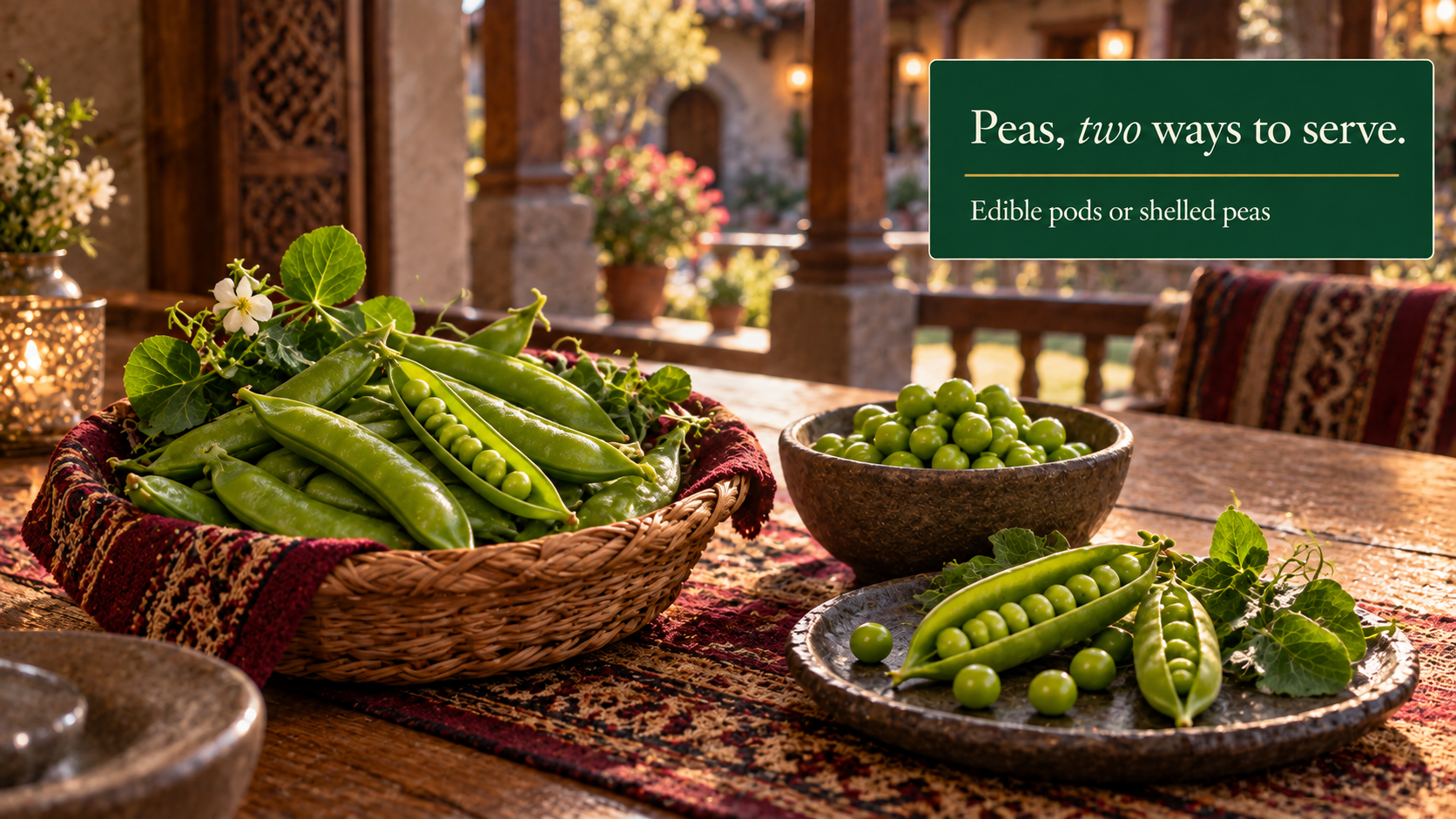
The first decision is made before the pot goes on: whole pod or shelled pea. Sugar Ann gives a bright, crisp vegetable with its pod intact. Alaska gives small peas that can be folded through warm grain. Each has a distinct place on the table, and the actual harvest's tenderness decides the final cooking time.
Vegetables at the Andean table
Snap Peas and Shelled Peas with Andean Grains
Sugar Ann is an edible-pod snap pea: steam tender whole pods briefly and serve them beside high-altitude Andean trout and quinoa. Alaska is a shelling pea: remove the peas from the pods, cook until tender, and fold them into quinoa with roast duck. Keeping the two types labeled prevents a cook from discarding Sugar Ann's best part or serving Alaska's fibrous shell.
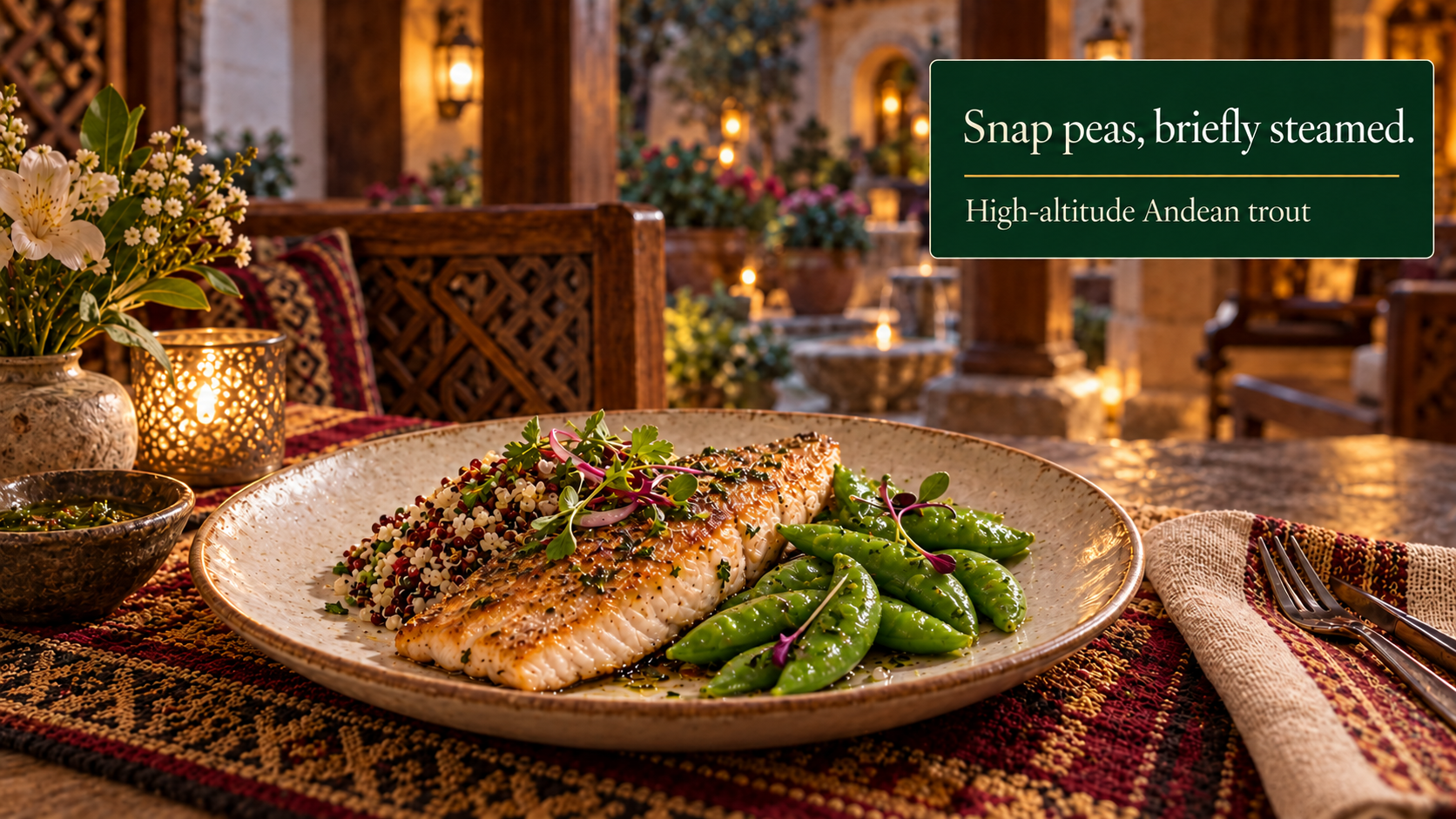
Briefly steamed Sugar Ann pods with high-altitude Andean trout and quinoa
Trim edible pods and steam briefly; serve with safely cooked high-altitude Andean trout and quinoa.
The pod gives a distinct crisp bite against soft grain and fish.
Variety reference: Eden Brothers: Sugar Ann (Snap Pea). Heirloom; open pollinated.
Shelled Alaska peas with roast duck and quinoa
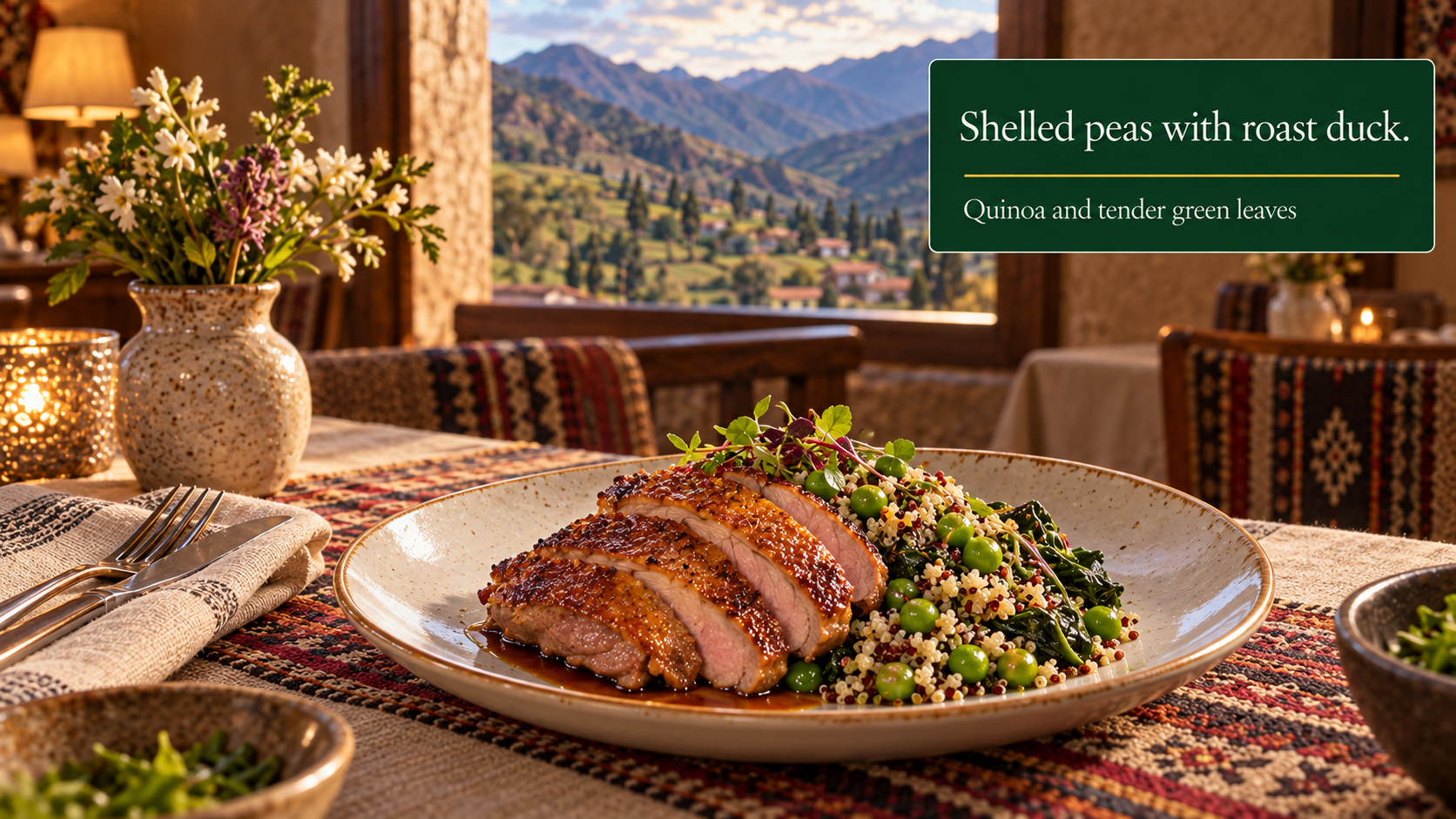
Remove peas from pods, cook until tender, and fold into quinoa beside roast duck.
Tender peas stay visible and sweet, while the fibrous shell is excluded.
Variety reference: Eden Brothers: Alaska. Heirloom; open pollinated.
Sugar Ann carries its own crunch
Trim and wash sound Sugar Ann pods. Steam them briefly, then drain well and place beside safely cooked high-altitude Andean trout and quinoa, if the fish source is verified. Herbs and citrus make a light finish; add any sacha inchi oil cold. The pod should still have a little snap.
Eden describes Sugar Ann as an edible-pod snap pea. A mature pod can become stringy, so taste the batch and pull a tough seam string when needed. Do not shell it by default.
Alaska peas come out of the pod
Open Alaska pods and collect the peas. Cook them until tender, then fold them through warm quinoa with chopped herbs. Serve the grain beside roast duck and native potatoes. A spoonful of peas distributed through the quinoa gives each bite a clear vegetable note.
The Alaska pod is a shell for this dish, not the serving vegetable. Taste the peas as they cook. Their maturity changes how quickly they soften, and overcooking can flatten the texture.
Put the peas next to a main dish
Sugar Ann also makes a crisp side for alpaca with canihua, while Alaska peas can brighten a covered duck broth. For roast cuy, a small spoonful of cooked shelled peas alongside native potatoes is an alternative to a rich sauce. Keep the whole-pod and shelling instructions attached to the right batch.
Wash produce, separate it from raw animal foods, and cook meat and fish to safe endpoints. Keep cooked grains and peas chilled until service if prepared ahead.
Serve the variety you have, not the label you hope for
The edible-pod versus shelling distinction is supported by the Eden listings and extension guidance. Neither exact Eden pea cultivar has yet been confirmed in production in Quillabamba.
A cook can write Sugar Ann or Alaska on a plate only after verifying the plant and harvest. Until then, snap pea and shelling pea describe what the diner will actually encounter.
These dishes are serving ideas. Images illustrate the ingredients and preparations; they do not document a restaurant menu, a tested recipe or a current property harvest. The exact Eden Brothers catalog varieties remain research candidates.
Give the Sacred Valley a little more time
A trip built around Machu Picchu can also leave room for a good meal and a less hurried stay. Ask Florian about The SoulSearching Experience, his five-day Sacred Valley seminar for 8-15 participants. Discuss dates, venue and meal arrangements directly as you plan.
Questions readers ask
Are Sugar Ann pea pods eaten whole?
Yes. Sugar Ann is an edible-pod snap pea, so wash, trim, and serve the whole tender pod, perhaps briefly steamed beside high-altitude Andean trout and quinoa. Test the actual batch for seam strings. Do not carry that whole-pod instruction over to Alaska, which Eden lists as a shelling pea.
Do Alaska peas need to be removed from the pods?
For Alaska, yes. Open the shelling pod and use the peas inside. Cook them until tender, then fold them into quinoa beside roast duck. The fibrous pod is not the planned vegetable here. Sugar Ann is a separate edible-pod listing; keep the two harvest containers labeled in the kitchen.
If pea pods look alike, how can the kitchen tell snap and shelling types apart?
Use the seed or harvest label first, then inspect and taste a sound washed pod if its identity is still uncertain. Extension notes shelling pods tend to be tough and fibrous while snap pods are selected for eating whole. Do not relabel a mixed bag as Sugar Ann or Alaska by appearance alone; keep the identity unresolved.
Are shelling-pea pods toxic if someone bites one by mistake?
For identified edible garden peas, Iowa State Extension says shelling pods are generally fibrous and unappealing, rather than toxic. That does not make them a good plated vegetable. Do not generalize this answer to ornamental sweet peas or an unidentified plant. Serve Alaska as shelled peas, and Sugar Ann as whole tender pods.
Should Sugar Ann pods be steamed or served raw?
Either approach can work with sound, washed edible pods. The proposed high-altitude Andean trout plate uses a brief steam to soften the pod while retaining snap. Raw pods would make a different, cooler grain salad. Taste for tenderness and remove a tough seam string if needed; avoid a long simmer that turns the pod dull and soft.
Do snap-pea strings need to come off before cooking?
Check a Sugar Ann pod by snapping the stem end and pulling gently along the seam. If a tough string comes away, remove it for a cleaner bite; if the young pod is tender, extensive trimming may be unnecessary.
What if cooked snap pods have a tough membrane?
Older or overcooked pods can feel tough. Taste the actual Sugar Ann harvest before planning a whole-pod plate, remove strings where present, and steam only until the desired tenderness is reached. If the pod remains unpleasant, do not put it on a guest plate merely because the seed listing calls the type edible-podded.
Can fresh peas be overcooked?
Yes. Tender peas and snap pods lose their lively texture with prolonged heat. For the Alaska-and-duck plate, cook shelled peas separately or add them late to the quinoa, then taste. For Sugar Ann, steam briefly and serve promptly. A fixed minute count is less useful than the size, maturity, and tenderness of the actual batch.
Can frozen peas be added directly to a hot dish?
Commercial frozen shelled peas can often be heated directly in a simmering dish according to the package directions. Stir so they heat evenly and do not stick. That convenience does not establish an Alaska harvest. A proposed Eden plate should say whether peas were actually grown, fresh-purchased, or frozen-purchased.
What savory dinner can use a bowl of fresh shelled peas?
Cook shelled Alaska peas until tender, then fold them through warm quinoa with chopped herbs and serve beside roast duck. A small portion can also join a clear broth close to service. Keep the pods for identification and shelling, rather than placing their fibrous walls on the plate. Taste the peas before seasoning because maturity changes their tenderness.
Can dirty snap pods still be served whole?
Do not infer safety from online votes. Wash sound pods under running water and remove damaged areas. Brown marks that do not wash off require inspection; discard pods with rot or mold. If uncertain, keep the questionable pods off a guest plate.
How do shelled peas and edible-pod peas differ in a recipe?
The kitchen distinction is clearer than the regional vocabulary: Sugar Ann provides the whole snap pod; Alaska provides the peas removed from a shell. Briefly steam Sugar Ann beside high-altitude Andean trout and quinoa. Cook Alaska peas and fold them into quinoa beside duck. Keep seed packet and harvest labels visible to the cook.
How can Sugar Ann retain its flavor beside high-altitude Andean trout?
Steam the washed pods only briefly, drain, and season lightly so their own flavor is still clear. Put citrus and herbs on the quinoa or beside the fish instead of coating every pod. Taste a pod raw first to know what the harvest offers. A thick dressing would make the pea flavor harder to notice.
Why are snap peas rubbery after cooking?
Frozen pods may not give the crisp bite wanted here. For a Sugar Ann high-altitude Andean trout plate, use sound fresh pods if available and steam briefly. Taste one before serving. If the actual batch is already tough or thawed soft, choose a cooked side where snap is less central rather than promising crispness.
What can be done with leftover sugar snap peas?
Keep sound pods refrigerated and use them soon in a second plate, perhaps sliced into cooled quinoa with herbs. Wash and trim before serving. Cooked pods can be folded into a warm grain side, though they may no longer be crisp. Date prepared leftovers and follow cold-storage guidance; do not infer a long shelf life from appearance.
Are ornamental sweet peas the same as edible snap peas?
No. Ornamental sweet peas are not the edible garden pea represented by Sugar Ann and Alaska. Extension explicitly warns against eating ornamental sweet peas. A kitchen should identify and label the crop before harvest and never serve an unknown pea pod because it resembles a snap pea. The word sweet alone is not enough.
Can small bumps on snap pea pods be assumed harmless?
No diagnosis can be made from a generic description. In one documented extension case, small bumps were attributed to edema and the expert judged those pods safe. That does not cover every lesion. Inspect the actual Sugar Ann batch, discard spoiled pods, and get a local expert assessment if damage is unexplained before plating it.
If Alaska pods have an unusual surface, are the peas inside safe?
An Oregon extension expert identified a specific photographed growth as non-harmful, but that answer cannot diagnose a different pod. Keep any visibly damaged or moldy batch off the plate until identified. If the pods are sound, wash them, shell Alaska peas with clean hands and tools, and cook the peas for the duck-and-quinoa dish.
Does adding salt make peas turn crunchy?
Salt alone does not establish the cause of an unexpected cooked-pea texture. For fresh Alaska peas, cook only until tender, season, and serve promptly in warm quinoa. If a batch is starchy, taste and adjust the plate; do not diagnose a cooking defect from salt alone.
Can fresh peas be cooked until they have canned-pea texture?
You can cook shelled peas longer for a softer result, but the proposed Alaska-and-duck plate aims for tender peas that remain distinct in quinoa. Start by tasting a pea, then stop when the texture suits the grain. Sugar Ann is a whole-pod type and is better judged by pod tenderness, not canned shelled-pea texture.
Continue at the table
- Romanesco, Gently Steamed with Lemon and Sesame
- Lemon Tahini for Alpaca and Steamed Vegetables
- Culinary Herbs with high-altitude Andean trout: Burnet, Cress, Lovage, and Lemongrass
- Quinoa in Peru: breakfasts, soups and savory plates
- High-altitude Andean trout: grilled and baked preparations
- All the new vegetable dishes