A small bowl of prepared ripe che fruit can accompany a separate baked-high-altitude Andean trout lunch. The fruit stays fresh and recognizable, with no syrup or experimental fish sauce.
An illustrated serving concept in an Andean hotel setting.
A separate che fruit serving beside a high-altitude Andean trout lunch
Keep the fresh fruit on a separate small plate, with its seeds or central stone removed from the prepared portions. A simply baked high-altitude Andean trout and cooked vegetables can form the main course. This is a proposed serving arrangement, with fruit identity and supply confirmed before service.
Explore High-altitude Andean trout in the ingredient guide. Confirm the actual preparation and availability with the kitchen.
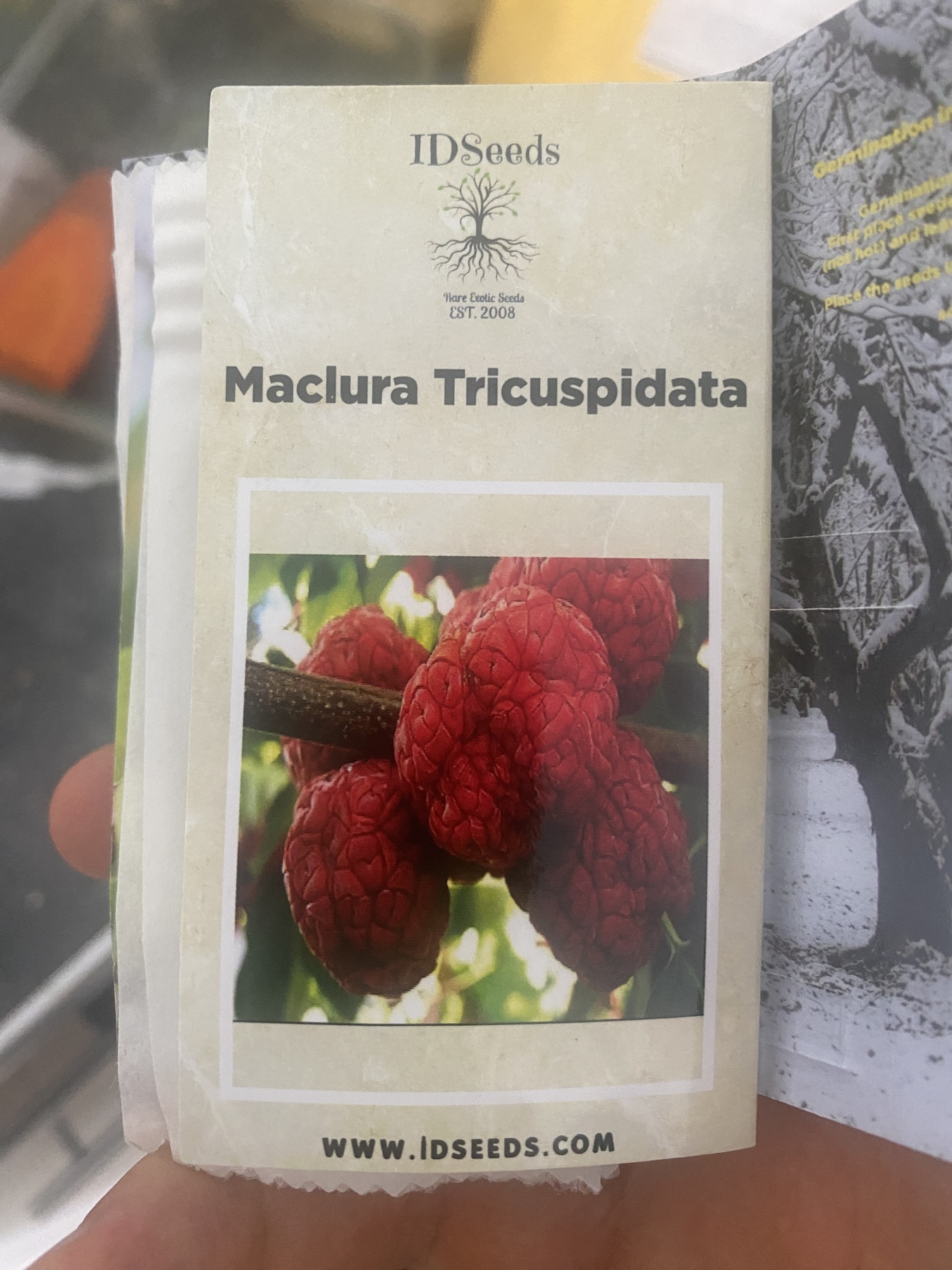
The photographed packet names Maclura tricuspidata, known as che or mandarin melon berry. Botanical sources document its ripe red fruit as edible. A possible serving uses verified food-grade ripe fruit, prepared without seeds and served separately from baked high-altitude Andean trout, quinoa, and vegetables.
The featured ingredient, served on its own.
Illustrated serving concepts and an imagined Sacred Valley garden. These are not photographs of a named restaurant, a current harvest, or a tested recipe.
Maclura tricuspidata is the identity to confirm
The photographed IDSeeds packet names Maclura tricuspidata. Che, Chinese mulberry, and mandarin melon berry are common names used for this tree; Cudrania tricuspidata is another botanical name encountered in references. The scientific name is the useful anchor when a supplier and a kitchen discuss the fruit.
The common name Chinese mulberry is not enough on its own. A plant grown from this packet still needs competent identification before food use. This guide concerns the documented fruit of Maclura tricuspidata, with no invitation to taste an unknown tree or substitute another red fruit that merely resembles its picture.
Tsukuba Botanical Garden, part of Japan's National Museum of Nature and Science, describes the fruit becoming red when ripe and being edible. Shanghai's botanical flora independently records its edible fruit. Those references support a fresh-fruit concept for the correctly identified species, rather than a serving based only on a seed seller's attractive photograph.
The kitchen should receive ripe culinary fruit in sound condition, check the batch, and reject damaged or deteriorated pieces. A red exterior helps describe the species but is not a complete test of eating quality. No unripe fruit, leaf preparation, bark, or root is proposed for this meal.
The photographed packet has no named seedless cultivar. It would be inaccurate to assume that every fruit from a future tree will have no seeds. A small serving can instead be prepared with any seeds removed, leaving the guest with manageable pieces of ripe flesh.
This is a presentation choice, not a claim that an accidental seed exposure has a particular toxic effect. Planting seeds remain outside the food preparation. If a kitchen cannot identify the fruit reliably or prepare it comfortably for eating, an ordinary familiar fruit can fill the same place alongside lunch.
Use a reliable food supplier, clean hands and utensils, and potable running water for washing. Keep the preparation gentle enough for the actual fruit. A vigorous scrub suited to a hard melon rind is not automatically appropriate for a soft ripe fruit with a textured surface.
Wash before preparing the serving and keep it appropriately chilled until needed. Check the actual product's handling instructions rather than borrow a shelf life from a dried or processed fruit. The bowl should arrive as a clean fresh component, with no need for a long display in sunlight to make the presentation attractive.
Keep the high-altitude Andean trout course complete on its own
The proposed main course is baked high-altitude Andean trout with quinoa and a familiar cooked vegetable. A small separate bowl of prepared che fruit offers a cool fresh contrast. It does not need to be blended into a glaze, turned into a sweetened drink, or tested as an improvised acid sauce for fish.
Serve the fruit in a portion that is easy to finish while its texture is pleasant. The guest can taste it between mouthfuls or after the cooked course. Plain water and a savory fish preparation keep the meal straightforward, with the kitchen confirming the actual sauce ingredients before service.
A nursery tree needs a long-term plan
The botanical sources describe a woody tree with thorns, not a low annual berry plant. The imagined nursery study therefore shows a young tree with room around it, while the ripe fruit appears in a separate botanical study. A tiny seedling should not be illustrated carrying an implausible abundance of mature fruit.
A sheltered nursery is a place to assess the actual site, including temperatures, exposure, drainage, and space. It is not evidence that the tree will fruit locally. Pollination, propagation, and mature-tree management require informed horticultural advice before any future garden supply is planned.
At a hotel, the useful request would be ripe che fruit from a verified culinary source, prepared without seeds and served separately. If it is unavailable, the high-altitude Andean trout lunch still works. There is no reason to substitute an unidentified garden fruit or explain the ingredient through medicinal claims.
The SoulSearching Experience is a five-day retreat and seminar for 8-15 people, with no plant medicine. This ordinary meal concept is not a confirmed menu inclusion. Its interest is a clear ingredient and a thoughtful serving, with the actual availability and individual dietary needs settled before the order is accepted.
A table within a longer stay
Food can give the days around Machu Picchu a welcome sense of place. If you would also like time for reflection, explore a Sacred Valley retreat before or after your visit. Florian Rolke offers The SoulSearching Experience, a five-day seminar for 8-15 participants, with no plant medicine.
Ask for the current dates, venue, price and inclusions before arranging the rest of your trip. These dishes, restaurant visits and garden visits are ideas to explore; they are not confirmed seminar inclusions.
Questions about this dish
Adapted from public cooking questions and published FAQs. Answer sources are linked below each response. Broader ingredient questions are included where they help with this serving.
What does ripe che fruit taste like?
California Rare Fruit Growers describes a sweet melon-like character when fully soft-ripe. Flavor depends on the actual fruit. A small plain portion lets the guest assess it without syrup or a strong sauce.
The harvest period depends on location and growing conditions. California fruit-growing notes should not become a Sacred Valley calendar. No current local tree, season, supplier, or harvest has been verified for this guide.
The proposed serving uses verified ripe culinary fruit, with seeds removed and the flesh in manageable pieces. It arrives separately from baked high-altitude Andean trout and quinoa. No leaf, bark, root, planting seed, or medicinal preparation is included.
Botanical sources describe red ripe fruit; California Rare Fruit Growers emphasizes thorough ripeness and soft flesh for eating quality. Color alone is insufficient. The kitchen should inspect the actual batch and reject deterioration.
This guide treats the documented ripe fruit as an ordinary food. It makes no therapeutic claim or guarantee of individual suitability. The interest is the fruit's identity and preparation beside a complete cooked meal.
No universal safe quantity or medicinal dose is established here. The proposal is a small prepared fresh-fruit portion, with individual dietary needs resolved before service. A guest can choose familiar fruit instead.
The botanical garden describes separate male and female flowers. Che is a flowering tree, even though its small flower clusters can be overlooked. Flowering and fruiting should be assessed on the identified plant rather than inferred from a seed photograph.
No broad compatibility claim is justified simply because plants are related. California Rare Fruit Growers documents Osage orange as a rootstock option. Other combinations need reliable horticultural evidence and a skilled grower, not assumption.
What chilling requirement should a che grower use?
This guide establishes no numeric chilling requirement for the photographed seed lot. A site assessment needs reliable regional horticultural advice and observations of the actual plant. A nursery setting in an illustration is not a climate trial.
Planting time depends on the actual site, tree condition, and seasonal weather. The proposal begins with a sheltered nursery assessment rather than an invented Sacred Valley planting date. A local grower should decide when conditions suit establishment.
Will an unidentified female che reliably fruit alone?
The species is described as dioecious, with male and female flowers on different plants. A named selection may have its own fruit-setting behavior, but no such selection is established by this packet. Verify the actual plant and supplier guidance.
California Rare Fruit Growers discusses seed, cuttings, and grafting. These routes have different implications for plant identity and time to fruit. The photographed seeds establish no named clone, successful germination, or immediate harvest.
Does che need enough seasonal warmth to ripen fruit?
Yes, fruiting needs more than winter survival. California Rare Fruit Growers recommends a warm sunny location. A particular highland site needs assessment of its whole season; a hardiness claim alone does not promise ripe fruit.
Should che be treated as an acid-soil crop like blueberries?
Do not transfer another fruit crop's soil rules automatically. California Rare Fruit Growers describes well-drained soil for che. Test the actual site and obtain local amendment advice rather than apply acid on a guess.
California Rare Fruit Growers notes that seed-grown plants can take years, potentially up to ten in its account. That is a caution about waiting, not a guaranteed schedule. This packet does not establish an imminent supply for a kitchen.
Pruning depends on the actual tree, desired form, and growing conditions. A competent grower should plan its long-term structure. Do not cut solely to make a mature fruit tree fit the scale of a small illustration.
Can a seed-grown che need management as a tree or shrub?
The botanical and grower sources describe a small tree or spreading woody plant. Its actual growth needs inspection and appropriate training. The guide does not guarantee a sucker-free plant or infer behavior from an untested seed lot.
California Rare Fruit Growers says ripe che does not detach as readily as mulberries and should be picked individually. A careful harvest protects the fruit for a fresh serving. Do not assume every related fruit uses the same harvest method.
No. This guide concerns Maclura tricuspidata, also called Cudrania tricuspidata. Osage orange is Maclura pomifera. A grafting relationship or shared genus does not make their fruits interchangeable for food.
The grower guidance favors a warm sunny position. A tree surviving in shade does not establish a useful harvest. Evaluate the actual light and seasonal temperatures before treating a nursery tree as a future kitchen source.