Pineapple can bring a bright, warm contrast to roast cuy without becoming a sweet sauce. The useful serving is small: tender pieces with a little of their own juice, native potatoes and plainly prepared vegetables. Gentle cooking gives a softer bite while leaving the fruit recognizable. It does not require a glaze, frying or a plate covered in fruit.
Gently Cooked Pineapple Beside Roast Cuy and Native Potatoes
Peel sound fresh pineapple, remove tough eyes and core as needed, then soften small pieces with a little water. Serve a modest amount beside roast cuy and native potatoes.
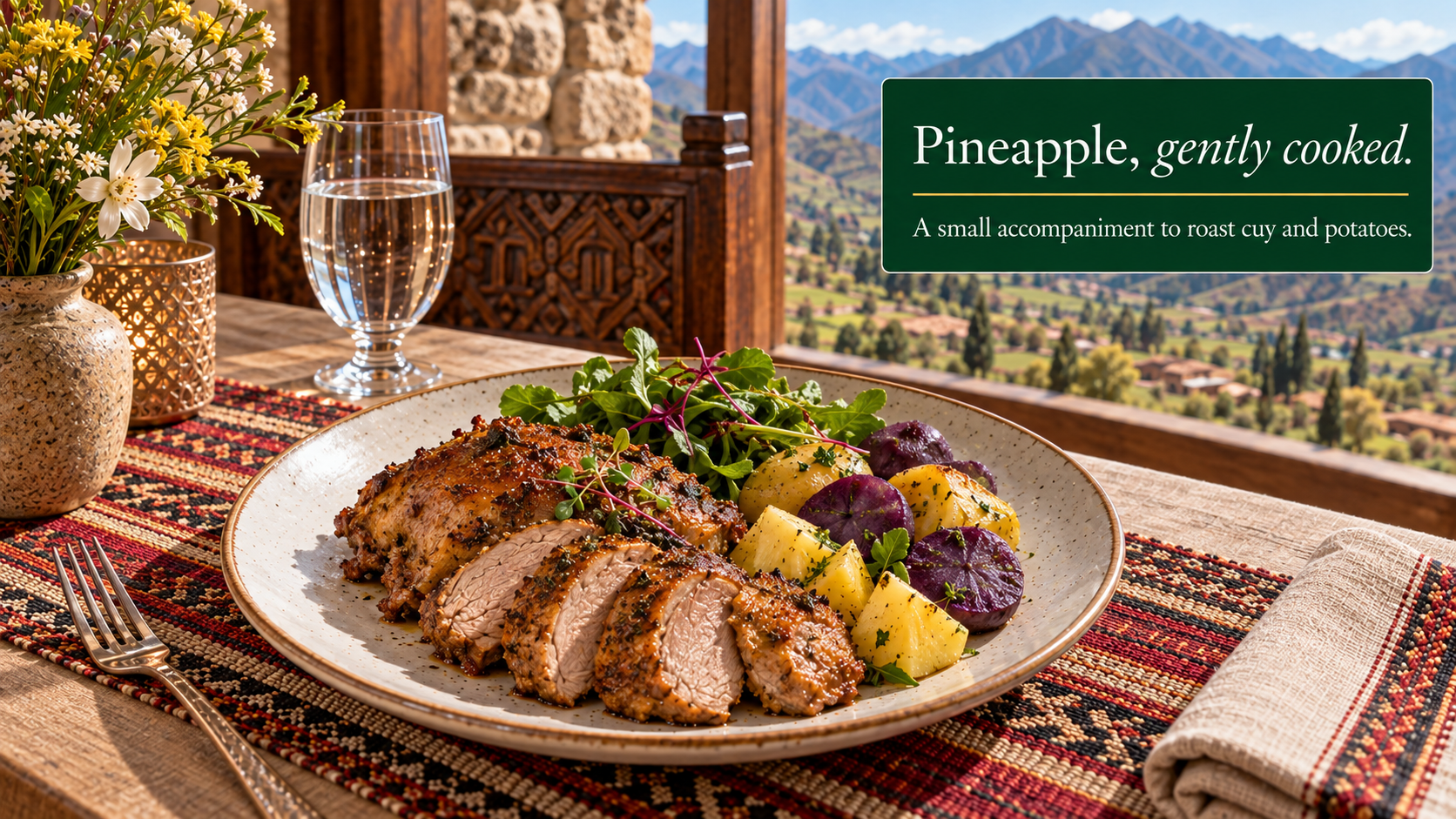
Choose fruit for flavor, then judge its tenderness
Taste the pineapple before assigning it to the meal. A ripe piece should have enough flavor to be pleasant without added sweetness. Pineapple bought too immature will not reliably become a sweeter ingredient through waiting on a counter. Skin color is only one clue and differs among fruit. The actual flesh and aroma are more useful to the cook than an attractive yellow exterior alone.
Avoid damaged, moldy or unwanted fermented fruit. Gentle cooking can change a sound fruit's texture, but it is not a rescue method for spoilage. A strong perfume may be welcome; an unpleasant fermented smell is a different matter. Ask the supplier for fruit intended for immediate eating rather than assuming every firm specimen will become suitable on the same day.
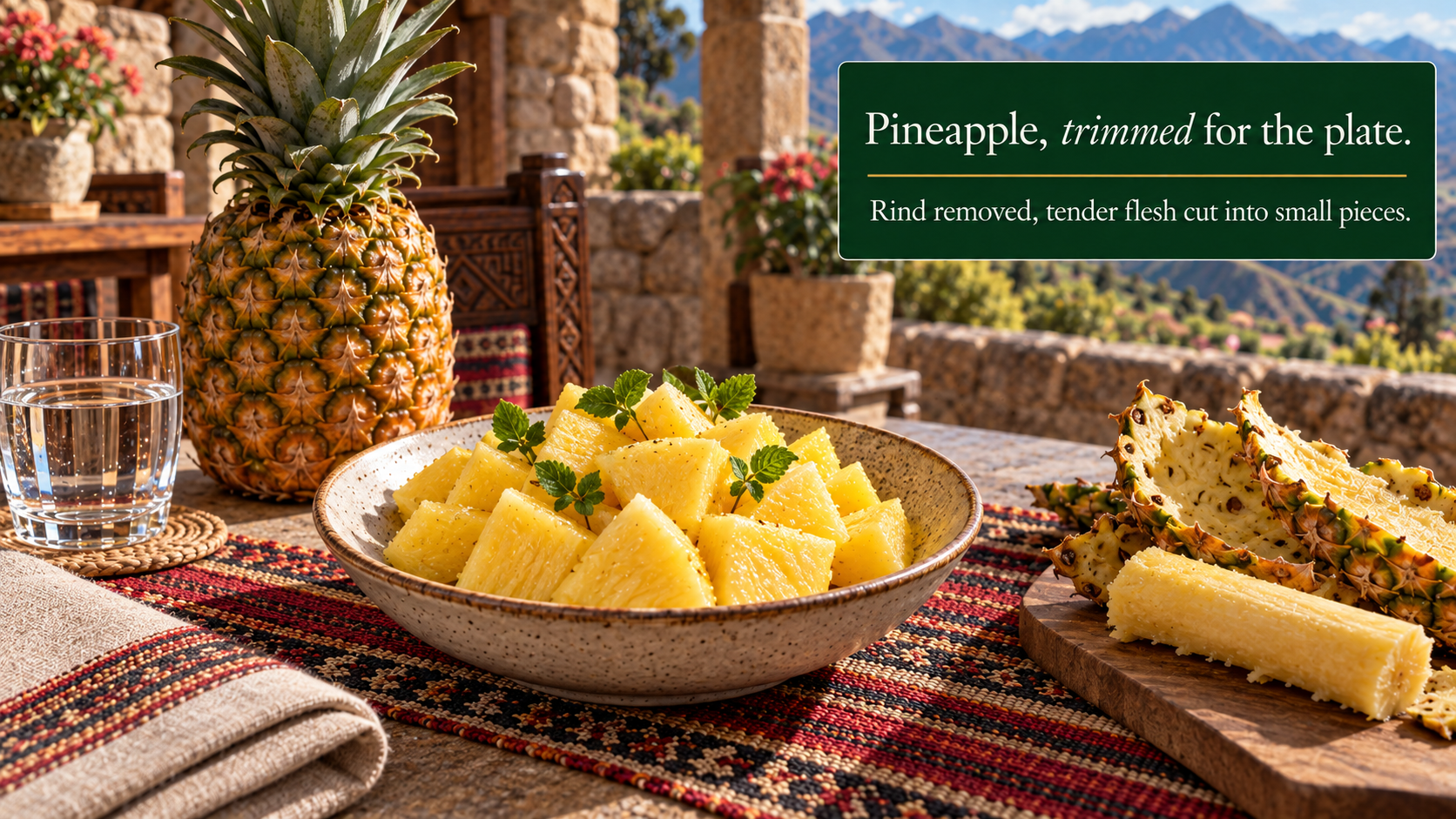
Remove the parts that interrupt a small accompaniment
Set the pineapple securely and remove the crown, base and outer peel. Trim the remaining eyes so the served pieces have a comfortable surface. Cut away a tough central core when its texture would distract. A tender part of the core may be usable in another preparation, but this accompaniment should not ask the guest to chew through a hard strip.
Cut the flesh into small wedges or broad bite-size pieces. Tiny dice break down quickly and can resemble a relish, while a large ring can dominate the plate. For the proposed meal, choose pieces that can be lifted with a fork alongside potato. Keep their dimensions reasonably similar so they soften at a similar pace.
Cook gently with a little water
Place the prepared pineapple in a small covered pan with enough water to prevent sticking. Warm it gently until a piece yields comfortably to the fork. Stir carefully or turn the pieces rather than beating them into pulp. The fruit should retain some form and release enough juice to make a light accompaniment.
Stop cooking when the texture suits the plate. A long reduction concentrates the flavor and may leave the fruit overly sharp or sticky. There is no advantage in pushing it to that point for this meal. If the pan becomes dry before the fruit softens, add a little water. This is a moist, gentle preparation, so browned edges are not a required sign of success.
Let native potatoes provide the quieter bite
Choose a verified edible potato product and prepare it until fully cooked. The kitchen can use the actual potatoes available and name a specific variety only when the supplier has identified it. Serve a few tender pieces or a simple mash. Their role is a calm starch beside cuy and the more lively pineapple.
Keep the potato seasoning restrained while testing the fruit. A strongly acidic potato dressing could duplicate the pineapple's job and make the plate tiring. Add vegetables or greens for variety, and drain any cooking water before service. The potato should remain identifiable as a separate part of dinner, not disappear into a sweet fruit mash.
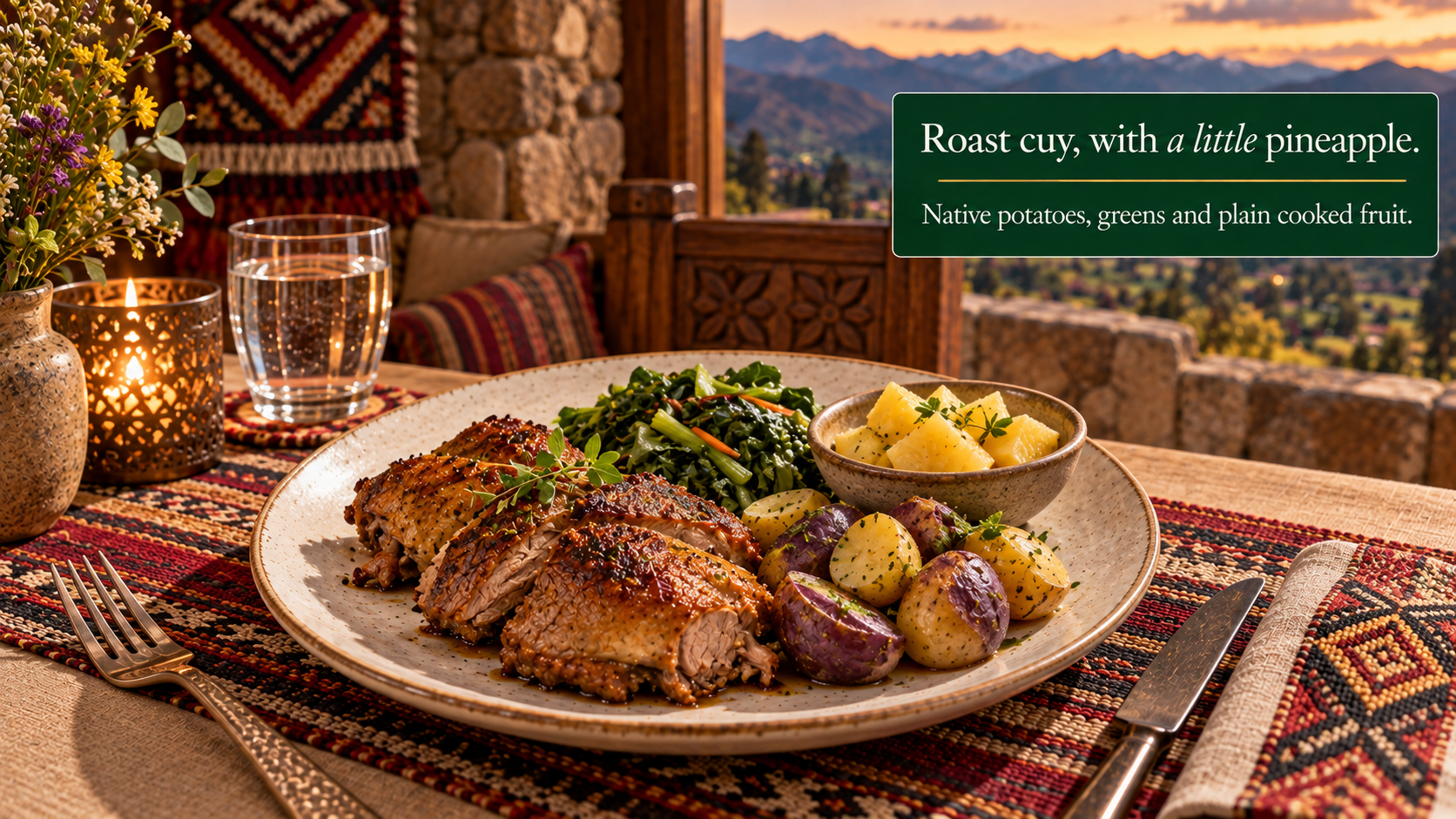
Serve roast cuy with the pineapple optional
Ask how the roast cuy will be portioned and presented. Set the pineapple beside it in a small amount, with potatoes and vegetables occupying the rest of the plate. Keep a little meat free of fruit juice so the guest can try its own flavor first. This is particularly helpful for visitors encountering cuy for the first time.
A few warm pieces can be enough for the initial serving. That is a culinary trial portion, not a nutritional limit. Bring additional pineapple separately if wanted. The food should read as roast cuy with an accompaniment, rather than pineapple with a small piece of meat hidden beneath it. Ordinary shallow hotel crockery can make the arrangement clear.
Taste a complete bite before adding citrus
Pineapple often brings sufficient acidity on its own. Taste it with the cuy and potato before reaching for lemon. If the fruit is particularly sharp, reduce the portion and loosen its juices slightly with water. A little parsley in the vegetables can add freshness without increasing the acid across the whole meal.
If the fruit is very sweet, keep it to a smaller amount and serve it separately. Do not add several more fruits or a bottled sauce to create complexity. The meal already has enough contrasts when its main components are prepared well. The most useful correction is often a change in proportion rather than another ingredient.
Ask for tender fruit and a plainly prepared potato
The most useful request is small tender pineapple pieces, roast cuy and native potatoes prepared simply. Ask how the cuy will be portioned and whether the potatoes will be pieces or mash. These details affect how easily the components share a forkful. If a guest prefers less fruit, a separate small dish lets the kitchen offer the same savory meal with an optional accompaniment.
The FDA's raw-fruit chart lists pineapple as a source of vitamin C and carbohydrate, with little protein. That context supports its role as fruit beside a fuller meal; it does not establish the nutrition of the cooked plate. Choose the final amount by appetite and flavor. A sharp pineapple may work best in just a few bites, while a milder one can invite another small helping after the guest has tried it.
The images are editorial illustrations of ingredients and serving ideas. They do not document a named restaurant, a current harvest or an included retreat meal. Preparation guidance is not a tested recipe.
Leave room for the Sacred Valley
A visit to Machu Picchu can leave time for a good meal and a quieter stay in the valley. Ask Florian about The SoulSearching Experience, his five-day Sacred Valley seminar for 8-15 participants. Discuss dates, venue and meal arrangements directly.
Questions readers ask
Should a hot savory pineapple accompaniment be a large fruit portion?
Begin with a small warm portion beside the cuy and potatoes. More can follow after tasting; the pineapple should not crowd out the savory meal.
What if the pineapple tastes too sour?
Taste sound fruit before cooking and use a smaller portion if sharp. Cooking changes tenderness but does not guarantee a balanced flavor.
Must every piece of pineapple core appear on the plate?
No. Remove a core that is too tough for the intended bite. This small tender accompaniment should be comfortable to eat with a fork.
Will waiting make an immature pineapple sweeter?
Do not depend on it. Select fruit with pleasant eating quality before cooking; changes in shell color are not a guarantee of greater sweetness.
Does fresh pineapple have to remain in a cold fruit salad?
No. The proposed meal uses gently cooked pieces. Keep enough shape to lift beside potato rather than reducing the flesh to a thick coating.
Should tough pineapple eyes remain after peeling?
Trim them away from this prepared accompaniment. Cut pieces that have a comfortable surface instead of leaving rough fragments for guests to remove.
Can a ripe Sugarloaf pineapple still have a green rind?
The Kauai Sugarloaf grower describes its ripe fruit as green with yellowing inside the eyes. That cultivar-specific guidance should not identify an unknown local pineapple.
Does this accompaniment need added sweetness?
No. Choose pleasant ripe fruit and let its own flavor do the work. Use a little beside cuy rather than making a sweet glaze.
Should the potato skin stay on beside pineapple?
Use sound fully cooked potatoes and decide from the actual skin texture. A pleasant skin may remain; peel when it distracts from the tender bite.
Oregon State University Food Hero: Mashed Potatoes · FDA: Cleaning Fruits and Vegetables
Could the native potatoes be served as a simple mash?
Yes. A quiet, smooth mash can contrast with small pineapple pieces. Keep it savory and describe the actual potatoes used.
Can pineapple accompany a savory main without covering it in sauce?
Yes. A few gently cooked pieces beside roast cuy and potato give separate fruit bites. The meat and starch can remain simply seasoned.
What does cuy mean on this menu?
It denotes guinea pig prepared as food. Ask the kitchen about the actual cooking and portioning; the proposal here is roast cuy, not a fried preparation.
Can the cuy be presented in prepared portions?
Ask the kitchen. A clear portion makes it easier to try the meat alongside potato and pineapple without handling a whole animal presentation.
Can a guest request a different cuy presentation?
Yes, discuss the serving beforehand. Keep the fruit accompaniment separate and ask how the meat will be portioned for the plate.
Should a visitor expect cuy to taste exactly like chicken?
No single comparison guarantees the experience. Ask about the actual preparation and try the meat on its own before adding pineapple.
Can the article establish the meal's current price?
No. Ask the host or kitchen for the actual menu and price. A proposed plate and an old online meal discussion do not establish a current quotation.
Should a cuy meal be requested in advance?
Ask the actual kitchen about availability and lead time. A restaurant's published practice elsewhere does not establish the policy at the kitchen you are visiting.
How can the components be eaten together?
Try a bite of cuy first, then combine a little pineapple with meat and potato. The separate arrangement lets the guest adjust each mouthful.
When should extra citrus be added?
After tasting pineapple with the meat and potato. The fruit may supply enough acidity; add any lemon to a separate portion first.
Utah State University Extension: Culinary Herbs · University of California ANR: Herb Substitutions
Can fresh herbs be replaced by dried herbs automatically?
Retest the amount and flavor. A small herb accent can work, but the pineapple does not need an assertive dried-herb coating.
Utah State University Extension: Culinary Herbs · University of California ANR: Herb Substitutions
Continue at the table
Put the guide into your plans
Prepare a dining request for the kitchenAnother dish to consider
- Oca with Roast Duck: An Andean Tuber at the Table
- Olluco at a Sacred Valley Table: The Bright Andean Tuber, Gently Cooked
- Mashua: An Andean Tuber Cooked for a Savory Sacred Valley Plate
- Arracacha Puree with Alpaca and Greens: An Andean Root Worth Ordering
- Pachamanca in the Sacred Valley: Herbs, Native Tubers and Slow-Cooked Food
- Encuentro de Dos Lawas: Chuño and Fresh Corn, Two Andean Soups at One Cusco Table
- Chairo Stew at Piedra & Sal: Moraya, Fava and Parsley, Read Closely