Tender parsnip brings natural sweetness and an aromatic root flavor to roast duck. Soft, finely textured kiwicha and greens make a coherent savory plate without a sweet glaze.
Tender parsnips with roast duck, greens and kiwicha
Use food-grade parsnips with a verified label, remove a woody core when necessary, and cook the pieces until tender. Serve with roast duck, greens and soft, finely textured kiwicha.
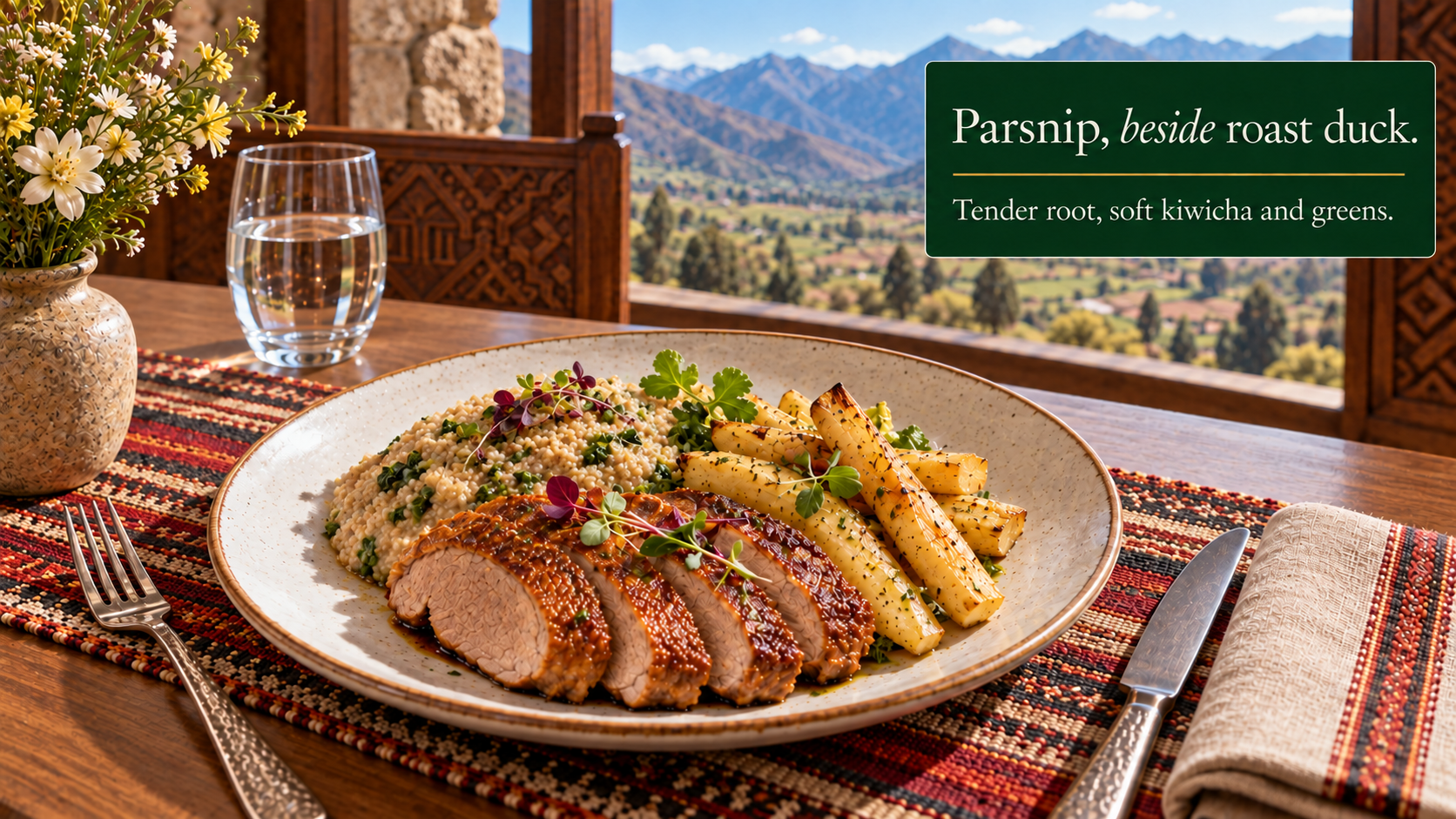
Taste and texture on the plate
Parsnip has its own aromatic root flavor and natural sweetness. It is more interesting when cooked tender and left recognizable than when covered with a sweet coating. Roast duck provides a savory contrast, while soft kiwicha adds a cohesive spoonful beside the root. Greens keep the meal from feeling like meat and starch alone.
Try a plain parsnip piece first, then a bite with the duck and grain. Remove a woody center rather than expecting sauce to make it pleasant. If the root is very soft, a coarse mash is a good serving choice. Keep the kiwicha creamy and very fine, not a loose quinoa-style mound.
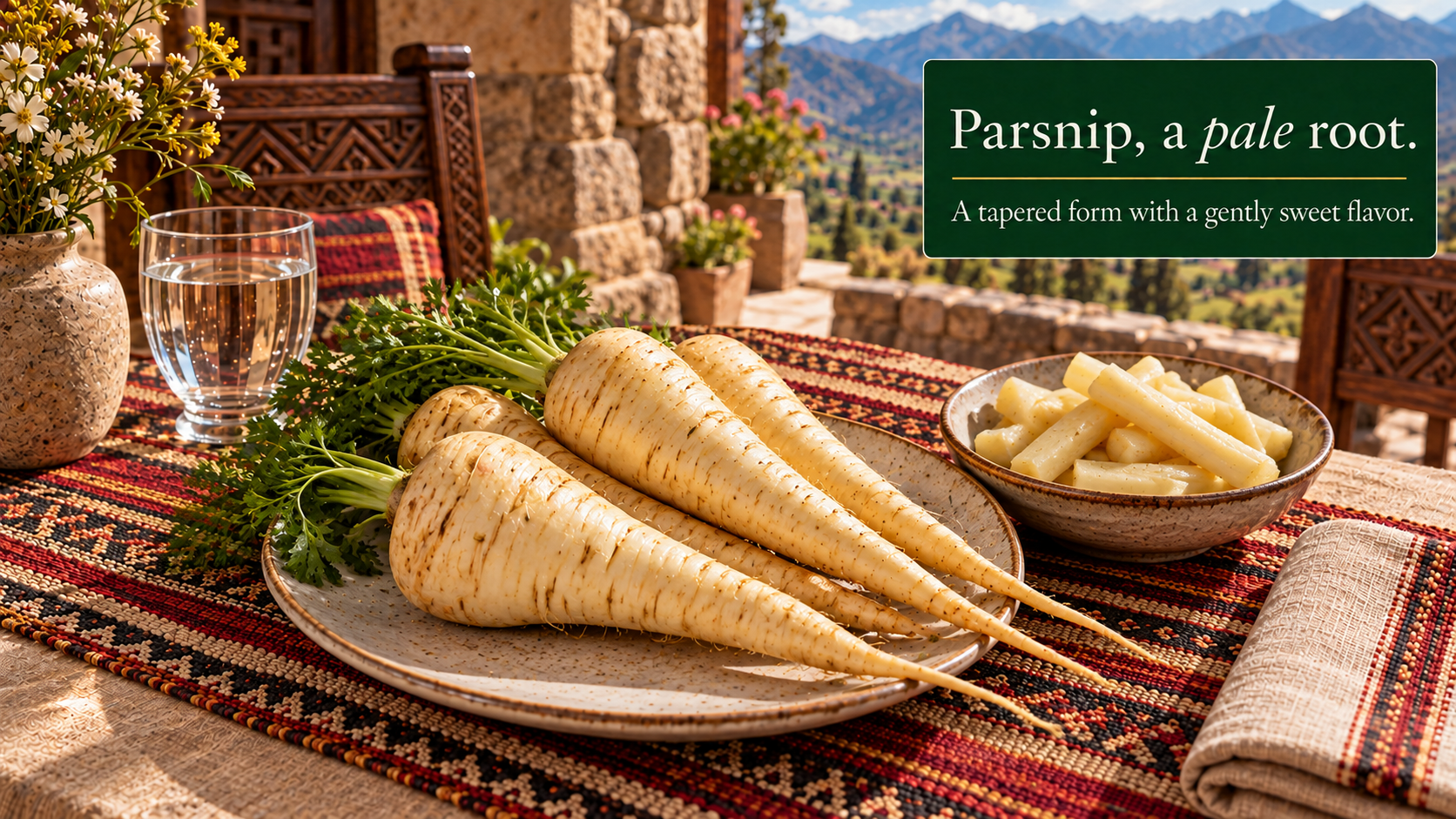
Choosing the serving while traveling
Ask whether the pale root is parsnip or parsley root, then choose the preparation you prefer: tender pieces or a mash. Check that the kiwicha is simmered grain if you want a soft accompaniment, since popped kiwicha would give a very different texture. Request the duck roasted and a modest herb finish separately.
Parsnip contributes fiber and a substantial vegetable portion, as described in extension nutrition guidance. It does not need a superfood claim to earn its place. Let the root, meat and grain portions follow appetite, and choose more greens if you want a lighter balance than a large root-and-grain serving.
Buy parsnips rather than guessing at a white root
Choose parsnips from a food supplier and keep their label if another pale root is being sold nearby. Parsnip and root parsley are different ingredients even though a photograph can make them seem similar. Do not identify a wild plant for dinner from a kitchen comparison. This preparation begins with a purchased culinary root.
Illinois Extension recommends firm, dry parsnips without pits. A manageable, fairly even root is easier to cut and cook than a very large irregular one. Examine soft spots and damage before buying. If the seller cannot tell you what the root is, choose another vegetable rather than giving an uncertain ingredient the parsnip name.
Cut for an even center
Wash the roots and trim the ends. Peel if needed for the condition and texture you want. Large parsnips may have a woody core; Illinois Extension recommends removing it. Cut a thick root lengthwise to inspect the center, then remove the hard portion before dividing the rest into batons or chunks.
Match the thickness of the pieces more carefully than their length. A thick shoulder and a narrow tip do not cook at the same pace merely because they came from one root. Split the wider section so it resembles the slimmer pieces. This small preparation choice is more useful than adding extra oven time after the thin ends have already dried out.
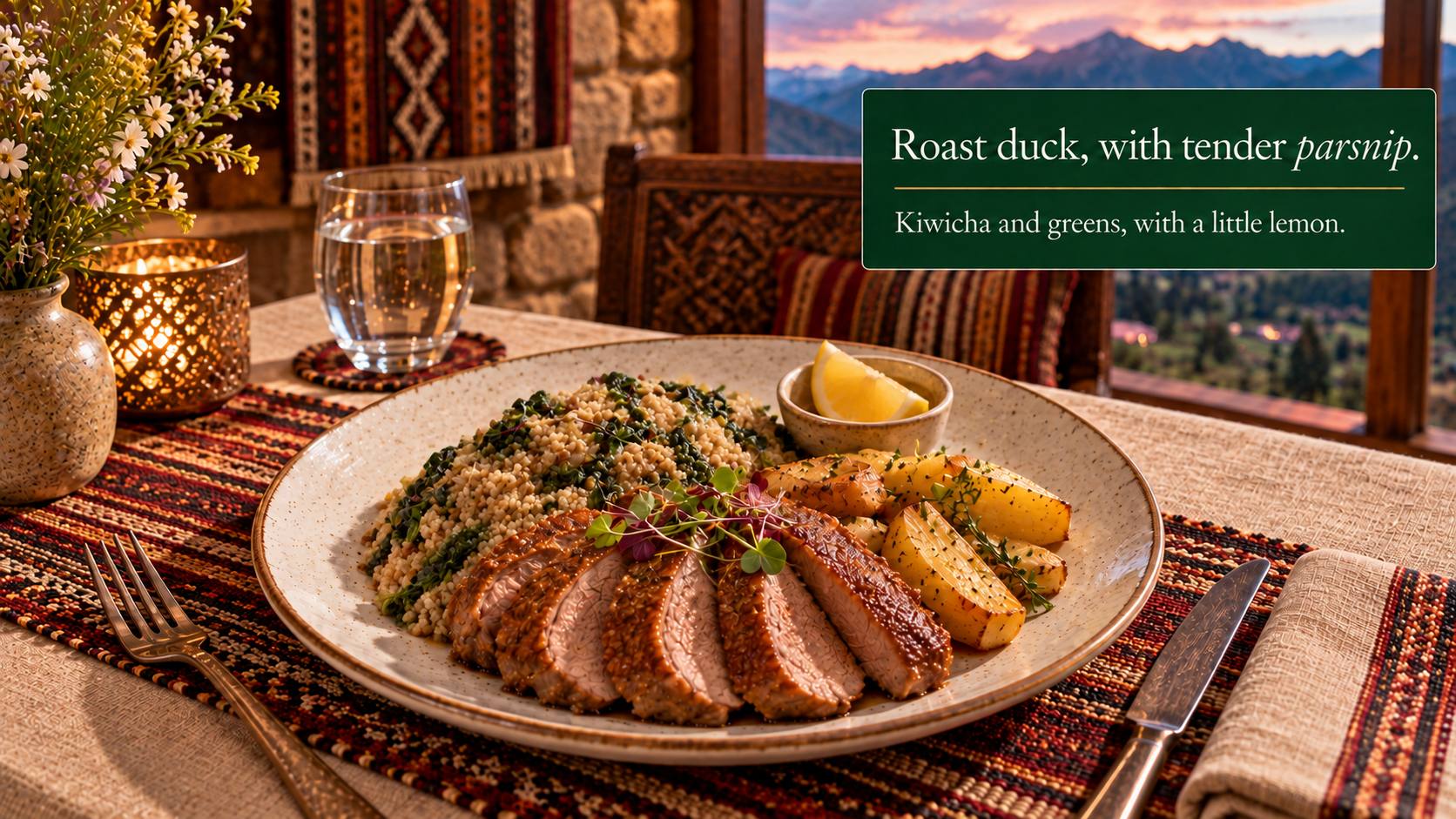
Choose tenderness before browning
Parsnips can be steamed, boiled or roasted. For this plate, start with a moist cook if the roots seem dense, then use the oven briefly for a drier surface if you want it. Montana State Extension describes steaming or boiling until tender as well as oven cooking. Check your own pieces rather than importing a time from a different cut.
Use a covered oven dish with a little water for a gentle start, then uncover when the center is nearly tender. Turn the pieces carefully and remove those that finish early. This approach uses no frying oil. A dark tip beside a firm center is a reason to adjust the cut and moisture next time, not a sign that the root needs a sweet coating.
Taste the root before seasoning the tray
Once cooked, try one plain piece. Parsnip has a flavor of its own rather than being a white carrot that needs to taste identical. If you enjoy its natural sweetness, a little salt and a restrained herb finish may be enough. If the batch is mild, try a squeeze of lemon on one portion before adding it to all the roots.
Do not use honey or sugar to conceal a texture problem. A woody center will remain distracting even when it is sweetened. If part of a prepared root is fibrous, remove it and serve the good pieces. A modest amount of pleasantly cooked parsnip is better on the plate than a large portion that is tiring to chew.
Roast duck is a separate cooking task
Use a roast method suited to the duck cut and prevent raw poultry juices from reaching the roots, greens or grain. USDA recommends a minimum internal temperature of 165°F for duck, measured with a food thermometer. Do not use the darkness of the skin as a substitute for checking the meat.
Serve a manageable duck portion beside the parsnips rather than over a pile that hides their texture. Drain excess rendered fat instead of turning it into a frying treatment for the vegetables. The root can remain plain enough to taste with the duck. If the meat has a strong seasoning, begin with very little additional herb on the parsnips.
Cook kiwicha as a soft accompaniment
Use food-grade kiwicha, or amaranth grain, following its package directions. For this meal, aim for a cohesive, spoonable texture with very fine grains rather than a loose mound that resembles quinoa. Add enough water for the intended soft preparation and stir as needed so the base does not catch.
Keep the portion modest because it accompanies both roots and meat. Spoon it alongside the parsnips where the diner can combine a little with each bite. If it becomes stiff while waiting, loosen the serving with fresh hot water. A creamy grain texture here does not require dairy, sugar or a rich sauce. It provides moisture and a quiet contrast to the roast.
Use greens as part of each bite
Wash the greens thoroughly and prepare them separately. Cook firmer leaves until tender and drain them well; use suitable tender leaves fresh if that is your preference. Give them a distinct space on the plate so they do not disappear beneath duck juices and roots.
Before adding a dressing, taste a bite of duck, parsnip and kiwicha together. Add citrus to a small serving of greens only if you want more sharpness. The plate already has several textures, so a pile of chopped toppings is unnecessary. Adjust the proportions to appetite: a little less kiwicha when the roots are substantial, or more greens when the meat feels rich.
The images are editorial illustrations of ingredients and serving ideas. They do not document a named restaurant, a current harvest or an included retreat meal. Preparation guidance is not a tested recipe.
Leave room for the Sacred Valley
A visit to Machu Picchu can leave time for a good meal and a quieter stay in the valley. Ask Florian about The SoulSearching Experience, his five-day Sacred Valley seminar for 8-15 participants. Discuss dates, venue and meal arrangements directly.
Questions readers ask
What flavor should I expect from cooked parsnip?
Expect a distinctive root flavor with natural sweetness rather than an exact copy of carrot. Try a plain cooked piece first. The duck adds savory contrast, and the soft kiwicha keeps the plate comfortable without requiring a sweet glaze.
Are root parsley and parsnip the same?
No. Buy the culinary parsnip named for this plate and confirm it with the seller. Root parsley creates a different variation. A similar pale root shape is not enough to establish that the ingredient is interchangeable.
Should I scrub or peel the parsnips?
Wash them well and trim the ends. Peel when the skin condition or desired texture calls for it. Montana State Extension describes peeling as optional, while a large woody core may need to be removed separately.
Montana State University Extension: Parsnips · Illinois Extension: Preparing Parsnips
When should the core be removed?
A large parsnip can have a woody core. Cut it lengthwise, inspect the center and remove the hard portion if present. Keep the tender outer flesh for the dish rather than relying on a longer roast to soften woodiness.
What should I look for when buying parsnips?
Choose firm, dry roots without pits or obvious decay. A manageable even shape is easier to cut for uniform cooking. Inspect the center during preparation, particularly in a large root, and remove woody material rather than serving it.
Should I choose soft parsnips for this plate?
Choose firm, sound roots for the best first comparison. Reject wet decay, mold and badly deteriorated pieces. Softness alone does not provide a complete safety assessment; when the condition or storage history is doubtful, replace the ingredient.
What if the cooked parsnip tastes harsh or bitter?
Check the root's condition and remove any woody core. Try a smaller portion with the savory meal rather than adding sugar automatically. If you dislike that particular batch, choose another vegetable; the plate does not require you to enjoy every root.
Can parsnip taste more aromatic than expected?
Yes, personal impressions of its distinct flavor differ. Start with a small plainly cooked portion and keep the seasoning restrained. Do not mistake an unfamiliar flavor for a reason to cover a damaged or unidentified root with a strong sauce.
How should I cut a tapered parsnip for even cooking?
Split the thick shoulder into pieces closer in thickness to the narrow end. Match thickness rather than just length. Check pieces individually and remove those that finish earlier instead of letting the slim tips dry while the center stays firm.
Is a moist start useful before an oven finish?
It can be. Steam, boil, or use a covered oven dish with a little water to establish tenderness, then uncover briefly if you want a drier surface. A crisp outside is optional for this duck plate.
What if the tips dry before the thick pieces soften?
Use a more even cut and a covered moist beginning. Remove thin pieces when ready. Do not keep roasting the entire batch just because one thick piece is firm. The aim is tender roots, not uniformly dark tips.
Can I serve the parsnips mashed instead?
Yes. Cook the prepared pieces until tender, drain and mash with a little fresh hot water to reach the texture you like. Keep the serving savory. The mash can sit beside the duck and greens without a dairy-rich sauce.
Do parsnips have to be roasted before going into soup?
No. Prepared parsnips can be cooked with a moist method until tender. For a soup variation, use evenly cut pieces and give them enough time to soften. Roasting is a flavor and texture choice rather than a universal requirement.
How much seasoning does the root need?
Begin with a plain cooked taste and one modest herb or a little salt if desired. Try citrus on one bite. The duck and greens already contribute flavor, so a mixture of several strong spices may make the root harder to recognize.
How do parsnips fit coherently with duck and kiwicha?
Keep the parsnips tender, the duck savory, and the kiwicha soft and spoonable. Add greens alongside. Those different textures give each component a role, while a small herb or citrus finish can connect a combined bite.
Can I freeze extra parsnip?
Yes. For uncooked surplus, use an extension freezing process that includes the appropriate blanching step. Prepared leftovers can be cooled and frozen in portions. Label the food clearly and expect a softer texture after reheating.
Illinois Extension: Preparing Parsnips · USDA FSIS: Leftovers and Food Safety
Can the roots be prepared a day ahead?
You can cook them ahead, cool promptly in shallow containers and refrigerate. Reheat leftovers to 165°F before serving hot. Keep the fresh greens separate. Do not leave partly prepared vegetables at room temperature overnight.
What is the reliable duck safety check?
Use a food thermometer. USDA recommends duck reach a minimum internal temperature of 165°F. Whether the meat pulls away from a bone is a texture observation, not a replacement for the temperature check.
Do the parsnips need the rendered duck fat?
No. This preparation cooks the roots separately with moisture and an optional oven finish. Drain excess duck fat and serve the meat alongside. The kiwicha can supply a soft accompaniment without frying the roots.
How should fresh greens be added without making the plate wet?
Dry the washed greens well and place them beside the warm components near serving. Keep dressing modest and optional. If using cooked greens instead, drain them so their liquid does not thin the kiwicha or soak the roots.