A savory panamito plate combines fully tender small beans with roast duck, oven-roasted zucchini and carrot, and a restrained huacatay finish. The beans should remain moist enough to spoon comfortably beside the meat. For the protein, see the separate duck preparation guide.
Panamito beans with roast duck, huacatay and vegetables
Confirm that the panamito product is a food-grade common bean, cook it fully, then serve it with tender roasted zucchini and carrot. Add huacatay in a small amount after tasting.
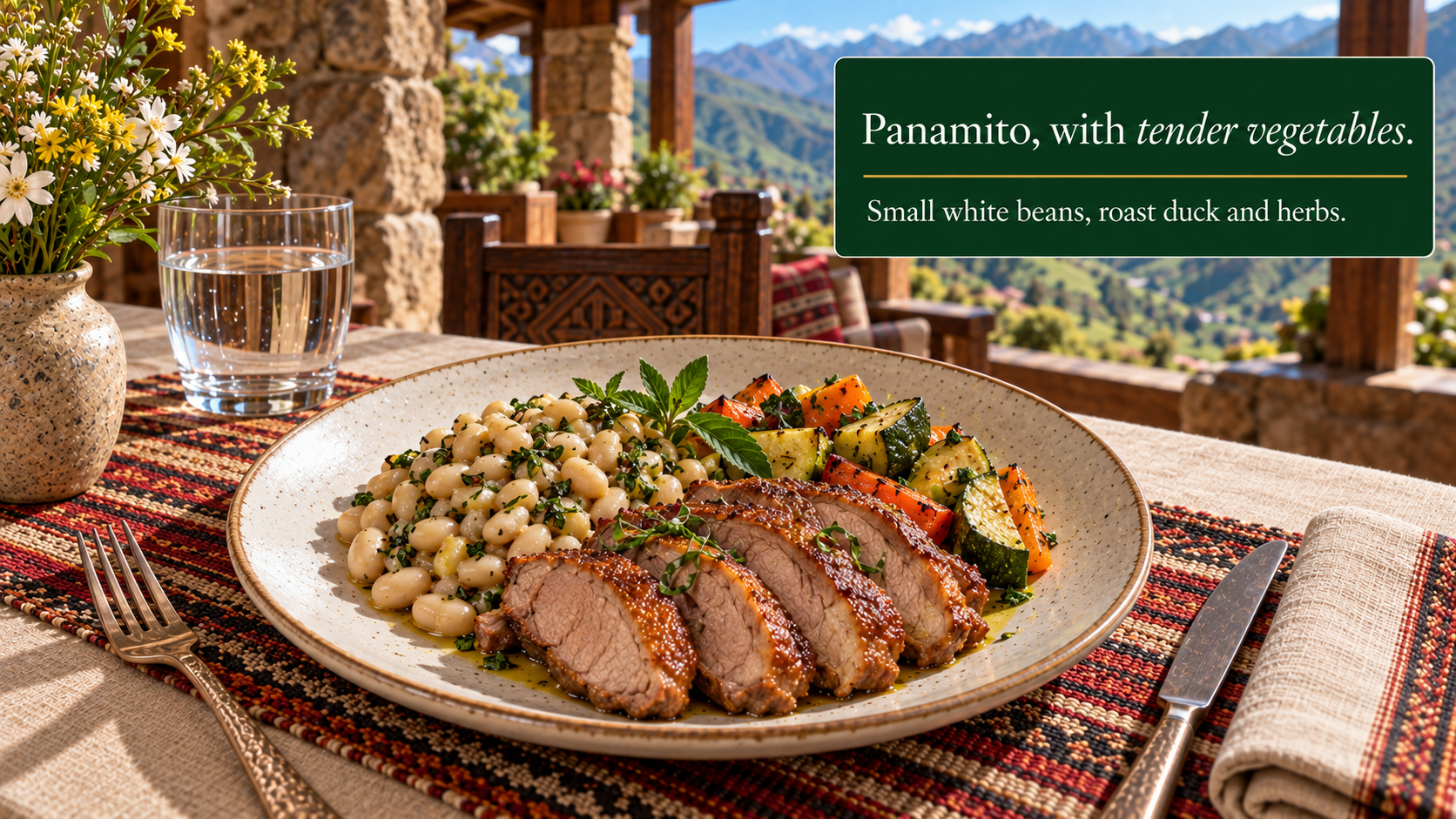
Taste and texture on the plate
Keep the small beans tender and lightly coated with their own liquid. The roast duck supplies a savory center, carrot adds a sweeter root bite, and zucchini brings a softer vegetable texture. A little huacatay is enough to give the plate a recognizable herbal note. Add it gradually so the mild beans still come through.
Put the vegetables and duck alongside rather than folding everything into the bean pot. This gives each part room and allows a diner to take more of whichever combination they enjoy. If the beans have cooked very soft, serve them as a coarse mash. That can be particularly comfortable beside carved duck.
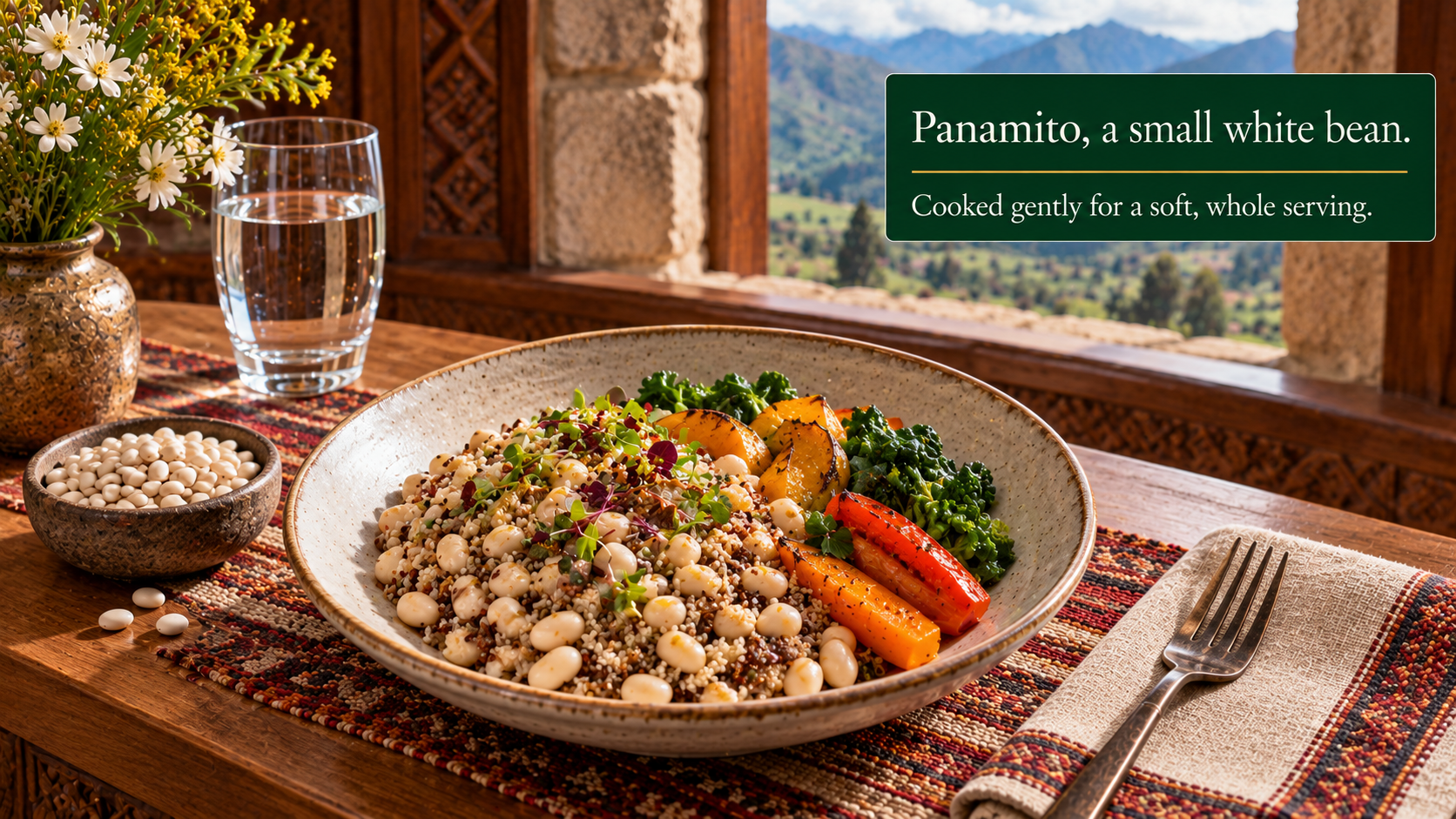
Choosing the serving while traveling
Ask whether panamito is being served as whole beans or a mash, and whether the huacatay is fresh herb or a prepared sauce. A sauce can bring its own salt and other ingredients, so requesting it separately makes the flavor easier to adjust. Confirm a roast duck preparation and roasted or gently cooked vegetables.
If the meal already has a generous bean portion, you may prefer the vegetables as the main extra side. Panamito contributes the protein and fiber associated with cooked common beans. The exact amounts depend on the product and portion, so there is no reason to borrow a nutrient number from a differently named white bean.
Panamito is a product name to verify
Peru's public procurement specification identifies frijol panamito as the mature grain of Phaseolus vulgaris, the common bean. INIA also documents named panamito material within that species. The product label helps distinguish panamito from other small white beans. The supplier may also provide a more specific variety name.
Ask whether you are buying dry mature beans, a ready-cooked product or fresh shelled beans. The food form changes the preparation. Keep the supplier label until you have cooked the batch. If the package specifies a cultivar, retain that name exactly. If it says only panamito, that is the honest name for the plate.
Peru public procurement: Frijol panamito technical specification
Soak and boil before the gentle finish
Follow a validated preparation for the actual dry-bean product and cooking method, including its soaking and cooking directions, and cook the beans fully. Utah State's cited ten-minute preliminary boil appears within its kidney-bean guidance for slow cookers and microwaves; it is not a universal timetable for every common-bean variety. Do not substitute an unverified low-temperature process.
Continue until the beans are completely tender, adding water as necessary so they do not dry out. Check several beans, not just one that happened to split early. Save acidic seasonings for after softening. Cooking time can differ between lots; let a safe process and the finished texture guide the meal rather than a rigid countdown.
Utah State University Extension: cooking dry common beans safely · NDSU Extension: All About Beans · NDSU Extension: refrigerated overnight bean soaking
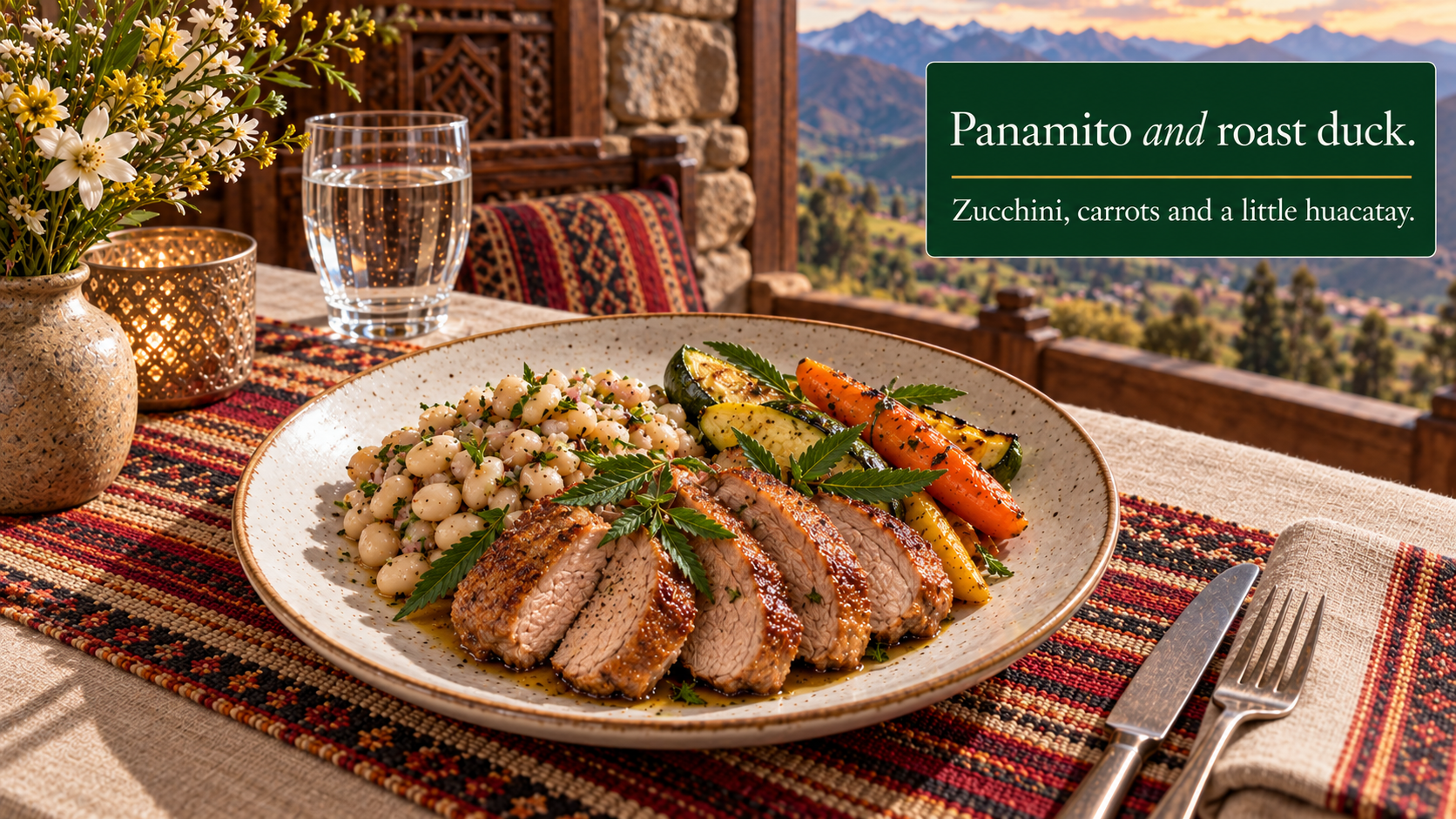
Roast carrot and zucchini at their own pace
Carrot needs a head start or a smaller cut than zucchini. Slice the carrot thinly and cut the zucchini into thicker half-moons or short lengths. Start the carrots in a covered tray with a little water, then add the zucchini when the carrots have begun to soften. Uncover when you want the surface to dry.
You can also use separate trays and combine the vegetables at serving. That is the easier choice if the zucchini is particularly watery. Leave its tender skin on after washing. Young, tender summer squash generally offers a better texture than oversized fruit with a hard rind and developed seeds. No frying oil is needed for this covered-then-uncovered oven method.
Oregon State University Extension: summer squash types and selection
Make huacatay a measured accent
Use correctly identified culinary huacatay from a food supplier. Rinse the leaves, remove coarse stems and chop a small amount finely. Stir a pinch into a spoonful of warm beans and taste before seasoning the full portion. The herb can be distinctive enough that a large handful overwhelms a mild bean.
A thin herb finish can be made with chopped leaves and a little warm bean liquid. Spoon it over one side of the beans so the diner can compare a plain bite with a seasoned one. If you have a prepared huacatay paste, read its ingredients and salt level. It is a different product from fresh leaves and should not be substituted by the spoonful without tasting.
Build a plate rather than a mixed stew
Put the beans in a shallow well, moist enough to hold together but not so loose that they cover the vegetables. Place zucchini and carrot alongside in recognizable pieces. A few chopped huacatay leaves can bridge the two without turning everything green. The diner should be able to taste the panamito on its own.
Begin with a comfortable serving of beans and a generous vegetable portion. Add more beans if this is the meal's main substantial ingredient. There is no requirement to disguise the plate with extra starch. If the beans feel dry next to the vegetables, add a little cooking liquid first. That usually solves the actual problem more directly than a rich sauce.
Choose the version that suits the batch
For beans that hold their shape, fold the seasoning in gently and leave the serving mostly whole. For a very soft batch, crush a few spoonfuls into the reserved liquid and serve as a coarse mash. Both versions pair well with the same roasted zucchini and carrot, but they should be described honestly. A mash is not a failed salad.
A cooler presentation is also possible once the beans and vegetables have been properly chilled. Keep the huacatay finish separate until you are ready to eat. If you want citrus, add it to the serving rather than storing the whole pot in a sharp dressing. This lets you control the balance as the vegetables release moisture.
Add a roast meat portion if desired
A portion of roast duck can accompany the beans and vegetables. Cook it separately and check that it reaches 165°F internally, as USDA recommends. Keep the duck beside the beans, drain excess rendered fat, and leave the huacatay finish light enough to taste the whole plate.
The images are editorial illustrations of ingredients and serving ideas. They do not document a named restaurant, a current harvest or an included retreat meal. Preparation guidance is not a tested recipe.
Leave room for the Sacred Valley
A visit to Machu Picchu can leave time for a good meal and a quieter stay in the valley. Ask Florian about The SoulSearching Experience, his five-day Sacred Valley seminar for 8-15 participants. Discuss dates, venue and meal arrangements directly.
Questions readers ask
Should I soak dry panamito beans?
Follow the product directions. A refrigerated overnight soak is a useful starting method for dry common beans. Drain afterward and complete the cooking process; soaking alone does not make them ready to eat.
NDSU Extension: All About Beans · NDSU Extension: refrigerated overnight bean soaking
Where should an overnight soak happen?
Use the refrigerator for an overnight soak. Do not leave a warm bowl of hydrated beans on the counter all day. If the handling history is uncertain, replace the batch instead of trying to fix it with seasoning.
NDSU Extension: All About Beans · NDSU Extension: refrigerated overnight bean soaking
Should I cook in the soaking water?
For this preparation, drain and rinse the soaked beans and use fresh cooking water. Keep later cooking liquid separately if you want to moisten the finished serving. Soaking water and finished cooking liquid are different stages.
Can a low slow cooker replace the directed boiling process?
Use a validated process for the exact dry-bean product and cooking method, follow its required soaking and cooking steps, and cook the beans fully. A long period on low heat does not by itself validate the preparation.
Utah State University Extension: cooking dry common beans safely
What if the centers remain hard?
Keep cooking with adequate water until the beans are fully tender. Older stock and cooking conditions can affect the result. Save acidic additions for after softening. Do not serve hard centers simply to preserve the outer shape.
How can I keep more beans intact?
After completing the validated cooking process for the actual beans, handle them gently and avoid vigorous stirring. Check tenderness before draining. A few broken beans are useful for thickening their liquid, and are preferable to an intact bean with an undercooked center.
NDSU Extension: All About Beans · Utah State University Extension: cooking dry common beans safely
How do I check the roast duck accompanying panamito?
Use a food thermometer and check a minimum internal temperature of 165°F, as USDA recommends. A browned surface or meat pulling from a bone is not a temperature reading. Keep raw duck utensils away from the cooked panamito and vegetables.
Should duck fat become a coating for the beans?
This version drains excess rendered fat and keeps the panamito moist with bean liquid. Serve the roast duck beside the beans rather than frying them in its drippings. A light huacatay finish can remain separate for each diner to adjust.
Should carrot and zucchini start cooking together?
Carrot generally needs a smaller cut or a head start. Cook it separately or begin it before adding zucchini, then remove ready pieces as needed. This keeps the soft zucchini from collapsing while the carrot center is still firm.
Can dry beans replace a ready-cooked product directly?
No. Prepare and fully cook the dry beans before using them in the finished meal. A canned bean has already been processed as a cooked food, while a dry seed needs its own complete cooking process.
NDSU Extension: All About Beans · Penn State Extension: Dried Beans Versus Fresh Shelled Beans
Should cooked beans be frozen with a little liquid?
A little finished cooking liquid is useful for reheating a moist serving. Cool and freeze meal-sized portions promptly, label them, and keep herbs or dressing separate. Do not freeze a partly cooked batch with the expectation that reheating will complete a safety process.
NDSU Extension: All About Beans · USDA FSIS: Leftovers and Food Safety
How long can I keep the cooked panamito beans serving refrigerated?
USDA generally recommends three to four days for refrigerated leftovers. Refrigerate promptly in shallow containers within two hours, or one hour above 90°F. Freeze portions you will not use in that period and reheat hot leftovers to 165°F.
How can I make this meal for one?
Cook a manageable batch and portion it after cooking. Use a comfortable scoop for the meal and freeze the extra promptly with a little liquid. Keep vegetables and fresh herbs separate so the next plate can have a fresh accompaniment.
NDSU Extension: All About Beans · USDA FSIS: Leftovers and Food Safety
What if the beans break down too much?
If they have been safely cooked and are simply very soft, use them as a coarse mash or loose puree. Add reserved cooking liquid gradually. A softer serving can work well beside vegetables; it does not need to be presented as a whole-bean salad.
Should I peel the zucchini accompanying panamito?
Leave young tender zucchini skin on after washing. If the fruit has a hard rind or coarse developed seeds, choose a younger one for this plate. The vegetable should offer a comfortable bite beside the small beans.
Oregon State University Extension: summer squash types and selection
How do I keep zucchini liquid from soaking the panamito?
Give the zucchini space in the cooking dish and drain released liquid before plating. Keep it beside the beans rather than tipping an entire wet tray into the pot. Use the beans' own liquid only as needed for the serving.
Does roasting extra duck justify doubling the oven temperature?
No. Use a roast method suited to the quantity and oven, and check each duck independently with a thermometer. USDA recommends a minimum internal temperature of 165°F. A single timer cannot establish every bird's readiness.
Can dried herbs replace the fresh finish?
Use a smaller amount and taste a serving first, because a dried herb is a different product with a different intensity. For huacatay, prepared paste also has its own ingredients and salt level. Do not exchange them spoon for spoon.
How do I keep the accompanying vegetables tender?
Cut dense vegetables smaller, give them a moist covered start, and uncover only after they begin to soften. Remove ready pieces while thicker ones continue cooking. A dark outside does not establish that the center is pleasant to eat.
What makes the complete plate enjoyable?
Start with fully tender beans and keep the accompaniments recognizable. Use a little cooking liquid to prevent dryness, offer the vegetables beside them, and taste a combined bite before adding a strong dressing. Adjust the portions to appetite.