Roast duck already brings richness to the plate. A little sharp yellow maracuya gives the next bite a different direction: fragrant and tart, yet light enough to leave the meat recognizable. Serve it beside the duck rather than turning the whole plate into a fruit glaze. Native potatoes and cooked greens make this a dinner, with the fruit playing the smaller, brighter role.
Fruit, grains and savory plates
Tart Maracuya with Roast Duck, Native Potatoes, and Greens
Tart maracuya can provide a small, unsweetened accompaniment to roast duck. Spoon yellow pulp beside the meat, or strain it for a smoother sauce and loosen it with a little appropriate savory liquid. Keep native potatoes and greens separate enough to taste each component. Use identified culinary passion fruit, Passiflora edulis, which is distinct from sweet granadilla, Passiflora ligularis.
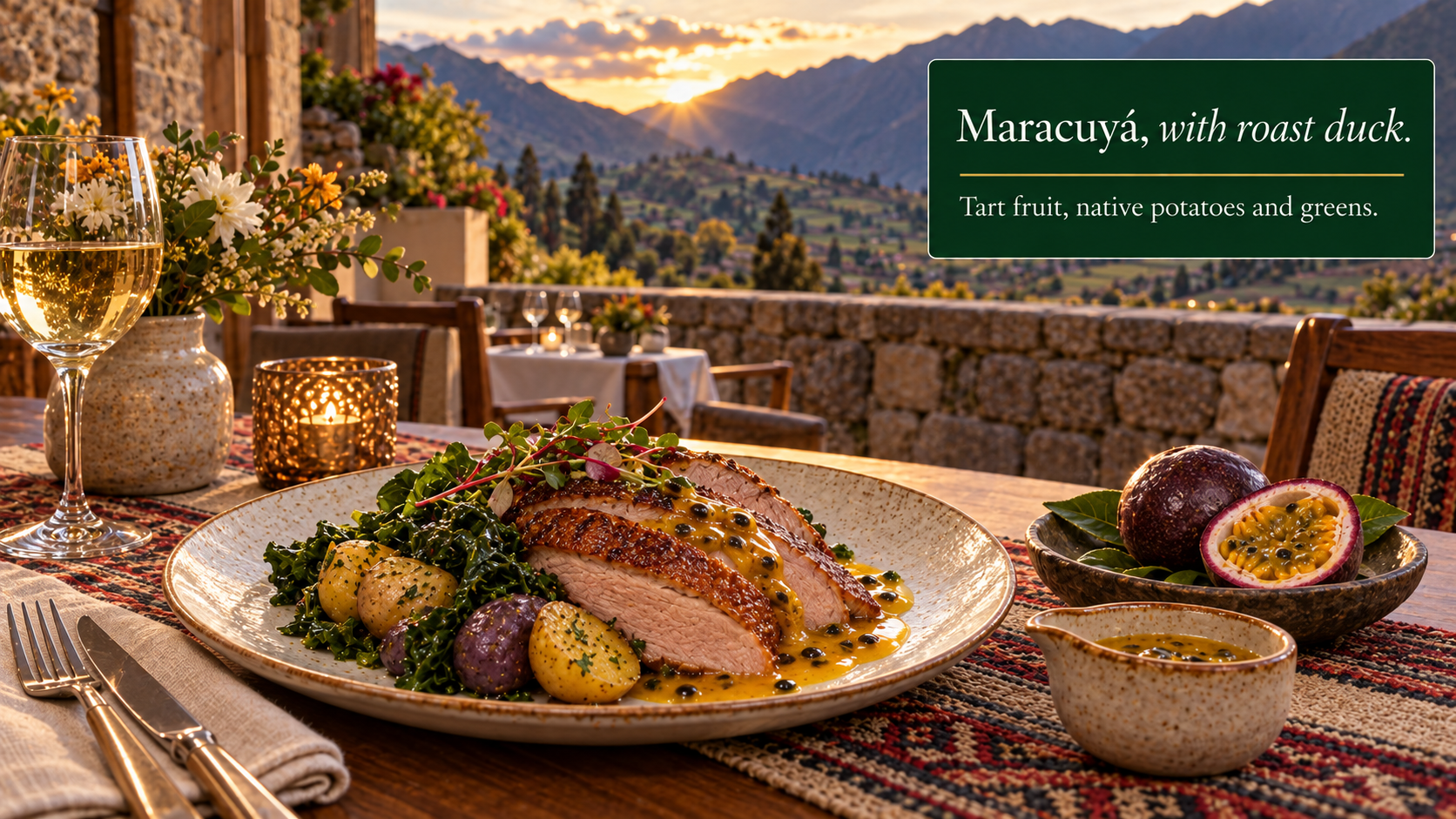
Start with tart passion fruit
Maracuya here means culinary Passiflora edulis. Yellow and purple forms belong to that species. Color alone does not identify a particular cultivar or predict exactly how sour a batch will taste. Sweet granadilla is a different species, Passiflora ligularis. Its gentler pulp suits a fresh spoonful, while the sharper maracuya in this plate is chosen for a small sauce.
Taste the pulp before deciding how much belongs beside the meat. The useful question is whether it adds a pleasant contrast, not whether it conforms to a promised sweetness. Whole fruit, unsweetened frozen pulp, and a diluted juice drink are different ingredients. For a packaged product, read the ingredients and choose pulp without added sweeteners.
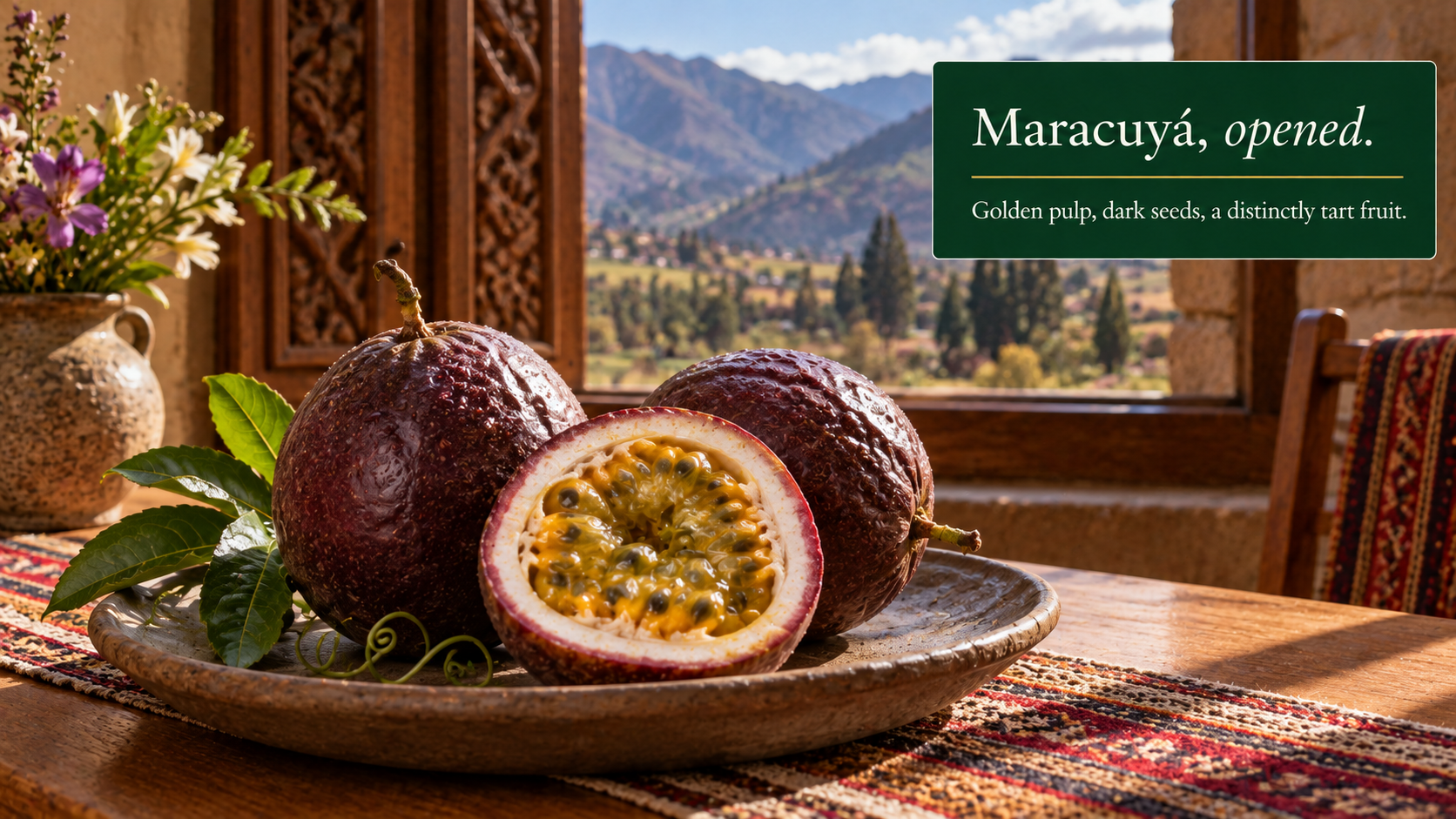
Build the duck plate
Set a separately cooked roast-duck portion beside tender native potatoes and a generous serving of greens. Keep the potatoes in recognizable pieces or a simple mash, according to the variety and the texture you prefer. The greens can be gently cooked and lightly seasoned, leaving the fruit to supply the plate's tart accent.
Put the maracuya in a small spooned pool or separate dish. Start with enough for a few bites rather than pouring it over the duck. A diner can then try meat alone, meat with potato, and meat with a little fruit. If the sauce seems too assertive, use less of it or loosen a small portion with an appropriate unsalted savory liquid.
Choose pulp or a smooth sauce
The pulp of culinary passion fruit contains edible crunchy seeds. Keep them when their texture is welcome, or press the pulp gently through a sieve for a smoother accompaniment. Straining changes the texture. It does not turn the fruit into a different species. There is no need to crush the seeds simply to obtain a smooth spoonful.
For a warm sauce, heat a small amount of strained pulp gently with a little suitable cooking liquid and taste as it changes. Avoid reducing a large quantity until its tartness overwhelms dinner. For a fresh version, spoon the pulp beside the finished meat. Neither version needs a sweet glaze, and a thin savory sauce is perfectly useful without becoming sticky.
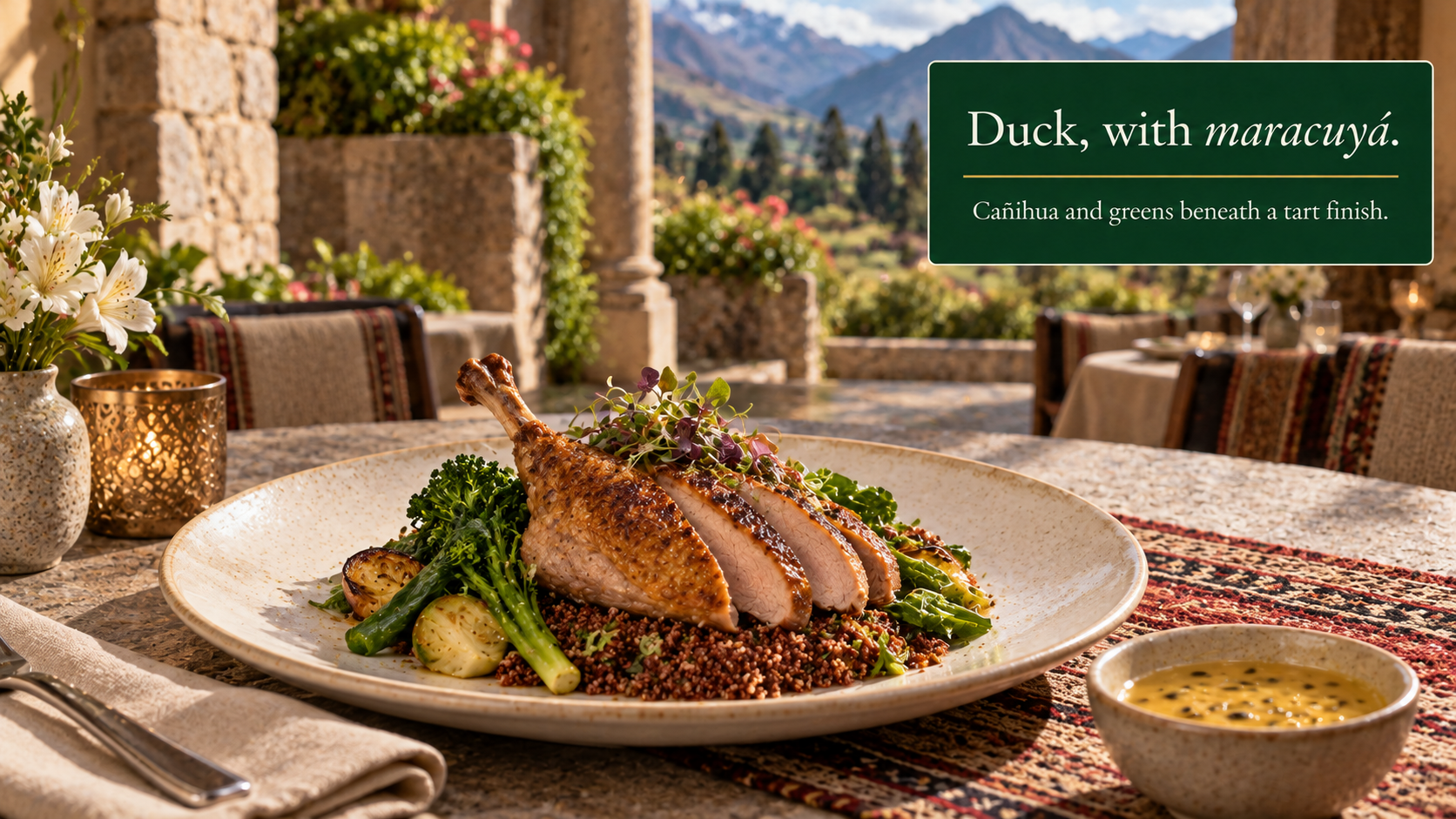
Let potatoes soften the forkful
Native potatoes give the tart fruit somewhere to go. A little maracuyá alongside a soft potato bite will taste different from a spoonful tried straight from the bowl. Choose the cooked potato for its eating quality rather than assuming every colorful variety will make the same mash. A few sound, evenly cooked pieces are often enough.
The second plate uses cooked cañihua in place of potatoes. Its very small reddish-brown grains give the duck a different accompaniment, with the strained fruit sauce served separately. Keep the greens uncomplicated. Add any fresh herb finish sparingly so it leaves room for the maracuyá.
Handle fruit and duck as separate ingredients
Wash whole fruit under running water before cutting it with a clean knife. Scoop the pulp into a clean bowl and keep it away from raw-duck juices and utensils. Discard spoiled fruit rather than trying to repair an off flavor with seasoning. The rind is not part of this sauce.
Cook duck separately and use a thermometer to check the thickest part; USDA recommends 165 F for poultry. Keep any fruit reserved for fresh service separate from utensils that touched the raw meat. A clean small bowl of sauce also makes it easier to add only the amount wanted at the table.
Choose the meal you want while traveling
Ask whether a maracuya sauce is sweetened and whether it arrives over the meat or alongside it. Those details affect the meal more than an elaborate description of tropical flavor. For a simpler dinner, choose roast duck, native potatoes, greens, and a small unsweetened fruit portion. For a lighter variation, the same restrained accompaniment can sit beside high-altitude Andean trout.
Food is part of the pleasure of a Sacred Valley stay, while ingredients may come from different Peruvian growing regions. Ask about the actual source when it matters to you. Choose the side vegetables and amount of sauce to make the roast a meal that suits your appetite.
The images illustrate serving ideas, rather than a named restaurant menu, a current harvest or an included retreat meal. These are preparation guides, not tested recipes.
A little more time in the Sacred Valley
A Machu Picchu journey can leave space for more than the train and the citadel: a meal, a quieter morning and a conversation that has time to develop. Ask Florian about The SoulSearching Experience, his five-day Sacred Valley seminar for 8-15 participants. Discuss dates, venue and meal arrangements directly.
Questions readers ask
Can passion fruit work in savory food without becoming a sweet glaze?
Yes. Use a small amount of unsweetened pulp as the tart component beside roast duck, native potatoes, and greens. Begin with a spoonful at the side and taste it with the meat. You are choosing a savory use of the fruit, rather than treating every passion-fruit preparation as a sweet sauce.
How can the maracuya accompaniment retain a fresh aroma?
Keep some pulp for fresh service, or warm a small amount gently rather than repeatedly boiling a large batch. Taste before and after heating. Serve the sauce alongside the roast duck so a modest portion can provide aroma and tartness without covering the rest of dinner.
How can I separate passion-fruit juice from the seeds?
Spoon the pulp into a sieve over a clean bowl and press it gently, letting the liquid pass through while the seeds remain behind. A little pulp clinging to seeds is not a reason to grind them. Use the strained liquid sparingly beside the duck.
Must the maracuya seeds be removed?
No. Culinary Passiflora edulis has edible crunchy seeds, and some diners enjoy them with the pulp. Remove them when you prefer a smooth sauce. The choice is about texture on this plate: a small seedy spoonful and a strained sauce give different eating experiences.
Can packaged passion-fruit pulp replace fresh fruit here?
It can, provided you know what the package contains. Choose an unsweetened pulp and check whether seeds are included. Taste its strength before adding any savory liquid. A sweetened drink or syrup will give a different result from the small tart accompaniment described in this guide.
Does a passion-fruit drink work the same way as plain puree?
Read the ingredients rather than relying on the name. Products differ in fruit content and may be diluted or sweetened. For this duck plate, select plain unsweetened pulp or juice and adjust a small portion to taste. Do not assume a drink product will behave like concentrated pulp.
Can leftover unsweetened puree be frozen in small portions?
Follow the product's directions after opening. For suitable fresh puree, small clean freezer portions make it easier to thaw only what a meal needs. Label the contents and keep them frozen. Freezing changes handling convenience. It does not turn a sweetened product into the unsweetened ingredient wanted here.
Does passion fruit need to become deeply wrinkled before it can be used?
Not necessarily. University of Hawaii guidance considers mature color and sound condition important, while noting that shriveling reflects moisture loss. Use identified culinary fruit with mature coloring and inspect it when opened. Wrinkles alone are neither a complete ripeness test nor a reason to dismiss otherwise good pulp.
Do yellow and purple passion fruit taste exactly the same?
No single sweetness rule covers every cultivar or batch. Both yellow and purple culinary forms fall within Passiflora edulis, but fruit quality includes acidity and aroma as well as color. Taste the actual pulp and adjust the sauce portion. Do not copy a fixed quantity solely because the shell has a familiar color.
Is maracuya the same fruit as sweet granadilla?
They are distinct in this guide: maracuya is Passiflora edulis and sweet granadilla is P. ligularis. Common names vary by place, so a label alone can confuse the comparison. For the duck accompaniment, choose the identified tart culinary fruit rather than assuming sweet granadilla will create the same sauce.
Is a strongly tart taste a sign I am eating passion fruit incorrectly?
Tartness can be a normal part of culinary passion fruit. For this meal, you do not need to enjoy a whole bowl of it on its own: try a small amount with duck and potato. Reject spoiled fruit, but do not expect every sound ripe fruit to taste as sweet as a flavored drink.
Can any passionflower vine supply fruit for this sauce?
No. Identify the plant and culinary fruit rather than using the flower name as proof of edibility. This sauce uses food-grade Passiflora edulis. Many other Passiflora species exist, and ornamental planting does not establish that an unidentified fruit belongs in the meal. Buying identified culinary fruit is the straightforward option.
Should the passion-fruit rind go into the duck sauce?
Use the scooped pulp or strained juice for this preparation and leave the tough rind out. The rind is a different part of the fruit and will not provide the same texture. A spooned sauce needs the yellow edible center, not pieces of shell blended into it.
Does a maracuya sauce need to be thick and sticky?
No. A small spoonable accompaniment can work well beside roast duck. Strain the pulp if wanted, add suitable savory liquid gradually, and stop when it can be served neatly. Strong reduction can concentrate the flavor, so taste before deciding that more cooking will improve the meal.
How should the duck be checked for doneness?
Measure the thickest part of the meat with a food thermometer, avoiding bone. USDA recommends 165 F for poultry, including duck. Keep fresh fruit sauce and its utensils separate from raw-duck juices, then bring the cooked meat and its accompaniments together at service.
Why can different parts of a whole duck finish differently?
Breast and leg portions differ in shape and thickness, so one quick check does not establish the whole bird's endpoint. Follow an appropriate roast-duck method and check the thickest parts with a thermometer. For an easy composed plate, separately prepared portions also allow more deliberate timing with the potatoes and greens.
Should the potato accompaniment be peeled before boiling?
Scrub the potatoes before cooking, whether you keep or remove the skin. Food Hero treats peeling as optional for its mashed-potato preparation. Choose the skin texture you want and cook even pieces until tender. Native varieties differ, so use the actual batch to decide whether pieces or mash suit the plate.
How can potato mash stay smooth enough to sit beside the sauce?
Cook the potato pieces until soft, drain them, and mash before adding liquid gradually. Start with less liquid than you think you need. The mash should hold its place on the plate, giving a soft counterpoint to the small tart fruit portion instead of merging into a puddle.
Can dried herbs replace fresh herbs on this plate?
Dried herbs can season a broth or cooked accompaniment, but they will not give the same leaf texture as a fresh finish. Use a modest amount and taste. For the duck and greens, one clear herb note is usually easier to balance with tart fruit than a large mixture of strong seasonings.
When should a delicate fresh herb finish be added?
Add it near the end or just before serving when you want its aroma to remain distinct. Stronger dried herbs can season a longer-cooked component earlier. Keep the herb finish on the savory food or in a small sauce portion so the maracuya can still be tasted on its own.
Continue at the table
Put the guide into your plans
Prepare a dining request for the kitchenAnother dish to consider
- Oca with Roast Duck: An Andean Tuber at the Table
- Olluco at a Sacred Valley Table: The Bright Andean Tuber, Gently Cooked
- Mashua: An Andean Tuber Cooked for a Savory Sacred Valley Plate
- Arracacha Puree with Alpaca and Greens: An Andean Root Worth Ordering
- Pachamanca in the Sacred Valley: Herbs, Native Tubers and Slow-Cooked Food
- Encuentro de Dos Lawas: Chuño and Fresh Corn, Two Andean Soups at One Cusco Table
- Chairo Stew at Piedra & Sal: Moraya, Fava and Parsley, Read Closely