A few pale lengths of cooked salsify give a high-altitude Andean trout plate a quieter kind of interest than a bright vegetable garnish. The mild root remains visible beside small grains and a piece of fish. Keep the preparation simple: cooked, peeled salsify, high-altitude Andean trout, quinoa, herbs, and a little lemon-tahini sauce placed where it can be tasted rather than spread over everything.
Vegetables at the Andean table
Salsify with High-Altitude Andean Trout and Quinoa
Cook Mammoth Sandwich Island salsify until its slender roots are tender, remove the tough skin, and serve the pieces beside high-altitude Andean trout and quinoa with a small lemon-tahini sauce. Its mild flavor deserves a restrained finish. This is white salsify, distinct from black salsify or scorzonera. Leave some root uncovered so its delicate flavor can be tasted before adding sauce.
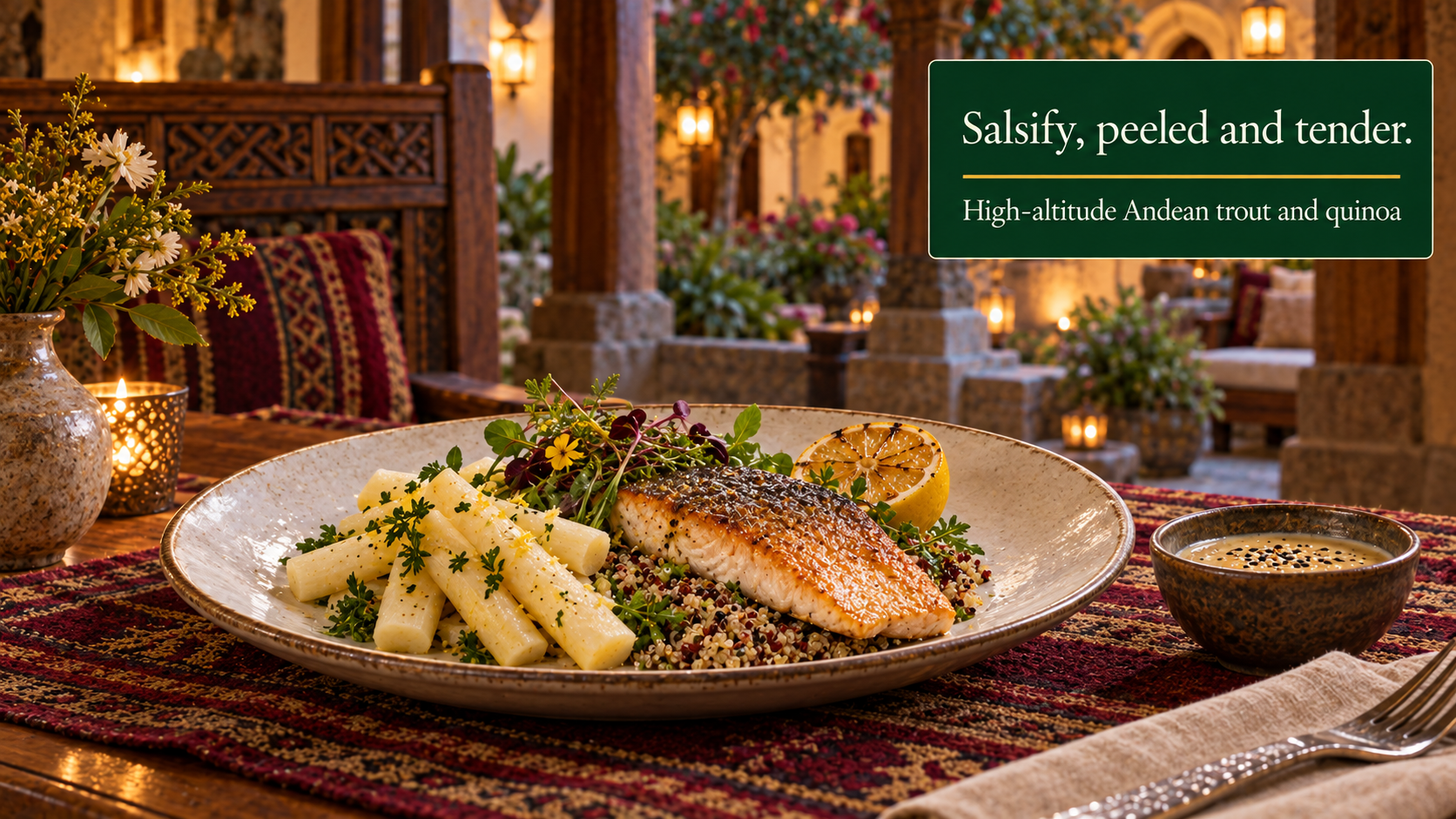
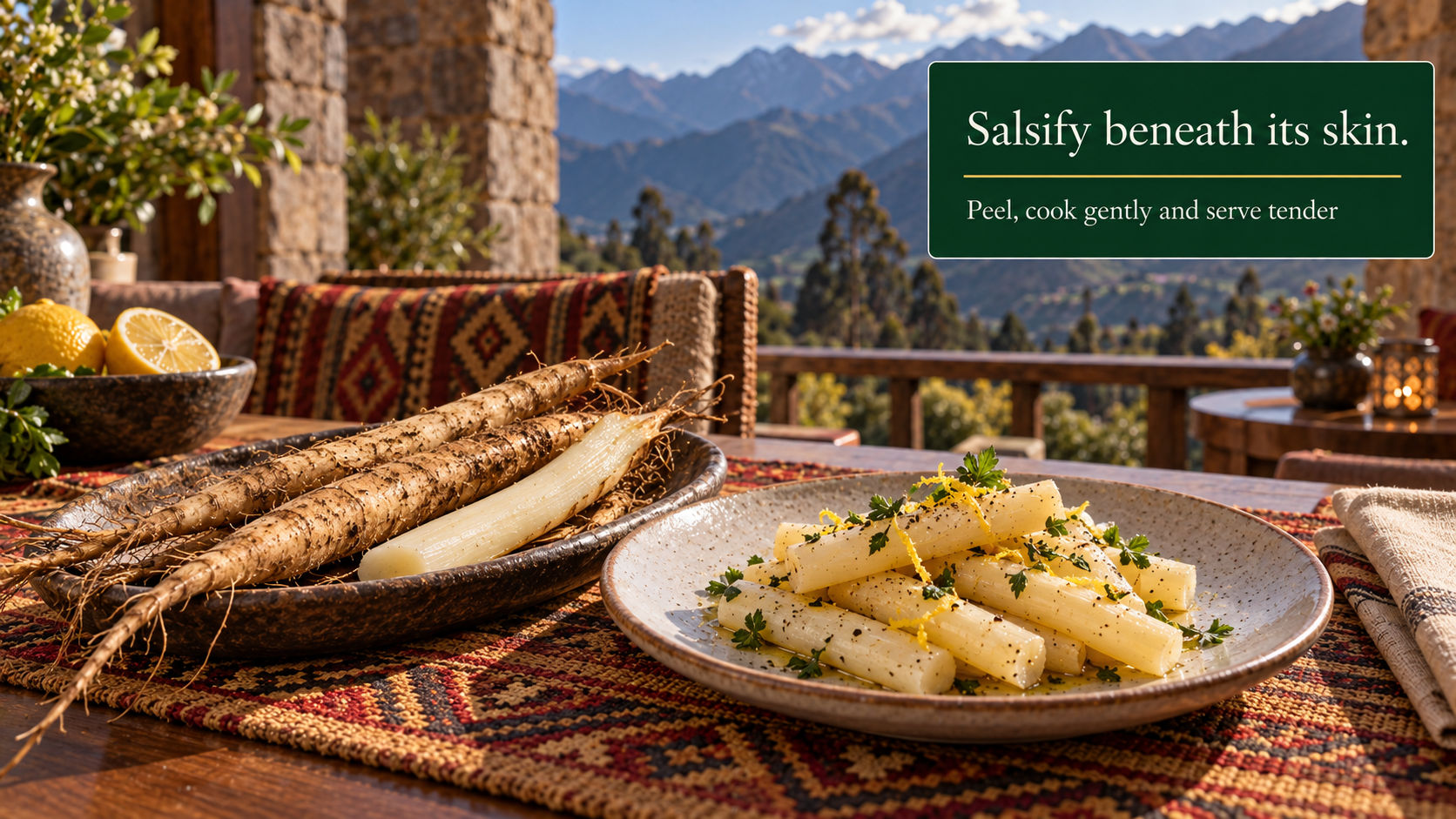
Cooked Mammoth Sandwich Island salsify with high-altitude Andean trout, quinoa, and lemon-tahini
Wash, peel, cut into even lengths, and cook until tender; drain and serve beside separately cooked high-altitude Andean trout and quinoa with a small sauce.
Pale root lengths keep their identity while the fish, grain, herbs, and restrained sauce provide a complete plate.
Variety reference: Eden Brothers: Mammoth Sandwich Island. Heirloom; open pollinated.
Start with the right root
Eden Brothers lists Mammoth Sandwich Island as a slender-rooted salsify. That cultivated food vegetable is commonly called white salsify. Black salsify, often sold as scorzonera, is a different crop. Oregon State discusses the two together but distinguishes them. A recipe using a black-skinned root is not proof of the appearance or behavior of Mammoth Sandwich Island.
Ask the supplier for the vegetable name and, when possible, the cultivar. Choose sound roots suitable for cooking. Texas A&M AgriLife advises against overmature, oversized roots because they may be tough and woody. A long root can look dramatic in a photograph and still be disappointing to eat; quality should decide the purchase before length or novelty does.
Build a complete high-altitude Andean trout plate
Serve cooked, peeled salsify with a separately cooked portion of high-altitude Andean trout and a modest bed of quinoa. Cut the roots into manageable lengths so a diner can lift a piece without chasing it across the plate. Keep pieces of similar thickness together during cooking and check the thickest one for tenderness before draining.
Arrange the quinoa loosely, set the high-altitude Andean trout beside it, and lay several salsify pieces between the grain and fish. Add chopped parsley or another identified culinary herb. A small spoonful of lemon-tahini sauce supplies an acidic, nutty accent. Leave some root uncovered so its own flavor can be tasted. The sauce introduces sesame, which needs to be identified for anyone with an allergy.
Cook for tenderness rather than a fixed appearance
Wash the roots under running water before peeling, and work with clean utensils and a clean board. These roots have been in soil; peeling does not replace washing. Once cleaned and peeled, cut them to an even size and cook in water or a suitable savory liquid until a knife can enter the center readily. The useful endpoint is a tender center, not a fixed number of minutes for every size of root.
Drain before plating so the quinoa stays separate and the lemon-tahini sauce does not become watery. If the roots vary greatly in thickness, remove the thinner pieces as they become tender. A tiny sample at the end of cooking helps establish whether the root is pleasantly soft or still fibrous. Tough produce should not be rescued on the plate with a larger quantity of sauce.
If raw peeling becomes sticky, another route is to wash and steam the roots first, then peel them once they are comfortable to handle. The Royal Horticultural Society recommends this order for white salsify. Whichever route is chosen, remove the tough skin before serving and check that the center is tender.
Keep the sauce small and adjustable
Thin tahini gradually with water until it can be spooned, then add lemon and seasoning to taste. A little finely chopped herb can join it. A small spoonful connects the fish, root, and grain while leaving their separate flavors easy to taste.
Tahini has a pronounced flavor, so offer a little at first. For someone who avoids sesame, a simple lemon-and-herb accompaniment can take its place. A small cold drizzle of sacha inchi oil is another optional finish after cooking, not a cooking oil for the roots or fish. Each alternative changes the flavor, so add a little and taste before dressing the whole plate.
Other meal forms should preserve the root's identity
A portion of tender salsify could accompany duck with native potatoes, or join a light alpaca and vegetable broth. With cuy, keep the root preparation gentle and give a separate herb relish to the meat. In each case, allow the diner to see and taste a piece of root before blending it into a mixed vegetable dish.
A puree is another possible use after the roots are thoroughly tender. Mash or blend a small portion with a suitable cooking liquid, adding it gradually. Pair that smooth component with something that supplies a different texture, such as intact cooked grains. A puree needs roots that are already tender. Add liquid in small amounts so it stays thick enough to sit beside the other food.
What the oyster-plant name does and does not mean
Texas A&M explains the common name oyster plant by a faint oyster-like flavor. That description is a tasting comparison. It does not make salsify a seafood ingredient, and a diner should not expect the taste or texture of an actual oyster. Try a plain cooked piece first: the flavor may be much more delicate than the common name suggests.
For a first introduction, the high-altitude Andean trout dish works because the root is served plainly enough to evaluate. A diner can try it on its own, then with the sauce and grain. If the mild flavor is overwhelmed, reduce the sauce rather than adding another strong condiment. The purpose is a satisfying meal with an unfamiliar vegetable, a chance to discover whether the flavor suits your meal.
Make the first serving an easy one to enjoy
For a first taste of salsify, choose a plate where a few cooked pieces remain plain enough to identify. high-altitude Andean trout and quinoa give the meal familiar anchors, while the root adds a softer vegetable texture. Try a piece alone before bringing in the lemon-tahini sauce. If sesame is unsuitable, ask for a simple herb and lemon accompaniment instead.
Salsify may be unfamiliar on a travel menu, so ask whether the kitchen is using white salsify or black salsify and how it is prepared. A tender root alongside fish is a different experience from a blended soup or puree. That small distinction helps a diner choose confidently and makes a less familiar vegetable part of an enjoyable Peru food experience.
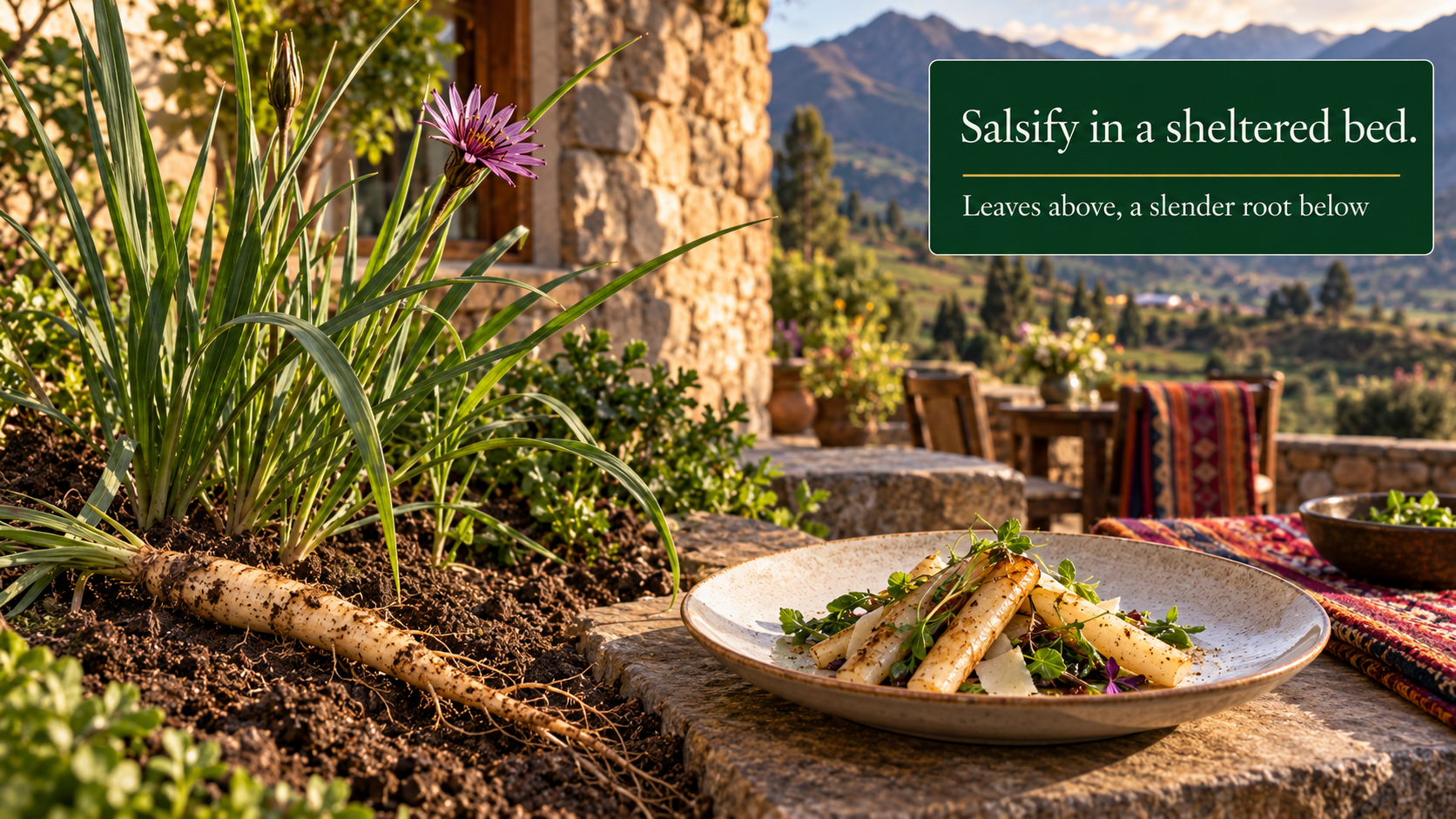
These dishes are serving ideas. Images illustrate the ingredients and preparations; they do not document a restaurant menu, a tested recipe or a current property harvest. The exact Eden Brothers catalog varieties remain research candidates.
Give the Sacred Valley a little more time
A trip built around Machu Picchu can also leave room for a good meal and a less hurried stay. Ask Florian about The SoulSearching Experience, his five-day Sacred Valley seminar for 8-15 participants. Discuss dates, venue and meal arrangements directly as you plan.
Questions readers ask
What does salsify taste like?
Texas A&M describes a faint oyster-like flavor, which explains the common name oyster plant. Expect a mild root vegetable rather than an actual shellfish taste. The high-altitude Andean trout plate uses a small amount of lemon-tahini so the root can still be tasted.
Can salsify replace potatoes in mashed dishes?
Tender cooked salsify can be mashed, but it is a different vegetable with a different flavor and may need a different amount of liquid. Start with a small portion. For the featured high-altitude Andean trout dish, intact root lengths offer a clearer first introduction than a potato-style mash.
Are white and black salsify the same vegetable?
No. White salsify and black salsify, or scorzonera, are distinct crops. This guide uses the white-rooted Mammoth Sandwich Island catalog listing. A black-skinned root in another recipe should not be relabeled as that cultivar, even when the cooked flesh looks pale.
How do I store salsify before cooking?
Keep sound roots refrigerated and follow the supplier's handling advice. Iowa State provides a salsify storage FAQ, while Texas A&M recommends removing the tops for storage. Inspect the actual roots before use; a general storage recommendation is not a guaranteed shelf life for a purchased batch.
How can I reduce sticky sap when preparing salsify?
White salsify and black salsify need to remain distinct. For white salsify, the RHS recommends cooking first and then peeling to avoid handling raw sticky latex. That offers an alternative preparation route before assembling the high-altitude Andean trout plate.
Where can I look for salsify to cook?
Ask a specialist vegetable supplier for cultivated white salsify and confirm whether they instead mean black salsify or scorzonera. Availability is separate from a seed catalog listing. A seller's name and location in another country do not establish a reliable supply in Peru.
How do I loosen tahini into a sauce for salsify?
Whisk in water gradually until it can be spooned rather than sitting as a stiff paste. UMass Chan's tahini sauce uses extra water to make a thinner sauce. Add lemon to taste and keep the portion small enough that the mild salsify remains noticeable.
What can replace the tahini sauce for someone avoiding sesame?
Leave tahini out and use a simple lemon-and-herb accompaniment made with suitable ingredients and clean utensils. Tahini contains sesame. For an allergy, tell the cook explicitly and ask about shared equipment; changing the sauce name alone does not address cross-contact.
Should the oil on top of a tahini jar be mixed in?
Mix the jar's contents until the paste is consistent before measuring a sauce portion. Otherwise the first spoonful may be mostly oil and the next mostly dense sesame solids. Follow the jar's storage instructions; water and lemon are added later when making the sauce.
What exactly is tahini in the lemon-tahini sauce?
Tahini is a paste made from ground sesame seeds. It gives this sauce body and a sesame flavor; it is not a spoonful of bottled sesame oil. Check the ingredient label when buying it, particularly if the meal needs to avoid sesame or another listed ingredient.
How can a salsify soup be made thicker without covering up the root flavor?
Blend some of the fully tender root with a small amount of broth and stir it back into the soup. Add extra liquid gradually. A little cooked potato can give a different, more substantial body, but begin with the salsify itself if its delicate flavor is the point.
Can the root be served without frying or chasing a crisp crust?
Yes. Steam white salsify, peel it, and serve tender pieces beside the fish and grain. The RHS specifically describes steaming this root. A soft cooked vegetable can be a complete accompaniment; browning and crispness are optional texture choices rather than requirements for the meal.
Why can the quinoa beside salsify taste bitter?
Quinoa can retain some bitter-tasting saponins on its surface. FAO notes that processing removes most, and rinsing is a common final preparation step. Check whether the package is pre-rinsed; otherwise wash and drain it before cooking so the mild root is not paired with an unnecessarily bitter grain.
How can the quinoa stay separate instead of becoming mushy?
Use measured liquid and a dependable cooking method, then let the covered quinoa finish absorbing moisture off the heat. Food Hero uses that resting stage rather than continuing to boil indefinitely. Fluff gently before placing it beside the salsify, and keep excess vegetable liquid off the grain.
Can quinoa for the high-altitude Andean trout plate be prepared earlier in the day?
Yes, but cool it promptly in shallow portions and keep it refrigerated until needed. Cooked grains are perishable foods. Carry a chilled portion with an ice pack if transporting it, rather than relying on a warm bag to hold it safely until lunch.
How can the high-altitude Andean trout be served with fewer troublesome bones?
Request a fillet with pin bones removed and inspect it while portioning. Oregon Sea Grant includes careful pin-bone removal in its finfish preparation guidance. Keep the fish visible beside the roots rather than mixing flaked fish blindly through the grain; a fillet still deserves a check.
How do I check the fish without overcooking it by guesswork?
Check the thickest part with a food thermometer. FDA recommends 145 F for most seafood. That is more useful than leaving every fillet in the oven for the same long time; piece thickness varies, and extra cooking after the endpoint can dry the meal.
Is frozen fish automatically a poorer choice for this plate?
No. Oregon State notes that frozen and previously frozen fish can be high quality. Ask how it has been handled and thawed, inspect its condition, and use FDA thawing guidance. Good ingredients matter more than making a never-frozen claim for the finished plate.
Can dried herbs replace a fresh herb finish?
They can season a broth or sauce, but they give a different finish from fresh leaves. Use less of a strongly flavored dried herb and allow it time to hydrate. For mild salsify, a small amount of fresh parsley is an easy way to keep the herb note restrained.
Should lemon zest or lemon juice be used in the sauce?
Use juice when you want acidity and liquid in the tahini sauce; a small amount of finely grated zest can add a separate citrus aroma. Add each gradually and taste. The root is mild, so an intensely sour sauce should not become the only flavor on the plate.
Continue at the table
- Romanesco, Gently Steamed with Lemon and Sesame
- Lemon Tahini for Alpaca and Steamed Vegetables
- Culinary Herbs with high-altitude Andean trout: Burnet, Cress, Lovage, and Lemongrass
- Quinoa in Peru: breakfasts, soups and savory plates
- High-altitude Andean trout: grilled and baked preparations
- All the new vegetable dishes